
Research article · 2023 · Full text
International Journal of Biology SciencesThe impact of oxidative stress on cellular function and aging
Volume 5(2) · Pages 97–100 · DOI: 10.33545/26649926.2023.v5.i2b.216 ↗
Research areasGenetics, Aging, and Longevity in Model OrganismsGABA and Rice ResearchFood Quality and Safety Studies
Abstract
Author-writtenOxidative stress, resulting from an imbalance between the production of reactive oxygen species (ROS) and the body's antioxidant defenses, plays a critical role in cellular function and aging. This article explores the mechanisms by which oxidative stress affects cellular components, the implications for aging and age-related diseases, and potential therapeutic strategies to mitigate oxidative damage. Understanding the intricate relationship between oxidative stress and cellular aging can provide insights into developing interventions to promote healthy aging and longevity.
Summary
Source-checkedPlain-language reading of the full paper, prepared with AI and checked against the text. Each point links to the authors' own words.
Why it matters
- Aging is a complex biological process that involves a gradual decrease in physiological functions and a higher risk of disease. View evidence ↗
- The oxidative stress theory suggests that the aging process is primarily driven by the accumulation of oxidative damage to cellular components. View evidence ↗
- Oxidative stress occurs when excessive levels of reactive oxygen species (ROS) overwhelm the body's antioxidant defenses, although small amounts of ROS are necessary for homeostasis and cell signaling. View evidence ↗
The question
- The study aims to investigate how oxidative stress impacts cellular function and aging, specifically looking at the mechanisms that lead to physiological decline and age-related diseases. View evidence ↗
What they did
- The author conducted a review of existing literature to explore the mechanisms of oxidative stress, its implications for aging and disease, and potential therapeutic strategies. View evidence ↗
What they found
- ROS can cause DNA mutations and genomic instability by inducing base modifications, cross-linking, and single or double-strand breaks. View evidence ↗
- Oxidative stress leads to the inactivation of enzymes and the aggregation and misfolding of proteins. View evidence ↗
- ROS trigger lipid peroxidation of polyunsaturated fatty acids in cell membranes, producing reactive aldehydes like 4-HNE and MDA that further spread oxidative damage. View evidence ↗
- Mitochondrial function is impaired by oxidative stress through damage to lipids, proteins, and mtDNA, which results in higher ROS generation and lower ATP production. View evidence ↗
- Oxidative stress induces cellular senescence (irreversible growth arrest), where cells develop a pro-inflammatory secretory phenotype (SASP) that contributes to tissue dysfunction and chronic inflammation. View evidence ↗
- High levels of ROS can trigger programmed cell death (apoptosis) via the mitochondrial pathway when oxidative damage to membranes releases cytochrome c. View evidence ↗
- In Alzheimer's disease, oxidative damage to neurons promotes the hyperphosphorylation of tau and the aggregation of amyloid-beta. View evidence ↗
- Atherosclerosis is promoted by ROS-induced endothelial dysfunction, which triggers inflammatory responses and increases the oxidation of LDL cholesterol. View evidence ↗
- ROS have a dual role in cancer: they can drive carcinogenesis through genomic instability and DNA mutations, but excessive levels can also induce cell death and inhibit the proliferation of cancer cells. View evidence ↗
What it means
- The author states that future research needs to clarify the context-specific roles of ROS and explore targeted interventions for cellular resilience. View evidence ↗
Visual summary
1 visualsIllustrations explain the paper; they do not show study data.
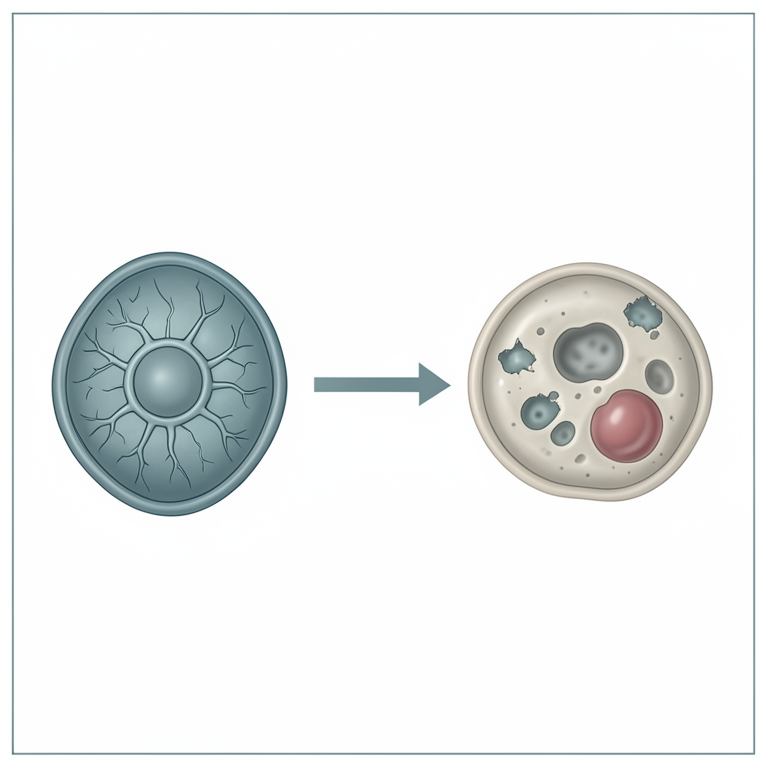
Study overview
AI-generated conceptual illustration (human dermal fibroblasts). It explains the idea and does not show study data.
View source evidence ↗Introduction
Aging is a complex biological process characterized by a gradual decline in physiological functions and an increased susceptibility to diseases. One of the central theories of aging is the oxidative stress theory, which posits that the accumulation of oxidative damage to cellular components is a primary driver of the aging process. Reactive oxygen species (ROS), including free radicals such as superoxide anion (O2•-), hydrogen peroxide (H 2 O 2 ), and hydroxyl radical (•OH), are by-products of normal cellular metabolism. While ROS play essential roles in cell signaling and homeostasis, excessive ROS levels can overwhelm the cell's antioxidant defenses, leading to oxidative stress.
Main Objective of the Study
The main objective of this study is to investigate the impact of oxidative stress on cellular function and aging, elucidating the mechanisms through which oxidative damage influences physiological decline and contributes to age-related diseases.
Literature Review
Oxidative stress has long been recognized as a crucial factor in the aging process and the development of various age-related diseases. The imbalance between reactive oxygen species (ROS) production and antioxidant defenses leads to cellular damage, which accumulates over time and contributes to the decline in physiological function associated with aging. Harman (1956) [9] . First proposed the free radical theory of aging, suggesting that aging results from the accumulation of oxidative damage caused by free radicals. This theory has since been supported by numerous studies, establishing oxidative stress as a central mechanism in the aging process. Harman later updated his theory to incorporate the role of mitochondrial dysfunction in aging, emphasizing the mitochondria's role as both a source and target of oxidative damage (Harman, 2006) [17] . Finkel and Holbrook (2000) [10] . Provided a comprehensive review of the biology of aging, highlighting the role of oxidants and oxidative stress. They discussed how ROS can damage cellular components, including DNA, proteins, and lipids, leading to cellular dysfunction and contributing to the aging process. Balaban, Nemoto, and Finkel (2005) [11] . Further elaborated on the relationship between mitochondria, oxidants, and aging, underscoring the importance of mitochondrial health in maintaining cellular function and longevity. Mitochondrial dysfunction is a key feature of aging and agerelated diseases. Wallace (1992) [13] . Proposed that mitochondrial genetics could provide a paradigm for understanding aging and degenerative diseases. He suggested that mutations in mitochondrial DNA (mtDNA) accumulate over time, leading to mitochondrial dysfunction and increased ROS production, which in turn exacerbates cellular damage and aging. Lane (2006) [12] . Echoed this sentiment, describing mitochondrial disease as a "powerhouse of disease" and emphasizing the central role of mitochondria in cellular energy production and oxidative stress. Stadtman (1992) [14] and Levine and Stadtman (2001) [15] . Explored the oxidative modification of proteins during aging. They demonstrated that oxidative damage to proteins can lead to loss of function, misfolding, and aggregation, which are hallmarks of many age-related diseases, including neurodegenerative disorders. Their work highlighted the importance of maintaining protein homeostasis to mitigate the effects of oxidative stress and aging. Oxidative stress has been implicated in the pathogenesis of neurodegenerative diseases, such as Alzheimer's and Parkinson's diseases. Swerdlow (2018) [1] discussed the mitochondrial cascade hypothesis in Alzheimer's disease, proposing that mitochondrial dysfunction and oxidative stress play a pivotal role in the disease's progression. Butterfield and Halliwell (2019) [2] provided evidence that oxidative stress contributes to the aggregation of amyloid-beta and hyperphosphorylation of tau, key features of Alzheimer's pathology. Similarly, Dexter and Jenner (2013) [3] and Gaki and Papavassiliou (2014) [4] highlighted the role of oxidative stress in Parkinson's disease, where it exacerbates dopaminergic neuron loss through mitochondrial damage and protein aggregation. Cardiovascular diseases are also closely linked to oxidative stress. Madamanchi and Runge (2007) [6] . Demonstrated that mitochondrial dysfunction in atherosclerosis is driven by oxidative stress, which promotes endothelial dysfunction, inflammation, and the oxidation of low-density lipoprotein (LDL) cholesterol. Harrison et al.
(2011) [7] . Discussed how oxidative stress contributes to hypertension by impairing nitric oxide signaling and promoting vascular remodeling, further illustrating the broad impact of oxidative stress on cardiovascular health. The role of oxidative stress in cancer is complex, as ROS can both promote and inhibit tumorigenesis. Trachootham et al. (2009) [8] reviewed the redox regulation of cell survival, noting that while low levels of ROS can promote cell proliferation and survival, high levels can induce cell death and inhibit cancer growth. This dual role of ROS in cancer underscores the need for a nuanced understanding of oxidative stress in the context of different diseases.
Impact of Oxidative Stress on Cellular Function
Oxidative stress, characterized by an imbalance between the production of reactive oxygen species (ROS) and the body's antioxidant defenses, significantly impacts cellular function. 2018) [1] have shown that mitochondrial dysfunction contributes significantly to the progression of Alzheimer's disease, where oxidative stress exacerbates the formation of amyloid plaques and neurofibrillary tangles. Similarly, Gaki and Papavassiliou (2014) [4] demonstrated that oxidative stress plays a crucial role in Parkinson's disease by promoting dopaminergic neuron loss through mitochondrial damage.
Oxidative stress is a potent inducer of cellular senescence, a state of irreversible growth arrest. Senescent cells exhibit a pro-inflammatory secretory phenotype (SASP), which can contribute to chronic inflammation and tissue dysfunction. The work of Campisi and d'Adda di Fagagna (2007) [5] has highlighted the importance of oxidative stress in driving cellular senescence and its implications for aging and agerelated diseases. High levels of ROS can trigger apoptosis (programmed cell death) through the intrinsic (mitochondrial) pathway. Oxidative damage to mitochondrial membranes releases cytochrome c, which activates caspases that orchestrate cell death. In contrast, excessive oxidative damage can lead to necrosis, an uncontrolled form of cell death associated with inflammation and tissue damage. Numerous studies have highlighted the role of oxidative stress in neurodegenerative diseases. For instance, oxidative damage to neurons contributes to the pathology of Alzheimer's disease (AD) by promoting amyloid-beta aggregation and tau hyperphosphorylation, as demonstrated by Butterfield and Halliwell (2019) [2] . Similarly, Dexter and Jenner (2013) [3] found that oxidative stress is implicated in Parkinson's disease (PD), where it exacerbates dopaminergic neuron loss through mitochondrial dysfunction and protein aggregation. Oxidative stress is a well-established factor in cardiovascular diseases.
ROS-induced endothelial dysfunction promotes atherosclerosis by enhancing the oxidation of low-density lipoprotein (LDL) cholesterol and triggering inflammatory responses, as shown by
Madamanchi and Runge (2007) [6] . Additionally, oxidative stress contributes to hypertension by impairing nitric oxide signaling and promoting vascular remodeling, according to Harrison et al. (2011) [7] . The dual role of ROS in cancer is evident from various studies. On one hand, ROS can induce DNA mutations and genomic instability, driving carcinogenesis. Trachootham et al. (2009) [8] discussed how ROS-induced oxidative DNA damage can initiate tumorigenesis. On the other hand, excessive ROS levels can inhibit cancer cell proliferation and induce cell death, providing a potential therapeutic strategy. Thus, the relationship between oxidative stress and cancer is complex and context-dependent. Oxidative stress exerts a multifaceted impact on cellular function, affecting mitochondrial integrity, inducing cellular senescence, and modulating cell death pathways. Comparative studies across different diseases underscore the central role of oxidative stress in pathogenesis. Understanding the mechanisms by which oxidative stress influences cellular function is crucial for developing therapeutic strategies to mitigate its detrimental effects. Future research should focus on elucidating the context-specific roles of ROS and exploring targeted interventions to enhance cellular resilience against oxidative damage.
Impact of Oxidative Stress and Aging
Oxidative stress, resulting from an imbalance between reactive oxygen species (ROS) production and antioxidant defenses, significantly impacts cellular function and aging. The excess ROS can induce damage to DNA, proteins, and lipids, leading to impaired cellular processes and contributing to the aging process and age-related diseases. ROS, including superoxide anion, hydrogen peroxide, and hydroxyl radicals, are natural byproducts of cellular metabolism. While essential in small amounts for cell signaling and homeostasis, excessive ROS can overwhelm the cell's antioxidant defenses, resulting in oxidative stress. One critical effect of oxidative stress is DNA damage. ROS can cause single and double-strand breaks, base modifications, and cross-linking, leading to mutations and genomic instability. This accumulated DNA damage activates cellular repair mechanisms and can induce cellular senescence or apoptosis if the damage is irreparable. Studies, such as those by Swerdlow (2018) [1] , have shown that oxidative DNA damage contributes significantly to aging and age-related diseases like Alzheimer's and Parkinson's diseases. Proteins are also susceptible to oxidative modifications that can alter their structure and function. Oxidative stress can cause protein misfolding, aggregation, and loss of enzymatic activity. Damaged proteins are typically degraded by the ubiquitin-proteasome system, but excessive oxidative stress can overwhelm this system, leading to the accumulation of dysfunctional proteins. Butterfield and Halliwell (2019) [2] highlighted the role of protein oxidation in neurodegenerative diseases, linking oxidative stress to aging. Lipid peroxidation, initiated by ROS, damages cell membranes and generates reactive aldehydes like malondialdehyde (MDA) and 4-hydroxynonenal (4-HNE). These byproducts can further propagate oxidative damage and disrupt membrane integrity, affecting cell signaling and function. Lipid peroxidation has been implicated in various age-related conditions, including cardiovascular diseases and neurodegeneration, as discussed by Madamanchi and Runge (2007) [6] . Mitochondria, as both a primary source and target of ROS, are particularly vulnerable to oxidative stress. Damage to mitochondrial DNA, proteins, and lipids impairs mitochondrial function, leading to reduced ATP production and increased ROS generation. This mitochondrial dysfunction contributes to the aging process by creating a vicious cycle of increased oxidative damage. Studies by Gaki and Papavassiliou (2014) [4] have demonstrated the critical role of mitochondrial dysfunction in aging and age-related diseases. Oxidative stress is a potent inducer of cellular senescence, a state of irreversible growth arrest. Senescent cells exhibit a pro-inflammatory secretory phenotype (SASP), which can contribute to chronic inflammation and tissue dysfunction. Research by Campisi and d'Adda di Fagagna (2007) [5] has shown that oxidative stress-induced senescence plays a crucial role in aging and the development of age-related diseases, such as cancer and cardiovascular diseases. High levels of ROS can trigger apoptosis (programmed cell death) through the intrinsic (mitochondrial) pathway. Oxidative damage to mitochondrial membranes releases cytochrome c, which activates caspases that orchestrate cell death. In contrast, excessive oxidative damage can lead to necrosis, an uncontrolled form of cell death associated with inflammation and tissue damage. Comparative studies highlight the role of oxidative stress in various aspects of aging. Oxidative damage to neurons contributes to the pathology of Alzheimer's disease by promoting amyloidbeta aggregation and tau hyperphosphorylation. Similarly, oxidative stress is implicated in Parkinson's disease, where it exacerbates dopaminergic neuron loss through mitochondrial dysfunction and protein aggregation, as demonstrated by Dexter and Jenner (2013) [3] . In cardiovascular diseases, ROS-induced endothelial dysfunction promotes atherosclerosis by enhancing the oxidation of low-density lipoprotein (LDL) cholesterol and triggering inflammatory responses. Oxidative stress also contributes to hypertension by impairing nitric oxide signaling and promoting vascular remodeling, according to Harrison et al. (2011) [7] . The dual role of ROS in cancer is evident from various studies. ROS can induce DNA mutations and genomic instability, driving carcinogenesis, as discussed by Trachootham et al. (2009) [8] . However, excessive ROS levels can inhibit cancer cell proliferation and induce cell death, providing a potential therapeutic strategy. Oxidative stress exerts a multifaceted impact on cellular function and aging, affecting DNA integrity, protein function, lipid membranes, and mitochondrial health.
Comparative studies underscore the central role of oxidative stress in the pathogenesis of various age-related diseases. Understanding the mechanisms by which oxidative stress influences aging is crucial for developing therapeutic strategies to mitigate its detrimental effects. Future research should focus on elucidating the context-specific roles of ROS and exploring targeted interventions to enhance cellular resilience against oxidative damage, ultimately promoting healthy aging and longevity.
Conclusion
This study highlights the profound impact of oxidative stress on cellular function and aging. The imbalance between ROS production and antioxidant defenses leads to oxidative damage in DNA, proteins, and lipids, which disrupts cellular processes and contributes significantly to the aging process and the development of age-related diseases. The evidence from various studies underscores the central role of oxidative stress in inducing cellular senescence, mitochondrial dysfunction, and programmed cell death, which collectively drive the aging process and related pathologies such as neurodegenerative and cardiovascular diseases, and cancer. Understanding these mechanisms provides a foundation for developing therapeutic strategies aimed at enhancing cellular resilience against oxidative damage. Future research should focus on context-specific roles of ROS and targeted interventions to mitigate oxidative stress, ultimately promoting healthier aging and longevity.
References
16 in the original paper- Swerdlow RH. Mitochondria and mitochondrial cascades in Alzheimer's disease. Journal of Alzheimer's disease. 2018;62(3):1403-1416.
- Butterfield DA, Halliwell B. Oxidative stress, dysfunctional glucose metabolism, and Alzheimer disease. Nature Reviews Neuroscience. 2019;20(3):148-160.
- Dexter DT, Jenner P. Parkinson disease: from pathology to molecular disease mechanisms. Free Radical Biology and Medicine. 2013;62:132-144.
- Gaki GS, Papavassiliou AG. Oxidative stress-induced signaling pathways implicated in the pathogenesis of Parkinson's disease. Neuro Molecular Medicine. 2014;16(2):217-230.
- Campisi J, d'Adda di Fagagna F. Cellular senescence: when bad things happen to good cells. Nature Reviews Molecular Cell Biology. 2007;8(9):729-740.
- Madamanchi NR, Runge MS. Mitochondrial dysfunction in atherosclerosis. Circulation Research. 2007;100(4):460-473.
- Harrison DG, Gongora MC, Guzik TJ, Widder J, Grumbach I. Oxidative stress and hypertension. Journal of the American Society of Hypertension. 2011;5(4):240-260.
- Trachootham D, Lu W, Ogasawara MA, Nilsa RD, Huang P. Redox regulation of cell survival. Antioxidants & Redox Signaling. 2009;10(8):13431374.
- Harman D. Aging: A theory based on free radical and radiation chemistry. Journal of Gerontology. 1956;11(3):298-300.
- Finkel T, Holbrook NJ. Oxidants, oxidative stress and the biology of aging. Nature. 2000;408(6809):239-247.
- Balaban RS, Nemoto S, Finkel T. Mitochondria, oxidants, and aging. Cell. 2005;120(4):483-495.
- Lane N. Mitochondrial disease: powerhouse of disease. Nature. 2006;440(7084):600-602.
- Wallace DC. Mitochondrial genetics: a paradigm for aging and degenerative diseases? Science. 1992;256(5057):628-632.
- Stadtman ER. Protein oxidation and aging. Science. 1992;257(5074):1220-1224.
- Levine RL, Stadtman ER. Oxidative modification of proteins during aging. Experimental Gerontology. 2001;36(9):1495-1502.
- Harman D. Free radical theory of aging: An update. Annals of the New York Academy of Sciences. 2006;1067:10-21.
Cited by 10
From OpenAlex, OpenCitations and reference lists read by Scinovex
- Kidney Dysfunction, Biochemical Changes, DNA Alteration, and MAPKs Regulation Following Chronic Exposure to Regular and Occasional Hookah Smoke in Mice ↗
Naserddine Kamel Hamadi, Anas Nemmar, Anas Nemmar, Sumaya Beegam, Nur Elena Zaaba, Ozaz Elzaki et al. · Oxidative Medicine and Cellular Longevity · 2026
Regular hookah smoking (Reg‐HS) has become a major global public health issue, linked to significant health risks, including kidney damage. A less frequent pattern of use, known as occasional hookah smoking (Occ‐HS), is also common; however, there has been little progress in understanding the direct impact of Occ‐HS on kidneys. To investigate how varying frequencies of HS inhalation affect the…
❝ 1PDF - The role of sirtuins (SIRT1-SIRT7) in cellular metabolism and aging: A molecular overview ↗
Piotr Kowalczyk · International Journal of Molecular Biology and Biochemistry · 2025
Sirtuins (SIRT1-SIRT7), a family of NAD⁺-dependent deacetylases and ADP-ribosyltransferases, have emerged as key regulators of metabolic homeostasis, stress responses, and the aging process in eukaryotic organisms. These highly conserved enzymes influence multiple biological pathways, including DNA repair, mitochondrial function, insulin sensitivity, and inflammation. Their dependence on NAD⁺ links their activity to the cell’s metabolic state, positioning them as metabolic sensors.
- Aging: Concept, theories, principle and future prospective ↗
Priti Gupta, T.S. Gopenath, Manuela Leri, Avinash Prakash, Vivek Jain, Umesh Kumar et al. · Elsevier eBooks · 2026
❝ 0 - Importance of natural antioxidants and their effects on humans ↗
Babli, Uzma Sayyed · International Journal of Multidisciplinary Trends · 2025
In recent years, natural antioxidants have become of great interest due to the possible adverse effects of synthetic antioxidants. Natural antioxidants play a crucial role in maintaining human health. Enzymatic antioxidants like catalase and peroxidase, alongside high-molecular-weight non-enzymatic antioxidants such as albumin and ferritin, support cellular defence mechanisms. Reactive oxygen species (ROS) and oxidants cause cell damage (oxidative stress). Antioxidants
- Genomic and molecular insights into thermotolerance mechanisms in cattle
Lipika Sarma, D Dutta, Utkarsh Verma, Nripendra Singh · International Journal of Agriculture and Food Science · 2025
Heat stress is a major environmental challenge impacting livestock health, particularly in tropical regions. At the molecular level, heat stress activates intricate signaling cascades and gene networks in cattle that drive cellular adaptation and survival. These include the heat shock response, oxidative stress pathways, immune regulation, and modulation of apoptotic genes. Recent transcriptomic and proteomic studies have revealed key gene families, such as heat shock proteins (HSPs), oxidative stress markers (e.g., HMOX1, BNIP3), and immune regulators (e.g., TLRs, NOS), that orchestrate these
- Mitochondria in crisis: The hidden engine of neurodegenration ↗
Neha Nawab, Awais Ahmad Mubashir, Gurmit Singh · International Journal of Pharmacology and Clinical Research · 2025
The pathogenesis of major neurodegenerative disorders, including Parkinson's disease (PD), Alzheimer's disease (AD), and other age-related cognitive decline syndromes, is now known to be greatly impacted by mitochondrial malfunction. This study thoroughly investigates the complex function of mitochondria as signaling hubs and energy regulators in brain health, as well as how their dysregulation may either be the fundamental cause or
- Exercise-induced oxidative stress and antioxidant responses: A meta-analysis ↗
Hamza Hussain Ali Alsalihi · Journal of Sports Science and Nutrition · 2025
Exercise has two positive effects on human physiology: it is a source of reactive oxygen species (ROS) and a stimulator of adaptive antioxidant defense mechanisms. The objectives of this meta-analysis were to provide the synthesis of available evidence on the topic of oxidative stress markers and its antioxidant responses in acute and chronic exercise. To determine the sources and variability
- Pranayama as a therapeutic tool for modulating oxidative stress and inflammation in cardiovascular diseases ↗
Radhika Kapoor, Aarav Patel · Journal of Swasthavritta and Yoga · 2025
Cardiovascular diseases (CVDs) are the leading cause of death globally, with oxidative stress and chronic inflammation recognized as central mechanisms in their pathogenesis. This paper explores the therapeutic potential of Pranayama (controlled breathing) as an adjunct to conventional treatment for CVDs. Pranayama practices, such as Nadi Shodhana and Bhramari, are examined for their ability to modulate key physiological factors particularly
- Evaluating antioxidant and anti-inflammatory roles of N acetylcysteine in COVID19 cases: Review ↗
Sherzad Haji Jumaah, Ardawan Fathi Ali · International Journal of Clinical Biology and Biochemistry · 2024
Background: Provide an analytical description of the current evidence regarding the potential anti-inflammatory and antioxidant capabilities N-acetylcysteine and its role in depressing the oxidative and inflammatory processes in COVID-19 cases. Materials and Methods: Systematic review targeted the antioxidant, anti-inflammatory roles with keywords like "NAC," "COVID-19," "inflammation" "oxidative stress," and "inflammation" to examine recent studies on role of NAC in mitigating
- The impact of smoking and substance abuse on male reproductive performance ↗
Abeer Nahy Hamdy · International Journal of Gynaecology Sciences · 2024
Background: Smoking and substance abuse are known to have adverse effects on male reproductive function. These habits may lead to reduced semen quality, hormonal imbalances and elevated oxidative stress that may impact fertility. Objective: To find out the effects of smoking and using drugs on semen quality, hormonal levels, oxidative stress markers and male reproductive performance. Methodology: During the period