
Research article · 2024 · Full text
International Journal of Advanced Chemistry ResearchEco friendly dyeing of wool cotton blended yarn by reactive dye
Volume 6(1) · Pages 225–232 · DOI: 10.33545/26646781.2024.v6.i1c.190 ↗
Research areasDyeing and Modifying Textile Fibers
Abstract
Author-writtenThe present research is based on dyeing of wool/cotton blended yarn using poly-functional reactive dye with Tri sodium citrate as an exhausting agent and EDTA (tetra sodium salt) for fixation in single bath and two-step process. The first step bath is slightly alkaline and second step is acidic medium for dyeing. Both are bio-degradable organic salts having more number of anionic sites than conventional inorganic chemicals i.e. sodium sulfate and sodium carbonate, so the reactivity with fiber and dye is much greater than ordinary salt. A major environmental problem of textile effluent is from the dyeing waste water, colorants, heavy metals, and high concentrations of inorganic salts are all water pollutants. The major effort is on the removal of toxic materials from the effluent and tries to decrease the concentration of these chemicals in the effluent discharged. Since, both the chemical are biodegradable hence it may help in reduction of pollutant in effluent. As both are the organic salt and having a bio degradable nature, it reduces the load of effluent treatment plant in industry in terms of cost and reduces the BOD and COD level and also reduces the criticalities of dyeing of wool-cotton blend.
Summary
Source-checkedPlain-language reading of the full paper, prepared with AI and checked against the text. Each point links to the authors' own words.
Why it matters
- Wool-cotton blends are valuable in the textile industry because they combine the absorbency and comfort of cotton with the warmth of wool. View evidence ↗
- Dyeing these blends is challenging because wool and cotton require opposing chemical environments (acidic vs. non-acidic) and different temperatures. View evidence ↗
- Textile dyeing creates significant environmental pollution through wastewater containing colorants, heavy metals, and high concentrations of inorganic salts. View evidence ↗
The question
- The researchers sought to replace non-biodegradable inorganic salts, such as sodium sulfate, with biodegradable organic salts like tri-sodium citrate and EDTA tetra sodium salt. View evidence ↗
What they did
- The experiment used wool-cotton blended yarns with composition ratios of 80:20 and 70:30. View evidence ↗
- The study employed Corafix Yellow GD-R reactive dye, using tri-sodium citrate as an exhausting agent and EDTA tetra sodium salt as a chelating agent. View evidence ↗
- The two-step single-bath process maintained pH 9.0-9.5 at 60-85°C for cotton dyeing, followed by pH 5.0-5.5 at 90-100°C for wool dyeing. View evidence ↗
What they found
- The 70/30 blend showed higher dye absorption than the 80/20 blend, which the authors attribute to the larger amorphous region of wool (70-75%) compared to cotton (30-35%). View evidence ↗
- The optimized 40 gpl samples demonstrated acceptable fastness: washing (3-3.5), light (3-4), dry rubbing (4-5), and wet rubbing (3-4). View evidence ↗
- Increasing salt concentration beyond 40 gpl increased the K/S value, indicating that dye was fixing more on the fiber surface rather than penetrating the interior. View evidence ↗
What it means
- The authors conclude that sodium citrate (SC) and EDTA are safer, biodegradable alternatives to glauber salt and soda, providing acceptable dyeing results. View evidence ↗
- Using these biodegradable organic salts is recommended to reduce industrial effluent treatment costs and lower BOD and COD levels. View evidence ↗
Visual summary
3 visualsIllustrations explain the paper; charts are replotted from the paper's own table values.
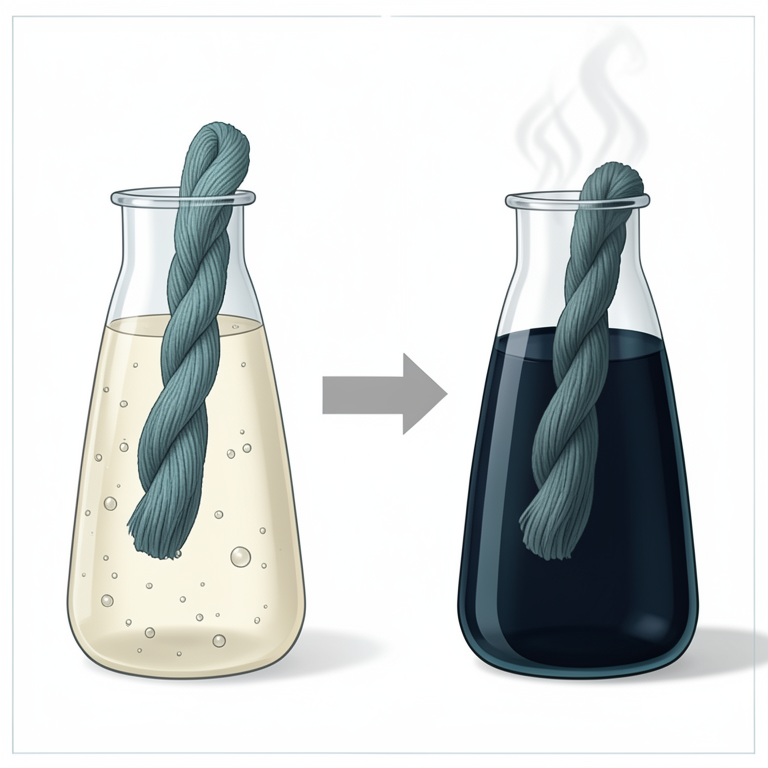
Two-Step Single-Bath Process
AI-generated conceptual illustration (wool-cotton blended yarn in a dyeing vessel). It explains the idea and does not show study data.
View source evidence ↗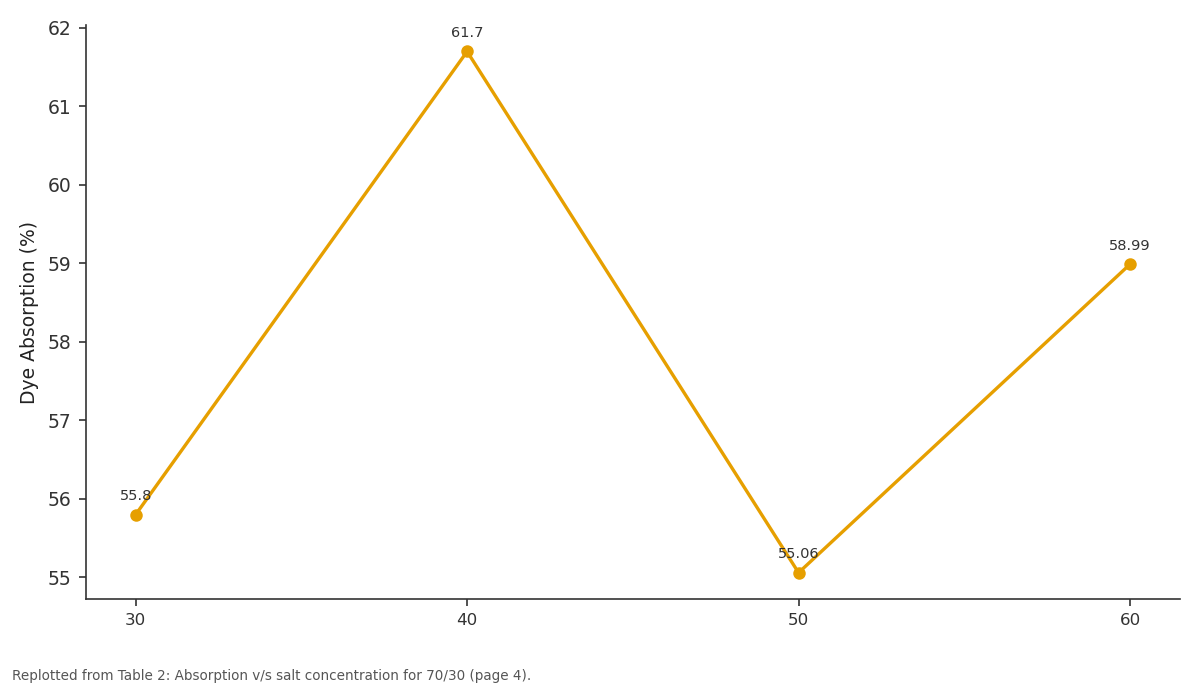
Dye Absorption (%): 30 vs 40 vs 50 vs 60
Replotted from Table 2 (page 4) of the original paper. Every bar is the paper's own table value.
View source evidence ↗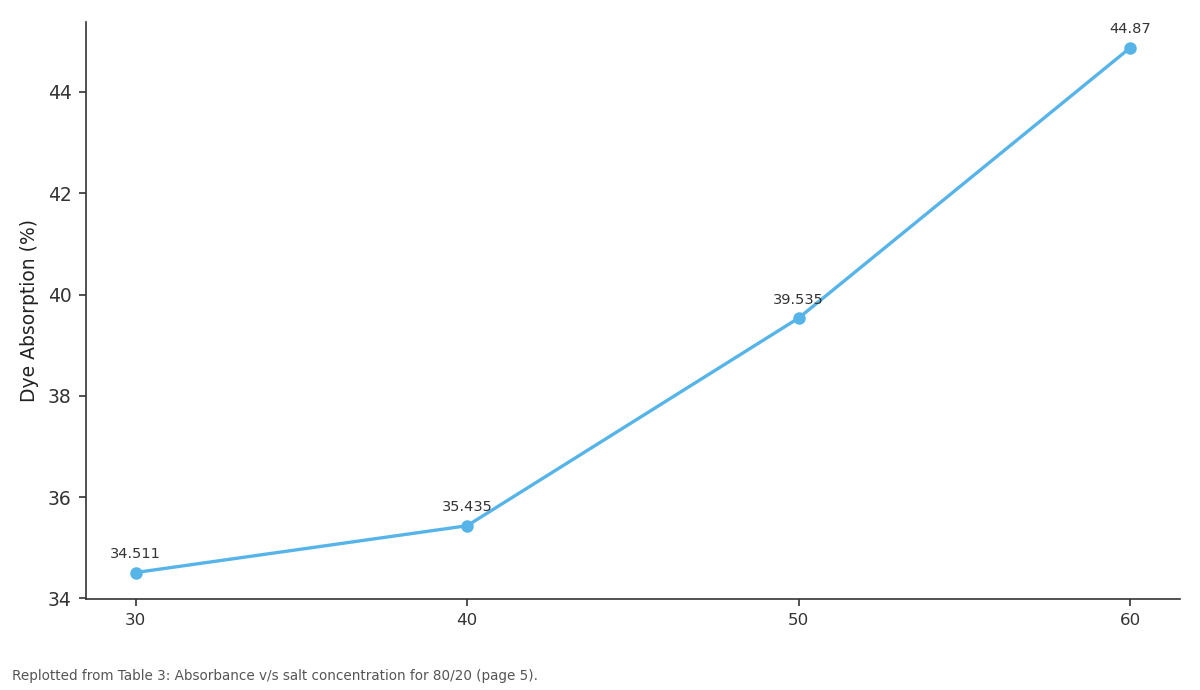
Dye Absorption (%): 30 vs 40 vs 50 vs 60
Replotted from Table 3 (page 5) of the original paper. Every bar is the paper's own table value.
View source evidence ↗Figures & tables
From the original paper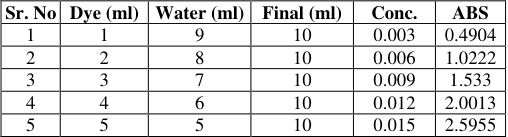 Table 1
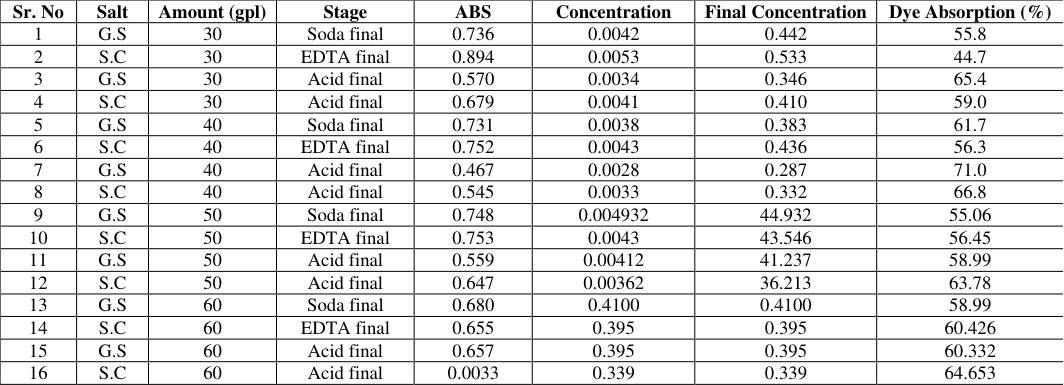 Table 2
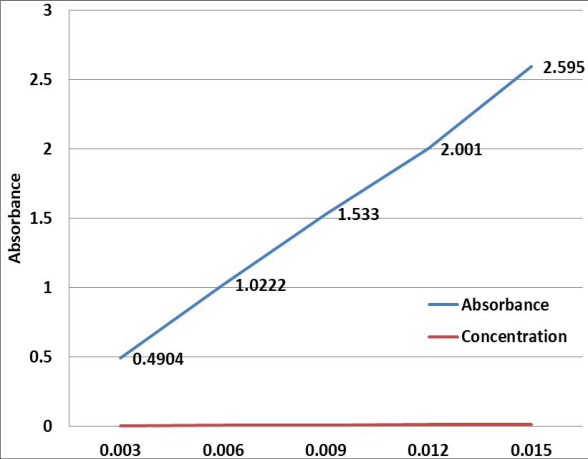 Figure 1
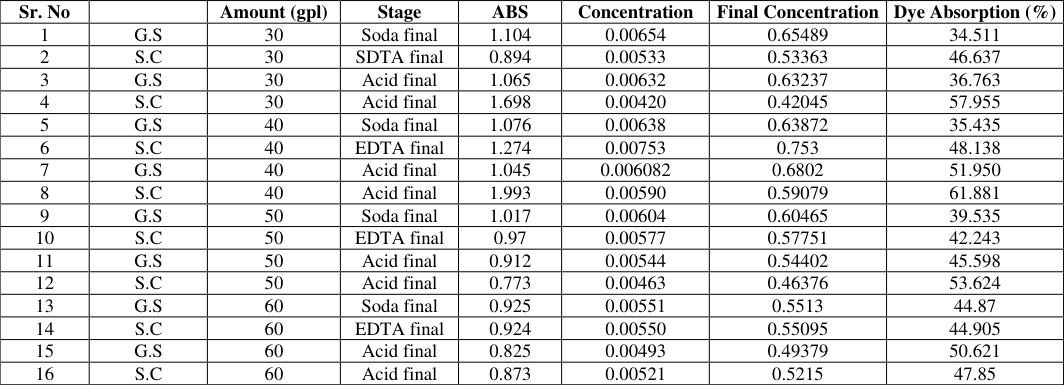 Table 3
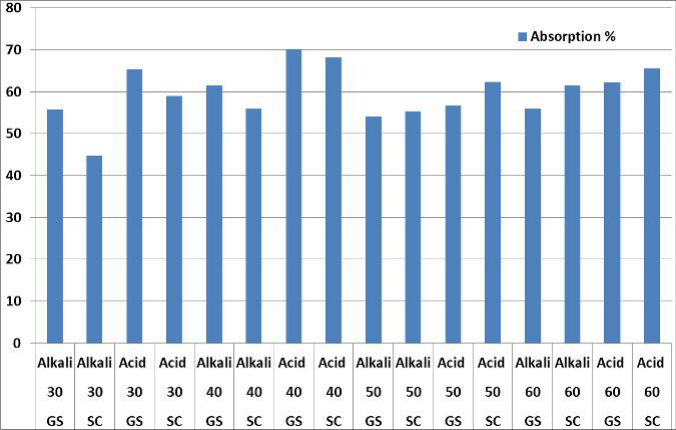 Figure 2
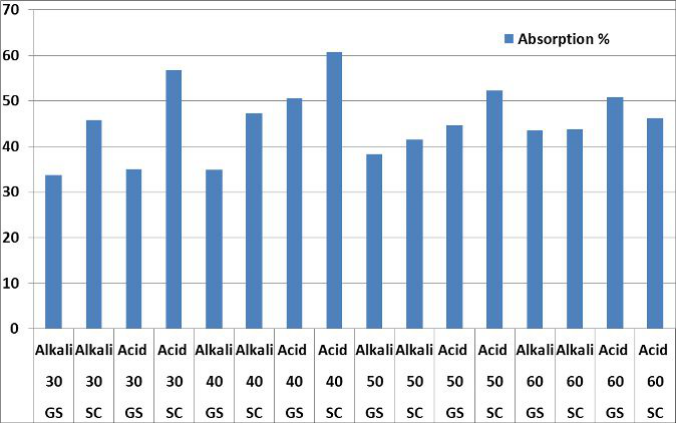 Figure 3
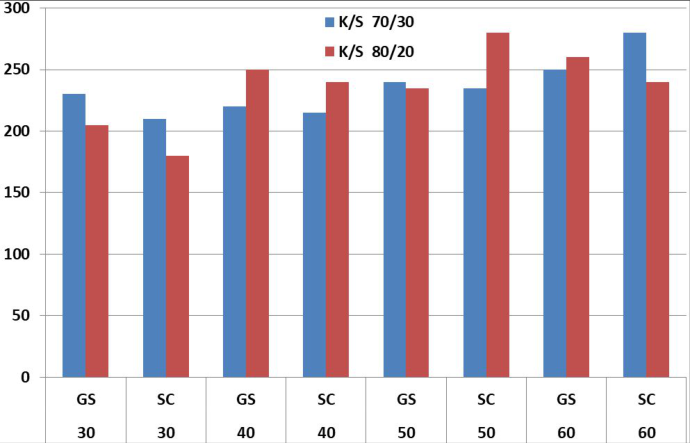 Figure 4
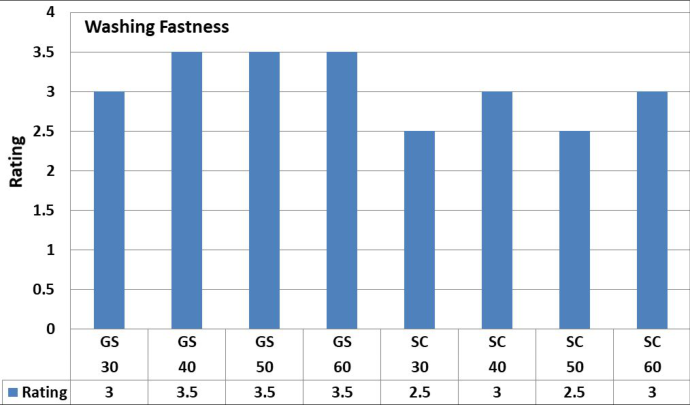 Figure 5
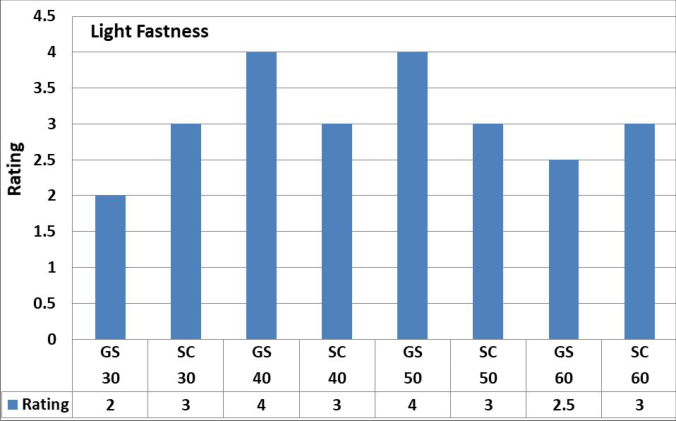 Figure 6
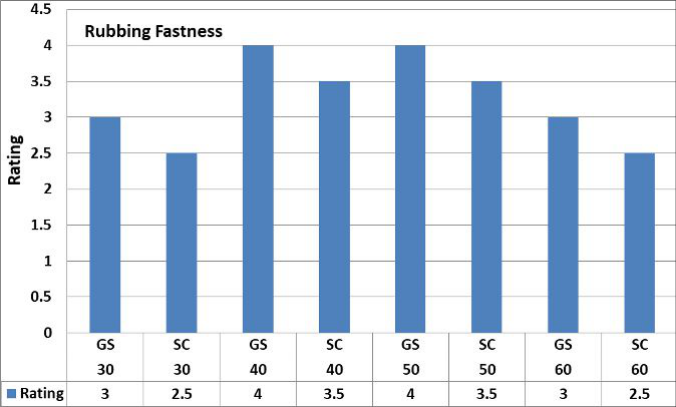 Figure 6
Introduction
Cotton/Wool blends have found a significant niche within the textile industry, being able to offer benefits that neither natural fiber in its sole state can, for example: absorbency with warmth, comfort without prickle and the ability to be worn across a wide temperature range, just to name a few. One of the major reasons that cotton/wool has not played a more significant role within the Industry is the lack of knowledge for wet processing, in particular the dyeing, of the fiber blend. It can be generally stated that cotton and wool are at opposing ends of the dyeing scale methods for dyeing wool are generally unfavorable towards cotton and those favorable towards cotton may damage or even completely destroy the wool. Blended textiles of wool and cotton are conventionally dyed to one uniform shade in one or two dye baths with one or two dyes where the different fiber types are dyed sequentially in two steps, under different requirements for alkalinity/ acidity and temperature. This cumbersome process has now been simplified to a one-step dyeing process with one dye. The new process relies on the selective modification of the cotton component in the presence of wool in a pre-treatment step to dyeing, followed by dyeing from a fresh dye bath with wool or cotton dye. Textile manufacturers and consumers generally recognize wool/cotton textiles as superior products that combine the rich full hand of wool with the comfort of cotton (Cardamone et al., 1996) [1] . It is a comfortable, durable and attractive fabric. The complementary properties of these fibers include wool's high elongation and weakness at low stress and cotton resistance to elongation and strength at high stress. Wool's low thermal conductivity and hygroscopicity, leading to apparent dryness, complement cotton's propensity to dissipate Wool, which is sheep hair, is made of animal proteins, while cotton is made of plant cellulose the main part of a plant's cell wall. Normally, when wool and cotton are blended together, two separate dye baths are required because the wool takes up most of the dye. Wool is dyed in an acidic environment at high temperatures, and cotton is dyed in a non-acidic environment at lower temperatures. This difference requires that the wool and cotton be dyed either separately or sequentially in one bath in which the pH and temperature levels are changed (Marmer and Cardamone 2000, 2002) [3,4] . Anywhere, many researches and development in finishing and dyeing of cotton/wool blend have been undertaken in recent years (Cardamone and Turner 2000; Ibrahim et al., 2006; 2007; 2008; 2006; Cardamone et al., 1998) [5][6][7][8][9][10] . The rising demand for relaxed and resilient all-seasonal clothing, especially in the casual-wear market has awakened a renewed interest not only in all-cotton and all-wool but also in blends of cotton and wool. Since the wool/cotton blends have both the comfort of cotton and the resilience of wool, the clothes made of the blends are worn by many people year-round and these blends ranging from 80/20 to 20/80 of cotton/wool are preferentially found in sportswear, active wear, and home furnishings (Charankar et al., 2007; Anon, 1992) [11][12] . Apart from intimate blends, union fabrics with cotton warp and woolen weft are also used for blazer cloth, gabardine rainwear, shirt, and pajamas. Wool/cotton blended fabrics require unique wet processing as well as dry processing such as singeing to produce high quality goods (John, 1998) [13] . There are several techniques are available for dyeing of wool/cotton blends to achieve union shade. The suitable dyeing technique depends on the fastness requirement, depth of shade, blend ratio, and cost (Lemin and Collins, 1959) [14] . Reactive dyes have become very popular due to their brilliancy, variety of hues, high wet fastness, convenient usage, and high applicability. In a reactive dye a chromospheres contains a substituent that reacts with the substrate. Reactive dyes have good fastness properties owing to the bonding that occurs during dyeing. Various types of reactive dyes are most commonly used in dyeing of cellulose like cotton or flax, but also wool is dye able with reactive dyes. Reactive dyeing is the most important method for the coloration of cellulosic fibers. It can also be applied on wool and nylon; in the latter case, they are applied under weakly acidic conditions. Reactive dyes have a low utilization degree compared to other types of dyestuff, since the functional group also bonds to water, creating hydrolysis. They have also some dyeing problems, such as low dyeability (Low dye build-up), requirements of large amount of auxiliary agents, and high volume of discharged wastewater, which must be improved (Holme, 2003; Mall et al., 2002; Molino et al., 2005; Pascual and Julia, 2001) [15][16][17][18] . Poly-functional reactive dyes with more number of reactive groups like vinyl sulphone, sulphato ethyl sulphone group, mono chloro triazine group have been developed for more effective dying. The combination of both warm and hot dyeing (60 °C» vinyl sulphone (VS) and 80 °C, MCT, respectively) reactive groups within the same molecule allows higher fixation to be obtained with very good temperature range properties, i.e. a similar colour yield is obtained when dyeing at temperatures between 60 °C and 80 °C.
Furthermore, this type of dyes has a wide pH range (9.5-11.5) of fixation onto cotton yarn.
1a. Need of eco-dyeing
Dyeing is usually a textile-wet process to impart color to textile materials. Textile wet finishing processes, especially exhaustion methods, have higher rate of energy consumption due to both higher fluid temperature and volume. Moreover, the increased awareness of environmental issues has been driven much interest in ecofriendly textile wet processing techniques. The main challenge that textile industries faces is to modify production at a competitive price by using safe dyes and chemicals as well as by reducing treatment cost. Some of the eco-friendly suggestions for textile processing are: Reduce water and energy consumption during preparation, coloration and finishing. Reduce aqueous waste and off-gases. Improve process efficiency. Reduce exposure to hazardous chemicals.
Keeping these facts in view, the main objective of this research is
To find the possibilities of dyeing wool-cotton blend yam in one dye bath and reduce the dyeing auxiliaries, colorants and energy required. Reuse of hydrolyzed reactive dye on wool fiber Hetero bi-functional reactive dye of colortex company namely Corafix Yellow GD-R, EDTA tetra sodium salt and tri sodium citrate are used to draw following outcomes: 1. The improvement of the dye exhaustion onto the target fabrics with optimized dyeing conditions; 2. Replacement of non-biodegradable Inorganic sail (Sodium sulfate with biodegradable organic salts (EDTA (GS) tetra sodium salt and tri sodium citrate (SC)). 3. Reuse of the dye bath and the chemicals that remain after the original dyeing process with wool component in slightly acidic medium. 4. The improvement of the dye exhaustion onto the target fabrics with optimized dyeing conditions; 5. Replacement of non-biodegradable inorganic salt (Sodium sulphate) with biodegradable organic salts (EDTA tetra sodium salt and tri sodium citrate). 6. Reuse of the dye bath and the chemicals that remain after the original dyeing process with wool component in slightly acidic medium.
As the yam blended with wool and cotton both so the major problem is to dye both fiber in single bath in single step. Due to opposite character of both fibers it is critical to dye, one is sensitive to acidic medium and other is alkali. Therefore, we need a poly-functional reactive dye for better result and try to keep pH mildly acidic (5.0-5.5) and basic (9.0-9.5). When a textile substrate dyed by an exhaustion method, the dyeing operation proceeds in three stagesa) Diffusion of dye through the aqueous dye bath to the fibre surface b) Transfer of dye across the fibre surface c) Diffusion of dye from the surface throughout the whole fibre.
Materials and Methods 2a. Wool cotton blended yarn
Wool-cotton blend yarn having a composition of 80:20 and 70:30 are prepared at UPTTI Kanpur. These yams are treated with non-ionic detergent at 100°C for one hour, bleach with H 2 O 2 and dried at room temperature.
2b. Reactive dye
The reactive dye used in study was Corafix Yellow GD-R from COLORTEX company and other chemicals are-Tri sodium citrate (exhausting agent), EDTA tetra sodium salt (Chelating agent) and Formic acid. After completing the exhaustion process check the pH of dye bath it is around 7.20-7.88. So the sodium citrate is working as exhaustive agent as well as slightly fixing agent which start the process of fixation with cotton.
2c. Dyeing condition
For fixation process make the 10 ml solution of EDTA tetra Sodium salt and soda ash of amount 10-30gm/lit for maintaining the pH between 9-9.5 and use in 3 part, steps of fixation are as follows 1. At 60 °C add first dose of EDTA in dye bath and start dyeing for 10 minute. 2. At 60 °C add second dose of EDTA, rotate for 10 minute after 10 minute check the pH of dye bath if it is in between 9.0-9.5 no need to add third dose. Raise the temperature to 85 °C 3. If it is less than pH 9.0 just add an amount to maintain the pH at 70 °C and continue for 10 minute at same temperature. Raise the temp to 85 °C with 1.5 °C/min.
Continuously dyeing for 30-45 minute, after the fixation of dye with fiber, reactive dye forms a covalent bond and other forms a bond with water and gets hydrolyzed, these hydrolyzed dye is not react with cotton. The un-reacted dye which is not hydrolyzed will make a bond with fiber or water due to increase in internal energy of molecule they move rapidly in dye bath so the unreacted dye is being a part of fiber by making bond or gets hydrolyzed with water. At higher temperature, the mobility of dye molecule is increased so the hydrolyzed dye which gets absorbed in fiber is came out, its increase the fastness property of sample. Decrease the temperature to 60 °C at the gradient of 2 °C /min for wool dyeing. The above procedure is for the dyeing of cotton component of sample now the following method is to dye wool component of yam using hydrolyzed dye of cotton dyeing Mostly wool and other protein fiber are dyed with acid dyes; all acid dyes are negatively charged in the aqueous solution.
Except the fiber reactive group (s), reactive dyes are similar to acid dyes. Therefore, it is possible to use the hydrolyzed reactive dyes to dye wool, protein and any other goods which could carry positive charges under dyeing conditions. The objective of this work is to explore the possibility of using the bath with hydrolyzed reactive dyes to dye wool fiber. In the same bath of cotton dyeing we use for dyeing of wool as the temperature of dye bath comes to 60 °C after cooling the following steps are taken to dye wool at pH of 5.0-5.5. 1. After cooling 60 °C add some amount of formic acid for 2 or 3 times to reduce the pH from 9.0-9.5 to 7.5-7.0 and start rotation for 10 minute. 2. Increase the temperature from 60 to 70 °C with gradient 2 °C/min. At 70 °C add formic acid in dye-bath to reduce pH to 5.0-5.5, rotate for 10-minute at this temperature 3. Now increase the temperature to 95 °C at 1.5 °C/min and dyeing continuously for 30 minute and start cooling with 2 °C/min to 40 °C.
After dyeing rinse the dye solution and wash the sample with normal water at room temperature, then the sample is soaked in non-ionic detergent for 10 minute at room temperature.
Results and Discussion 3a. Evaluation of dyeing performance
The whole dyeing test is conducted in two parts 1. Testing of dye liquor: by UV-Vis-Spectrophotometer 2. Testing of dyed material: by Computer colour matching machine, Crock meter, laundrometer. Xenon Arc machine.
3a1. Determination of dye concentration and optical density:
In order to evaluate dye absorption, l gm dye powder was taken and dissolved in 100 ml of water making 1% concentration, then 3 ml of 1% concentration solution diluted to 100 ml. This solution is diluted to different levels as shown in table.
After finding the values of Absorbance at different concentration we get a linear graph between absorbance v/s concentrations. This graph gives the value of Ɛ (Molar absorptivity i.e. l mol -1 cm -1]). After finding the value of molar absorptivity we find out the unknown concentration of treated dye. As shown in above data the maximum concentration of dye is absorbed in material at 40 gpl of salt value. 51.95% total fixation is achieved at 40 gpl G.S and 66.80% total fixation taken place with 40 gpl of S.C.
3b1. K/S value of dyed blended yarns
Efficiency of a dying process is assessed by the extent of coloration of fiber using two different terms, dye uptake and dye yield. The first one is a quantitative approach and the second term is qualitative. Dye uptake can be defined as grams of dye per 100 gm of dyed textile' while dye yield is the ratio of co-efficient of absorption and co-efficient of scattering termed as K/S, known as Kubelka Munk ratio. It is purely a number with no units and is measured by colour matching system. Dye yield is also known as colour yield, dye strength or colour strength. Dye yield is the coloured property of the surface of a textile and does not include the dyeing status at the interior. To get higher K/S using lesser dye, the dyeing process is to be controlled to achieve only a surface dyeing, where dyes mostly remain on the surface of textile. Reflectance value (R) of the dyed sample is measured by the colour matching system which is converted to K/S using the relationship.
The higher the reflectance value, the lower the K/S K/S value of the yarn is measured by CCM (computer colour matching machine). Dyed yarn with different amount salt is compared taking G S, soda sample as standard and compared S C and EDTA sample.
3c. Analysis of dyeing behaviour of blended yarns
After finding the result of dye water and material by UV-Vis-speclrophotometer, CCM and fastness properties we have done the analysis of reducing salt concentration and reducing environmental pollution by the replacement of non-biodegradable inorganic salt sodium sulphate or sodium chloride by using bio-degradable organic salt Tri sodium citrate and in place of inorganic alkali soda ash using EDTA (Tetra Sodium salt) with poly functional reactive dye Corafix Yellow GD-R. Poly-functional dyes works better in temperature range between 60-80 °C and having more number of functional groups in dye reactivity with cotton. One more benefit of poly functional dye is to minimize the gap of temperature of application between cotton and wool as dye works on cotton at 85 °C while wool at 95 °C. Its prevents the bond breakage between cotton and dye at higher temperature during wool dyeing and unbounded dyes (Hydrolyzed dyes) desorbed from pores of cotton and wool due to increase in internal energy of molecules. These hydrolyzed dye react with wool in acidic medium forming ionic bond with wool as hydrolyzed dye works as an acid dye. After the testing of material and dye bath liquor the result shown that the optimization level of salt at 40 gpl. The result shows above of 40 gpl of salt concentration by UV-Visspectrophotometer for blend 80/20 and 70/30 shows highest absorption after that its shows reduction in total fixation value, above optimum level sodium citrate shows chemical coagulation in dye bath and due to increase the pH of salt dye react readily with fiber on surface so the K/S value shows greater at 50 and 60 gpl the reason behind that, the more dye fixation on the surface of material rather than absorb in mass so, it gives poor washing and rubbing fastness. It may be due to chemical coagulation in dye bath, which result in increased the pH of salt and dye reacts readily with fiber on surface. That is why the K/S value shows greater at 50 and 60 gpl. It shows that the more dye fixation on the surface of material rather than absorb inside the yarn. Hence it gives poor washing and rubbing fastness. The value of absorption of dye shows by UV-Visspectrophotometer is more for 70/30 blend than 80/20 blend due the amorphous region of wool which is 70-75% while cotton has only 30-35% as the greater amount of amorphous region wool gives more absorption of dye. It is due to the polarity of its polymers and its amorphous nature. The polarity will readily attract any polar dye molecules and draw them into the polymer system. The inter-polymer spaces in the crystalline regions of the polymer system are too small and prevent the relatively large and bulky dye molecules from entering. Therefore the dye molecules can enter the amorphous regions of the polymer system of wool.
Conclusion
As the research is based on improving the results for woolcotton blend dyeing and reduce the pollution load on environment. Hence, the objective of research is to find the optimizing condition of dyeing using organic salts. After analyzing text test results of dyed yarns using single dye bath liquor, the optimal level of salt is 40 gpl. It is also observed that at 40 gpl of salt concentration both the blend 80/20 and 70/30 shows highest UV absorption. Above 40 gpl, a reduction in UV absorption is observed which results lower total dye fixation value. The K/S of sample after 40 gpl is also increases, which shows the greater fixation of dyes on surface than in inner part of fiber. Fastness of optimised material shows good level of light washing and rubbing fastness. So from the above result we conclude that SC and EDTA is better and safer option of glauber salt and soda and gives the acceptable result in comparison of conventional method, as both are the organic salt and having a bio degradable nature, it reduces the load of effluent treatment plant in industry in terms of cost and reduces the BOD and COD level and also reduces the criticalities of dyeing of wool-cotton blend.
Figures and tables from the paper
| Sr. No | Dye (ml) | Water (ml) | Final (ml) | Conc. | ABS |
|---|---|---|---|---|---|
| 1 | 1 | 9 | 10 | 0.003 | 0.4904 |
| 2 | 2 | 8 | 10 | 0.006 | 1.0222 |
| 3 | 3 | 7 | 10 | 0.009 | 1.533 |
| 4 | 4 | 6 | 10 | 0.012 | 2.0013 |
| 5 | 5 | 5 | 10 | 0.015 | 2.5955 |
Table text extracted from the original PDF; superscript letters are shown inline. The original table image is below.
View original table image
| Sr. No | Salt | Amount (gpl) | Stage | ABS | Concentration | Final Concentration | Dye Absorption (%) |
|---|---|---|---|---|---|---|---|
| 1 | G.S | 30 | Soda final | 0.736 | 0.0042 | 0.442 | 55.8 |
| 2 | S.C | 30 | EDTA final | 0.894 | 0.0053 | 0.533 | 44.7 |
| 3 | G.S | 30 | Acid final | 0.570 | 0.0034 | 0.346 | 65.4 |
| 4 | S.C | 30 | Acid final | 0.679 | 0.0041 | 0.410 | 59.0 |
| 5 | G.S | 40 | Soda final | 0.731 | 0.0038 | 0.383 | 61.7 |
| 6 | S.C | 40 | EDTA final | 0.752 | 0.0043 | 0.436 | 56.3 |
| 7 | G.S | 40 | Acid final | 0.467 | 0.0028 | 0.287 | 71.0 |
| 8 | S.C | 40 | Acid final | 0.545 | 0.0033 | 0.332 | 66.8 |
| 9 | G.S | 50 | Soda final | 0.748 | 0.004932 | 44.932 | 55.06 |
| 10 | S.C | 50 | EDTA final | 0.753 | 0.0043 | 43.546 | 56.45 |
| 11 | G.S | 50 | Acid final | 0.559 | 0.00412 | 41.237 | 58.99 |
| 12 | S.C | 50 | Acid final | 0.647 | 0.00362 | 36.213 | 63.78 |
| 13 | G.S | 60 | Soda final | 0.680 | 0.4100 | 0.4100 | 58.99 |
| 14 | S.C | 60 | EDTA final | 0.655 | 0.395 | 0.395 | 60.426 |
| 15 | G.S | 60 | Acid final | 0.657 | 0.395 | 0.395 | 60.332 |
| 16 | S.C | 60 | Acid final | 0.0033 | 0.339 | 0.339 | 64.653 |
Table text extracted from the original PDF; superscript letters are shown inline. The original table image is below.
View original table image
| Sr. No | — | Amount (gpl) | Stage | ABS | Concentration | Final Concentration | Dye Absorption (%) |
|---|---|---|---|---|---|---|---|
| 1 | G.S | 30 | Soda final | 1.104 | 0.00654 | 0.65489 | 34.511 |
| 2 | S.C | 30 | SDTA final | 0.894 | 0.00533 | 0.53363 | 46.637 |
| 3 | G.S | 30 | Acid final | 1.065 | 0.00632 | 0.63237 | 36.763 |
| 4 | S.C | 30 | Acid final | 1.698 | 0.00420 | 0.42045 | 57.955 |
| 5 | G.S | 40 | Soda final | 1.076 | 0.00638 | 0.63872 | 35.435 |
| 6 | S.C | 40 | EDTA final | 1.274 | 0.00753 | 0.753 | 48.138 |
| 7 | G.S | 40 | Acid final | 1.045 | 0.006082 | 0.6802 | 51.950 |
| 8 | S.C | 40 | Acid final | 1.993 | 0.00590 | 0.59079 | 61.881 |
| 9 | G.S | 50 | Soda final | 1.017 | 0.00604 | 0.60465 | 39.535 |
| 10 | S.C | 50 | EDTA final | 0.97 | 0.00577 | 0.57751 | 42.243 |
| 11 | G.S | 50 | Acid final | 0.912 | 0.00544 | 0.54402 | 45.598 |
| 12 | S.C | 50 | Acid final | 0.773 | 0.00463 | 0.46376 | 53.624 |
| 13 | G.S | 60 | Soda final | 0.925 | 0.00551 | 0.5513 | 44.87 |
| 14 | S.C | 60 | EDTA final | 0.924 | 0.00550 | 0.55095 | 44.905 |
| 15 | G.S | 60 | Acid final | 0.825 | 0.00493 | 0.49379 | 50.621 |
| 16 | S.C | 60 | Acid final | 0.873 | 0.00521 | 0.5215 | 47.85 |
Table text extracted from the original PDF; superscript letters are shown inline. The original table image is below.
View original table image
References
14 in the original paper- Cardamone JM, Bao G, Marmer WN, Duley RL. Pretreatment of wool/cotton for union dyeing Part 2. Textile Chemist and Colorist. 1996;28(12):37-43.
- El-Shishtawy RM, Youssef YA, Ahmed NSE, Mousa AA. The use of sodium edate in dyeing: II. Union dyeing of cotton/wool blend with hetero bifunctional reactive dyes. Dyes and Pigments. 2007;72(1):57-65.
- Cardamone JM, Turner JD. Cationic applications for union dyeing wool/cotton blends. Textile Chemist and Colorist. 2000;32(6):49-52.
- Ibrahim NA, Allam E, EL-Hosamy MB, El-Zairy MR, El-Zairy W. Union dyeing of easy care-finished wool/viscose and cotton/wool blends. Polymer-Plastics Technology and Engineering. 2006;45(4):447-453.
- Ibrahim NA, Allam E, EL-Hosamy MB, El-Zairy W. UV protective finishing of cellulose/wool blended fabrics. Polymer-Plastics Technology and Engineering. 2007;46(9):905-911.
- Ibrahim NA, Allam E, EL-Hosamy MB, El-Zairy W. Options for enhancing performance properties of easycare finished cellulose/wool blended fabrics. PolymerPlastics Technology and Engineering. 2008;47(3):281292.
- Ibrahim NA, Allam E, EL-Hosamy MB, El-Zairy W. Combined dyeing and resin finishing of wool/viscose and cotton/wool blends. Polymer-Plastics Technology and Engineering. 2006;45(4):455-462.
- Cardamone JM, Piotrowski E, Francis A, Marmer WN. Union dyeing cotton/wool blended fabrics: Efficient pre-treatment/ dyeing prescriptions. AATCC. 1998;1(1):819-822.
- Charankar SP, Verma V, Gupta M. J Text. Assoc. 2007;68(3):201.
- Lemin DR, Collins JK. Fast Dyeings on Wool-Cellulosic Unions. Journal of the Society of Dyers and Colourists. 1959 Aug;75(8):421-429.
- Holme I. Challenge and change in wool dyeing and finishing. Rev. Prog. Color. 2003;33(1):85-92.
- Mall JK, Sims P, Carr CM. Surface chemical analysis of lipase enzyme treatments on wool and mohair. Journal of Textile Institute. 2002;93(1):43-51.
- Molino R, Espinos JP, Yubero F, Erra P, GonzalezElipe AR. XPS analysis if downstream plasma treated wool: influence of the nature of the gas on the surface modification of wool. Applied Surface Science. 2005;252(4):1417-1429.
- Pascual E, Julià MR. The role of chitosan in wool finishing. Journal of Biotechnology. 2001;89(2-3):289296.
Cited by 2
From OpenAlex, OpenCitations and reference lists read by Scinovex
- Use of sea water for dyeing wool with reactive dyes ↗
Nebojša Ristić, Aleksandra Mičić, Ivanka Ristić, Dragana Marković, Aleksandar S. Zdravković · Tekstilna industrija · 2025
The high consumption of water and chemicals in textile dyeing conditions the development and promotion of alternative procedures that are environmentally safe and sustainable. Fresh water is an increasingly scarce natural resource, and its possible substitution with sea water would be a sustainable technological solution from the point of view of ecology. In this work, woolen fabric was dyed with…
❝ 1PDF - Herbal Nano-finished cotton fabric using Lawsonia inermis (Henna), Cymbopogon citratus (Lemon grass) and Mentha piperita (Mentha) extracts for antifungal, antimicrobial, and UV protection applications ↗
Govind Bhargav, Neelu Kambo, Sunita Arya, Shraddha Shukla, Ritu Pandey · International journal of applied research · 2025