
Research article · 2023 · Full text
International Journal of Biology SciencesThe role of mitochondrial dynamics in metabolic regulation
Volume 5(2) · Pages 87–91 · DOI: 10.33545/26649926.2023.v5.i2b.214 ↗
Research areasMitochondrial Function and Pathology
Abstract
Author-writtenMitochondria are essential organelles responsible for energy production and various metabolic processes. Their dynamic nature, characterized by continuous cycles of fission and fusion, is crucial for maintaining cellular homeostasis and responding to metabolic demands. This review explores the mechanisms of mitochondrial dynamics and their role in metabolic regulation. We discuss the impact of mitochondrial morphology on bio-energetics, the involvement of key proteins in fission and fusion processes, and the interplay between mitochondrial dynamics and metabolic pathways. Additionally, we highlight the implications of dysregulated mitochondrial dynamics in metabolic disorders and potential therapeutic approaches.
Summary
Source-checkedPlain-language reading of the full paper, prepared with AI and checked against the text. Each point links to the authors' own words.
Why it matters
- Mitochondria are vital organelles primarily responsible for producing cellular energy via oxidative phosphorylation. View evidence ↗
- The ability of mitochondria to continuously undergo cycles of fusion and fission is essential for maintaining their overall integrity and function. View evidence ↗
- Mitochondrial dynamics allow cells to adapt to metabolic needs, distribute organelles during cell division, and remove damaged mitochondria through mitophagy. View evidence ↗
The question
- The paper aims to review how mitochondrial dynamics influence cellular bio-energetics and their role in metabolic disorders. View evidence ↗
- The review seeks to explain the mechanisms of fusion and fission, their effect on function, their link to obesity and diabetes, and possible treatments. View evidence ↗
What they did
- Mitochondrial fusion is the merging of two organelles, mediated by Mfn1 and Mfn2 on the outer membrane and OPA1 on the inner membrane. View evidence ↗
- Mitochondrial fission is primarily driven by Drp1, which forms a ring on the outer membrane to divide the organelle. View evidence ↗
- Drp1 activity is regulated by phosphorylation: serine 616 phosphorylation increases fission, while serine 637 phosphorylation inhibits it. View evidence ↗
What they found
- Increased mitochondrial fusion is linked to improved ATP production and higher oxidative phosphorylation capacity. View evidence ↗
- Excessive fission causes mitochondrial fragmentation, which reduces ATP production and increases the generation of reactive oxygen species (ROS). View evidence ↗
- Tissues with insulin resistance, including adipose and skeletal muscle, typically show increased fission and decreased fusion. View evidence ↗
- In non-alcoholic fatty liver disease (NAFLD), increased fission and decreased fusion in hepatocytes contribute to fibrosis, inflammation, and steatosis. View evidence ↗
- The pharmacological agent Mdivi-1 can improve mitochondrial function in disease models by inhibiting Drp1 and promoting fusion. View evidence ↗
What it means
- The authors conclude that metabolic health can be improved by modulating fusion/fission proteins, enhancing mitophagy, or using lifestyle changes like diet and exercise. View evidence ↗
- The authors state that further research into mitochondrial dynamics and targeted therapies is essential for treating complex metabolic diseases. View evidence ↗
Visual summary
1 visualsIllustrations explain the paper; they do not show study data.
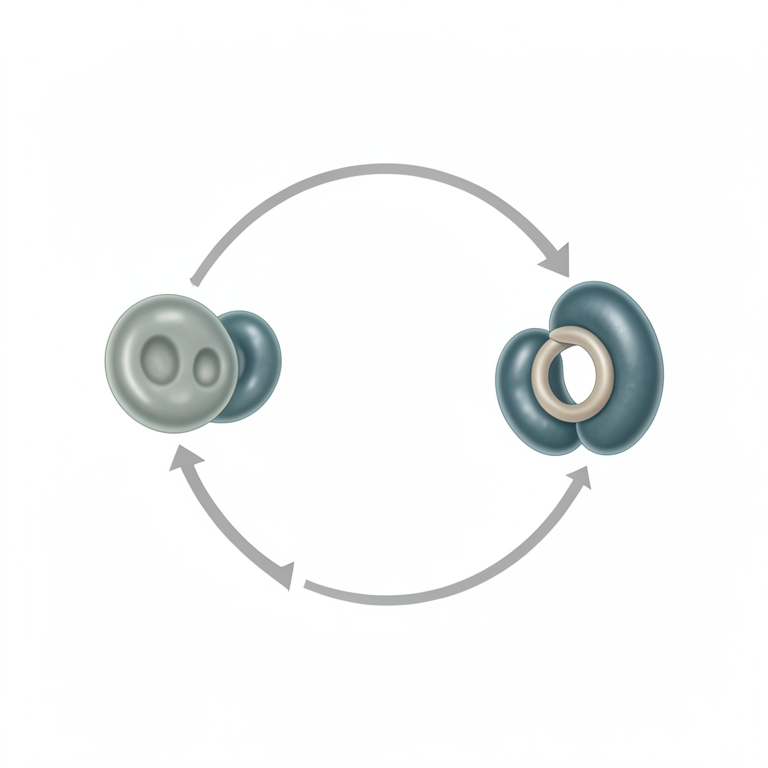
Mitochondrial Dynamics Cycle
AI-generated conceptual illustration (Mitochondria in a eukaryotic cell cytoplasm). It explains the idea and does not show study data.
View source evidence ↗Introduction
Mitochondria are essential organelles that play a critical role in cellular energy production, primarily through oxidative phosphorylation. Beyond their role in generating ATP, mitochondria are also involved in various other cellular processes, including the regulation of metabolic pathways, apoptosis, and calcium homeostasis. The dynamic nature of mitochondria, characterized by continuous cycles of fusion and fission, is crucial for maintaining their function and integrity. These processes, collectively referred to as mitochondrial dynamics, are essential for adapting to metabolic demands, ensuring the distribution of mitochondria during cell division, and facilitating the removal of damaged mitochondria through mitophagy. Mitochondrial fusion involves the merging of two mitochondria to form a single, larger organelle, allowing the mixing of mitochondrial contents, including mitochondrial DNA (mtDNA), proteins, and lipids. This process is mediated by key proteins such as mitofusins (Mfn1 and Mfn2) on the outer mitochondrial membrane (OMM) and optic atrophy 1 (OPA1) on the inner mitochondrial membrane (IMM). These proteins coordinate the tethering and fusion of the mitochondrial membranes, ensuring the exchange of essential components that maintain mitochondrial function and bioenergetic capacity. In contrast, mitochondrial fission is the division of a single mitochondrion into two smaller organelles. This process is crucial for the distribution of mitochondria to daughter cells during cell division and for isolating damaged regions of mitochondria that can be targeted for degradation through mitophagy. The primary protein involved in mitochondrial fission is dynamin-related protein 1 (Drp1), which is recruited to the OMM where it forms a ring-like structure that constricts and divides the mitochondrion. Additional proteins, such as fission 1 (Fis1), mitochondrial fission factor (Mff), and mitochondrial dynamics proteins of 49 and 51 kDa (MiD49 and MiD51), assist in regulating Drp1 activity. The balance between mitochondrial fusion and fission is essential for maintaining mitochondrial health and function. Disruptions in this balance can lead to mitochondrial fragmentation or hyperfusion, both of which are associated with various pathological conditions. For instance, excessive mitochondrial fission can result in fragmented and dysfunctional mitochondria, leading to impaired oxidative phosphorylation, reduced ATP production, and increased production of reactive oxygen species (ROS). These changes can contribute to cellular dysfunction and the development of metabolic disorders. Metabolic disorders, such as obesity, type 2 diabetes, neurodegenerative diseases, and cardio-vascular diseases are characterized by impaired energy metabolism and mitochondrial dysfunction. In these conditions, altered mitochondrial dynamics have been implicated in the pathogenesis and progression of the disease. For example, in obesity and type 2 diabetes, increased mitochondrial fission and decreased fusion contribute to insulin resistance and metabolic dysregulation. In neurodegenerative diseases, such as Alzheimer's and Parkinson's, impaired mitochondrial fusion and excessive fission lead to neuronal dysfunction and cell death. Similarly, in cardiovascular diseases, imbalances in mitochondrial dynamics can result in compromised energy production and increased susceptibility to ischemic damage. Understanding the mechanisms underlying mitochondrial dynamics and their impact on bio-energetics is crucial for developing targeted therapeutic strategies for metabolic disorders. Therapeutic interventions aimed at modulating mitochondrial dynamics, such as pharmacological agents that promote fusion or inhibit fission, as well as lifestyle interventions like exercise and dietary modifications, have shown promise in improving mitochondrial function and metabolic health.
Objective of Paper
The objective of this paper is to review the role of mitochondrial dynamics in cellular bio-energetics and their implications in metabolic disorders. It aims to elucidate the mechanisms of fusion and fission, examine their impact on mitochondrial function, analyze their connection with disorders like obesity and diabetes, and identify potential therapeutic strategies.
Mitochondrial Dynamics
Mitochondrial dynamics encompass the processes of mitochondrial fusion and fission, which are essential for maintaining mitochondrial function, distribution, and quality control within cells. These processes are tightly regulated and play a critical role in cellular homeostasis, energy production, and metabolic regulation. This overview delves into the mechanisms, regulation, and implications of mitochondrial dynamics, highlighting their importance in health and disease. Mitochondrial fusion is the merging of two mitochondria into one, facilitating the exchange of mitochondrial contents such as mitochondrial DNA (mtDNA), proteins, and lipids. This process is mediated by key proteins, including mitofusins (Mfn1 and Mfn2) on the outer mitochondrial membrane (OMM) and optic atrophy 1 (OPA1) on the inner mitochondrial membrane (IMM). Mitofusins initiate the tethering and docking of adjacent mitochondria, forming homo-and hetero-dimers that facilitate OMM fusion. OPA1, which exists in long and short isoforms, regulates IMM fusion and maintains mitochondrial cristae structure, essential for efficient oxidative phosphorylation. Mitochondrial fission, on the other hand, involves the division of a single mitochondrion into two smaller ones. This process is crucial for mitochondrial distribution, especially during cell division, and for the removal of damaged mitochondria through mitophagy. The primary protein involved in fission is dynamin-related protein 1 (Drp1), a cytosolic protein recruited to the OMM. Upon recruitment, Drp1 oligomerizes and forms a ring-like structure around the mitochondrion, constricting and dividing it. Fission 1 (Fis1), mitochondrial fission factor (Mff), and mitochondrial dynamics proteins of 49 and 51 kDa (MiD49 and MiD51) assist in recruiting and regulating Drp1 activity. The balance between mitochondrial fission and fusion is influenced by various factors, including cellular energy status, calcium signaling, and post-translational modifications. Cellular energy status, reflected by ATP levels and reactive oxygen species (ROS), can trigger mitochondrial fission to facilitate the removal of damaged mitochondria. Elevated intracellular calcium levels activate calcium-dependent kinases that phosphorylate Drp1, promoting fission. Posttranslational modifications such as phosphorylation, ubiquitination, and SUMOylation modulate the activity and stability of fusion and fission proteins. For example, phosphorylation of Drp1 at serine 616 enhances its fission activity, while phosphorylation at serine 637 inhibits it. Mitophagy, the selective autophagy of damaged mitochondria, is closely linked to mitochondrial fission. During mitophagy, fission segregates dysfunctional parts of mitochondria, which are then targeted for degradation. This process is vital for maintaining a healthy mitochondrial population and preventing the accumulation of defective mitochondria that could impair cellular function. Mitochondrial dynamics significantly impact cellular bioenergetics and metabolism. Fusion enhances mitochondrial efficiency by optimizing oxidative phosphorylation and maintaining mitochondrial integrity. Studies have shown that enhanced fusion correlates with improved bio-energetic profiles, particularly in tissues with high energy demands such as cardiac and skeletal muscles. Conversely, excessive fission is associated with fragmented mitochondria, reduced ATP production, and increased oxidative stress. Dysregulated mitochondrial dynamics are implicated in various metabolic disorders, including obesity, type 2 diabetes, neurodegenerative diseases, and cardiovascular diseases. In obesity and type 2 diabetes, altered mitochondrial dynamics contribute to insulin resistance and impaired glucose metabolism. Research indicates that insulin-resistant tissues exhibit increased mitochondrial fission and decreased fusion, leading to dysfunctional mitochondria and elevated ROS levels. Neurodegenerative diseases like Alzheimer's and Parkinson's are characterized by mitochondrial dysfunction and altered dynamics. Impaired fusion and excessive fission contribute to neuronal damage and cell death, exacerbating disease progression. In cardiovascular diseases, imbalances in mitochondrial dynamics compromise energy production and increase susceptibility to ischemic damage. Therapeutic strategies targeting mitochondrial dynamics hold potential for treating metabolic disorders. Modulating the activity of fusion and fission proteins through pharmacological agents can restore the balance of mitochondrial dynamics. For instance, mitochondrial division inhibitor 1 (Mdivi-1) inhibits Drp1 activity, promoting fusion and improving mitochondrial function in disease models. Enhancing mitophagy to remove damaged mitochondria can also improve mitochondrial quality and function. Lifestyle interventions such as exercise and dietary modifications positively influence mitochondrial dynamics, promoting fusion and enhancing metabolic health. In conclusion, mitochondrial dynamics are crucial for maintaining cellular homeostasis and regulating metabolic processes. Understanding the mechanisms of mitochondrial fusion and fission, and their impact on bioenergetics and metabolism, provides valuable insights into the pathogenesis of metabolic disorders. Therapeutic strategies targeting mitochondrial dynamics offer promising avenues for treating various diseases, underscoring the importance of this field in biomedical research.
Impact of Mitochondrial Dynamics on Bio-energetics
Mitochondrial dynamics, characterized by the processes of fusion and fission, play a crucial role in the regulation of cellular bio-energetics. These processes enable mitochondria to adapt to metabolic demands, maintain their functional integrity, and optimize energy production. Understanding the impact of mitochondrial dynamics on bio-energetics involves examining how these morphological changes influence mitochondrial function, efficiency, and overall cellular energy metabolism. Mitochondrial fusion promotes the merging of mitochondria, allowing the exchange and mixing of mitochondrial contents such as mitochondrial DNA (mtDNA), proteins, lipids, and metabolites. This process is essential for maintaining mitochondrial function and enhancing bio-energetic efficiency. When mitochondria fuse, they can compensate for localized defects in mtDNA and distribute metabolites more evenly, thus ensuring that the entire mitochondrial network can operate optimally. Enhanced fusion supports the maintenance of a wellorganized mitochondrial cristae structure, which is crucial for the efficient function of the electron transport chain (ETC) and ATP synthesis. Studies have shown that mitochondrial fusion is associated with increased oxidative phosphorylation capacity and improved ATP production. For example, cardiac and skeletal muscles, which have high energy demands, exhibit high levels of mitochondrial fusion, correlating with their robust bio-energetic profiles. Conversely, mitochondrial fission involves the division of a single mitochondrion into smaller, discrete units. This process is essential for the distribution of mitochondria during cell division and for the removal of damaged mitochondria through mitophagy. While fission is necessary for maintaining mitochondrial quality control, excessive fission can lead to mitochondrial fragmentation, impairing mitochondrial function and reducing bio-energetic efficiency. Fragmented mitochondria have a disrupted cristae structure, which compromises the function of the ETC and ATP synthase, leading to decreased ATP production and increased production of reactive oxygen species (ROS). High levels of ROS can cause further mitochondrial damage, creating a vicious cycle that exacerbates bio-energetic deficits. The balance between fusion and fission is critical for maintaining mitochondrial function and bio-energetic homeostasis. Under conditions of increased energy demand or stress, cells may modulate mitochondrial dynamics to optimize energy production. For instance, during periods of high metabolic activity, such as exercise, mitochondrial fusion is upregulated to enhance ATP synthesis and support sustained energy production. Conversely, in response to mitochondrial damage or dysfunction, fission is upregulated to segregate and remove defective mitochondria via mitophagy, thereby preventing the accumulation of dysfunctional organelles that could impair cellular metabolism. Disruptions in mitochondrial dynamics are implicated in various metabolic disorders, highlighting their impact on bio-energetics. In obesity and type 2 diabetes, for example, altered mitochondrial dynamics contribute to insulin resistance and metabolic dysfunction. Insulin-resistant tissues often exhibit increased mitochondrial fission and decreased fusion, leading to fragmented mitochondria with reduced oxidative phosphorylation capacity. This bio-energetic impairment is associated with decreased ATP production and increased ROS levels, contributing to the development and progression of metabolic diseases. In neurodegenerative diseases such as Alzheimer's and Parkinson's, impaired mitochondrial dynamics are linked to neuronal bio-energetic deficits and cell death. Neurons rely heavily on mitochondrial function for ATP production and calcium homeostasis. Dysregulated mitochondrial fusion and fission in these diseases lead to mitochondrial fragmentation, reduced ATP synthesis, and increased oxidative stress, contributing to neurodegeneration and cognitive decline. Cardiovascular diseases also illustrate the impact of mitochondrial dynamics on bio-energetics. Cardiomyocytes, the cells of the heart muscle, require a continuous supply of ATP to sustain contractile function. Altered mitochondrial dynamics in cardiovascular diseases can lead to mitochondrial dysfunction, compromised ATP production, and increased susceptibility to ischemic injury. Therapeutic strategies aimed at restoring the balance of mitochondrial fusion and fission hold the potential for improving bio-energetic efficiency and treating metabolic and degenerative diseases.
Mitochondrial Dynamics in Metabolic Disorders
Mitochondrial dynamics, involving the processes of fusion and fission, are essential for maintaining mitochondrial function and cellular homeostasis. Dysregulation of these dynamics is increasingly recognized as a critical factor in the development and progression of various metabolic disorders, including obesity, type 2 diabetes, neurodegenerative diseases, and cardiovascular diseases. The intricate balance between mitochondrial fusion and fission influences cellular energy production, oxidative stress, and metabolic signaling, all of which are crucial for metabolic health. In obesity and type 2 diabetes, mitochondrial dysfunction is a hallmark feature, often characterized by an imbalance in mitochondrial dynamics. In insulin-resistant tissues, such as skeletal muscle and adipose tissue, there is a tendency toward increased mitochondrial fission and decreased fusion. This shift leads to the presence of fragmented and dysfunctional mitochondria, which are less efficient at oxidative phosphorylation and ATP production. The reduced bioenergetic capacity of these mitochondria contributes to impaired glucose uptake and utilization, exacerbating hyperglycemia and insulin resistance. Moreover, fragmented mitochondria generate higher levels of reactive oxygen species (ROS), which can further damage cellular components and exacerbate insulin resistance through oxidative stress pathways. Neurodegenerative diseases, such as Alzheimer's and Parkinson's, are also profoundly affected by mitochondrial dynamics. Neurons, which have high energy demands, rely heavily on mitochondrial function for ATP production and calcium homeostasis. In these diseases, dysregulated mitochondrial dynamics result in excessive fission and impaired fusion, leading to mitochondrial fragmentation. Fragmented mitochondria in neurons are associated with reduced respiratory chain activity and ATP production, contributing to neuronal dysfunction and death. Additionally, the accumulation of damaged mitochondria and increased ROS production exacerbates oxidative stress and mitochondrial DNA damage, further promoting neurodegeneration.
Therapeutic strategies targeting
Conclusion
Mitochondrial dynamics, encompassing the continuous processes of fusion and fission, are fundamental to maintaining mitochondrial function and cellular homeostasis. The balance between these dynamic processes ensures optimal mitochondrial morphology, distribution, and quality control, which are critical for efficient energy production and metabolic regulation. Dysregulation of mitochondrial dynamics has emerged as a key factor in the pathogenesis of various metabolic disorders, including obesity, type 2 diabetes, neurodegenerative diseases, cardiovascular diseases, and non-alcoholic fatty liver disease. In metabolic disorders, an imbalance in mitochondrial fusion and fission leads to mitochondrial fragmentation, dysfunction, and impaired bio-energetic capacity. This disruption in mitochondrial dynamics contributes to decreased ATP production, increased reactive oxygen species (ROS) generation, and elevated oxidative stress, exacerbating metabolic dysfunction and disease progression. In insulin-resistant tissues, excessive fission and reduced fusion result in impaired glucose metabolism and increased ROS, contributing to the development of type 2 diabetes. In neurodegenerative diseases, fragmented mitochondria in neurons are associated with reduced respiratory chain activity and neuronal death, while in cardiovascular diseases, altered dynamics lead to compromised energy production and cardiac dysfunction. Restoring the balance of mitochondrial dynamics holds significant therapeutic potential. Pharmacological modulation of fusion and fission proteins, enhancing mitophagy to remove damaged mitochondria, and lifestyle interventions such as exercise and dietary modifications can improve mitochondrial function and metabolic health. Targeting mitochondrial dynamics offers promising avenues for mitigating the effects of metabolic disorders and improving patient outcomes. In conclusion, the intricate balance of mitochondrial dynamics is essential for metabolic regulation and cellular health. Dysregulation of these processes plays a crucial role in the development and progression of metabolic disorders. Continued research into the mechanisms of mitochondrial dynamics and the development of targeted therapies will be vital for advancing our understanding and treatment of these complex diseases.
References
14 in the original paper- Liesa M, Palacín M, Zorzano A. Mitochondrial dynamics in mammalian health and disease. Physiological Reviews. 2009;89(3):799-845.
- Youle RJ, van der Bliek AM. Mitochondrial fission, fusion, and stress. Science. 2012;337(6098):1062-1065.
- Friedman JR, Nunnari J. Mitochondrial form and function. Nature. 2014;505(7483):335-343.
- Wai T, Langer T. Mitochondrial dynamics and metabolic regulation. Trends in Endocrinology & Metabolism. 2016;27(2):105-117.
- Perry CGR, Lally J, Holloway GP, Heigenhauser GJF, Bonen A, Spriet LL. Repeated transient mRNA bursts precede increases in transcriptional and mitochondrial proteins during training in human skeletal muscle. Journal of Physiology. 2010;588(23):4795-4810.
- Twig G, Elorza A, Molina AJ, Mohamed H, Wikstrom JD, Walzer G, et al. Fission and selective fusion govern mitochondrial segregation and elimination by autophagy. EMBO Journal. 2008;27(2):433-446.
- Sebastian D, Sorianello E, Segales J, Irazoki A, RuizBonilla V, Sala D, et al. Mfn2 deficiency links mitochondrial dysfunction to insulin resistance in skeletal muscle. Nature. 2012;491(7424):109-113.
- Chan DC. Mitochondrial dynamics and its involvement in disease. Annual Review of Pathology. 2020;15(1):235-259.
- Westermann B. Mitochondrial fusion and fission in cell life and death. Nature Reviews Molecular Cell Biology. 2010;11(12):872-884.
- Dorn GW. Mitochondrial dynamics in heart disease. Biochimica et Biophysica Acta (BBA) -Molecular Cell Research. 2013;1833(1):233-241.
- Archer SL. Mitochondrial dynamics -mitochondrial fission and fusion in human diseases. New England Journal of Medicine. 2013;369(23):2236-2251.
- Schrepfer E, Scorrano L. Mitofusins, from mitochondria to metabolism. Molecular Cell. 2016;61(5):683-694.
- Cunniff B, McKenzie AJ, Heintz NH, Howe AK. AMPK activity regulates the trafficking of mitochondria to the leading edge during cell migration and matrix invasion. Molecular Biology of the Cell. 2016;27(17):2662-2674.
- Shutt TE, McBride HM. Keeping the engine in shape: mitochondrial dynamics, bio-energetics, and the morphology of health and disease. Annual Review of Biochemistry. 2013;82:403-436.