
Research article · 2023 · Full text
International Journal of Biology SciencesThe role of small RNAS in regulating disease resistance in plants
Volume 5(2) · Pages 109–112 · DOI: 10.33545/26649926.2023.v5.i2b.219 ↗
Research areasPlant Disease Resistance and GeneticsAgronomic Practices and Intercropping SystemsPlant Molecular Biology Research
Abstract
Author-writtenSmall RNAs (sRNAs) have emerged as crucial regulators of gene expression in plants, playing significant roles in various biological processes, including disease resistance. This paper provides a comprehensive overview of the mechanisms by which sRNAs, including microRNAs (miRNAs) and small interfering RNAs (siRNAs), regulate plant immune responses. We discuss the biogenesis and functional roles of these sRNAs, highlighting recent advancements in understanding their contributions to plant-pathogen interactions. Furthermore, we explore the potential of sRNA-based strategies for enhancing disease resistance in crops, addressing the challenges and future directions in this rapidly evolving field.
Summary
Source-checkedPlain-language reading of the full paper, prepared with AI and checked against the text. Each point links to the authors' own words.
Why it matters
- Pathogens such as bacteria, fungi, viruses, and nematodes cause significant agricultural yield losses, which threatens global food security. View evidence ↗
- Conventional approaches to crop resistance, including chemical pesticides and selective breeding, are often insufficient because of environmental issues, time requirements, and the ability of pathogens to adapt. View evidence ↗
- Small RNAs (sRNAs) are key regulators of gene expression that affect various biological functions, including immune regulation and stress responses. View evidence ↗
The question
- The paper aims to explain how sRNAs regulate plant disease resistance, focusing on their biogenesis, functions, and potential for improving crop resilience via biotechnology. View evidence ↗
What they did
- The review categorizes sRNAs as non-coding molecules typically 20-24 nucleotides long, divided into microRNAs (miRNAs) and small interfering RNAs (siRNAs). View evidence ↗
- Both miRNAs and siRNAs operate by guiding RNA-induced silencing complexes (RISCs) to complementary mRNAs, leading to either translational repression or mRNA degradation. View evidence ↗
- miRNA biogenesis starts with RNA polymerase II transcribing pri-miRNAs into hairpin structures, which are then processed in the nucleus by DCL1, HYL1, and SE. View evidence ↗
- siRNAs are produced from long double-stranded RNA (dsRNA) precursors, sourced from transposons, endogenous loci, or viral replication, which are processed by Dicer-like (DCL) enzymes. View evidence ↗
What they found
- In tomato plants, miR482 and miR2118 modulate resistance to Phytophthora infestans by regulating the levels of NLR resistance (R) genes. View evidence ↗
- The upregulation of miR393 during pathogen infection suppresses auxin signaling by targeting F-box protein transcripts, allowing the plant to prioritize defense over growth. View evidence ↗
- In rice, phased secondary siRNAs (phasiRNAs) enhance resistance to bacterial pathogens by regulating genes that normally inhibit immunity. View evidence ↗
- sRNAs contribute to transgenerational immune priming, enabling plants to pass enhanced resistance to their offspring via epigenetic modifications. View evidence ↗
- Using CRISPR-Cas9 to knock out miRNA genes that suppress R genes can increase R gene expression and improve overall pathogen resistance. View evidence ↗
- Applying synthetic sRNAs externally to target pathogen genes is a potential strategy for protecting crops against viral infections. View evidence ↗
What it means
- The authors conclude that sRNAs are essential components of plant immunity, offering complex regulatory mechanisms that improve disease resistance. View evidence ↗
- The authors recommend continued research into sRNA pathways to develop innovative agricultural solutions for crop protection and productivity. View evidence ↗
Visual summary
1 visualsIllustrations explain the paper; they do not show study data.
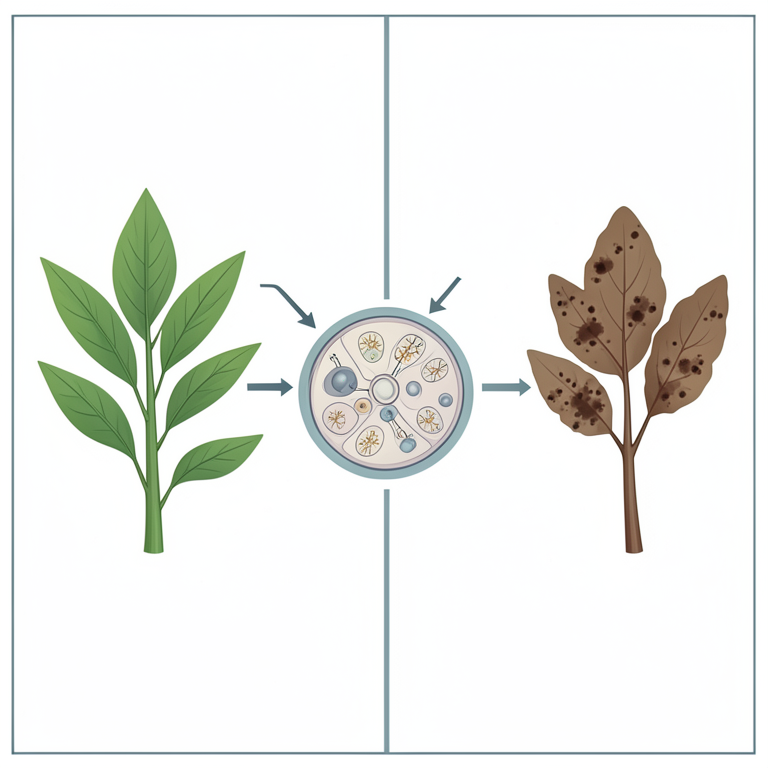
Study overview
AI-generated conceptual illustration (Arabidopsis thaliana plants). It explains the idea and does not show study data.
View source evidence ↗Introduction
Plant diseases caused by various pathogens, including bacteria, fungi, viruses, and nematodes, present significant challenges to global agriculture, leading to substantial yield losses and threatening food security. Traditional methods for developing disease-resistant crop varieties, such as selective breeding and the use of chemical pesticides, often fall short due to time constraints, pathogen adaptation, and environmental concerns. Consequently, there is an urgent need for innovative approaches to enhance disease resistance in plants. Small RNAs (sRNAs) have emerged as pivotal regulators of gene expression, influencing a multitude of biological processes, including development, stress responses, and immune regulation. These short, non-coding RNA molecules, typically 20-24 nucleotides in length, can be broadly categorized into two main classes: microRNAs (miRNAs) and small interfering RNAs (siRNAs). Both types of sRNAs function through RNA-induced silencing complexes (RISCs), guiding these complexes to complementary messenger RNAs (mRNAs) to trigger mRNA degradation or translational repression. The discovery and characterization of miRNAs and siRNAs have revolutionized our understanding of post-transcriptional gene regulation in plants. MiRNAs are derived from single-stranded RNA precursors that form hairpin structures, which are processed by Dicer-like enzymes to produce mature miRNA duplexes. These mature miRNAs play crucial roles in modulating the expression of genes involved in plant immunity, development, and hormonal signaling pathways. SiRNAs, on the other hand, originate from double-stranded RNA (dsRNA) precursors and are similarly processed by Dicer-like enzymes. SiRNAs are primarily involved in antiviral defense, transposon silencing, and the regulation of endogenous genes. Research over the past decade has significantly advanced our understanding of the roles of sRNAs in plant immunity. Studies have demonstrated that sRNAs can fine-tune the expression of resistance (R) genes, which encode proteins responsible for recognizing pathogen-derived molecules and initiating defense responses. For example, in tomato, miR482 and miR2118 regulate the levels of nucleotide-binding leucine-rich repeat (NLR) R genes, thereby modulating the plant's resistance to pathogens such as Phytophthora infestans. Similarly, siRNAs have been shown to participate in the amplification of immune signals through the production of phased secondary siRNAs (phasiRNAs), which target additional defense-related mRNAs.
Main objective
The main objective of this paper is to explore and elucidate the mechanisms by which small RNAs (sRNAs) regulate disease resistance in plants, highlighting their biogenesis, functional roles, and potential applications in enhancing crop resilience through genetic and biotechnological approaches.
Biogenesis and types of small RNAs
Small RNAs (sRNAs) are crucial regulators of gene expression in plants, playing significant roles in various biological processes, including development, stress responses, and disease resistance. They are short, noncoding RNA molecules, typically 20-24 nucleotides in length, and can be broadly categorized into microRNAs (miRNAs) and small interfering RNAs (siRNAs).
Understanding their biogenesis and functional roles is essential for appreciating how plants regulate gene expression at the post-transcriptional level. The biogenesis of miRNAs begins with the transcription of miRNA genes by RNA polymerase II, producing primary miRNAs (pri-miRNAs) that form characteristic hairpin structures. These pri-miRNAs are processed in the nucleus by a protein complex involving Dicer-like 1 (DCL1), Hyponastic Leaves 1 (HYL1), and Serrate (SE). This processing results in precursor miRNAs (pre-miRNAs), which are further cleaved by DCL1 to generate mature miRNA duplexes. One strand of the duplex, known as the guide strand, is incorporated into the RNA-induced silencing complex (RISC), while the other strand is typically degraded. The mature miRNA within the RISC then guides the complex to complementary target mRNAs, leading to their degradation or translational repression. For example, the interplay between miRNAs and phytohormone signaling pathways has been extensively studied, revealing how sRNAs fine-tune plant responses to biotic and abiotic stresses. The role of siRNAs in transgenerational inheritance of stress responses and epigenetic regulation has also emerged as a significant area of research, demonstrating how plants can pass on acquired resistance to offspring. These advancements underscore the dynamic and multifaceted nature of sRNA-mediated regulation in plants. The detailed understanding of sRNA biogenesis and function not only provides insights into fundamental biological processes but also opens up new avenues for developing innovative strategies for crop improvement. By leveraging sRNA-based approaches, it is possible to enhance disease resistance, stress tolerance, and overall plant productivity, contributing to sustainable agriculture and food security. In summary, the biogenesis of miRNAs and siRNAs involves complex and tightly regulated processes that are essential for their function as gene expression regulators. Advances in high-throughput sequencing and molecular biology techniques have significantly expanded our understanding of these pathways, revealing new layers of complexity and regulation. These insights pave the way for novel applications in plant biotechnology and crop improvement, highlighting the potential of sRNAs as powerful tools for enhancing plant health and productivity.
Comparative studies
Early research laid the groundwork for understanding the basic mechanisms of sRNA biogenesis and function. For instance, Reinhart et al. (2002) [7] provided foundational insights into the identification and characterization of miRNAs in Arabidopsis. The discovery of Dicer and Argonaute proteins as core components of the RNAi machinery by Bernstein et al. (2001) [8] and Hammond et al.
(2001) [9] respectively, were pivotal in establishing the biochemical pathways involved in sRNA function.
Recent studies have expanded our knowledge by uncovering additional layers of complexity in sRNA biogenesis and function. Advances in high-throughput sequencing technologies have enabled the identification of numerous novel miRNAs and siRNAs across various plant species, revealing a broader diversity of sRNA pathways. For instance, the work of Axtell et al. (2011) [10] on phased siRNAs (phasiRNAs) in rice and their role in amplifying gene silencing signals highlighted the sophisticated regulatory capabilities of sRNAs. Furthermore, the interplay between sRNAs and other regulatory networks, such as hormone signaling pathways and epigenetic modifications, has been increasingly recognized. Research by Li et al. (2012) [11] demonstrated how miRNAs interact with salicylic acid (SA) and jasmonic acid (JA) pathways to modulate immune responses, providing a deeper understanding of the crosstalk between different regulatory systems in plants.
Small RNAs in regulating disease resistance in plants
Small RNAs (sRNAs) have emerged as critical regulators of gene expression in plants, playing pivotal roles in orchestrating disease resistance. These sRNAs, including microRNAs (miRNAs) and small interfering RNAs (siRNAs), act by guiding RNA-induced silencing complexes (RISCs) to target messenger RNAs (mRNAs), resulting in mRNA degradation or translational repression. The intricate regulatory networks mediated by sRNAs enable plants to mount effective defense responses against a wide array of pathogens, including bacteria, fungi, viruses, and nematodes.
The role of miRNAs in disease resistance involves the finetuning of gene expression related to immune responses. For instance, miRNAs can modulate the levels of resistance (R) genes, which are responsible for recognizing pathogen effectors and activating downstream defense mechanisms. One well-studied example is miR482 and miR2118 in tomato, which target transcripts of nucleotide-binding leucine-rich repeat (NLR) R genes. During pathogen attack, the downregulation of these miRNAs leads to an increase in NLR transcript levels, enhancing the plant's defensive capacity. This regulation is crucial for balancing immune responses to avoid unnecessary energy expenditure and potential autoimmunity.
In comparison, siRNAs primarily function in silencing viral RNA and regulating transposons, but they also play significant roles in plant immunity. For example, the generation of phased siRNAs (phasiRNAs) involves an initial miRNA-triggered cleavage of a precursor RNA, followed by the production of secondary siRNAs in a phased manner. These phasiRNAs amplify the silencing signal and target additional mRNAs involved in defense responses. In rice, phasiRNAs have been shown to regulate genes that negatively control immunity, thereby enhancing resistance to bacterial pathogens. Previous studies have laid the groundwork for understanding the basic mechanisms of sRNA function in plant immunity. Early research identified several miRNAs and siRNAs involved in stress responses and provided insights into their biogenesis and target recognition. For instance, initial studies in Arabidopsis thaliana demonstrated that miR393 targets transcripts encoding F-box proteins, which are involved in auxin signaling. Upon pathogen infection, the upregulation of miR393 suppresses auxin signaling, thereby prioritizing defense responses over growth.
Recent advancements have further elucidated the complex interactions between sRNAs and other regulatory pathways. High-throughput sequencing technologies have facilitated the discovery of numerous sRNAs and their targets, revealing a broader spectrum of sRNA-mediated regulation than previously known. For example, the interplay between miRNAs and hormonal pathways such as salicylic acid (SA), jasmonic acid (JA), and ethylene (ET) signaling has been extensively studied. These hormones are crucial for modulating immune responses, and their signaling pathways are tightly regulated by miRNAs. The dynamic regulation of hormonal pathways by miRNAs allows plants to fine-tune their defense responses according to the type and intensity of the pathogen attack. Moreover, the role of sRNAs in transgenerational immune priming has emerged as a fascinating area of research. Plants exposed to certain pathogens can pass on acquired resistance traits to their progeny through sRNA-mediated epigenetic modifications. This form of transgenerational memory enhances the ability of subsequent generations to respond more robustly to similar threats, providing an evolutionary advantage. The practical applications of sRNA knowledge in crop improvement have also seen significant progress. Genetic engineering techniques, such as CRISPR-Cas9, have been employed to manipulate sRNA pathways for enhanced disease resistance. For example, CRISPR-Cas9 has been used to knock out miRNA genes that suppress R genes, thereby increasing the expression of R genes and improving resistance to pathogens. Additionally, exogenous application of synthetic sRNAs targeting pathogen genes has shown promise in protecting crops from viral infections. In summary, small RNAs are integral to the regulation of disease resistance in plants, modulating a wide range of genes and pathways involved in immune responses. The advancements in understanding sRNA functions and interactions have significantly expanded our knowledge of plant immunity, highlighting the complexity and sophistication of sRNA-mediated regulation. These insights not only enhance our fundamental understanding of plant biology but also pave the way for innovative strategies in crop protection and improvement, contributing to sustainable agricultural practices and global food security.
Conclusion
Conclusion
References
9 in the original paper- Kurihara Y, Watanabe Y. Arabidopsis micro-RNA biogenesis through Dicer-like 1 protein functions. Proc. Natl. Acad. Sci. USA. 2004;101(34):12753-12758. DOI:10.1073/pnas.0402769101.
- Baumberger N, Baulcombe DC. Arabidopsis ARGONAUTE1 Is an RNA Slicer that Selectively Recruits MicroRNAs and Short Interfering RNAs. Proc. Natl. Acad. Sci. USA. 2005;102(33):11928-11933. DOI:10.1073/pnas.0505499102.
- Hamilton AJ, Baulcombe DC. A Species of Small Antisense RNA in Posttranscriptional Gene Silencing in Plants. Science. 1999;286(5441):950-952. DOI:10.1126/science.286.5441.950.
- Fire A, Xu S, Montgomery MK, Kostas SA, Driver SE, Mello CC. Potent and Specific Genetic Interference by Double-Stranded RNA in Caenorhabditis elegans. Nature. 1998;391(6669):806-811. DOI:10.1038/35888.
- Reinhart BJ, Weinstein EG, Rhoades MW, Bartel B, Bartel DP. MicroRNAs in Plants. Genes Dev. 2002;16(13):1616-1626. DOI:10.1101/gad.1004402.
- Bernstein E, Caudy AA, Hammond SM, Hannon GJ. Role for a bidentate ribonuclease in the initiation step of RNA interference. Nature. 2001;409(6818):363-366. DOI:10.1038/35053110.
- Hammond SM, Bernstein E, Beach D, Hannon GJ. An RNA-directed nuclease mediates post-transcriptional gene silencing in Drosophila cells. Nature. 2001;404(6775):293-296. DOI:10.1038/35005107.
- Axtell MJ, Jan C, Rajagopalan R, Bartel DP. A TwoHit Trigger for siRNA Biogenesis in Plants. Cell. 2006;127(3):565-577. DOI:10.1016/j.cell.2006.09.032.
- Li Y, Zhang Q, Zhang J, Wu L, Qi Y, Zhou JM. Identification of microRNAs involved in pathogenassociated molecular pattern-triggered plant innate immunity. Plant Physiol. 2010;152(4):2222-2231. DOI:10.1104/pp.109.151803.