
Research article · 2023 · Full text
International Journal of Biology SciencesEvaluating the toxicological impacts of cobalt, copper, and cadmium on seed germination
Volume 5(2) · Pages 121–124 · DOI: 10.33545/26649926.2023.v5.i2b.221 ↗
Research areasSeed Germination and Physiology
Abstract
Author-writtenHeavy metals such as cobalt (Co), copper (Cu), and cadmium (Cd) are environmental pollutants that can have detrimental effects on plant growth and development. This study evaluates the toxicological impacts of Co, Cu, and Cd on seed germination in three plant species: radish (Raphanus sativus), lettuce (Lactuca sativa), and wheat (Triticum aestivum). We examined germination rates, seedling growth parameters, and morphological changes under varying concentrations of these metals. The findings provide insights into the phytotoxic mechanisms of these heavy metals and their implications for agricultural productivity and environmental health.
Summary
Source-checkedPlain-language reading of the full paper, prepared with AI and checked against the text. Each point links to the authors' own words.
Why it matters
- Human activities such as mining and the use of certain fertilizers have increased heavy metal concentrations in soil, creating a critical environmental issue. View evidence ↗
- Heavy metals are harmful to plants because they disrupt essential processes like photosynthesis and nutrient uptake. View evidence ↗
- Radish, lettuce, and wheat are significant agricultural crops that respond differently to heavy metal stress. View evidence ↗
The question
- The study aims to investigate how cobalt (Co), copper (Cu), and cadmium (Cd) affect the germination and growth of radish, lettuce, and wheat seedlings. View evidence ↗
What they did
- Seeds were exposed to four concentrations of each metal: 0 µM (control), 10 µM, 50 µM, and 100 µM. View evidence ↗
- The experiment used three replicates per treatment, with each petri dish containing 20 seeds. View evidence ↗
- Seeds were grown for 10 days in a growth chamber at 25 °C with a 12-hour light/dark cycle. View evidence ↗
- The researchers measured root length, shoot length, and fresh weight to evaluate seedling growth. View evidence ↗
What they found
- Cadmium at 100 µM completely inhibited seed germination (0%) for radish, lettuce, and wheat. View evidence ↗
- Cobalt at 100 µM reduced germination rates from control levels (92-95%) to 48-55% across the three species. View evidence ↗
- Copper at 100 µM significantly reduced average root length, with radish decreasing from 8.0 cm (control) to 3.5 cm. View evidence ↗
- Cobalt at 100 µM reduced average shoot length, with lettuce decreasing from 11.5 cm (control) to 5.0 cm. View evidence ↗
- Copper at 100 µM reduced the average fresh weight of seedlings, with lettuce dropping from 2.3 g (control) to 0.5 g. View evidence ↗
- High concentrations of cobalt and copper caused chlorosis (yellowing of leaves), which indicates impaired chlorophyll synthesis. View evidence ↗
- Root browning, a marker of oxidative stress, was most severe in seedlings treated with cadmium. View evidence ↗
What it means
- The authors conclude that cadmium is the most toxic of the three metals, as it completely stops germination and growth at high concentrations. View evidence ↗
- The authors recommend exploring phytoremediation and metal-tolerant plant varieties to manage contaminated soils. View evidence ↗
- The authors state that more research is needed to understand the specific mechanisms of toxicity and to create practical soil management solutions. View evidence ↗
Visual summary
3 visualsIllustrations explain the paper; charts are replotted from the paper's own table values.
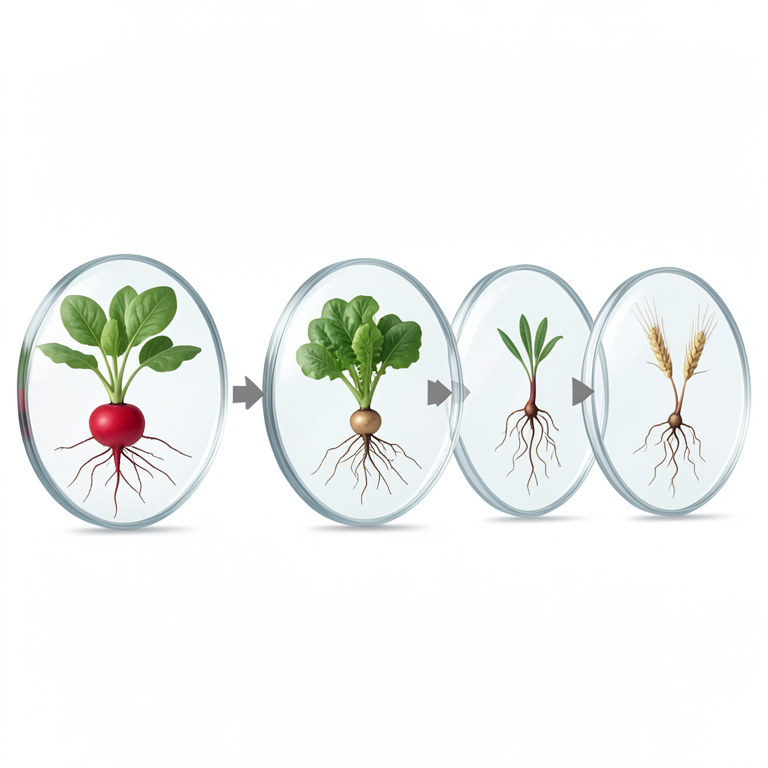
Experimental Setup
AI-generated conceptual illustration (radish, lettuce, and wheat seeds in petri dishes). It explains the idea and does not show study data.
View source evidence ↗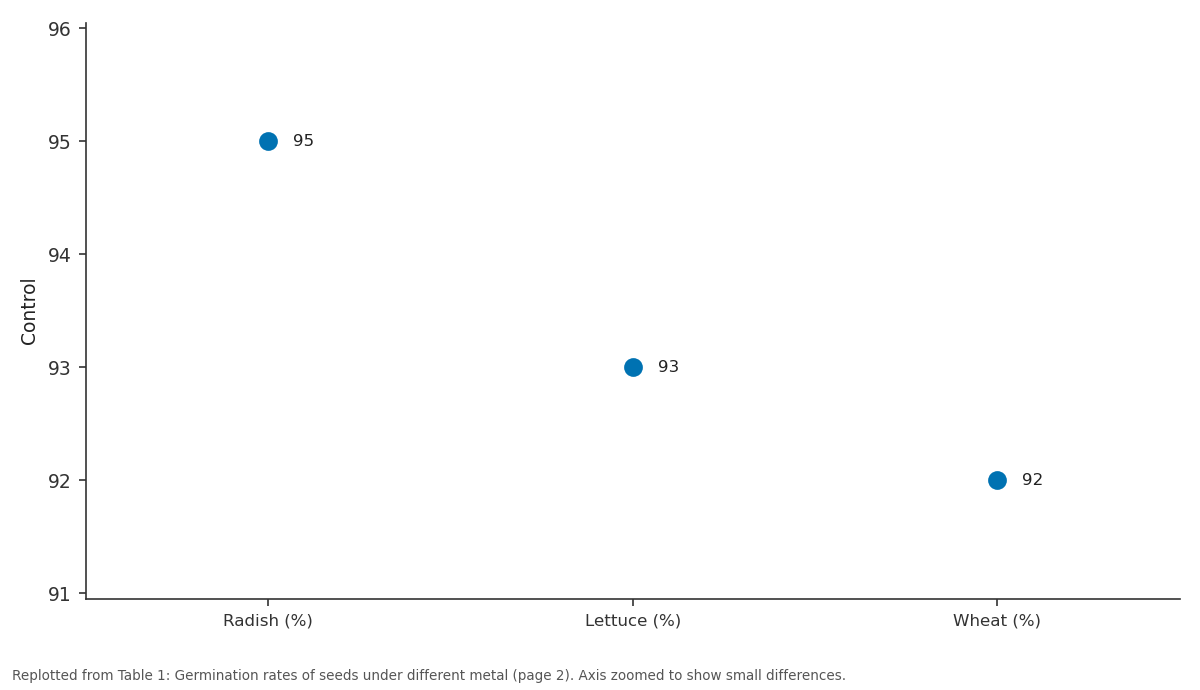
Control: Radish (%) vs Lettuce (%) vs Wheat (%)
Replotted from Table 1 (page 2) of the original paper. Every bar is the paper's own table value.
View source evidence ↗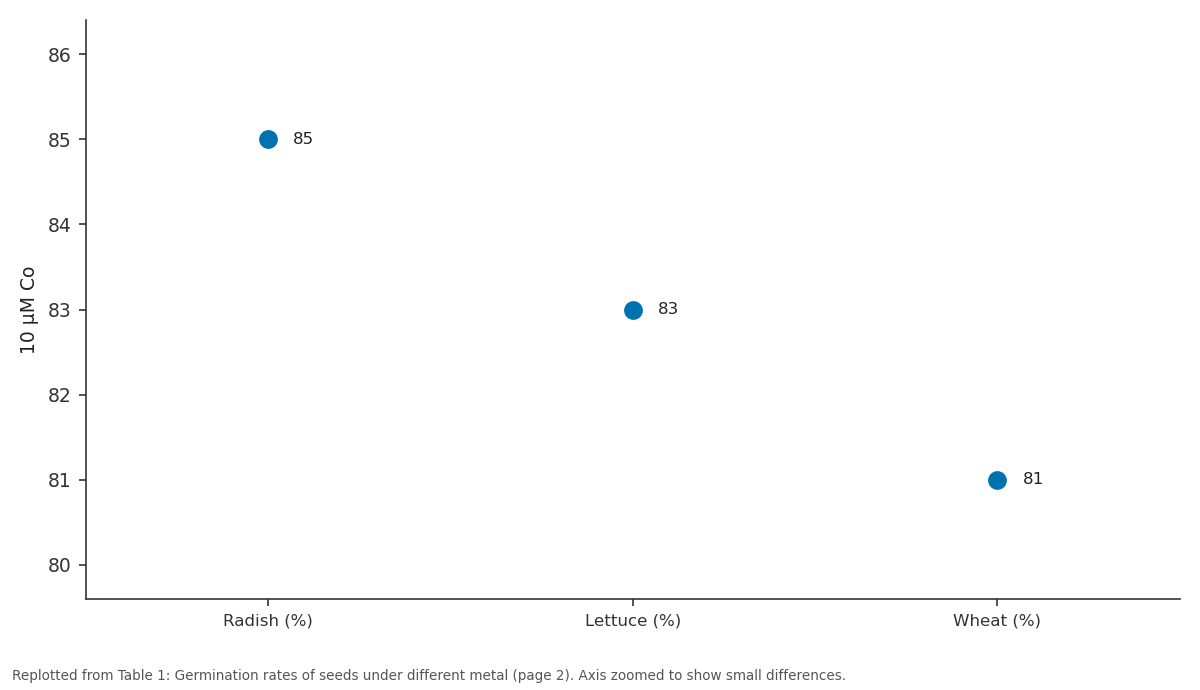
10 µM Co: Radish (%) vs Lettuce (%) vs Wheat (%)
Replotted from Table 1 (page 2) of the original paper. Every bar is the paper's own table value.
View source evidence ↗Figures & tables
From the original paper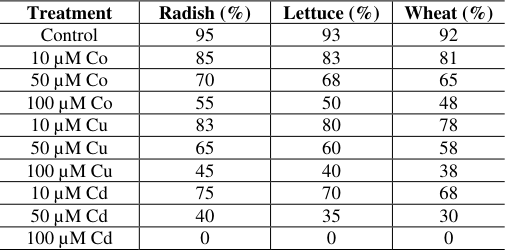 Table 1
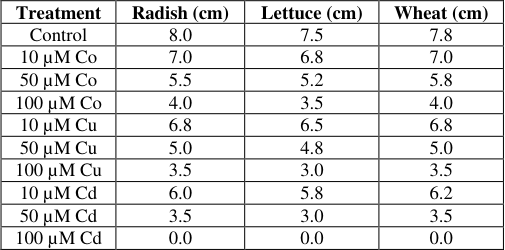 Table 2
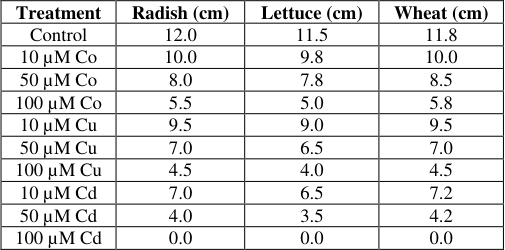 Table 3
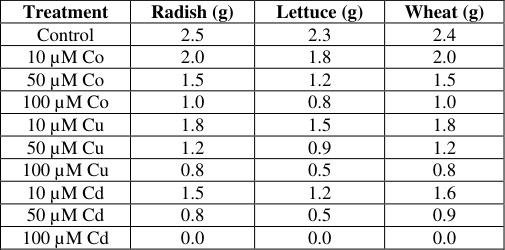 Table 4
Introduction
Heavy metals are naturally occurring elements that have a high atomic weight and a density at least five times greater than that of water. These metals, such as cobalt (Co), copper (Cu), and cadmium (Cd), are essential in various industrial, agricultural, and technological applications. However, their presence in the environment, particularly in soils, poses significant challenges to plant growth and agricultural productivity. Anthropogenic activities, including mining, smelting, industrial discharge, and the use of metal-containing pesticides and fertilizers, have led to increased concentrations of heavy metals in soils. This contamination has become a critical environmental issue due to the toxic effects of heavy metals on plants, animals, and humans. Plants are particularly vulnerable to heavy metal stress, which can adversely affect their growth, development, and productivity. Heavy metals interfere with various physiological and biochemical processes in plants, including nutrient uptake, photosynthesis, and enzyme activities. The extent of damage depends on the type and concentration of the metal, the plant species, and the duration of exposure. Understanding the specific effects of different heavy metals on plant growth is crucial for developing strategies to mitigate their impact and ensure sustainable agricultural practices. Radish (Raphanus sativus), lettuce (Lactuca sativa), and wheat (Triticum aestivum) are important agricultural crops with varying sensitivities to heavy metal stress. Radish and lettuce are commonly used as model plants in phytotoxicity studies due to their rapid germination and growth, while wheat is a staple crop with significant economic importance. Studying the effects of heavy metals on these species provides valuable insights into the broader impact of soil contamination on crop health and productivity. Cobalt (Co) is an essential micronutrient for plants, required in small amounts for various metabolic processes, including nitrogen fixation in legumes. However, at higher concentrations, it can become toxic, causing symptoms such as stunted growth, chlorosis, and root browning. Copper (Cu) is another essential micronutrient involved in photosynthesis, respiration, and the formation of lignin in plant cell walls. Excessive copper levels, however, can lead to oxidative stress, enzyme inhibition, and damage to cellular structures. Cadmium (Cd) is a non-essential heavy metal that is highly toxic even at low concentrations. It interferes with water and nutrient uptake, disrupts photosynthesis, and induces oxidative stress, leading to severe growth inhibition and morphological abnormalities. This study aims to investigate the effects of Co, Cu, and Cd on the germination and seedling growth of radish, lettuce, and wheat. By exposing seeds to different concentrations of these metals, we seek to understand their impact on germination rates, root length, shoot length, and fresh weight. Additionally, we will document any morphological changes such as chlorosis and root browning to assess the overall health of the seedlings. The findings of this study will contribute to our understanding of heavy metal toxicity in plants and inform strategies to manage contaminated soils and protect crop health.
Main Objective
The main objective of this study is to evaluate the effects of cobalt (Co), copper (Cu), and cadmium (Cd) on the germination and seedling growth of radish (Raphanus sativus), lettuce (Lactuca sativa), and wheat (Triticum aestivum) to understand the impact of heavy metal stress on these agriculturally important crops.
Materials and Methods
Seeds of radish (Raphanus sativus), lettuce (Lactuca sativa), and wheat (Triticum aestivum) were selected due to their varying sensitivities to heavy metal stress and their agricultural importance. The seeds were surface-sterilized using a 5% sodium hypochlorite solution for 10 minutes, followed by thorough rinsing with distilled water to remove any residual chemicals. This sterilization process ensured that the seeds were free from microbial contaminants. The experimental design involved exposing the seeds to different concentrations of cobalt (Co), copper (Cu), and cadmium (Cd) solutions prepared from their respective nitrate salts (Co(NO 3 ) 2 , Cu(NO 3 ) 2 , and Cd(NO 3 ) 2 ). The metal concentrations used were 0 µM (control), 10 µM, 50 µM, and 100 µM for each metal. Distilled water served as the control treatment. Seeds were placed in petri dishes lined with filter paper, which was moistened with 5 mL of the respective metal solutions. Each treatment was replicated three times, with 20 seeds per petri dish to ensure statistical reliability. The petri dishes were incubated in a growth chamber set at 25 °C with a 12-hour light/dark cycle for 10 days. This controlled environment facilitated consistent germination and seedling growth conditions across all treatments. Germination rates were recorded daily, and the final germination percentage was calculated on the 10th day. Seedling growth parameters, including root length, shoot length, and fresh weight, were measured. Morphological changes, such as chlorosis and root browning, were also documented. For statistical analysis, one-way analysis of variance (ANOVA) was employed to evaluate the effects of different metal concentrations on germination rates and seedling growth parameters. Tukey's post-hoc test was used to identify significant differences between treatments, with statistical significance set at p< 0.05. Data analysis was performed using statistical software (e.g., SPSS or R) to ensure rigorous evaluation.
Germination Rates
The germination rates of radish (Raphanus sativus), lettuce (Lactuca sativa), and wheat (Triticum aestivum) seeds were significantly affected by the presence of cobalt (Co), copper (Cu), and cadmium (Cd). Higher concentrations of these metals resulted in decreased germination rates across all species. Cadmium had the most pronounced effect, with a significant reduction in germination observed at 50 µM and complete inhibition at 100 µM.
Fresh Weight
Fresh weight of seedlings decreased significantly with increasing metal concentrations, particularly in the presence of Cd. Root Browning: Browning of roots, a sign of oxidative stress, was most pronounced in seedlings treated with Cd.
Discussion
The results of this study indicate that the germination rates of radish (Raphanus sativus), lettuce (Lactuca sativa), and wheat (Triticum aestivum) seeds are significantly inhibited by increasing concentrations of cobalt (Co), copper (Cu), and cadmium (Cd). Cadmium had the most profound effect, with a complete inhibition of germination observed at 100 µM for all three species. These findings align with previous studies, such as those by Liu et al. (2016), who reported that cadmium exerts a strong inhibitory effect on seed germination due to its high toxicity and ability to interfere with essential enzymatic activities in seeds. The significant reduction in root length with increasing metal concentrations across all species is consistent with the findings of previous research. For example, Zhang et al.
(2018) [17] observed similar reductions in root length in soybean seedlings exposed to Cd and Cu. In our study, radish roots were particularly sensitive, showing substantial reductions even at 10 µM of Cd. This can be attributed to the disruption of cell division and elongation processes in the root meristem, as well as potential damage to the root structure caused by oxidative stress induced by heavy metals. Shoot growth was also significantly inhibited by metal exposure, with cadmium causing the most severe reductions. Lettuce shoots showed significant stunting at higher metal concentrations, consistent with the results of Gopal and Rizvi (2008) [18] , who found that cadmium exposure leads to a marked reduction in shoot growth in rice seedlings. The reduction in shoot length can be linked to the inhibition of photosynthetic activity and nutrient uptake, which are crucial for shoot development. The fresh weight of seedlings decreased significantly with increasing metal concentrations, particularly in the presence of Cd. Similar findings were reported by Sharma and Dubey (2005) [4] , who observed a significant reduction in biomass in maize seedlings exposed to cadmium. This reduction in fresh weight can be attributed to the combined effects of inhibited root and shoot growth, as well as potential disruptions in metabolic processes due to heavy metal stress. Morphological changes such as chlorosis and root browning further underscore the stress and damage caused by heavy metals. Chlorosis, or the yellowing of leaves, was observed in seedlings exposed to higher concentrations of Co and Cu, indicating impaired chlorophyll synthesis. This observation is consistent with the findings of Chatterjee et al. (2006), who reported chlorosis in mustard seedlings exposed to copper stress. Root browning, a sign of oxidative stress, was most pronounced in seedlings treated with Cd, supporting the results of Verma and Dubey (2003) [14] , who documented similar effects in rice seedlings. In conclusion, the study highlights the detrimental effects of heavy metals on the germination and growth of radish, lettuce, and wheat seedlings. Cadmium, in particular, poses a severe threat to plant health, completely inhibiting germination and growth at higher concentrations. These findings underscore the importance of monitoring and managing heavy metal levels in agricultural soils to ensure healthy crop production. Future studies should explore the underlying mechanisms of heavy metal toxicity in plants and investigate potential mitigation strategies, such as phytoremediation or the use of metal-tolerant plant varieties, to combat the adverse effects of heavy metals in contaminated soils.
Conclusion
This study clearly demonstrates the detrimental effects of cobalt (Co), copper (Cu), and cadmium (Cd) on the germination and growth of radish (Raphanus sativus), lettuce (Lactuca sativa), and wheat (Triticum aestivum) seedlings. The results indicate that higher concentrations of these heavy metals significantly reduce germination rates, root length, shoot length, and fresh weight of the seedlings. Cadmium was found to be the most toxic, causing complete inhibition of germination and severe reductions in growth parameters at higher concentrations. The observed morphological changes, such as chlorosis and root browning, further highlight the stress and damage caused by heavy metal exposure. These findings are consistent with previous research and emphasize the critical need for monitoring and managing heavy metal contamination in agricultural soils. Effective strategies to mitigate heavy metal stress, such as phytoremediation and the use of metaltolerant plant varieties, should be explored to protect crop health and ensure sustainable agricultural practices. Further research is necessary to understand the mechanisms of heavy metal toxicity and to develop practical solutions for managing contaminated soils. This study underscores the importance of maintaining soil health to support robust plant growth and agricultural productivity
Figures and tables from the paper
| Treatment | Radish (%) | Lettuce (%) | Wheat (%) |
|---|---|---|---|
| Control | 95 | 93 | 92 |
| 10 µM Co | 85 | 83 | 81 |
| 50 µM Co | 70 | 68 | 65 |
| 100 µM Co | 55 | 50 | 48 |
| 10 µM Cu | 83 | 80 | 78 |
| 50 µM Cu | 65 | 60 | 58 |
| 100 µM Cu | 45 | 40 | 38 |
| 10 µM Cd | 75 | 70 | 68 |
| 50 µM Cd | 40 | 35 | 30 |
| 100 µM Cd | 0 | 0 | 0 |
Table text extracted from the original PDF; superscript letters are shown inline. The original table image is below.
View original table image
| Treatment | Radish (cm) | Lettuce (cm) | Wheat (cm) |
|---|---|---|---|
| Control | 8.0 | 7.5 | 7.8 |
| 10 µM Co | 7.0 | 6.8 | 7.0 |
| 50 µM Co | 5.5 | 5.2 | 5.8 |
| 100 µM Co | 4.0 | 3.5 | 4.0 |
| 10 µM Cu | 6.8 | 6.5 | 6.8 |
| 50 µM Cu | 5.0 | 4.8 | 5.0 |
| 100 µM Cu | 3.5 | 3.0 | 3.5 |
| 10 µM Cd | 6.0 | 5.8 | 6.2 |
| 50 µM Cd | 3.5 | 3.0 | 3.5 |
| 100 µM Cd | 0.0 | 0.0 | 0.0 |
Table text extracted from the original PDF; superscript letters are shown inline. The original table image is below.
View original table image
| Treatment | Radish (cm) | Lettuce (cm) | Wheat (cm) |
|---|---|---|---|
| Control | 12.0 | 11.5 | 11.8 |
| 10 µM Co | 10.0 | 9.8 | 10.0 |
| 50 µM Co | 8.0 | 7.8 | 8.5 |
| 100 µM Co | 5.5 | 5.0 | 5.8 |
| 10 µM Cu | 9.5 | 9.0 | 9.5 |
| 50 µM Cu | 7.0 | 6.5 | 7.0 |
| 100 µM Cu | 4.5 | 4.0 | 4.5 |
| 10 µM Cd | 7.0 | 6.5 | 7.2 |
| 50 µM Cd | 4.0 | 3.5 | 4.2 |
| 100 µM Cd | 0.0 | 0.0 | 0.0 |
Table text extracted from the original PDF; superscript letters are shown inline. The original table image is below.
View original table image
| Treatment | Radish (g) | Lettuce (g) | Wheat (g) |
|---|---|---|---|
| Control | 2.5 | 2.3 | 2.4 |
| 10 µM Co | 2.0 | 1.8 | 2.0 |
| 50 µM Co | 1.5 | 1.2 | 1.5 |
| 100 µM Co | 1.0 | 0.8 | 1.0 |
| 10 µM Cu | 1.8 | 1.5 | 1.8 |
| 50 µM Cu | 1.2 | 0.9 | 1.2 |
| 100 µM Cu | 0.8 | 0.5 | 0.8 |
| 10 µM Cd | 1.5 | 1.2 | 1.6 |
| 50 µM Cd | 0.8 | 0.5 | 0.9 |
| 100 µM Cd | 0.0 | 0.0 | 0.0 |
Table text extracted from the original PDF; superscript letters are shown inline. The original table image is below.
View original table image
References
17 in the original paper- Clemens S, Ma JF, Pineros M. Molecular mechanisms of plant tolerance and hyper-accumulation of heavy metals. J Exp. Bot. 2013;64(1):03-05.
- Glick BR. Phytoremediation: Synergistic use of plants and bacteria to clean up the environment. Biotechnol Adv. 2003;21(5):383-393.
- Hall JL. Cellular mechanisms for heavy metal detoxification and tolerance. J Exp. Bot. 2002;53(366):1-11.
- Sharma P, Dubey RS. Lead toxicity in plants. Braz J Plant Physiol. 2005;17(1):35-52.
- Wuana RA, Okieimen FE. Heavy metals in contaminated soils: A review of sources, chemistry, risks and best available strategies for remediation. ISRN Ecol. 2011;2011(1):11-20.
- Zaidi S, Usmani S, Singh BR, Musarrat J. Significance of nickel in crops and human health. Environ Int. 2006;32(6):831-835.
- Zhang H, Huang B. Effects of soil cadmium on growth and antioxidative enzymes in soybean seedlings. Environ Pollut. 2007;147(3):687-693.
- Yadav SK. Heavy metals toxicity in plants: an overview on the role of glutathione and phytochelatins in heavy metal stress tolerance of plants. S Afr. J Bot. 2010;76(2):167-179.
- Benavides MP, Gallego SM, Tomaro ML. Cadmium toxicity in plants. Braz J Plant Physiol. 2005;17(1):2134.
- Choppala G, Saifullah Bolan N, et al. Cellular mechanisms in higher plants governing tolerance to cadmium toxicity. Crit. Rev. Plant Sci. 2014;33(5):374391.
- Pandey N, Sharma CP. Effect of heavy metals Co2+, Ni2+, and Cd2+ on growth and metabolism of cabbage. Plant Sci. 2002;163(4):753-758.
- Singh S, Parihar P, Singh R, Singh VP, Prasad SM. Heavy metal tolerance in plants: role of transcriptomics, proteomics, metabolomics, and ionomics. Front Plant Sci. 2015;6:1143.
- Verma S, Dubey RS. Lead toxicity induces lipid peroxidation and alters the activities of antioxidant enzymes in growing rice plants. Plant Sci. 2003;164(4):645-655.
- Wójcik M, Tukiendorf A. Phytochelatin synthesis and cadmium localization in wild type of Arabidopsis thaliana. Plant Growth Regul. 2011;64(2):71-78.
- Yruela I. Copper in plants: Acquisition, transport and interactions. Funct. Plant Biol. 2009;36(5):409-430.
- Ye J, Zhang Y, Cui H, Liu J, Wu Y, Cheng Y, Xu H, Huang X, Li S, Zhou A, Zhang X. WEGO 2.0: A web tool for analyzing and plotting GO annotations, 2018 update. Nucleic acids research. 2018 Jul 2;46(W1):W71-5.
- Gopal R, Rizvi AH. Excess lead alters growth, metabolism and translocation of certain nutrients in radish. Chemosphere. 2008 Feb 1;70(9):1539-44.
Cited by 1
From OpenAlex, OpenCitations and reference lists read by Scinovex
- Biometric, Physiological, and Genetic Profile of Chrysanthemum Plants in Response to CdS, Co3O4, and Fe3O4@Co Nanoparticles Treatment ↗
Alicja Tymoszuk, Dariusz Kulus, Alicja Kulpińska, Katarzyna Gościnna, Paulina Pietrzyk-Thel, Magdalena E Osial · Nanotechnology Science and Applications · 2025
Purpose: Chrysanthemum is one of the most popular ornamental plants worldwide. Its breeding remains a highly relevant topic. Nanotechnology significantly and interdisciplinarily contributes to the progress in modern horticulture. To date, there are no studies on the use of the proposed heavy metal-based nanoparticles in mutation breeding of ornamental plants. Methods: CdS NPs, Co 3 O 4 NPs, and Fe…
❝ 0PDF