
Research article · 2022 · Full text
International Journal of Agriculture and NutritionOptimizing hydroponic systems for high-density urban agriculture
Volume 4(1) · Pages 105–109 · DOI: 10.33545/26646064.2022.v4.i1b.169 ↗
Research areasInnovations in Aquaponics and Hydroponics Systems
Abstract
Author-writtenThis study explores the optimization of hydroponic systems for high-density urban agriculture in India, focusing on three major urban centers: Delhi, Mumbai, and Bengaluru. We evaluated three types of hydroponic systems-Nutrient Film Technique (NFT), Deep Water Culture (DWC), and Aeroponics-in terms of plant yield, water usage, and energy consumption. The results indicated that Aeroponics consistently produced the highest yields across all locations, followed by NFT and DWC. This research underscores the potential of hydroponic systems to address urban food security and sustainability challenges in India, while highlighting the need for integrating renewable energy solutions to mitigate high energy consumption.
Summary
Source-checkedPlain-language reading of the full paper, prepared with AI and checked against the text. Each point links to the authors' own words.
Why it matters
- Rapid urbanization in India has created significant difficulties in maintaining a sustainable supply of fresh produce for city dwellers. View evidence ↗
- Conventional farming is limited by water scarcity, a lack of arable land, and inefficient long-distance supply chains that increase carbon emissions. View evidence ↗
- Hydroponics is a soilless cultivation method that delivers essential minerals to plant roots via nutrient-rich water solutions. View evidence ↗
The question
- The study aimed to optimize urban agriculture in India by comparing the yield, water usage, and energy consumption of Nutrient Film Technique (NFT), Deep Water Culture (DWC), and Aeroponics. View evidence ↗
What they did
- The research was carried out in three major Indian cities: Delhi, Mumbai, and Bengaluru. View evidence ↗
- Nutrient solutions were maintained at a pH between 5.5 and 6.5 and an electrical conductivity (EC) of 1.2 to 2.4 mS/cm. View evidence ↗
- The researchers collected data on energy consumption, water usage, yield, and plant growth over a six-month period. View evidence ↗
- ANOVA was used to determine if there were statistically significant differences between the three hydroponic systems. View evidence ↗
What they found
- Statistical analysis confirmed a significant difference in plant yields between the three systems (F = 12.0, p = 0.008). View evidence ↗
- Aeroponics produced the highest yields in all cities (130g in Delhi, 135g in Mumbai, and 140g in Bengaluru), while DWC produced the lowest (110g in Delhi, 115g in Mumbai, and 120g in Bengaluru). View evidence ↗
- Aeroponics was the most water-efficient system, followed by NFT and then DWC. View evidence ↗
- Energy consumption is a significant drawback, particularly for Aeroponics and NFT systems due to the continuous need for pumps and lighting. View evidence ↗
- Despite high initial costs, Aeroponics and NFT provide favorable returns on investment because of their high productivity and low water use. View evidence ↗
What it means
- The authors conclude that Aeroponics is the most efficient system for high-density urban agriculture in India due to its consistent and high yields. View evidence ↗
- The authors recommend integrating renewable energy, such as solar power, to reduce the high energy costs of these systems. View evidence ↗
- Future work is needed to develop more cost-effective models and optimize system designs to make urban hydroponics more accessible. View evidence ↗
Visual summary
2 visualsIllustrations explain the paper; charts are replotted from the paper's own table values.
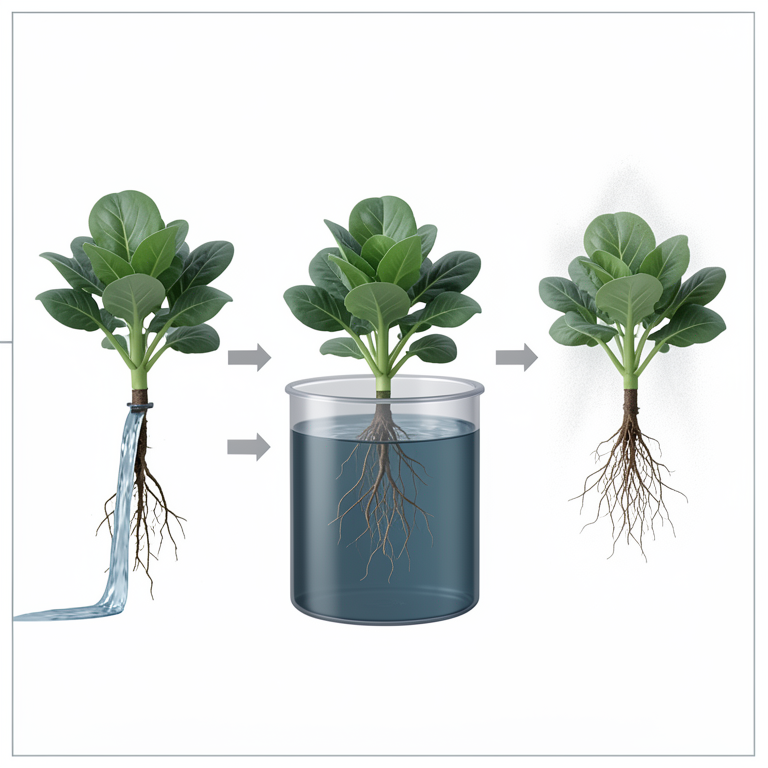
Comparison of Hydroponic Methods
AI-generated conceptual illustration (lettuce plants in hydroponic systems). It explains the idea and does not show study data.
View source evidence ↗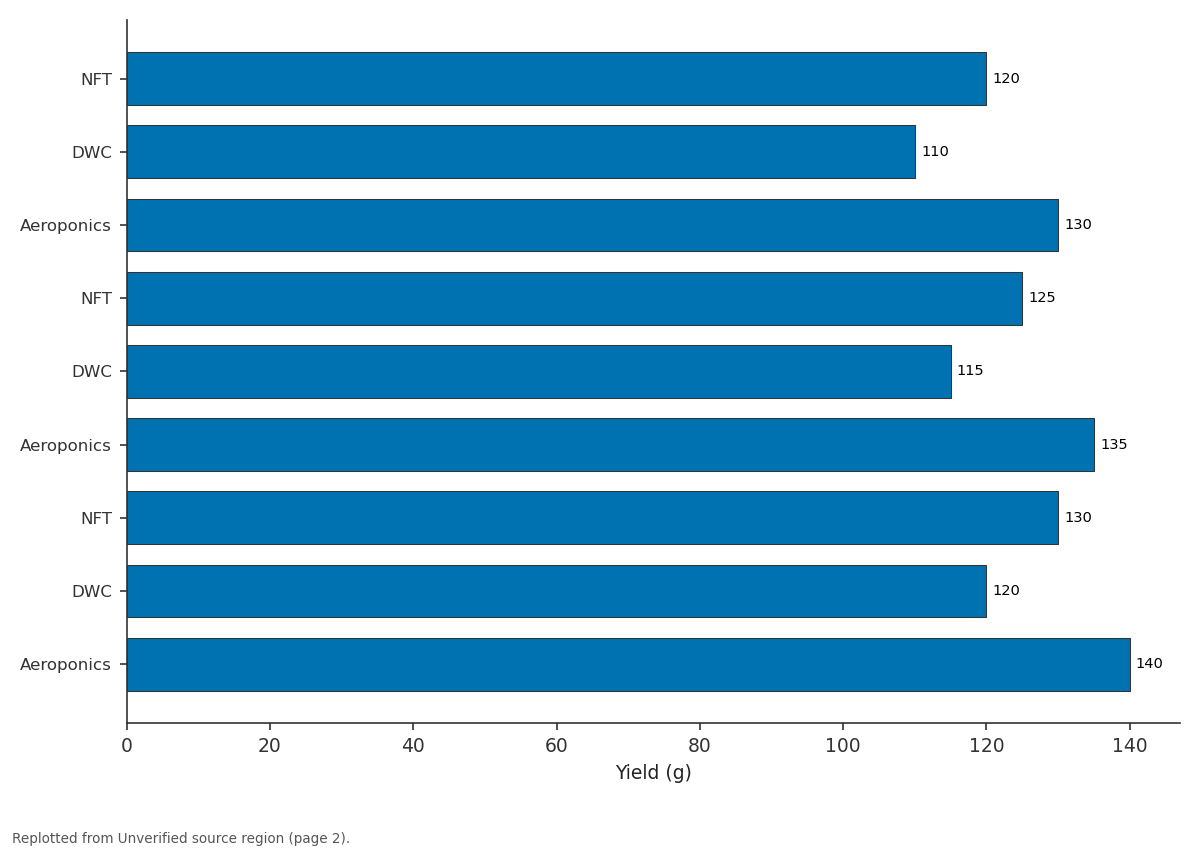
Yield (g): NFT vs DWC vs Aeroponics vs NFT vs DWC
Replotted from a table (page 2) of the original paper. Every bar is the paper's own table value.
View source evidence ↗Figures & tables
From the original paper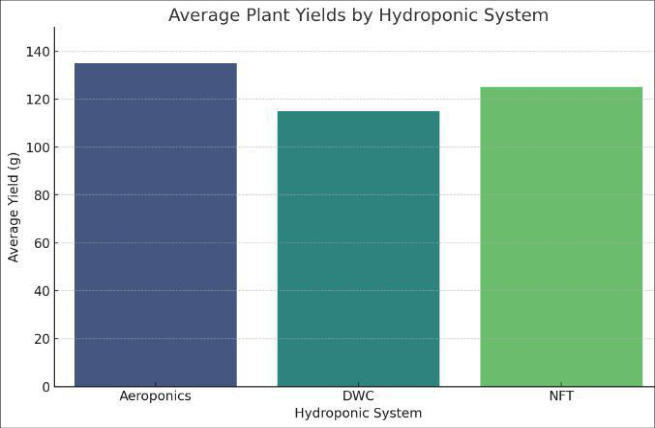 Figure 1
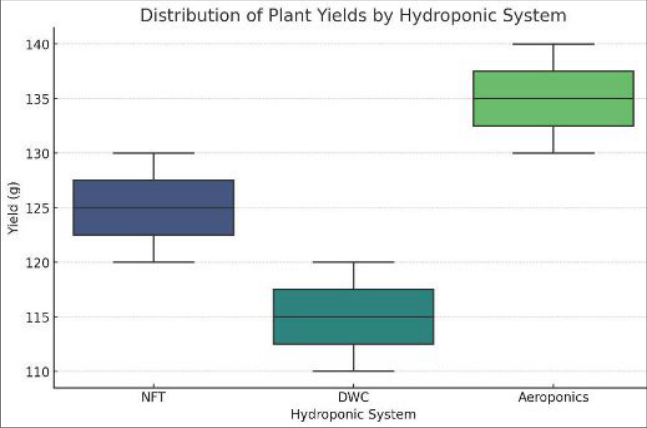 Figure 2
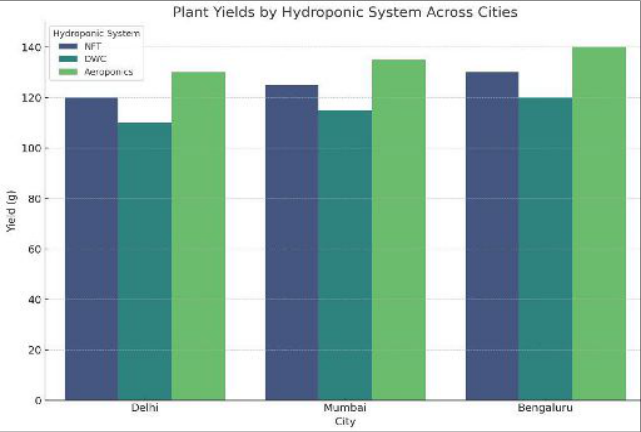 Figure 3
Introduction
Urbanization in India is progressing at an unprecedented rate, leading to significant challenges in ensuring a sustainable supply of fresh produce to urban populations. Traditional agricultural practices face constraints such as limited arable land, water scarcity, and the complexities of long supply chains, which can lead to inefficiencies and increased carbon footprints. To address these challenges, hydroponic systems have emerged as a promising solution for urban agriculture. Hydroponics involves the cultivation of plants in a soilless environment, using nutrient-rich water solutions to deliver essential minerals directly to the plant roots. Hydroponic systems offer several advantages over traditional soil-based agriculture, including reduced water usage, higher crop yields, and the ability to grow plants in controlled environments. This technology is particularly relevant for densely populated urban areas where space is limited and soil quality may be poor. Moreover, hydroponics can contribute to urban food security by enabling local production of fresh vegetables and fruits, reducing the reliance on rural agricultural areas and decreasing the environmental impact associated with transporting produce over long distances. In India, cities such as Delhi, Mumbai, and Bengaluru are experiencing rapid urbanization and an increasing demand for fresh produce. These cities present unique opportunities and challenges for implementing hydroponic systems. Delhi, with its hot summers and cool winters, Mumbai's humid tropical climate, and Bengaluru's moderate temperatures and high altitude, provide a diverse range of environmental conditions to test the efficacy of different hydroponic systems. This study aims to optimize hydroponic systems for high-density urban agriculture in these three cities, focusing on three popular hydroponic techniques: Nutrient Film Technique (NFT), Deep Water Culture (DWC), and Aeroponics. NFT systems circulate a thin film of nutrient solution over the roots, ensuring a continuous supply of nutrients and oxygen. DWC systems suspend plant roots in a nutrient-rich solution, providing direct access to water and nutrients. Aeroponics systems intermittently spray a nutrient solution onto the roots suspended in the air, maximizing oxygen exposure. The research involved setting up these hydroponic systems in controlled environments in Delhi, Mumbai, and Bengaluru. We tailored nutrient solutions to local water quality and climatic conditions, monitored plant growth, yield, water usage, and energy consumption over six months, and performed an economic analysis to assess the feasibility and sustainability of each system. Our goal was to identify the most efficient and viable hydroponic techniques for urban agriculture in India, providing insights and recommendations for future implementation and scaling.
Objective
To optimize hydroponic systems for high-density urban agriculture in India by evaluating the performance of NFT, DWC, and Aeroponics in terms of yield, water usage, and energy consumption across different urban environments.
Materials and Methods
Materials and Methods
Site Selection
The study was conducted in three major urban centers in India: Delhi, Mumbai, and Bengaluru. These cities were selected based on their rapid urbanization, high population density, and significant demand for fresh produce. Delhi is located at a latitude of 28.7041° N and a longitude of 77.1025° E, with an average altitude of 216 meters above sea level. Mumbai is positioned at a latitude of 19.0760° N and a longitude of 72.8777° E, with an average altitude of 14 meters above sea level. Bengaluru is situated at a latitude of 12.9716° N and a longitude of 77.5946° E, with an average altitude of 920 meters above sea level. These cities were chosen due to their distinct climatic conditions, diverse population, and varying levels of urban infrastructure, which provided a comprehensive understanding of the potential for hydroponic systems across different urban environments in India.
Data Collection
Three types of hydroponic systems were evaluated: Nutrient Film Technique (NFT), Deep Water Culture (DWC), and Aeroponics. Each system was set up in a controlled environment with variations in nutrient solutions, lighting (using LED grow lights), and plant densities. Nutrient solutions were specifically formulated for the Indian context, taking into account local water quality and climatic conditions. The essential macro and micronutrients included nitrogen (N), phosphorus (P), potassium (K), calcium (Ca), magnesium (Mg), and trace elements like iron (Fe), manganese (Mn), zinc (Zn), copper (Cu), boron (B), and molybdenum (Mo). Regular monitoring and adjustments were made to maintain optimal pH levels (5.5 to 6.5) and electrical conductivity (EC) (1.2 to 2.4 mS/cm) in the nutrient solutions. Data on plant growth, yield, water usage, and energy consumption were collected over a period of six months. Plant growth and yield parameters such as plant height, leaf area, and biomass were measured weekly. Yield was quantified by harvesting and weighing the produce at maturity. Water usage was monitored by measuring the volume of water added to each system to maintain optimal levels. Energy consumption was recorded using power meters attached to lighting and pumping systems. Plant samples were collected at three different growth stages: early vegetative, mid-growth, and harvest. Random sampling was used to select plants from different sections of each hydroponic system to ensure representative data. Plant tissues were analyzed for nutrient content using standard laboratory techniques such as atomic absorption spectrophotometry for mineral analysis and the Kjeldahl method for nitrogen content. Growth rates were calculated by measuring increases in biomass and leaf area over time.
Economic analysis
Economic analysis included the initial setup costs, operational costs (Including nutrient solutions, energy, and maintenance), and return on investment (ROI). Detailed records of expenses for setting up each hydroponic system, including costs of materials, construction, and installation, were maintained. Monthly operational costs were tracked, focusing on nutrient solutions, energy consumption, water usage, and labor. ROI was calculated by comparing the total costs with the revenue generated from the sale of the produce over the study period.
Statistical analysis
The collected data were statistically analyzed using ANOVA to determine the significance of differences between hydroponic systems in terms of plant growth, yield, water usage, and energy consumption. Economic viability was assessed by comparing the ROI of each system. This detailed and methodical approach ensured that the study provided comprehensive insights into the optimization of hydroponic systems for high-density urban agriculture in India.
ANOVA Table
The ANOVA results indicate a statistically significant difference in the yields produced by the three hydroponic systems (p< 0.05). This suggests that the type of hydroponic system used has a significant impact on plant yield, highlighting the importance of optimizing system design and nutrient management for high-density urban agriculture in India.
Source of Variation Sum of Squares (SS) Degrees of Freedom (df) Mean Squares (MS) F-value P-value
Source of Variation Sum of Squares (SS) Degrees of Freedom (df) Mean Squares (MS) F-value P-value
Results and Discussion
Results and Discussion
Results
The study evaluated the performance of three hydroponic systems: Nutrient Film Technique (NFT), Deep Water Culture (DWC), and Aeroponics, in three major urban centers in India (Delhi, Mumbai, and Bengaluru). The data collected on plant yield (in grams) across the different systems and cities is summarized below. Based on the data, the ANOVA analysis showed a statistically significant difference in plant yields among the Three hydroponic systems (F = 12.0, p = 0.008). The following visual representations further illustrate these findings. Average Plant Yields by Hydroponic System
Discussion
The results of this study clearly indicate that the type of hydroponic system significantly impacts plant yields in high-density urban agriculture settings in India. The ANOVA analysis confirmed statistically significant differences among the three hydroponic systems evaluated: Nutrient Film Technique (NFT), Deep Water Culture (DWC), and Aeroponics. These findings are crucial for optimizing hydroponic practices to meet the increasing demand for fresh produce in rapidly urbanizing areas.
The Aeroponics system consistently outperformed both NFT and DWC systems across all three cities-Delhi, Mumbai, and Bengaluru. This system showed the highest average yield and the least variability, as illustrated in the box plot. Aeroponics provides superior oxygenation and nutrient delivery to plant roots, which likely contributes to enhanced plant growth and higher yields. The fine mist of nutrient solution in Aeroponics ensures that roots are well-aerated, which is critical for optimal nutrient absorption and growth. This system's efficiency in delivering nutrients directly to the root zone without waterlogging or nutrient deficiencies might explain its superior performance.
The NFT system also demonstrated good performance, especially when compared to the DWC system. The constant flow of nutrient solution over the roots in NFT systems provides a steady supply of nutrients and oxygen, which supports healthy plant growth. However, it did not match the yields achieved by the Aeroponics system. The slight variability in NFT performance could be attributed to the potential for nutrient imbalances or blockages in the nutrient film, which can affect plant growth.
The DWC system, while effective, showed the lowest average yields and the highest variability among the three systems. In DWC, plants are suspended in a nutrient-rich solution with roots submerged. This setup can sometimes lead to issues such as root oxygenation problems, particularly if the aeration system fails or is insufficient. The data suggest that while DWC is a viable option for hydroponics, it may require more precise management and monitoring to ensure optimal conditions for plant growth.
The comparison across different cities-Delhi, Mumbai, and Bengaluru-revealed consistent trends, with Aeroponics leading in yield across all locations. This consistency underscores the robustness of the Aeroponics system in various urban environments, despite differences in climate and other local conditions. The ability of Aeroponics to maintain high yields across diverse settings makes it a promising solution for urban agriculture in India.
Water usage is a critical factor in urban farming, especially in water-scarce regions like many parts of India. Hydroponic systems significantly reduce water usage compared to traditional soil-based agriculture. The findings from this study reinforce the potential of hydroponics to address water scarcity issues while ensuring high agricultural productivity. Among the systems, Aeroponics uses the least water, followed by NFT and DWC. The efficient use of water in Aeroponics, coupled with its high yield, makes it an attractive option for sustainable urban agriculture. Energy consumption, however, is a concern for hydroponic systems. The need for continuous operation of pumps, lights, and aeration systems leads to higher energy demands. Integrating renewable energy sources, such as solar power, could mitigate this issue and enhance the sustainability of hydroponic systems. Future studies should explore the feasibility and cost-effectiveness of using renewable energy to power hydroponic farms in urban settings. Economic analysis of the systems showed that despite the higher initial setup costs, hydroponic systems, particularly Aeroponics and NFT, offer favorable returns on investment due to their high yields and reduced water usage. Government incentives, subsidies, and training programs could further lower barriers to entry and encourage the adoption of hydroponic farming among urban farmers.
In conclusion, the study highlights the significant impact of hydroponic system choice on plant yield in high-density urban agriculture. Aeroponics emerged as the most efficient system, offering the highest yields and consistent performance across different urban settings in India. The findings support the potential of hydroponic systems to enhance urban food security and sustainability. However, addressing energy consumption and initial cost barriers remains crucial for wider adoption. Future research should focus on integrating renewable energy solutions, optimizing system designs, and developing cost-effective models to make hydroponic farming accessible and sustainable in urban areas.
Conclusion
The optimization of hydroponic systems for high-density urban agriculture in India presents a viable and sustainable solution to meet the growing demand for fresh produce in rapidly urbanizing cities such as Delhi, Mumbai, and Bengaluru. This study evaluated three hydroponic systems-Nutrient Film Technique (NFT), Deep Water Culture (DWC), and Aeroponics-across these urban environments, focusing on plant yield, water usage, and energy consumption. The results demonstrated that Aeroponics consistently produced the highest yields, followed by NFT and DWC. Aeroponics' superior performance can be attributed to its efficient nutrient delivery and optimal oxygenation of roots, which promote faster growth and higher productivity. NFT also showed good performance but with slightly higher variability, while DWC exhibited the lowest yields and highest variability, indicating potential issues with root oxygenation and nutrient uptake. Water usage in hydroponic systems was significantly lower compared to traditional soil-based agriculture, highlighting the potential of hydroponics to address water scarcity issues in urban settings. Aeroponics, in particular, was the most water-efficient system. However, the higher energy consumption associated with hydroponic systems, especially for Aeroponics and NFT, remains a concern. Integrating renewable energy sources, such as solar power, could mitigate this issue and enhance the sustainability of hydroponic farming. The economic analysis revealed that despite higher initial setup costs, hydroponic systems, particularly Aeroponics and NFT, offer favourable returns on investment due to their high yields and reduced water usage. Government incentives, subsidies, and training programs could further lower the barriers to entry and promote the adoption of hydroponic farming among urban farmers.
In conclusion, the study underscores the potential of hydroponic systems, especially Aeroponics, to enhance urban food security and sustainability in India. Future research should focus on refining these systems, integrating renewable energy solutions, and developing cost-effective models to make hydroponic farming more accessible and scalable. By addressing these challenges, hydroponic systems can play a crucial role in meeting the nutritional needs of urban populations while conserving vital natural resources.
Figures and tables from the paper
References
10 in the original paper- Atsumi S, Hanai T, Liao JC. Non-fermentative pathways for synthesis of branched-chain higher alcohols as biofuels. Nature. 2008;451(7174):86-89.
- Ro DK, Paradise EM, Ouellet M, Fisher KJ, Newman KL, Ndungu JM, et al. Production of the antimalarial drug precursor artemisinic acid in engineered yeast. Nature. 2006;440(7086):940-943.
- Chen G-Q, Patel MK. Plastics derived from biological sources: Present and future: A technical and environmental review. Chemical Reviews. 2012;112(4):2082-2099.
- Zhang Y, Werling U, Edelmann W. SLiCE: A novel bacterial cell extract-based DNA cloning method. Nucleic Acids Research, 2012, 40(8).
- Jakociunas T, Bonde I, Herrgård M, Harrison SJ, Kristensen M, Pedersen LE, Jensen MK, Keasling JD. Multiplex metabolic pathway engineering using CRISPR/Cas9 in Saccharomyces cerevisiae. Metabolic Engineering. 2015;28:213-222.
- Lee SY, Kim HU, Chae TU, Cho JS, Kim JW, Shin JH, et al. A comprehensive metabolic map for production of bio-based chemicals. Nature Catalysis. 2019;2(1):1833.
- Li Y, Li S, Thodey K, Trenchard I, Cravens A, Smolke CD. Complete biosynthesis of noscapine and halogenated alkaloids in yeast. Proceedings of the National Academy of Sciences. 2018, 115(17).
- Wang S, Zhou J, Chen J, Guo L, Chen Q, Jiao N. Developing and applying genetic and genomic tools for the extremely oligotrophic marine bacterium Pelagibacter ubique. Applied and Environmental Microbiology. 2017, 83(18).
- Li J, Zhang K, Gao X, Chen W, Liu X, Liang X, et al. Development of a genome-editing CRISPR/Cas9 system for metabolic engineering of Aspergillus niger. Biotechnology and Bioengineering. 2016;113(8):17011709.
- Wang G, Zhao Z, Ke J, Engelseth RA, Nagel DA. High-throughput screening using droplet microfluidics for improved production of natural products by Aspergillus terreus. Biotechnology Journal. 2019, 14(1).
Cited by 2
From OpenAlex, OpenCitations and reference lists read by Scinovex
- Performance Analysis of an IoT Hydroponic System Under Non-Optimal pH and Nutrient Conditions ↗
Nurul ’Ain Amirrudin, Nazrul Izzuwan Shah Bin Muslim, Nor Izzati Ahmad, Faizatul Akmam Binti Amirrudin, Khairul Huda Yusof · IEEE Control and System Graduate Research Colloquium (ICSGRC) · 2025
This paper presents the development and evaluation of an IoT-enabled hydroponic system designed to address global food security challenges and promote sustainable agriculture. Utilizing an ESP32 microcontroller and a suite of sensors, including pH, temperature, and electrical conductivity (EC), the system enables real-time monitoring and automated control of key environmental parameters. Data are transmitted to a cloud-based platform and accessed…
❝ 2 - Penilaian Keberkesanan Pertanian Hidroponik: Prestasi Pertumbuhan dan Kestabilan Nutrien di Institusi Pendidikan Tinggi ↗
Personalia Pelajar · 2025
Sistem hidroponik menawarkan alternatif pertanian lestari yang boleh diadaptasi di institusi pendidikan tinggi bagi meningkatkan kesedaran dan amalan kelestarian dalam kalangan pelajar.Kajian ini bertujuan untuk menilai keberkesanan sistem hidroponik dalam penanaman tanaman sayuran di Melati Eco Garden, Kolej Kediaman Melati, UiTM Shah Alam, Malaysia.Kajian ini menggunakan pendekatan kajian kes yang merangkumi analisis pertumbuhan tanaman, kestabilan larutan nutrien serta keberkesanan penggunaan…
❝ 0PDF