
Research article · 2023 · Full text
International Journal of Agriculture and NutritionEnhancing soil fertility and crop nutrition through vermicomposting
Volume 5(2) · Pages 114–117 · DOI: 10.33545/26646064.2023.v5.i2b.168 ↗
Research areasCrop Yield and Soil FertilityAgronomic Practices and Intercropping Systems
Abstract
Author-writtenVermicomposting, the process of using earthworms to convert organic waste into nutrient-rich compost, has gained considerable attention for its potential to enhance soil fertility and crop nutrition. This paper reviews the benefits of vermicomposting, its impact on soil health, and its role in improving crop yields and nutritional quality. By integrating vermicomposting into agricultural practices, farmers can sustainably manage organic waste, enhance soil structure, and increase the availability of essential nutrients, thereby promoting sustainable agriculture.
Summary
Source-checkedPlain-language reading of the full paper, prepared with AI and checked against the text. Each point links to the authors' own words.
Why it matters
- Soil fertility is essential for agricultural productivity because it directly affects the quality of nutrition, the amount of crop yield, and the health of the ecosystem. View evidence ↗
- The excessive use of chemical fertilizers has caused environmental problems such as water pollution and soil degradation, as well as a loss of microbial diversity in the soil. View evidence ↗
- Global waste management is a major challenge, with the World Bank reporting that organic waste makes up about 44% of the 2 billion tons of municipal solid waste produced every year. View evidence ↗
The question
- The objective of this paper is to evaluate how vermicomposting affects crop nutrition and soil fertility, demonstrating its value as a sustainable practice for improving yield and soil health. View evidence ↗
What they did
- Vermicomposting typically utilizes specific earthworm species, most notably Eisenia fetida, Lumbricus rubellus, and Eudrilus eugeniae. View evidence ↗
- To ensure earthworm survival and efficiency, the vermicomposting process requires a moisture content of approximately 60-80%. View evidence ↗
- The optimal temperature for the decomposition process and earthworm survival is between 15-25 °C. View evidence ↗
- The production of finished vermicompost generally requires a duration of 2-3 months. View evidence ↗
What they found
- Vermicompost provides essential plant nutrients, specifically nitrogen, phosphorus, potassium, calcium, and magnesium. View evidence ↗
- Research indicates that vermicompost has higher levels of available nutrients than conventional compost. View evidence ↗
- Earthworm burrowing improves soil structure by creating channels that facilitate better water infiltration and root penetration. View evidence ↗
- The use of vermicompost has been shown to significantly increase the yields of strawberries, peppers, and tomatoes. View evidence ↗
- Vermicompost application increases the nutritional quality of crops by raising levels of phenolic compounds, carotenoids, and vitamin C. View evidence ↗
- Beneficial microorganisms in vermicompost can reduce the population of pathogenic microbes by outcompeting them, which helps suppress soil-borne diseases. View evidence ↗
- Converting organic waste into vermicompost instead of sending it to landfills significantly reduces greenhouse gas emissions. View evidence ↗
What it means
- The authors conclude that vermicomposting is an effective, sustainable method for managing organic waste while simultaneously improving crop nutrition and soil fertility. View evidence ↗
- Vermicomposting is recommended as a viable economic option for rural and small-scale farmers due to potential income from sales and lower costs for inputs. View evidence ↗
Visual summary
1 visualsIllustrations explain the paper; they do not show study data.
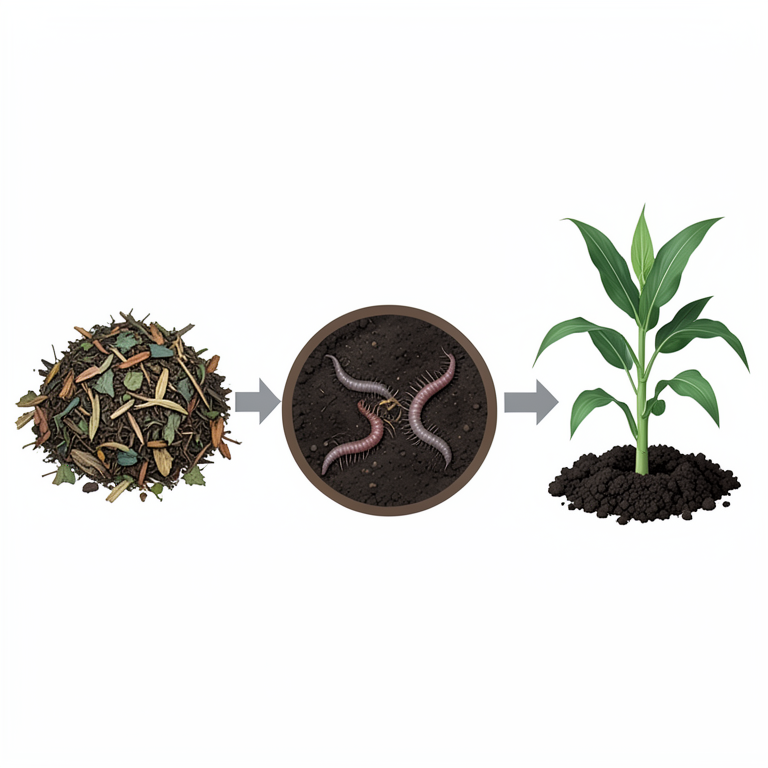
Vermicomposting Cycle
AI-generated conceptual illustration (Eisenia fetida earthworms and organic waste in soil). It explains the idea and does not show study data.
View source evidence ↗Introduction
Soil fertility is a critical factor in agricultural productivity, directly influencing crop yields, nutritional quality, and overall ecosystem health. Traditional farming practices have heavily relied on chemical fertilizers to enhance soil fertility and boost crop production. However, the overuse and misuse of these chemical inputs have led to significant environmental and agronomic issues, including soil degradation, loss of soil microbial diversity, and pollution of water bodies due to runoff and leaching. According to a report by the Food and Agriculture Organization (FAO), the global use of synthetic fertilizers has increased by more than 500% since the 1960s, contributing to various environmental problems and raising concerns about the sustainability of conventional agricultural practices. Vermicomposting has emerged as a promising sustainable alternative to chemical fertilizers. It involves the use of earthworms to convert organic waste into nutrient-rich compost. This process not only helps in managing organic waste but also produces a valuable soil amendment that can enhance soil fertility and crop nutrition. Vermicomposting has been shown to improve soil structure, increase nutrient availability, and promote beneficial microbial activity, making it an eco-friendly solution for sustainable agriculture. The growing amount of organic waste generated globally poses a significant challenge for waste management. According to the World Bank, approximately 2 billion tons of municipal solid waste are generated annually, with organic waste comprising around 44% of this total. Vermicomposting offers an effective way to recycle organic waste, converting it into a valuable resource for agriculture. Studies have shown that vermicompost is rich in essential plant nutrients, including nitrogen (N), phosphorus (P), potassium (K), calcium (Ca), and magnesium (Mg). A study by Arancon et al. (2004) [1] reported that vermicompost contains higher levels of available nutrients compared to conventional compost, making it an excellent soil amendment for improving soil fertility. Vermicomposting significantly enhances soil structure by increasing its porosity, aeration, and water-holding capacity. The burrowing activity of earthworms creates channels in the soil, which enhance root penetration and water infiltration. Improved soil structure reduces soil erosion and compaction, leading to better root development and overall plant health. Bhattacharya and Chattopadhyay (2004) [2] found that vermicompost application improved soil physical properties, leading to increased crop yields. Vermicomposting enhances microbial activity in the soil, leading to increased microbial biomass and diversity. The microbial communities in vermicompost play a significant role in nutrient cycling and organic matter decomposition, contributing to improved soil health.
A study by Edwards and Bohlen (1996) [3] highlighted that vermicompost contains beneficial microorganisms, such as nitrogen-fixing bacteria and phosphate-solubilizing bacteria, which further aid in nutrient availability and uptake by plants. Additionally, vermicompost has been shown to suppress soil-borne diseases and pests, reducing the need for chemical pesticides. Numerous studies have demonstrated the positive impact of vermicompost on crop yield and quality. For instance, a study by Lazcano and Domínguez (2011) [4] reported that the application of vermicompost significantly increased the yield of various crops, including tomatoes, peppers, and strawberries. The improvement in yield is attributed to the enhanced nutrient availability, improved soil structure, and increased microbial activity associated with vermicomposting. Furthermore, crops grown with vermicompost have been found to have higher concentrations of essential nutrients, such as vitamins, minerals, and antioxidants, contributing to improved nutritional quality. Vermicomposting supports the principles of sustainable agriculture by promoting the recycling of organic waste, reducing reliance on chemical fertilizers, and improving soil health. The use of vermicompost as a soil amendment aligns with sustainable farming practices that aim to enhance environmental quality and the resource base on which agriculture depends.
Objective of the Paper
To evaluate the impact of vermicomposting on soil fertility and crop nutrition, and to demonstrate its benefits as a sustainable agricultural practice for enhancing soil health and crop yield.
Vermicomposting Process
Vermicomposting is a biological process that utilizes various species of earthworms to convert organic waste into a nutrient-rich compost called vermicompost. This process not only helps in waste management but also produces a valuable soil amendment that can enhance soil fertility and crop nutrition. The primary species of earthworms used in vermicomposting include Eisenia fetida (Red wigglers), Lumbricus rubellus, and Eudrilus eugeniae (African nightcrawler), among others. These earthworms are particularly efficient at decomposing organic matter and thrive in environments rich in decaying organic material. The vermicomposting process begins with the collection of organic waste materials, which can include kitchen scraps, farm residues, animal manure, and other biodegradable waste. These materials are first pre-composted to a certain extent to reduce pathogens and create a more suitable substrate for the earthworms. Pre-composting involves partial decomposition of the organic waste, which helps in reducing its volume and converting it into a form that is more accessible for earthworms to digest. Once the organic waste is pre-composted, it is placed in vermicomposting beds or containers. These beds are typically shallow and designed to provide optimal conditions for the earthworms, including adequate moisture, aeration, and temperature. The ideal moisture content for vermicomposting is around 60-80%, as earthworms require a moist environment to survive and thrive. Adequate aeration is also crucial, as it ensures that the composting material remains aerobic, preventing the production of harmful gases such as methane and hydrogen sulfide. The earthworms are then introduced into the vermicomposting beds, where they begin to consume the organic waste. As the earthworms feed, they break down the organic material in their digestive systems. The digestion process involves the mechanical breakdown of the waste by the earthworm's gizzard, followed by enzymatic degradation in the intestine. The resulting excretions, known as castings or vermicast, are rich in nutrients and beneficial microorganisms. These castings form the primary component of vermicompost. Throughout the vermicomposting process, the earthworms continually burrow and mix the composting material, enhancing its aeration and facilitating further decomposition. The activity of the earthworms also helps in maintaining an optimal temperature within the composting beds. The temperature typically ranges between 15-25 °C, which is ideal for the decomposition process and the survival of the earthworms. The duration of the vermicomposting process can vary depending on factors such as the type and quantity of organic waste, the species of earthworms used, and environmental conditions. Generally, the process takes about 2-3 months to produce finished vermicompost. During this period, it is essential to regularly monitor and maintain the moisture content, aeration, and temperature to ensure optimal conditions for the earthworms and the composting process. Once the vermicomposting process is complete, the vermicompost is harvested by separating the earthworms from the finished compost. This can be done manually or using mechanical sifters. The harvested vermicompost is then cured for a short period to stabilize its nutrient content and improve its quality. Curing involves allowing the vermicompost to mature further under controlled conditions, enhancing its microbial activity and nutrient availability. The final product, vermicompost, is a dark, crumbly, and earthysmelling material that is rich in essential plant nutrients, including nitrogen (N), phosphorus (P), potassium (K), calcium (Ca), and magnesium (Mg). It also contains beneficial microorganisms that promote soil health and plant growth. Vermicompost can be used as a soil amendment to enhance soil fertility, improve soil structure, and increase the availability of nutrients to plants. It can be applied directly to the soil, used as a component of potting mixes, or brewed into compost tea for foliar application.
Benefits of Vermicomposting
Vermicomposting offers a multitude of benefits that make it an attractive option for sustainable agriculture and organic waste management. These benefits extend to soil health, crop nutrition, environmental sustainability, and economic viability. One of the most significant benefits of vermicomposting is its ability to enhance soil fertility. Vermicompost is rich in essential nutrients such as nitrogen, phosphorus, potassium, calcium, and magnesium, which are vital for plant growth. Studies, such as Arancon et al. (2004) [1] , have shown that the nutrients in vermicompost are in a form that is readily available to plants, leading to improved nutrient uptake and enhanced plant growth. This nutrientrich compost can reduce the need for chemical fertilizers, thereby lowering input costs for farmers and minimizing the environmental impact associated with synthetic fertilizers. Vermicomposting significantly improves soil structure by increasing its porosity, aeration, and water-holding capacity. The burrowing action of earthworms creates channels in the soil, which enhance root penetration and water infiltration. Improved soil structure reduces soil erosion and compaction, leading to better root development and overall plant health. Bhattacharya and Chattopadhyay (2004) [2] found that vermicompost application improved soil physical properties, leading to increased crop yields. A wellstructured soil promotes healthy microbial activity, which is crucial for nutrient cycling and organic matter decomposition. The process of vermicomposting enhances microbial activity in the soil, leading to increased microbial biomass and diversity. The microbial communities in vermicompost play a significant role in breaking down organic matter and making nutrients available to plants. Edwards and Bohlen (1996) [3] highlighted that these beneficial microorganisms, such as nitrogen-fixing bacteria and phosphate-solubilizing bacteria, contribute to improved soil fertility and plant growth. Enhanced microbial activity also helps in suppressing soil-borne diseases and pests, reducing the need for chemical pesticides and promoting a healthier growing environment. Vermicompost has been shown to suppress soil-borne diseases and pests, reducing the incidence of plant diseases and the need for chemical pesticides. Singh et al. (2010) [5] demonstrated that the presence of beneficial microorganisms in vermicompost can outcompete pathogenic microbes, thereby reducing their population and activity. This natural disease suppression mechanism is a key benefit of vermicomposting, contributing to healthier crops and reduced reliance on chemical inputs. Crops grown with vermicompost have been found to have higher concentrations of essential nutrients, such as vitamins, minerals, and antioxidants, compared to those grown with conventional compost or chemical fertilizers. Lazcano and Domínguez (2011) [4] reported that this improvement in nutritional quality can be attributed to the balanced supply of nutrients and the presence of beneficial microorganisms that promote plant health. Enhanced crop nutrition leads to better quality produce, which is more appealing to consumers and can command higher market prices. Vermicomposting supports sustainable agriculture by promoting the recycling of organic waste, reducing reliance on chemical fertilizers, and improving soil health. The use of vermicompost as a soil amendment aligns with sustainable farming practices that aim to enhance environmental quality and the resource base on which agriculture depends. Bhattacharya and Chattopadhyay (2004) [2] emphasized that by converting organic waste into valuable compost, vermicomposting reduces waste disposal problems and contributes to a circular economy. Economically, vermicomposting can provide a costeffective solution for waste management and soil fertility enhancement. Farmers can reduce their input costs by using vermicompost instead of expensive chemical fertilizers. Additionally, vermicomposting can generate income through the sale of surplus compost. Small-scale farmers and rural communities can particularly benefit from vermicomposting by utilizing locally available organic waste and producing high-quality compost for their own use or for sale. Arancon et al. (2004) [1] noted that vermicomposting offers significant economic benefits through reduced fertilizer costs and potential income from vermicompost sales. Vermicomposting also has a positive environmental impact by reducing the volume of organic waste sent to landfills. Organic waste in landfills decomposes anaerobically, producing methane, a potent greenhouse gas. By diverting organic waste from landfills and converting it into vermicompost, greenhouse gas emissions are significantly reduced. This contributes to climate change mitigation and supports global efforts to reduce carbon footprints. Singh et al. (2010) [5] highlighted the environmental benefits of vermicomposting in reducing greenhouse gas emissions and promoting sustainable waste management practices. In conclusion, vermicomposting offers numerous benefits that make it an effective and sustainable practice for enhancing soil fertility, improving crop nutrition, and managing organic waste. Its ability to improve soil structure, increase nutrient availability, enhance microbial activity, suppress diseases, and support sustainable agriculture makes vermicomposting a valuable tool for farmers and gardeners. By integrating vermicomposting into agricultural practices, we can promote healthier soils, more nutritious crops, and a more sustainable and resilient agricultural system.
Impact on Crop Nutrition
Vermicomposting significantly impacts crop nutrition by enhancing the availability and uptake of essential nutrients, improving soil health, and promoting the overall growth and quality of crops. The nutrient-rich vermicompost, derived from the decomposition of organic waste by earthworms, serves as an excellent soil amendment that supports sustainable agricultural practices. This section discusses the impact of vermicomposting on crop nutrition, drawing on findings from various studies. Vermicompost is known for its high nutrient content, including essential macronutrients such as nitrogen (N), phosphorus (P), potassium (K), calcium (Ca), and magnesium (Mg), as well as micronutrients like zinc (Zn), iron (Fe), manganese (Mn), and copper (Cu). These nutrients are present in forms that are readily available to plants, facilitating their uptake and utilization. Arancon et al. (2004) [1] reported that the application of vermicompost significantly increased the nutrient content in crops, leading to improved growth and yield. The study found that vermicompost-treated plants exhibited higher levels of nitrogen, phosphorus, and potassium compared to those treated with conventional compost or chemical fertilizers. The enhanced nutrient availability in vermicompost is partly due to the presence of beneficial microorganisms that play a crucial role in nutrient cycling and organic matter decomposition. These microorganisms, including nitrogenfixing bacteria, phosphate-solubilizing bacteria, and mycorrhizal fungi, contribute to the breakdown of organic matter and the release of nutrients in forms accessible to plants. Edwards and Bohlen (1996) [3] highlighted that the microbial activity in vermicompost not only enhances nutrient availability but also promotes plant health and resilience. Improved soil structure and health are additional factors contributing to the positive impact of vermicomposting on crop nutrition. The physical properties of soil, such as porosity, aeration, and water-holding capacity, are significantly improved by the application of vermicompost. The burrowing activity of earthworms creates channels in the soil, which enhance root penetration and water infiltration. Bhattacharya and Chattopadhyay (2004) [2] found that vermicompost application improved soil physical properties, leading to better root development and nutrient uptake. Healthy root systems are essential for efficient nutrient absorption, ensuring that plants receive an adequate supply of essential nutrients throughout their growth stages.
Crops grown with vermicompost have been found to have higher concentrations of essential nutrients, vitamins, minerals, and antioxidants compared to those grown with conventional compost or chemical fertilizers. Lazcano and Domínguez (2011) [4] reported that vermicompost application resulted in increased levels of vitamin C, carotenoids, and phenolic compounds in various crops. These nutrients and bioactive compounds contribute to the nutritional quality of the produce, making it more beneficial for human health. The impact of vermicomposting on crop nutrition extends to improved crop yields and quality. Studies have consistently demonstrated that crops treated with vermicompost produce higher yields compared to those treated with conventional compost or chemical fertilizers. Arancon et al. (2004) [1] observed significant increases in the yields of tomatoes, peppers, and strawberries with the application of vermicompost. The yield improvement is attributed to the enhanced nutrient availability, improved soil structure, and increased microbial activity associated with vermicomposting. Furthermore, vermicompost has been shown to enhance the resilience of crops to environmental stresses such as drought, salinity, and diseases. The presence of beneficial microorganisms in vermicompost can induce systemic resistance in plants, making them more tolerant to biotic and abiotic stresses. Singh et al. (2010) [5] demonstrated that vermicomposttreated plants exhibited increased resistance to soil-borne diseases, reducing the need for chemical pesticides and promoting healthier crop growth. In summary, vermicomposting positively impacts crop nutrition by enhancing nutrient availability, improving soil health, and promoting overall plant growth and quality. The nutrientrich vermicompost, along with the beneficial microorganisms it contains, supports sustainable agricultural practices by reducing reliance on chemical fertilizers and pesticides. The improved nutritional content and yield of crops grown with vermicompost highlight its potential as a valuable tool for enhancing food security and promoting sustainable agriculture.
Conclusion
Vermicomposting has demonstrated significant potential as a sustainable agricultural practice that enhances soil fertility and crop nutrition. By converting organic waste into nutrient-rich compost, vermicomposting addresses waste management issues while providing a valuable soil amendment. The application of vermicompost improves soil structure, increases nutrient availability, and promotes beneficial microbial activity, which are essential for healthy plant growth and increased crop yields. Studies have shown that crops grown with vermicompost exhibit higher concentrations of essential nutrients, vitamins, minerals, and antioxidants, contributing to improved nutritional quality. The enhanced resilience of these crops to environmental stresses and diseases further underscores the benefits of vermicomposting. The economic advantages of reduced input costs and potential income from vermicompost sales make it a viable option for farmers, particularly small-scale and rural communities. The integration of vermicomposting into agricultural practices supports sustainable farming by reducing reliance on chemical fertilizers and pesticides, promoting soil health, and contributing to environmental conservation. Vermicomposting not only improves agricultural productivity but also aligns with global efforts to mitigate climate change and enhance food security. Overall, vermicomposting offers a comprehensive solution for enhancing soil fertility and crop nutrition, promoting sustainable agriculture, and fostering environmental stewardship. Its adoption can lead to healthier soils, more nutritious crops, and a more resilient agricultural system, ultimately contributing to sustainable development and global food security.
References
4 in the original paper- Arancon NQ, Edwards CA, Bierman P, Welch C, Metzger JD. Influences of vermicomposts on field strawberries: Part 1. Effects on growth and yields. Bioresource Technology. 2004;93(2):145-153.
- Bhattacharya SS, Chattopadhyay GN. Transformation of nitrogen during vermicomposting of fly ash. Waste Management & Research. 2004;22(6):488-491.
- Singh R, Gupta R, Tiwari S. The potential of vermicomposting in managing the solid waste from the paper mill. Journal of Hazardous Materials. 2010;181(1-3):647-652.
- Tripathi G, Bhardwaj P. Decomposition of kitchen waste amended with cow manure using an epigeic species (Eisenia fetida) and an anecic species (Lampito mauritii). Bioresource Technology. 2004;92(2):215218.
Cited by 6
From OpenAlex, OpenCitations and reference lists read by Scinovex
- FACTORS INFLUENCING THE COMPOSTING PROCESS OF VEGETAL WASTE: A REVIEW ↗
Elena-Melania CISMARU, Ana-Maria Tăbărașu, Nicolae-Valentin VLĂDUT, Gabriel-Valentin GHEORGHE, Ana Zaica, Dragos Nicolae Dumitru et al. · INMATEH Agricultural Engineering · 2025
Although composting is a well-established method for the biological stabilization of organic matter, in recent years advanced technologies and optimized operational strategies have been introduced, that are aimed at enhancing both compost quality and processing efficiency. These innovations, ranging from improved aeration and moisture control systems to the use of bio-activators and process monitoring tools, have significantly reduced decomposition time,…
❝ 2PDF - Recycling waste into useful organic fertiliser with vermicomposting ↗
RAOSAHEB K. BAROTE · Acta Entomology and Zoology · 2025
Vermicomposting is an uncomplicated biotechnological method for composting that utilizes specific species of earthworms to improve the waste conversion process and generate a superior end product. Vermicomposting is simple to manage and provides nutrients along with growth hormones. The nutrient levels in vermicomposting are greater than those found in traditional compost. The procedure is quicker than composting since the organic…
❝ 0PDF - Influence of different organic manures, Beejamrit and Jeevamrit on soil properties in Western Rajasthan
Sagar Sagar, RK Jakhar · International Journal of Advanced Chemistry Research · 2025
An experiment was carried out at Research farm of Agricultural Research Station, SKRAU, Bikaner during kharif, 2022 on loamy sand soil. The experiment was laid out in a factorial randomized block design (FRBD) with three replications and 16 treatment combinations comprising of different manures (Control, FYM 7.5 t ha-1, Vermicompost 5.0 t ha-1 and Poultry manure 2.5 t ha-1) and different liquid manures (Control + Seed Treatment with Beejamrit + Spray of Jeevamrit at 30, 45 & 60 DAS + Seed Treatment with Beejamrit and Spray of Jeevamrit at 30, 45 & 60 DAS). The results indicated that applicatio
- Review on floral waste utilization: A sustainable and ecofriendly approach
Chethankumar CR, Gowtham KM, Manjunath M, Siddanagouda . · International Journal of Agriculture and Food Science · 2025
In India, an estimated 108,000 temples and mosques generate a substantial amount of floral waste daily, with approximately 8 million tons annually ending up in landfills or polluting water bodies. This often-overlooked issue, exacerbated by numerous festivals throughout the year, leads to foul odors and significant environmental harm due to the highly biodegradable nature of flowers. Cities with high concentrations of temples experience a tenfold increase in such waste. However, this floral waste, rich in nutrients and lignocellulosic materials, presents a valuable resource. It can be repurpos
- Ethnobotanical study and anthelmintic investigation of Detarium microcarpum (Fabaceae) ↗
Habibou Hama Hamadou, A. Issa, Idrissa Moussa, Khalid Ikhiri · International Journal of Herbal Medicine · 2024
African flora in general, and Nigerian flora in particular, is rich in medicinal plants. The aim of this study is to contribute to a better understanding of Detarium microcarpum and its evaluation in terms of the anthelmintic activity of its organs. Ethnobotanical surveys were carried out using questionnaires with herbalists and traditional practitioners, and extracts of the various organs were
- Effect of vermicompost and compost tea on the growth and yield of onions ↗
Desire Hatungimana, Mtaita Tuarira Abduel, Sebastian Chakeredza, Munashe Kurehwatira · International Journal of Plant Pathology and Microbiology · 2024
Relatively low onion yield in Sub Saharan Africa is attributed to several limitations such as poor soil fertility. For that reason, the field experiment was conducted to test the effectiveness of vermicompost and compost tea on onion growth and yield. The soil used had 52% sand, 30% silt, 18% clay and a pH of 7.17. Complete Randomized Design (CRD) with