
Research article · 2023 · Full text
International Journal of Agriculture and NutritionThe role of planting systems in improving maize yield under limited irrigation regimes
Volume 5(1) · Pages 145–147 · DOI: 10.33545/26646064.2023.v5.i1b.162 ↗
Research areasCrop Yield and Soil Fertility
Abstract
Author-writtenLimited water availability is a significant challenge for maize (Zea mays L.) production in many parts of the world. Efficient water use is crucial for sustaining crop yields under water-scarce conditions. This review explores the role of different planting systems in improving maize yield and water productivity under limited irrigation regimes. By examining recent research, we highlight the impact of various planting techniques, including row spacing, planting density, and mulching, on maize growth, yield, and water use efficiency. The findings provide insights into optimizing planting systems to enhance maize productivity in water-limited environments.
Summary
Source-checkedPlain-language reading of the full paper, prepared with AI and checked against the text. Each point links to the authors' own words.
Why it matters
- Maize is a globally important staple crop that is critical for food security, particularly in developing nations. View evidence ↗
- Climate change is increasing the frequency of droughts and water scarcity, which threatens maize production in semi-arid and arid regions. View evidence ↗
- Conventional irrigation methods often fail to meet crop water needs, resulting in economic losses and lower yields. View evidence ↗
The question
- The paper aims to evaluate how different planting systems affect maize yield and water use efficiency under limited irrigation to provide optimization recommendations. View evidence ↗
What they did
- The author conducted a review of recent research focusing on the effects of mulching, planting density, and row spacing on maize growth and water productivity. View evidence ↗
What they found
- Reducing row spacing from 75 cm to 50 cm can increase maize yield by up to 15% through improved resource utilization. View evidence ↗
- Intercropping maize with legumes can lead to a 10-20% increase in maize yield, varying by environment and system. View evidence ↗
- The highest yields and water productivity under limited irrigation were achieved with moderate planting densities of 60,000-70,000 plants per hectare. View evidence ↗
- A planting density of 8-10 plants per square meter is suggested as the optimal balance to ensure nutrient and water access while minimizing competition. View evidence ↗
- Plastic mulching significantly increases water use efficiency and maize yield by maintaining higher soil moisture and reducing water loss. View evidence ↗
- Ridge and furrow planting improves soil moisture distribution and reduces runoff, which significantly enhances water use efficiency and maize yield. View evidence ↗
What it means
- The author concludes that optimizing intercropping, planting density, and row spacing is crucial for improving crop performance and water use efficiency under limited irrigation. View evidence ↗
- The author recommends combining optimized planting systems with precision irrigation and drought-tolerant varieties to achieve high yields with limited water. View evidence ↗
Visual summary
2 visualsIllustrations explain the paper; they do not show study data.
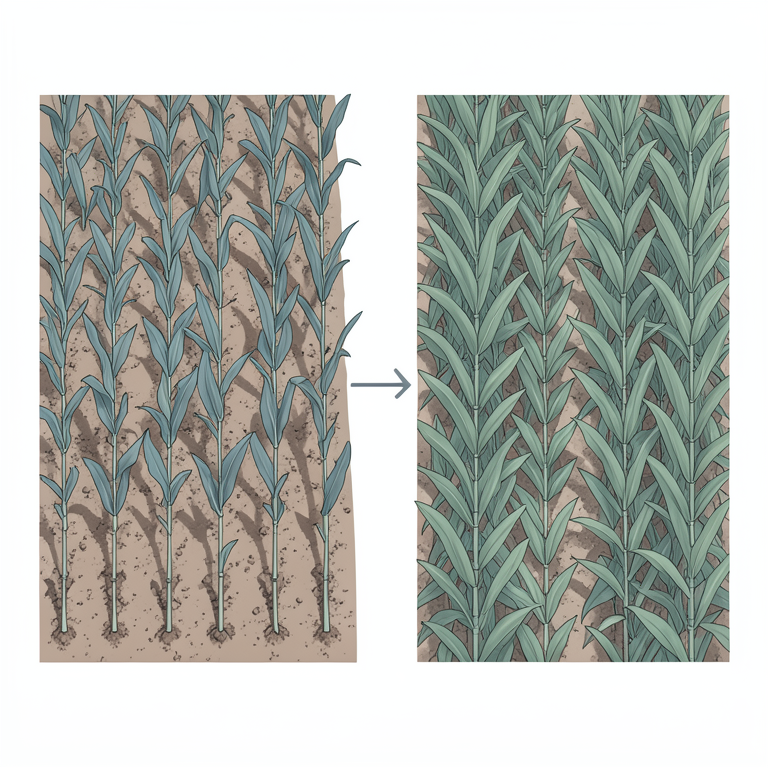
Row Spacing Comparison
AI-generated conceptual illustration (maize plants in a field). It explains the idea and does not show study data.
View source evidence ↗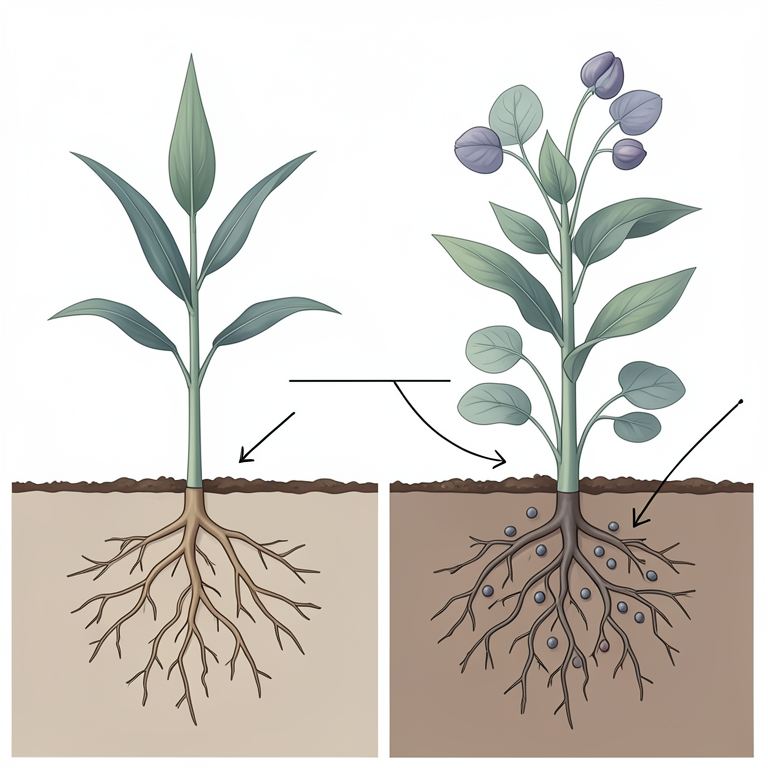
Intercropping Synergy
AI-generated conceptual illustration (maize plants and legume plants in soil). It explains the idea and does not show study data.
View source evidence ↗Introduction
Maize (Zea mays L.) is a staple food crop globally, with significant importance for food security, especially in developing countries. It provides essential nutrients and serves as a critical source of food, feed, and industrial raw material. In 2020, global maize production reached approximately 1.12 billion metric tons, with the United States, China, and Brazil being the top producers. However, the increasing frequency of droughts and water scarcity, exacerbated by climate change, poses a substantial threat to maize production, particularly in arid and semi-arid regions. Water availability is a key determinant of maize yield. Under limited irrigation conditions, optimizing planting systems becomes essential to ensure sustainable maize production. Traditional irrigation practices are often insufficient to meet the water demands of crops, leading to reduced yields and economic losses. In regions like sub-Saharan Africa and South Asia, where water resources are limited, there is an urgent need to adopt efficient agricultural practices that maximize water use efficiency and enhance crop performance. Row spacing, planting density, and intercropping are critical components of planting systems that can significantly influence maize yield under limited irrigation. Narrow row spacing has been shown to improve canopy closure and light interception, reducing soil evaporation and conserving soil moisture. For instance, studies have demonstrated that reducing row spacing from 75 cm to 50 cm can increase maize yield by up to 15% due to better resource utilization. Similarly, optimizing planting density can balance intra-specific competition and resource use efficiency, crucial for maximizing yield under water-limited conditions. Intercropping, the practice of growing two or more crops simultaneously on the same field, offers numerous benefits for maize production. Intercropping with legumes, such as soybean or cowpea, can enhance soil fertility through nitrogen fixation, improve water use efficiency, and reduce pest and disease incidence. Research indicates that intercropping maize with legumes can increase maize yield by 10-20%, depending on the specific cropping system and environmental conditions.
Main Objective of the paper
The main objective of this paper is to explore and evaluate the impact of different planting systems on maize yield under limited irrigation regimes, providing insights and recommendations for optimizing water use efficiency and enhancing crop performance in water-scarce environments.
Reviews of
Reviews of
Impact of Planting Systems on Maize Yield
Planting systems play a significant role in influencing maize yield, particularly under limited irrigation regimes. Row spacing, planting density, and intercropping are crucial factors that determine how effectively maize plants utilize available resources such as water, nutrients, and light. Row spacing affects maize yield by influencing canopy closure and light interception. Narrow row spacing promotes quicker canopy closure, reducing soil evaporation and conserving soil moisture. This is especially beneficial under limited irrigation conditions where water conservation is critical. Optimal row spacing can also improve root distribution, enhancing water and nutrient uptake, leading to better plant health and higher yields. Research has demonstrated that narrower row spacing can significantly increase maize yield by improving water use efficiency and light interception. Planting density determines the level of competition among maize plants for resources. High planting density increases competition, which can reduce individual plant performance if the competition for water and nutrients becomes too intense. Conversely, low planting density may result in underutilization of resources, leading to lower overall yield. Finding the optimal planting density is essential for maximizing yield under limited irrigation. Studies suggest that a planting density of 8-10 plants per square meter often provides the best balance between competition and resource utilization, ensuring adequate access to water and nutrients without excessive competition. Intercropping involves growing two or more crops simultaneously on the same field, improving resource use efficiency and providing mutual benefits to the intercropped species. Intercropping can lead to complementary use of water, nutrients, and light, with deep-rooted crops accessing resources from deeper soil layers and shallow-rooted crops utilizing resources from the upper layers. Intercropping maize with legumes, for instance, can enhance soil fertility through biological nitrogen fixation by the legumes, benefiting maize growth. This practice can also help reduce pest and disease incidence by disrupting the habitat and life cycle of pests. Studies have shown that intercropping maize with legumes can improve maize yield by enhancing nitrogen availability and water use efficiency. Water Use Efficiency (WUE) is a critical measure of how effectively a planting system utilizes available water to produce biomass and yield. Improving WUE is essential for maintaining maize productivity under limited irrigation. Techniques such as mulching, which reduces soil evaporation and retains soil moisture, can significantly enhance WUE. Developing and using drought-tolerant maize varieties can also improve WUE and ensure stable yields under water-limited conditions. Precision irrigation techniques, such as drip irrigation, deliver water directly to plant roots, minimizing water loss and further improving WUE. Research in semi-arid regions has found that reducing row spacing and intercropping maize with legumes can significantly enhance WUE and increase maize yield. For instance, reducing row spacing from 75 cm to 50 cm can improve WUE by 10-15%, while intercropping maize with pigeon pea has been shown to increase WUE by 18%. These practices lead to better soil moisture utilization, reduced evaporation, and enhanced overall productivity. In conclusion, the choice of planting system is crucial for determining maize yield under limited irrigation regimes. Optimizing row spacing, planting density, and intercropping can significantly improve water use efficiency and crop performance. By adopting these practices, farmers can enhance maize productivity even under conditions of water scarcity. Sustainable agricultural practices, such as using drought-tolerant varieties and precision irrigation, further support the goal of achieving high yields with limited water resources.
Conclusion
The optimization of planting systems is crucial for enhancing maize yield under limited irrigation regimes, a necessity driven by climate change and increasing water scarcity. This study highlights the significant impact of row spacing, planting density, and intercropping on maize productivity and water use efficiency. Narrow row spacing improves canopy closure, light interception, and reduces soil evaporation, leading to better water conservation and higher yields. Optimal planting density balances resource utilization and competition among plants, ensuring efficient water and nutrient uptake. Intercropping, particularly with legumes, enhances soil fertility, reduces pest incidence, and improves overall water use efficiency through complementary resource use. Research indicates that these planting systems, when optimized, can significantly boost maize yield under water-limited conditions. Techniques such as mulching, the use of drought-tolerant varieties, and precision irrigation further support sustainable maize production by maximizing water use efficiency and maintaining stable yields. Farmers adopting these practices can achieve higher productivity even in regions with limited water availability, contributing to food security and sustainable agricultural development. In conclusion, the strategic implementation of optimized planting systems is essential for mitigating the challenges posed by limited irrigation. By focusing on row spacing, planting density, and intercropping, alongside advanced agricultural techniques, it is possible to enhance maize yield, ensure efficient water use, and support sustainable farming practices in waterscarce environments.
References
8 in the original paper- Liu W, Tollenaar M, Smith G, Stewart G, Deen W. Within-row plant spacing variability does not affect corn grain yield. Agron J. 2004;96(1):275-280.
- Andrade FH, Calviño P, Cirilo A, Barbieri P. Yield responses to narrow rows depend on increased radiation interception. Agron J. 2002;94(5):975-980.
- Otegui ME, Nicolini MG, Ruiz RA, Dodds PA. Sowing date effects on grain yield components for different maize genotypes. Agron J. 1995;87(1):29-33.
- D'Andrea KE, Otegui ME, Cirilo AG, Eyhérabide GH. Ecophysiological traits in maize hybrids and their relationship with plant density and grain yield. Crop Sci. 2008;48(2):381-389.
- Lithourgidis AS, Vlachostergios DN, Dordas CA, Damalas CA. Dry matter yield, nitrogen content, and competition in pea-cereal intercropping systems. Eur J Agron. 2011;34(4):287-294.
- Li L, Sun JH, Zhang FS, Guo TW, Bao XG, Smith FA, Smith SE. Root distribution and interactions between intercropped species. Oecologia. 2006;147(2):280-290.
- Raimbault BA, Vyn TJ, Tollenaar M. Corn response to tillage and plant density under different nitrogen availability conditions. Agron J. 1990;82(6):849-857.
- Egli DB, Hatfield JL, Batchelor WD, Kiniry JR, Maddonni GA, McWilliams SA, et al. Nonlinear crop responses to nitrogen: A framework to support sitespecific nitrogen recommendations. Agron J. 2001;93(3):561-570.