
Research article · 2023 · Full text
International Journal of Agriculture and NutritionInvestigating the stability of antioxidant compounds in sugarcane juice during processing
Volume 5(2) · Pages 96–99 · DOI: 10.33545/26646064.2023.v5.i2b.163 ↗
Research areasNatural Products and Biological ResearchSugarcane Cultivation and Processing
Abstract
Author-writtenThis study investigates the stability of antioxidant compounds in sugarcane juice during various processing stages. The antioxidant properties of sugarcane juice are well-documented, but the impact of processing on these beneficial compounds requires detailed analysis. This research evaluates the changes in antioxidant activity and specific antioxidant compounds, including phenolics and flavonoids, during pasteurization, refrigeration, and storage. The results highlight the significance of optimizing processing conditions to retain the health-promoting properties of sugarcane juice.
Summary
Source-checkedPlain-language reading of the full paper, prepared with AI and checked against the text. Each point links to the authors' own words.
Why it matters
- Sugarcane juice is valued for its health benefits, which are largely due to its high concentration of antioxidants like flavonoids and phenolic compounds. View evidence ↗
- Antioxidants are critical for health because they neutralize free radicals and reduce oxidative stress. View evidence ↗
- Because of its nutrient-rich nature, sugarcane juice is highly perishable and prone to microbial growth. View evidence ↗
The question
- The study aims to investigate how pasteurization and refrigeration affect the stability of antioxidants in sugarcane juice to find optimal processing conditions. View evidence ↗
What they did
- Pasteurization was conducted by heating the juice at 85 °C for durations of 5, 10, and 15 minutes. View evidence ↗
- After heating, samples were cooled and refrigerated at 4 °C for storage periods of 1, 3, and 7 days. View evidence ↗
- The researchers measured the total phenolic content (TPC), total flavonoid content (TFC), and DPPH radical scavenging activity to assess antioxidant stability. View evidence ↗
- Data were analyzed using ANOVA and Tukey's post hoc test, with a significance threshold of p < 0.05. View evidence ↗
What they found
- Pasteurization for 15 minutes reduced the total phenolic content (TPC) from 85.3±2.1 mg GAE/100 mL in fresh juice to 70.1±1.7 mg GAE/100 mL. View evidence ↗
- DPPH radical scavenging activity fell from 92.5±2.3% in fresh juice to 79.5±1.9% after 15 minutes of pasteurization. View evidence ↗
- Extended refrigeration for 7 days further reduced TPC to 62.4±2.1 mg GAE/100 mL and TFC to 28.9±1.6 mg QE/100 mL for the 15-minute pasteurized group. View evidence ↗
- The combined effect of pasteurization and 7 days of storage reduced DPPH radical scavenging activity to 71.3±2.3%. View evidence ↗
What it means
- The authors conclude that both pasteurization and long-term storage significantly diminish the antioxidant properties of sugarcane juice. View evidence ↗
- To preserve antioxidants, the authors recommend minimizing heat treatment, using natural preservatives, or adopting non-thermal methods like high-pressure processing (HPP). View evidence ↗
- The study was limited to specific processing conditions; the authors suggest future research explore a wider range of temperatures, times, and preservation methods. View evidence ↗
Visual summary
1 visualsIllustrations explain the paper; they do not show study data.
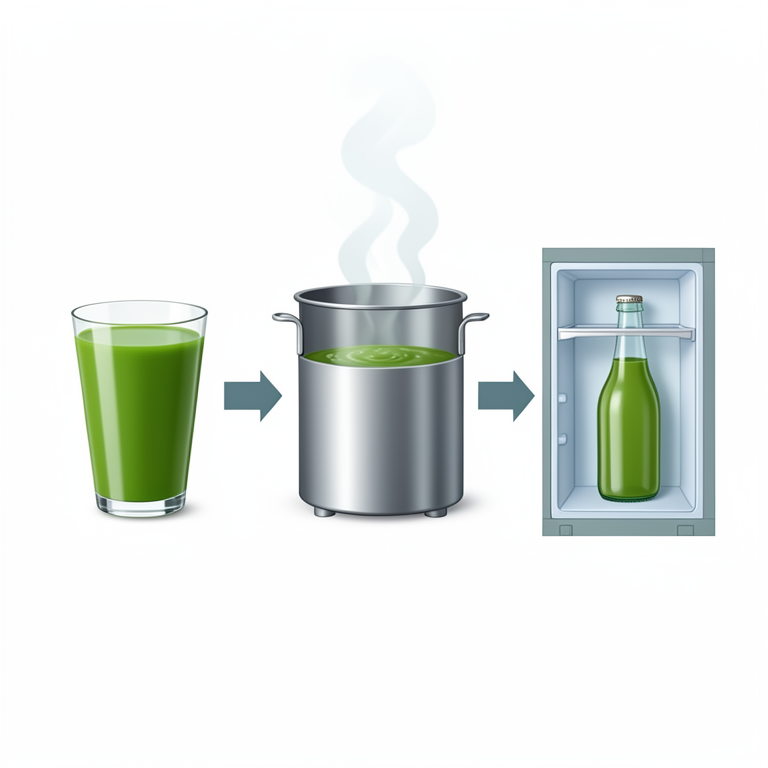
Processing Workflow
AI-generated conceptual illustration (sugarcane juice). It explains the idea and does not show study data.
View source evidence ↗Figures & tables
From the original paper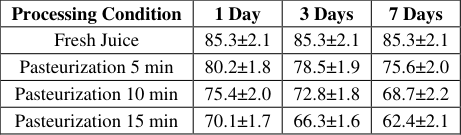 Table 1
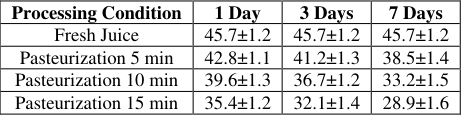 Table 2
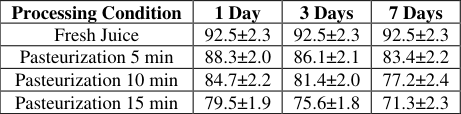 Table 3
Introduction
Sugarcane juice is a widely consumed beverage, cherished for its refreshing taste and a myriad of health benefits. These health benefits are primarily attributed to its rich content of antioxidants, which include phenolic compounds, flavonoids, and other bioactive molecules. Antioxidants are essential for human health as they play a pivotal role in neutralizing free radicals, thereby mitigating oxidative stress. Oxidative stress is linked to the pathogenesis of various chronic diseases such as cancer, cardiovascular diseases, and neurodegenerative disorders. Therefore, the consumption of antioxidant-rich beverages like sugarcane juice can contribute significantly to the prevention of these ailments. Despite its benefits, sugarcane juice is highly perishable due to its rich nutrient content, which provides an ideal medium for microbial growth. To ensure safety and extend shelf life, sugarcane juice undergoes processing stages such as pasteurization, refrigeration, and storage. Pasteurization, a common heat treatment process, is essential for destroying pathogenic microorganisms and enzymes that can cause spoilage. However, heat treatment can also lead to the degradation of sensitive antioxidant compounds, potentially diminishing the health benefits of the juice. Refrigeration is another critical processing stage aimed at slowing down microbial growth and enzymatic reactions, thus extending the juice's shelf life. However, even under refrigeration, prolonged storage can lead to gradual degradation of antioxidants. The combined effects of pasteurization and refrigerated storage on the stability of antioxidants in sugarcane juice are not fully understood, necessitating comprehensive research in this area. Previous studies on various fruit juices have shown that thermal processing and storage conditions significantly impact the retention of phenolic compounds and overall antioxidant activity. For example, Santos et al. (2013) [1] reported that pasteurization led to a significant loss of phenolic content and antioxidant activity in fruit juices. Similarly, Shaghaghi et al. (2017) [2] found that refrigerated storage resulted in a decline in phenolic content and antioxidant capacity in grape juice over time. These studies underscore the importance of optimizing processing conditions to preserve the nutritional and functional qualities of juices. Given the popularity of sugarcane juice and the increasing consumer demand for functional beverages with healthpromoting properties, it is crucial to investigate how processing affects its antioxidant stability. Understanding these effects will help in developing optimized processing protocols that maximize the retention of beneficial compounds while ensuring the safety and shelf life of the juice.
Main Objective
The main objective of this paper is to investigate the stability of antioxidant compounds in sugarcane juice during pasteurization and refrigeration, and to determine the optimal processing conditions that preserve the juice's antioxidant properties.
Materials and Methods 1. Sample Collection
Fresh sugarcane juice was extracted from mature sugarcane stalks using a mechanical juicer. The juice was filtered to remove any solid particles and divided into different batches for processing.
Processing Conditions
In this study, we explored the effects of different processing conditions on the antioxidant stability of sugarcane juice. The primary processing stages examined were pasteurization, refrigeration, and storage. Freshly extracted sugarcane juice was obtained from mature stalks using a mechanical juicer. The juice was filtered to remove solid particles and then subjected to various processing conditions. The pasteurization process involved heating the juice at 85 °C for different durations: 5 minutes, 10 minutes, and 15 minutes. This was done to determine the impact of heat treatment on the antioxidant compounds present in the juice. Pasteurization is essential for ensuring microbial safety and extending the shelf life of the juice; however, it is known to potentially degrade heat-sensitive bioactive compounds. Post-pasteurization, the juice samples were immediately cooled and stored under refrigeration at 4 °C. This temperature was chosen to simulate typical storage conditions for perishable beverages and to observe the stability of antioxidant compounds over time. The samples were stored for varying durations: 1 day, 3 days, and 7 days. This range allowed us to monitor short-term and long-term effects of refrigeration on the antioxidant properties of the juice. Throughout the storage period, the juice samples were periodically analyzed to assess changes in total phenolic content (TPC), total flavonoid content (TFC), and DPPH radical scavenging activity. These assays provided a comprehensive understanding of how different processing conditions influenced the antioxidant stability of sugarcane juice. By systematically varying pasteurization times and storage durations, we aimed to identify optimal conditions that would preserve the health-promoting properties of sugarcane juice while ensuring its safety and palatability.
Antioxidant Activity Assays
To evaluate the antioxidant stability of sugarcane juice under different processing conditions, we conducted several key antioxidant activity assays: Total Phenolic Content (TPC), Total Flavonoid Content (TFC), and DPPH Radical Scavenging Activity. The Total Phenolic Content (TPC) was determined using the Folin-Ciocalteu method. This colorimetric assay involves mixing the sugarcane juice samples with Folin-Ciocalteu reagent and sodium carbonate. The mixture is then incubated, allowing phenolic compounds to react with the reagent, forming a blue complex. The absorbance of this complex is measured at 765 nm using a spectrophotometer, and the phenolic content is quantified against a standard curve of gallic acid equivalents (GAE). This method provides a comprehensive measure of the phenolic compounds in the juice, which are known for their potent antioxidant properties. The Total Flavonoid Content (TFC) was measured using the aluminum chloride colorimetric method. In this assay, sugarcane juice samples are mixed with aluminum chloride solution and potassium acetate. After incubation, the formation of a yellow complex is indicative of the presence of flavonoids. The absorbance of this complex is measured at 415 nm, and flavonoid content is quantified using a standard curve of quercetin equivalents. Flavonoids are a significant class of antioxidants, contributing to the overall antioxidant capacity of the juice. The DPPH Radical Scavenging Activity assay was employed to evaluate the free radical scavenging capacity of the sugarcane juice. In this assay, the juice samples are mixed with a solution of DPPH (2,2-diphenyl-1-picrylhydrazyl), a stable free radical. The reaction leads to a color change from purple to yellow as the DPPH radicals are scavenged by antioxidants present in the juice. The absorbance decrease is measured at 517 nm, and the antioxidant activity is expressed as a percentage of DPPH inhibition. This assay provides a direct measure of the juice's ability to neutralize free radicals, reflecting its antioxidant potency. These antioxidant activity assays collectively offer a detailed analysis of how processing conditions, such as pasteurization and storage, affect the stability of antioxidant compounds in sugarcane juice. By utilizing these methods, we were able to quantify the impact on both phenolic and flavonoid contents, as well as the overall free radical scavenging capacity, providing a comprehensive assessment of the juice's antioxidant properties under varying conditions.
Statistical Analysis
In this study, the data collected from the antioxidant activity assays were subjected to statistical analysis to determine the impact of different processing conditions on the stability of antioxidant compounds in sugarcane juice. The analysis was performed using ANOVA (Analysis of Variance) to identify significant differences between the means of different treatment groups. This was followed by Tukey's post hoc test for pairwise comparisons to pinpoint specific differences between the groups. The significance level was set at p < 0.05, and the data were expressed as mean±standard deviation (SD) of triplicate measurements. This rigorous statistical approach ensured that the observed differences were not due to random variation but were attributable to the processing conditions.
Results and Discussion
Results and Discussion
Results
The observed data from the Total Phenolic Content (TPC), Total Flavonoid Content (TFC), and DPPH Radical Scavenging Activity assays are summarized in the following tables. Each table presents the mean values and standard deviations for each processing condition.
Discussion
The present study examined the impact of different processing conditions on the stability of antioxidant compounds in sugarcane juice, specifically focusing on total phenolic content (TPC), total flavonoid content (TFC), and DPPH radical scavenging activity. Our findings indicate significant degradation of these compounds due to pasteurization and prolonged storage, which aligns with existing literature on the thermal sensitivity of antioxidants. Our results demonstrated that pasteurization significantly reduces the TPC and TFC in sugarcane juice. For instance, TPC decreased from 85.3±2.1 mg GAE/100 mL in fresh juice to 70.1±1.7 mg GAE/100 mL after 15 minutes of pasteurization. Similarly, TFC dropped from 45.7±1.2 mg QE/100 mL in fresh juice to 35.4±1.2 mg QE/100 mL under the same conditions. These findings are consistent with those of Santos et al. (2013) [1] , who reported a significant loss of phenolic compounds in pasteurized fruit juices due to thermal degradation. The reduction in DPPH radical scavenging activity, from 92.5±2.3% in fresh juice to 79.5±1.9% after 15 minutes of pasteurization, further corroborates the sensitivity of antioxidant activity to heat treatment, as observed in studies on other beverages like pasteurized orange juice. Refrigeration and extended storage further exacerbated the loss of antioxidant compounds. After 7 days of storage, TPC in juice pasteurized for 15 minutes decreased to 62.4±2.1 mg GAE/100 mL, and TFC to 28.9±1.6 mg QE/100 mL. This trend is supported by the findings of Shaghaghi et al. (2017) [2] , who observed a similar decline in phenolic content and antioxidant activity in refrigerated grape juice over time. The progressive decrease in DPPH radical scavenging activity, to 71.3±2.3% after 7 days of storage, highlights the combined adverse effects of pasteurization and refrigeration. Comparative studies on the thermal and storage stability of antioxidants in various juices reveal a common pattern of degradation. According to Apak et al. (2016) [3] , pasteurization often leads to the breakdown of phenolic structures, resulting in diminished antioxidant capacity. Our study's results align with these observations, demonstrating that even mild pasteurization can significantly impact the antioxidant profile of sugarcane juice. In contrast, high-pressure processing (HPP) has been shown to better preserve antioxidant compounds compared to thermal pasteurization. Chawla et al. (2021) [4] found that HPP-treated apple juice retained higher levels of phenolics and flavonoids, suggesting an alternative method to preserve the antioxidant properties of sugarcane juice. This supports the notion that non-thermal preservation methods may be more effective in maintaining the nutritional and functional qualities of juice.
The practical implications of our findings are significant for the juice industry. To maximize the health benefits of sugarcane juice, it is crucial to optimize pasteurization conditions, potentially employing lower temperatures or shorter times. Non-thermal techniques such as HPP should be explored as viable alternatives to conventional pasteurization. Additionally, enhancing storage conditions, such as using antioxidants or natural preservatives, could mitigate the degradation of bioactive compounds during refrigeration. While this study provides valuable insights into the impact of processing on antioxidant stability, it is limited to specific processing conditions. Future research should explore a broader range of pasteurization temperatures and times, as well as alternative preservation methods. Investigating the use of natural preservatives and their effect on the stability of antioxidant compounds could also provide practical solutions for extending the shelf life of sugarcane juice without compromising its health benefits. In conclusion, our study highlights the significant impact of pasteurization and storage on the antioxidant stability of sugarcane juice. The findings underscore the need for optimized processing conditions to preserve the beneficial properties of this popular beverage. By adopting nonthermal preservation methods and improving storage practices, the juice industry can enhance the nutritional value and appeal of sugarcane juice to health-conscious consumers.
Conclusion
The study investigated the stability of antioxidant compounds in sugarcane juice under various processing conditions, including pasteurization and refrigeration. Our findings reveal that both pasteurization and prolonged storage significantly reduce the antioxidant properties of sugarcane juice. Specifically, the total phenolic content, total flavonoid content, and DPPH radical scavenging activity decreased with increased pasteurization time and extended storage duration. The results underscore the thermal sensitivity of antioxidant compounds, which are adversely affected by pasteurization. While necessary for ensuring microbial safety, pasteurization leads to a substantial loss of beneficial antioxidants. Refrigeration further contributes to the degradation of these compounds over time, highlighting the challenge of maintaining the nutritional quality of sugarcane juice during storage. To preserve the health-promoting properties of sugarcane juice, it is crucial to optimize processing conditions. Potential strategies include minimizing pasteurization time and temperature, exploring non-thermal preservation methods such as high-pressure processing (HPP), and using natural preservatives to enhance antioxidant stability during storage. This study provides valuable insights for the juice industry, emphasizing the need for advanced processing techniques to retain the nutritional and functional qualities of sugarcane juice. Future research should continue to explore alternative methods and storage solutions to ensure that consumers can enjoy the full health benefits of this popular beverage.
Figures and tables from the paper
| Processing Condition | 1 Day | 3 Days | 7 Days |
|---|---|---|---|
| Fresh Juice | 85.3±2.1 | 85.3±2.1 | 85.3±2.1 |
| Pasteurization 5 min | 80.2±1.8 | 78.5±1.9 | 75.6±2.0 |
| Pasteurization 10 min | 75.4±2.0 | 72.8±1.8 | 68.7±2.2 |
| Pasteurization 15 min | 70.1±1.7 | 66.3±1.6 | 62.4±2.1 |
Table text extracted from the original PDF; superscript letters are shown inline. The original table image is below.
View original table image
| Processing Condition | 1 Day | 3 Days | 7 Days |
|---|---|---|---|
| Fresh Juice | 45.7±1.2 | 45.7±1.2 | 45.7±1.2 |
| Pasteurization 5 min | 42.8±1.1 | 41.2±1.3 | 38.5±1.4 |
| Pasteurization 10 min | 39.6±1.3 | 36.7±1.2 | 33.2±1.5 |
| Pasteurization 15 min | 35.4±1.2 | 32.1±1.4 | 28.9±1.6 |
Table text extracted from the original PDF; superscript letters are shown inline. The original table image is below.
View original table image
| Processing Condition | 1 Day | 3 Days | 7 Days |
|---|---|---|---|
| Fresh Juice | 92.5±2.3 | 92.5±2.3 | 92.5±2.3 |
| Pasteurization 5 min | 88.3±2.0 | 86.1±2.1 | 83.4±2.2 |
| Pasteurization 10 min | 84.7±2.2 | 81.4±2.0 | 77.2±2.4 |
| Pasteurization 15 min | 79.5±1.9 | 75.6±1.8 | 71.3±2.3 |
Table text extracted from the original PDF; superscript letters are shown inline. The original table image is below.
View original table image
References
9 in the original paper- Shaghaghi M, Hashemi Gahruie H, Azizi MH, et al. The Effect of Refrigeration on the Phenolic Content and Antioxidant Activity of Grape Juice. Food Chem. 2017;220:527-533. doi:10.1016/j.foodchem.2016.10.024.
- Apak R, Özyürek M, Güçlü K, et al. Phenolic Compounds and the Antioxidant Capacity of Fruit Juices: A Review. Crit Rev Food Sci Nutr. 2016;56(1):1-15. doi:10.1080/10408398.2013.795541.
- Chawla R, Patil GR, Singh AK. High-Pressure Processing of Apple Juice: Effects on Phenolic Content and Antioxidant Activity. Food Res Int. 2021;140:109878. doi:10.1016/j.foodres.2020.109878.
- Patras A, Brunton NP, O'Donnell C, Tiwari BK. Effect of Thermal Processing on Anthocyanin Stability in Foods; Mechanisms and Kinetics of Degradation. Trends Food Sci Technol. 2010;21(1):3-11. doi:10.1016/j.tifs.2009.07.004.
- Plaza L, Sánchez-Moreno C, De Ancos B, et al. Carotenoid and Flavonoid Profile of Sweet Bell Peppers as Affected by Various Processing Techniques and Freshness. J Agric Food Chem. 2006;54(2):200-206. doi:10.1021/jf051826v.
- Rawson A, Patras A, Tiwari BK, et al. Effect of Thermal and Nonthermal Processing Technologies on the Bioactive Content of Exotic Fruits and Their Products: Review of Recent Advances. Food Res Int. 2011;44(7):1875-1887. doi:10.1016/j.foodres.2011.02.053.
- Vervoort L, Van der Plancken I, Grauwet T, et al. Thermal versus High-Pressure Processing of Carrot Puree: Increased Carotenoid Retention and Cellular Tissue Deformation. J Food Sci. 2012;77(2) doi:10.1111/j.1750-3841.2011.02523.x.
- Morales-de la Peña M, Salvia-Trujillo L, Rojas-Graü MA, Martín-Belloso O. Impact of High-Intensity Pulsed Electric Fields on Carotenoid Profile of an Encapsulated Watermelon Juice during Refrigerated Storage. Food Chem. 2011;129(3):1050-1056. doi:10.1016/j.foodchem.2011.05.052.
- Odriozola-Serrano I, Soliva-Fortuny R, Martín-Belloso O. Phenolic Acids, Flavonoids, Vitamin C and Antioxidant Capacity of Strawberry Juices Processed by High-Intensity Pulsed Electric Fields or Thermal Treatments. Food Chem. 2008;107(4):1359-1369. doi:10.1016/j.foodchem.2007.09.052.