
Research article · 2022 · Full text
International Journal of Agriculture and NutritionThe impact of seed-borne fungal pathogens on wheat germination and yield: A comprehensive review
Volume 4(1) · Pages 101–105 · DOI: 10.33545/26646064.2022.v4.i1b.158 ↗
Research areasWheat and Barley Genetics and PathologyCrop Yield and Soil FertilityGenetics and Plant Breeding
Abstract
Author-writtenSeed-borne fungal pathogens significantly impact wheat (Triticum aestivum) production by affecting seed germination, seedling vigor, and crop yield. This review synthesizes current knowledge on the prevalence, identification, and effects of seed-borne fungi on wheat germination and yield. It discusses the mechanisms by which these pathogens affect wheat, the environmental factors influencing their prevalence, and the strategies for managing seed-borne fungal diseases. By compiling findings from recent studies, this review aims to provide a comprehensive understanding of the challenges posed by seed-borne fungi and the integrated approaches needed to mitigate their impact on wheat production.
Summary
Source-checkedPlain-language reading of the full paper, prepared with AI and checked against the text. Each point links to the authors' own words.
Why it matters
- Wheat is a critical global staple crop that provides a large part of the world's caloric intake. View evidence ↗
- Seed-borne fungal pathogens challenge wheat production by hindering seed germination and seedling establishment, which leads to significant yield losses. View evidence ↗
- These fungi typically infect seeds during maturation or harvesting, causing poor germination and creating weakened plants more vulnerable to other stresses. View evidence ↗
The question
- The study aims to evaluate how seed-borne fungal pathogens affect wheat germination and yield, while reviewing management strategies for sustainable production. View evidence ↗
What they did
- The authors conducted a comprehensive review synthesizing existing knowledge on the prevalence, identification, and effects of these fungi. View evidence ↗
- The review analyzes the mechanisms of infection, environmental drivers of prevalence, and various management strategies. View evidence ↗
What they found
- Severe Fusarium infections can result in wheat yield losses of up to 50%. View evidence ↗
- Alternaria infections are associated with yield losses ranging from 10% to 20%, depending on environmental conditions and severity. View evidence ↗
- Aspergillus contamination can lead to yield losses of up to 30% due to poor germination and compromised seedling health. View evidence ↗
- Bipolaris infections can reduce wheat yields by 15% to 25%. View evidence ↗
- Penicillium contamination can cause yield losses of up to 20%. View evidence ↗
- Fusarium-infected seeds show lower germination rates because they produce mycotoxins like deoxynivalenol (DON) that disrupt cellular functions. View evidence ↗
- Biological seed treatments using Trichoderma spp. can reduce fungal disease incidence while improving seedling vigor and germination. View evidence ↗
- Fungicide treatments have been shown to increase germination rates and lower infection levels of Bipolaris sorokiniana. View evidence ↗
What it means
- The authors conclude that an Integrated Disease Management (IDM) approach, combining cultural, biological, chemical, and genetic strategies, is the most effective way to sustainably control these pathogens. View evidence ↗
- The authors recommend continued research and extension efforts to create management strategies tailored to specific pathogen pressures and environments. View evidence ↗
Visual summary
1 visualsIllustrations explain the paper; they do not show study data.
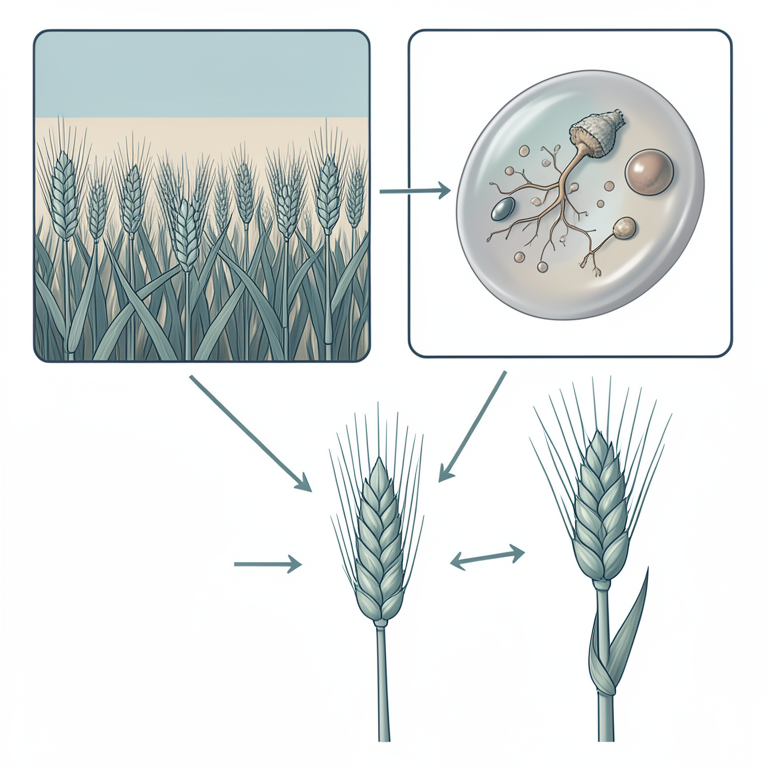
Integrated Disease Management (IDM) Framework
AI-generated conceptual illustration (wheat plants and seeds). It explains the idea and does not show study data.
View source evidence ↗Figures & tables
From the original paper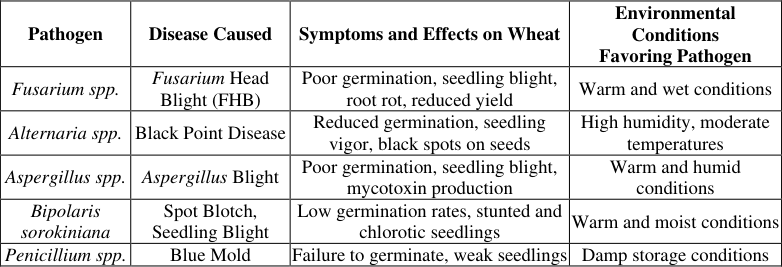 Table 1
Introduction
Wheat (Triticum aestivum) is one of the most important staple crops worldwide, providing a significant portion of the global population's caloric intake. However, wheat production faces numerous challenges, including diseases caused by seed-borne fungal pathogens. These pathogens can lead to significant yield losses by affecting seed germination and seedling establishment. Understanding the impact of seed-borne fungal pathogens on wheat is crucial for developing effective management strategies to ensure food security. Seed-borne fungi are microorganisms that infect seeds, often during the maturation and harvesting stages. They can cause diseases in seedlings, resulting in poor germination rates and weakened plants that are more susceptible to other stress factors. This review aims to provide an overview of the major seed-borne fungal pathogens affecting wheat, their impact on germination and yield, and current management practices.
Objective of the study
The objective of this study is to evaluate the impact of seed-borne fungal pathogens on wheat germination and yield, and to review the current strategies for managing these pathogens to ensure sustainable wheat production. The table provides a detailed overview of the major seedborne fungal pathogens affecting wheat, highlighting the diseases they cause, their symptoms, effects on wheat, and the environmental conditions that favor their prevalence. Understanding these pathogens is crucial for developing effective management strategies to mitigate their impact on wheat production. In conclusion, the table provides a comprehensive overview of the major seed-borne fungal pathogens affecting wheat, their impact on germination and yield, and the environmental conditions that favor their prevalence. Effective management of these pathogens requires a multifaceted approach that incorporates both traditional and innovative agricultural practices.
Major seed-borne fungal pathogens in wheat
Major seed-borne fungal pathogens in wheat
Impact on germination and seedling vigor
Seed-borne fungal pathogens have a profound impact on the germination and seedling vigor of wheat, leading to significant yield losses and compromised crop quality. These pathogens can infect seeds at various stages, including maturation, harvesting, and storage, resulting in poor germination rates and weakened seedlings. Fusarium spp., particularly Fusarium graminearum and Fusarium culmorum, are notorious for causing Fusarium head blight (FHB) and seedling blight. Infected seeds often exhibit poor germination and produce seedlings with stunted growth and root rot. The presence of Fusarium spp. can lead to pre-and post-emergence damping-off, reducing plant population density and overall crop vigor. Studies by Goswami and Kistler (2004) [3] have shown that Fusariuminfected seeds have significantly lower germination rates due to the production of mycotoxins, such as deoxynivalenol (DON), which inhibit protein synthesis and disrupt cellular functions. Alternaria spp., including Alternaria triticina and Alternaria alternata, cause black point disease, characterized by black discoloration on the seeds. This pathogen thrives in high humidity and moderate temperatures, conditions often found in many wheat-growing regions. Infected seeds demonstrate reduced germination rates and poor seedling vigor. Research by Khanzada et al. (2002) [5] indicates that Alternariainfected seeds exhibit significant reductions in germination due to fungal invasion and the subsequent breakdown of seed tissues. Aspergillus spp., such as Aspergillus flavus and Aspergillus niger, are major concerns due to their ability to produce aflatoxins, which pose severe health risks. These pathogens cause Aspergillus blight, leading to poor seed germination and seedling blight. Aspergillus-infected seeds often fail to germinate, and those that do produce weak seedlings. Bateman and Kwasna (1999) [1] reported that Aspergillus contamination in seeds leads to reduced germination rates and compromised seedling health, primarily due to the toxins produced by the fungus. Bipolaris sorokiniana, responsible for spot blotch and seedling blight, affects germination by causing seedling damping-off and root rot. Infected seeds have low germination rates, and the seedlings are often stunted and chlorotic. Singh and Pavgi (1974) [7] demonstrated that Bipolaris-infected seeds show significantly reduced germination and seedling vigor, which directly impacts plant population density and yield potential. Penicillium spp., particularly Penicillium expansum, cause blue mold in stored seeds. These pathogens thrive in damp storage conditions and can significantly reduce seed viability. Infected seeds often fail to germinate, and the resulting seedlings are weak and less competitive. Bhoite and Oehrke (2011) [2] found that Penicillium contamination leads to substantial reductions in seed germination and seedling vigor, emphasizing the importance of proper seed storage practices. [4] highlights the efficacy of fungicide treatments in controlling Bipolaris sorokiniana, resulting in improved seed germination and seedling health. Similarly, Bhoite and Oehrke (2011) [2] demonstrated the effectiveness of organic and conventional seed treatments in reducing Penicillium contamination and enhancing germination rates.
In conclusion, seed-borne fungal pathogens significantly impact wheat germination and seedling vigor, leading to reduced plant population density and yield. Understanding the environmental conditions that favor these pathogens and implementing integrated management strategies are crucial for mitigating their effects and ensuring sustainable wheat production.
Impact on yield
Seed-borne fungal pathogens have a significant impact on wheat yield, primarily through their detrimental effects on seed germination and seedling vigor, which lead to poor crop stands and reduced biomass. The presence of these pathogens can cause both direct and indirect yield losses, affecting the overall productivity and quality of wheat crops. Fusarium spp., particularly Fusarium graminearum and Fusarium culmorum, are major contributors to yield losses in wheat. These pathogens cause Fusarium Head Blight (FHB) and seedling blight, leading to reduced seed germination and seedling vigor. Infected plants often exhibit stunted growth and root rot, resulting in lower plant density and reduced biomass. The production of mycotoxins, such as deoxynivalenol (DON), by Fusarium spp. further compromises grain quality and safety, leading to economic losses. Studies by Goswami and Kistler (2004) [3] have shown that Fusarium infections can lead to yield losses of up to 50% in severe cases, highlighting the critical need for effective management strategies. Alternaria spp., including Alternaria triticina and Alternaria alternata, cause black point disease in wheat, characterized by black discoloration on seeds and reduced seedling vigor. These pathogens thrive in high humidity and moderate temperatures, leading to significant reductions in germination rates and poor seedling establishment. The resulting sparse crop stands directly translate to lower grain yields. Khanzada et al. (2002) [5] reported that Alternaria infections could cause yield losses of 10-20%, depending on the severity of the infection and environmental conditions. Aspergillus spp., such as Aspergillus flavus and Aspergillus niger, are known for their ability to produce aflatoxins, which pose serious health risks to humans and animals. These pathogens cause Aspergillus blight, leading to poor seed germination and weak seedlings. Aspergillus-infected seeds often fail to establish robust crop stands, resulting in reduced biomass and lower yields. Bateman and Kwasna (1999) [1] found that Aspergillus contamination in wheat seeds could lead to yield losses of up to 30%, primarily due to the combined effects of reduced germination and compromised seedling health. Bipolaris sorokiniana, the causal agent of spot blotch and seedling blight, affects wheat yield by causing seedling damping-off, root rot, and stunted growth. Infected seeds have low germination rates, and the resulting seedlings are often chlorotic and less competitive. This leads to sparse crop stands and lower yield potential. Singh and Pavgi (1974) [7] demonstrated that Bipolaris infections could reduce wheat yields by 15-25%, depending on the infection severity and environmental conditions. Penicillium spp., particularly Penicillium expansum, cause blue mold in stored wheat seeds, leading to reduced seed viability and weak seedlings. Infected seeds often fail to germinate, and the resulting seedlings are less competitive, leading to lower biomass and reduced yields. Bhoite and Oehrke (2011) [2] found that Penicillium contamination could cause yield losses of up to 20%, emphasizing the importance of proper seed storage practices to minimize fungal infections.
The environmental conditions that favor the prevalence of these seed-borne pathogens also play a crucial role in determining their impact on wheat yield. High humidity, warm temperatures, and poor soil drainage create ideal conditions for the growth and spread of pathogens like Fusarium spp., Alternaria spp., and Bipolaris sorokiniana. These conditions exacerbate the effects of seed-borne fungi on crop establishment and yield potential. Effective management of seed-borne fungal pathogens is essential to minimize their impact on wheat yield. Strategies such as fungicide seed treatments, crop rotation, use of resistant varieties, and proper seed storage practices can significantly reduce the prevalence and severity of these pathogens. Jahn et al. (2005) [4] highlighted the effectiveness of fungicide treatments in controlling Bipolaris sorokiniana, resulting in improved crop stands and higher yields. Similarly, Bhoite and Oehrke (2011) [2] demonstrated the benefits of organic and conventional seed treatments in reducing Penicillium contamination and enhancing yield potential.
Management Strategies
Effective management of seed-borne fungal pathogens in wheat is critical to minimizing their impact on seed germination, seedling vigor, and yield. Integrated management strategies that combine cultural, biological, chemical, and genetic approaches are essential for sustainable wheat production. Cultural practices play a vital role in managing seed-borne fungal pathogens. Crop rotation and residue management are key strategies.
Rotating wheat with non-host crops helps break the disease cycle by reducing the buildup of pathogen inoculum in the soil. Crop residues can harbor fungal pathogens; hence, proper management, such as incorporating residues into the soil or removing them from the field, can reduce the inoculum load. Proper seed storage conditions are also crucial. Seeds should be stored in dry, cool environments to prevent fungal growth. High humidity and warm temperatures favor the proliferation of seed-borne fungi like Aspergillus spp. and Penicillium spp. Ensuring seeds are stored under optimal conditions can significantly reduce the risk of fungal contamination. Biological control involves the use of beneficial microorganisms to suppress the activity of seed-borne fungal pathogens. Trichoderma spp. are well-known biocontrol agents that can effectively combat various seedborne fungi. These beneficial fungi colonize the seed surface, outcompete the pathogenic fungi for nutrients, and produce antifungal compounds that inhibit pathogen growth.
Research has shown that biological seed treatments with Trichoderma spp. can enhance seed germination and seedling vigor while reducing the incidence of fungal diseases. For instance, studies by Harman et al. (2004) demonstrated that Trichoderma-treated seeds had significantly lower infection rates and better germination compared to untreated seeds. Fungicide seed treatments are a common and effective method for managing seed-borne fungal pathogens. Chemical treatments can protect seeds from infection during storage and early growth stages. Commonly used fungicides include thiram, carboxin, fludioxonil, and metalaxyl, which have broad-spectrum activity against a range of seed-borne fungi. Fungicide treatments have been shown to significantly improve seed germination rates and seedling health. For example, Jahn et al. (2005) [4] reported that fungicide-treated seeds exhibited higher germination rates and lower infection levels of Bipolaris sorokiniana. However, it is important to use fungicides judiciously to avoid the development of fungicide-resistant pathogen strains.
Breeding for genetic resistance is a long-term strategy for managing seed-borne fungal pathogens. Developing and deploying wheat varieties that are resistant to these pathogens can significantly reduce the impact of fungal diseases. Genetic resistance can be achieved through traditional breeding methods or modern biotechnological approaches such as marker-assisted selection and genetic engineering. Researchers have identified resistant genes in wheat that confer resistance to pathogens like Fusarium spp. and Bipolaris sorokiniana. Incorporating these resistant genes into commercial wheat varieties can provide a durable and sustainable solution to managing seed-borne fungal diseases.
An integrated disease management (IDM) approach combines multiple strategies to achieve effective and sustainable control of seed-borne fungal pathogens. IDM involves the coordinated use of cultural practices, biological control, chemical treatments, and genetic resistance to minimize the impact of fungal diseases. Implementing an IDM approach requires careful planning and monitoring. Farmers should regularly scout their fields for signs of disease, use clean and certified seeds, apply appropriate seed treatments, and adopt crop rotation and residue management practices. By integrating these strategies, farmers can reduce the reliance on chemical fungicides and promote a more sustainable and environmentally friendly approach to disease management. Numerous studies have demonstrated the effectiveness of integrated management strategies in controlling seed-borne fungal pathogens. For instance, Harman et al. (2004) showed that combining biological seed treatments with Trichoderma spp. and fungicide treatments resulted in significantly lower infection rates and improved seedling health compared to using either method alone. Similarly, Bhoite and Oehrke (2011) [2] found that organic and conventional seed treatments effectively reduced Penicillium contamination and enhanced seed germination and yield. In practice, farmers who have adopted integrated management strategies have reported better crop stands, higher yields, and reduced disease incidence. These realworld examples highlight the importance of using a holistic approach to managing seed-borne fungal pathogens in wheat.
In conclusion, managing seed-borne fungal pathogens in wheat requires a comprehensive and integrated approach. By combining cultural practices, biological control, chemical treatments, and genetic resistance, farmers can effectively reduce the impact of these pathogens on seed germination, seedling vigor, and yield. An integrated disease management strategy not only enhances crop productivity but also promotes sustainable and environmentally friendly farming practices. Continued research and extension efforts are needed to develop and disseminate effective management strategies that address the challenges posed by seed-borne fungal pathogens in wheat production.
Conclusion
The comprehensive review on the impact of seed-borne fungal pathogens on wheat germination and yield underscores the significant challenges these pathogens pose to wheat production. Fusarium spp., Alternaria spp., Aspergillus spp., Bipolaris sorokiniana, and Penicillium spp. are among the major pathogens that adversely affect seed germination, seedling vigor, and ultimately, crop yield. These pathogens thrive under specific environmental conditions, such as high humidity and warm temperatures, which facilitate their growth and spread. Fusarium species, responsible for Fusarium Head Blight (FHB) and seedling blight, significantly reduce germination rates and seedling health, leading to substantial yield losses. Alternaria spp., causing black point disease, and Aspergillus spp., known for producing harmful mycotoxins, also contribute to decreased germination and weakened seedlings. Bipolaris sorokiniana and Penicillium spp. further exacerbate the problem by causing diseases like spot blotch, seedling blight, and blue mold, which reduce seed viability and crop stand density. Effective management of these seed-borne pathogens requires an integrated approach that combines cultural practices, biological control, chemical treatments, and genetic resistance. Cultural practices such as crop rotation, proper residue management, and optimal seed storage conditions are essential for reducing pathogen inoculum. Biological control using beneficial microorganisms like Trichoderma spp. has shown promise in enhancing seed germination and seedling vigor while suppressing pathogen activity. Fungicide seed treatments remain a vital tool for protecting seeds from fungal infections, though their use must be judicious to prevent resistance development.
Breeding for genetic resistance offers a long-term solution, with ongoing research focused on incorporating resistant genes into commercial wheat varieties. An integrated disease management (IDM) strategy that incorporates these various approaches can significantly mitigate the impact of seed-borne fungal pathogens on wheat. By adopting IDM practices, farmers can improve crop productivity, enhance seedling health, and reduce yield losses, contributing to sustainable wheat production. Continued research and extension efforts are crucial for developing and disseminating effective management strategies tailored to specific environmental conditions and pathogen pressures.
In conclusion, addressing the challenges posed by seedborne fungal pathogens is essential for ensuring the sustainability and productivity of wheat farming. This review highlights the need for a multifaceted approach to disease management, integrating cultural, biological, chemical, and genetic strategies to protect wheat crops from the detrimental effects of these pathogens.
Figures and tables from the paper
| Pathogen | Disease Caused | Symptoms and Effects on Wheat | Environmental Conditions Favoring Pathogen |
|---|---|---|---|
| Fusarium spp. | Fusarium Head Blight (FHB) | Poor germination, seedling blight, root rot, reduced yield | Warm and wet conditions |
| Alternaria spp. | Black Point Disease | Reduced germination, seedling vigor, black spots on seeds | High humidity, moderate temperatures |
| Aspergillus spp. | Aspergillus Blight | Poor germination, seedling blight, mycotoxin production | Warm and humid conditions |
| Bipolaris sorokiniana | Spot Blotch, Seedling Blight | Low germination rates, stunted and chlorotic seedlings | Warm and moist conditions |
| Penicillium spp. | Blue Mold | Failure to germinate, weak seedlings | Damp storage conditions |
Table text extracted from the original PDF; superscript letters are shown inline. The original table image is below.
View original table image
References
7 in the original paper- Bateman GL, Kwasna H. Effects of number of winter wheat crops grown successively on fungal communities on wheat roots. Applied Soil Ecology. 1999;13(3):271282.
- Bhoite SU, Oehrke L. Efficacy of organic and conventional seed treatments against seed-borne pathogens and effects on seed germination of winter wheat. The Plant Pathology Journal. 2011;27(1):24-29.
- Goswami RS, Kistler HC. Heading for disaster: Fusarium graminearum on cereal crops. Molecular Plant Pathology. 2004;5(6):515-525.
- Jahn M, Germar K, Hoffer C. Influence of seed treatments on the incidence of Bipolaris sorokiniana in wheat seeds. Journal of Plant Diseases and Protection. 2005;112(3):247-256.
- Khanzada KA, Lodhi AM, Shahzad S. Seed-borne mycoflora of wheat, sorghum and barley. Pakistan Journal of Botany. 2002;34(2):131-134.
- Palacios SA, Ramirez ML, Reynoso MM. Occurrence of Fusarium spp. and fumonisin in durum wheat grains. Journal of Agricultural and Food Chemistry. 2011;59(2):12264-12269.
- Singh DP, Pavgi MS. Seed-borne infection of Bipolaris sorokiniana in wheat and its effect on seed germination and seedling vigor. Phytopathology. 1974;64(11):14531455.