
Research article · 2024 · Full text
International Journal of Research in AgronomyEffect of different levels of gibberellic acid (GA3) on growth and yield of two varieties of cucumber (Cucumis sativus L.) cv. Malini, Nazia F1
Volume 7(6) · Pages 568–573 · DOI: 10.33545/2618060x.2024.v7.i6h.930 ↗
Research areasAdvances in Cucurbitaceae Research
Abstract
Author-writtenThe present investigation was carried out with title “Effect of different levels of gibberellic acid (GA3) on growth and yield of two varieties of cucumber (Cucumis sativus L.) cv. Malini, Nazia F1” atResearch Farm, Department of Horticulture, Naini Agricultural Institute, SHUATS, Naini, Prayagraj, Uttar Pradesh during the Zaid-2023-24 with a view to identify the effects of different combinations of PGR doses and its role in growth, yield and quality of two varieties of cucumber. The experiment was laid in Randomized block design with 10 treatments and 3 replications. Under this experiment, overall, 10 treatment was taken T1 (Malini + Control), T2 (Malini + (GA3) @ 5 ppm), T3 (Malini + (GA3) @ 10 ppm), T4 (Malini + (GA3) @ 15 ppm), T5 (Malini + (GA3) @ 20 ppm), T6 (Nazia F1 + Control), T7 (Nazia F1 + (GA3) @ 5 ppm) T8 (Nazia F1 + (GA3) @ 10 ppm),T9 (Nazia F1 + (GA3) @ 15 ppm) and T10 (Nazia F1 + (GA3) @ 20 ppm). From the above experimental finding it may be concluded that the treatment T10 (Nazia F1 + (GA3) was found to be best in the terms of growth, yield and quality of Cucumber. The highest net return was found in the T10 (Nazia F1 + (GA3) with (Rs 1,76,507/ha) and the highest B:C ratio was found in the same with 2.39.
Summary
Source-checkedPlain-language reading of the full paper, prepared with AI and checked against the text. Each point links to the authors' own words.
Why it matters
- India is a major global contributor to vegetable production, ranking as the second-largest producer of fruits and vegetables in 2020. View evidence ↗
- Cucumber is a significant crop in India, with production reaching 1608.29 million tonnes across 94 million hectares in 2020-21. View evidence ↗
- Plant Growth Regulators (PGRs) are essential for managing plant development and can directly influence the final crop yield. View evidence ↗
The question
- The study aimed to determine how different doses of gibberellic acid (GA3) affect the growth, yield, and quality of two cucumber varieties: Malini and Nazia F1. View evidence ↗
What they did
- The researchers used a Randomized block design consisting of 10 different treatments and 3 replications. View evidence ↗
- Treatments included control groups and GA3 concentrations of 5, 10, 15, and 20 ppm for both the Malini and Nazia F1 varieties. View evidence ↗
- The experiment took place during the Zaid seasons of 2022-23 at the Horticultural Research Farm in Prayagraj, Uttar Pradesh. View evidence ↗
- Data analysis was performed using STATISTICA (7.0) software. View evidence ↗
What they found
- The Nazia F1 variety with 20 ppm GA3 (T10) achieved the maximum plant height at 45 days after sowing (69.75 cm), while the Malini control (T1) had the minimum (45 cm). View evidence ↗
- The highest number of branches per plant at 45 DAS was found in T10 (15.98 branches), compared to the lowest in T1 (12.67 branches). View evidence ↗
- T10 (Nazia F1 + 20 ppm GA3) reached first flowering the fastest at 38.21 days, while T1 (Malini control) took the longest at 42.03 days. View evidence ↗
- The highest Total Soluble Solids (TSS) was 5.74°Brix in T10, while the lowest was 4.26°Brix in T2. View evidence ↗
- T10 produced the highest ascorbic acid content at 5.38 mg/100 g, whereas T1 produced the lowest at 3.47 mg/100 g. View evidence ↗
Visual summary
3 visualsIllustrations explain the paper; charts are replotted from the paper's own table values.
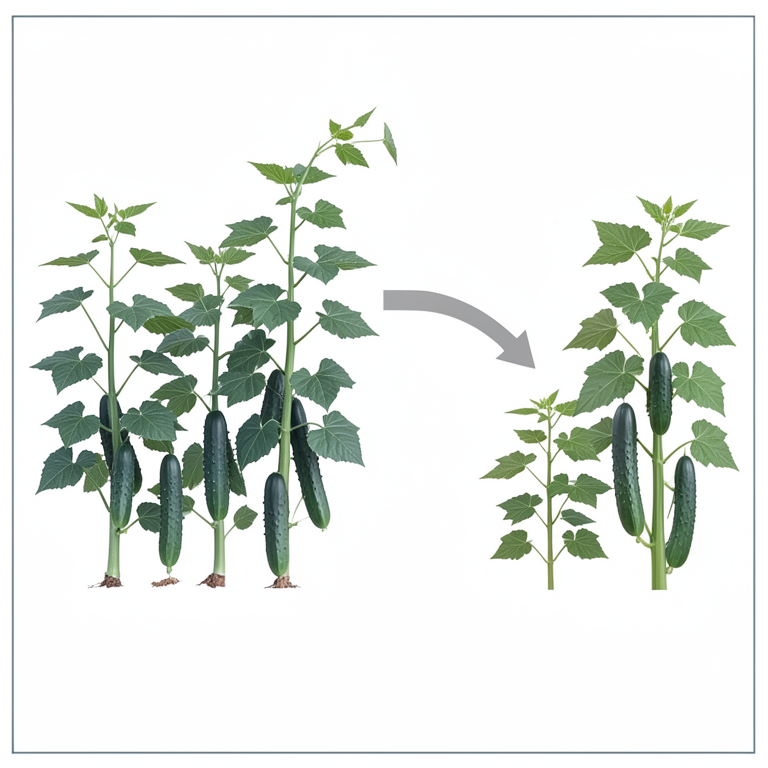
Experimental Treatment Matrix
AI-generated conceptual illustration (cucumber plants (Cucumis sativus L.)). It explains the idea and does not show study data.
View source evidence ↗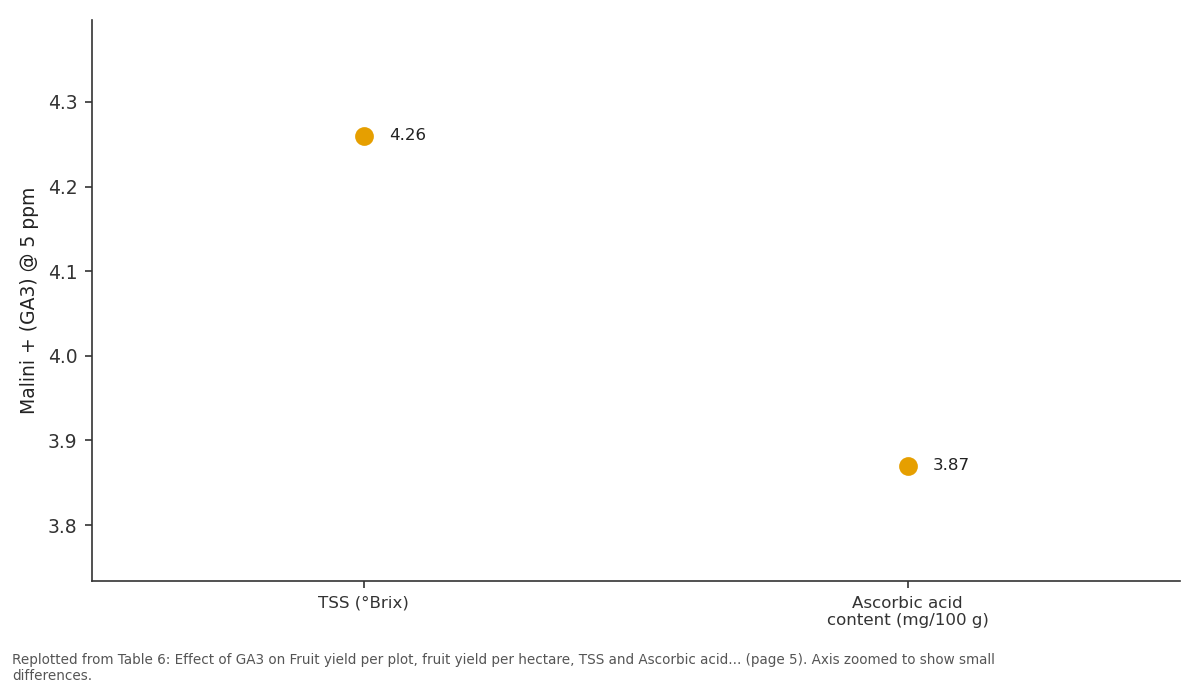
Malini + (GA3) @ 5 ppm: TSS (°Brix) vs Ascorbic acid content...
Replotted from Table 6 (page 5) of the original paper. Every bar is the paper's own table value.
View source evidence ↗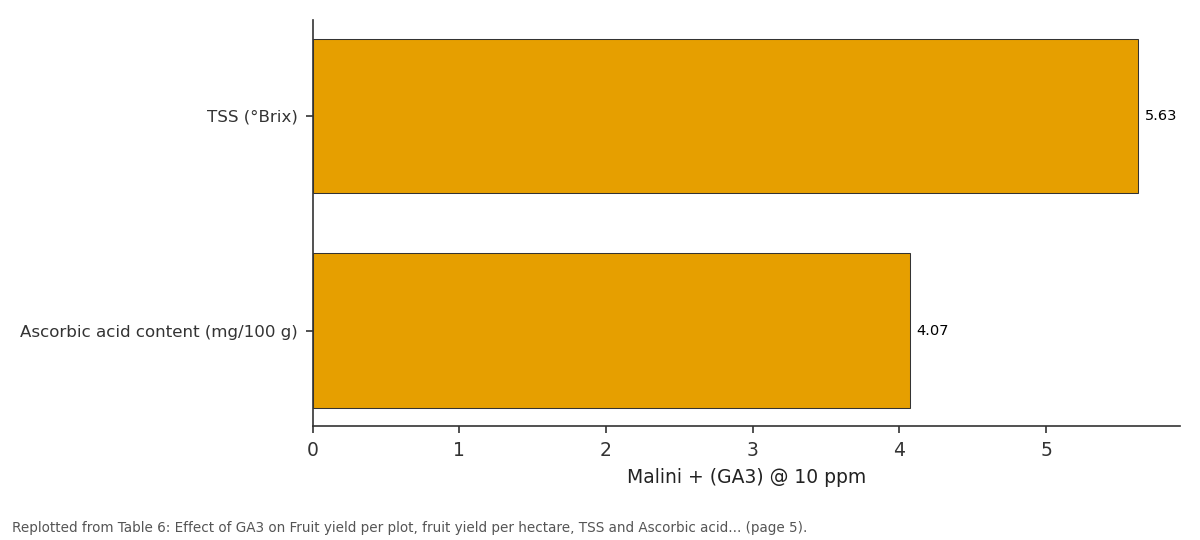
Malini + (GA3) @ 10 ppm: TSS (°Brix) vs Ascorbic acid content...
Replotted from Table 6 (page 5) of the original paper. Every bar is the paper's own table value.
View source evidence ↗Figures & tables
From the original paper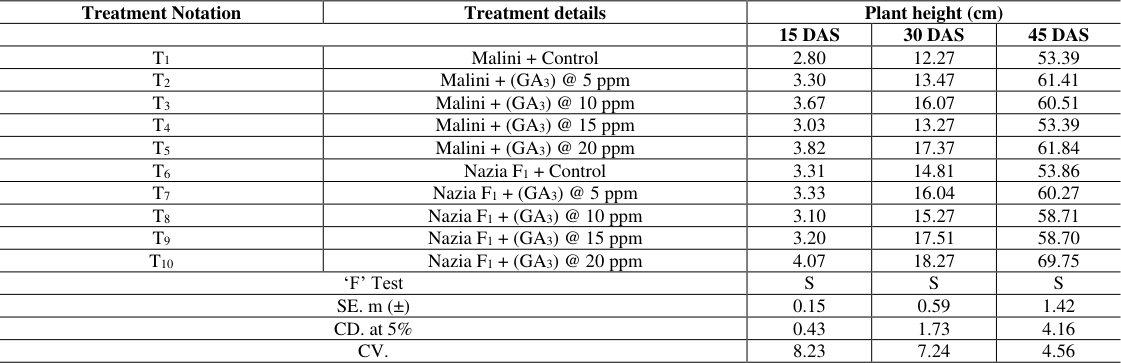 Table 2
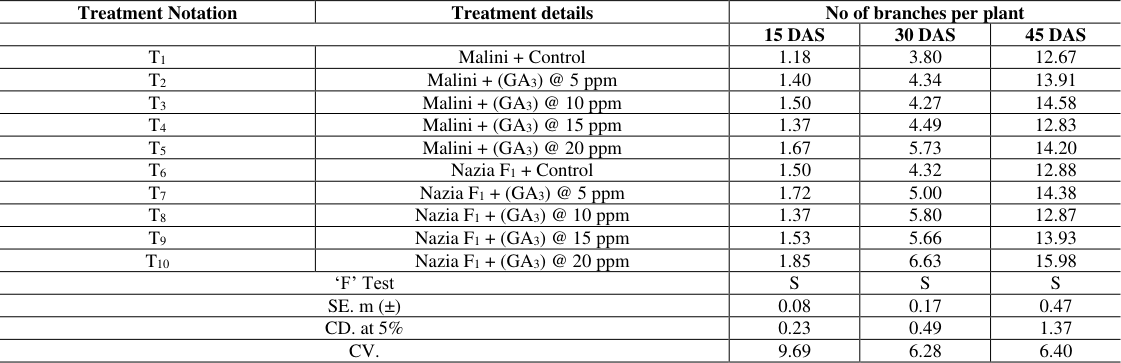 Table 3
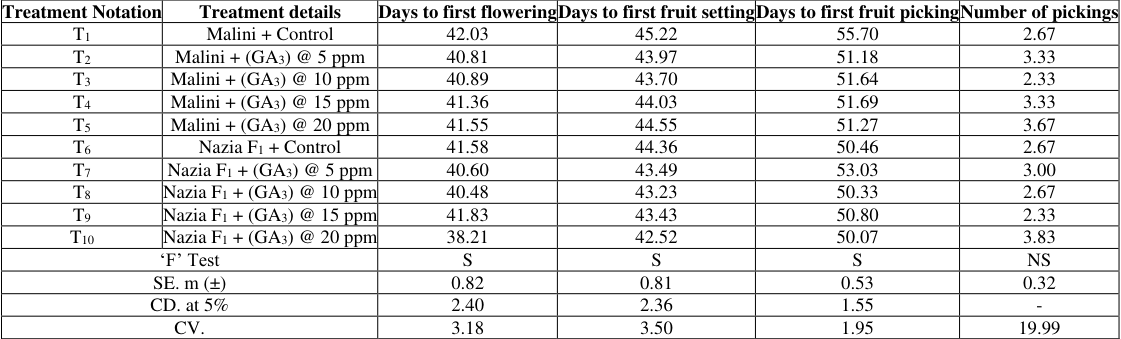 Table 4
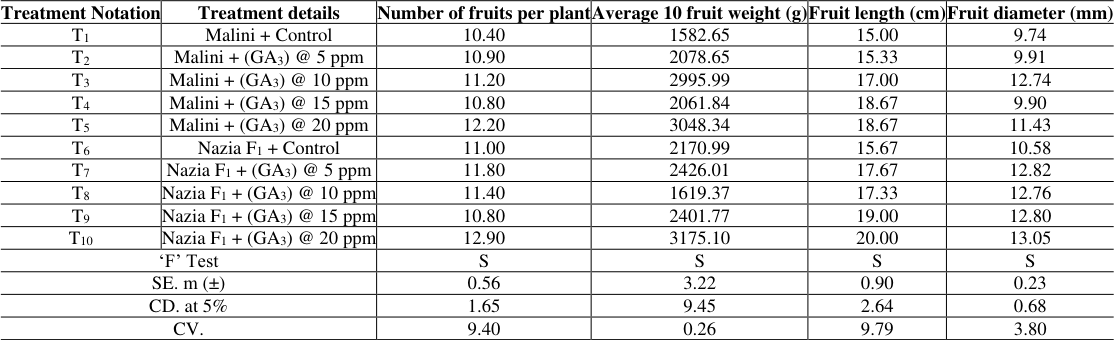 Table 5
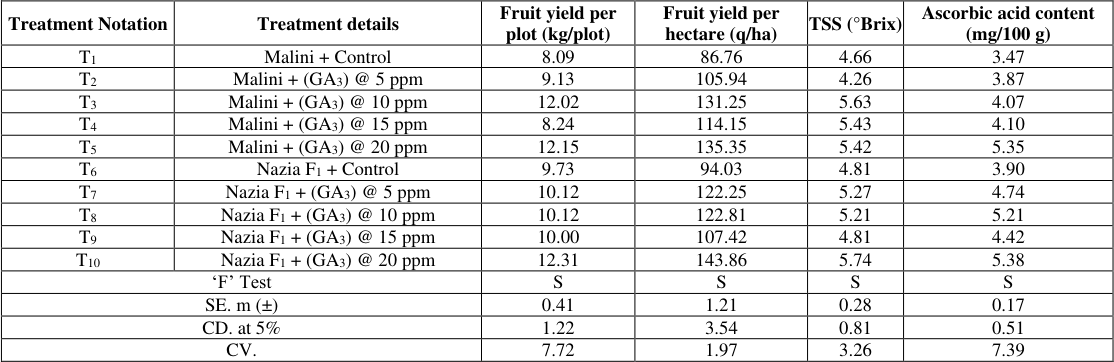 Table 6
Introduction
Throughout history, fruits and vegetables have been highly regarded for their nutritional value, particularly for their abundance of essential vitamins such as A and C, minerals including electrolytes, and more recently recognized phytochemicals, notably antioxidants. In 2020, India emerged as the world's second-largest producer of fruits and vegetables, with a staggering output of 82.85 million tons of fruits and 166.18 million tons of vegetables, contributing nearly 14.0% to global vegetable production. Despite this impressive production, significant amounts, approximately 25% go to waste annually, highlighting the challenge of agricultural waste management (Anonymous, 2015) [3] . The Cucurbitaceae, also called cucurbits or the gourd family, are a plant family consisting of about 965 species in around 95 genera, of which the most important to humans are: Cucurbitasquash, pumpkin, zucchini, some gourds Lagenariacalabash, and others that are inedible Citrulluswatermelon (C. lanatus, C. colocynthis) and others Cucumiscucumber (C. sativus), various melon Momordicabitter melon Luffathe common name is also luffa, sometimes spelled loofah (when fully ripened, two species of this fibrous fruit are the source of the loofah scrubbing sponge). The plants in this family are grown around the tropics and in temperate areas, where those with edible fruits were among the earliest cultivated plants in both the Old and New Worlds. The family Cucurbitaceae ranks among the highest of plant families for number and percentage of species used as human food. Cucurbits are the largest group of summer vegetables crops belonging to the family Cucurbitaceae. Most of the cucurbits are monoecious in nature except Coccinia and pointed gourd (Parval) which are diocious. Several hermaphrodites and andromonoecious cultivars are also available in some crops (melons). Fruit is Pepo botanically.
Botanically Cucumber is known as Cucumis sativus L. Belongs to family Cucurbitaceae. It is a diploid self-pollinated species with chromosome number 2n=2x=14. Cucumber probably originated from Indo-Burma region of Hindustan centre (Vavilov, 1935). It is mainly cultivated in China, India, Turkey, Iran, and other parts of south-east Asia. Progenitor of cucumber is "Cucumis hardwickii". Economic sex ratio is 15:1.The area under Cucumber production in India accounts to 94 million ha with production of 1608.29 million tonnes in year 2020-21 (Source: NHB, Ministry of Agriculture & Farmers Welfare, Government of India, 2021-22). West Bengal ranks first in area and production of Cucumber in year 2021-22 followed by Madhya Pradesh and Haryana. The production of Cucumber in Jammu & Kashmir is 20.68 million tonnes for year 2021-22. The cucumber is used as salad, pickles, and as cooked vegetable. It has many uses in ayurvedic medicines. According to 'Unani' medicines, the oil from its seed is God for the brain and the body. Cucumber has 96.3 g water, magnesium 11 mg, sodium 10.2 mg, Vitamin C 7 mg, 2.5g Carbohydrates, Oxalic acid 15 mg, Calcium 10 mg, Sulphur 17 mg, Potassium 50 mg and many other nutrients out of 100 g of edible portion. (Choudhary, 2013) [9] . It is considered as quality dietary food due to its excellent digestibility and rich water content (96.3 g/100 g). Cucumber is a dependable laxative for those who suffer constipation. The juice of cucumber is a valuable food in the treatment of hyper acidity, gastric and duodenal ulcers. Cucumber is well adapted crop for warm season crop, and it does not withstand even light frost. The crop performs well in temperature range between 18 °C-24 °C and soil having pH ranging between 5.5-6.7irrespective of its kind from sandy to heavy clay soil. It is grown as sole crop in India in Zaid and Kharifseason. It is well suited to hot and warm climate with annual rainfall of 60-75 cm. However, cucumber cannot withstand water lodging.
Role of plant growth regulators (PGRs) on crop plants
Plant Growth Regulators (PGRs), or plant hormones, are crucial for regulating plant growth and development, thereby influencing crop yield. PGRs have various key roles in crop growth: Stimulating cell division and elongation: PGRs like auxins and cytokinin promote shoot and root growth by stimulating cell division and elongation, leading to larger and more productive crops. Regulating flowering and fruiting: PGRs such as gibberellins and cytokinin affect flowering initiation, flower development, and fruit set. They synchronize flowering, ensuring successful pollination and fertilization, resulting in improved fruit formation and increased crop yield. Regulating senescence and ripening: PGRs like ethylene and abscisic acid influence leaf senescence and fruit ripening. Ethylene is a key regulator of fruit ripening, initiating changes in colour, texture, flavour, and aroma. Proper PGR management optimizes fruit maturation, post-harvest quality, and extends the shelf life of crops. PGRs have been found to alleviate the adverse effects of various abiotic stresses on chilli plants, including drought, salinity, and extreme temperatures. They can enhance stress tolerance and improve the plant's ability to withstand challenging environmental conditions.
Materials and Methods
The present investigation entitled "Effect of different levels of gibberellic acid (GA 3 ) on growth and yield of two varieties of cucumber (Cucumis sativus L.) cv. Malini, Nazia F 1 " was done to understand the effect of plant growth regulators (GA 3 ) on fruit growth, yield and quality of Cucumber. The details of the materials used, and the procedures adopted in the investigation, which was carried out at Research Farm, Department of Horticulture, Naini Agricultural Institute, SHUATS, Prayagraj during the Zaid season of 2022-23 are described under the following heads.
Experimental Site
The study was conducted at the Horticultural Research Farm within the Department of Horticulture, Naini Agricultural Institute, Sam Higginbottom University of Agriculture, Technology and Sciences, Prayagraj, U.P., during the Zaid seasons of 2022-23. The university is positioned alongside the Prayagraj -Rewa National Highway, approximately 5 kilometres from Prayagraj City. All essential facilities required for successful crop cultivation, including field preparation, inputs, irrigation provisions, and labour, were provided by the Department of Horticulture, Naini Agricultural Institute, Sam Higginbottom University of Agriculture, Technology and Sciences, Prayagraj, U.P., India.
Location and climatic conditions of the experimental farm
Prayagraj lies within the central plain sub-zone of Agro-climatic zone V, as per the Perspective and Strategic Plan (SPSP) for IWMP of Uttar Pradesh by the Department of Land Development and Water Resources, Government of U.P. The geographical coordinates for Naini range between 20° 33' 40'' to 21' 50" N latitude and 73° 27' 58'' to 73° 56' 36'' E longitude. The region features a tropical climate characterized by relatively hot summers, moderately cold winters, and humid, warm monsoons. Rainfall is abundant, primarily occurring from June to September, predominantly driven by the south-west advancing monsoon. The bulk of precipitation concentrates in July and August. Detailed meteorological data for the cropping seasons are provided in Tables 1. Statistical analysis the statistical analysis of the data was carried out using STATISTICA (7.0) software.
Results and Discussion
Results and Discussion
Plant Height
It was also found that T 10 (Nazia F 1 + GA 3 @ 20 ppm) had maximum plant height at 15,30, 45 DAS (4.07, 18.27, 69.75 cm) which was at par with T 5 (Malini + GA 3 @ 20 ppm) having 61.84 cm whereas the minimum plant height was observed in treatment T 1 (Malini + Control) with (2.8, 12.27, 45 cm) Nazia F 1 cucumber variety demonstrates superior growth at a GA 3 concentration of 20 ppm due to its genetic predisposition and responsiveness to this specific hormone level. At 20 ppm, GA 3 effectively stimulates cell elongation processes, particularly in the internodes, resulting in increased plant height. Similar findings were reported by Anayat et al., (2020) [4] in bitter gourd.
Number of Branches
The results pertaining to the effect of GA 3 on number of branches per plant of two different varieties of cucumber observed at 15, 30 and 45 DAS.
It is evident that the number of branches per plant was influenced by different treatments for plant growth regulators.
There was significant difference present among the treatments applied. It was also found that T 10 (Nazia F 1 + GA 3 @ 20 ppm) had maximum number of branches per plant at [12] in bottle gourd.
Days to first flowering
It was also found that T 10 (Nazia F 1 + GA 3 @ 20 ppm) took minimum days to first flowering (38.21 days) which was at par with T 3 (Malini + GA 3 @ 10 ppm) and T 7 (Nazia F1 + GA 3 @ 5 ppm) having 40.60 days whereas the maximum days to first flowering was observed in treatment T 1 (Malini + Control) with 42.03 days. Similar findings were reported by Jeevitha and Vasudevan (2019) [5] in sponge gourd.
Days to first fruit setting
The results pertaining to the effect of GA 3 on number of branches per plant of two different varieties of cucumber observed.
It was also found that T 10 (Nazia F 1 + GA 3 @ 20 ppm)took minimum days to first fruit setting (42.52 days) which was at par with T 8 (Nazia F1 + GA 3 @ 10 ppm) having 43.23 days whereas the maximum days to first fruit setting was observed in treatment T 1 (Malini + Control) with 45.22 days. Similar findings were reported by Jishnu et al., (2023) [15] in Sponge gourd.
Days to first fruit picking
It was also found that T 10 (Nazia F 1 + GA 3 @ 20 ppm) took minimum days to first fruit picking (50.07 days) which was at par with T 8 (Nazia F1 + GA 3 @ 10 ppm) having 50.33 days whereas the maximum days to first fruit picking was observed in treatment T 1 (Malini + Control) with 55.70 days. The Malini variety may exhibit different genetic or hormonal sensitivities, resulting in variations in fruit maturity responses even at similar GA 3 doses. Similar findings were reported by Kumar et al., (2019) [16] ; Pandey et al., (2021) [17] in cucumber.
Number of pickings
It was also found that T 10 (Nazia F 1 + GA 3 @ 20 ppm) had maximum number of pickings (3.83) which was at par with T 5 (Malini + GA 3 @ 20 ppm) having whereas the minimum number of pickings was observed in treatment T 3 (Malini + GA 3 @ 10 ppm) with 2.33. The Malini variety may exhibit different genetic or hormonal sensitivities, resulting in variations in fruit maturity responses even at similar GA 3 doses. Similar findings were reported by Kumar et al., (2019) [16] ; Pandey et al., (2021) [17] in cucumber.
Number of fruits per plant
It was also found that T 10 (Nazia F 1 + GA 3 @ 20 ppm) had maximum number of fruits per plant (12.90 fruits) which was at par with T 5 (Malini + (GA 3 ) @ 20 ppm) having12.20 fruits whereas the minimum number of fruits per plant was observed in treatment T 1 (Malini + Control) with10.40 fruits. Similar findings were reported by Rosales and Galinato (2015) [18] in bitter gourd.
Average 10 fruit weight
It was also found that T 10 (Nazia F 1 + GA 3 @ 20 ppm)had maximum average 10 fruit weight (3175.10 gram) which was at par with T 5 (Malini + GA 3 @ 20 ppm) having3048.34 gram whereas the minimum average 10 fruit weight was observed in treatment T 1 (Malini + Control) with 1582.65 gram. The Malini variety may exhibit different genetic or hormonal sensitivities, resulting in variations in fruit weight even at similar GA 3 doses. Similar findings were reported by Shah et al., (2023) [19] in bitter gourd.
Fruit length
It was also found that T 10 (Nazia F 1 + GA 3 @ 20 ppm) had maximum fruit length (20.00 cm) which was at par with T 9 (Nazia F 1 + GA 3 @ 15 ppm) having19.00 cm whereas the minimum fruit length was observed in treatment T 1 (Malini + Control) with15.00 cm. Similar findings were reported by Shukla et al., (2023) [20] in Ridge gourd.
Fruit diameter
It was also found that T 10 (Nazia F 1 + GA 3 @ 20 ppm) had maximum fruit diameter (13.05 mm) which was at par with T 7 (Nazia F 1 + GA 3 @ 5 ppm) having 12.82 mm whereas the minimum fruit diameter was observed in treatment T 1 (Malini + Control) with 9.74 mm. The Malini variety may possess different genetic or hormonal traits, resulting in variations in fruit diameter even at similar GA 3 doses. Similar findings were reported by Shukla et al., (2023) [20] in Ridge gourd.
Fruit yield per plot
It was also found that T 10 (Nazia F 1 + GA 3 @ 20 ppm) had maximum fruit yield per plot (12.31 kg/plot) which was at par with T 5 (Malini + GA 3 @ 20 ppm) having 12.15 kg/plot whereas the minimum fruit yield per plot was observed in treatment T 1 (Malini + Control) with8.09 kg/plot. Similar findings were reported by Shukla et al., (2023) [20] in Ridge gourd.
Fruit yield per hectare
Fruit yield per hectare had significant influence under GA 3 on different varieties of cucumber at different GA 3 doses. It was also found that T 10 (Nazia F 1 + GA 3 @ 20 ppm) had maximum fruit yield per hectare (143.86q/ha) which was at par with T 5 (Malini + GA 3 @ 20 ppm) having 135.35q/ha whereas the minimum fruit yield per hectare was observed in treatment T 1 (Malini + Control) with86.76q/ha. Similar findings were reported by Vyas et al., (2023) [21] in Ridge gourd.
TSS
TSS had significant influence under GA 3 on different varieties of cucumber at different GA 3 doses. It was also found that T 10 (Nazia F 1 + GA 3 @ 20 ppm) had maximum TSS (5.74°Brix) which was at par with T 3 (Malini + GA 3 @ 10 ppm) having 5.63°Brix whereas the minimum TSS was observed in treatment T 2 (Malini + GA 3 @ 5 ppm) with 4.26°Brix. Similar findings were reported by Shukla et al., (2023) [20] ; Vyas et al., (2023) [21] in Ridge gourd.
Ascorbic acid content
Ascorbic acid content had significant influence under GA 3 on different varieties of cucumber at different GA 3 doses. It was also found that T 10 (Nazia F 1 + GA 3 @ 20 ppm) had maximum ascorbic acid content (5.38 mg/100 g) which was at par with T 5 (Malini + GA 3 @ 20 ppm) having 5.35 mg/100 g whereas the minimum ascorbic acid content was observed in treatment T 1 (Malini + Control) with 3.47 mg/100 g. Similar findings were reported by Shukla et al., (2023) [20] ; Vyas et al., (2023) [21] in Ridge gourd. In this table we observed that maximum fruit yield per plot are found in T 10 (Nazia F 1 + (GA 3 ) @ 20 ppm) (12.31kg) and minimum fruit yield per plot are found in T 0 (Malini + Control) (8.09 kg).
In this table we observed that maximum fruit yield per q/ha (143.86 q/ha), TSS (5.74) and Ascorbic acid (5.38) are found in T 10 (Nazia F 1 + (GA 3 ) @ 20 ppm) and minimum fruit yield per q/ha (86.76 q/ha), TSS (4.66), Ascorbic acid (3.47) are found in T 0 (Malini + Control)
Conclusion
From the above experimental finding it may be concluded that the treatment T 10 (Nazia F 1 + (GA 3 ) was found to be best in the terms of growth, yield and quality of Cucumber. The highest net return was found in the T 10 (Nazia F 1 + (GA 3 ) with (Rs 1, 76,507/ha) and the highest B: C ratio was found in the same with 2.39.
Figures and tables from the paper
| Treatment Notation | Treatment details | Plant height (cm) | — | — |
|---|---|---|---|---|
| 15 DAS | 30 DAS | 45 DAS | ||
| T1 | Malini + Control | 2.80 | 12.27 | 53.39 |
| T2 | Malini + (GA3) @ 5 ppm | 3.30 | 13.47 | 61.41 |
| T3 | Malini + (GA3) @ 10 ppm | 3.67 | 16.07 | 60.51 |
| T4 | Malini + (GA3) @ 15 ppm | 3.03 | 13.27 | 53.39 |
| T5 | Malini + (GA3) @ 20 ppm | 3.82 | 17.37 | 61.84 |
| T6 | Nazia F1 + Control | 3.31 | 14.81 | 53.86 |
| T7 | Nazia F1 + (GA3) @ 5 ppm | 3.33 | 16.04 | 60.27 |
| T8 | Nazia F1 + (GA3) @ 10 ppm | 3.10 | 15.27 | 58.71 |
| T9 | Nazia F1 + (GA3) @ 15 ppm | 3.20 | 17.51 | 58.70 |
| T10 | Nazia F1 + (GA3) @ 20 ppm | 4.07 | 18.27 | 69.75 |
| ‘F’ Test | S | S | S | |
| SE. m (±) | 0.15 | 0.59 | 1.42 | |
| CD. at 5% | 0.43 | 1.73 | 4.16 | |
| CV. | 8.23 | 7.24 | 4.56 |
Table text extracted from the original PDF; superscript letters are shown inline. The original table image is below.
View original table image
| Treatment Notation | Treatment details | No of branches per plant | — | — |
|---|---|---|---|---|
| 15 DAS | 30 DAS | 45 DAS | ||
| T1 | Malini + Control | 1.18 | 3.80 | 12.67 |
| T2 | Malini + (GA3) @ 5 ppm | 1.40 | 4.34 | 13.91 |
| T3 | Malini + (GA3) @ 10 ppm | 1.50 | 4.27 | 14.58 |
| T4 | Malini + (GA3) @ 15 ppm | 1.37 | 4.49 | 12.83 |
| T5 | Malini + (GA3) @ 20 ppm | 1.67 | 5.73 | 14.20 |
| T6 | Nazia F1 + Control | 1.50 | 4.32 | 12.88 |
| T7 | Nazia F1 + (GA3) @ 5 ppm | 1.72 | 5.00 | 14.38 |
| T8 | Nazia F1 + (GA3) @ 10 ppm | 1.37 | 5.80 | 12.87 |
| T9 | Nazia F1 + (GA3) @ 15 ppm | 1.53 | 5.66 | 13.93 |
| T10 | Nazia F1 + (GA3) @ 20 ppm | 1.85 | 6.63 | 15.98 |
| ‘F’ Test | S | S | S | |
| SE. m (±) | 0.08 | 0.17 | 0.47 | |
| CD. at 5% | 0.23 | 0.49 | 1.37 | |
| CV. | 9.69 | 6.28 | 6.40 |
Table text extracted from the original PDF; superscript letters are shown inline. The original table image is below.
View original table image
| Treatment Notation | Treatment details | Days to first flowering | Days to first fruit setting | Days to first fruit picking | Number of pickings |
|---|---|---|---|---|---|
| T1 | Malini + Control | 42.03 | 45.22 | 55.70 | 2.67 |
| T2 | Malini + (GA3) @ 5 ppm | 40.81 | 43.97 | 51.18 | 3.33 |
| T3 | Malini + (GA3) @ 10 ppm | 40.89 | 43.70 | 51.64 | 2.33 |
| T4 | Malini + (GA3) @ 15 ppm | 41.36 | 44.03 | 51.69 | 3.33 |
| T5 | Malini + (GA3) @ 20 ppm | 41.55 | 44.55 | 51.27 | 3.67 |
| T6 | Nazia F1 + Control | 41.58 | 44.36 | 50.46 | 2.67 |
| T7 | Nazia F1 + (GA3) @ 5 ppm | 40.60 | 43.49 | 53.03 | 3.00 |
| T8 | Nazia F1 + (GA3) @ 10 ppm | 40.48 | 43.23 | 50.33 | 2.67 |
| T9 | Nazia F1 + (GA3) @ 15 ppm | 41.83 | 43.43 | 50.80 | 2.33 |
| T10 | Nazia F1 + (GA3) @ 20 ppm | 38.21 | 42.52 | 50.07 | 3.83 |
| ‘F’ Test | S | S | S | NS | |
| SE. m (±) | 0.82 | 0.81 | 0.53 | 0.32 | |
| CD. at 5% | 2.40 | 2.36 | 1.55 | - | |
| CV. | 3.18 | 3.50 | 1.95 | 19.99 |
Table text extracted from the original PDF; superscript letters are shown inline. The original table image is below.
View original table image
| Treatment Notation | Treatment details | Number of fruits per plant | Average 10 fruit weight (g) | Fruit length (cm) | Fruit diameter (mm) |
|---|---|---|---|---|---|
| T1 | Malini + Control | 10.40 | 1582.65 | 15.00 | 9.74 |
| T2 | Malini + (GA3) @ 5 ppm | 10.90 | 2078.65 | 15.33 | 9.91 |
| T3 | Malini + (GA3) @ 10 ppm | 11.20 | 2995.99 | 17.00 | 12.74 |
| T4 | Malini + (GA3) @ 15 ppm | 10.80 | 2061.84 | 18.67 | 9.90 |
| T5 | Malini + (GA3) @ 20 ppm | 12.20 | 3048.34 | 18.67 | 11.43 |
| T6 | Nazia F1 + Control | 11.00 | 2170.99 | 15.67 | 10.58 |
| T7 | Nazia F1 + (GA3) @ 5 ppm | 11.80 | 2426.01 | 17.67 | 12.82 |
| T8 | Nazia F1 + (GA3) @ 10 ppm | 11.40 | 1619.37 | 17.33 | 12.76 |
| T9 | Nazia F1 + (GA3) @ 15 ppm | 10.80 | 2401.77 | 19.00 | 12.80 |
| T10 | Nazia F1 + (GA3) @ 20 ppm | 12.90 | 3175.10 | 20.00 | 13.05 |
| ‘F’ Test | S | S | S | S | |
| SE. m (±) | 0.56 | 3.22 | 0.90 | 0.23 | |
| CD. at 5% | 1.65 | 9.45 | 2.64 | 0.68 | |
| CV. | 9.40 | 0.26 | 9.79 | 3.80 |
Table text extracted from the original PDF; superscript letters are shown inline. The original table image is below.
View original table image
| Treatment Notation | Treatment details | Fruit yield per plot (kg/plot) | Fruit yield per hectare (q/ha) | TSS (°Brix) | Ascorbic acid content (mg/100 g) |
|---|---|---|---|---|---|
| T1 | Malini + Control | 8.09 | 86.76 | 4.66 | 3.47 |
| T2 | Malini + (GA3) @ 5 ppm | 9.13 | 105.94 | 4.26 | 3.87 |
| T3 | Malini + (GA3) @ 10 ppm | 12.02 | 131.25 | 5.63 | 4.07 |
| T4 | Malini + (GA3) @ 15 ppm | 8.24 | 114.15 | 5.43 | 4.10 |
| T5 | Malini + (GA3) @ 20 ppm | 12.15 | 135.35 | 5.42 | 5.35 |
| T6 | Nazia F1 + Control | 9.73 | 94.03 | 4.81 | 3.90 |
| T7 | Nazia F1 + (GA3) @ 5 ppm | 10.12 | 122.25 | 5.27 | 4.74 |
| T8 | Nazia F1 + (GA3) @ 10 ppm | 10.12 | 122.81 | 5.21 | 5.21 |
| T9 | Nazia F1 + (GA3) @ 15 ppm | 10.00 | 107.42 | 4.81 | 4.42 |
| T10 | Nazia F1 + (GA3) @ 20 ppm | 12.31 | 143.86 | 5.74 | 5.38 |
| ‘F’ Test | S | S | S | S | |
| SE. m (±) | 0.41 | 1.21 | 0.28 | 0.17 | |
| CD. at 5% | 1.22 | 3.54 | 0.81 | 0.51 | |
| CV. | 7.72 | 1.97 | 3.26 | 7.39 |
Table text extracted from the original PDF; superscript letters are shown inline. The original table image is below.
View original table image
References
14 in the original paper- Arora N, Bist V. The role of plant growth regulators in horticultural crops. J Appl Nat Sci. 2016;8(1):429-440.
- Barsoom MA, Attala MA. Effect of Ethrel and Gibberellic Acid on Growth, Flowering, Sex Ratio and Yield to Luffa Plant. Middle East J Agric Res. 2020;9(4):984-993.
- Bouyoucos GJ. Hydrometer Method Improved for Making Particle Size Analysis of Soils. Agron J. 1962;54:464-465.
- Choudhary B. Vegetables-Cucurbits, Cucumber nutritional quality. National Book Trust India. Reprint edition. 2013. 142 p.
- Directorate of Economics and Statistics. Ministry of Agriculture & Farmers Welfare (DAC & FW): Government of India, 2020-21.
- Duhan DS, Singh J, Panghal VPS, HansRaj. Influence of plant growth regulators on growth, flowering and fruit yield of bottle gourd [Lagenaria siceraria (Mol.) Standl.]. Veg Sci. 2022;49(1):69-74.
- FAOSTAT. Food Supply-Crops Primary Equivalent. 2020. Available from: www.fao.org/faostat/en/data/CC. Accessed 2021 Dec 15.
- Farooq S, Azam F, Akhtar J. Effect of plant growth regulators on growth and yield of tomato under drought stress. Pak J Agric Sci. 2018;55(4):827-834.
- Jishnu A, Hareendrakumar VR. Impact of HR Practices on Innovative Work Behaviour: The Mediating Role of Organizational Support, Knowledge-sharing and Employee Creativity. Paradigm. 2024:09718907241251410.
- Kumar V, Parihar RD, Sharma A, Bakshi P, Sidhu GP, Bali AS, et al. Global evaluation of heavy metal content in surface water bodies: A meta-analysis using heavy metal pollution indices and multivariate statistical analyses. Chemosphere. 2019 Dec 1;236:124364.
- Rosales RJ, Galinato RG. Effect of gibberellic acid on the flowering and yield performance of hybrid variety of Momordica charantia. International Journal of Research in Agricultural Sciences. 2018;5(6):2348-3997.
- Shah N, Sebag-Montefiore D, Cervantes A, Rodel C, Schrag D. Preoperative Treatment of Locally Advanced Rectal Cancer. New England Journal of Medicine. 2023 Oct 26;389(17):1630-1632.
- Shukla AK, Atal S, Banerjee A, Jhaj R, Balakrishnan S, Chugh PK, et al. An observational multi-centric COVID-19 sequelae study among health care workers. The Lancet Regional Health-Southeast Asia. 2023 Mar 1;10.
- Vyas N, Brunckhorst O, Fanshawe JB, Stewart R, Dasgupta P, Ahmed K. Prognostic factors for mental wellbeing in prostate cancer: A systematic review and meta-analysis. Psycho-Oncology. 2023 Nov;32(11):1644-1659.
Cited by 1
From OpenAlex, OpenCitations and reference lists read by Scinovex
- Impact of foliar application of plant bio-regulators on vegetative, floral and yield traits in bottle gourd (Lagenaria siceraria) under valley condition of Garhwal hills ↗
Etalesh Goutam, D. K. Rana, Khulakpam Naseeruddin Shah, Vivek Singh, Bharti, R. S. Choudhary · Vegetos · 2025
❝ 1