
Research article · 2024 · Full text
International Journal of Research in AgronomyEffect of enhanced doses of phosphatic and zinc fertilizers over recommended doses of fertilizers (RDF) on grain yield and its attributes in wheat (Triticum aestivum L.)
Volume 7(6) · Pages 574–577 · DOI: 10.33545/2618060x.2024.v7.i6h.931 ↗
Research areasCrop Yield and Soil FertilityAgricultural Science and Fertilization
Abstract
Author-writtenA field experiment was conducted at the Research farm of the Department of Agriculture, Maharishi Markandeshwar University, Mullana, Ambala during Rabi season of 2023 to determine the “Effect of enhanced doses of Phosphatic and Zinc fertilizers over recommended doses of fertilizers (RDF) on grain yield and its attributes in wheat (Triticum aestivum L.)”. The experiment was laid out in a Factorial Randomized Block Design (FRBD) with three replications and four treatments applied to three wheat varieties DBW187, HD3226 and WH1270. The treatments were control (T1), (T2) 100% RDF (recommended doses of fertilizers) i.e., Nitrogen-150 kg/ha through Urea (50% basal dose + urea 25% at after 25 days of sowing + 25% at pre flowering), Phosphorus- 60 kg/ha through SSP (100% basal dose), Potassium- 60 kg/ha through Muriate of Potash (100% as basal dose) and ZnSo4-25 kg/ha, (T3) 25% higher ZnSo4 + RDF, (T4) 25% higher P2O5 + RDF. The data was recorded on plant growth parameters, grain yield and its components namely plant height, dry weight accumulation per meter row length, total no. of tillers per running meter row length, number of spikes per meter row length, number of grains per spike, 1000 grains weight, grain yield, straw yield and biological yield. Indices namely harvest index, cost of cultivation, gross return, net return and benefit cost ratio were computed. The comparative evaluation of various treatments revealed that 25% enhanced doses of phosphatic and zinc fertilizers gave good response and higher yield as compared to RDF. The increase in yield due to application of 25% higher phosphorous (56.02 q/ha) as well as zinc (54.54 q/ha) was significantly higher over RDF (52.11 q/ha) and control (30.74 q/ha). Treatment T4 showed highest gross returns (Rs. 162055.5/ha) and net returns (Rs.95,238/ha) as well as higher benefit cost ratio (2.42).
Summary
Source-checkedPlain-language reading of the full paper, prepared with AI and checked against the text. Each point links to the authors' own words.
Why it matters
- Wheat is one of the most important staple food crops in India, second only to rice. View evidence ↗
- In alkaline soils, high salt ion concentrations can limit nutrient availability and lead to the loss of applied nutrients. View evidence ↗
- Zinc and phosphorus deficiencies can occur in soils rich in calcium, carbonates, and bicarbonates because these elements bind with the nutrients to form non-absorbable complexes. View evidence ↗
The question
- The researchers also sought to evaluate the economic viability of these different fertilizer treatments. View evidence ↗
What they did
- The field experiment was conducted during the 2023 Rabi season on sandy loam soil at the Maharishi Markandeshwar University research farm in Ambala. View evidence ↗
- The study used a Factorial Randomized Block Design with three replications, testing four fertilizer treatments across three wheat varieties: DBW187, HD3226, and WH1270. View evidence ↗
- Researchers measured growth parameters (height, dry weight, tillers), yield components (spikes, grains per spike, 1000-grain weight), and overall grain, straw, and biological yields. View evidence ↗
What they found
- Treatment T4 (25% higher P2O5 + RDF) produced the best growth results, including the highest plant height (103.40 cm), dry matter (253.27 g), and tiller count (60.32), significantly outperforming the control. View evidence ↗
- Grain yield was significantly higher with 25% extra phosphorus (56.02 q/ha) and zinc (54.54 q/ha) compared to the recommended dose (52.11 q/ha) and the control (30.74 q/ha). View evidence ↗
- T4 (25% higher P2O5 + RDF) achieved the highest values for spikes per meter (74.57), grains per spike (50.60), 1000-grain weight (43.31 g), and biological yield (125.58 q/ha). View evidence ↗
- Among the varieties tested, WH1270 performed the best, recording the highest grain yield (54.24 q/ha) and biological yield (121.99 q/ha). View evidence ↗
What it means
- The authors conclude that farmers, particularly those with calcareous soils in north east Haryana, should adopt 25% higher phosphorus and zinc applications. View evidence ↗
- The study recommends using 25% higher P and Zn over the standard recommended doses as it is economically viable. View evidence ↗
Visual summary
3 visualsIllustrations explain the paper; charts are replotted from the paper's own table values.
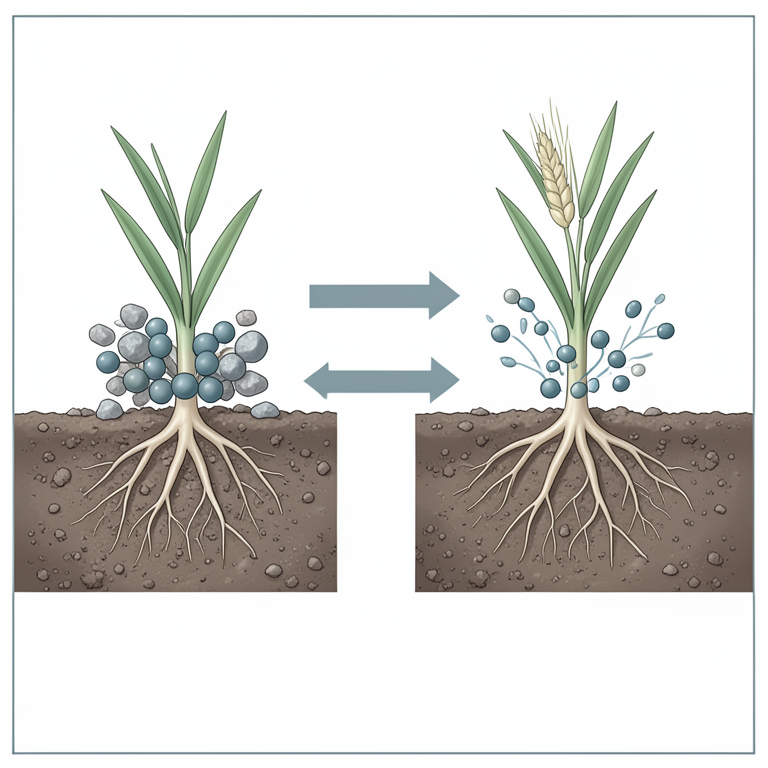
Nutrient Binding in Alkaline Soil
AI-generated conceptual illustration (wheat roots in alkaline soil). It explains the idea and does not show study data.
View source evidence ↗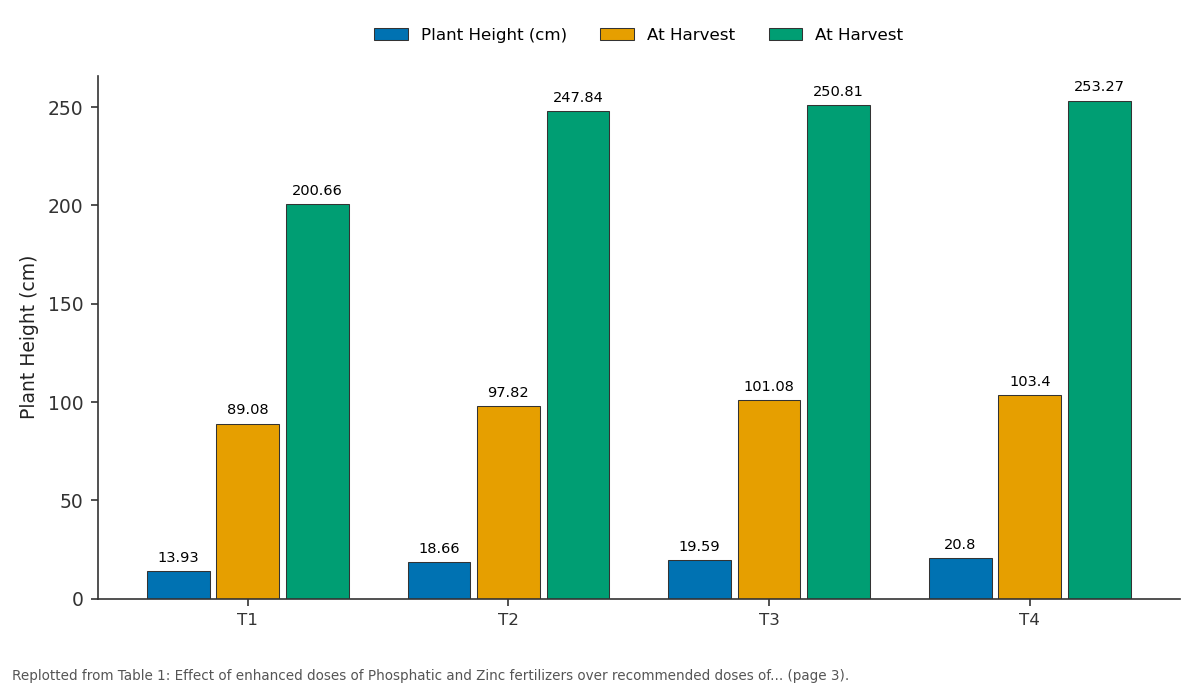
Plant Height (cm) and At Harvest and more: T1 vs T2 vs T3 vs T4
Replotted from Table 1 (page 3) of the original paper. Every bar is the paper's own table value.
View source evidence ↗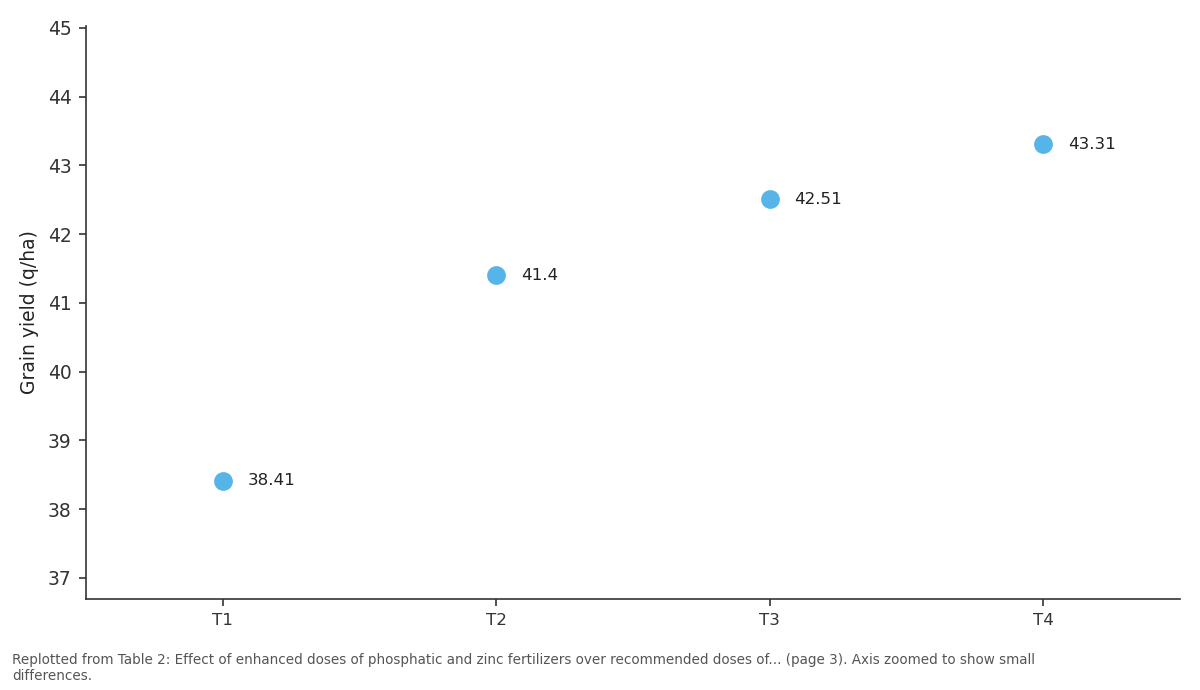
Test weight (g): T1 vs T2 vs T3 vs T4
Replotted from Table 2 (page 3) of the original paper. Every bar is the paper's own table value.
View source evidence ↗Figures & tables
From the original paper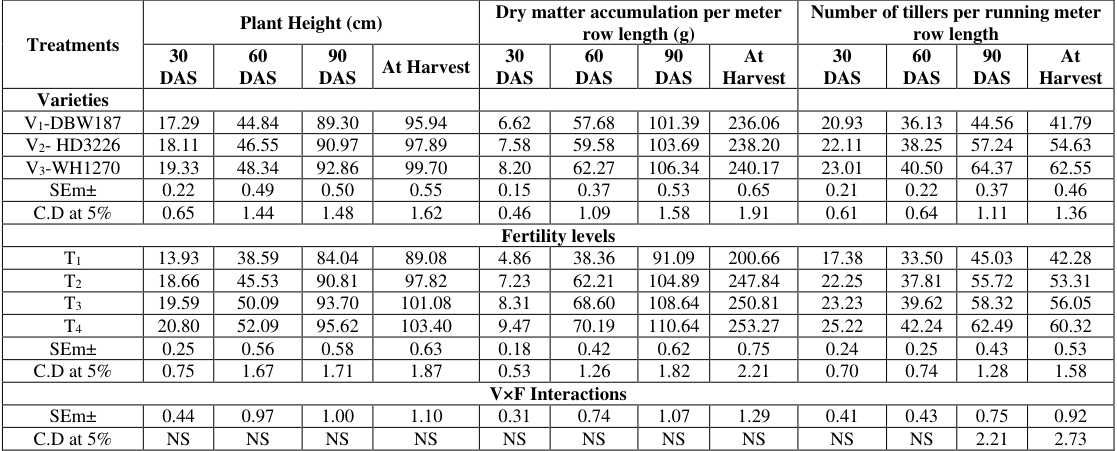 Table 1
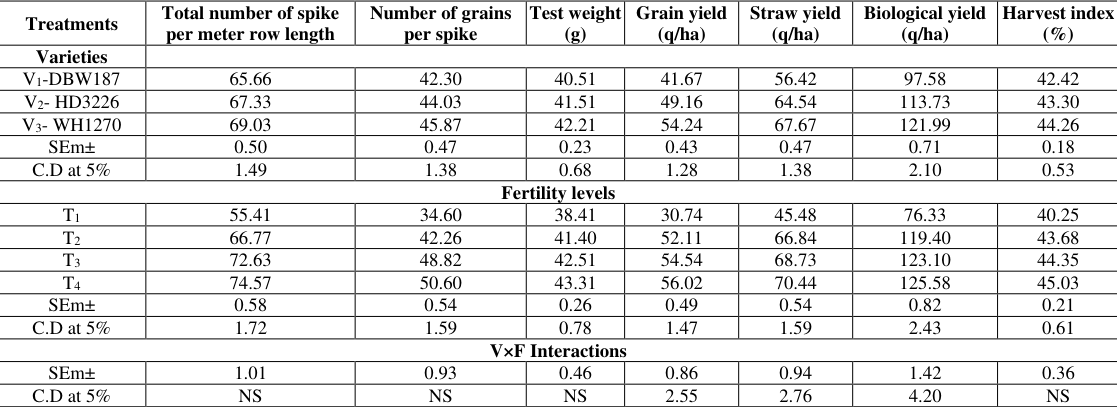 Table 2
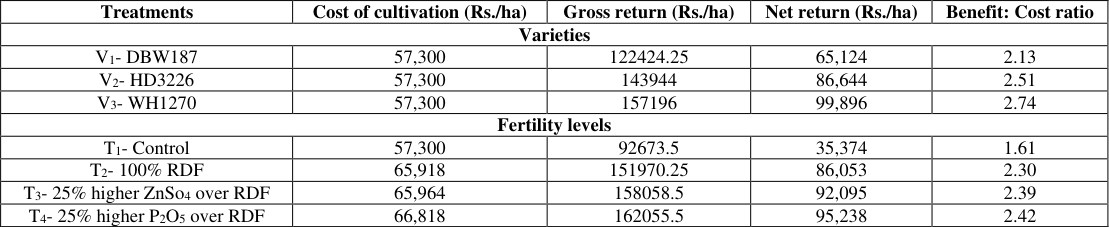 Table 3
Introduction
Wheat (Triticum aestivum L.) a member of Poaceae family, is India's prime most staple food crop after rice. It is known as the "king of cereals". The earliest cultivated species are hulled wheat and comprise all three polyploidy levels known in Triticum spp., diploid, tetraploid and hexaploid (Sousa et al., 2021) [13] . There are mainly three species of wheat that are grown in India and Triticum aestivum or bread wheat being the most commonly grown one. It is produced in almost all the wheat cultivating states of India, i.e. Uttar Pradesh, Punjab, Haryana, Rajasthan, Bihar, West Bengal, Assam etc. Wheat is typically traded based on specific properties such as grain protein content and hardness. Wheat is consumed globally by billions of people. Wheat is a food that contains human nutrition, especially in the least developed countries where wheat products are major food. It is used as flour that is used in different types of food variety and baked products. It contains minerals, fat and vitamins, which are source of micronutrients and dietary fiber. It contains 78% carbohydrate, 14% protein, 2% fat and vitamins such as thiamine and vitamin B as well as minerals such as zinc and iron etc. In 2021-2022, wheat occupied 304.69 lakh hectare area with production of 106.84 million tonnes and average yield of 3507 kg/ha in India (GOI Annual Report, 2022-2023). Approximately 14% of the nation's cultivated land is dedicated to growing wheat.
India contributes approximately 12% of the total wheat production of world. In Haryana, wheat is cultivated on 2533 thousand hectare with 11876 thousand tonnes production with average yield as 4678 kg/ha (Swati, 2024) [14] . Nutrient use efficiency through inorganic fertilizer by the crops vary from 30-50% in case of N, 15-20% in case of P and less than 5% in case of micronutrients. Among the fertilizers, nitrogen (N) is the most important nutrient for wheat and it improves yield and quality of grain. Plants contain more N than any other nutrients obtained from the soil. N fertilization increases Zn acquisition in cereal crops. Phosphorous is the second essential macronutrient required for plant growth and development alongside nitrogen (Bechtaoui et al., 2021) [4] . It is an essential nutrient needed for normal plant growth and development. As an important nutrient, P is present less in the soil and cannot be replenished without external sources (Arsad et al., 2022.) [2] . The major attention given to nitrogen and phosphorous fertilization than potassium. After N, potassium (K) is absorbed in large amount than any other element and plays an important role in improving the quality of crop and enhancing crop resistance. It activates the photosynthetic enzymes and assimilates translocation. During the recent years, in developing countries, the deficiency of micronutrient creating a problem of malnutrition. This deficiency is due to minimum uptake of Zn by plants because soils are rich in carbonates and bicarbonates and calcium which bind with P and Zn thus form a complex that is not absorbed by plants. Zinc supplementation is a typical way to correct zinc deficiency. Zinc is an important micronutrient for plants since it is involved in many fundamental cellular functions including metabolic and physiological processes, enzyme activation, and ion homeostatis (Saleem et al., 2022) [12] . The alkaline soil has a higher concentration of salt ions, which limit the crop growth in terms of nutrient availability. Thus, substantial amount of applied nutrients is lost through various pathways, more so in light texture alkaline soils. It is therefore, imperative to evaluate effect of enhanced doses of nutrients in such soils to optimise sustainable wheat production. In light of the above facts, the present study is designed with the following objectives. Objectives 1. To determine effect of enhanced doses of phosphatic and zinc fertilizers over RDF (recommended dose of fertilizers) on plant growth, grain and straw yield and their attributes. 2. To work out the economics of different fertilizer treatments.
Materials and Methods
The field experiment entitled "Effect of enhanced doses of Phosphatic and Zinc fertilizers over RDF on grain yield and its attributes in wheat (Triticum aestivum L.)" was conducted at research farm of Department of Agriculture, Maharishi Markandeshwar (Deemed to be University), Mullana, Ambala, Haryana through Rabi season of 2022-2023. The research plot was composed of sandy loam soil. The soil was moderately alkaline, contained less organic matter and had medium quantities of accessible phosphate and potassium. The experiment was conducted in FRBD (Factorial Randomized Block Design). Factor A consisted three wheat varieties (DBW187, HD3226 and WH1270) and Factor B consisted four treatments each replicated thrice. The treatments were control (T 1 ), 100% RDF (T 2 ) i.e., Nitrogen-150 kg/ha through Urea, Phosphorous-60 kg/ha through SSP, Potassium-60 kg/ha through MOP, ZnSo 4 -25 kg/ha, 25% higher ZnSo 4 + RDF (T 3 ) , 25% higher P 2 O 5 + RDF (T 4 ). Data on growth, yield attributes, yield and economics were subjected to statistically analysed by means of the variances partition (ANOVA) method as stated by Panse and Sukhatme (1985) [10] .
Results and Discussions Growth Parameters
The information about growth parameters is presented in Table 1. Among treatments, T 4 (25% higher P 2 O 5 + RDF) observed the highest plant height (103.40 cm), dry matter accumulation per meter row length (253.27 g), total number of tillers per running meter row length (60.32) which was statistically higher than T 3 followed by T 2 and the lowest growth parameters were observed in T 1 control. Among varieties, WH1270 recorded the highest plant height (99.70 cm), dry matter accumulation per meter row length (240.17 g), total number of tillers per running meter row length (62.55) followed by HD3226 and the lowest was observed in DBW187. The greatest growth characters of wheat may be due to P which increased the absorption of nutrients by roots and have better proliferation of roots (Yadav et al. 2017) [15] . This was also in findings of Noonari et al. (2016) [9] . There was significant increase in growth rate with increase of Zn rate with recommended doses of fertilizers over control. Similar findings were also reported by Arshad et al. (2016) [3] . The significantly poor growth characters were observed under control (T 1 ) mainly due to unavailability of required nutrients in sufficient quantity for growth and development of wheat crop. The similar findings were also reported by Jat et al. (2020) [6] .
| Treatments | Plant Height (cm) | — | — | — | Dry matter accumulation per meter row length (g) | — | — | — | Number of tillers per running meter row length | — | — | — |
|---|---|---|---|---|---|---|---|---|---|---|---|---|
| 30 DAS | 60 DAS | 90 DAS | At Harvest | 30 DAS | 60 DAS | 90 DAS | At Harvest | 30 DAS | 60 DAS | 90 DAS | At Harvest | |
| Varieties | ||||||||||||
| V1-DBW187 | 17.29 | 44.84 | 89.30 | 95.94 | 6.62 | 57.68 | 101.39 | 236.06 | 20.93 | 36.13 | 44.56 | 41.79 |
| V2- HD3226 | 18.11 | 46.55 | 90.97 | 97.89 | 7.58 | 59.58 | 103.69 | 238.20 | 22.11 | 38.25 | 57.24 | 54.63 |
| V3-WH1270 | 19.33 | 48.34 | 92.86 | 99.70 | 8.20 | 62.27 | 106.34 | 240.17 | 23.01 | 40.50 | 64.37 | 62.55 |
| SEm± | 0.22 | 0.49 | 0.50 | 0.55 | 0.15 | 0.37 | 0.53 | 0.65 | 0.21 | 0.22 | 0.37 | 0.46 |
| C.D at 5% | 0.65 | 1.44 | 1.48 | 1.62 | 0.46 | 1.09 | 1.58 | 1.91 | 0.61 | 0.64 | 1.11 | 1.36 |
| Fertility levels | ||||||||||||
| T1 | 13.93 | 38.59 | 84.04 | 89.08 | 4.86 | 38.36 | 91.09 | 200.66 | 17.38 | 33.50 | 45.03 | 42.28 |
| T2 | 18.66 | 45.53 | 90.81 | 97.82 | 7.23 | 62.21 | 104.89 | 247.84 | 22.25 | 37.81 | 55.72 | 53.31 |
| T3 | 19.59 | 50.09 | 93.70 | 101.08 | 8.31 | 68.60 | 108.64 | 250.81 | 23.23 | 39.62 | 58.32 | 56.05 |
| T4 | 20.80 | 52.09 | 95.62 | 103.40 | 9.47 | 70.19 | 110.64 | 253.27 | 25.22 | 42.24 | 62.49 | 60.32 |
| SEm± | 0.25 | 0.56 | 0.58 | 0.63 | 0.18 | 0.42 | 0.62 | 0.75 | 0.24 | 0.25 | 0.43 | 0.53 |
| C.D at 5% | 0.75 | 1.67 | 1.71 | 1.87 | 0.53 | 1.26 | 1.82 | 2.21 | 0.70 | 0.74 | 1.28 | 1.58 |
| V×F Interactions | ||||||||||||
| SEm± | 0.44 | 0.97 | 1.00 | 1.10 | 0.31 | 0.74 | 1.07 | 1.29 | 0.41 | 0.43 | 0.75 | 0.92 |
| C.D at 5% | NS | NS | NS | NS | NS | NS | NS | NS | NS | NS | 2.21 | 2.73 |
Table text extracted from the original PDF; superscript letters are shown inline. The original table image is below.
View original table image
Yield and Yield Attributes
The data regarding yield and yield attributes is presented in Table 2. Among treatments, T 4 (25% higher P 2 O 5 + RDF) observed the highest total number of spikes per meter row length (74.57), number of grains per spike (50.60), 1000-grain weight (43.31 g) and grain yield (56.02 q/ha), straw yield (68.73 q/ha), biological yield (125.58 q/ha), harvest index (45.03%) which was statistically higher than T 3 followed by T 2 and the lowest yield and yield attributes were observed in T 1 control. Among varieties, WH1270 recorded the highest total number of spikes per meter row length (69.03), number of grains per spike (45.87), 1000-grain weight (42.21 g) and grain yield (54.24 q/ha), straw yield (67.67 q/ha), biological yield (121.99 q/ha), harvest index (44.26%) followed by HD3226 and the lowest was observed in DBW187. Effects of application of Zn in crop growth could be due to the reason that Zn plays a vital role in synthesis of auxin hormone in plants and in inititation of primordia for reproductive parts. Similar results were also reported by Prajapati et al. (2022) [11] . Also similar results were reported by Jat et al. (2018) [7] , Yadav et al. (2017) [15] , Arif et al. (2017) [1] and Mishra et al. (2017) [8] . The highest grain yield due to 25% higher phosphorous fertilizer in addition to RDF was observed. This significant increase in grain yield may be due to increased biological yield. The increase in biological yield could be attributed to better source and sink relationships. Biological yield has two components i.e. grain yield and straw yield therefore, 25% higher phosphorous application in addition to RDF resulted in higher grain yield as well as straw yield. Similar results were observed in findings of Jat et al. (2018) [7] . The application of higher P fertilizers meets the levels of P in soil as soils are alkaline (Arshad et al. 2016) [3] . The significantly poor yield and yield attributes were observed under control (T 1 ) mainly due to unavailability of required nutrients in sufficient quantity for growth and development of wheat crop. The similar findings were also reported by Jat et al. (2020) [6] .
Economics
The data regarding economics of wheat varieties affected by treatments and their interactions are reported in Table 3. Among treatments, T 4 (25% higher P 2 O 5 + RDF) showed the highest cost of cultivation (Rs. 66,818/ha), gross return (Rs. 162055.5/ha), net return (Rs. 95,238/ha) and benefit cost ratio (2.42) and the lowest was observed in T 1 (control) where no fertilizers were used. Within varieties, all three varieties had the same cost of cultivation (Rs.57,300/ha). The maximum gross return (Rs. 157196/ha), net return (Rs. 99,896/ha) and benefit cost ratio (2.74) was observed in WH1270 followed by HD3226 and the lowest was observed in DBW187. The highest gross return and net return was increased with increasing supply of phosphorous. This was also in the findings of Mishra et al. (2017) [8] .
| Treatments | Cost of cultivation (Rs./ha) | Gross return (Rs./ha) | Net return (Rs./ha) | Benefit: Cost ratio |
|---|---|---|---|---|
| Varieties | ||||
| V1- DBW187 | 57,300 | 122424.25 | 65,124 | 2.13 |
| V2- HD3226 | 57,300 | 143944 | 86,644 | 2.51 |
| V3- WH1270 | 57,300 | 157196 | 99,896 | 2.74 |
| Fertility levels | ||||
| T1- Control | 57,300 | 92673.5 | 35,374 | 1.61 |
| T2- 100% RDF | 65,918 | 151970.25 | 86,053 | 2.30 |
| T3- 25% higher ZnSo4 over RDF | 65,964 | 158058.5 | 92,095 | 2.39 |
| T4- 25% higher P2O5 over RDF | 66,818 | 162055.5 | 95,238 | 2.42 |
Table text extracted from the original PDF; superscript letters are shown inline. The original table image is below.
View original table image
Interaction Effect
The significant variety and treatment interactions for some characters namely total number of tillers per running meter row length at 90 DAS and at harvest, grain yield, straw yield and biological yield revealed that different varieties responded differently to fertiliser treatments.
Conclusion
Therefore, from the result of the present investigation it is concluded that farmers may adopt 25% higher P and Zn application especially in calcareous soils of north east Haryana rich in carbonates and bicarbonates. Both P and Zn bind with Ca to form a complex and both these nutrients become non available. Therefore, in such soils application of higher doses of P and Zn may compensate some of the nutrients fixed in complex form so that the crop may not manifest P and Zn deficiency. The economic analysis also confirms that application of higher doses of P and Zn are economically viable and farmers can follow recommendation of using 25% higher P and Zn over and above recommended doses of fertilizers. Among varieties WH1270 significantly out yielded other varieties HD3226 and DBW187 and recorded highest straw yield, grain yield, harvest index and biological yield as (67.67 q/ha), (54.24 q/ha), (44.26%) and (121.99 q/ha) respectively.
References
15 in the original paper- Arif M, Tasneem M, Bashir F, Yaseen G, Anwar A. Evaluation of different levels of potassium and zinc fertilizer on the growth and yield of wheat. Int J Biosens Bioelectron. 2017;3(2):1-5.
- Arsad MK, Mondal BK, Kashive AV, Gupta A. Effect of phosphatic fertilizer on growth, yield and uptake of nutrients in wheat crop (Triticum durum L.). Pharma Innovation J. 2022;11(7):2393-2395.
- Arshad M, Adnan M, Ahmed S, Khan AK. Integrated effect of Phosphorous and Zinc on wheat crop. Am-Euras J Agric Environ Sci. 2016;16(3):455-459.
- Bechtaoui N, Rabiu MK, Raklami A, Oufdou K, Hafidi M, Jemo M. Phosphate-dependent regulation of growth and stress management in plants. Front Plant Sci. 2021;12:679916.
- Government of India. Annual report 2022-2023, Department of Agriculture and Farmers Welfare, Ministry of Agriculture and Farmers Welfare.
- Jat L, Rana NS, Naresh RK, Dhyani BP, Purushottam, Dimple, et al. Effect of integrated nutrient management on yield of wheat (Triticum aestivum L.) under in IndoGangetic Plains. J Pharmacogn Phytochem. 2020;9(6):1378-1383.
- Jat RC, Sharma Y, Jakhar RK, Sharma RK. Effect of phosphorous, zinc and iron on yield and quality of wheat in Western Rajasthan, India. Int J Curr Microbiol Appl Sci. 2018;7(3):2055-2062.
- Mishra S, Ali A, Singh AK, Singh G, Singh RR. Response of late sown wheat to phosphorous and zinc nutrition in eastern Uttar Pradesh. Ann Plant Soil Res. 2017;19(1):2328.
- Noonari S, Kalhoro SA, Ali A, Mahar A, Raza A, Ahmed M, et al. Effect of different levels of phosphorus and method of application on the growth and yield of wheat. Nat Sci. 2016;8(7):305-314.
- Panse VG, Sukhatme PV. Statistical methods for agricultural workers. Indian Council of Agricultural Research Publication; 1985:87-89.
- Prajapati AR, Patel KI, Chauhan ZY, Patel CK, Chaudhari P. Effect of zinc fertilization on growth, yield and quality of wheat (Triticum aestivum L.). Pharma Innovation J. 2022;11(4):1399-1402.
- Saleem MH, Usman K, Rizwan M, Jabri HA, Alsafran M. Functions and strategies for enhancing zinc availability in plants for sustainable agriculture. Front Plant Sci. 2022;13:1033092.
- Sousa TD, Ribeiro M, Sabenca C, Igrejas G. The 10,000year success story of wheat. Foods. 2021;10(9):21-24.
- Swati. An assessment of wheat crop in Haryana. Int J Multidiscip Res. 2024;6(1).
- Yadav SK, Singh G, Kumar R, Kumar P, Mohan B. Effect of phosphorus, sulphur and zinc on growth, yield and yield attributes of wheat (Triticum aestivum). Int J Curr Microbiol Appl Sci. 2017;6(8):2581-2584.