
Research article · 2023 · Full text
International Journal of Agriculture and Food ScienceA review study on the antioxidant and antimicrobial activities of Pandanus Odoratissimus L. male inflorescence
Volume 5(2) · Pages 145–147 · DOI: 10.33545/2664844x.2023.v5.i2b.186 ↗
Research areasGABA and Rice ResearchMicrobial Metabolism and Applications
Abstract
Author-writtenPandanus Odoratissimus L., commonly known as the fragrant screw pine, is a tropical plant with significant traditional medicinal uses. The male inflorescence of this plant has been studied for its potential antioxidant and antimicrobial properties. This review compiles and analyzes existing research on the bioactive compounds responsible for these activities, their mechanisms of action, and potential applications in pharmaceuticals and other industries.
Summary
Source-checkedPlain-language reading of the full paper, prepared with AI and checked against the text. Each point links to the authors' own words.
Why it matters
- Pandanus Odoratissimus L., or the fragrant screw pine, is a tropical plant recognized for its extensive use in traditional medicine. View evidence ↗
- Various parts of the plant, such as the roots, leaves, and inflorescences, are traditionally used to treat conditions including inflammation, wounds, and infections. View evidence ↗
- The rise of antibiotic resistance creates a critical need for the discovery of new natural antimicrobial agents. View evidence ↗
The question
- The study aims to provide a comprehensive review of existing literature regarding the antimicrobial and antioxidant activities of the male inflorescence of Pandanus Odoratissimus L. View evidence ↗
What they did
- The review examines the role of bioactive compounds, specifically terpenoids, alkaloids, phenolic acids, and flavonoids, in the plant's activity. View evidence ↗
- Antimicrobial efficacy in the reviewed studies was commonly evaluated using MBC, MIC, and disc diffusion assays. View evidence ↗
What they found
- Bioactive compounds in the male inflorescence act as antioxidants by donating electrons to neutralize free radicals, which prevents cellular damage. View evidence ↗
- The male inflorescence exhibits significant antibacterial activity against pathogens including Pseudomonas aeruginosa, Escherichia coli, and Staphylococcus aureus. View evidence ↗
- The male inflorescence is effective against fungal strains, specifically Aspergillus niger and Candida albicans. View evidence ↗
- The antimicrobial effect is primarily achieved by disrupting microbial cell membranes, causing the leakage of intracellular components and subsequent cell death. View evidence ↗
What it means
- The authors conclude that the plant's bioactivities have broad potential applications in cosmetics, food preservation, and the development of natural pharmaceutical agents. View evidence ↗
- The authors state that comprehensive clinical trials and in vivo studies are still necessary to fully establish the safety, efficacy, and mechanisms of the plant's compounds. View evidence ↗
Visual summary
1 visualsIllustrations explain the paper; they do not show study data.
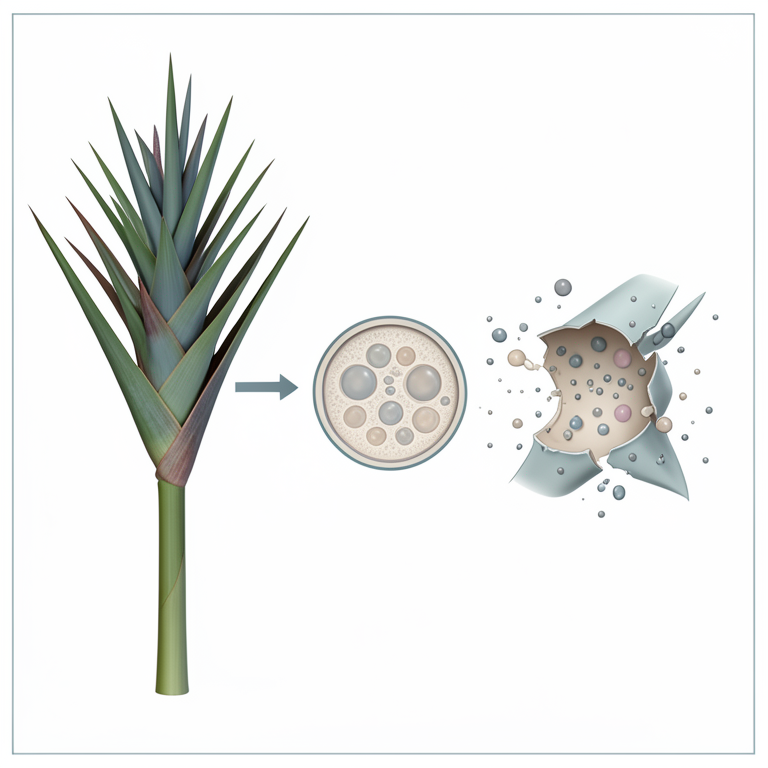
Mechanism of Antimicrobial Action
AI-generated conceptual illustration (Pandanus odoratissimus male inflorescence and a bacterial cell). It explains the idea and does not show study data.
View source evidence ↗Introduction
Pandanus Odoratissimus L., commonly referred to as the fragrant screw pine, is a plant of great significance in traditional medicine, particularly in tropical and subtropical regions. This plant, belonging to the family Pandanaceae, is renowned not only for its aromatic properties but also for its diverse medicinal uses. Traditional practices have utilized various parts of Pandanus Odoratissimus L., including its leaves, roots, and inflorescences, for treating a myriad of ailments. Its applications range from wound healing and antiinflammatory treatments to antimicrobial therapies. The Pandanus Odoratissimus L. plant is characterized by its distinctive long, narrow leaves with spiny edges and an aromatic scent that makes it popular in culinary and medicinal contexts. The plant thrives in coastal areas and marshy lands, where it forms dense thickets. One of its most striking features is the male inflorescence, which is not only visually appealing but also a potent source of bioactive compounds. The male inflorescence consists of clusters of small, fragrant flowers that exude a sweet scent, attracting pollinators and humans alike. Historically, the different parts of Pandanus Odoratissimus L. have been used for various medicinal purposes. The roots are often employed in treating skin diseases and ulcers, while the leaves are used in poultices for headaches and rheumatism. The male inflorescence, in particular, has been traditionally utilized to prepare concoctions believed to possess healthboosting properties. These traditional uses highlight the plant's importance in ethnomedicine and provide a foundation for scientific exploration into its pharmacological potential. The therapeutic potential of Pandanus Odoratissimus L. is largely attributed to its rich phytochemical profile. Studies have identified numerous bioactive compounds within the plant, including flavonoids, phenolic acids, alkaloids, terpenoids, and essential oils. These compounds are known for their health-promoting properties, including antioxidant and antimicrobial activities. The male inflorescence, in particular, is a repository of these bioactive constituents, making it a focal point for pharmacological studies. Antioxidant and antimicrobial properties are two critical areas of interest in modern pharmacology. Antioxidants play a vital role in neutralizing free radicals, thereby preventing cellular damage and mitigating the risk of various diseases, including cardiovascular diseases, cancers, and neurodegenerative disorders. On the other hand, antimicrobial agents are essential for combating infections caused by bacteria, fungi, and viruses. The increasing prevalence of antibiotic resistance further underscores the need for novel natural antimicrobial agents. Recent scientific investigations have delved into the antioxidant and antimicrobial potential of Pandanus Odoratissimus L. male inflorescence. These studies aim to validate traditional medicinal claims and explore new therapeutic applications. By isolating and characterizing the bioactive compounds responsible for these activities, researchers seek to understand their mechanisms of action and potential benefits.
Objective
The primary objective of this study is to conduct a comprehensive review of the existing literature on the antioxidant and antimicrobial activities of the male inflorescence of Pandanus Odoratissimus L.
Antioxidant Activities of Pandanus Odoratissimus L. Male Inflorescence
The antioxidant activity of the male inflorescence of Pandanus Odoratissimus L. has been a subject of interest due to its potential therapeutic benefits. Antioxidants are compounds that can prevent or slow the damage to cells caused by free radicals, unstable molecules that the body produces as a reaction to environmental and other pressures.
The antioxidant activity of Pandanus Odoratissimus L. male inflorescence is attributed to its rich content of bioactive compounds, including flavonoids, phenolic acids, alkaloids, and terpenoids.
Research indicates that these compounds act through various mechanisms to exert their antioxidant effects. One primary mechanism is the scavenging of free radicals. Free radicals, such as reactive oxygen species (ROS) and reactive nitrogen species (RNS), can cause oxidative stress, leading to cellular damage and various diseases. The bioactive compounds in the male inflorescence neutralize these free radicals by donating electrons, thereby reducing their reactivity and preventing cellular damage. Additionally, these compounds inhibit lipid peroxidation, a process in which free radicals steal electrons from the lipids in cell membranes, resulting in cell damage. By preventing lipid peroxidation, the male inflorescence helps maintain cell membrane integrity and function. The reduction of oxidative stress markers is another important aspect of its antioxidant activity. Oxidative stress markers, such as malondialdehyde (MDA) and protein carbonyls, are indicators of oxidative damage in cells. Studies have shown that the male inflorescence reduces the levels of these markers, indicating its potential in mitigating oxidative stress.
The antioxidant activity of the male inflorescence has been demonstrated in various in vitro assays. Assays such as DPPH (2,2-diphenyl-1-picrylhydrazyl) and ABTS (2,2'azino-bis(3-ethylbenzothiazoline-6-sulfonic acid)) measure the ability of compounds to neutralize free radicals, while the FRAP (Ferric Reducing Antioxidant Power) assay evaluates the reducing power of antioxidants. These studies have consistently shown that extracts from the male inflorescence exhibit significant antioxidant activity in these assays.
In vivo studies, though limited, further support these findings. Animal studies suggest that the antioxidant properties of the male inflorescence can confer protective effects against oxidative stress-related conditions. For instance, administration of the extract has been shown to reduce oxidative damage in tissues, improve antioxidant enzyme activities, and enhance overall health in animal models.
The potential health benefits of these antioxidant activities are significant. Antioxidants play a crucial role in preventing and managing various diseases, including cardiovascular diseases, cancers, diabetes, and neurodegenerative disorders. The ability of the male inflorescence to reduce oxidative stress and its markers suggests its potential as a natural antioxidant supplement. This potential application extends to the food and cosmetic industries, where natural antioxidants are increasingly sought after for their health benefits and consumer appeal. In conclusion, the male inflorescence of Pandanus Odoratissimus L. exhibits robust antioxidant activities due to its rich phytochemical content. These activities are evident in its ability to scavenge free radicals, inhibit lipid peroxidation, and reduce oxidative stress markers. While current research highlights its potential, further studies, particularly in vivo and clinical trials, are essential to fully understand and harness these antioxidant properties for therapeutic and industrial applications.
Antimicrobial Activities of Pandanus Odoratissimus L. Male Inflorescence
The male inflorescence of Pandanus Odoratissimus L. has garnered attention for its notable antimicrobial activities, which are largely attributed to its diverse array of bioactive compounds. These compounds include flavonoids, phenolic acids, alkaloids, terpenoids, and essential oils, each contributing to the plant's ability to inhibit the growth of various microorganisms. The antimicrobial properties of Pandanus Odoratissimus L. male inflorescence are primarily due to its ability to disrupt microbial cell membranes. This disruption leads to the leakage of essential intracellular components, ultimately causing cell death. The compounds can also inhibit microbial enzyme activity, interfering with the metabolic processes crucial for the survival and proliferation of the microbes. Additionally, some bioactive constituents may interfere with microbial DNA synthesis, further hindering the growth and replication of the microorganisms. Several studies have demonstrated the effectiveness of the male inflorescence against a range of bacterial and fungal strains. For instance, it has shown significant activity against common bacterial pathogens such as Staphylococcus aureus, Escherichia coli, and Pseudomonas aeruginosa. These bacteria are known to cause various infections in humans, ranging from skin infections to more severe conditions like pneumonia and septicemia. The ability of Pandanus Odoratissimus L. male inflorescence to inhibit these pathogens suggests its potential as a natural antibacterial agent. In addition to its antibacterial properties, the male inflorescence has exhibited antifungal activity. Studies have shown that it is effective against fungal strains such as Candida albicans and Aspergillus niger. Candida albicans is a common cause of fungal infections, particularly in immunocompromised individuals, leading to conditions like oral thrush and systemic candidiasis. Aspergillus niger, on the other hand, is known for causing respiratory infections and allergic reactions. The antifungal activity of the male inflorescence highlights its potential in treating fungal infections and managing fungal contamination.
The antimicrobial activity of Pandanus Odoratissimus L. male inflorescence has been assessed using various in vitro assays. Disc diffusion, minimum inhibitory concentration (MIC), and minimum bactericidal concentration (MBC) assays are commonly employed to evaluate the antimicrobial efficacy. These studies consistently demonstrate that extracts from the male inflorescence possess significant antimicrobial properties, inhibiting the growth of both bacterial and fungal pathogens. Although the majority of the research has been conducted in vitro, some in vivo studies support these findings. Animal studies suggest that the antimicrobial compounds in the male inflorescence can effectively reduce microbial load and prevent infections in living organisms. These preliminary in vivo studies are promising and warrant further investigation to confirm the efficacy and safety of these compounds in clinical settings. The potential applications of the antimicrobial properties of Pandanus Odoratissimus L. male inflorescence are extensive. In the pharmaceutical industry, it could be used to develop natural antimicrobial agents for treating infections and preventing microbial resistance, a growing concern with synthetic antibiotics. In the food industry, its antimicrobial activity can help in food preservation, extending shelf life and ensuring food safety. Moreover, in the cosmetic industry, it can be incorporated into products to prevent microbial contamination and promote skin health. In conclusion, the male inflorescence of Pandanus Odoratissimus L. exhibits significant antimicrobial activities, attributed to its rich phytochemical content. These activities are effective against a broad spectrum of bacterial and fungal pathogens, making it a promising candidate for developing natural antimicrobial agents. Further research, especially clinical trials, is essential to fully harness these antimicrobial properties for therapeutic and industrial applications
Conclusion
The male inflorescence of Pandanus Odoratissimus L. demonstrates significant antioxidant and antimicrobial activities, largely due to its rich composition of bioactive compounds such as flavonoids, phenolic acids, alkaloids, terpenoids, and essential oils. These compounds work through various mechanisms, including scavenging free radicals, inhibiting lipid peroxidation, disrupting microbial cell membranes, and inhibiting microbial enzyme activity. Research indicates that the antioxidant properties of the male inflorescence can mitigate oxidative stress and protect against cellular damage, with promising results in both in vitro and preliminary in vivo studies. The antimicrobial activities have been shown to be effective against a broad spectrum of bacterial and fungal pathogens, suggesting its potential as a natural alternative to synthetic antimicrobial agents. The potential applications of these bioactivities are extensive, ranging from pharmaceutical uses, such as developing natural antioxidant and antimicrobial agents, to industrial applications in food preservation and cosmetics. However, while current studies highlight the significant potential of Pandanus Odoratissimus L. male inflorescence, further comprehensive in vivo studies and clinical trials are essential to fully understand its efficacy, safety, and mechanisms of action.
Future research should focus on isolating and characterizing individual bioactive compounds, understanding their specific interactions and pathways, and developing novel formulations and delivery systems to maximize their therapeutic potential. The promising findings to date underscore the importance of this plant in traditional medicine and its potential role in modern healthcare and industry.
References
6 in the original paper- Adkar PP, Bhaskar VH. Pandanus Odoratissimus (Kewda): A review on ethnopharmacology, phytochemistry, and nutritional aspects. Advances in Pharmacological and Pharmaceutical Sciences. 2014;2014(1):120895.
- Gurmeet S, Amrita P. Unique pandanus-flavour, food and medicine. Journal of Pharmacognosy and Phytochemistry. 2016;5(3):08-14.
- Sahu BP, Goud P, Patnaik C. Pandanus Odoratissimus Linn: Isolation of stigmast-5, 22-dien-3β-ol from ethanolic extract of stem bark and study of antimicrobial activity. Journal of Chemistry and Chemical Sciences. 2016;6(6):574-585.
- Ningrum AN, Schreiner M. Pandan leaves: Vanilla of the East. Agro Food Industry Hi Tech, 2014 May, 25(3).
- Mangundayao KL. A Review of Biological Activity of Thai Turmeric and and Pandan Leaves and its Implications to Human Health. Organized by Dusit Thani College 29 November-2 December 2017
- Bangkok, Thailand, 2017 Nov 29, 9.