
Research article · 2022 · Full text
International Journal of Agriculture and Food SciencePhenological events as indicators of climate change
Volume 4(1) · Pages 129–131 · DOI: 10.33545/2664844x.2022.v4.i1b.188 ↗
Research areasRemote Sensing in Agriculture
Abstract
Author-writtenPhenology, the study of seasonal biological events, is a critical field for understanding the impacts of climate change on ecosystems. This review paper explores the role of phenological events as indicators of climate change, highlighting the shifts in timing observed across various species and ecosystems. By examining long-term phenological data, we can gain insights into the broader implications of these changes for biodiversity, ecosystem services, and human activities. The review also discusses the methodologies used to monitor phenological changes and the potential for phenology to inform climate adaptation strategies.
Summary
Source-checkedPlain-language reading of the full paper, prepared with AI and checked against the text. Each point links to the authors' own words.
Why it matters
- Phenology is the study of the timing of recurring biological events, which helps researchers understand how organisms interact with their environment. View evidence ↗
- Biological events like plant flowering, leaf emergence, bird migration, and animal breeding are highly sensitive to environmental changes, especially precipitation and temperature. View evidence ↗
- Changes in phenology can cause cascading effects in ecosystems, such as when altered flowering times affect nectar availability and the reproductive success of pollinators. View evidence ↗
The question
- The review aims to synthesize existing knowledge on how climate change causes phenological shifts and what these shifts mean for human activities and ecosystems. View evidence ↗
- The study also seeks to evaluate the methods used to monitor phenology and how this data can be used for climate adaptation. View evidence ↗
What they did
- The review analyzes phenological shifts, defined as changes in the timing of recurring biological events caused by climate change. View evidence ↗
- The review examines traditional field observations where researchers and citizen scientists record events like first flowering dates or bird arrivals. View evidence ↗
- The paper discusses the use of remote sensing, including satellite imagery and aerial photography, to monitor vegetation greenness and leaf area index on a large scale. View evidence ↗
- The review covers automated systems like environmental sensors and phenocams (time-lapse cameras) that provide high-frequency, continuous data. View evidence ↗
What they found
- Evidence shows that many plants are flowering earlier in spring, insects are emerging earlier, and migratory birds are arriving at breeding grounds sooner. View evidence ↗
- Rising temperatures cause plants to initiate spring stages sooner, which may extend the growing season but increases the risk of damage from late frosts. View evidence ↗
- Earlier bird migration can create ecological mismatches if the peak availability of food sources, such as insects, does not shift in sync. View evidence ↗
- Species that cannot adjust their biological timing to match climate changes face a higher risk of extinction or population decline. View evidence ↗
What it means
- The authors conclude that phenological monitoring is essential for assessing climate change and that integrating diverse data allows for better mitigation strategies for human well-being and ecosystems. View evidence ↗
- The authors recommend using phenological data in agriculture to improve crop yield predictions, pest management, and planting schedules. View evidence ↗
Visual summary
1 visualsIllustrations explain the paper; they do not show study data.
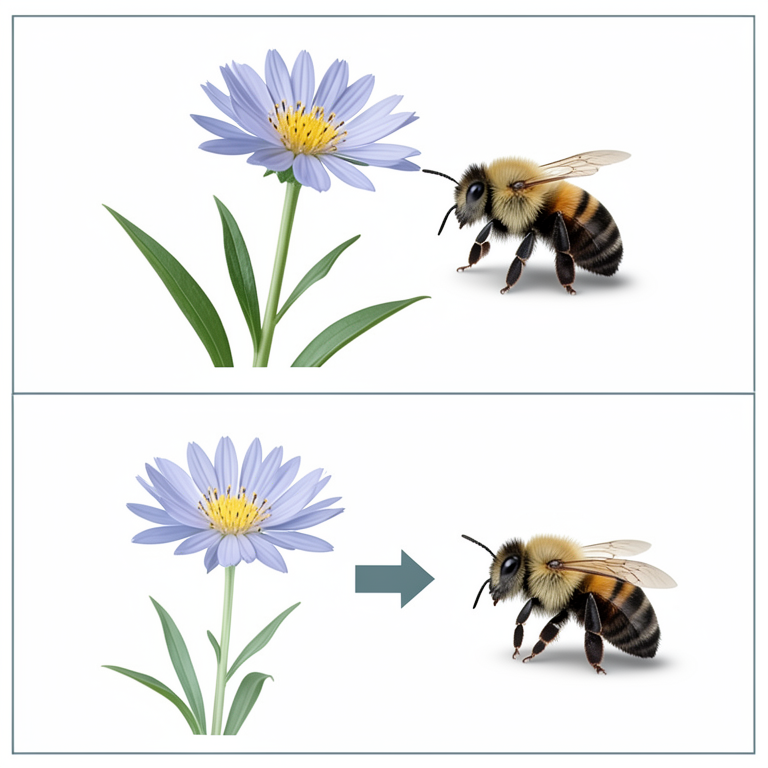
Ecological Mismatch Concept
AI-generated conceptual illustration (wildflowers and bumblebees). It explains the idea and does not show study data.
View source evidence ↗Introduction
Phenology, the study of the timing of recurring biological events, provides critical insights into the interactions between organisms and their environment. These biological events, which include the flowering of plants, the emergence of leaves, the migration of birds, and the breeding of animals, are highly sensitive to changes in environmental conditions, particularly temperature and precipitation. As a result, phenological events are powerful indicators of the impacts of climate change on ecosystems. Over the past century, global temperatures have risen significantly due to increased concentrations of greenhouse gases in the atmosphere. This warming trend has led to noticeable shifts in the timing of phenological events across a wide range of species and ecosystems. For example, many plants are now flowering earlier in the spring, migratory birds are arriving at their breeding grounds sooner, and insects are emerging earlier in the year. These shifts in phenology are among the most compelling pieces of evidence for the biological effects of climate change. Phenological events are particularly valuable as indicators of climate change for several reasons. They provide direct and observable evidence of how organisms respond to changes in their environment. Unlike other ecological processes that may be influenced by multiple factors, the timing of phenological events is closely tied to specific environmental cues, making them relatively straightforward to monitor and interpret. Phenological changes can have cascading effects throughout ecosystems. For example, the timing of plant flowering can influence the availability of nectar for pollinators, which in turn affects the reproductive success of both plants and pollinators. Similarly, the timing of insect emergence can impact Phenological studies can contribute to broader climate science by improving our understanding of how biological processes are linked to climate variability and change. This knowledge can enhance climate models and help predict future ecological responses to ongoing and projected changes in the climate system
Objective
The objective of this review is to synthesize current knowledge on phenological shifts in response to climate change, examining their implications for ecosystems and human activities. The review also evaluates methodologies for phenological monitoring and discusses the potential for using phenological data in climate adaptation strategies.
Phenological Shifts in Response to Climate Change
Phenological shifts refer to the changes in the timing of recurring biological events in response to climate change. These events include plant activities such as leaf unfolding, flowering, fruiting, and leaf fall, as well as animal behaviors like migration, hibernation, breeding, and feeding. Climate change, primarily driven by global warming, has led to significant alterations in the environmental cues that organisms use to time these events, resulting in noticeable shifts in phenology across various species and ecosystems. For plants, one of the most documented phenological shifts is the advancement of spring events such as budburst, flowering, and leaf unfolding. As temperatures rise earlier in the year, many plant species have been observed to initiate these stages sooner than they did historically. This can lead to a longer growing season but can also cause problems if early growth is followed by late frosts. Additionally, the timing of leaf senescence and fall in autumn can be delayed, further extending the period of active growth. In the animal kingdom, phenological shifts are equally significant. Many bird species, for example, are now arriving at their breeding grounds earlier in the spring due to warmer temperatures and earlier availability of food resources. This advancement in migration timing can lead to mismatches with the peak availability of food, such as insects, which are also experiencing phenological shifts. Similarly, changes in the timing of breeding and hibernation in mammals and the emergence of insects have been widely reported. These shifts in phenology can have cascading effects throughout ecosystems. For instance, if plants flower earlier but their pollinators do not adjust their schedules accordingly, it can lead to reduced pollination success and affect plant reproduction. Similarly, if herbivores emerge before the availability of their food plants, it can impact their survival and growth. These mismatches can disrupt established ecological relationships and lead to changes in species composition and ecosystem dynamics. Phenological shifts are not uniform across all regions or species, and their magnitude can vary significantly depending on local climate conditions, species-specific responses, and ecological interactions. In some cases, species that are unable to adjust their phenological timing may face increased risks of population decline or even extinction. Overall, phenological shifts in response to climate change provide crucial indicators of how ecosystems are responding to environmental changes. They highlight the interconnectedness of species within ecosystems and underscore the importance of monitoring and understanding these shifts to predict and mitigate the impacts of climate change on biodiversity and ecosystem services.
Monitoring Phenological Changes
Monitoring phenological changes is essential for understanding how climate change affects ecosystems and for developing strategies to mitigate its impacts. Various methodologies and tools have been developed to track these changes accurately and efficiently across different spatial and temporal scales. Traditional field observations have been the cornerstone of phenological monitoring for centuries. Researchers and citizen scientists record the timing of specific phenological events, such as the first flowering date of plants, the arrival of migratory birds, or the emergence of insects. These observations are often standardized using phenological scales, allowing for consistent and comparable data collection. However, this method is time-consuming and labor-intensive, with limited spatial coverage and potential observer bias. Advances in remote sensing technologies have revolutionized phenological monitoring by providing largescale, high-resolution data on vegetation and land cover changes. Satellite imagery and aerial photography can detect changes in vegetation greenness, leaf area index, and other indicators of plant phenology. Remote sensing offers extensive spatial and temporal coverage, enabling the monitoring of inaccessible or large areas. Nonetheless, it requires specialized equipment and expertise and may have limitations in detecting specific phenological events or finescale changes. Automated monitoring systems, such as phenocams (timelapse cameras) and environmental sensors, provide continuous and high-frequency data on phenological changes. Phenocams capture images of vegetation and landscapes at regular intervals, allowing researchers to visually analyze changes over time. Environmental sensors measure temperature, light, and other microclimatic factors that influence phenology. These systems offer high temporal resolution and objective data collection but involve initial setup and maintenance costs and complex data management and analysis. Citizen science initiatives have become increasingly popular in phenological monitoring. Programs like the USA National Phenology Network and the UK Phenology Network engage the public in recording phenological events, contributing to large datasets that enhance scientific understanding. These initiatives not only gather valuable data but also raise public awareness about climate change and its impacts. However, data quality control and potential inconsistencies in observations pose challenges. Long-term ecological research (LTER) sites provide critical data on phenological changes over extended periods. These sites offer a comprehensive understanding of ecological processes and trends, contributing to our knowledge of how ecosystems respond to climatic variations. LTER programs often integrate multiple monitoring methods, including field observations, remote sensing, and automated systems. While these sites provide long-term, consistent data collection and integrate various data sources, they require significant resources and funding and are limited in number. Integrating phenological data from various sources is crucial for comprehensive analysis and interpretation. Geographic Information Systems (GIS) and advanced statistical models are commonly used to analyze spatial and temporal patterns in phenological data. These tools help identify trends, correlations, and potential drivers of phenological changes. Effective data integration and analysis enhance data visualization and the ability to identify and predict phenological trends, although they require technical expertise and may encounter issues with data compatibility and standardization. Monitoring phenological changes has numerous applications across different fields, including ecological research, agriculture, conservation, public health, and climate science. In ecological research, it aids in understanding species interactions, community dynamics, and ecosystem functioning. In agriculture, it helps optimize planting and harvesting schedules, pest management, and crop yield predictions. Conservation efforts benefit from informed management practices for protected areas and endangered species. Public health strategies can predict pollen seasons and manage allergy-related issues, while climate science uses phenological data as indicators of climate change impacts and contributes to climate models. Effective monitoring of phenological changes is essential for understanding and mitigating the impacts of climate change on ecosystems and human activities. By leveraging a combination of traditional observations, remote sensing, automated systems, and citizen science, researchers can gather comprehensive data to inform ecological research, agricultural practices, conservation efforts, and public health strategies. Continued advancements in monitoring technologies and data integration will further enhance our ability to track and respond to phenological changes in a rapidly changing climate.
Conclusion
Phenological changes serve as vital indicators of the impacts of climate change on ecosystems. The timing of biological events such as flowering, migration, and breeding is closely linked to environmental conditions, making phenology an essential area of study for understanding how climate variability and change affect biodiversity, ecosystem functioning, and human activities. Monitoring these changes through traditional field observations, remote sensing, automated systems, and citizen science initiatives provides comprehensive data that enhance our understanding of phenological shifts. Effective phenological monitoring helps identify and predict the timing and extent of these shifts, allowing for better management and adaptation strategies across various sectors. For instance, in agriculture, understanding phenological changes can optimize planting schedules, improve pest management, and enhance crop yield predictions. In conservation, phenological data inform the management of protected areas and guide actions to support endangered species. Public health benefits from phenological monitoring by predicting pollen seasons and managing allergy-related conditions, while climate science uses these data to improve climate models and forecast ecological responses to future climate scenarios. The integration of phenological data from multiple sources, combined with advances in data analysis and visualization technologies, enhances our ability to track and respond to phenological changes effectively. Continued research and collaboration across disciplines are essential to furthering our understanding of phenology and its role in climate adaptation. In conclusion, phenological monitoring is a critical tool for assessing the impacts of climate change. By leveraging diverse methodologies and integrating comprehensive data sets, researchers and policymakers can develop informed strategies to mitigate the negative effects of climate change on ecosystems and human well-being. As our climate continues to change, the importance of phenology as a key indicator and area of study will only grow, providing invaluable insights into the resilience and adaptation of natural systems.
References
10 in the original paper- Cleland EE, Chuine I, Menzel A, Mooney HA, Schwartz MD. Shifting plant phenology in response to global change. Trends in Ecology & Evolution. 2007;22(7):357-365.
- Menzel A, Sparks TH, Estrella N, Koch E, Aasa A, Ahas R, et al. European phenological response to climate change matches the warming pattern. Global Change Biology. 2006;12(10):1969-1976.
- Parmesan C, Yohe G. A globally coherent fingerprint of climate change impacts across natural systems. Nature. 2003;421(6918):37-42.
- Root TL, Price JT, Hall KR, Schneider SH, Rosenzweig C, Pounds JA. Fingerprints of global warming on wild animals and plants. Nature. 2003;421(6918):57-60.
- Schwartz MD, Ahas R, Aasa A. Onset of spring starting earlier across the Northern Hemisphere. Global Change Biology. 2006;12(2):343-351.
- Haggerty BP, Matthews ER, Gerst KL, Evenden AG, Mazer SJ. The California Phenology Project: tracking plant responses to climate change. Madroño. 2013;60(1):1-3.
- Inouye DW. Climate change and phenology. Wiley Interdisciplinary Reviews: Climate Change. 2022;13(3):e764.
- Richardson AD, Keenan TF, Migliavacca M, Ryu Y, Sonnentag O, Toomey M. Climate change, phenology, and phenological control of vegetation feedbacks to the climate system. Agricultural and Forest Meteorology. 2013;169:156-173.
- Ojha VK. Climate change and its impact on biodiversity: A global perspective. Int J Geogr Geol Environ 2022;4(2):245-249. DOI: 10.22271/27067483.2022.v4.i2c.300
- Post E, Forchhammer MC, Stenseth NC, Callaghan TV. The timing of life-history events in a changing climate. Proceedings of the Royal Society B: Biological Sciences. 2001;268(1462):15-23.
Cited by 1
From OpenAlex, OpenCitations and reference lists read by Scinovex
- Monitoring, analysing, forecasting and communicating phenological changes ↗
A.J.H. van Vliet · 2008
The main objectives of this PhD thesis are to assess the climate-induced phenological changes in The Netherlands, to increase the knowledge and understanding of the ecological and socio-economic impacts of these phenological changes, to determine how society can adapt to these phenological changes and to determine the importance of phenological networks in monitoring of, communicating on and adapting to the…
❝ 10PDF