
Research article · 2023 · Full text
International Journal of Agriculture and NutritionEffects of agricultural extension services on cereal crop yields
Volume 5(2) · Pages 92–95 · DOI: 10.33545/26646064.2023.v5.i2b.154 ↗
Research areasCrop Yield and Soil FertilityAgricultural Systems and PracticesRice Cultivation and Yield Improvement
Abstract
Author-writtenAgricultural extension services play a crucial role in enhancing the productivity and sustainability of cereal crop production. This review paper examines the impact of these services on cereal crop yields, highlighting the mechanisms through which extension services influence agricultural practices. The paper synthesizes findings from various studies to provide a comprehensive understanding of the effectiveness of extension services in different contexts and regions. Key factors such as farmer education, access to resources, and adoption of modern technologies are explored. The review also discusses the challenges faced by extension services and offers recommendations for improving their effectiveness.
Summary
Source-checkedPlain-language reading of the full paper, prepared with AI and checked against the text. Each point links to the authors' own words.
Why it matters
- Cereal crops like wheat, rice, maize, and barley are essential staple foods for a large part of the world's population. View evidence ↗
- Agricultural extension services are designed to connect scientific research with practical farming applications. View evidence ↗
The question
- The paper aims to analyze how agricultural extension services affect cereal crop yields by improving farmer knowledge, technology adoption, input access, and sustainable practices. View evidence ↗
What they did
- The authors conducted a review paper that synthesizes findings from various existing studies to understand the effectiveness of extension services across different regions. View evidence ↗
What they found
- Research on maize yields indicates that farmers receiving extension support achieve significantly higher yields than those who do not. View evidence ↗
- In arid regions, extension programs that introduced advanced irrigation and water management led to substantial yield increases for wheat and maize. View evidence ↗
- Extension-supported training in Integrated Pest Management (IPM) in Nicaragua resulted in increased yields for rice and maize and reduced pest damage. View evidence ↗
- In Uganda, participation in extension programs was linked to higher cereal yields, as well as improved food security and household income. View evidence ↗
- The promotion of conservation agriculture (no-till farming, crop rotation, and organic amendments) via extension services increased yields for wheat and barley. View evidence ↗
- Pests and diseases are significant threats that can cause up to 40% yield losses in cereal crops. View evidence ↗
- In Ethiopia, extension services improved farmer access to high-quality seeds, fertilizers, and pesticides, leading to higher maize yields. View evidence ↗
What it means
- The authors conclude that ongoing investment and support for extension services are essential to maximize benefits and ensure long-term agricultural sustainability. View evidence ↗
- The authors suggest that integrating digital tools like mobile apps and remote sensing will revolutionize extension services by providing real-time data for better decision-making. View evidence ↗
- The authors note that yield improvements can be hindered by challenges including water scarcity, land degradation, and socio-economic barriers. View evidence ↗
Visual summary
1 visualsIllustrations explain the paper; they do not show study data.
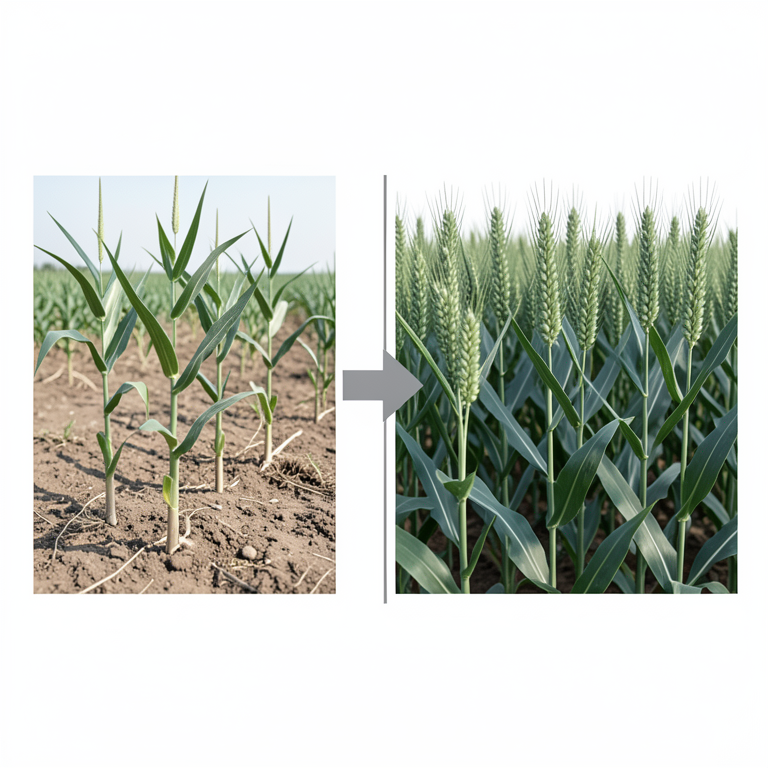
Mechanisms of Extension Services
AI-generated conceptual illustration (maize and wheat crops). It explains the idea and does not show study data.
View source evidence ↗Introduction
Agricultural extension services are essential for disseminating knowledge and innovations to farmers, thereby improving agricultural productivity and sustainability. These services involve a range of activities, including farmer education, training, and the provision of technical assistance. Cereal crops, which include wheat, rice, maize, and barley, are staple foods for a significant portion of the global population. Enhancing the yields of these crops through effective extension services can have a profound impact on food security and economic development. Cereal crops are fundamental to global food security, providing more than half of the world's caloric intake. They are vital sources of carbohydrates, proteins, and essential nutrients. Increasing the productivity of cereal crops is therefore crucial to meet the growing food demands of a rising global population. Agricultural extension services can significantly contribute to this goal by promoting best practices and facilitating the adoption of improved crop varieties and technologies. Agricultural extension services aim to bridge the gap between research and practice. They play a pivotal role in educating farmers about new agricultural techniques, pest and disease management, soil fertility management, and efficient water use. Extension agent's work directly with farmers, providing them with the knowledge and tools needed to improve their farming practices and increase crop yields. The success of these services depends on various factors, including the availability of resources, the quality of training provided, and the responsiveness of farmers to new information.
Objective of the Paper
The objective of this paper is to analyze the impact of agricultural extension services on cereal crop yields, examining how these services enhance farmer knowledge, facilitate the adoption of new technologies, improve access to essential inputs, and promote sustainable farming practices.
Their analysis emphasizes the need for well-structured and adequately funded extension programs to maximize their impact on yields. Evenson and Gollin (2003) [2] . Focuses on the Green Revolution's impact, particularly in developing countries. They attribute the substantial yield improvements in cereal crops such as wheat and rice to the widespread dissemination of high-yielding varieties and modern agricultural practices facilitated by extension services. The study highlights that the presence of robust extension systems was crucial for the adoption of these innovations, leading to significant yield gains. Ragasa et al. (2016) [3] . Examined the effects of agricultural extension services on maize yields. They find that farmers who received extension support had significantly higher yields compared to those without such support (Sule John Adanehi et al, 2022) [6] . The study attributes this difference to better access to improved seeds, fertilizers, and training on best practices provided by extension agents. This research underscores the importance of extension services in improving access to critical inputs and knowledge. Dinar et al. (2007) [4] . Investigated the impact of extension services on water use efficiency and cereal yields in arid regions. Dinar and colleagues find that the introduction of advanced irrigation techniques and water management practices through extension programs led to substantial yield increases in wheat and maize. The research highlights the role of extension services in promoting sustainable resource use while enhancing productivity. Hruska and Corriols (2002) [5] . Explored the implementation of integrated pest management (IPM) practices in Nicaragua through extension services. Their study shows that farmers who adopted IPM practices, supported by extension training, experienced significant reductions in pest damage and increased yields in rice and maize. This research demonstrates the effectiveness of extension services in promoting sustainable and effective pest management strategies. Benin et al. (2011) [7] . Examined the socio-economic impacts of agricultural extension services in Uganda. Their findings indicate that households participating in extension programs not only achieved higher cereal yields but also experienced improved household incomes and food security. The study highlights the broader socio-economic benefits of extension services, beyond just yield improvements. Pretty et al. (2003) [8]. Analyzed the effects of promoting conservation agriculture practices through extension services. Their study focuses on the adoption of no-till farming, crop rotation, and organic amendments, showing that these practices led to improved soil health and increased yields of wheat and barley. The research emphasizes the importance of extension services in promoting sustainable agricultural practices that enhance long-term productivity.
Cereal Crop Yields
Cereal crops such as wheat, rice, maize, barley, and oats are vital for global food security, accounting for a substantial portion of the world's caloric intake. The yields of these crops, defined as the amount produced per unit area, are influenced by a complex interplay of genetic, environmental, and agronomic factors. Detailed analysis of previous studies reveals the multifaceted nature of these influences and underscores the importance of integrated approaches to improve cereal crop productivity. Genetic improvement has been a cornerstone of yield enhancement in cereal crops. According to a study by Fischer and Edmeades (2010), advances in plant breeding and biotechnology have led to significant yield increases through the development of highyielding varieties, disease-resistant strains, and droughttolerant crops. These improvements are largely attributed to the application of genetic engineering and molecular breeding techniques. For instance, research by Pingali (2012) highlights that the Green Revolution's success in the mid-20 th century was driven by the introduction of semi-dwarf, highyielding varieties of rice and wheat, which dramatically increased yields in Asia and Latin America. Similarly, hybrid varieties of maize have shown remarkable yield gains due to heterosis, or hybrid vigor, as demonstrated by Duvick (2005). Environmental conditions play a crucial role in determining cereal crop yields. Climate factors such as temperature, precipitation, and solar radiation are critical. Lobell et al. (2011) found that increasing temperatures and changing precipitation patterns due to climate change pose significant risks to cereal production. Their study projects yield reductions for major cereals if current trends continue, emphasizing the need for climate-resilient crop varieties. Soil quality, including factors such as fertility, pH, and structure, is also essential for optimal crop growth. Lal (2006) discusses how soil degradation, particularly in developing countries, poses a severe threat to crop productivity. Enhancing soil health through practices like crop rotation, cover cropping, and organic amendments has been shown to improve yields, as noted by Tilman et al. (2002). Agricultural practices significantly influence cereal crop yields. Efficient irrigation systems are critical, particularly in regions with unreliable rainfall. According to a study by Fereres and Soriano (2007), improved irrigation techniques, such as drip irrigation and precision sprinklers, can enhance water use efficiency and boost yields. Fertilization is another key factor; the application of both organic and inorganic fertilizers supplies essential nutrients like nitrogen, phosphorus, and potassium. Stewart et al. (2005) reported that balanced fertilization practices could significantly increase cereal yields, but overreliance on inorganic fertilizers can lead to soil degradation and environmental pollution. Pest and disease management is vital for protecting cereal crops. Integrated pest management (IPM) strategies, which combine biological, cultural, mechanical, and chemical controls, have been effective in reducing pest-related yield losses. Oerke (2006) estimated that pests and diseases can cause yield losses of up to 40% in cereals. The use of fungicides, insecticides, and herbicides, combined with resistant crop varieties, has been instrumental in managing these threats. Mechanization and precision agriculture technologies also play a significant role. According to Zhang et al. (2002), GPS-guided machinery, remote sensing, and drones have revolutionized planting, harvesting, and crop monitoring, leading to increased efficiency and productivity. Global trends in cereal crop yields reveal significant regional variability. This variability is often due to differences in technology adoption, climatic conditions, and access to agricultural inputs. For example, Pingali and Heisey (1999) noted that while developed countries have seen steady yield improvements, many developing regions lag due to limited access to modern technologies and resources. Sustainability in agriculture is a growing concern, as highlighted by Tilman et al. (2011), who argue that sustainable practices are essential to balance productivity with environmental conservation. Conservation tillage, agroforestry, and organic farming are among the practices that can enhance long-term yield sustainability without degrading natural resources. Food security remains a critical issue, with increasing cereal yields essential to meet the demands of a growing global population. However, challenges such as land degradation, water scarcity, and socio-economic barriers can impede yield improvements. Addressing these challenges requires a multifaceted approach, integrating scientific research, supportive policies, and farmer education. Future directions for enhancing cereal crop yields include continued investment in research and development to develop new crop varieties and agricultural technologies. According to Godfray et al. (2010), developing climate-resilient crops through breeding and biotechnological interventions is essential to withstand extreme weather conditions and ensure stable yields. Supportive policies and educational programs for farmers, as discussed by Pretty et al. (2010) [8] , can facilitate the adoption of best practices and new technologies, ultimately leading to improved yields. In summary, cereal crop yields are influenced by a complex interplay of genetic, environmental, and management factors. Previous studies underscore the importance of integrated approaches combining advances in agricultural science and technology with sustainable practices and supportive policies to enhance cereal yields and ensure global food security. Addressing the challenges posed by climate change, resource scarcity, and socio-economic barriers will be essential to achieve these goals and sustain cereal production in the future.
Agricultural Extension Services
Agricultural extension services play a crucial role in improving cereal crop yields by providing farmers with access to information, technologies, and practices that enhance agricultural productivity. These services involve a variety of activities, including education, training, and the dissemination of innovative farming techniques. Detailed analysis of the effects of agricultural extension services on cereal crop yields highlights their significant impact on productivity, efficiency, and sustainability. One of the primary effects of agricultural extension services is the improvement of farmers' knowledge and skills. According to Anderson and Feder (2004) [1] , extension services equip farmers with the latest information on crop management, pest control, and soil fertility, leading to betterinformed decision-making. This enhanced knowledge helps farmers adopt more efficient and effective farming practices, ultimately increasing cereal crop yields. For instance, a study by Evenson and Gollin (2003) [2] . Found that countries with strong extension services saw significant yield improvements in cereal crops due to the widespread adoption of modern agricultural practices. The dissemination of new technologies and innovations is another critical effect of agricultural extension services. Extension agents play a key role in introducing farmers to high-yielding seed varieties, advanced irrigation methods, and precision farming tools. For example, Dinar et al. (2007) [4]. Reported that the adoption of improved seed varieties and modern irrigation techniques, facilitated by extension services, led to substantial yield increases in wheat and maize. The introduction of such technologies helps bridge the gap between research and practical application, ensuring that farmers benefit from scientific advancements.
Agricultural extension services also enhance farmers' access to essential inputs and resources. These services often include assistance in obtaining high-quality seeds, fertilizers, and pesticides. A study by Ragasa et al. (2016) [3] in Ethiopia demonstrated that farmers who received extension support had better access to these inputs, resulting in higher maize yields compared to those who did not receive such support. By improving access to critical resources, extension services help farmers optimize their input use and achieve higher productivity. Extension services contribute to better pest and disease management, which is vital for maintaining high cereal crop yields. Extension agents provide training on integrated pest management (IPM) techniques, which combine biological, cultural, mechanical, and chemical controls to manage pests and diseases effectively. According to a study by Hruska and Corriols (2002) [5] , the implementation of IPM practices through extension programs in Nicaragua led to significant reductions in pest damage and increased yields in rice and maize. Effective pest and disease management reduces crop losses and ensures more stable and reliable yields. The promotion of sustainable agricultural practices is another important effect of agricultural extension services. These services encourage farmers to adopt practices that enhance soil health, conserve water, and reduce environmental impact. For instance, Pretty et al. (2003) [8] . Found that extension programs promoting conservation agriculture practices, such as no-till farming and crop rotation, led to improved soil fertility and increased wheat and barley yields. Sustainable practices help maintain long-term productivity and resilience in cereal cropping systems. Furthermore, agricultural extension services can foster social and economic development within farming communities. By improving yields and profitability, these services contribute to better livelihoods and food security. A study by Benin et al. (2011) [7] . In Uganda showed that households participating in extension programs experienced higher cereal yields and increased household incomes. This economic upliftment can lead to further investments in agriculture, creating a positive feedback loop that enhances overall productivity. In summary, agricultural extension services have a profound and multifaceted impact on cereal crop yields. They enhance farmers' knowledge and skills, facilitate the adoption of new technologies, improve access to essential inputs, promote effective pest and disease management, encourage sustainable practices, and contribute to socio-economic development. These combined effects lead to significant improvements in cereal crop productivity, ensuring food security and sustainable agricultural development. Continued investment in and support for agricultural extension services are essential for maximizing their benefits and achieving long-term agricultural sustainability.
Conclusion
Agricultural extension services have demonstrated a profound impact on cereal crop yields by equipping farmers with essential knowledge, technologies, and resources. The positive effects of these services include enhanced farmer education, improved access to high-quality inputs, effective pest and disease management, and the promotion of sustainable farming practices. These benefits collectively contribute to higher productivity, better livelihoods, and greater food security. Extension services bridge the gap between agricultural research and practical application, ensuring that scientific advancements reach the farmers who need them most. Studies have consistently shown that strong extension services correlate with significant yield improvements in cereals like wheat, maize, and rice. This correlation underscores the importance of these services in the global effort to enhance food production and ensure agricultural sustainability.
Future Prospects
Looking forward, the role of agricultural extension services will become increasingly critical as the world faces challenges such as climate change, population growth, and resource constraints. The integration of digital technologies will revolutionize extension services, with tools like mobile apps, remote sensing, and precision agriculture technologies providing real-time information and enabling farmers to make more informed decisions. E-extension services can reach a wider audience more efficiently, offering personalized advice and training. As climate change continues to affect agricultural productivity, extension services will need to focus on promoting climate-resilient farming practices. This includes developing and disseminating drought-tolerant and heat-resistant crop varieties, as well as teaching adaptive techniques like waterefficient irrigation and soil conservation practices. To meet the growing food demands of a rising global population, extension services must emphasize sustainable intensification-producing more food from the same amount of land while minimizing environmental impact. Practices such as integrated pest management, conservation agriculture, and organic farming will be crucial in achieving this balance. Future extension services should prioritize capacity building and empowerment of farmers, particularly smallholders. This involves not only technical training but also improving access to financial services, markets, and policy advocacy. Empowered farmers are more likely to adopt innovative practices and contribute to broader agricultural development goals. Effective extension services will require collaboration among various stakeholders, including government agencies, research institutions, private sector companies, and non-governmental organizations. Multi-stakeholder platforms can facilitate the sharing of knowledge, resources, and best practices, leading to more coordinated and impactful extension efforts. Implementing robust monitoring and evaluation frameworks will help assess the effectiveness of extension services and identify areas for improvement. Data-driven approaches can provide insights into the outcomes of different extension programs, ensuring that resources are used efficiently and effectively. In conclusion, agricultural extension services are indispensable for enhancing cereal crop yields and ensuring sustainable agricultural development. As the agricultural landscape evolves, these services must adapt and innovate to address emerging challenges and opportunities. By leveraging digital technologies, promoting climate resilience, and fostering collaboration, extension services can continue to play a pivotal role in securing the future of global food security and agricultural sustainability. Continued investment in these services, combined with supportive policies and research, will be essential to maximize their impact and support the growth and resilience of the agricultural sector.
References
7 in the original paper- Anderson JR, Feder G. Agricultural extension: Good intentions and hard realities. The World Bank Research Observer. 2004;19(1):41-60. DOI:10.1093/wbro/lkh013.
- Ragasa C, Berhane G, Tadesse F, Taffesse AS. Gender differences in access to extension services and agricultural productivity. J Agric. Educ. Ext. 2016;22(5):437-459. DOI:10.1080/1389224X.2016.1206450.
- Dinar A, Campbell M, Zilberman D. The impact of extension services in times of crisis: Côte d'Ivoire, Ethiopia, and Egypt. Agric. Econ. 2007;36(2):123-130. DOI:10.1111/j.1574-0862.2007.00198.x.
- Hruska AJ, Corriols M. The impact of training in integrated pest management among Nicaraguan maize farmers: Increased net returns and reduced health risk. Int. J Occup. Environ Health. 2002;8(3):191-200. DOI:10.1179/oeh.2002.8.3.191.
- Adanehi SJ, Oduntan FT, Idu EE. Exploring the access of agricultural extension services among small-scale garden egg farmers in Abaji area council, Abuja. Int J Agric Extension Social Dev. 2022;5(1):48-53. DOI:10.33545/26180723.2022.v5.i1a.123
- Benin S, Nkonya E, Okecho G, Randriamamonjy J, Kato E, Lubadde G, et al. Returns to spending on agricultural extension: The case of the National Agricultural Advisory Services (NAADS) program of Uganda. Agric. Econ. 2011;42(2):249-267. DOI:10.1111/j.1574-0862.2010.00512.x.
- Pretty J, Noble AD, Bossio D, Dixon J, Hine RE, Penning de Vries FWT, et al. Resource-conserving agriculture increases yields in developing countries. Environ Sci. Technol. 2006;40(4):1114-1119. DOI:10.1021/es051670d.