
Research article · 2024 · Full text
International Journal of Agriculture and NutritionBiofertilizers effects on some agromorphological parameters and harvest stage on nutrients composition of ginger (Zingiber officinale Rosc.)
Volume 6(1) · Pages 121–128 · DOI: 10.33545/26646064.2024.v6.i1b.151 ↗
Research areasHumic Substances and Bio-Organic StudiesGinger and Zingiberaceae research
Abstract
Author-writtenBiofertilizers application may influence growth, productivity and nutrients content by harvest period of Zingiber officinale. These rhizomes are one of the highest value spices in the world for nutrition and health. Experimental field with 2 plots of Z. officinale was carried out (one plot for treatments and other without treatment for dosages according to the harvest period). On first plot, five treatments were applied as follows: Control, Indigenous Microorganisms (IMO), Efficient Microorganisms (EM), Arbuscular Mycorrhizal Fungi (AMF) and Chemical Fertilizer (NPK). Growth parameters investigated including number of leaves, height of the stem, leaf area and collar diameter were recorded during growth period as well as yield and nutrients composition of rhizomes at 6 months after planting. Globally, growth parameters did not vary significantly with the treatments. However, IMO significantly increased yield (14.68 T/ha) and other biofertilizers (>13 T/ha) compared to control (11.13 T/ha). Biofertilizers application significantly increased carotenoids (0.64-0.91 mg/100 g), total phenolic compounds (3508.83 mgGAE/100 g), flavonoids (1420.04-1542.36 mgQE/100 g) and ashes (3.33 g/100 g) contents as well as moisture and micronutrients compared to the control and NPK. On second plot, harvest after 08 months significantly increased ashes, Fe, Ca and Mg contents in rhizomes compared to 6 months but slight decrease in carotenoids, vitamin C and phenolic compounds. These results show the importance of using biofertilizers to promoting Ginger plants and therefore can be a sustainable alternative to the use of chemicals. Then to overcome the problem of some nutrients deficiency, it can be recommended to harvest Ginger at 8 months which is a right harvest period for the synthesis of certain essential nutrients.
Summary
Source-checkedPlain-language reading of the full paper, prepared with AI and checked against the text. Each point links to the authors' own words.
Why it matters
- Ginger rhizomes are among the most valuable spices globally due to their nutritional and health benefits. View evidence ↗
- Overusing chemical fertilizers in traditional farming can damage the environment through soil acidification and water pollution, while also reducing food quality. View evidence ↗
- Biofertilizers are considered a sustainable alternative to chemical fertilizers for improving plant nutrition. View evidence ↗
The question
- The study aimed to evaluate how different biofertilizers and the timing of harvest affect the growth, yield, and nutrient composition of ginger rhizomes. View evidence ↗
What they did
- The experiment used two plots; one tested five treatments: a control, Indigenous Microorganisms (IMO), Efficient Microorganisms (EM), Arbuscular Mycorrhizal Fungi (AMF), and a chemical NPK fertilizer. View evidence ↗
- The study employed a completely randomized design with three replications, totaling 15 subplots. View evidence ↗
- A second unfertilized plot was used specifically to compare the effects of harvesting at 6 months versus 8 months. View evidence ↗
What they found
- Growth parameters (such as leaf number and stem height) did not vary significantly between the biofertilizer treatments, the NPK control, and the untreated plants. View evidence ↗
- Biofertilizers significantly increased yield compared to the control (11.15±1.75 T/ha) and NPK (12.12±1.57 T/ha), with IMO producing the highest yield at 14.68±2.60 T/ha. View evidence ↗
- Harvesting at 8 months significantly decreased rhizome yield (10.08±1.14 T/ha) compared to harvesting at 6 months (12.88±1.60 T/ha). View evidence ↗
What it means
- The authors conclude that the ideal harvest time depends on the goal: 6 months for maximum antioxidant power or 8 months for higher micronutrient content. View evidence ↗
- The study recommends biofertilizers as a sustainable alternative to chemical fertilizers for promoting ginger plant production. View evidence ↗
Visual summary
3 visualsIllustrations explain the paper; charts are replotted from the paper's own table values.
Harvest Timing Trade-off
AI-generated conceptual illustration (ginger rhizomes (Zingiber officinale Rosc.)). It explains the idea and does not show study data.
View source evidence ↗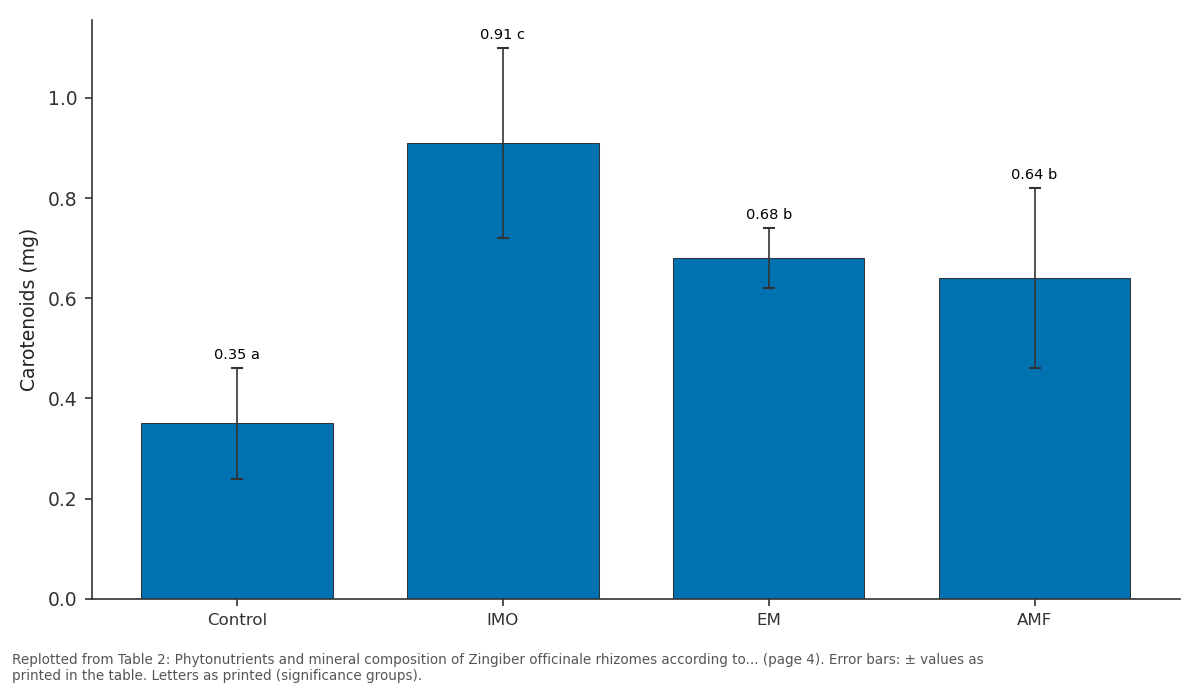
Carotenoids (mg): Control vs IMO vs EM vs AMF
Replotted from Table 2 (page 4) of the original paper. Every bar is the paper's own table value.
View source evidence ↗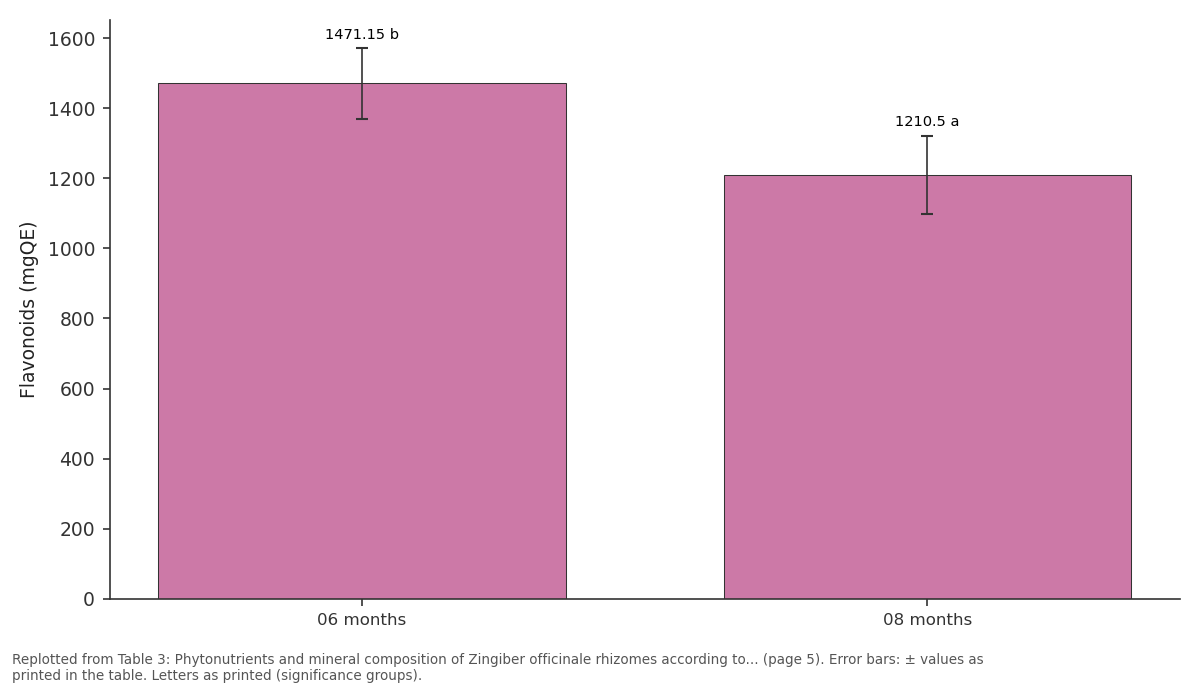
Flavonoids (mgQE): 06 months vs 08 months
Replotted from Table 3 (page 5) of the original paper. Every bar is the paper's own table value.
View source evidence ↗Figures & tables
From the original paper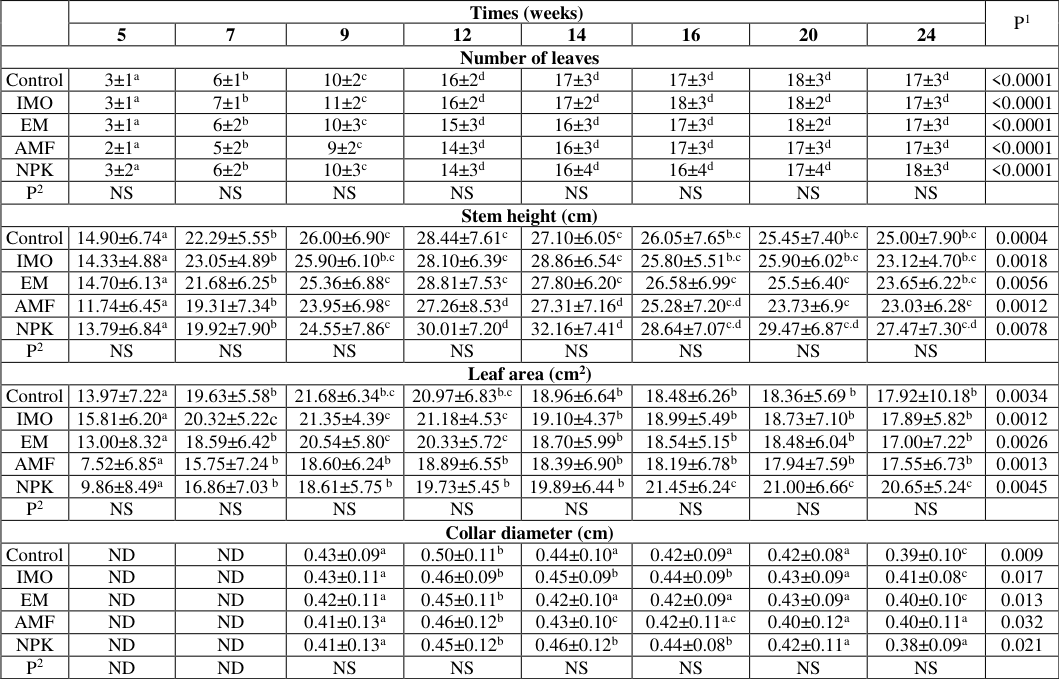 Table 1
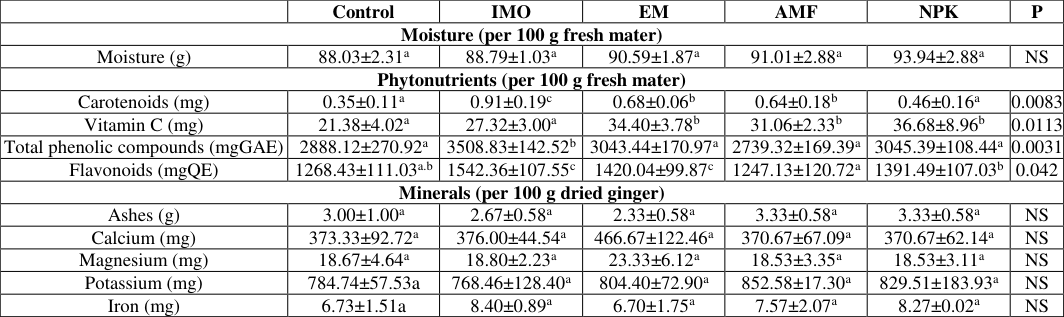 Table 2
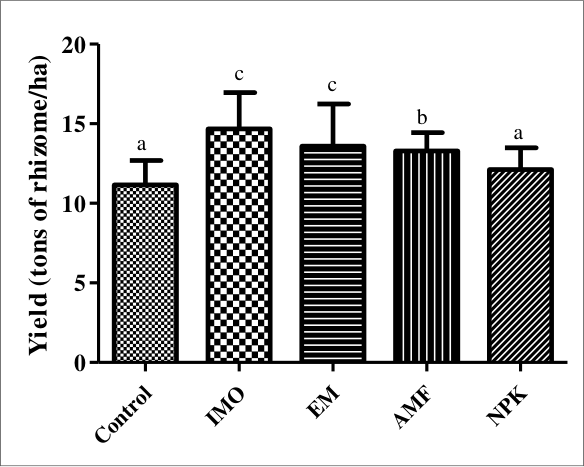 Figure 1
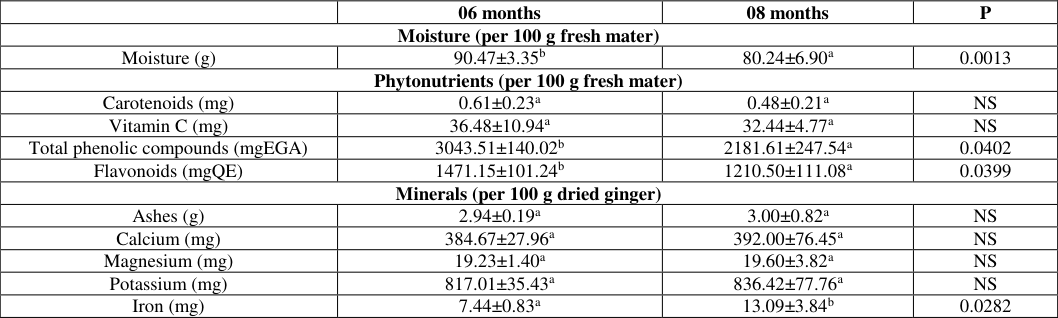 Table 3
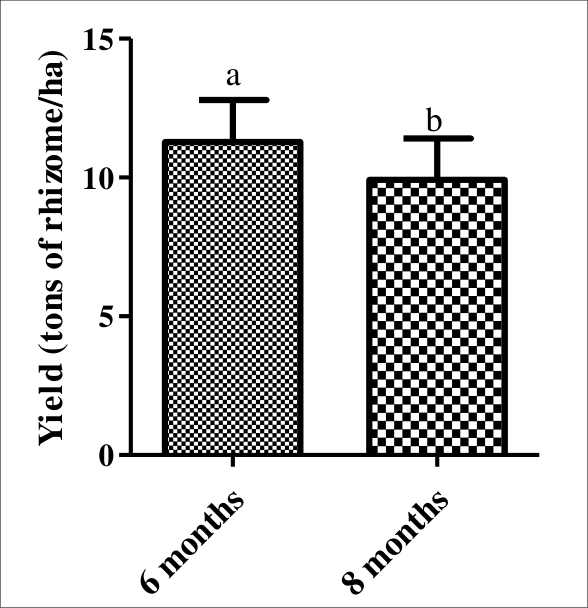 Figure 2
Introduction
Ginger (Zingiber officinale Roscoe) is a crop rhizome commonly consumed as spice and belonging to the Zingiberaceae family and the Zingiber genus. It is used as one of the important ingredients in traditional and modern medicine, behind the fact of being used as a spice [1] . In recent years, ginger has been found in numerous biological activities, such as antioxidant [2] , anti-inflammatory, antimicrobial and anticancer activities [3,4] . In addition, it has been demonstrated that ginger has the potential to prevent and manage several diseases, such as neurodegenerative diseases, cardiovascular diseases and obesity [5,6] . The health benefits of ginger are mainly attributed to its composition. Indeed, ginger is rich in various chemical components, such as phenolic compounds (mainly gingerols, shogaols, and paradols), carotenoids, vitamins, minerals, polysaccharides and raw fibres [5] . The production of this spice has expanded in most parts of the world, as it can be grown under varied climatic conditions. The productivity of ginger is, however, affected by poor nutrient management which includes mostly chemical fertilizers [7] . As it is a nutrientexhaustive crop and hence requires an adequate supply of elements at important stages of its growth cycle. Unfortunately, it is obvious that the excessive use of chemical fertilizers in conventional agricultural systems decreases food quality and causes serious environmental damages such as waterway pollution, mineral depletion, soil acidification and other issues.
Thus, effective nutrient management can help in reducing the overuse of chemical fertilizers, thereby preserving environmental quality [8] . Therefore, sustainable fertilizers such as biofertilizers seem to be an optional saving alternative [9,10] . Biofertilizers can be defined as microbial biostimilus enhancing the efficiency of plants nutrition and can be used for their microorganisms which consistently reduces the intervention of chemical fertilizers. Hence, permitting the construction of organic matter from the soil and increasing the bioavailability of nutrients Singh and Sharma [11] and secreting growth-promoting substances [12] . The use of biofertilizers can improve plant growth and crop productivity by increasing nutrients that promote soil fertility, as well as water and nutrients uptake through greater mineralization due to higher microbial activities and therefore, a better nutritional quality of food products [12,14] . Among the widely range of biofertilizers used, there are Indigenous Microorganisms (IMO) which are native microorganisms of the source where they have been taken Harim, et al. [15] and the Efficient Microorganisms (EM) which are a mix-up of lactic bacteria and other beneficial microorganisms Desfontaines, et al. [16] as well as the Arbuscular Mycorrhizal Fungi (AMF) whose the mycorrhizae ameliorate the water and minerals absorption, and the resistor of pathogens fungi [17] . Tchiaze, et al. [18] demonstrated that in order to substitute chemical fertilizers, the use of mycorrhizae and poultry droppings led to highly improve leaves biomass and productivity of fresh rhizomes of Curcuma longa. In the same way, EM and IMO lead to increase yield of Arachis hypogaea under coastal soilclimate conditions [15] . It's important to note that the functional properties and biological activities of plants depend on the harvest period. Zingiber officinale reaches its physical and physiological maturity for about 10 months. For an optimization of fresh consumption quality, harvesting can be realized between 5 th and 7 th month and the rest preserved for future use for drying and crushing for ginger's essential oil production [19,20] .
In Cameroon, Z. officinale is used as a spice for common dishes, as an ingredient to prepare drinks, syrup, and to produce confectionery and pastry. Ethno-medicinal studies showed that ginger is widely used in folk medicine to treat several diseases [21] . In addition, ginger has been strongly recommended for the prevention of COVID-19, so its demand almost tripled during the pandemic. Therefore, it was necessary to find strategies to increase its production in an environmentally friendly manner. In order to contribute to the development of this ideology, this work was designed to evaluate the effect of biofertilizers (IMO, EM and AMF) on the growth, yield and then, the harvest stage on some phytonutrients and minerals content of ginger rhizomes.
Materials and Methods
Materials and Methods
Study site
The field experiment was conducted at the experimental site of the Faculty of Science of the University of Douala, Littoral Region-Cameroon. The place is located at 4°2'53 N and 9°42'15 E, 19 m altitude, tropical climate, average temperature of 26.2 °C and annual average rainfall of 3174 mm. Some physical and chemical properties of soil composite sample at a depth of 0-30 cm before planting were as follows: sand (51.6%), silt (32.3%), clay (14.2%), N (0.32%), C (0.75%), P (4.60 ppm), K (0.25g kg -1 ), Na (0.07g kg -1 ), Ca (0.23g kg -1 ), Mg (0.17g kg -1 ), Zn (0.29 mg kg -1 ), Cu (1.42 mg kg -1 ), Fe (3.26 mg kg -1 ), CEC (20.08 mol kg -1 ), pH (6.45). Soil analysis were carried out at Research Unity of Soil Analysis and Chemistry of Environment of Faculty of Agronomy of Dschang University Cameroon.
Materials
Z. officinale rhizomes and chemical fertilizer NPK (14-23-14) were obtained from a Douala local market. Mature rhizomes have been carefully selected for their ease of budding. Indigenous Microorganisms (IMO) were prepared on the experimental site according to the protocol used by [22] . They are mainly made up of photosynthetic bacteria (Rhodopseudomonas palustris), and yeasts (Saccharomyces cerevisiae). Efficient Microorganisms (EM) were obtained in the local market and were prepared according to [23] . They essentially consist of useful aeroanaeobic microorganisms like lactic bacteria (Lactobacillus casei). Then, Arbuscular Mycorrhizal Fungi (AMF) consisted of a mixture of propagules of Acaulospora tuberculata (50%) and Gigaspora margarita (50%) which were isolated and multiplied from the Applied Microbiology and Biological Control Laboratory of IRAD-Nkolbisson Cameroon.
Field experimental design and treatments
The experimental field was designed in 02 identical plots. On one plot, five treatments were applied as follows: T0= Control; T1 = IMO and T2 = EM were used a week before planting (40 g/plant); T3 = Arbuscular Mycorrhizal Fungi (AMF) applied once, the day of planting (40 g/plant); T4 = positive control treat with NPK applied two weeks after planting (10 g/plant). Treatments were carried out in a completely randomized design with three replications each for a total of 15 subplots. The rhizomes about 4 cm length were left pregerminated beforehand and those having two or three buds were planted at 5 cm depth one per hole, 30 cm between ginger plants for a total of 14 plants/subplot. The distance separating the subplots from each other was 0.90 cm [10,24] . The second plot which was to be used for the harvest stage at 6 months as well as 8 months of cultivation had no fertilization. However, all planting arrangements were the same as the previous. The rhizomes were planted in early April which is the planting period. The crops received hand weeding regularly every three weeks and no pesticide and irrigation water was applied.
Assessment of plant growth parameters, yield and phytonutrients contents
In the field trial, growth parameters were recorded during the vegetative stage every two weeks from the 5 th to the 24 th week after planting according to the treatment as well as yield and phytonutrient contents. The number of leaves was assessed by simple counting, while the plant height was measured using a graduated ruler, the collar diameter using a calliper, length and width of leaf were measured using a graduated ruler [25] . Leaf area was calculated from length and width of leaf: S=2/3 L x l where L = Length (cm), l = width (cm), S = Surface (cm 2 ). After 06 months and then 08 months of cultivation, on second plot, part of the clumps of Z. officinale were harvested according to subplots and yield production were assessed. Accordingly, rhizomes were separated from the base of the stem, abundantly and carefully washed and weighed. Samples were dried at 62 °C for 72h and dry weights determined. Total carotenoids content and vitamin C were evaluated on fresh rhizomes. Then by photometry (iTcheckTM Carotene; Bio Analyst GmbH, Tetow, Germany) at 446 nm according to protocol used previously by Dongho, et al. [26] and Stevens, et al. [27] . The Total Phenolic Compounds (TPC), flavonoids and minerals (ashes, calcium, magnesium, potassium, iron) contents were determined on dry crushed sample. TPC and flavonoids were determined by spectrophotometric method. Minerals were determined according to the international methods recommended by Pauwels, et al. [28] and respecting the ISO, AFNOR and EN standards.
Statistical analysis
Raw data were entered on MS (Excel Microsoft Office 2013) spreadsheet and organized for statistical analysis, then exported to Graphpad Prism version 5.0. The significant difference test was assessed using one-way ANOVA. The data were subjected to descriptive statistics and the results were expressed as mean with standard error of mean (SEM). The values of p˂0.05 were considered significant.
Results
Results
Influence of fertilizers on growth parameters, yield and composition of Zingiber officinale rhizomes 3.1.1 Effect of different fertilizers on growth parameters of Zingiber officinale
Table 1 shows the evolution in leaves number, stem height, leaf area and collar diameter. It appears that these parameters increase significantly (p˂0.05) with time whatever the treatment. However, from the 12 th week overall, these parameters no longer vary significantly regardless of the treatment. Inoculation with Indigenous Microorganisms showed a positive effect on plant growth more than others. In fact, whether with the positive control (NPK) or biofertilizers, no significant difference was noted either between them or compared to untreated plants.
| — | Times (weeks) | — | — | — | — | — | — | — | P1 |
|---|---|---|---|---|---|---|---|---|---|
| 5 | 7 | 9 | 12 | 14 | 16 | 20 | 24 | ||
| Number of leaves | |||||||||
| Control | 3±1a | 6±1b | 10±2c | 16±2d | 17±3d | 17±3d | 18±3d | 17±3d | <0.0001 |
| IMO | 3±1a | 7±1b | 11±2c | 16±2d | 17±2d | 18±3d | 18±2d | 17±3d | <0.0001 |
| EM | 3±1a | 6±2b | 10±3c | 15±3d | 16±3d | 17±3d | 18±2d | 17±3d | <0.0001 |
| AMF | 2±1a | 5±2b | 9±2c | 14±3d | 16±3d | 17±3d | 17±3d | 17±3d | <0.0001 |
| NPK | 3±2a | 6±2b | 10±3c | 14±3d | 16±4d | 16±4d | 17±4d | 18±3d | <0.0001 |
| P2 | NS | NS | NS | NS | NS | NS | NS | NS | |
| Stem height (cm) | |||||||||
| Control | 14.90±6.74a | 22.29±5.55b | 26.00±6.90c | 28.44±7.61c | 27.10±6.05c | 26.05±7.65b.c | 25.45±7.40b.c | 25.00±7.90b.c | 0.0004 |
| IMO | 14.33±4.88a | 23.05±4.89b | 25.90±6.10b.c | 28.10±6.39c | 28.86±6.54c | 25.80±5.51b.c | 25.90±6.02b.c | 23.12±4.70b.c | 0.0018 |
| EM | 14.70±6.13a | 21.68±6.25b | 25.36±6.88c | 28.81±7.53c | 27.80±6.20c | 26.58±6.99c | 25.5±6.40c | 23.65±6.22b.c | 0.0056 |
| AMF | 11.74±6.45a | 19.31±7.34b | 23.95±6.98c | 27.26±8.53d | 27.31±7.16d | 25.28±7.20c.d | 23.73±6.9c | 23.03±6.28c | 0.0012 |
| NPK | 13.79±6.84a | 19.92±7.90b | 24.55±7.86c | 30.01±7.20d | 32.16±7.41d | 28.64±7.07c.d | 29.47±6.87c.d | 27.47±7.30c.d | 0.0078 |
| P2 | NS | NS | NS | NS | NS | NS | NS | NS | |
| Leaf area (cm2) | |||||||||
| Control | 13.97±7.22a | 19.63±5.58b | 21.68±6.34b.c | 20.97±6.83b.c | 18.96±6.64b | 18.48±6.26b | 18.36±5.69 b | 17.92±10.18b | 0.0034 |
| IMO | 15.81±6.20a | 20.32±5.22c | 21.35±4.39c | 21.18±4.53c | 19.10±4.37b | 18.99±5.49b | 18.73±7.10b | 17.89±5.82b | 0.0012 |
| EM | 13.00±8.32a | 18.59±6.42b | 20.54±5.80c | 20.33±5.72c | 18.70±5.99b | 18.54±5.15b | 18.48±6.04b | 17.00±7.22b | 0.0026 |
| AMF | 7.52±6.85a | 15.75±7.24 b | 18.60±6.24b | 18.89±6.55b | 18.39±6.90b | 18.19±6.78b | 17.94±7.59b | 17.55±6.73b | 0.0013 |
| NPK | 9.86±8.49a | 16.86±7.03 b | 18.61±5.75 b | 19.73±5.45 b | 19.89±6.44 b | 21.45±6.24c | 21.00±6.66c | 20.65±5.24c | 0.0045 |
| P2 | NS | NS | NS | NS | NS | NS | NS | NS | |
| Collar diameter (cm) | |||||||||
| Control | ND | ND | 0.43±0.09a | 0.50±0.11b | 0.44±0.10a | 0.42±0.09a | 0.42±0.08a | 0.39±0.10c | 0.009 |
| IMO | ND | ND | 0.43±0.11a | 0.46±0.09b | 0.45±0.09b | 0.44±0.09b | 0.43±0.09a | 0.41±0.08c | 0.017 |
| EM | ND | ND | 0.42±0.11a | 0.45±0.11b | 0.42±0.10a | 0.42±0.09a | 0.43±0.09a | 0.40±0.10c | 0.013 |
| AMF | ND | ND | 0.41±0.13a | 0.46±0.12b | 0.43±0.10c | 0.42±0.11a.c | 0.40±0.12a | 0.40±0.11a | 0.032 |
| NPK | ND | ND | 0.41±0.13a | 0.45±0.12b | 0.46±0.12b | 0.44±0.08b | 0.42±0.11a | 0.38±0.09a | 0.021 |
| P2 | ND | ND | NS | NS | NS | NS | NS | NS |
Table text extracted from the original PDF; superscript letters are shown inline. The original table image is below.
View original table image
Effect of different fertilizers on yield of Zingiber officinale rhizomes
The use of biofertilizers increased yields significantly than control (11.15±1.75 T/ha) and NPK (12.12±1.57 T/ha) (Figure 1). IMO plants recorded the highest yield (14.68±2.60 T/ha), followed by EM (13.60±3.01 T/ha) and AMF (13.30±1.29 T/ha).
Effect of different fertilizers on phytonutrients and mineral composition of Zingiber officinale rhizomes
Moisture wasn't significantly influenced by fertilizers (table 2). Indeed, no difference was noted either between biofertilizers or with control. Carotenoids were significantly higher in plants amended with biofertilizers than those of the control and NPK which are not very different otherwise, this content was higher with IMO compared to EM and AMF. Similarly, for vitamin C, the results showed that there are significant differences in their values according to the treatments (p=0.0113). It is noted that total phenolic compounds are also influenced by fertilizers (p=0.0031), indeed, plants amended with IMO showed a high value compared to NPK, EM, control and AMF which are not significantly different. Also, the flavonoid contents vary significantly (p=0.042). Indeed, the plants amended with IMO and EM showed a high value followed by NPK, control and AMF. Concerning mineral composition, globally, the weight of ashes was not significantly influenced by the treatments. However, the average ashes content was slightly high with control, AMF and NPK compared to IMO and NPK. Likewise, the mineral contents (Ca, Mg, K, and Fe) in the rhizome of Z. officinale were not significantly affected by different types of fertilizers. Nevertheless, the highest increase of rhizome Ca and Mg contents was found in plants supplied with EM compared to all other treatments.
| — | Control | IMO | EM | AMF | NPK | P |
|---|---|---|---|---|---|---|
| Moisture (per 100 g fresh mater) | ||||||
| Moisture (g) | 88.03±2.31a | 88.79±1.03a | 90.59±1.87a | 91.01±2.88a | 93.94±2.88a | NS |
| Phytonutrients (per 100 g fresh mater) | ||||||
| Carotenoids (mg) | 0.35±0.11a | 0.91±0.19c | 0.68±0.06b | 0.64±0.18b | 0.46±0.16a | 0.0083 |
| Vitamin C (mg) | 21.38±4.02a | 27.32±3.00a | 34.40±3.78b | 31.06±2.33b | 36.68±8.96b | 0.0113 |
| Total phenolic compounds (mgGAE) | 2888.12±270.92a | 3508.83±142.52b | 3043.44±170.97a | 2739.32±169.39a | 3045.39±108.44a | 0.0031 |
| Flavonoids (mgQE) | 1268.43±111.03a.b | 1542.36±107.55c | 1420.04±99.87c | 1247.13±120.72a | 1391.49±107.03b | 0.042 |
| Minerals (per 100 g dried ginger) | ||||||
| Ashes (g) | 3.00±1.00a | 2.67±0.58a | 2.33±0.58a | 3.33±0.58a | 3.33±0.58a | NS |
| Calcium (mg) | 373.33±92.72a | 376.00±44.54a | 466.67±122.46a | 370.67±67.09a | 370.67±62.14a | NS |
| Magnesium (mg) | 18.67±4.64a | 18.80±2.23a | 23.33±6.12a | 18.53±3.35a | 18.53±3.11a | NS |
| Potassium (mg) | 784.74±57.53a | 768.46±128.40a | 804.40±72.90a | 852.58±17.30a | 829.51±183.93a | NS |
| Iron (mg) | 6.73±1.51a | 8.40±0.89a | 6.70±1.75a | 7.57±2.07a | 8.27±0.02a | NS |
Table text extracted from the original PDF; superscript letters are shown inline. The original table image is below.
View original table image
Influence of harvest stage on yield and composition of Zingiber officinale rhizomes 3.2.1 Effect of harvest stage on yield of Zingiber officinale rhizomes
Figure 2 shows that harvest period caused a significant decrease in yield. Really, long harvest age causes a drop in Z. officinale rhizomes yield. In fact, yield of plants rhizomes decreases significantly from the harvest at 6 months (12.88±1.60 T/ha) to 8 months (10.08±1.14 T/ha).
Effect of harvest stage on phytonutrients and mineral composition of Zingiber officinale rhizomes
It appears that moisture content decreases significantly (p=0.0013) with the harvest stage (Table 3). The results also indicate the decrease of carotenoids and vitamin C concentration between 6 and 8 months, although no significant difference for either. Likewise, the effect of the harvest stage in Z. officinale rhizomes showed a significant decrease of total phenolic compounds and flavonoids contents between 6 th and 8 th month. The amount of ashes obtained is not significantly different up to 8 months. Nevertheless, we note slightly increase at the 8 th month.
| — | 06 months | 08 months | P |
|---|---|---|---|
| Moisture (per 100 g fresh mater) | |||
| Moisture (g) | 90.47±3.35b | 80.24±6.90a | 0.0013 |
| Phytonutrients (per 100 g fresh mater) | |||
| Carotenoids (mg) | 0.61±0.23a | 0.48±0.21a | NS |
| Vitamin C (mg) | 36.48±10.94a | 32.44±4.77a | NS |
| Total phenolic compounds (mgEGA) | 3043.51±140.02b | 2181.61±247.54a | 0.0402 |
| Flavonoids (mgQE) | 1471.15±101.24b | 1210.50±111.08a | 0.0399 |
| Minerals (per 100 g dried ginger) | |||
| Ashes (g) | 2.94±0.19a | 3.00±0.82a | NS |
| Calcium (mg) | 384.67±27.96a | 392.00±76.45a | NS |
| Magnesium (mg) | 19.23±1.40a | 19.60±3.82a | NS |
| Potassium (mg) | 817.01±35.43a | 836.42±77.76a | NS |
| Iron (mg) | 7.44±0.83a | 13.09±3.84b | 0.0282 |
Table text extracted from the original PDF; superscript letters are shown inline. The original table image is below.
View original table image
Despite that the values increase at the end of 8 th month, Ca, Mg, and K contents are not statistically different. The analysis of Fe content data in Z. officinale rhizomes indicated that this micronutrient was positively affected by harvest stage (p=0.0282) (Table 3).
Discussion
In order to improve the qualitative and quantitative production of Z. officinale, the study aimed to assess the response of fertilizers (IMO, EM, AMF and NPK) on growth, yield and some nutritional contents of the rhizomes as well as the harvest stage on the nutritional composition of these rhizomes. The growth parameters measured increased significantly whatever the treatment until the 16 th week from which they tend to be constant. This could be explained by the fact that Z. officinale plants have reached their optimal morphological growth and the nutrient uptake that occurs during the active phase of growth is reached in the 4 th to 6 th month of the Zingiberaceae plants [24] . Also, Azizah, et al. [24] showed a significant difference in the growth parameters of Zingiber zerumbet over time but, further for a given time, the latter do not vary significantly with the treatment, whether with NPK or the biofertilizers and control. Biofertilizers improved the yield of Z. officinale compared to control and NPK, IMO giving the highest yield.
Numerous studies have reported that the inoculation with biofertilizers increased the absorption of nutrients as well as the improvement of soil properties responsible for the stimulation of the growth and productivity of Ginger [29] . According to Tchiaze, et al. [18] , the addition of organic manure improves soil quality, in particular pH, organic matter content and cation exchange capacity, thus ensuring good hydromineral absorption which promotes good development and therefore an increase in yield.
In this study, biofertilizers didn't significantly influence the moisture content. These results were not similar to those of Oyedeji, et al. [30] who stated that poultry manure increased the moisture content of amaranths in rainfall zone. The climate in high rainfall would increase the quantity of water in the soil and would be the cause of large water absorption.
Plants treated with IMO have better concentrations of carotenoids, total phenolic compounds and flavonoids. This could be explained by the fact that IMOs adapt easily in the environment and facilitate nitrogen fixation, solubilization of phosphate and potassium, participating thus in carotenoids synthesis through the increase in biomass synthesis [31] . Fertilizers induce significantly an increase in Vitamin C content. High absorption of nutrients, leads to an increase of the number of leaves responsible for photosynthesis that improve the synthesis of macronutrients such as glucose which is the substrate for vitamin C synthesis [32] . Globally, fertilization did not significantly induce the accumulation of minerals in Zingiber officinale rhizomes, although a high rate is observed with IMO, AMF and NPK application. This can be explained by the fact that biofertilizers allow aeration of the soil and facilitate the capture of minerals from the soil by the deep enlargement of ginger roots promoting better mineral absorption [33] . Indeed, mycorrhizae act significantly in the decomposition and mineralization of organic matter and mobilize these nutrients for the benefit of the host plant. The harvest period of ginger rhizomes showed a decrease in yield in the 8 th month compared to the 6 th month. It would be an indicator that ginger crop dropped their leaves around 7 months after sowing and this would lead to a gradual decline in yield. Pawar and Patil [34] reported in their study that dry matter of ginger rhizomes and green ginger yield was highest when harvested at maximum of 8 months and it decreased consistently with delay in harvesting. Similarly, Mohammad [35] showed that turmeric (Curcuma longa) produces the highest dry yield when shoots are withered completely, and low fresh yield with advanced harvest stage. Moreover, according to the time of harvesting, moisture, phenolic compounds, carotenoids, flavonoids and iron decreased with the stage of harvest. The decrease in water content could be due to the increase in dry matter content in the rhizomes as well as fibre with maturity. As for carotenoids decreasing could be due to yellowing, wilting and death of leaves at maturity, which would reduce leaf biomass responsible for a decrease in photosynthesis and therefore a decrease in carotenoid synthesis [36] . These results are also in agreement with those of Ascensión, et al. [37] who reported that phytonutrients decrease with crop development which also leads to fibres increase in Aloe vera flowers plant. In the present study, we observed a nonsignificant increase in the concentration of minerals although the amount slightly increases with age of maturity except iron which is significant. This could be due to a relatively inactive synthesis of organic compounds by the vegetative parts and an increase in osmotic exchanges thus enhancing the absorption of minerals. The more mature for plants leads to more resistance of cell walls which leads to the concentration of certain minerals [33] . Stoilova, et al. [38] demonstrated in their research that Z. officinale has a chelating action which has found a significant chelating effect of the organic extract of ginger and which increases with the stage of maturity.
Conclusion
At the end of this study in experimental field, the results showed that the treatments applied to Zingiber officinale had no significant effects on the growth parameters except with IMO but biofertilizers increased yields significantly. Overall, biofertilizers had a significant effect on nutrients composition with a significant increase in carotenoids, ash contents as well as moisture, Ca, Mg, Fe contents but not significantly compared to NPK and control. As for the stage of maturation, Fe, Ca and Mg contents increased significantly at 8 months of harvest compared to 6 months unlike the moisture, carotenoids and vitamin C contents which decreased slightly at this stage. Biofertilizers improve agromorphological parameters and nutritional composition and the ideal harvest period would be 6 months if a strong antioxidant power is desired and 8 months if high micronutrient contents are desired.
Acknowledgments
Acknowledgments
References
35 in the original paper- Chandrashekhar G, Hore JK. Effect of growth and yield of the ginger with the combination of organic, inorganic and biofertilizers. Journal of Pharmacognosy and Phytochemistry. 2019;8(3):1174-1176.
- Eleazu CO, Amadi P, Nwosu, Ironua C. Chemical composition and free radical scavenging activities of 10 elite accessions of ginger (Zingiber officinale Roscoe). Journal of Clinical Toxicology. 2013;3(1):1-15.
- Jelled A, Fernandes A, Barros L, Chahdoura H, Achour L, Ferreira ICFR, et al. Chemical and antioxidant parameters of dried forms of ginger rhizomes. Industrial Crops and Products. 2015;77:30-35.
- Azimi P, Ghiasvand R, Feizi A, Hariri MM, Abbasi B. Effects of cinnamon, cardamom, saffron, and ginger consumption on markers of glycemic control, lipid profile, oxidative stress, and inflammation in type 2 diabetes patients. Journal of Review of Diabetic Studies. 2015;11(3):258-266.
- Semwal RB, Semwal DK, Combrinck S, Viljoen AM. Gingerols and shogaols: Important nutraceutical International Journal of Agriculture and Nutrition https://www.agriculturejournal.net principles from ginger. Phytochemistry. 2015;117:554568.
- Dinesh R, Srinivasan V, Hamza S, Manjusha A, Kumar PS. Short-term effects of nutrient management regimes on biochemical and microbial properties in soils under rainfed ginger (Zingiber officinale Rosc.). Geoderma. 2012;173:192-198.
- Jabborova D, Sayyed RZ, Azimov A, Jabbarov Z, Matchanov A, Enakiev Y, et al. Impact of mineral fertilizers on mineral nutrients in the ginger rhizome and on soil enzymes activities and soil properties. Saudi Journal of Biological Sciences. 2021;28(9):5268-5274.
- Sharma RC, Sarka S, Das D, Banik P. Impact assessment of arbuscular mycorrhiza Azospirillum and chemical fertilizer application on soil health and ecology. Communications in Soil Science and Plant Analysis. 2013;44(6):1116-1126.
- Ngueleu DA, Muyang RF, Wamba FO, Ngotta BB, Tefouet VD, Nyemene KPJ, et al. Evaluation of soil fertility, growth, nutrient uptake and yield traits of peanut under indigenous and effective microorganism fertilizers in sandy ferralitic soils in Douala, Cameroon. African Journal of Agricultural Research. 2021;17(3):432-441.
- Singh A, Sharma S. Effect of microbial inoculants on mixed solid waste composting. Vermicomposting and plant response. Compost Science & Utilization. 2003;11(3):190-199.
- Jeon JS, Lee SS, Kim HY. Plant growth promotion in soil by some inoculated microorganisms. Journal of Microbiology. 2003;41(4):271-276.
- Rouphael Y, Colla G. Biostimulants in agriculture. Frontiers in Plant Science. 2020;11:511937. https://doi.org/10.3389/fpls.2020.00040.
- Kumar N, Krishnamoorty V, Nalina L, Sooriana T, Dharm K. A new factor estimating total leaf area in banana. Info Musa. 2002;11(2):42-43.
- Harim AN, Muhamad AN, Ahmed OH, Susilawati, Khairulmazmi A. Physico-chemical properties of indigenous microorganism-composts and humic acid prepared from selected agro-industrial residues. African Journal of Biotechnology. 2012;11(34):8456-8463.
- Desfontaines L, Rotin P, Ozier-Lafontaine H. Les biostimulants: Qu'en pensez-vous? Quelles alternatives pour l'agriculture Guyanaise? Innovations Agronomiques. INRAE. 2018;64:31-46.
- Smith SE, Read DJ. Mycorrhizal symbiosis. San Diego, CA: Academic Press. Read, DJ, Perez-Moreno. Mycorrhizas and nutrient cycling in ecosystems: A journey towards relevance? New Phytologist. 2008;157:475-492.
- Tchiaze Ifoue AV, Choula F, Dongho DFF, Kedi DM, Fotso, Taffouo VD. Growth, rhizome yield and biochemical components of turmeric (Curcuma longa L.) as influenced by mycorrhizae, poultry droppings and chemical fertilizers. International Journal of Agronomy and Agricultural Research. 2022;21:35-49.
- Bijaya BB. Ginger processing in India 'Zingiber officinale': A Review. International Journal of Current Microbiology and Applied Sciences. 2018;4:1-13.
- Sirinapa S, Rajnibhas S, Niramon U. Influence of maturity and drying temperature on antioxidant activity and chemical compositions in ginger. Division of Product Development Technology, Faculty of AgroIndustry, Chiang Mai University, Chiang Mai, Thailand. Current Applied Science and Technology. 2019;1:28-42.
- Mpondo ME, Dibong SD. Traditional knowledge on medicinal plants use by ethnic communities in Douala, Cameroon. European Journal of Medicinal Plants. 2012;2:159-176.
- Park H, Duponte W. How to cultivate indigenous microorganism manure. Biotechnology. 2018;9:01-06.
- Azizah IF, Ngatinem N, Rusmanto, Himawan AS. Effect of liquid organic bio-fertilizer on morphological growth and productivity of five black ginger accessions (Curcuma aeruginosa Roxb.). International Journal of Innovative Science and Research Technology. 2023;8:2633-2638.
- Flowers TS, Yeo AR. Effects of salinity on plant growth and crop yields. Environmental stress in Plants. 1989;19:101-119. https://doi.org/10.1007/978-3-642-73163-1_11.
- Dongho DFF, Ngono NA, Demasse MA, Schweigert F, Gouado I. Effect of heating and of short exposure to sunlight on carotenoids content of crude palm oil. Journal of Food Processing and Technology. 2014;5:314. http://dx.doi.org/10.4172/2157-7110.1000314.
- Stevens R, Buret M, Garchery C, Carretero Y, Causse M. Technique for rapid, small-scale analysis of vitamin C levels in fruit and application to a tomato mutant collection. Journal of Agricultural and Food Chemistry. 2006;54:6159-6165.
- Dash U, Gupta B, Bhardwaj DR, Sharma P, Kumar D, Chauhan A, et al. Tree spacings and nutrient sources effect on turmeric yield, quality, bio-economics and soil fertility in a poplar-based agroforestry system in Indian Himalayas. Agroforestry Systems. 2024;98:911-931. https://doi.org/10.1007/s10457-024-00962-3.
- Oyedeji S, Adedayo DA, Bello AA, Agboola OO. Effect of NPK and poultry manure on growth, yield, and proximate composition of three Amaranths. Hindawi Publishing Corporation. Journal of Botany. 2014;1:1-6. http://dx.doi.org/10.1155/2014/828750.
- Fanciullino A, Bidel L, Urban L. Carotenoid responses to environmental stimuli: Integrating redox and carbon controls into a fruit model. Plant, Cell and Environment. 2014;37:273-289.
- Smirnoff N. The function and metabolism of ascorbic acid in plants. Annals of Botany. 1996;78:661-669.
- Jyotsna N, Ghosh M, Ghosh DC, Meitei WI, Timsina J. Effect of biofertilizer on growth, productivity, quality and economics of rainfed organic ginger in NorthEastern region of India. Journal of Agricultural Science and Technology. 2013;A3:83-98.
- Pawar HK, Patil BR. Effects of manuring and period of harvesting on production of ginger and its quality. Journal of Maharashtra Agricultural Universities. 1990;15:12-14.
- Mohammad AH. Effects of harvest time on shoot biomass and yield of turmeric (Curcuma longa L.) in Okinawa Japan. Plant Production Science. 2010;13(1):97-103.
- Poozesh V, Amirahmadi A. The impact of organic and inorganic fertilizers on some phytochemical and antioxidant properties in Zingiber officinale Rosc. Journal of Chemical Health Risks. 2024;14:1-13.
- Ascensión MS, María Elena LC, Josefa GM, María José R, Aguayo E. Aloe vera flowers, a byproduct with great potential and wide application, depending on maturity stage. Food Science Direct. 2020;9:11-21.
- Stoilova I, Krastanov A, Stoyanova A, Denev P, Gargova S. Activity antioxydante d'un extrait de gingembre (Zingiber officinale). Chimie alimentaire. 2007;102:764-770.
Cited by 1
From OpenAlex, OpenCitations and reference lists read by Scinovex
- Climate Resilience in Horticulture: Future-Ready Horti-farming ↗
Debapriya Sarkar, Ritoban Pandit, Raj Kumar, Debarpita Datta Ray, Arju Ali Khan, Anwesha Das et al. · Springer eBooks · 2026
❝ 0