
Research article · 2024 · Full text
International Journal of Horticulture and Food SciencePhysiological roles of nano fertilizer and thiamine (B1) on some growth and flowering of Petunia plant (Petunia hybrida L.)
Volume 6(1) · Pages 133–140 · DOI: 10.33545/26631067.2024.v6.i1b.202 ↗
Research areasPineapple and bromelain studiesGrowth and nutrition in plantsFlowering Plant Growth and Cultivation
Abstract
Author-writtenThe study was\\\\\\\\r\\\\\\\\ncarried out at the Lath house located in the Department of Horticulture and\\\\\\\\r\\\\\\\\nLandscape Design, University of Kirkuk, Agricultural Research and Experiments\\\\\\\\r\\\\\\\\nStation, Al-Sayada. To assess the impact of two parameters, namely the foliar\\\\\\\\r\\\\\\\\napplication of Nano fertilizer with varying concentrations of macro and micro\\\\\\\\r\\\\\\\\ncomponents (0, 1.5, and 3) g, the study was conducted from October 23, 2022, to\\\\\\\\r\\\\\\\\nJune 4, 2023. The doses of L-1 and thiamine are 0mg, 150mg, and 300mg. The\\\\\\\\r\\\\\\\\nexperiment on growth and flowering attributes was planned using a randomized\\\\\\\\r\\\\\\\\ncomplete block design (RCBD). The findings were analyzed using the statistical\\\\\\\\r\\\\\\\\ntool SAS (2005). The Dunkin\\\\\\\\\\\\\\\' test was conducted at a significance level of\\\\\\\\r\\\\\\\\n0.05. The findings revealed that the application of Nano fertilizer, at a\\\\\\\\r\\\\\\\\nconcentration of 3 g. L-1, resulted in an increase in plant height by 18.6 cm.\\\\\\\\r\\\\\\\\nConversely, the use of thiamine led to a significant reduction in plant height\\\\\\\\r\\\\\\\\nwhen the concentration was increased to 300 mg. The length of L-1 is 14.16 cm. The\\\\\\\\r\\\\\\\\nstudy revealed that the combination between Nano fertilizer, which contains\\\\\\\\r\\\\\\\\nboth macro and micro components, and thiamine had a notable impact at a\\\\\\\\r\\\\\\\\nconcentration of 3 g. Concentrations of L-1 thiamine at 0.0 and 300 mg L-1\\\\\\\\r\\\\\\\\nresulted in significant increases in plant height (24.3 cm) and leaf area (1459\\\\\\\\r\\\\\\\\ncm2), respectively. Additionally, the plants exhibited an early blooming date\\\\\\\\r\\\\\\\\nat a dosage of 1.5 g. The treatment with L-1 and 300 mg L-1 (27.67) resulted in\\\\\\\\r\\\\\\\\na delay in blooming date (56.67) compared to the plant control.
Summary
Source-checkedPlain-language reading of the full paper, prepared with AI and checked against the text. Each point links to the authors' own words.
Why it matters
- Nanotechnology is increasingly applied in agriculture to enhance mineral fertilizer effectiveness by increasing the reaction surface area and speed. View evidence ↗
- Thiamine acts as a growth regulator that improves plant growth by stimulating cell division and growth. View evidence ↗
The question
- The study aimed to evaluate how foliar applications of thiamine and nano fertilizers containing macro and micro elements affect the growth and flowering of Petunia plants. View evidence ↗
What they did
- The experiment took place at the University of Kirkuk's Agricultural Research and Experiments Station from October 23, 2022, to June 4, 2023, testing nano fertilizer concentrations of 0, 1.5, and 3 g. View evidence ↗
- Thiamine was applied at doses of 0 mg, 150 mg, and 300 mg. View evidence ↗
- The research used a Randomized Completely Block Design (RCBD) with nine treatments across three blocks. View evidence ↗
- The researchers measured plant height, leaf area, total chlorophyll content, flowering date, and the number of flowers per plant. View evidence ↗
What they found
- Nano fertilizer at 3 g.L-1 significantly increased plant height to 18.6 cm, compared to 13.3 cm in the control group. View evidence ↗
- High concentrations of thiamine (300 mg.L-1) significantly reduced plant height to 14.16 cm compared to the control's 18.9 cm. View evidence ↗
- The interaction of 3 g.L-1 nano fertilizer and thiamine resulted in the greatest plant height of 24.3 cm, significantly higher than the combined control height of 11.16 cm. View evidence ↗
- Neither nano fertilizer nor thiamine, alone or in interaction, caused significant changes in the total chlorophyll content of the leaves. View evidence ↗
- The interaction of 1.5 g.L-1 nano fertilizer and 300 mg.L-1 thiamine accelerated flowering, reducing the time to bloom to 27.67 days compared to 56.67 days for the control. View evidence ↗
- While there was an increase in the number of flowers, the effect was not statistically significant. View evidence ↗
What it means
- The authors concluded that foliar nano fertilizer moderately enhanced growth and blooming without statistical significance, while high-dose thiamine (300 mg.L-1) notably reduced plant height. View evidence ↗
- The authors found that the interaction between nano fertilizer and thiamine significantly enhanced certain traits during the early stages of blooming. View evidence ↗
Visual summary
1 visualsIllustrations explain the paper; they do not show study data.
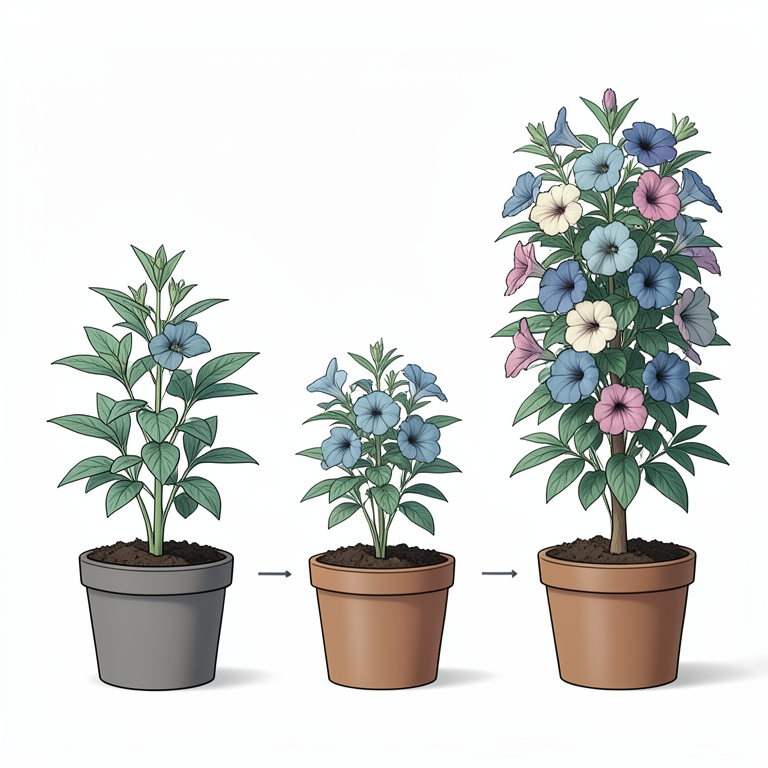
Plant Height Response
AI-generated conceptual illustration (Petunia hybrida plants). It explains the idea and does not show study data.
View source evidence ↗Figures & tables
From the original paper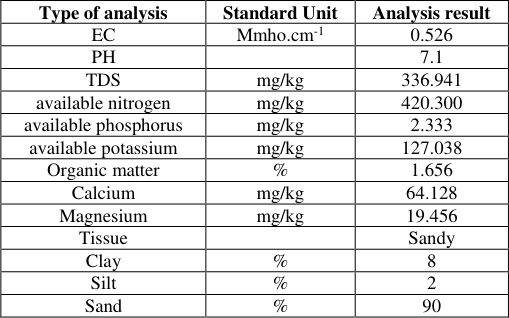 Table 1
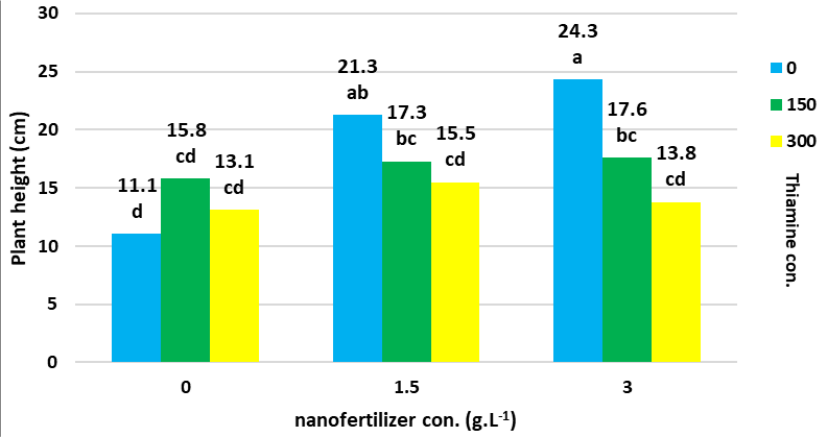 Figure 1
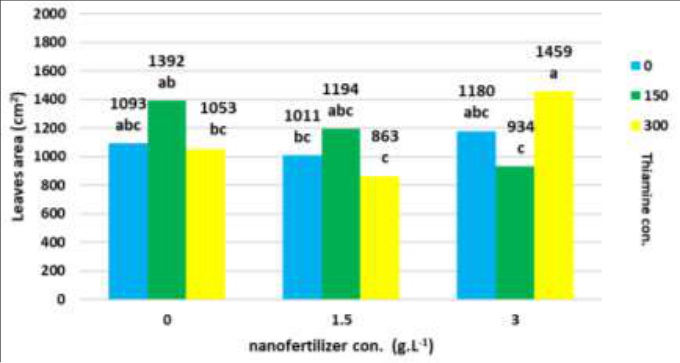 Figure 2
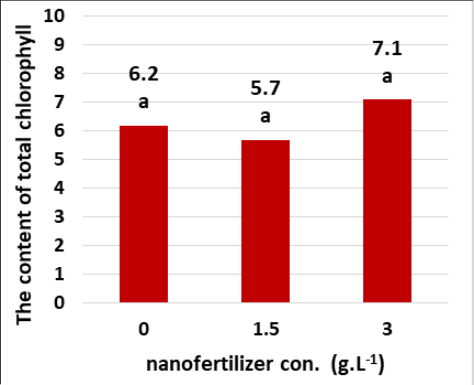 Figure 2
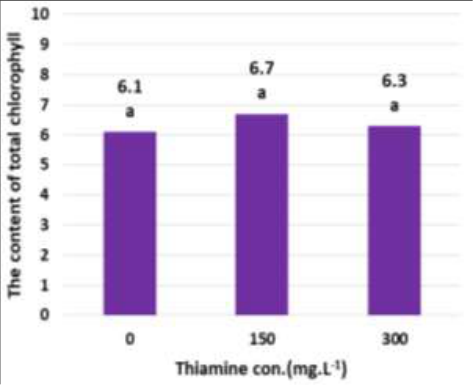 Figure 2
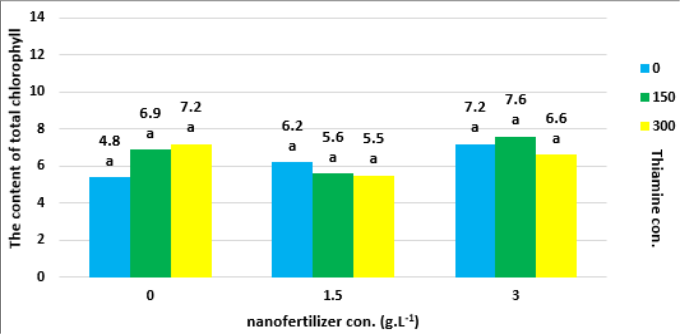 Figure 3
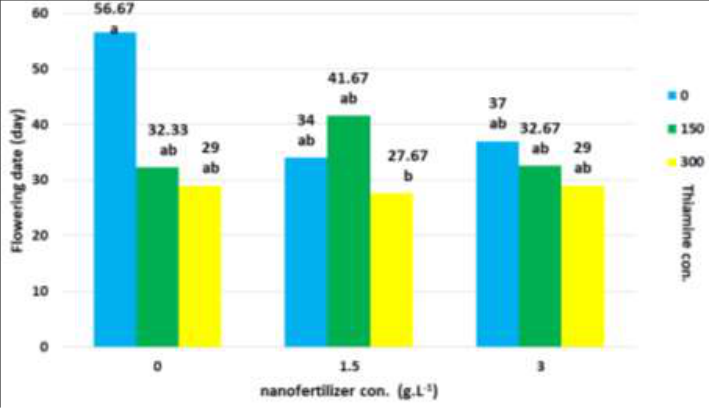 Figure 4
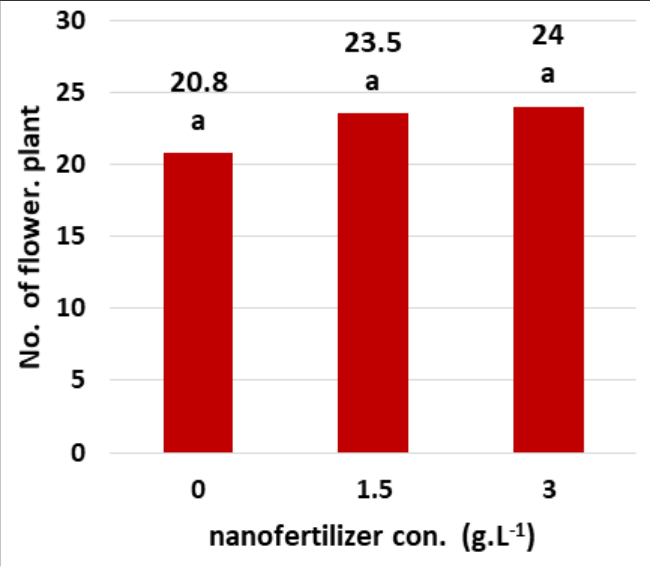 Figure 5
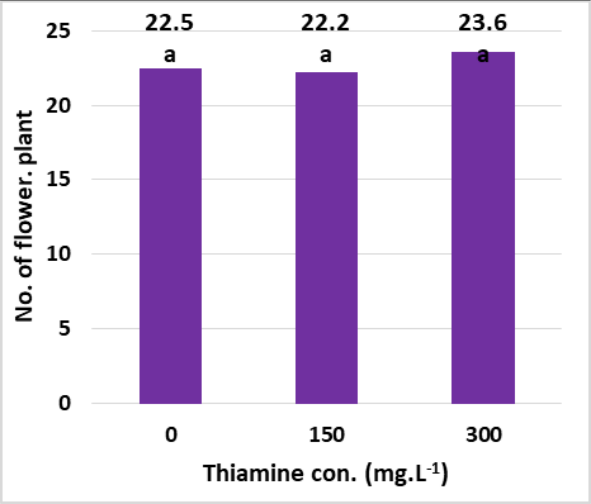 Figure 5
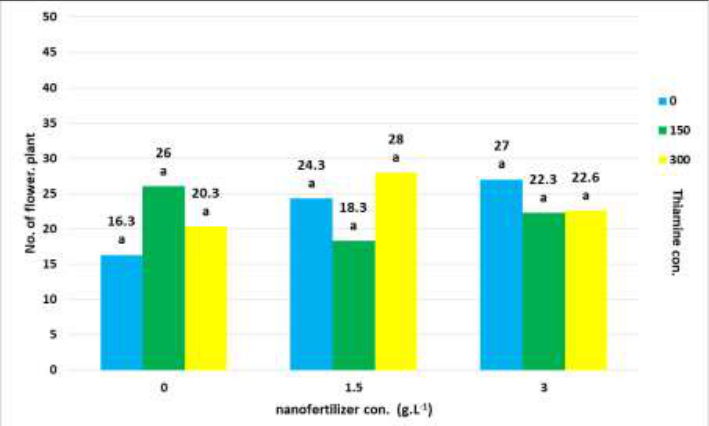 Figure 5
Introduction
Petunia hybrida L. is a winter herbaceous annual plant that is native to South America and belongs to the Solanaceae family. The bell-shaped flowers, also known as trumpet-shaped blossoms, appear during the spring and summer seasons. The flowers of Petunia that grow in gardens are hybrid varieties resulting from the crossbreeding of Petunia axillaris and Petunia integrifolia. These flowers exhibit a range of colors including pink, red, violet, and blue [8] . There exist several variations of them that exhibit variations in their forms and dimensions. The genus name Petunia is derived from the Greek word "Petun," which translates as smoke plant. This name may be attributed to the resemblance between these two plants in terms of their exterior look [4] . Vitamins are important chemicals that control growth and can be found in small amounts, controlling many growth processes, such as biological energy pathways in plants. One part of the pentose phosphate cycle they help is keto decarboxylation. They also help make carbohydrates, which are also known as thiamine [6] , by reducing and synthesising enzymes. Thiamine is one of the growth regulators that stimulates cell growth and division, i.e., works to improve plant growth [11] , Concentrations of thiamine abound in highly effective areas of the plant. It is believed that this vitamin is formed in the leaves and depends on light in its composition, as required by the roots for their growth [10] . Nanotechnology is being used more and more in agriculture to improve the effectiveness of mineral fertilizers. It does this by increasing the surface area, which in turn increases the reaction's surface area and speed. This makes these (Nano) fertilizers more effective than traditional fertilizers. Some nutrients have been mixed into different Nanoparticles to have a significant effect that makes it easier for plants to absorb them [2] . Nano fertilizer technology is the most widespread and is used for its positive effect on improving plant growth. [7] . Many studies, such as those by [1] , have shown the importance of saffron (Crocus sativus L.). The study looked at what happens to the petunia plant's body when Nano fertilizers with macro and micro elements and thiamine are put on the plant's leaves. They looked at how this affects the plant's growth and flowering.
Materials and Methods
The study was carried out at the Lath house located in the Department of Horticulture and Landscape Design, University of Kirkuk, Agricultural Research and Experiments Station, Al-Sayada. The research was done from October 23, 2022, until June 4, 2023. The seedling pots were filled with growth material composed of a 2:1 ratio of sand to peat moss. On October 23, 2022, the seedlings were transferred from 10 cm plastic pots to bigger 20 cm plastic pots. The media pots have a capacity ranging from 6.5 kg. They are subjected to a weekly preventative regimen that includes the application of the fungicide Rasha and the insecticide Tagros FLASH. The plants were protected from fungal and insect infections by applying a 10% EC alfasipermethrin spray to the leaves, following the recommendation of (3). The seedlings were treated with Nano fertilizer on three occasions. The initial application took place on October 27, 2022, when the seedlings had reached the third leaf stage. The subsequent applications were administered at monthly intervals. The plants were additionally treated with thiamine on three occasions. The first application occurred one week after the Nano fertilizer spray, followed by a second application one week after the first one. The experimental setting utilized the R.C.B.D. (Randomized Completely Block Design) methodology, employing three blocks and nine treatments. The bifurcation processes were monitored as required, and prior to planting, plants were irrigated and soil samples were collected to determine their physical and chemical characteristics, as indicated in the attached table-1. Examined the subsequent characteristics: 1. Plant height (cm).
Results and Discussion
Plant height (cm): Figure (1-a) shows that spraying plants with Nano fertilizer containing macro and micro elements increased their height significantly when the concentration was 3 g.L -1 . The plants grew 18.6 cm, which is a significant difference from the control, which only grew 13.3 cm. This might be because of the Nano-effect of the macro and micro elements on the importance of the Nano fertilizer used and its physiological role in affecting the vital processes within the plant. This had a positive effect on the quality of the plants and was due to the properties of Nano fertilizers, such as their small size and large leaf area, which increases the absorption surface, makes photosynthesis more efficient, and boosts plant growth [5] . The thiamine figure (1-b) showed that it had a significant effect on the plant's height decreased to 14.16 cm, when sprayed at a concentration of 300 mg.L -1 , compared with control (18.9 cm), and this result doesn't match what it said it would. As shown in Figure (1c) from [9] study of the Pelargonium hortorum L. plant, interaction, the plants grew 24.3 cm taller after being sprayed with 3 g.L -1 of Nano fertilizer containing macroand micro elements and thiamine as a control treatment. It differed significantly with the control treatment of both factors, as it reached a lower height of 11.16 cm. This result is consistent with the results of researchers [9] by studying it on the plant Pelargonium hortorum L. and [1] . Studied on the Crocus sativus L. show that both factors do not have a significant effect in the rate leaves area, this result is similar to what the researcher [13] pointed out in his study on the Rose hybrida L., Interaction in Figure (2-c) between the two factors shows a significant increasing the rate leaves area and the largest value was recorded at the concentration of 3 g.L -1 of Nano fertilizer for macro and micro elements and spraying 300 mg.L -1 of thiamine, as it reached 1459 cm 2 , and differed significantly from spraying at a concentration of (1.5 g.L -1 ) of Nano fertilizer for macro and micro elements and 300 mg.L -1 of Thiamine and amounted to 863 cm 2 , this result may be attributed to the positive effect interfering between the two factors that have been studied and This is consistent with the results referred to by the researchers [12] in his study of the Iris sp. plant [1] , with his study on the Crocus sativus L. Nano fertilizer for macro and micro elements at a concentration of 1.5 g.L -1 and 300 mg.L -1 of the thiamine was early at the flowering date and took the minimum duration of flowering 27.67 days, compared to the plants control for both factors, which took the longest duration required for flowering 56.67 days, This result may be due to the overlapping effect of both factors, and this result is similar to with the researchers indicated as [1] , in his study on the saffron plant Crocus sativus L. and [12] in his study of Iris sp. plant.
Conclusion
The administration of Nano fertilizer by foliar spraying resulted in a moderate enhancement of growth and blooming characteristics, while the increase was not statistically significant. Thiamine (B1) had a notable impact on reducing plant height when the dosage was increased to 300 mg.L -1 . However, no significant influence was observed on other attributes that were investigated. The interaction between two elements had a notable impact on enhancing some traits that were being examined during the initial stages of blooming.
Figures and tables from the paper
| Type of analysis | Standard Unit | Analysis result |
|---|---|---|
| EC | Mmho.cm-1 | 0.526 |
| PH | 7.1 | |
| TDS | mg/kg | 336.941 |
| available nitrogen | mg/kg | 420.300 |
| available phosphorus | mg/kg | 2.333 |
| available potassium | mg/kg | 127.038 |
| Organic matter | % | 1.656 |
| Calcium | mg/kg | 64.128 |
| Magnesium | mg/kg | 19.456 |
| Tissue | Sandy | |
| Clay | % | 8 |
| Silt | % | 2 |
| Sand | % | 90 |
Table text extracted from the original PDF; superscript letters are shown inline. The original table image is below.
View original table image
References
6 in the original paper- Abdul Majeed LS, Kefaia GS, Mohammed MO. Effect of some Nano fertilizers and amino acid of tryptophan on some physiological characteristics of Saffron plant Crocus sativus L. Kirkuk University Journal for Agricultural Sciences. 2023;14(1):151-165.
- Chhipa H. Nano fertilizers and Nano pesticides for agriculture. Environmental Chemistry Letters. 2017;2:1-8.
- Drostkar E, Talebi R, Kanouni H. Foliar application of Fe, Zn and NPK nano-fertilizers on seed yield and morphological traits in chickpea under rainfed conditions. Journal of Research in Ecology. 2016;4(2):221-228.
- Gerats T, Vandenbussche M. A model system for comparative research: Petunia. Trends in Plant Science. 2005;10(5):251-256.
- Nahed GA, Aziz AAA, Mazher M, Farahat MM. Response of vegetative growth and chemical constraints of Thuja orientalis L. plant to foliar application of different amino acids at Nubaria. Journal of American Science. 2010;6(3):295-301.
- Star SN, Kefaia GS, Osamah IA. Effect of Foliar application of CPPU, CCC on growth and flowering of Rose plant (Rosa hybrida L.). Kirkuk University Journal for Agricultural Sciences. 2023;14(2):162-176.
Cited by 1
From OpenAlex, OpenCitations and reference lists read by Scinovex
- Nano-fertilizers for climate-smart agriculture: Resource efficiency across soil-plant-environment systems ↗
Md. Asadujjaman Rasel, Sayma Salam, Md. Moshiul Islam · Climate smart agriculture. · 2026
Climate change is intensifying constraints on agricultural productivity by amplifying nutrient losses, yield instability, and environmental degradation. Climate-smart agriculture (CSA) seeks to address these challenges by integrating productivity, resilience, and sustainability; however, conventional fertilizer practices remain inefficient and environmentally burdensome. Recent advances in nano-fertilizer technologies offer new opportunities to improve nutrient management within CSA frameworks. Nano-fertilizers enhance nutrient delivery through…
❝ 3PDF