
Research article · 2024 · Full text
International Journal of Research in AgronomyInfluence of foliar applications with organic sources of nutrients on growth and yield of soybean (Glycin max L.) A research review
Volume 7(6) · Pages 181–186 · DOI: 10.33545/2618060x.2024.v7.i6c.869 ↗
Research areasAgricultural Science and FertilizationPlant Growth Enhancement TechniquesAgronomic Practices and Intercropping Systems
Abstract
Author-writtenSoybean (Glycine max L.) is an economically important crop globally, valued for its high protein content and versatile applications in food, feed, and industrial products. In recent years, there has been a growing interest in organic farming practices to enhance soybean productivity while minimizing environmental impacts. This research review explores the influence of foliar applications with organic sources of nutrients on the growth and yield of soybean. A comprehensive review of existing literature reveals significant findings regarding the efficacy of foliar applications with organic nutrients in improving soybean performance. Studies have demonstrated that foliar applications of organic sources, such as compost tea, vermiwash, Panchagavya, and cattle dung manure, contribute to enhanced nutrient uptake, improved soil health, and increased crop yield. Key factors contributing to the effectiveness of foliar applications include the bioavailability of nutrients, stimulation of plant growth hormones, enhancement of soil microbial activity, and promotion of balanced nutrient uptake by plants. Moreover, synergistic effects between organic foliar applications and soil amendments have been observed, leading to improved agronomic performance and yield stability. This research review highlights the importance of integrating organic foliar applications into soybean production systems for sustainable agriculture. By optimizing nutrient management practices and harnessing the benefits of organic sources, farmers can enhance soybean yields, improve crop quality, and contribute to environmental conservation. Overall, the findings underscore the potential of foliar applications with organic sources of nutrients as a valuable strategy for enhancing soybean productivity and sustainability in modern agricultural systems. Further research and field trials are warranted to explore optimal application methods, dosage levels, and compatibility with different soybean varieties and environmental conditions.
Summary
Source-checkedPlain-language reading of the full paper, prepared with AI and checked against the text. Each point links to the authors' own words.
Why it matters
- Soybean is a globally significant economic crop due to its versatility in industrial, feed, and food applications and its high protein content. View evidence ↗
- The increasing use of synthetic pesticides and fertilizers in agriculture has negatively impacted ecosystem health and soil fertility. View evidence ↗
- Organic agriculture focuses on sustainability and ecosystem management as an alternative to external synthetic inputs. View evidence ↗
The question
- The objective of this review is to examine how foliar applications of organic nutrients affect the yield and growth of soybean crops. View evidence ↗
What they did
- The authors conducted a comprehensive review of existing literature to evaluate the efficacy of organic foliar nutrients. View evidence ↗
- The review specifically analyzes organic sources including cattle dung manure, Panchagavya, vermiwash, and compost tea. View evidence ↗
What they found
- Combining 100% of the Recommended Dose of Fertilizers (RDF) with vermiwash at 100 liters per hectare significantly improves dry matter accumulation, leaf area index, plant height, and branching. View evidence ↗
- Compared to vermicompost, vermiwash contains significantly higher levels of sodium (97.8%), magnesium (97.6%), calcium (89.1%), and phosphorus (84%). View evidence ↗
- The highest oil yield (311.15 kg ha-1) was achieved using a 3% Panchagavya foliar spray combined with RDF, which was significantly higher than the control (190.78 kg ha-1). View evidence ↗
- The highest oil content of 19.38% was observed when 125% RDF was combined with Farm Yard Manure (FYM) at 5t/ha. View evidence ↗
- A nutritional schedule of 125% RDF plus FYM at 5t/ha resulted in the highest protein content (0.48%). View evidence ↗
What it means
- The authors recommend using a 3% concentration of Panchagavya as a foliar spray to improve crop performance, growth, and nutrient uptake. View evidence ↗
- The authors conclude that Integrated Nutrient Management (INM) strategies, combining organic and inorganic fertilizers, can optimize the quality and yield of soybeans. View evidence ↗
- The authors state that more field trials are needed to determine the best dosage levels, application methods, and how these organic sources interact with different environments and soybean varieties. View evidence ↗
Visual summary
1 visualsIllustrations explain the paper; they do not show study data.
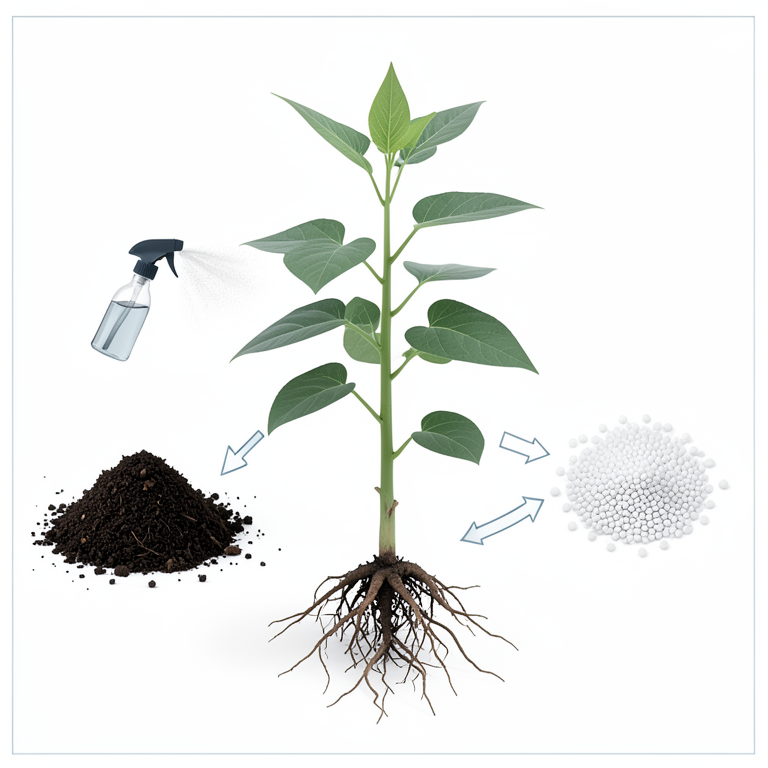
Integrated Nutrient Management (INM) Concept
AI-generated conceptual illustration (soybean plants (Glycin max L.)). It explains the idea and does not show study data.
View source evidence ↗Introduction
Organic agriculture is a holistic system that emphasizes ecosystem management and sustainability over the use of external agricultural inputs. This system minimizes or eliminates the use of synthetic inputs such as fertilizers, pesticides, veterinary drugs, genetically modified organisms (GMOs), preservatives, additives, and irradiation. Instead, it incorporates site-specific management practices that aim to maintain and enhance long-term soil health and ecosystem balance. Soybean (Glycine max L. Merrill) is a leguminous crop belonging to the family Leguminosae. This crop is notable for its nitrogen-fixing ability, facilitated by symbiotic bacteria called Rhizobia within root nodules. The biology of the soil, including its organic carbon content, is closely linked to its health and fertility. The application of organic manures has a direct positive impact on crop yield and soil properties. In recent years, there has been a significant increase in the use of chemical fertilizers and pesticides in agriculture, which has detrimental effects on soil fertility and overall ecosystem health. Organic fertilizers, such as Vermiwash, offer a sustainable alternative. Vermiwash is rich in essential amino acids like lysine, methionine, and cystine, and contains antioxidants and dietary fibers, which can help reduce cholesterol levels in the human body (Liu, 2000) [24] .
Soybean crops are vulnerable to various insect pests, particularly defoliators and pod borers, during the vegetative and postflowering stages, which can lead to significant yield losses (Singh, 2001) [31] . Soybean oil is valuable for its content of lecithin, which comprises about 0.5-1.0 percent of the oil and is crucial for the development of human nerve tissue. For optimal growth, soybeans require a temperature range of 26 °C to 30 °C. Temperatures below 10 °C can hinder growth, while temperatures above 40 °C can adversely affect flowering and seed formation. In summary, organic agriculture, through practices such as the use of Vermiwash and other organic manures, can mitigate the adverse effects of chemical fertilizers, promote sustainable crop production, and enhance soil fertility and ecosystem health. Panchagavya is an organic product derived from five elements originating from the cow, which has been a part of Indian traditional medicine for centuries. Developed by Dr. Natarajan, an allopathic medical practitioner with expertise in ecological farming and sustainable agriculture, Panchagavya combines traditional knowledge of cow products and medicinal herbs. Dr. Natarajan's extensive research on Panchagavya has been validated by leading research institutes in India, earning him the prestigious "SrishtiSanman" award from a developmental organization in Ahmedabad. The formulation of Panchagavya includes: 4 kg gobar gas slurry 1 kg fresh cow dung 3 liters of cow urine 2 liters of cow's milk 2 liters of cow's curd 1 kg cow's ghee 3 liters of sugarcane juice 12 ripe bananas 3 liters of tender coconut water 2 liters of toddy (if available) This mixture results in about 20 liters of Panchagavya, which can be used as a foliar spray to enhance crop production, acting as a growth promoter and immunity booster. Its use extends to cultivating medicinal herbs and integrating sustainable agricultural practices. Compost tea, another organic agricultural input, is a liquid extract made by steeping compost in water through various preparation methods (Scheuerell and Mahaffee, 2002) [30] . This liquid extract, also known as "watery fermented compost extract," "compost seepage," "organic tea," and "compost leachate," does not differentiate between production methods. Fayed (2010) [17] suggested that compost tea as a foliar application can significantly increase total sugars in fruits, as evidenced in studies on Manfalouty Pomegranate trees. Neem Leaf Extract (Azadirachtaindica A. Juss), part of the Meliaceae family, is another potent organic input. Neem is a fast-growing tropical evergreen plant known for its effectiveness against economically important insects, pests, and diseases. Various parts of the neem plant, particularly the leaf, bark, and root extracts, have biopesticidal properties. Azadirachtin, a biopesticide derived from neem extract, controls insect pests by repelling them, inhibiting feeding, and disrupting their growth and reproduction. Neem-based formulations typically do not kill insects directly but alter their behavior, reducing pest damage to crops and their reproductive potential. Neem is praised for being eco-friendly, biodegradable, affordable, and non-toxic. Neem, often referred to as the "Life-giving tree," "Village pharmacy," "Divine tree," and "Sacred offering of nature," has numerous valuable properties (Hossain & Nagooru, 2011;
Kumar & Navartnam, 2013) [20,21] . The United Nations Environment Programme (UNEP) declared it the "Tree of the 21st Century" in 2012. The neem tree, or Margosa, can reach a height of 30 meters and a girth of 2.5 meters (Rangiah & Gowda, 2019) [29] , the integration of organic inputs like Panchagavya, compost tea, and neem extract into agricultural practices supports sustainable agriculture, enhances crop productivity, and promotes eco-friendly pest management.
Effect of Vermiwash as an Organic Source of Nutrient on Soybean Crop Production 1) Vermiwash is an organic liquid derived from the leachate produced during the vermicomposting process. This nutrient-rich extract contains major nutritive and enzymatic elements that promote the growth of all green plants (GorakhNath et al., 2009) [19] . The application of 100% RDF (Recommended Dose of Fertilizers) combined with vermiwash at a rate of 100 liters per hectare has been shown to significantly enhance plant height, primary and secondary branches, leaf area index, and dry matter accumulation compared to other treatments. Vermiwash's potential in sustainable agriculture biotechnology is well-documented, highlighting its cost-effectiveness, availability, reproducibility, reliability, and eco-friendliness (Zambare et al., 2008) [35] .
2) Vermiwash, a brownish liquid, is collected after water passes through various layers of earthworm culture units. This liquid contains coelomic fluid, which is rich in several enzymes, plant growth hormones like cytokinins and gibberellins, vitamins, and micro and macro nutrients (Buckerfield et al., 1999) [14] . Notably, the phosphorus content in vermiwash is about 84% higher compared to vermicompost. Vermiwash is also 89.1% and 97.6% richer in calcium and magnesium, respectively, and has 97.8% higher sodium content than vermicompost (Manyuchi et al., 2013) [27] . 3) Organic amendments such as vermicompost and vermiwash, when translocated into the plant system, can alter physiological processes, including enzyme activity. This leads to greater accumulation of plant metabolites and induced resistance against insect pests (Bhawalkar and Bhawalkar, 1992; Bhide, 1993; Rabindra, 2003) [28] . Vermiwash serves as a biopesticide and eco-friendly soil conditioner, contributing to sustainable agricultural practices by reducing reliance on chemical fertilizers and protecting the environment (Varghese and Prabha, 2014) [34] . 4) Foliar application of vermiwash at 200 ppm, which contains sulfur, is involved in the synthesis of fatty acids and improves protein quality through the synthesis of amino acids such as cystine and methionine. This process potentially increases the oil content in plants (Lende et al., 2007) [23] . Vermiwash's role in promoting sustainable development in agriculture biotechnology is wellrecognized due to its beneficial origin, cost-effectiveness, availability, reproducibility, reliability, and eco-friendly nature.In summary, vermiwash is a highly effective organic input for enhancing plant growth and resilience. Its application not only boosts plant productivity but also supports sustainable and eco-friendly agricultural practices.
Effect of Panchgavya as an Organic Source of Nutrient on Soybean Crop Production
Panchagavya is an effective organic input that significantly enhances crop resistance to pests and diseases, leading to increased overall yields (Tharmaraj et al., 2011) [33] . It positively impacts the growth and productivity of various crops (Somasundaram et al., 2003) [32] . Cow urine, an essential component of Panchagavya, holds a unique place in Ayurveda and is described in ancient texts like Sushruta Samhita and Ashtanga Sangraha for its therapeutic values. Sarifibani, a type of liquid manure used in organic farming, was studied for microbial population variations using raw materials (cow dung and cow urine) from different cow breeds (native and Jersey). The best breed source was selected for further research, which also examined the impact of organic farming on soil health by analyzing basic soil parameters in the research field. Panchagavya contains vitamins (A and B), calcium, fat, glycosides, macro nutrients (N, P, K, and Ca), micro nutrients (Zn, Fe, Cu, Mn), and total reducing sugars (glucose). These nutrients contribute to soil health and crop productivity.
The microbial flora in soil, crucial for soil health, is positively influenced by liquid organic manures. For instance, the application of Panchagavya at a 3% concentration, sprayed four times with poultry manure, significantly increased okra yield, comparable to inorganic nutrient applications with pesticide sprays (Lourduraj et al., 2005) [26] . Using the recommended dose of fertilizer along with Panchagavya as a foliar spray at different crop stages enhances photosynthesis and root system development, leading to improved nutrient extraction from the soil and better crop development and yield (Loganathan and Wahab, 2014; Vimalendran and Wahab, 2013) [25] . Panchagavya contains chemolithotrophs and autotrophic nitrifiers (ammonifiers and nitrifiers) that colonize leaves, increasing ammonia uptake and enhancing total nitrogen supply. Secondary and micronutrients (Ca, S, and Fe) and macronutrients (NPK) content in the leaves and pods of annual moringa were superior under treatments involving poultry manure, neem cake, and Panchagavya. In summary, Panchagavya, with its rich nutrient content and beneficial microbial population, plays a crucial role in promoting plant growth, enhancing crop yields, and maintaining soil health in sustainable agriculture. Its application leads to better photosynthesis, nutrient uptake, and resistance to pests and diseases, making it a valuable organic farming input.
Effect of Neem Leaf Extract as an Organic Source of Nutrient on Soybean Crop Production
Neem (Azadirachtaindica), often referred to as the "Life-giving tree," "Village pharmacy," "Divine tree," and "sacred offering of nature," is celebrated for its numerous valuable properties (Hossain &Nagooru, 2011; Kumar &Navartnam, 2013) [21] . Recognized for its importance, the United Nations Environment Programme (UNEP) declared neem the "Tree of the 21st Century" in 2012. Neem trees can reach heights of up to 30 meters and girths of 2.5 meters (Rangiah& Gowda, 2019) [29] . Neem's systemic action makes it highly effective for plant protection, playing a crucial role in safeguarding various crops such as rice, maize, wheat, barley, sugarcane, tomatoes, cotton, brinjal, and many other vegetables. It provides protection against harmful pests for up to 10 weeks. Major neem extractsincluding neem oil, leaf extracts, bark extracts, and root extracts-along with neem by-products like neem cake, possess pesticidal properties. These extracts and by-products are used as biopesticides, fungicides, and organic manure (Acharya et al., 2017) [1] . Neem oil and extracts work effectively due to their bioactive compounds, such as azadirachtin, which disrupts insect growth and reproduction, repels pests, and inhibits feeding. This makes neem an eco-friendly, biodegradable, and non-toxic option for integrated pest management. Neem cake, a by-product of oil extraction, is also rich in nutrients and used as organic manure, enhancing soil fertility while acting as a pest repellent. The extensive use of neem in agriculture underscores its importance in promoting sustainable farming practices. Its ability to protect crops from pests without the adverse effects associated with synthetic chemicals aligns with the goals of sustainable agriculture, ensuring environmental health and longterm agricultural productivity.
Results
Meteorological Observations: During the crop growth period, the recorded environmental conditions were as follows:
Temperature
Average minimum temperature: 16.2 °C Average maximum temperature: 28.9 °C
Relative Humidity
Average maximum relative humidity: 88.0% Average minimum relative humidity: 50.1% These conditions reflect a moderate climate, which is conducive to the healthy growth and development of various crops. The temperature range and humidity levels are important factors that influence plant physiological processes, pest and disease incidence, and overall crop yield.
Yield Attributes, Biomass and Harvest Index
Many reports have shown that using various organic sources of nutrients can lead to higher crop yields compared to using inorganic sources. Specifically, applications of different organic sources have significantly improved yield attributes of soybean (Glycine max L.). The yield and yield attributing parameters To record these parameters, five randomly selected plants were used to determine the number of pods per plant and the number of seeds per pod. The total biomass and seed yield (kg/ha) were calculated based on the total weight of harvested dry matter and soybean seeds from the experimental plot. The harvest index, defined as the ratio of grain yield to above-ground biomass yield, was also measured. Application of organic fertilizers drastically improved the agronomic performance of soybean, significantly increasing crop yield. This enhanced crop performance under organic manure application can be attributed to several factors: 1. Soil Available Nutrients: Organic manures enrich the soil with nutrients that are more readily available to plants. 2. Enhanced Organic Carbon: Organic inputs increase the organic carbon content of the soil, which is crucial for maintaining soil health and fertility. 3. Higher Microbial Population: Organic fertilizers promote a higher microbial population, which is essential for nutrient cycling and soil structure improvement. 4. Increased Enzyme Activities: The microbial activity stimulated by organic inputs leads to increased enzyme activities in the soil, which enhances nutrient availability. 5. Residual Effect: Organic manures have a residual effect, continuing to benefit soil fertility and crop yield over time (Aher et al., 2018) [3] .
The performance of soybean, measured in terms of pods per plant, seeds per pod, test weight (100 seeds), seed yield, straw yield, and total biomass, was significantly influenced by nutrient management practices, except for the harvest index. The improvement in yield attributes is largely attributed to the higher organic carbon content and increased microbial enzyme activities resulting from the application of organic manures (Aher et al., 2018b) [5] .
In conclusion, the use of organic fertilizers not only enhances soybean yield and yield attributes but also improves soil health, making it a sustainable and effective nutrient management strategy for crop production.
Harvest Index = Economic Yield/ Biological Yield.
Oil Content and Oil Yield
Foliar application of vermiwash, particularly at 200 ppm, has demonstrated significant benefits for plant growth and yield. This specific concentration of vermiwash, which contains sulfur, plays a crucial role in the synthesis of fatty acids and enhances protein quality by facilitating the synthesis of essential amino acids such as cystine and methionine. These biochemical processes contribute to an increase in oil content in crops (Lende et al., 2007) [23] . Additionally, Lende et al. (2007) [23] noted that the oil percentage in seeds was highest in treatments that received foliar sprays of vermiwash due to the high sulfur content in VW, meeting the substantial sulfur requirements of oilseed crops. Similarly, Fayed (2010) [17] reported that foliar application of compost tea led to a significant increase in total sugars in fruits of Manfalouty pomegranate trees. This demonstrates the efficacy of organic foliar applications in improving both the yield and quality of various crops. Moreover, the highest oil yield (311.15 kg ha-1) was observed with the application of the recommended dose of fertilizer (RDF) combined with a 3% foliar spray of Panchagavya. This treatment was significantly superior to all other treatments, highlighting the benefits of integrating Panchagavya into nutrient management practices. In contrast, the lowest oil content (190.78 kg ha-1) was recorded in the control treatment, underscoring the positive impact of organic foliar sprays on oil yield. In summary, the use of vermiwash and Panchagavya as foliar applications enhances various crop parameters:
Increases oil content due to sulfur involvement in fatty acid synthesis.
Enhances protein quality through the synthesis of cystine and methionine. Meets the high sulfur requirements of oilseed crops, leading to higher oil percentage in seeds.
Compost Tea
Increases total sugars in fruits, as demonstrated in Manfalouty pomegranate trees.
Significantly increases oil yield in comparison to other treatments and the control.
These organic foliar applications not only improve crop yield and quality but also contribute to sustainable agricultural practices by reducing reliance on chemical inputs and enhancing soil and plant health.
Quality Characters
In recent times, the use of different organic sources in agriculture has gained value and popularity due to their positive results in nutrient management and quality food production. The application of organic sources has shown significant improvements in the yield and quality of various crops. Notable findings include:
1. Oil Content: The maximum oil content (19.38%) was recorded with the application of 125% Recommended Dose of Fertilizer (RDF) combined with Farm Yard Manure (FYM) @ 5t/ha. This result was comparable to the application of 125% RDF alone.
Protein Content:
The highest protein content (0.48%) was achieved with the application of 125% RDF + FYM @ 5t/ha, which was significantly higher than other nutritional schedules.
Grain Phosphorus Content:
The variety JS 97-52, receiving the nutritional schedule of 125% RDF + FYM @ 5t/ha, produced the highest grain phosphorus (P%) content. This was found to be at par with the same nutritional schedule applied to the variety RKS 18.
These results highlight the effectiveness of integrating organic sources such as FYM with RDF in enhancing the nutrient content and overall quality of crops. The combination of organic and inorganic nutrients not only improves yield attributes but also contributes to better soil health and sustainable agricultural practices.
Summary of Benefits
Enhanced Oil Content: The application of 125% RDF + FYM @ 5t/ha led to the highest oil content (19.38%), indicating that this combination is effective in increasing the lipid yield in crops. Improved Protein Content: A significant increase in protein content (0.48%) was observed with the same combination, suggesting its role in enhancing the nutritional quality of the produce. Higher Grain Phosphorus: The highest grain phosphorus content was recorded in varieties JS 97-52 and RKS 18 with the application of 125% RDF + FYM @ 5t/ha, demonstrating the positive impact on essential nutrient uptake.
These findings support the use of organic sources in nutrient management strategies to achieve high-quality food production while maintaining sustainable farming practices.
Soil Organic Carbon (SOC): Lakaria et al. (2012) conducted a study on the long-term effects of organic farming practices on soil organic carbon (SOC) levels in a soybean-wheat cropping system. Their findings revealed remarkable increases in SOC levels compared to both the absolute control and the recommended dose of NPK fertilizers:
SOC Increase
Long-term organic farming practices resulted in a significant SOC increase of 105% compared to the absolute control.
When compared to the recommended dose of NPK fertilizers, organic farming practices led to a 71% higher SOC level. Furthermore, the study investigated the impact of different treatments on the micronutrient uptake of soybean crops:
Micronutrient Uptake
Treatments involving organic manure alone or in combination with Panchangavya and/or biodynamic preparations significantly improved the micronutrient uptake of soybean crops. These organic treatments outperformed treatments receiving the recommended dose of chemical fertilizers in terms of micronutrient uptake. These findings highlight the benefits of long-term organic farming practices in improving soil health, particularly in terms of SOC accumulation. Additionally, organic treatments were found to enhance the micronutrient uptake of soybean crops compared to conventional chemical fertilizers. This underscores the potential of organic farming methods not only in maintaining soil fertility but also in promoting nutrient-rich crop yields.
Conclusion
Based on the comprehensive reviews mentioned above, it is evident that the application of organic sources of nutrients plays a crucial role in enhancing soybean productivity, improving nutrient uptake by plants, and fostering soil health. These organic inputs not only contribute to increased crop yields but also promote sustainable agricultural practices by improving soil nutrient status and accelerating soil enzyme activities. For optimal soybean performance while ensuring soil health sustainability, the following recommendations are suggested are the Application of CDM on an N equivalent basis is recommended to provide essential nutrients and organic matter to the soil, thereby improving soil fertility and structure. Incorporating foliar application of Panchagavya at a 3% concentration enhances plant growth, nutrient uptake, and overall crop performance. Panchagavya, derived from cow products, contains valuable nutrients and bioactive compounds that promote plant health and vigor. Implementing a combination of organic and inorganic fertilizers through INM strategies can further optimize soybean yield and quality. For instance, applying the recommended dose of fertilizers (RDF) along with foliar applications of Panchagavya at key growth stages (30, 45, 60 days after sowing) has shown promising results in enhancing yield and quality parameters. Incorporating foliar application of compost tea at 75% concentration at similar growth stages as Panchagavya application can also contribute to improved soybean yield and quality. Compost tea, rich in beneficial microorganisms and nutrients, enhances soil microbial activity and nutrient availability, thereby supporting plant growth and development. Moreover, treatments utilizing organic manure alone or in combination with Panchangavya and/or biodynamic preparations have demonstrated significant improvements in micronutrient uptake by soybean crops compared to treatments relying solely on chemical fertilizers. This emphasizes the importance of organic farming practices in promoting balanced nutrient uptake and overall crop health.
In conclusion, the adoption of organic nutrient management practices, integrated with appropriate foliar applications, offers a sustainable approach to enhance soybean productivity while ensuring soil health and environmental sustainability. These recommendations provide valuable insights for farmers seeking to optimize soybean production through holistic and environmentally friendly approaches.
References
27 in the original paper- Acharya P, Mir SA, Nayak B. Competence of biopesticide and neem in agriculture. International Journal of Environment, Agriculture and Biotechnology. 2017;2(6):2958-2964. https://doi.org/10.22161/ijeab/2.6.23.
- Amogha KR, Ajeet Jaiswal, Kanaka S, Rose Meher Santhosh K. Green Leaf Proteins: Sustainable Solutions for Plant-Based Protein Sources. Journal of Plant Biota; c2023. https://doi.org/10.51470/JPB.2023.02.02.19.
- Anushi, Dhanesh Kumar, Abhishek Raj Ranjan. Exploring the growing interest in the medicinal properties of fruits and the development of nutraceuticals. Journal of Plant Biota; c2024. https://doi.org/10.51470/JPB.2024.3.1.13.
- Bhinde MR. Vermicompost. Paper presented in Short Term Training Prakruti, YasufMegerally Centre, Tala, Dis. Raigad, 1993, July 3-4.
- Anushi, Budhesh Pratap Singh, Ayesha Siddiqua, Arshad Khayum. The Art and Science of Flavour: A Journey through Aromas in Horticultural Crops. Journal of Plant Biota; c2024. https://doi.org/10.51470/JPB.2024.3.1.18.
- Osuntokun OT, Azuh VO, Thonda OA, Olorundare SD. Random Amplified Polymorphic DNA (RAPD) Markers Protocol of Bacterial Isolates from Two Selected General Hospitals Wastewater (HWW). Journal of Plant Biota; c2024. https://doi.org/10.51470/JPB.2024.3.1.28.
- Anushi, Krishnamoorthi A, Ghosh PK. From Seed to Succulence: Mastering Dragon Fruit Propagation Techniques. Journal of Plant Biota; c2024. https://doi.org/10.51470/JPB.2024.3.1.08.
- Buckerfield JC, Flavel T, Lee KE, Webster KA. Vermicompost soil and liquid form as plant growth promoter. Pedobiologia. 1999;42:753-759.
- Valiyev S, Rajabov T, Kabulova F, Khujanov A, Urokov S. Changes in the amount of photosynthetic pigments in the native Artemisia diffusa in the semi-desert rangelands of Uzbekistan under the influence of different sheep grazing intensities and different seasons. Journal of Plant Biota; c2024. https://doi.org/10.51470/JPB.2024.3.1.24.
- Fayed TA. Effect of compost tea and some antioxidants applications on leaf chemical constituents, yield and fruit quality of pomegranate. World Journal of Agriculture Science. 2010;6:402-411.
- Gorakh N, Keshav S, Singh DK. Chemical analysis of vermicompost/vermiwash of different combination of animal, agro and kitchen wastes. Australian Journal of Basic & Applied Sciences. 2009;3(4):3672-3676.
- Hossain MA, Nagooru MR. Biochemical profiling and total flavonoids contents of leaves crude extract of endemic medicinal plant Corydyline terminalis L. Kunth. Pharmacognosy Journal. 2011;3(24):25-30. https://doi.org/10.5530/pj.2011.24.5.
- Kumar VS, Navaratnam V. Neem (Azadirachta indica): Prehistory to contemporary medicinal uses to humankind. Asian Pacific Journal of Tropical Biomedicine. 2013;3(7):505-514. http://doi.org/10.1016/S2221-1691(13)60105-7.
- Lakaria BL, Singh M, Reddy KS, Biswas AK, Jha P, Choudhary RS, et al. Carbon addition and storage under integrated nutrient management in soybean-wheat cropping sequence in a Vertisol of central India. National Academy of Science Letters. 2012;35(3):131-137.
- Lende SR, Deotale RD, Kamble PS, Ghadge PP, Suryapujary SM. Influence of foliar spray of vermi wash and cowdung wash on biochemical and yield contributing parameters and yield of soybean. Journal of Soil and Crops. 2007;17(2):398-402.
- Liu K. Expanding soybean phospholipids may help memory loss. Food Technology. 2000;53:144.
- Loganathan V, Wahab K. Influence of panchagavya foliar spray on the growth attributes and yield of baby corn (Zea mays) cv. COBC-1. Journal of Applied & Native Science. 2014;6(2):397-401.
- Lourduraj CA, Boomi Raj K, Paneerselvam S. Yield attributes and yield of chilli (Capsicum annuum L.) as influenced by organic farming and organic manures on the production of bhendi. Proceedings of Seminar on Organic Agriculture in Peninsular India, OASIS, Coimbatore. 2005, pp. 187-188, 159-163.
- Manyuchi MM, Phiri A, Muredzi P, Chitambwe T. Comparison of vermicompost and vermiwash biofertilizers from vermicomposting waste corn pulp. Proceedings of World Academy of Science, Engineering and Technology (WASET). 2013;78:346.
- Rabindra RJ. Modification of plant biochemistry for pest management. Guest lecture, University of Agricultural Sciences, Dharwad, 2003, Nov. 12.
- Rangiah K, Gowda M. Method to quantify plant secondary metabolites: quantification of neem metabolites from leaf, bark, and seed extracts as an example. In: Gowda M, Sheetal A, Kole C, editors. The Neem Genome. Compendium of Plant Genomes. Springer International Publishing; 2019. p. 21-30. https://doi.org/10.1007/978-3030-16122-4_3.
- Scheuerell SJ, Mahaffee WF. Compost tea principles and prospects for plant disease control. Compost Science and Utilization. 2002;10:313-338.
- Singh OP. Integrated insect management practices. Souvenir on Indian Soyfarm, Ministry of Agriculture, Government of India and Government of Madhya Pradesh, India. 2001. p. 22.
- Somasundaram E, Sankaran N, Meena S, Thiyagarajan TM, Chandaragiri K, Pannerselvam S. Response of green gram to varied levels of panchagavya (organic nutrition) foliar spray. Madras Agricultural Journal. 2003;90(1-3):169-172.
- Tharmaraj K, Ganesh P, Sureshkumar R, Anandan A, Kolanjinathan K. A Critical Review on Panchagavya -A Boon Plant Growth. International Journal of Pharmacy and Biological Archives. 2011;2(6):1611-1614.
- Varghese SM, Prabha ML. Biochemical characterization of vermiwash and its effect on growth of Capsicum frutescens. Malaya Journal of Biosciences. 2014;1(2):86-91.
- Zambare VP, Padul MV, Yadav AA, Shete TB. Vermiwash: biochemical and microbiological approach as ecofriendly soil conditioner. Asian Journal of Agricultural and Biological Sciences. 2008;3:1-5.
Cited by 1
From OpenAlex, OpenCitations and reference lists read by Scinovex
- Effect of Crude Extracts Fern Leaves as Biostimulants on Biomass and Nodulation of Soybean (Glycine max L.) ↗
Arfa Iskhia Dilla, Zozy Aneloi Noli, Mansyurdin Mansyurdin · JURNAL BIOLOGI TROPIS · 2024
Soybean (Glycine max) is a primary food commodity for the people in Indonesia, with most of its needs still dependent on imports. Efforts to increase local production require a sustainable strategy, including by use biostimulants. Natural biostimulants, such as fern leaf extract, is proven to be a solution in increasing the growth of plants. This study aims to evaluate the…
❝ 0PDF