
Research article · 2024 · Full text
International Journal of Research in AgronomyResponse of micronutrients and GA3 foliar feeding on flowering and fruiting behaviour of Ber (Zizyphus mauritiana Lamk.) fruit cv. Banarasi Karaka
Volume 7(6) · Pages 249–253 · DOI: 10.33545/2618060x.2024.v7.i6d.887 ↗
Research areasPlant Physiology and Cultivation StudiesBanana Cultivation and ResearchPhytochemistry and biological activities of Ficus species
Abstract
Author-writtenThe present investigation entitled “Response of micronutrients and GA3 foliar feeding on flowering and fruiting behaviour of Ber (Zizyphus mauritiana Lamk.) fruit cv. Banarasi Karaka” was conducted on twenty-nine-year-old ber plants grown in sodic soil condition at Main Experimental Station, Department of Fruit Science, Acharya Narendra Deva University of Agriculture & Technology Kumarganj Ayodhya (U.P) during the year 2022-23 and 2023-24 to investigate the response of foliar application of micronutrients and GA3 on flowering and fruiting behaviour of ber. The experiment comprised of two foliar applications during September and November with five treatments on the cultivar Banarasi karaka with four replication. The data was recorded and analysed by using Randomised block design. Under the investigation, ber plants were studied for the parameter of days taken to flowering initiation, days taken to 50% flowering, fruit set, fruit retention. The minimum (6.75) days taken to flowering initiation and the minimum (25.75) days taken to 50% flowering, the maximum (12.69%) fruit set and maximum (19.75%) fruit retention was recorded in plants sprayed with ZnSO4 0.5% + Borax 0.5% + GA3 10 ppm, which was significantly superior over all other treatments. It was followed by T3 (Borax 0.5%), T2 (ZnSO4 0.5%) and T4 (GA3 10 ppm) treatments
Summary
Source-checkedPlain-language reading of the full paper, prepared with AI and checked against the text. Each point links to the authors' own words.
Why it matters
- Ber (Zizyphus mauritiana Lamk.) is an ancient fruit crop common in India and China, with a cultivation history spanning over 4,000 years. View evidence ↗
- The ber tree is highly hardy and suitable for arid and semi-arid regions where other fruit trees often fail due to insufficient irrigation. View evidence ↗
- Ber cultivation can become unprofitable due to high rates of immature fruit drop caused by factors such as hormonal imbalance, poor nutrition, and moisture stress. View evidence ↗
The question
- The study aimed to investigate how the foliar application of micronutrients and GA3 affects the flowering and fruiting behavior of ber. View evidence ↗
What they did
- Using a Randomized Block Design with four replications on the Banarasi Karaka cultivar, five treatments were tested: a control, ZnSO4 (0.5%), Borax (0.5%), GA3 (10 ppm), and a combination of all three, with sprays applied in September and November. View evidence ↗
- The researchers measured four key parameters: the time to flowering initiation, the time to 50% flowering, the percentage of fruit set, and the percentage of fruit retention. View evidence ↗
What they found
- The combination treatment was also the most effective in reducing the time to 50% flowering, reaching a pooled minimum of 25.50 days. View evidence ↗
- The combination treatment resulted in the highest pooled fruit set at 12.87%, significantly outperforming the other treatments. View evidence ↗
- The combination treatment achieved the highest pooled fruit retention at 19.75%, which was significantly superior to all other groups. View evidence ↗
- The control group exhibited the lowest pooled fruit retention at 10.91%. View evidence ↗
What it means
- The authors concluded that the combination of ZnSO4 0.5%, Borax 0.5%, and GA3 10 ppm is the most effective treatment for improving flowering and fruiting parameters. View evidence ↗
Visual summary
3 visualsIllustrations explain the paper; charts are replotted from the paper's own table values.
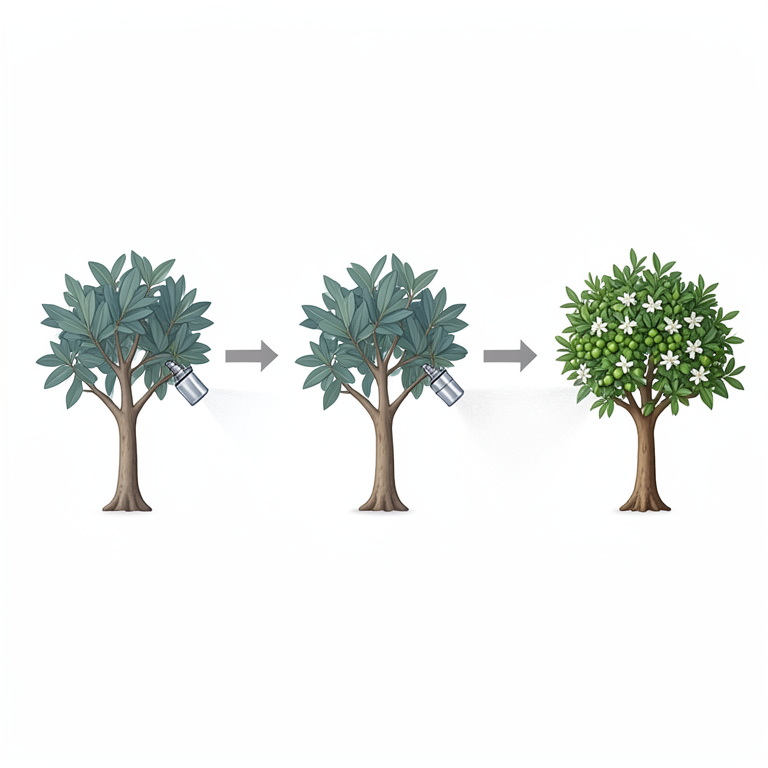
Experimental Treatment Layout
AI-generated conceptual illustration (Ber trees (Zizyphus mauritiana Lamk. cv. Banarasi Karaka)). It explains the idea and does not show study data.
View source evidence ↗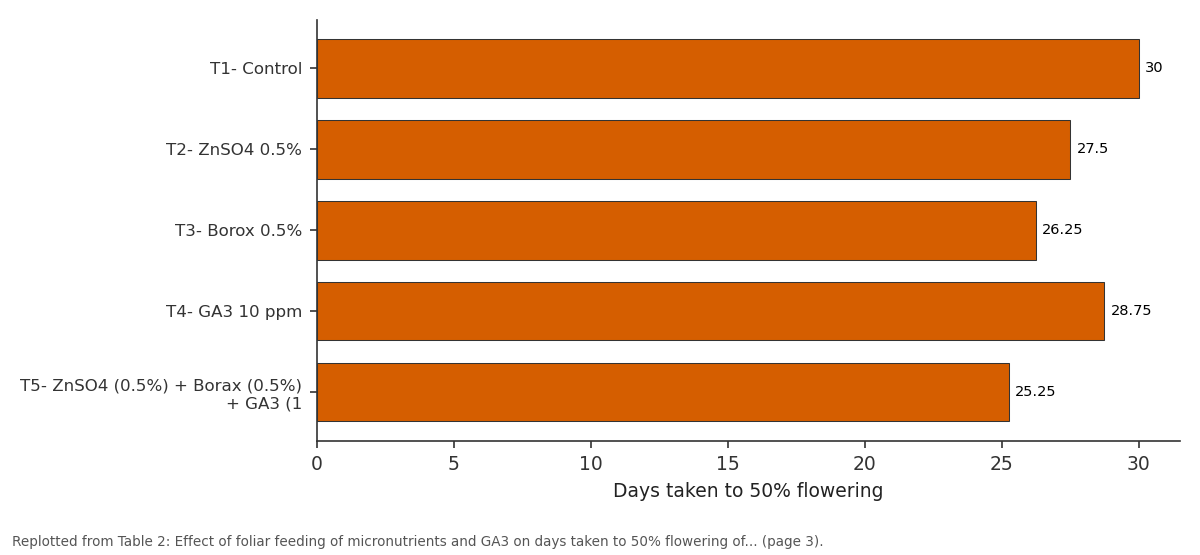
2023-24: T1- Control vs T2- ZnSO4 0.5% vs T3- Borox 0.5% vs T4- GA3 10 ppm vs T5- ZnSO4 (0.5%) +...
Replotted from Table 2 (page 3) of the original paper. Every bar is the paper's own table value.
View source evidence ↗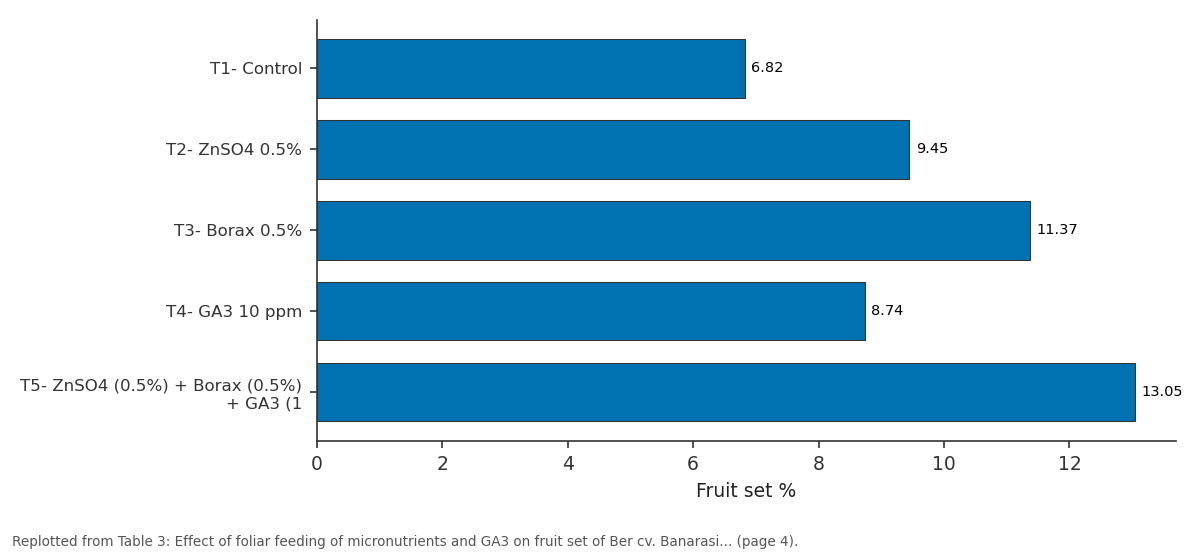
2023-24: T1- Control vs T2- ZnSO4 0.5% vs T3- Borax 0.5% vs T4- GA3 10 ppm vs T5- ZnSO4 (0.5%) +...
Replotted from Table 3 (page 4) of the original paper. Every bar is the paper's own table value.
View source evidence ↗Figures & tables
From the original paper Table 1
 Table 2
 Table 3
 Table 4
Introduction
Ber (Zizyphus mauritiana Lamk.) belongs to family Rhamnaceae, is one of the ancient and common fruit of India and China, being cultivated over 4000 years (Mehra, 1967) [15] . It is also known as Chinese date, Indian plum, Indian jujube or Chinese fig. Its tree is one of the hardy fruit crops right for cultivation mainly in arid and semiarid condition where most of the trees fail to grow due to lack of irrigation. Commercial cultivation usually extends up to 1000m above sea level. It is known as for its ability to withstand adverse condition, such as salinity, drought and water logging. It originated in central Asia which includes North-West India, Afghanistan, Tazakistan, Uzbekistan and China. India ranks first among the ber growing countries of the world with an area of 53000 ha and annual production of 580000 MT (Anon, 2021) [1] . The major ber growing states in India are Madhya Pradesh, Bihar, Uttar Pradesh, Punjab, Haryana, Rajasthan, Maharashtra, Assam, Gujarat, West Bengal, Andhra Pradesh and Tamil Nadu. But, it is an ideal fruit for cultivation in the arid and semi-arid zones of Northern India (Bal et al., 1982) [4] . Its cultivation has received a great impetus as a commercial crop in Punjab, Haryana, and Rajasthan because of its excellent yield and economic returns. Its fruit is richer than apple in respect of protein, phosphorous, calcium, carotene and vitamin C. It is popularly called as poor man's apple due to its high nutritional quality such as higher protein (0.8g), β-carotene (70 IU), vitamin C (50-100 mg) contents as well as medicinal value (Rai and Gupta, 1994) [18] . Fresh fruit contains Moisture (81.6-83.0 g), Fat (0.07 g), Fiber (0.60 g), Carbohydrates (17.0 g), Ascorbic acid (66-110 mg/100 g), Total sugars (5.4-10.5%), Non reducing sugar (3.2-8.0%), Reducing sugar (1.4-6.2 g), Calcium (25.6 mg), Phosphorus (26.8 mg), Iron (0.76-1.8 mg), Ash (0.3-0.59 g), Carotene (0.021 mg), Thiamine (0.02-0.024 mg), Riboflavin (0.02-0.038 mg), Niacin (0.7-0.873 mg), Citric Acid (0.2-1.1 mg), Fluoride (0.1-0.2 ppm), Pectin (dry basis) 2.2-3.4 percent (Morton, 1987) [16] . Jujube fruits have a spongy, sweet tasting pulp, and are an excellent source of ascorbic acid and carotenoids. Usually the fruits are eaten fresh but can also be used for making jam, pickles, candy or dehydrated products. The leaves are used as fodder for cattle and camels and to feed tassar silk-worms. The ber tree can serve as a host to lac insects, bark is used in tanning industry, wood is used for making charcoal etc. The seeds are sedative and are taken, sometimes with buttermilk, to halt nausea, vomiting, and abdominal pains in pregnancy. Plants can tolerate PH more than 9 and soil as well as water salinity to a limited extent (Hooda et al., 1990) [12] . The flowering period lasts for about two and a half months from September to November. In north Indian condition ber flowers in the month of August September while in West Bengal flowering occurs mainly in September-November in different varieties which produces heavy flowers in the axillary cymes on both mature and current season's growths (Teaotia and Chauhan, 1963) [28] . The fruit setting starts in the second week of October and continues up to the first fortnight of November. The fruit growth in terms of length and diameter follows a 'double sigmoid' curve. The flowers are borne on the current season's growth in leaf axils; the inflorescence is cymose (Bal, 1984) [2] and each cyme contains 15-28 flowers. The fruit is berry with a single stone and the shape of the fruit may vary from round to oblong, ovate, oval and oblate depending on the cultivars. It is a quick growing and early bearing fruit which yields a heavy crop every year. Moreover, the tree can tolerate hot and dry weather during May-June as the tree goes to dormant conditions which, in turn, reduce the total water requirements during the period of water scarcity especially in Rajasthan. Pruning is essential to maintain vigour, productivity, quality and size of fruits (Singh et al., 2004) [27] . As pruning is determined by fruiting behavior of a crop it is primarily the mostimportant annual operation in ber. In case of unpruned tree, the canopy area continue to enlarge year after year, branch lets become very weak, fruit size reduced and tree ultimately become unproductive whereas in case of judiciously pruned tree vigour and shape is maintained and fruit size as well as quality of fruits is improved. Thus, pruning is required every year in ber to induce maximum number of new healthy shoots which bear good quality fruits and removal of unproductive, over-crowded and portion of old branches for production of new fruit bearing shoots. High degree of immature fruits dropped during initial stage of fruit growth and development experiences all over India may be due to various factors like hormonal imbalance, abortion of embryo and inclement weather (Bal et al., 1988) [3] , nutrition (Chauhan and Gupta, 1985) [5] , moisture stress (Ghosh and Tarai, 2007) [11] and pathogen infestation (Reddy et al., 1997) [20] makes ber cultivation nonprofitable. Plant growth regulators and micro nutrients in minute quantities play an important role in enhancing growth and development of plants to influence yield and quality, affecting plant metabolism by bringing about a change in nutritional and hormonal status of the plant (Gadi and Bohra, 2005) [9] . Gibberellins are reported to increase fruit set, size, retention and yield as well as improve fruit physicochemical characteristics and ripening (Rizk-Alla et al., 2011) [21] . Micronutrients (B, Fe and Zn) also have a positive effect on ber fruit set, yield, fruit quality and storage-life (Samant et al., 2008) [23] . Borax and zinc sulphate are known to play a crucial role in growth, development, quality and storage of fruits (Jayachandran et al., 2005; Singh et al., 2007 and Rajput et al., 2015) [13,26,19] .
Materials and Methods
The present investigation was carried out at Main Experimental Station, Horticulture, Department of Fruit Science; Acharya Narendra Deva University of Agriculture & Technology, Kumarganj, Ayodhya (U.P.) during 2022-23 and 2023-24 on 29 year old Ber plants which were planted at spacing 6 x 6 m. Geographically, It is situated at 26.47º North latitude, 82.12º East longitude and altitude of 113 meter from sea level. The site is located in typical saline alkaline belt of Gangetic plains of eastern Uttar Pradesh. Randomized Block Design with four replication was applied in experimental trial, with the allocation of five treatment combinations on varieties Banarasi Karaka. Treatments were T 1 -Control, T 2 -ZnSO 4 (0.5%), T 3 -Borax (0.5%), T 4 -GA 3 (10 ppm), T 5 -ZnSO 4 (0.5%) + Borax (0.5%) + GA 3 (10 ppm). Foliar spray was done twice in the month of September and November. The observations were recorded for days taken to flowering initiation, days taken to 50% flowering, fruit set, fruit retention.
Flowering initiation time
The tagged shoots were observed to note as to when the inflorescence (axillary cyme) emerges on shoot on a branch. The number of days were counted from the date of first spraying to the day when first inflorescence in each replication of the different treatments appeared.
Days taken to 50% flowering
This observation was recorded by visiting the experimental field every day after panicles emergence and the number of days were counted from the date of first spraying to the day when 50 percent flowers on a panicle opened.
Fruit Set
To study about fruit set percent under natural conditions, 100 flowers were tagged in each direction of the tree (i.e., East, West, North and South) at the time of flowering. Initial fruit set was recorded after 10 days of fruit setting. Percent initial fruit set was calculated using following.
Fruit Retention
To get the fruit retention, the number of flowers retained in form of fruits were recorded at the time of fruit harvesting and percent value was worked out as follows:
Results and Discussion Days taken to flowering initiation
An examination of the data presented in Table-1 showed a significant influence of micronutrients and GA 3 treatment on days taken to flowering initiation during both the years of investigation. During 2022-23, the minimum (6.75) days taken to flowering initiation was recorded with foliar application of T 5 (ZnSO 4 0.5% + Borax 0.5% + GA 3 10 ppm), which was statistically at par with T 3 (Borax 0.5%) 7.50, while, significantly superior over rest of the treatments. However, the maximum (11.75) days taken to flowering initiation were recorded under control. A similar trend was also noted in 2023-24 and the minimum (6.25) days taken to flowering initiation was observed in T 5 (ZnSO 4 0.5% + Borax 0.5% + GA 3 10 ppm) which was significantly superior over the rest of the treatments. This was followed by T 3 (Borox 0.5%), T 2 (ZnSO 4 0.5%) and T 4 (GA 3 10 ppm) treatments with 7.25, 8.00, and 8.75 days taken to flowering initiation, respectively. While the maximum (10.25) days taken to flowering initiation were observed in control. Pooled data represents that all the treatments decreased days taken to flowering initiation significantly over the control. The minimum (6.50) days taken to flowering initiation was recorded in plants sprayed with ZnSO 4 0.5% + Borax 0.5% + GA 3 10 ppm, which was significantly superior over all other treatments. It was followed by T 3 (Borox 0.5%), T 2 (ZnSO 4 0.5%) and T 4 (GA 3 10 ppm) treatments with 7.38, 8.13, and 9.13 days taken to flowering initiation respectively. The highest (11) days taken to flowering initiation was recorded in control. [22] in sweet orange and Das et al. (2020) [6] in ber.
Days taken to 50% flowering
Effect of micronutrients and GA 3 treatments on days taken to 50% flowering revealed that all the treatments proved effective in decreasing days taken to 50% flowering over control (Table -2). During 2022-23, the minimum (25.75) days taken to 50% flowering was recorded with foliar application of T 5 (ZnSO 4 0.5% + Borax 0.5% + GA 3 10 ppm), which was significantly superior over rest of the treatments. This was followed by T 3 (Borax 0.5%), T2 (ZnSO 4 0.5%) and T 4 (GA 3 10 ppm) treatments with 27.25, 28.25, 29.50 days taken to 50% flowering, respectively. However, the maximum (30.75) days taken to 50% flowering were recorded under control. Also in 2023-24, similar trend was noted and the minimum days taken to 50% flowering (25.25) was observed in T 5 (ZnSO 4 0.5% + Borax 0.5% + GA 3 10 ppm) which was significantly superior over rest of the treatments. This was followed by T 3 (Borax 0.5%), T 2 (ZnSO 4 0.5%) and T4 (GA The results concluded that micronutrients and GA 3 played a positive role in reducing the days taken to 50% flowering in ber. Similar findings were reported by Kanpure et al. (2016) [14] , Sen et al. 2016 [24] .
Fruit set
The data in Table 3 shows the effect of micronutrients and GA 3 treatments on fruit set % during both the years (2022-23 and 2023-24) of investigation. During 2022-23, the maximum (12.69%) fruit set was recorded with foliar application of T 5 (ZnSO 4 0.5% + Borax 0.5% + GA 3 10 ppm), which was significantly superior over rest of the treatments. This was followed by T 3 (Borax 0.5%), T 2 (ZnSO 4 0.5%) and T 4 (GA 3 10 ppm) treatments with 11.25, 9.14, 8.16% fruit set, respectively. However, the minimum (6.06%) fruit set was recorded under control. Similar trend was also noted in 2023-24 and the maximum (13.05%) fruit set was observed in T 5 (ZnSO 4 0.5% + Borax 0.5% + GA 3 10 ppm) which was significantly superior over rest of the treatments. This was followed by T 3 (Borax 0.5%), T 2 (ZnSO 4 0.5%) and T 4 (GA 3 10 ppm) treatments with 11.37, 9.45, 8.74% fruit set, respectively. While the minimum (6.82%) fruit set was observed in control. Pooled data reveals that all the treatments increased fruit set significantly over the control. The maximum (12.87%) fruit set was recorded in plants sprayed with ZnSO 4 0.5% + Borax 0.5% + GA 3 10 ppm, which was significantly superior over all other treatments. It was followed by T 3 (Borax 0.5%), T 2 (ZnSO 4 0.5%) and T 4 (GA 3 10 ppm) treatments with 11.31, 9.29, 8.45% fruit set, respectively. The lowest (6.44%) fruit set was recorded in control. In present study the fruit set was significantly higher in plants treated with ZnSO 4 0.5% + Borax 0.5% + GA 3 10 ppm treatments, this can be attributed to its ability to enhance mobilization of carbohydrates from leaves to the developing fruits (Sharma et al., 2018) [25] . These results were in accordance with those obtained by Kanpure et al. (2016) [14] , Sen et al.
| Treatments | Fruit set % | — | — |
|---|---|---|---|
| 2022-23 | 2023-24 | Pooled | |
| T1- Control | 6.06 | 6.82 | 6.44 |
| T2- ZnSO4 0.5% | 9.14 | 9.45 | 9.29 |
| T3- Borax 0.5% | 11.25 | 11.37 | 11.31 |
| T4- GA3 10 ppm | 8.16 | 8.74 | 8.45 |
| T5- ZnSO4 (0.5%) + Borax (0.5%) + GA3 (10 ppm) | 12.69 | 13.05 | 12.87 |
| SEm± | 0.17 | 0.13 | 0.13 |
| CD at 5% | 0.53 | 0.39 | 0.39 |
Table text extracted from the original PDF; superscript letters are shown inline. The original table image is below.
View original table image
(2016) [24] and Patel et al. (2023) [17] . Boron in higher plants has a crucial role in flowering, pollen germination and fruiting Desouky et al. (2009) [8] . It is required for optimal pollen germination, acceleration of pollen tube growth and found to reduce percentage of flower drops and increases the pollen producing capacity of the anthers and pollen viability, thus finally lead to higher fruit set (Thompson and Batjer, 1950) [29] . Pooled data in Table 4 shows that all the treatments increased fruit retention % significantly over the control. The maximum (19.75%) fruit retention was recorded in plants sprayed with ZnSO 4 0.5% + Borax 0.5% + GA 3 10 ppm, which was significantly superior over all other treatments. It was followed by T 3 (Borax 0.5%), T 2 (ZnSO 4 0.5%) and T 4 (GA 3 10 ppm) treatments with 18.06, 16.14, 14.92% fruit retention, respectively. The lowest (10.91%) fruit retention was recorded in control. The ZnSO 4, Borax and GA 3 was also proved more positive, because ZnSO 4, Borax and GA 3 play an important role in translocation of carbohydrate and auxin synthesis to the sink and increased in pollen variability and fertilization. This result was in agreement with the findings of Sen et al. 2016 [24] , Devi et al. (2019) [7] , Gangadhar et al. (2019) [10] , and Patel et al.
| Treatments | Fruit retention % | — | — |
|---|---|---|---|
| 2022-23 | 2023-24 | Pooled | |
| T1- Control | 10.66 | 11.17 | 10.91 |
| T2- ZnSO4 0.5% | 15.78 | 16.50 | 16.14 |
| T3- Borox 0.5% | 17.80 | 18.32 | 18.06 |
| T4- GA3 10 ppm | 14.70 | 15.14 | 14.92 |
| T5- ZnSO4 (0.5%) + Borax (0.5%) + GA3 (10 ppm) | 19.48 | 20.01 | 19.75 |
| SEm± | 0.17 | 0.17 | 0.18 |
| CD at 5% | 0.54 | 0.54 | 0.54 |
Table text extracted from the original PDF; superscript letters are shown inline. The original table image is below.
View original table image
Fruit retention A perusal of
(2023) [17] . Higher fruit retention might be ascribed to reduced fruit drop resulting from higher carbohydrate supply and water uptake induced by boron application.
Conclusion
Based on the results, It may be concluded from the results obtained in present investigation that the treatment of ZnSO 4 0.5% + Borax 0.5% + GA 3 10 ppm was found to be most effective to improve days taken to flowering initiation, days taken to 50% flowering, fruit set, fruit retention. Therefore, ZnSO 4 (0.5%) + Borax (0.5%) + GA 3 (10 ppm) can be recommended to minimised days taken to flowering initiation, days taken to 50% flowering and to maximised fruit set, fruit retention of ber fruit in the Indo-Gangetic plains of eastern Uttar Pradesh.
Figures and tables from the paper
| Treatments | Days taken to flowering initiation | — | — |
|---|---|---|---|
| 2022-23 | 2023-24 | Pooled | |
| T1- Control | 11.75 | 10.25 | 11.00 |
| T2- ZnSO4 0.5% | 8.25 | 8.00 | 8.13 |
| T3- Borox 0.5% | 7.50 | 7.25 | 7.38 |
| T4- GA3 10 ppm | 9.50 | 8.75 | 9.13 |
| T5- ZnSO4 (0.5%) + Borax (0.5%) + GA3 (10 ppm) | 6.75 | 6.25 | 6.50 |
| SEm± | 0.25 | 0.20 | 0.18 |
| CD at 5% | 0.76 | 0.63 | 0.57 |
Table text extracted from the original PDF; superscript letters are shown inline. The original table image is below.
View original table image
| Treatments | Days taken to 50% flowering | — | — |
|---|---|---|---|
| 2022-23 | 2023-24 | Pooled | |
| T1- Control | 30.75 | 30.00 | 30.25 |
| T2- ZnSO4 0.5% | 28.25 | 27.50 | 27.75 |
| T3- Borox 0.5% | 27.25 | 26.25 | 26.75 |
| T4- GA3 10 ppm | 29.50 | 28.75 | 29.00 |
| T5- ZnSO4 (0.5%) + Borax (0.5%) + GA3 (10 ppm) | 25.75 | 25.25 | 25.50 |
| SEm± | 0.19 | 0.30 | 0.15 |
| CD at 5% | 0.60 | 0.93 | 0.47 |
Table text extracted from the original PDF; superscript letters are shown inline. The original table image is below.
View original table image
References
26 in the original paper- Bal JS. Horticulture Bulletin. 1984;26:501-502.
- Bal JS, Randhawa JS, Singh SN. Effect of NAA on fruit characters and quality of Ber cv. Umran. Haryana J Hort. Sci. 1988;17:20-23.
- Bal JS, Singh SN, Randhawa JS, Sharma SC. Effect of naphthalene acetic acid and trichlorophenoxy acetic acid on fruit drop, size and quality of Ber. Prog. Hort. 1982;14(23):148-151.
- Chauhan KS, Gupta AK. Effect of foliar application of urea on the fruit drop physico-chemical composition of Ber fruits under arid conditions. Haryana J Hort. Sci. 1985;14:9-11.
- Das KK, Yadav PK, Bhunia SR, Singh RS. Effect of plant growth regulators on flowering parameters of ber (Zizyphus mauritiana Lamk). Int. J Curr. Microbiol. Appl. Sci. 2020;9(3):2684-2690.
- Devi P, Gautam RKS, Singh J, Maurya SK, Chaudhary A. Effect of foliar application of NAA, GA3 and zinc sulphate on fruit drop, growth and yield of ber (Zizyphus mauritiana Lamk.) cv. Banarasi Karaka. Int. J Curr. Microbiol. Appl. Sci. 2019;8(1):1679-1683.
- Desouky IM, Haggag LF, Abd EI-Migeed MMM, Kishk YFM, EI-Hahy ES. Effect of boron and calcium nutrient sprays on fruit set, oil content and oil quality of some olive oil cultivars. World J Agric. Sci. 2009;5:180-185.
- Gadi BR, Bohra SP. Effect of plant growth regulators on photosynthesis and some biochemical parameters in Ber cv. Gola. Indian J Hort. 2005;62(3):296-297.
- Gangadhar, Chaurasiya R, Sharma A, Tiwari S, Goyal G, Bhadauria AS, et al. Influence of foliar application of GA3 with and without NAA on fruit drop, growth, yield and quality of Ber (Zizyphus mauritiana Lamk.) cv. Banarasi Karaka. Int. J Curr. Microbiol. Appl. Sci. 2019;8:45-56.
- Ghosh SN, Tarai RK. Effect of mulching on soil moisture, yield and quality of Ber. Indian J Soil Cons. 2007;35:246248.
- Hooda P, Sandhu AS, Mehta PK, Ahlawat VP. Growth yield and quality of Ber (Zizyphus mauritiana Lamk.) as affected by soil salinity. J Hortic Sci. 1990;65:589-593.
- Jayachandran KS, Srihari D, Reddy YN. Pre-harvest sprays of different sources of calcium to improve the shelf-life of guava. Indian J Hort. 2005;62:68-70.
- Kanpure NR, Sen P, Kachouli B, Anjanawe SR, Haldar A. Effect of nitrogen and micronutrients on growth and yield of ber (Ziziphus mauritiana Lamk.) cv. Gola under Malwa Plateau of Madhya Pradesh. Int. J Agric. Sci. 2016;8(58):3260-3262.
- Mehra KL. History of the jujube in ancient. Indian J Hort. 1967;24:37-47.
- Patel B, Kumar V, Srivastava AK, Singh SC, Prakash O, Chugh V, et al. Effect of plant growth regulator and nutrients on chemical composition and yield of ber (Ziziphus mauritiana Lamk.) cv. Thai Apple under Bundelkhand region of Uttar Pradesh. The Pharma Innovation Journal. 2023;12(3):1560-1564.
- Rai M, Gupta PN. Genetic diversity in Ber. Indian J Hort. 1994;39:42-47.
- Rajput A, Tiwari R, Pandey A, Somvanshi SPS. Effect of pre-harvest application of Ca, Zn and B on prolonged storability of Ber (Zizyphus mauritiana Lamk.). Res Environ Life Sci. 2015;8:771-772.
- Reddy MM, Reddy GS, Madhusudan T. Evaluation of some ber (Zizyphus mauritiana L.) varieties and fungicides against powdery mildew. J Res ANGRAU. 1997;25:19-26.
- Rizk-Alla MS, Abd El-Wahab MA, Fekry OM. Application of GA3 and NAA as a means for improving yield, fruit quality and storability of Black Monukka grape. Nat Sci. 2011;9(1):1-19.
- Sajid M, Rab A, Ali N, Arif M, Ferguson L, Ahmed M, et al. Effect of foliar application of Zn and B on fruit production and physiological disorders in sweet orange cv. Blood Orange. Sarhad J Agric. 2010;26(3):355-360.
- Samant D, Mishra NK, Singh AK, Lal RL. Effect of micronutrient sprays on fruit yield and quality during storage in Ber cv. Umran under ambient conditions. Indian J Hort. 2008;65(4):399-404.
- Sen P, Kanpure RN, Kachouli B, Anjanawe SR, Haldar A. Effect of nitrogen and micronutrients on growth and yield of ber (Ziziphus mauritiana L.) cv. Gola under Malwa Plateau of Madhya Pradesh. Int. J Agric. Sci. 2016;8(56):3260-3262.
- Sharma S, Sharma N, Sharma DP, Chauhan N. Effect of plant growth regulators on fruit set, yield efficiency, fruit size and russet formation in apple cv. Scarlet Spur II. Int. J Pure Appl. Biosci. 2018;6(3):692-698.
- Singh R, Chaturvedi OP, Gaur GS, Singh G. Effect of preharvest spray of zinc, calcium and boron on the storage behaviour of guava (Psidium guajava L.) fruits cv. Allahabad safeda. Acta Hort. 2007;735:633-638.
- Teaotia SS, Chauhan RS. Flowering, pollination, fruit set and fruit drop studies in ber (Zizyphus mauritiana Lamk.). Punjab Hort. J. 1963;3:60-70.
- Thompson AH, Batjer LP. The effect of boron in germination medium on pollen tube growth for several deciduous fruit tree. Proc. Am Soc. Hortic Sci. 1950;56:227-229.