
Research article · 2024 · Full text
International Journal of Research in AgronomyEvaluation of different integrated weed control techniques on transplanted finger millet (Eleusine coracana (L.) Gaertn.) in the coastal region of Karaikal
Volume 7(6S) · Pages 380–386 · DOI: 10.33545/2618060x.2024.v7.i6sf.881 ↗
Research areasAgronomic Practices and Intercropping SystemsAgricultural Science and FertilizationWeed Control and Herbicide Applications
Abstract
Author-writtenA field experiment was conducted at Pandit Jawaharlal Nehru College of Agriculture and Research Institute, Karaikal during rabi season 2017-18 to evaluate different integrated weed control techniques on transplanted finger millet (Eleusine coracana (L.) Gaertn.) in the coastal region of Karaikal. The experiment involving ten treatments which were evaluated in Randomised Block Design and replicated thrice. Eleven weed species belonging to grasses, sedges and broad leaved weeds were found to be associated with finger millet in experimental site. Among all treatments, hand weeding twice at 15 and 30 DAT (T9) and Pendimethalin @ 750g ha-1at 3 DAT + one hand weeding at 30 DAT (T2) resulted in lowest dry weight of weeds throughout the crop growth period and also registered the lowest nutrient uptake by weeds. Integrated weed control with pre-emergence application of Pendimethalin @ 750g ha-1at 3 DAT + one hand weeding at 30 DAT (T2) registered higher values of growth and yield components which was followed by hand weeding twice at 15 and 30 DAT (T9). It was concluded that Pendimethalin @ 750g ha-1at 3 DAT + one hand weeding at 30 DAT is the most effective weed management practice for achieving increased nutrient uptake by crop, higher grain yield and net returns through effective control of weeds in transplanted finger millet.
Summary
Source-checkedPlain-language reading of the full paper, prepared with AI and checked against the text. Each point links to the authors' own words.
Why it matters
- Small millets are important for national food security because they are hardy in drought conditions. View evidence ↗
- Finger millet, also known as Ragi, is the most productive of the small millets. View evidence ↗
- The first five weeks after planting are the most critical period for competition between the crop and weeds. View evidence ↗
The question
- The study aimed to identify the weed flora and determine the most effective integrated weed management practice for transplanted finger millet. View evidence ↗
What they did
- The researchers used a Randomized Block Design with ten different weed control treatments, including herbicides (Pendimethalin and Bispyribac sodium), hand weeding, and peg weeding, each replicated three times. View evidence ↗
- The study was conducted from December to April 2017-18 at the PAJANCOA&RI Agronomy farms in Karaikal. View evidence ↗
What they found
- Grasses were the dominant weed species in the field, accounting for 83% and 76% of the weed flora. View evidence ↗
- At 60 days after transplanting (DAT) and at harvest, the lowest weed dry weight was achieved using either twice hand weeding (T9) or a combination of Pendimethalin and one hand weeding (T2). View evidence ↗
- The unweeded control had the highest nutrient uptake by weeds (N: 0.5, P: 0.5, K: 2.5 kg ha-1), while treatment T2 significantly reduced this uptake (N: 0.2, P: 0.1, K: 0.7 kg ha-1). View evidence ↗
- The combination of Pendimethalin and Bispyribac sodium (T4) resulted in the lowest plant height across all stages, likely due to herbicide toxicity. View evidence ↗
- Grain nutrient uptake for N, P, and K was highest in treatment T2, followed by T9. View evidence ↗
What it means
- The authors conclude that applying Pendimethalin at 3 DAT followed by one hand weeding at 30 DAT is the most effective practice for maximizing yield and nutrient uptake while controlling weeds. View evidence ↗
Visual summary
3 visualsIllustrations explain the paper; charts are replotted from the paper's own table values.
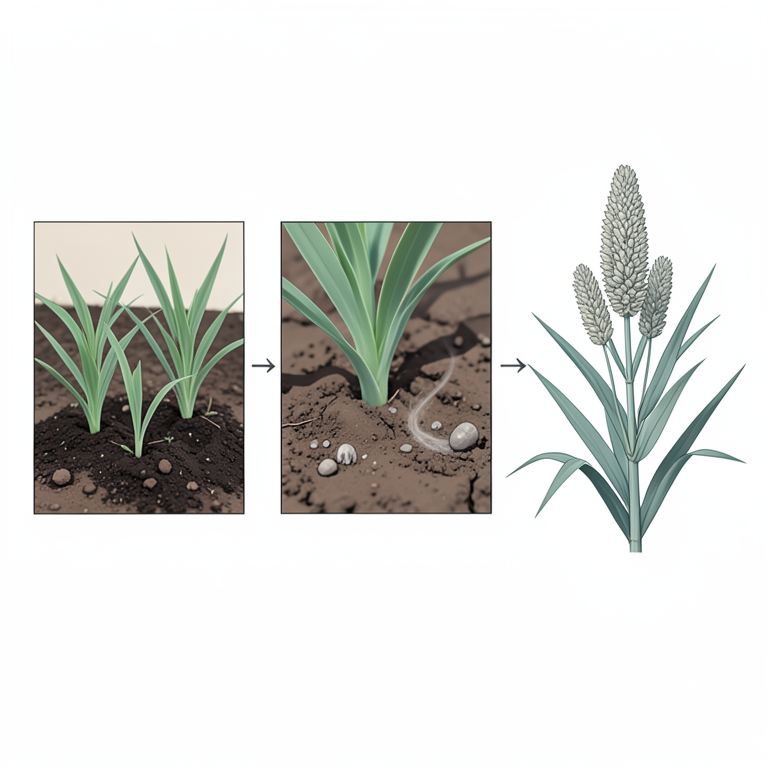
Integrated Weed Management Strategy
AI-generated conceptual illustration (transplanted finger millet plants). It explains the idea and does not show study data.
View source evidence ↗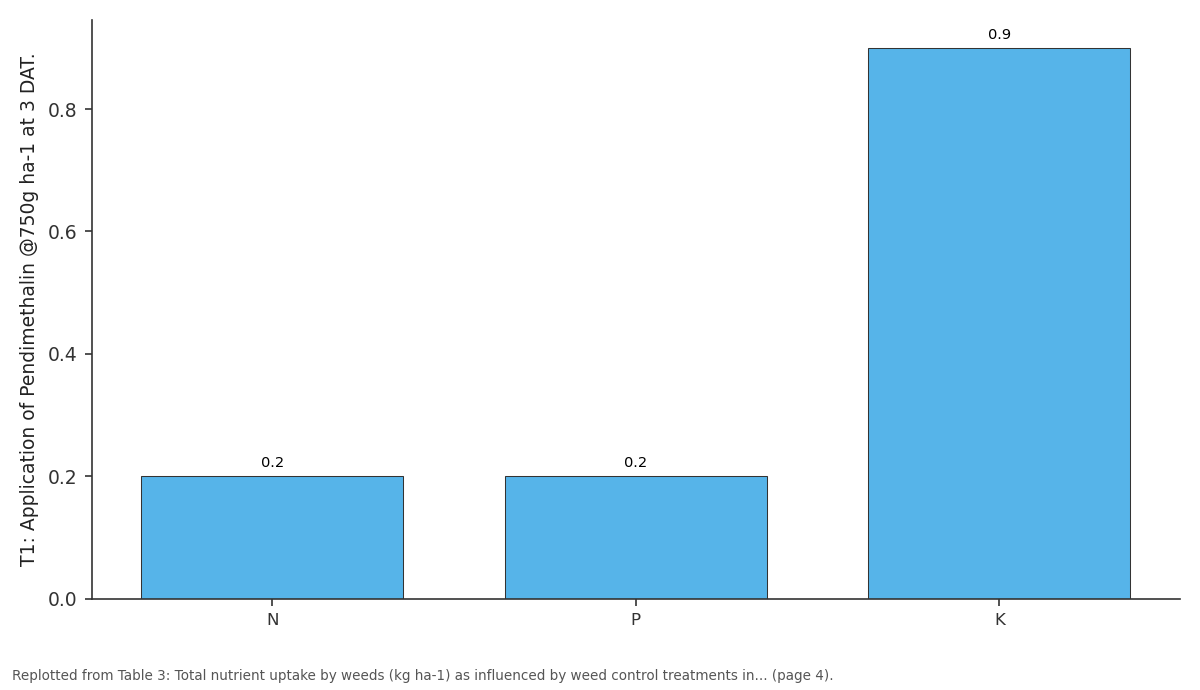
T1: Application of Pendimethalin @750g ha-1...: N vs P vs K
Replotted from Table 3 (page 4) of the original paper. Every bar is the paper's own table value.
View source evidence ↗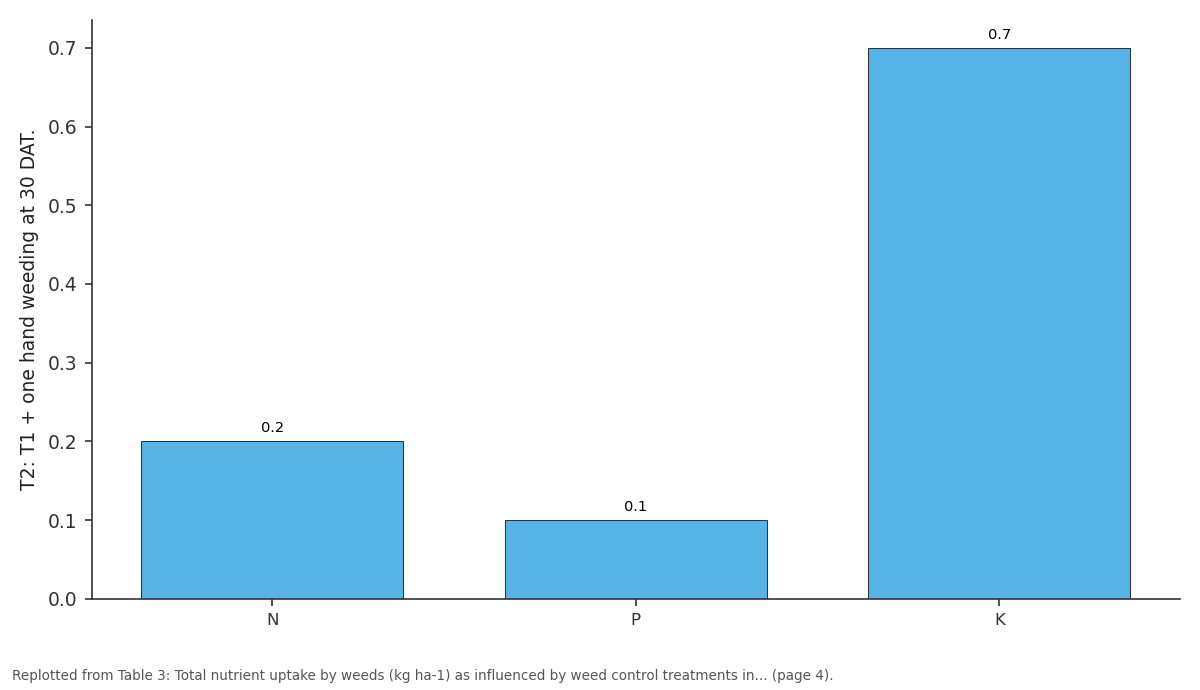
T2: T1 + one hand weeding at 30 DAT.: N vs P vs K
Replotted from Table 3 (page 4) of the original paper. Every bar is the paper's own table value.
View source evidence ↗Figures & tables
From the original paper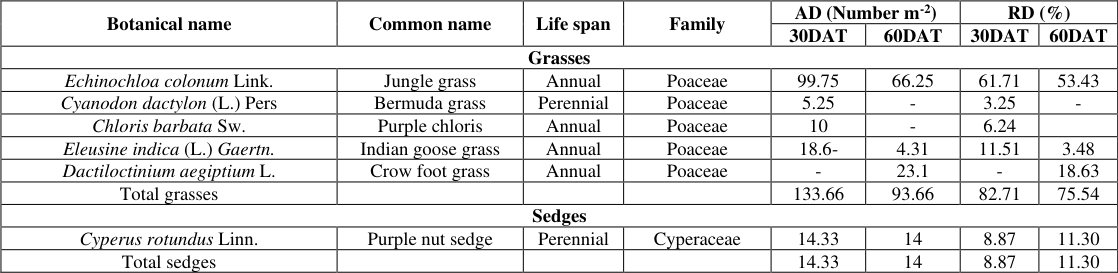 Table 1
 Table 2
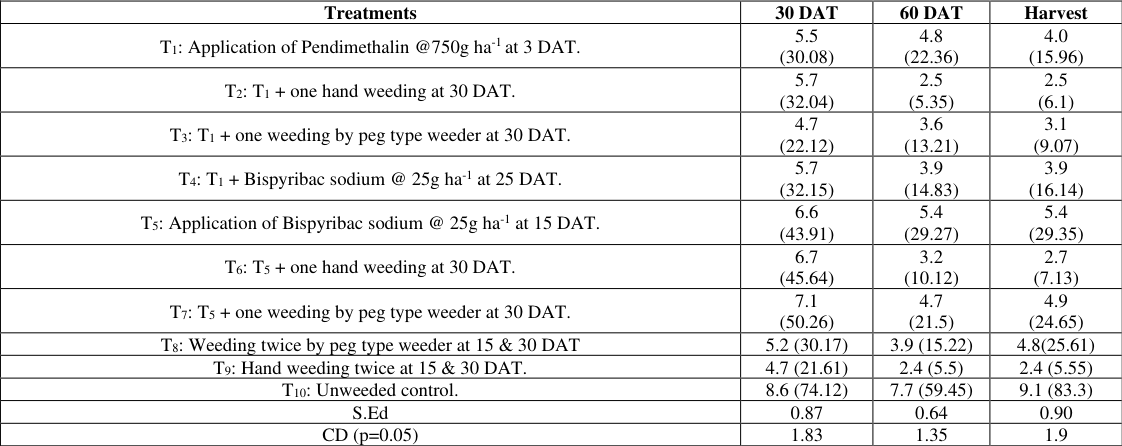 Table 2
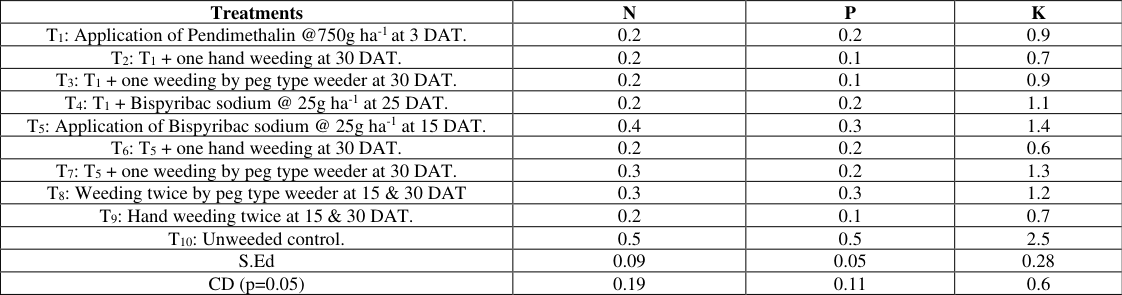 Table 3
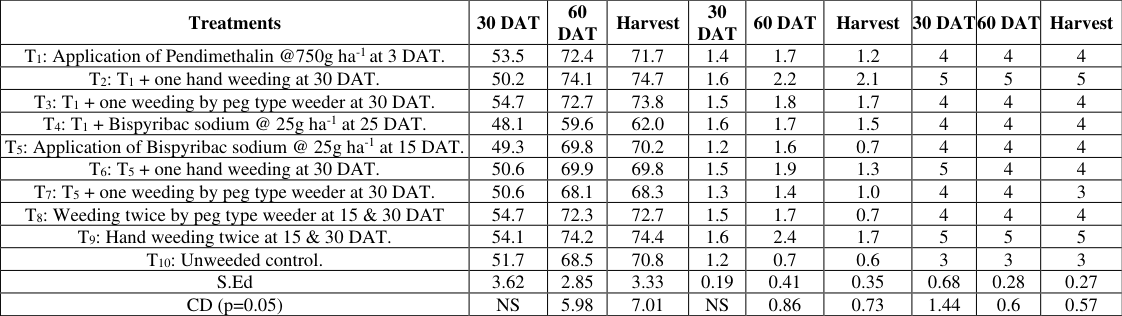 Table 4
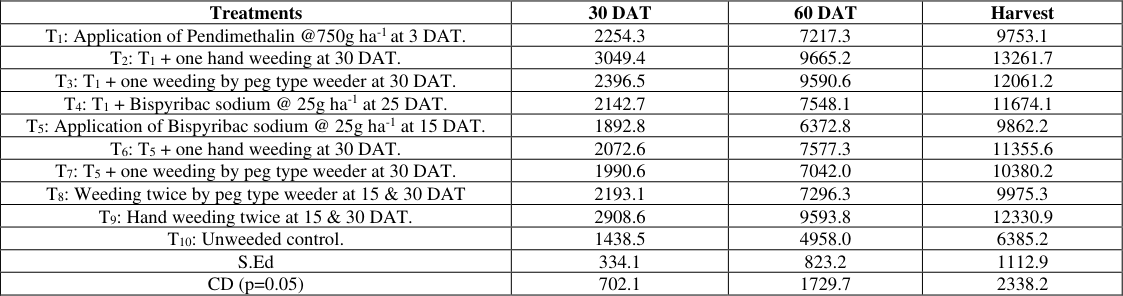 Table 5
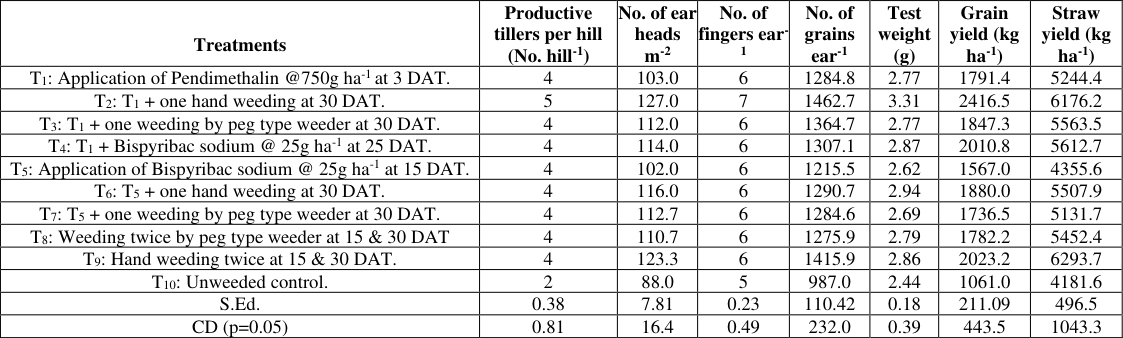 Table 6
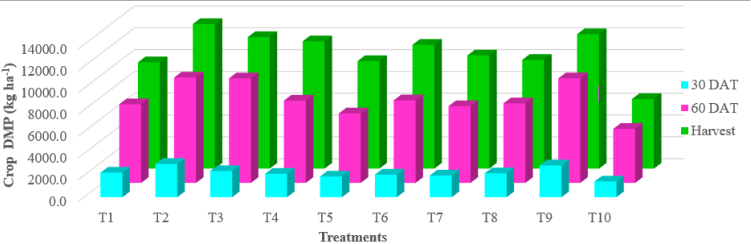 Figure 1
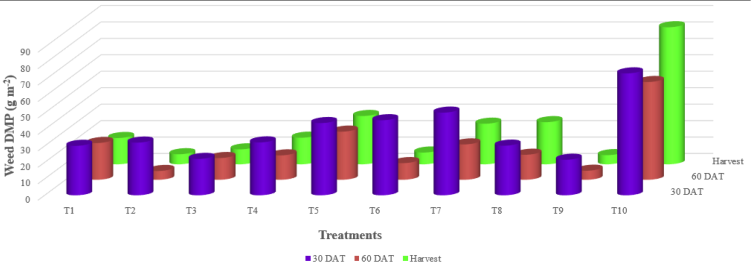 Figure 2
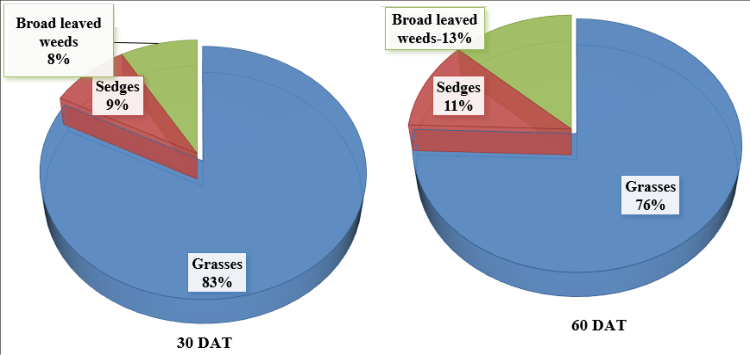 Figure 3
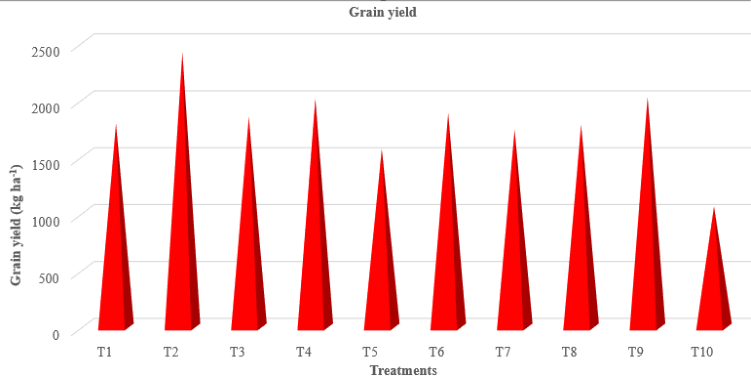 Figure 4
Introduction
Small millets are drought hardy crops and make an important contribution to the national food basket. Small millets offer enormous advantages such as early maturity, wider adaptability, low input cost and high nutritious value of both grain and fodder. These millets constitute to be a part of subsistence agriculture. They are high in folic acid, minerals, iron, fibre and have higher vitamin levels than rice. Small millets not only have been less researched but also have received negligible developmental support (Rao, 1986) [19] . Finger millet or Ragi has the pride of place in having the highest productivity among small millets. It is the main food grain for many people, especially in dry areas of India and Sri Lanka. It is the most important small millet grown in India in an area of 1.07 Million ha with a production of 1.89 Million tonnes and a productivity of 1.48 t ha -1 (Bellundagi et al., 2016) [1] . In Tamil Nadu the area of finger millet is 1.14 lakh ha with a production of 3.08 lakh tonnes and a productivity of 2.58 t ha -1 (DES and MoAFW, 2021 -22). Finger millet grains are more nutritious and provide eight times more calcium, four times more minerals and two times more phosphorus per unit of grain consumed as compared to rice. Protein content of finger millet is more than that of rice with well-balanced amino acid profile. It is a good source of methionine and lysine and is also rich in important vitamins such as thiamine, riboflavin, folic acid and niacin. It is ideal food as it lowers the incidence of cardiovascular diseases, duodenal ulcers and diabetes among population consuming millets (MSSRF, 2002). Grain is higher in protein, fat and minerals than rice, corn, or sorghum. Finger millet is also known as Ragi or locally Kezhvaragu, valued as staple food and first important crop among small millets. It contains 9.2% protein, 1.29% fat, 76.32% carbohydrate, 2.24% minerals and 3.9% ash besides vitamin A and B.
The grains are rich in phosphorus, potassium and amino acid. It is also rich source of calcium (410 mg/100 g grain) for growing children and aged people (Tomar et al., 2011) [24] . The critical period for crop-weed competition is initial five weeks' period from planting (Sundaresh et al., 1975 and Nanjappa, 1980) [23,11] . Effective weed management is needed for accomplishment of higher yield. It warrants for timely weeding and Inter cultivation within the critical period. Although manual weeding is effective, it is time consuming and labour intensive. By the time it is practiced, the crop would have been sufficiently damaged by weed competition. So, controlling weeds by use of herbicides is receiving attention due to shortage of labour and increased labour wages. There is a considerable dearth of knowledge concerning the feasibility of chemical weed control in Ragi. There is also a demand from farmers for the selective pre or post emergence herbicides which became cheaper when compared to manual weeding for timely control of weeds in Ragi crop. However, increased consciousness about the chemical pollution of soil and water had widened the scope for an integrated approach to control weeds. Keeping this in view, the experiment was conducted to study the weed flora and an effective integrated weed management practice for transplanted finger millet.
Materials and Methods
The present investigation entitled "Assessment of various integrated weed management practices on transplanted finger millet (Eleusine coracana (L.) Gaertn.) in the coastal region of Karaikal." was undertaken to know the influence of weeds in combination with various integrated weed management practices on the performance of finger millet for growth and yield characters at A22 field at Agronomy farms of PAJANCOA&RI, Karaikal during December to April, 2017-18. Karaikal is situated at 10° 55'N latitude and 79°49'E longitude with an altitude of four meters above MSL. Location comes under coastal deltaic alluvial plain zone which has a tropical climate with the mean maximum and minimum temperatures of 30.6 ᵒC and 21.1 ᵒC respectively. The mean annual total rainfall is 1112mm. The total annual evaporation is 438.5 mm and the annual total bright sun shine hours is 699.2. The mean annual morning and evening relative humidity are 93% and 67% respectively, while the mean annual wind speed is 5 kmph. The experiment was laid out in a Randomized Block Design with ten treatments viz.T1 (Application of Pendimethalin @ 750g ha -1 at 3 DAT), T2 (T1 + one hand weeding at 30 DAT), T3 (T1 + one weeding by peg type weeder at 30 DAT), T4 (T1 + Bispyribac sodium @ 25g ha -1 at 25 DAT), T5 (Application of Bispyribac sodium @ 25g ha -1 at 15 DAT), T6 (T5 + one hand weeding at 30 DAT), T7(T5 + one weeding by peg type weeder at 30 DAT), T8 (Weeding twice by peg type weeder at15 and 30 DAT), T9 (Hand weeding twice at15 and 30 DAT) and T10 (Unweeded control) with three replications. The finger millet seeds of the variety TRY-1 were used with all the crop management practices pertaining to finger millet were followed as per crop production guide.
Results and Discussion
Effect of weed control treatments on weeds Weed floristic composition Diverse weed flora was observed in transplanted finger millet. Eleven weed species belonging to grasses, sedges and broad leaved weeds were found to be associated with finger millet in experimental site viz., Echinochloa colonum (L), Dactyloctenium aegyptium, (L), Eleusine indica (L.), Cynodon dactylon (L.), Chloris barbata Sw. (among grasses), Cyperus rotundus (L) (among sedges), Eclipta alba (L), Aeschynomene indica (L), Cleome viscosa (L), Corchorus trilocularis (Auct.) and Alysicarpus rugosus (Willd.) DC. (among broad leaved weeds) (Table 1). Such dominance of weed species in finger millet was also reported by Dhanapal et al. (2015) [3] in finger millet-groundnut cropping system, Kumar et al. (2015) [6] and Satish.et al. (2018) [21] in drill sown finger millet. Among the weed flora observed in the field, grasses dominated over the sedges and broad leaved weeds with the percentage of 83 and 76 (Fig. 3). This is in line with the findings of Prasad et al. (2010) [24] and Dhanapal et al. (2015) [3] .
| Botanical name | Common name | Life span | Family | AD (Number m-2) | — | RD (%) | — |
|---|---|---|---|---|---|---|---|
| 30DAT | 60DAT | 30DAT | 60DAT | ||||
| Grasses | |||||||
| Echinochloa colonum Link. | Jungle grass | Annual | Poaceae | 99.75 | 66.25 | 61.71 | 53.43 |
| Cyanodon dactylon (L.) Pers | Bermuda grass | Perennial | Poaceae | 5.25 | - | 3.25 | - |
| Chloris barbata Sw. | Purple chloris | Annual | Poaceae | 10 | - | 6.24 | |
| Eleusine indica (L.) Gaertn. | Indian goose grass | Annual | Poaceae | 18.6- | 4.31 | 11.51 | 3.48 |
| Dactiloctinium aegiptium L. | Crow foot grass | Annual | Poaceae | - | 23.1 | - | 18.63 |
| Total grasses | 133.66 | 93.66 | 82.71 | 75.54 | |||
| Sedges | |||||||
| Cyperus rotundus Linn. | Purple nut sedge | Perennial | Cyperaceae | 14.33 | 14 | 8.87 | 11.30 |
| Total sedges | 14.33 | 14 | 8.87 | 11.30 |
Table text extracted from the original PDF; superscript letters are shown inline. The original table image is below.
View original table image
Weed dry weight
The weed control treatments significantly showed the dry weight of all the groups of weeds throughout the crop growth period as compared to unweeded control (Fig. 2). During early stages of crop growth (30 DAT), hand weeding twice at 15 and 30 DAT (T9) and Pendimethalin @ 750 g ha -1 at 3 DAT + one weeding by peg type weedier at 30 DAT (T3) registered lowest dry weight of weeds owing to effective suppression of all groups of weeds due to reduced weed density by Pendimethalin during initial period due to effective hand weeding. Such reports were also made by Tahir et al. (2015) and Makhan et al. (2016) [8] . During later stages (60 DAT and at harvest) hand weeding twice at 15 and 30 DAT (T9) and Pendimethalin @ 750g ha -1 at 3 DAT + one hand weeding at 30 DAT (T2) resulted in lowest dry weight of weeds (Fig. 2), (Table 2). The lower weed dry weight in twice hand weeding (T9) might be due to reduced soil seed bank as well as the poor emergence of weeds after second hand weeding. Hand weeding controlled the emerged weeds and those that emerged later on might have failed to accumulate sufficient dry matter owing to the competition offered by the crop plants. Moreover, the weed seeds under depleted soil seed bank shall have been brought to the upper soil layer by hand weeding, though germinated and emerged later they were in their initial growth stage thus accumulating less dry weight. Effective reduction in weed density by Pendimethalin during initial period and by hand weeding at later periods was the reason for lower dry weight of weeds in treatment T2. This is in confirmation with the results of Singh et al. (2016) [22] , Tuti et al. (2016) [25] and Haindavi et al. (2018) [5] . It was also noticed that highest weed dry weight were observed in unweeded control at all the stages; which might be due to the accumulation of higher dry matter of weeds and higher weed intensity. This resulted in dominance of weeds in utilizing the sunlight, nutrients, moisture, CO2 etc. This is in corroboration with the findings of Pradhan et al. (2010) [14] and Rao et al. (2015) [20] .
| Treatments | 30 DAT | 60 DAT | Harvest |
|---|---|---|---|
| T1: Application of Pendimethalin @750g ha-1 at 3 DAT. | 5.5 (30.08) | 4.8 (22.36) | 4.0 (15.96) |
| T2: T1 + one hand weeding at 30 DAT. | 5.7 (32.04) | 2.5 (5.35) | 2.5 (6.1) |
| T3: T1 + one weeding by peg type weeder at 30 DAT. | 4.7 (22.12) | 3.6 (13.21) | 3.1 (9.07) |
| T4: T1 + Bispyribac sodium @ 25g ha-1 at 25 DAT. | 5.7 (32.15) | 3.9 (14.83) | 3.9 (16.14) |
| T5: Application of Bispyribac sodium @ 25g ha-1 at 15 DAT. | 6.6 (43.91) | 5.4 (29.27) | 5.4 (29.35) |
| T6: T5 + one hand weeding at 30 DAT. | 6.7 (45.64) | 3.2 (10.12) | 2.7 (7.13) |
| T7: T5 + one weeding by peg type weeder at 30 DAT. | 7.1 (50.26) | 4.7 (21.5) | 4.9 (24.65) |
| T8: Weeding twice by peg type weeder at 15 & 30 DAT | 5.2 (30.17) | 3.9 (15.22) | 4.8(25.61) |
| T9: Hand weeding twice at 15 & 30 DAT. | 4.7 (21.61) | 2.4 (5.5) | 2.4 (5.55) |
| T10: Unweeded control. | 8.6 (74.12) | 7.7 (59.45) | 9.1 (83.3) |
| S.Ed | 0.87 | 0.64 | 0.90 |
| CD (p=0.05) | 1.83 | 1.35 | 1.9 |
Table text extracted from the original PDF; superscript letters are shown inline. The original table image is below.
View original table image
| Broad leaved weeds | — | — | — | — | — | — | — |
|---|---|---|---|---|---|---|---|
| Eclipta alba L. | False daisy | Annual | Asteraceae | 9.5 | 10 | 5.88 | 8.06 |
| Aeschynomene indica L. | Indian joint watch | Perennial | Fabaceae | 0.5 | 3.1 | 0.31 | 2.5 |
| Cleome viscose L. | Wild mustard | Annual | Capparidaceae | 0.5 | 0.5 | 0.31 | 0.4 |
| Corchorus trilocularis (Auct.) | Jute mallow | Annual | Malvaceae | 3.10 | 2.23 | 1.92 | 1.8 |
| Alysicarpus rugosus (Willd.) DC. | Red moneywort | Annual | Fabaceae | .- | 0.5 | - | 0.4 |
| Total broad leaved weeds | 13.66 | 16.33 | 8.42 | 13.16 | |||
| Total | 161.65 | 124.0 | 100 | 100 |
Table text extracted from the original PDF; superscript letters are shown inline. The original table image is below.
View original table image
Nutrient uptake by weeds
Unweeded control recorded maximum uptake of nutrients (N, P and K) by weeds. This was mainly due to poor control of weeds which has facilitated the weeds to utilize nutrients to maximum extent (Table 3). Similarly, increase in nutrient uptake by increase in weed competition is also reported by Patil et al. (2014) [13] and Kumar et al. (2015) [6] .
| Treatments | N | P | K |
|---|---|---|---|
| T1: Application of Pendimethalin @750g ha-1 at 3 DAT. | 0.2 | 0.2 | 0.9 |
| T2: T1 + one hand weeding at 30 DAT. | 0.2 | 0.1 | 0.7 |
| T3: T1 + one weeding by peg type weeder at 30 DAT. | 0.2 | 0.1 | 0.9 |
| T4: T1 + Bispyribac sodium @ 25g ha-1 at 25 DAT. | 0.2 | 0.2 | 1.1 |
| T5: Application of Bispyribac sodium @ 25g ha-1 at 15 DAT. | 0.4 | 0.3 | 1.4 |
| T6: T5 + one hand weeding at 30 DAT. | 0.2 | 0.2 | 0.6 |
| T7: T5 + one weeding by peg type weeder at 30 DAT. | 0.3 | 0.2 | 1.3 |
| T8: Weeding twice by peg type weeder at 15 & 30 DAT | 0.3 | 0.3 | 1.2 |
| T9: Hand weeding twice at 15 & 30 DAT. | 0.2 | 0.1 | 0.7 |
| T10: Unweeded control. | 0.5 | 0.5 | 2.5 |
| S.Ed | 0.09 | 0.05 | 0.28 |
| CD (p=0.05) | 0.19 | 0.11 | 0.6 |
Table text extracted from the original PDF; superscript letters are shown inline. The original table image is below.
View original table image
Effect of weed control treatments on finger millet Growth components
The growth components in finger millet such as plant height, number of tillers and crop DMP were progressively increasing from 30 DAT to harvest stage. LAI showed increased trend from 30 DAT to 60 DAT but decreased at harvest stage. On comparing all the weed management practices the growth components were dominated by treatments viz., Pendimethalin @ 750g ha -1 at 3 DAT + one hand weeding at 30 DAT (T2) followed by hand weeding twice at 15 and 30 DAT (T9) (Table 4). Which was in line with the findings of Kumar et al. (2015) [6] and Prithvi et al. (2015) [17] . However, the variation in plant height and LAI showed nonsignificant result due to weed management practices at 30 DAT but at 60 DAT and at harvest Pendimethalin @ 750g ha -1 at 3 DAT + one hand weeding at 30 DAT (T2) and hand weeding twice at 15 and 30 DAT (T9) showed higher plant height and LAI, which might be due to less competition by weeds. Similar findings were recorded by Pradhan et al. (2010) [14] and Patil et al. (2014) [13] . The lowest plant height was recorded by Pendimethalin @ 750g ha -1 at 3 DAT + Bispyribac sodium @ 25g ha -1 at 25 DAT (T4) at all the developmental stages (Table 4). This was mainly due to herbicide toxicity by both the herbicides as evidenced by Prithvi et al. (2015) [17] and Rao et al. (2015) [20] . The LAI was lowest in (T10) unweeded control. This was mainly due to the suppression of crop growth due to weed species during the growth phases. Such suppression of crop growth due to weeds was reported by Ramamoorthy et al. (2002) [18] . Number of tillers and crop DMP were higher in Pendimethalin @ 750g ha -1 at 3 DAT + one hand weeding at 30 DAT (T2) and hand weeding twice at 15 and 30 DAT (T9) at all the growth stages (Table 4), (Table 5), (Fig. 1). This increase in crop growth parameters in these treatments was due to better control of weeds resulting in minimum competition of weeds with finger millet during crop growth period. Also this helped in better utilization of nutrients, moisture, space and light by the crop. Unweeded check recorded significantly lower number of tillers and crop DMP. This might be due to severe crop weed competition for the same growth resources. These results are in line with the findings of Patil et al. (2014) [13] and Kumar et al. (2015) [6] . The study indicated that keeping the plots weed free up to 40 DAT resulted in production of significantly higher values of growth components over the other weed management practices which was also visualised by Naik et al. (2001) [10] in transplanted finger millet.
| Treatments | 30 DAT | 60 DAT | Harvest |
|---|---|---|---|
| T1: Application of Pendimethalin @750g ha-1 at 3 DAT. | 2254.3 | 7217.3 | 9753.1 |
| T2: T1 + one hand weeding at 30 DAT. | 3049.4 | 9665.2 | 13261.7 |
| T3: T1 + one weeding by peg type weeder at 30 DAT. | 2396.5 | 9590.6 | 12061.2 |
| T4: T1 + Bispyribac sodium @ 25g ha-1 at 25 DAT. | 2142.7 | 7548.1 | 11674.1 |
| T5: Application of Bispyribac sodium @ 25g ha-1 at 15 DAT. | 1892.8 | 6372.8 | 9862.2 |
| T6: T5 + one hand weeding at 30 DAT. | 2072.6 | 7577.3 | 11355.6 |
| T7: T5 + one weeding by peg type weeder at 30 DAT. | 1990.6 | 7042.0 | 10380.2 |
| T8: Weeding twice by peg type weeder at 15 & 30 DAT | 2193.1 | 7296.3 | 9975.3 |
| T9: Hand weeding twice at 15 & 30 DAT. | 2908.6 | 9593.8 | 12330.9 |
| T10: Unweeded control. | 1438.5 | 4958.0 | 6385.2 |
| S.Ed | 334.1 | 823.2 | 1112.9 |
| CD (p=0.05) | 702.1 | 1729.7 | 2338.2 |
Table text extracted from the original PDF; superscript letters are shown inline. The original table image is below.
View original table image
| Treatments | 30 DAT | 60 DAT | Harvest | 30 DAT | 60 DAT | Harvest | 30 DAT | 60 DAT | Harvest |
|---|---|---|---|---|---|---|---|---|---|
| T1: Application of Pendimethalin @750g ha-1 at 3 DAT. | 53.5 | 72.4 | 71.7 | 1.4 | 1.7 | 1.2 | 4 | 4 | 4 |
| T2: T1 + one hand weeding at 30 DAT. | 50.2 | 74.1 | 74.7 | 1.6 | 2.2 | 2.1 | 5 | 5 | 5 |
| T3: T1 + one weeding by peg type weeder at 30 DAT. | 54.7 | 72.7 | 73.8 | 1.5 | 1.8 | 1.7 | 4 | 4 | 4 |
| T4: T1 + Bispyribac sodium @ 25g ha-1 at 25 DAT. | 48.1 | 59.6 | 62.0 | 1.6 | 1.7 | 1.5 | 4 | 4 | 4 |
| T5: Application of Bispyribac sodium @ 25g ha-1 at 15 DAT. | 49.3 | 69.8 | 70.2 | 1.2 | 1.6 | 0.7 | 4 | 4 | 4 |
| T6: T5 + one hand weeding at 30 DAT. | 50.6 | 69.9 | 69.8 | 1.5 | 1.9 | 1.3 | 5 | 4 | 4 |
| T7: T5 + one weeding by peg type weeder at 30 DAT. | 50.6 | 68.1 | 68.3 | 1.3 | 1.4 | 1.0 | 4 | 4 | 3 |
| T8: Weeding twice by peg type weeder at 15 & 30 DAT | 54.7 | 72.3 | 72.7 | 1.5 | 1.7 | 0.7 | 4 | 4 | 4 |
| T9: Hand weeding twice at 15 & 30 DAT. | 54.1 | 74.2 | 74.4 | 1.6 | 2.4 | 1.7 | 5 | 5 | 5 |
| T10: Unweeded control. | 51.7 | 68.5 | 70.8 | 1.2 | 0.7 | 0.6 | 3 | 3 | 3 |
| S.Ed | 3.62 | 2.85 | 3.33 | 0.19 | 0.41 | 0.35 | 0.68 | 0.28 | 0.27 |
| CD (p=0.05) | NS | 5.98 | 7.01 | NS | 0.86 | 0.73 | 1.44 | 0.6 | 0.57 |
Table text extracted from the original PDF; superscript letters are shown inline. The original table image is below.
View original table image
Yield components
The yield components of finger millet viz., productive tillers, number of ear heads m -2 , number of fingers ear -1 , number of grains ear -1 and test weight were studied in the present investigation in relation to the weed management practices which revealed that number of ear heads m -2 played a dominant role in deciding the yield of the crop (Table 6). Similar results were also reported by Kumara et al. (2007) [7] in finger millet. The values of yield components were found to be superior in Pendimethalin @ 750g ha -1 at 3 DAT + one hand weeding at 30 DAT (T2) followed by hand weeding twice at 15 and 30 DAT (T9). It was due to reduced crop weed competition for nutrients, light, moisture and space and provided better environment for crop growth and development. Unweeded check treatment recorded poor yield components due to poor control of weeds which resulted in severe crop weed competition. This is in confirmation with the results of Kumara et al. (2007) [7] , Patil et al. (2014) [13] and Kumar et al. (2015) [6] . The variation in number of grains ear -1 , test weight and harvest index was not much among the treatments in present in investigation due to the reason that these characters were genetic makeup of the plant which could not be influenced much by the weed management practices. Such results were also supported by Ganapathy et al. (2011) [4] .
Yield
The grain yield of finger millet was significantly higher in Pendimethalin @ 750 g ha -1 at 3 DAT + one hand weeding at 30 DAT (T2) followed by hand weeding twice at 15 and 30 DAT (T9) (Table 6, Figure 4). The higher grain yield may be owing to significantly lower weed dry weight, higher weed control efficiency which reflected in higher values of plant height, number of effective tillers plant -1 , ear head m -2 and 1,000 grain weight. This was in line with the findings of Pradhan et al. (2010) [14] , Patil et al. (2014) [13] and Kumar et al. (2015) [6] . Similar to that of grain yield, straw yield was also influenced by different weed management practices. The higher straw yield was recorded in hand weeding twice at 15 and 30 DAT (T9) followed by Pendimethalin @ 750g ha -1 at 3 DAT + one hand weeding at 30 DAT (T2). This higher yield might be due to better control of weeds at tillering stage of the crop which was also visualised by Pandey et al. (2014) [12] and Dhanapal et al. (2015) [3] . The study also reveals that early competition of the weeds must be avoided to make the crop in utilizing the inputs such as water, nutrients and light to produce superior yield. Similar reports on the importance of early weed control option was made by Naik et al. (2001) [10] .
Nutrient uptake by plant and grain
The variation in nutrient uptake (N, P and K) by plant showed non-significant result due to weed management practices but the grain nutrient uptake (N, P and K) was higher in Pendimethalin @ 750g ha -1 at 3 DAT + one hand weeding at 30 DAT (T2) followed by hand weeding twice at 15 and 30 DAT (T9). Higher nutrient uptake was due to lower weed density and weed dry weight in these treatments which helped the crop to grow well, absorb more nutrient from the soil and efficiently supply the absorbed nutrients to economic part grain. These results were in line with Kumar et al. (2015) [6] . Table 3: Total nutrient uptake by weeds (kg ha -1 ) as influenced by weed control treatments in finger millet.in Finger millet.
Treatments
N P K T1: Application of Pendimethalin @750g ha -1 at 3 DAT. 0.2 0.2 0.9 T2: T1 + one hand weeding at 30 DAT. 0.2 0.1 0.7 T3: T1 + one weeding by peg type weeder at 30 DAT. 0.2 0.1 0.9 T4: T1 + Bispyribac sodium @ 25g ha -1 at 25 DAT. 0.2 0.2 1.1 T5: Application of Bispyribac sodium @ 25g ha -
Conclusion
The results of this investigation indicate that, when compared to other weed management techniques in transplanted finger millet, the application of Pendimethalin @ 750g ha -1 at 3 DAT + one hand weeding at 30 DAT had lower weed dry weight, less nutrient uptake by weeds, high uptake of nutrients by crop during the critical period of crop weed competition and increased performance of growth and yield attributes during the crop growth period.
References
24 in the original paper- Bellundagi V, Umesh KB, Ravi SC. Growth dynamics and forecasting of finger millet (Ragi) production in Karnataka. Department of Agricultural Economics, UAS, GKVK, Bengaluru, Karnataka, India. Economic Affairs. 2016;61(2):195-201.
- DES (Directorate of Economics and Statistics) and MoAFW (Ministry of Agriculture and Farmers Welfare). 2021-22.
- Dhanapal GN, Sanjay MT, Hareesh GR, Patil VB. Weed and fertility management effects on grain yield and economics of finger millet following groundnut. International Journal of Weed Science. 2015;47(2):139-143.
- Ganapathy S, Nirmalakumari A, Muthiah AR. Genetic variability and interrelationship analysis for economic traits in finger millet germplasm. World Journal of Agricultural Sciences. 2011;7(2):185-188.
- Haindavi P, Chandrasekhar K, Lakshmi VN, Prakash KK. Interaction of irrigation and weed control options on weed management and yield of dry sown rice (Oryza sativa L.). International Journal of Current Microbiology and Applied Sciences. 2018;6:2218-2227.
- Kumar P, Shekara MK, Yamuna BG, Sunil CM. Crop weed competition for nutrients by weeds on drill sown finger millet [Eleusine coracana (L.) Gaertn.]. International Journal of Tropical Agriculture. 2015;33(3):2049-2053.
- Kumara O, Naik BT, Palaiah P. Effect of weed management practices and fertility levels on growth and yield parameters in finger millet. Karnataka Journal of Agricultural Sciences. 2007;20(2):230-233.
- Makhan SB, Sunny K, Kaur S, Kaur T, Singh J, Yadav R, Chauhan BS, Gill G. Management of complex weed flora in dry-seeded rice. Crop Protection. 2016;83:20-28.
- Naik CD, Muniyappa TV, Kumar DM. Integrated weed management studies in drill sown finger millet. Karnataka Journal of Agricultural Sciences. 2001;14(4):900-904.
- Nanjappa HV. Crop-weed competition and weed control studies in finger millet (Eleusine coracana Gaertn.). Ph.D. Thesis. Division of Agronomy, University of Agricultural Sciences, Bangalore, India. 1980;P. 42.
- Pandey S, Damini T, Sonboir HL. Yield and economics of finger millet influenced by post emergence herbicides. Journal of Plant Development Sciences. 2014;6(3):471-473.
- Patil B, Reddy VC, Mellesha, Gururaj K. Weed control efficiency and economics of non-chemical weed management practices in transplanted organic finger millet. Green Farming. 2014;5(3):483-485.
- Pradhan A, Rajput AS, Thakur A. Effect of weed management on growth and yield of finger millet. Indian Journal of Weed Science. 2010;42(1&2):53-56.
- Prasad RTV, Kumar K, Denesh GR, Sanjay MT. Long term herbicide usage of weed shift and productivity in transplanted finger millet-groundnut cropping system in southern Karnataka. Journal of Crop and Weed. 2010;6(1):44-48.
- Prasad RTV, Narasimha N, Dwarakanath N, Munegowda MK, Krishnamurthy K. Integrated weed management in drilled finger millet. Mysore Journal of Agricultural Sciences. 1991;25:13-19.
- Prithvi BK, Rao AS, Srinivasulu K. Weed management in transplanted ragi. Indian Journal of Weed Science. 2015;47(2):214-215.
- Ramamoorthy K, Lourduraj CA, Sekhar PM. Weed management studies with pre-emergence isoproturon in rainfed direct sown finger millet (Eleusine coracana Gaertn.). Madras Agricultural Journal. 2002;89(1-3):30-32.
- Rao MV. Small millets in global agriculture. In: Proceedings of the First International Small Millets Workshop, Bangalore. 1986;October 29-November 2.
- Rao VP, Reddy SA, Rao KY. Effect of integrated weed management practices on growth and yield of pigeon pea (Cajanus cajan (L.) Millsp.). International Journal of Plant, Animal and Environmental Sciences. 2015;5(3):124-127.
- Satish P, Lakra RK, Nargis K, Alam P, Puran AN. Weed Management on Direct Seeded Finger Millet (Eleusine coracana L.) Under Rainfed Condition of Jharkhand. International Journal of Current Microbiology and Applied Sciences. 2018;Special Issue 7:844-850.
- Singh V, Jat ML, Ganie ZA, Chauhan BS, Gupta RK. Herbicide options for effective weed management in dry direct-seeded rice under scented rice-wheat rotation of western Indo-Gangetic Plains. Crop Protection. 2016;81:168-176.
- Sundaresh HN, Rajappa MG, Gowda LBK, Sastry KKS. Critical stages of weed competition in ragi under rainfed conditions. Mysore Journal of Agricultural Sciences. 1975;9:582-585.
- Tomar GS, Taunk SK, Choudhary JL. Science of Crop Production Part-1 Kharif Crop. Varanasi, India: Kushal Publications; 2011. p. 182-183.
- Tuti MD, Singh S, Pandey BM, Bisht JK, Pattanayak A. Weed management in rainfed finger millet. Indian Journal of Weed Science. 2016;48(1):74-75.