
Research article · 2024 · Full text
International Journal of Research in AgronomyAssessment of power weeder efficiency using diverse blade mechanisms in inter-row weeding
Volume 7(6) · Pages 328–336 · DOI: 10.33545/2618060x.2024.v7.i6e.855 ↗
Research areasSoil Mechanics and Vehicle Dynamics
Abstract
Author-writtenWeeding is one of the most labour-intensive and time-consuming tasks in agriculture. Weeds are essentially unwanted plants that compete with crops for light, moisture, and nutrients, thereby reducing overall yield. Among various weeding methods, mechanical weed control is favoured due to its timeliness, safety, reduced physical effort, and cost-effectiveness. This study utilized a self-propelled machine powered by a 5.76 hp, 4-stroke single-cylinder diesel engine. Three sets of blades-rotary, non-rotary and a combination of both, with multiple adjustment options-were developed and fabricated to perform the weeding operations. The weeding operations were carried out in an inter-row mode where crop spacing was less than or equal to 750 mm for dry land crops. Results showed that the combined blade achieved greater depth and weeding efficiency, whereas the rotary blade performed the lowest in these aspects. The effective field capacity was found to be highest for the non-rotary blade and lowest for the combined blade. Field efficiency was higher with the combined blade, while it was lowest for the non-rotary blade. Fuel consumption, cost of operation, and man-hours per hectare were highest for the combined blade and lowest for the rotary blade. The maximum performance index was found for the rotary blade and lowest for the combined blade. One-way ANOVA analysis indicated that the blade mechanism had a significant effect on inter-row weeding parameters such as depth, field efficiency, fuel consumption, plant damage factor, cost of operation, man-hours per hectare, and performance index, with significant differences observed at p
Summary
Source-checkedPlain-language reading of the full paper, prepared with AI and checked against the text. Each point links to the authors' own words.
Why it matters
- Weeding is a highly labor-intensive and time-consuming agricultural task. View evidence ↗
- Weeds reduce overall crop yields by competing for essential resources like light, moisture, and nutrients. View evidence ↗
- Mechanical weed control is preferred over other methods because it is safer, more timely, cost-effective, and requires less physical effort. View evidence ↗
The question
- The study aims to evaluate how different blade mechanisms on a mini power weeder perform during inter-row weeding for dry land crops. View evidence ↗
What they did
- The researchers used a self-propelled machine powered by a 4-stroke single-cylinder diesel engine with an output of approximately 5.75-5.76 hp. View evidence ↗
- Three different blade mechanisms were tested: rotary blades, non-rotary blades, and a combined system of both. View evidence ↗
- Field trials were conducted in sandy loam soil (15-16% moisture) in Tilapara village, Bongaigaon district, Assam. View evidence ↗
- The study measured several performance metrics, including depth of cut, weeding and field efficiency, fuel consumption, plant damage, operating cost, and labor hours. View evidence ↗
What they found
- The combined blade achieved the greatest weeding depth (4.2 cm), followed by the non-rotary blade (4.1 cm) and the rotary blade (3.1 cm). View evidence ↗
- The combined blade had the highest weeding efficiency (84.3%), while the rotary blade had the lowest (81.2%). View evidence ↗
- Field efficiency was highest for the combined blade (86.44%) and lowest for the non-rotary blade (68.96%). View evidence ↗
- Fuel consumption was highest for the combined blade (8.2 l/ha) and lowest for the rotary blade (7.8 l/ha). View evidence ↗
- Plant damage was minimal across all tests, but was highest with the combined blade (0.1%) and lowest with the non-rotary blade (0.02%). View evidence ↗
- The combined blade required the most labor (19.6 man-h/ha), while the rotary and non-rotary blades required the least (16.7 man-h/ha). View evidence ↗
- The non-rotary blade achieved the highest performance index (120.7), while the combined blade had the lowest (104.76). View evidence ↗
- Statistical analysis showed that blade mechanism significantly affected depth, field efficiency, plant damage, cost, labor, and performance index (p<0.05), but not weeding efficiency, effective field capacity, or fuel consumption. View evidence ↗
What it means
- The authors conclude that the combined blade is superior for performance, while the rotary blade is more economical in terms of cost and labor. View evidence ↗
- The developed blade mechanisms are not suitable for use with wetland agriculture crops. View evidence ↗
Visual summary
1 visualsIllustrations explain the paper; they do not show study data.
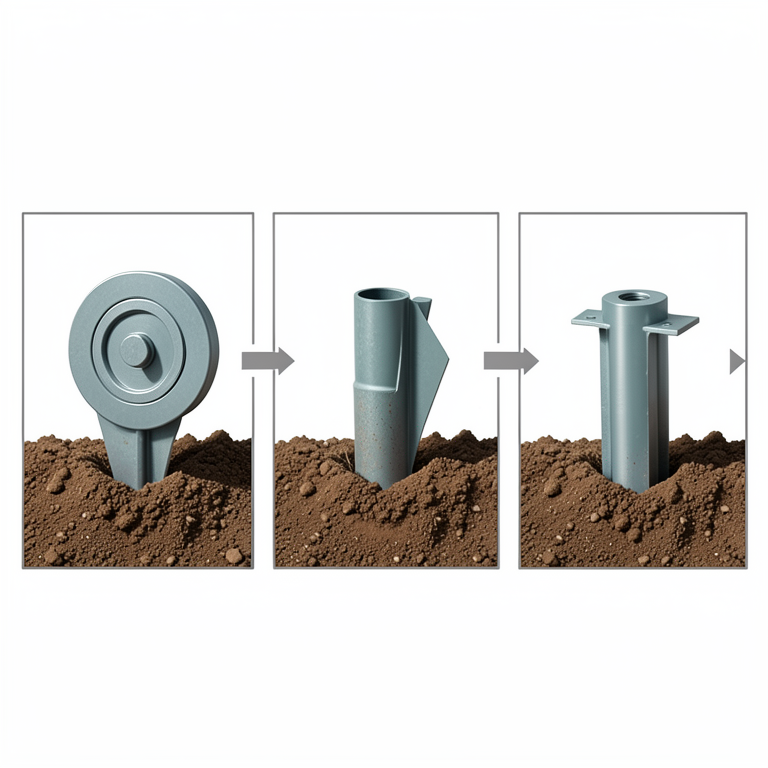
Comparison of Blade Mechanisms
AI-generated conceptual illustration (power weeder blade mechanisms in soil). It explains the idea and does not show study data.
View source evidence ↗Figures & tables
From the original paper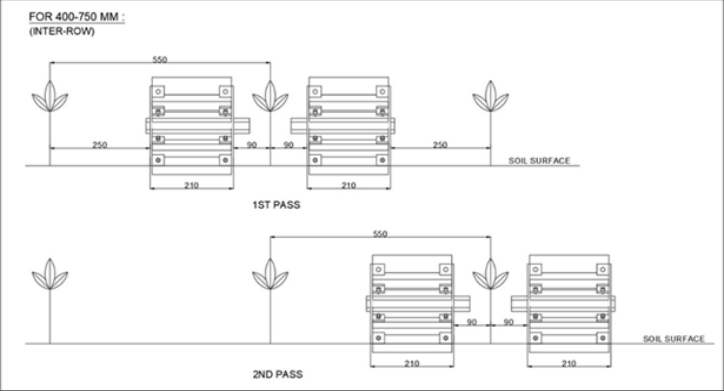 Figure 2
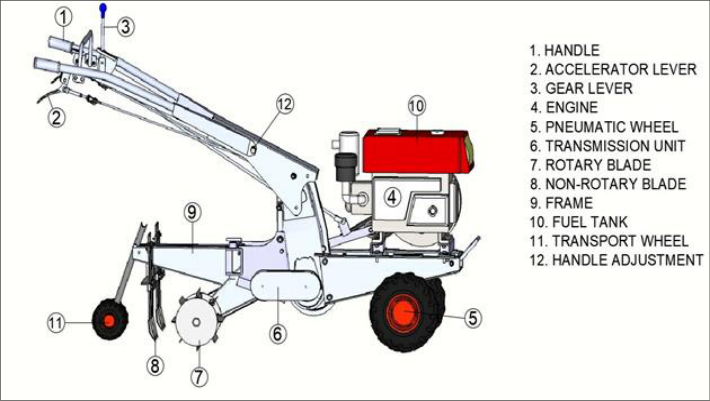 Figure 1
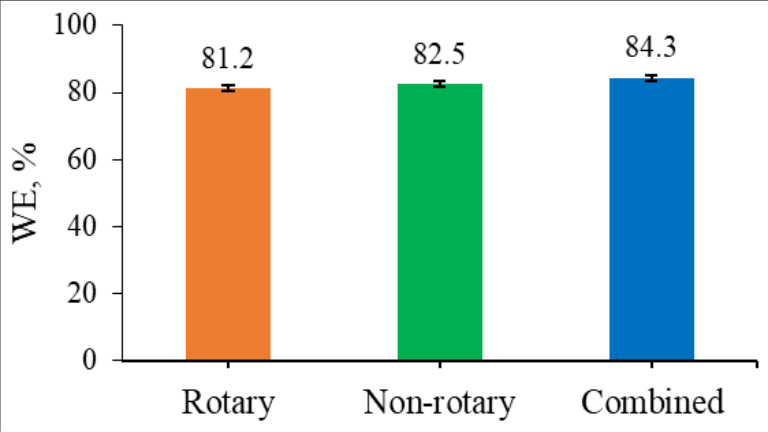 Figure 4
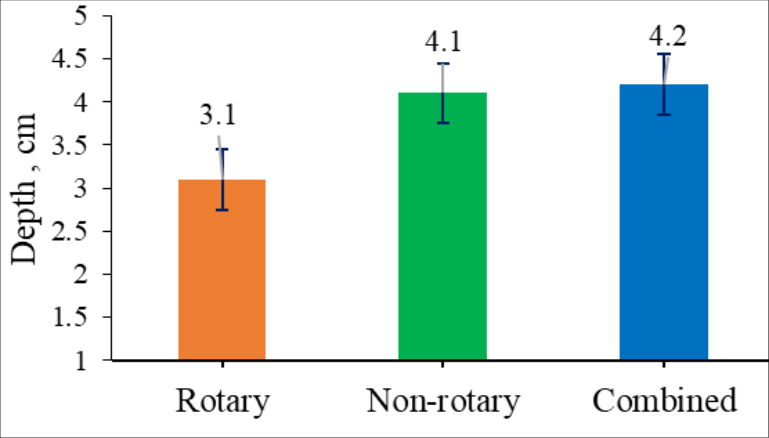 Figure 3
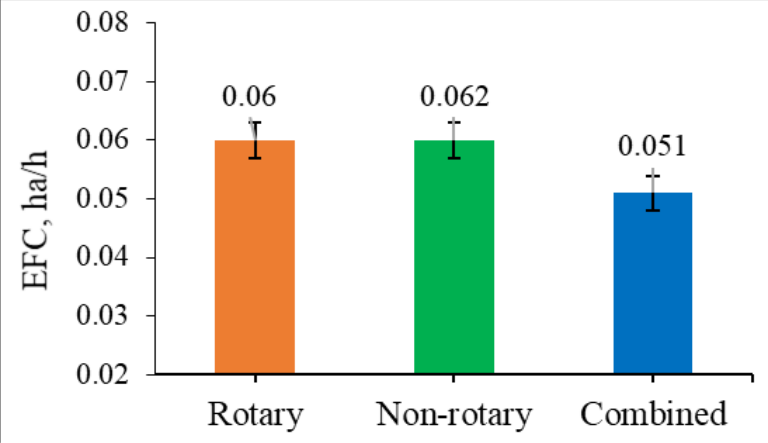 Figure 5
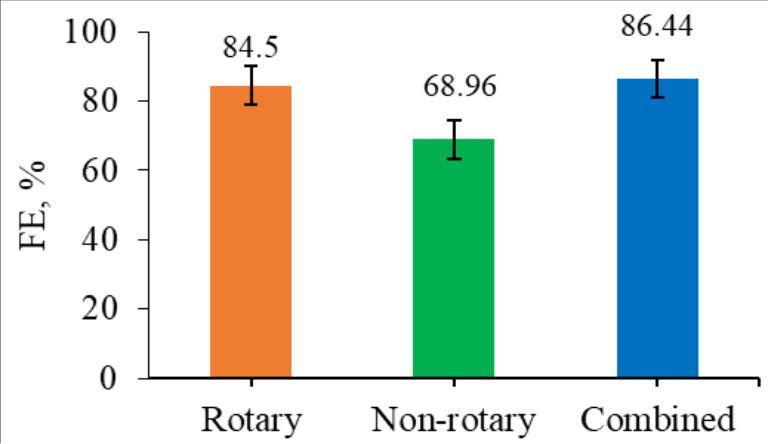 Figure 6
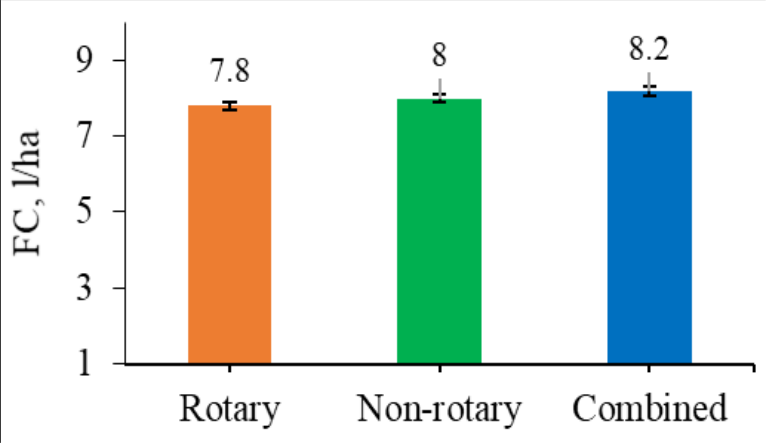 Figure 7
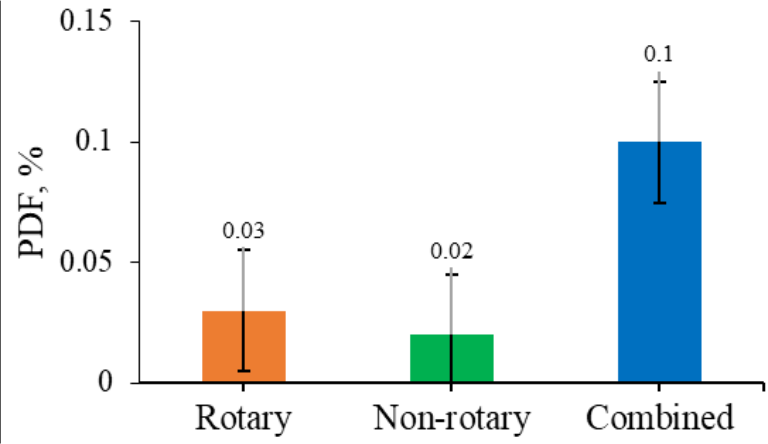 Figure 8
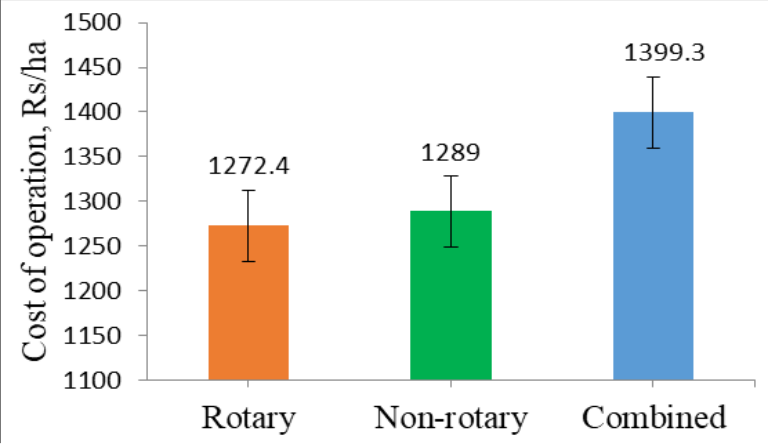 Figure 9
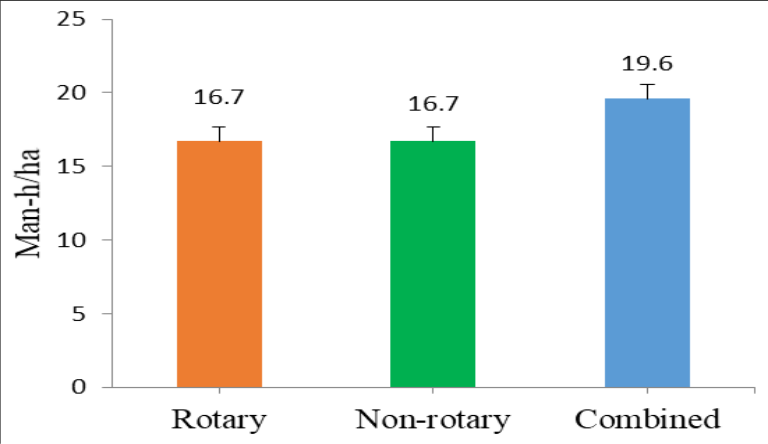 Figure 10
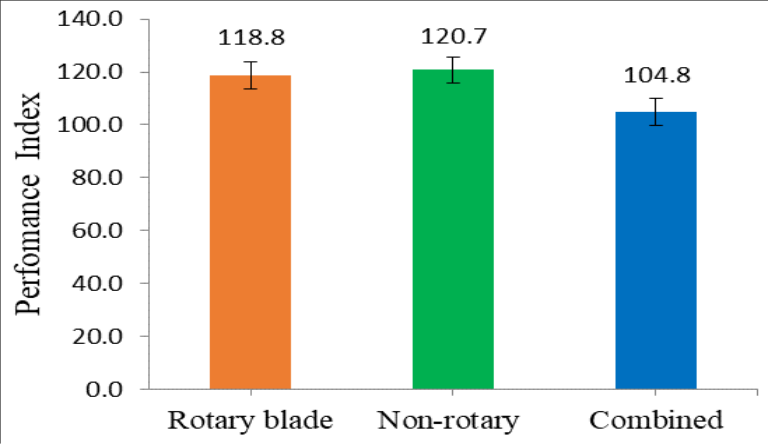 Figure 11
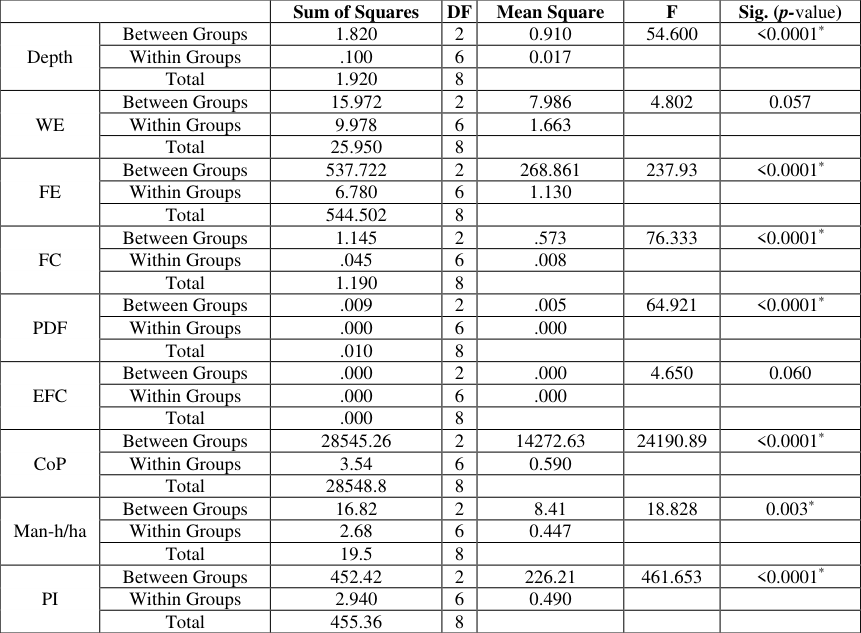 Table 1
Introduction
Weeding is one of the most arduous and time-intensive tasks in farming. Depending on the crop and location, weeds are estimated to reduce yields by 16 to 42% (Kushwaha et al. 2002) [1] . The level of losses is influenced by the type of weeds, their density, the timing of their appearance, and the rate at which they are removed (Shekhar et al. 2010) [2] . Hand weeding is a labourintensive and often inefficient task, frequently delayed and sometimes impractical due to unfavourable soil conditions (Kumar et al. 2017) [3] . Manual weeding represents one-third of cultivation costs and requires a substantial workforce, making up about 25% of the total labour required, which translates to approximately 900-1200 man-hours per hectare (Devojee et al., 2020) [4] . Despite the slightly higher operational costs compared to other tools, a power weeder ensures more timely weeding operations (Shekhar et al. 2010) [2] . Mechanical weed control not only removes weeds between crop rows but also loosens the soil surface, improving aeration and water absorption. (Bini Sam, 2014) [5] . Mechanical weed control is favoured over other methods for various reasons. Proper depth and spacing of crops are crucial for maximizing yield, as both the depth of seed placement and the distance between rows affect crop performance. Manuwa et al. (2009) [6] developed a row crop power weeder achieving a field capacity of 0.035 ha/h and 96% field efficiency with a 40 mm depth of cut. In 2010, Nkakini et al. [7] tested a petrol engine weeder in tropical areas, achieving a theoretical field capacity of 0.047 ha/h and an effective field capacity of 0.34 ha/h, with a weeding efficiency of 71%. Olaoye et al. (2012) [8] evaluated a rotary power weeder, finding a field capacity of 0.0712 ha/h and a weeding efficiency of 73%.
Kumar et al. (2017) [3] observed a power weeder's performance in wet and dry lands, noting a higher field capacity of 0.0494 ha/h and weeding efficiency of 76.40% in dry land. Devojee et al. (2020) [4] developed a portable knapsack power weeder tested on chili crops with different blade configurations, achieving field capacities ranging from 0.025 to 0.029 ha/h, weeding efficiencies from 66.1% to 79.9%, and performance indices from 123 to 132. Considering the above information and future needs to address the limitations of power weeding in various dry land crops, a small, lightweight, self-propelled multi-purpose weeder is essential for farmers for small and marginal farmers. Introducing a compact, affordable weeder with multiple blade assembly options will benefit small and marginal farmers by enhancing efficiency, reducing labor and cultivation costs, and increasing crop yields. The present study examines the effectiveness of a mini power weeder equipped with diverse blade mechanisms for operating in the inter-row mode of operation for dry land crops.
Materials and Methods
A self-propelled 4-stroke single-cylinder diesel engine with a power output of 5.75 hp and an engine speed of 1800 was utilized for inter-row weeding. The power weeder operated in three modes: rotary blade (RB), non-rotary blade (NRB), and combined blade (CB) mechanisms. The rotary blades had specific dimensions: a length of 40 cm (20 cm on each side), six blades on each side, a blade width of 4.5 cm, thickness of 0.6 cm, disc diameter of 20 cm, rotor shaft diameter of 2.5 cm, and a blade angle of 55 degrees. For non-rotary blades, the angle of attack was set at 15 degrees, the approach angle at 50 degrees, and the blade width at 16.8 cm. The effective width of the nonrotary blade was 60 cm. Each set of non-rotary blades had a provision for vertical adjustment to control the depth of cut.The attachment of blade assembly in CAD model of self-propelled power weeder is shown in Fig. 1 and the method weeding operation when the row-to row spacing is less than or equal to 750 mm is shown in Fig. 2.
Area of experiment
The experiment took place in a farmer's field in Tilapara village, located in the Bongaigaon district of Assam. The soil in the experimental area was sandy loam with an average moisture content of 15-16%. The field was divided into three equal sections. Dependent parameters, including depth of cut, weeding efficiency, effective field capacity, field efficiency, fuel consumption, plant damage factor, performance index, and labour hours per hectare, and operating cost, were measured after completing each set of field trials.
Depth of operation
The depth of operation was determined by measuring the vertical distance from the horizontal soil surface to the bottom of the excavated soil using a steel scale. Measurements were taken from three randomly selected locations after weeding was completed, and the average depth was calculated.
Width of operation
To determine the average width of cut, three measurements were taken. These measurements were recorded at three evenly spaced locations along the direction of travel using a steel scale, and then the average width was calculated.
Speed
The speed of the weeder was measured by timing how long it took to cover a distance of 20 meters, using a stopwatch. The average speed for the weeder in each treatment plot was recorded individually. The selected speed range, from 0.28 m/s to 0.56 m/s, was found to be ergonomically ideal for walking behind implements, according to Yadav and Pund (2007) [9] .
Theoretical Field Capacity (TFC)
The theoretical field capacity of an implement refers to the rate of field coverage that would be achieved if the machine operated continuously at its rated forward speed and consistently covered its full rated width.
Where, w-width of blade in metre (m), S-speed of operation in km/h
Effective Field Capacity (EFC)
Effective field capacity is the average area covered by the weeder per hour. It is calculated based on the total area weeded in hectares and the total working time, including any time lost due to turning at headlands, taking breaks, or making adjustments and repairs.
Field efficiency (FE)
It is the ratio of effective field capacity to the theoretical field capacity expressed as percentage.
Weeding Efficiency (WE)
The calculation involved selecting a random square area in the field and counting the number of weeds within this area before and after weeding. Three sets of observations were taken using the quadrant method, where a 1-square-meter quadrant was randomly placed in different spots (Tajuddin, 2006) [10] . The average weeding efficiency was then calculated as follows.
Where, W b -number of weeds before weeding, W a -number of weeds after weeding 2.9 Fuel consumption (FC) Fuel consumption directly impacts the economic efficiency of the power weeder. The fuel consumption rate, defined as the amount of fuel used per unit time, was measured for each tillage operation using the refilling (volume) method. A calibrated cylinder was employed to measure the fuel used during refilling. The fuel consumption rate was calculated using the method described by Rangasamy et al. (1993) [11] .
Where, Q f = Quantity of fuel consumed in litre (l) and t = time taken (h). Area covered within the working duration is converted to fuel consumption per hectare area (ha/l).
Plant damage factor (PDF)
Plant damage refers to the harm caused to crop plants during the weeding operation. It was assessed by observing plants buried by soil and the cutting of plant leaves or tops due to the rotating action of weeding drums and blades. The number of plants in a 10-meter row length was recorded before and after weeding, and the plant damage factor was calculated using the method outlined by Gupta (1981) [12] .
Where, P b = Number of total plants in 10 m row length before weeding, P a = Number of plants damaged along 10 m row length after weeding.
Performance index (PI)
The evaluation of the weeder's effectiveness was conducted using a performance index (PI), as per the formula proposed by Srinivas et al. 2010 [13] (100
Where, FC = Field capacity in ha/h, PDF = Plant damage factor, %, WE = Weeding efficiency, % and Pw = Power, hp
Cost of operation
The total cost of weeding is gained from machine operation cost and labour cost for weeding. In this study, to cover one hectare land, the amount of fuel consumed by the weeder was calculated by top fill method used by Devojee et al. (2020) [4] and hence fuel cost was calculated.
Results and Discussion
Results and Discussion
Width of operation
After each operation, the effective width was measured, and the average value was determined from three randomly selected spots. The rotary blade showed an average effective width of 38 cm, while the non-rotary blade averaged 39 cm, and the combined blade averaged 39 cm. The greater depth observed with the non-rotary and combined blades might be attributed to the angle of the non-rotary blade (Khayer and Patel, 2022) [14] .
Speed
The average operational speeds recorded were 0.47 m/s for the rotary blade, 0.41 m/s for the non-rotary blade, and 0.4 m/s for the combined blade. The increased depth of operation with the combined blade resulted in higher draft forces, thereby reducing its speed. These observed speeds align with the range recommended by Yadav and Pund (2007) [9] for optimal weeding performance from an ergonomic perspective.
Depth
For inter-row weeding, the recorded depths were 3.1 cm for the rotary blade, 4.1 cm for the non-rotary blade, and 4.2 cm for the combined blade (Fig. 3). The combined blade achieved the greatest depth in both weeding methods, likely due to the dual weeding actions. Initially, the rotary blade loosened the soil to a certain depth, and then the non-rotary blade followed, enhancing penetration. This sequence allowed the non-rotary blade to penetrate more effectively. Devojee et al. (2020) [4] reported comparable depths of 4.6 cm for a Power Weeder equipped with six rotary blades.
Weeding efficiency
The weeding efficiency increased gradually from the rotary blade to the combined blade mechanism for inter-row weeding, with only a slight deviation observed between the rotary and non-rotary blades (Fig. 4). The combined blade achieved the highest weeding efficiency at 84.3%, while the rotary blade had the lowest efficiency. This difference is attributed to the effective blade width and the dual purpose of soil manipulation with the combined blade. However, the rotary blade experienced some disturbance due to uneven field conditions and machine vibration, leading to less penetration at times and resulting in a lower efficiency of 81.2%.
Effective field capacity (EFC)
The effective field capacity (EFC) indicates the average area covered per unit of time. There were no significant differences between the rotary and non-rotary blades in terms of EFC. However, the combined blade had a lower effective field capacity due to the increased time required for control and guide of the weeder, which reduced its forward speed. Additionally, the combined blade required more time when turning compared to the rotary and non-rotary blades.
Field efficiency
For inter-row weeding, the combined blade achieved the highest field efficiency (FE) at 86.44%, while the non-rotary blade had the lowest FE at 68.96% (Fig. 6). The rotary blade demonstrated better FE in both weeding methods, likely due to minimal time loss and a smaller gap between theoretical and effective field capacities during operations (Khayer et al., 2024). Conversely, the deeper operation of the non-rotary unit resulted in reduced field efficiency.
Fuel consumption
The Power Weeder consumed more fuel using the combined blade mechanism (8.2 l/ha) than the other blades (Fig. 7). This can be attributed to the higher power requirement to penetrate the soil with the combined blade, resulting in increased fuel consumption. This finding is consistent with previous research showing that increasing the depth of operation leads to higher power requirements and fuel consumption (Hegazy et al., 2014) [15] . For inter-row weeding, the fuel consumption for the combined, non-rotary, and rotary blades was 8.2 l/ha, 8.0 l/ha, and 7.8 l/ha, respectively. Therefore, regarding economic considerations, the rotary blade was the most efficient option for inter-row weeding due to its lower fuel consumption.
Plant damage factor (PDF)
Manual counting of weeds before and after weeding was performed in three randomly selected square quadrants. During inter-row weeding operations, plant damage was highest with the combined blade (0.1%) and lowest with the non-rotary blade (0.02%) (Fig. 8). The increased plant damage with the combined blade is likely due to greater soil inversion near the crop roots, which raises the risk of crop damage or uprooting. Nevertheless, plant damage was minimal across all three cases
Cost of operation (CoP) and Performance Index (PI)
The operational cost of weeding operation was found in the range of Rs 1272.4-1399.3 per hectare in which maximum was found for inter-row weeding with combined blade and minimum was found for rotary blade (Fig. 9). Overall lowest cost of operation was observed in the case of rotary blade irrespective of mode of operation. Man-hour required for weeding in one hectare land of operation found maximum for combined blade (19.6 man-h/ha) of inter-row weeding whereas minimum was found for both non-rotary and rotary blade (16.7 man-h/ha) (Fig. 10). Performance index was found maximum in the case of nonrotary blade (120.7) and minimum in the case of combined blade (104.76). (Fig. 11).
Statistical Analysis
A statistical analysis was carried out to find the significance of varying blade mechanism on various field parameters in interrow weeding operation (Table 1). A one-way ANOVA test was conducted using the three sets of blade mechanisms which indicated that field parameters such as depth, field efficiency, field capacity plant damage factor, cost of operation, man-h/ha and performance index exhibited a significant difference at a confidence interval of p<0.05. However, the parameters such as weeding efficiency, effective field capacity, and fuel consumption showed non-significant differences during field operations.
| — | — | Sum of Squares | DF | Mean Square | F | Sig. (p-value) |
|---|---|---|---|---|---|---|
| Between Groups | 1.820 | 2 | 0.910 | 54.600 | <0.0001* | |
| Depth | Within Groups | .100 | 6 | 0.017 | ||
| Total | 1.920 | 8 | ||||
| Between Groups | 15.972 | 2 | 7.986 | 4.802 | 0.057 | |
| WE | Within Groups | 9.978 | 6 | 1.663 | ||
| Total | 25.950 | 8 | ||||
| Between Groups | 537.722 | 2 | 268.861 | 237.93 | <0.0001* | |
| FE | Within Groups | 6.780 | 6 | 1.130 | ||
| Total | 544.502 | 8 | ||||
| Between Groups | 1.145 | 2 | .573 | 76.333 | <0.0001* | |
| FC | Within Groups | .045 | 6 | .008 | ||
| Total | 1.190 | 8 | ||||
| Between Groups | .009 | 2 | .005 | 64.921 | <0.0001* | |
| Within Groups | .000 | 6 | .000 | |||
| Total | .010 | 8 | ||||
| Between Groups | .000 | 2 | .000 | 4.650 | 0.060 | |
| EFC | Within Groups | .000 | 6 | .000 | ||
| Total | .000 | 8 | ||||
| Between Groups | 28545.26 | 2 | 14272.63 | 24190.89 | <0.0001* | |
| CoP | Within Groups | 3.54 | 6 | 0.590 | ||
| Total | 28548.8 | 8 | ||||
| Between Groups | 16.82 | 2 | 8.41 | 18.828 | 0.003* | |
| Man-h/ha | Within Groups | 2.68 | 6 | 0.447 | ||
| Total | 19.5 | 8 | ||||
| Between Groups | 452.42 | 2 | 226.21 | 461.653 | <0.0001* | |
| PI | Within Groups | 2.940 | 6 | 0.490 | ||
| Total | 455.36 | 8 |
Table text extracted from the original PDF; superscript letters are shown inline. The original table image is below.
View original table image
Conclusion
The developed power weeder is suitable for small and marginal farmers with different blade arrangement and choice-based operations. The inter-row weeding operation was best suited for field crops having row-to-row spacing less than or equal to 75 cm, otherwise it will work as an intra-row weeding operation. From the performance point of view, combined blade has shown better results whereas; rotary weeder has shown better results from the economic aspects such as cost of operation and manh/ha . Also depending on the weed density, either set of blade mechanism can be utilized. This developed weeder blade is not suitable for wetland agriculture crops. The developed blade mechanism has easy and user-friendly attachment or detachment of blade mechanism.
Acknowledgement
The authors would like to thank the Department of Agricultural Engineering, Northeastern Regional Institute of Science and Technology (NERIST), Nirjuli, Arunachal Pradesh for providing the necessary support for conducting this experiment.
Figures and tables from the paper
References
10 in the original paper- Kushwaha HS, Tripathi ML, Singh VB. Weed management in coriander (Coriandrum sativum). In Proceedings of the Second International Agronomy Congress on Balancing Food and Environment Security: A Continuing Challenge. 2002:985-987.
- Shekhar S, Chandra S, Roy DK. Performance evaluation of different weeding tools in maize. Indian Journal of Weed Science. 2010;42(1&2):95-97.
- Kumar GK, Kumar DA, Sean YD. Performance evaluation of power weeder under dry and wet land conditions. International Journal of Agriculture Innovations and Research. 2017;6(2):222-223.
- Devojee B, Meena S, Sharma A, Agarwal C. Performance evaluation of weeder by number of blades per flange in chilli crop. International Journal of Chemical Studies. 2020;8(2):727-731.
- Bini S. Development and physiological cost evaluation of a modified blade system for power weeder in dry land cultivation. International Journal of Scientific Engineering and Research. 2016;4(1).
- Manuwa SI, Odubanjo OO, Malumi BO, Olofinkua SG. Development and performance evaluation of a row-crop mechanical weeder. Journal of Engineering and Applied Sciences. 2009;4(4):236-239.
- Nkakini SO, Akor AJ, Ayotamuno MJ, Ikoromari A, Efenudu EO. Field performance evaluation of manual operated petrol engine powered weeder for the tropics. Agricultural Mechanization in Asia, Africa and Latin America (AMA). 2010;41(4):68-73.
- Olaoye JO, Samuel OD, Adekanye TA. Performance evaluation of an indigenous rotary power weeder. Energy and Environmental Engineering Journal. 2012;1(1):94-97.
- Tajuddin A. Design, development and testing of an engine operated weeder. Agricultural Engineering Today. 2006;30(5&6):25-29.
- Rangasamy K, Balasubramanian M, Swaminathan KR. Evaluation of power weeder performance. Agricultural Mechanization in Asia, Africa and Latin America (AMA). 1993;24(4):16-18.