
Research article · 2024 · Full text
International Journal of Agriculture and NutritionEffect of fertilizer type on the growth and yield of Cucurbita moschata Duch ecotypes from six geopolitical zones
Volume 6(1) · Pages 107–112 · DOI: 10.33545/26646064.2024.v6.i1b.149 ↗
Research areasAdvances in Cucurbitaceae Research
Abstract
Author-writtenThis study assessed the effect of fertilizer type on the growth and yield of Cucurbita moschata Duch. Ecotypes from six geopolitical zones of Nigeria. Two fruit types (rough and smooth) were sourced from six geopolitical zones in Nigeria- Delta, Nsukka, Makurdi, Ogun, Osun, Kaduna and Taraba State, making a total of (10 collections). The experiment carried out in Teaching and Research Farm, Federal University of Agriculture Makurdi was laid out in a Randomized Complete Block Design (RCBD) with 5 replicates. A total of 150 accessions were evaluated for their performances under the three types of treatment (10 g of cow dung, 10 g of NPK 20:10:10 and control). Reproductive characters were subjected to Analysis of Variance (ANOVA), cluster and correlation Analysis using Mini Tab 17.0 software. The ANOVA revealed that replication had no significant effect on reproductive characters evaluated (p>0.05). On the other hand, accession, fertilizer type and interaction of accession and fertilizer type had significant effect on reproductive characters evaluated. There were significant differences among the accessions. There were also significant differences among the different fertilizer types applied except in stem diameter (0.02). Accession and fertilizer interaction effect showed significant effect on the reproductive characters evaluated except in number of flower per florescence (0.04). Mean performance of accessions, showed that Taraba smooth had the highest number of seeds per plant (302.27) and also gave the tallest plant (397.64 cm). On the other hand, Makurdi smooth gave the highest number of pods per plant (3.53). Mean performance of accessions due to effect of fertilizer type showed that accessions with organic fertilizer had the tallest plant (421.62 cm), highest number of pods per plant (3.33), and highest number of seeds per plant (304.23). Accessions with inorganic fertilizer on the other hand, had the highest number of seeds (65.98) and also the highest pod weight (2.83 kg). Mean performance of accessions based on accession and fertilizer interaction revealed that Makurdi Rough (MR) organic had the tallest plant (507.12 cm), and also had the highest number of pods per plant (5.0). Taraba Smooth (TS) inorganic on the other hand, had the highest pod weight (4.32 kg), and also gave the highest number of seeds pre plant (369.40). Correlation analysis revealed that plant length (PL) and leaf length (LL) were strongly correlated (r=0.737). Pod weight per plant (POWT) and number of seeds per plant showed moderate correlation. Plant length (PL) and number of pods per plant were weakly correlated. Cluster analysis showed that Makurdi Rough (MR), Delta Rough (DR), and Nsukka Rough (NR), were more closely related than the rest of the accessions, while Taraba Smooth (TS), and Ogun Smooth (OS) are the most divergent accessions. The results from this study have provided useful information especially on the crop’s agronomy, breeding, ecology and conservation of its genetic resources.
Summary
Source-checkedPlain-language reading of the full paper, prepared with AI and checked against the text. Each point links to the authors' own words.
Why it matters
- Pumpkins are nutritionally valuable crops, providing Vitamin A and other vitamins essential for growth and disease prevention. View evidence ↗
- Despite their benefits, cucurbits are often neglected, and there is a lack of research and breeding efforts for these crops in Nigeria. View evidence ↗
- Identifying the most suitable manure for pumpkin production is necessary to provide critical data for future research. View evidence ↗
The question
- The study aimed to evaluate how organic manure (cow dung), inorganic manure (NPK), and a control treatment affect the growth and yield of various Cucurbita moschata Duch. ecotypes. View evidence ↗
What they did
- The researchers used 12 collections of rough and smooth fruit seeds sourced from six geopolitical zones in Nigeria. View evidence ↗
- The experiment used a Randomized Complete Block Design (RCBD) with 180 total accessions, consisting of 12 collections replicated five times. View evidence ↗
- Treatments were divided into three groups of 60 accessions: 10g of cow dung (organic), 10g of NPK 20-10-10 (inorganic), and a control group with no application. View evidence ↗
- Data were analyzed using Mini Tab 17 software, employing ANOVA, Pearson's correlation, and cluster analysis via the Single Linkage method. View evidence ↗
What they found
- ANOVA showed that while replication did not significantly affect reproductive characters, the accession, fertilizer type, and their interaction did have significant effects. View evidence ↗
- Organic fertilizer resulted in the best overall growth and yield in terms of plant height (421.62 cm), pods per plant (3.33), and seeds per plant (304.23). View evidence ↗
- Inorganic fertilizer led to the highest pod weight (2.83 kg) and a specific seed count of 65.98. View evidence ↗
- Interaction effects showed that Makurdi Rough with organic fertilizer reached the maximum height (507.12 cm) and pod count (5.0), while Taraba Smooth with inorganic fertilizer achieved the highest pod weight (4.32 kg) and seeds per plant (369.40). View evidence ↗
- A strong positive correlation (r=0.737) was found between plant length (petiole length) and leaf length. View evidence ↗
- Cluster analysis identified Makurdi Rough, Delta Rough, and Nsukka Rough as closely related, whereas Taraba Smooth and Ogun Smooth were the most divergent. View evidence ↗
What it means
- The authors conclude that both organic and inorganic fertilizers are superior to no application for pumpkin production. View evidence ↗
- The authors recommend organic manure for increasing the number of pods per plant and inorganic manure for increasing the number of leaves and seeds. View evidence ↗
Visual summary
1 visualsIllustrations explain the paper; they do not show study data.
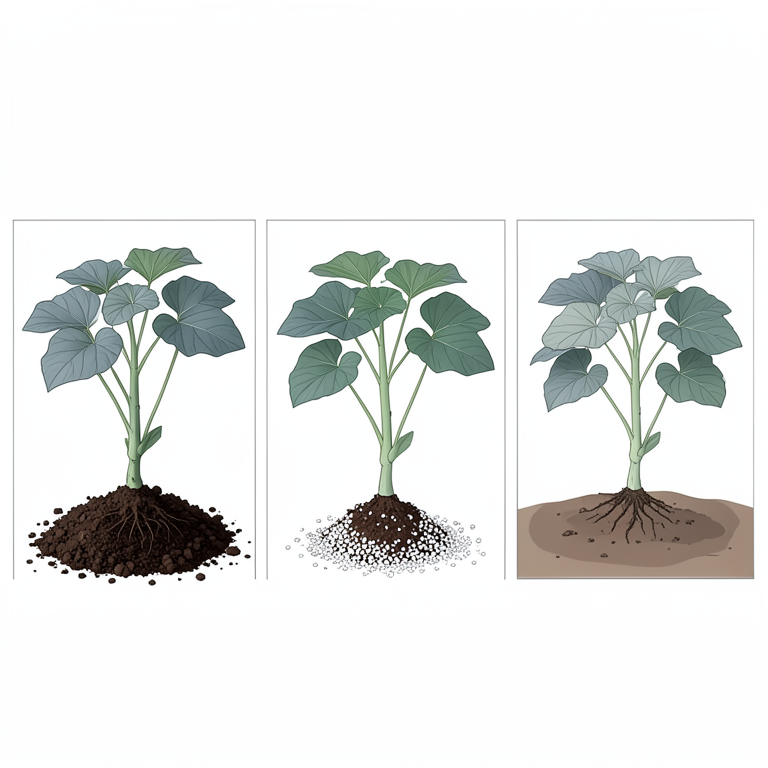
Experimental Treatment Layout
AI-generated conceptual illustration (Cucurbita moschata pumpkin plants). It explains the idea and does not show study data.
View source evidence ↗Figures & tables
From the original paper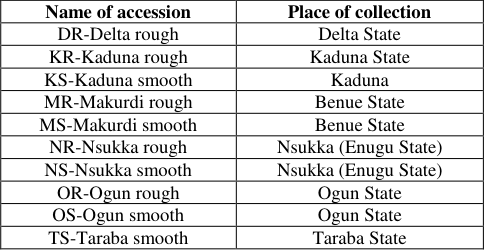 Table 1
 Table 2
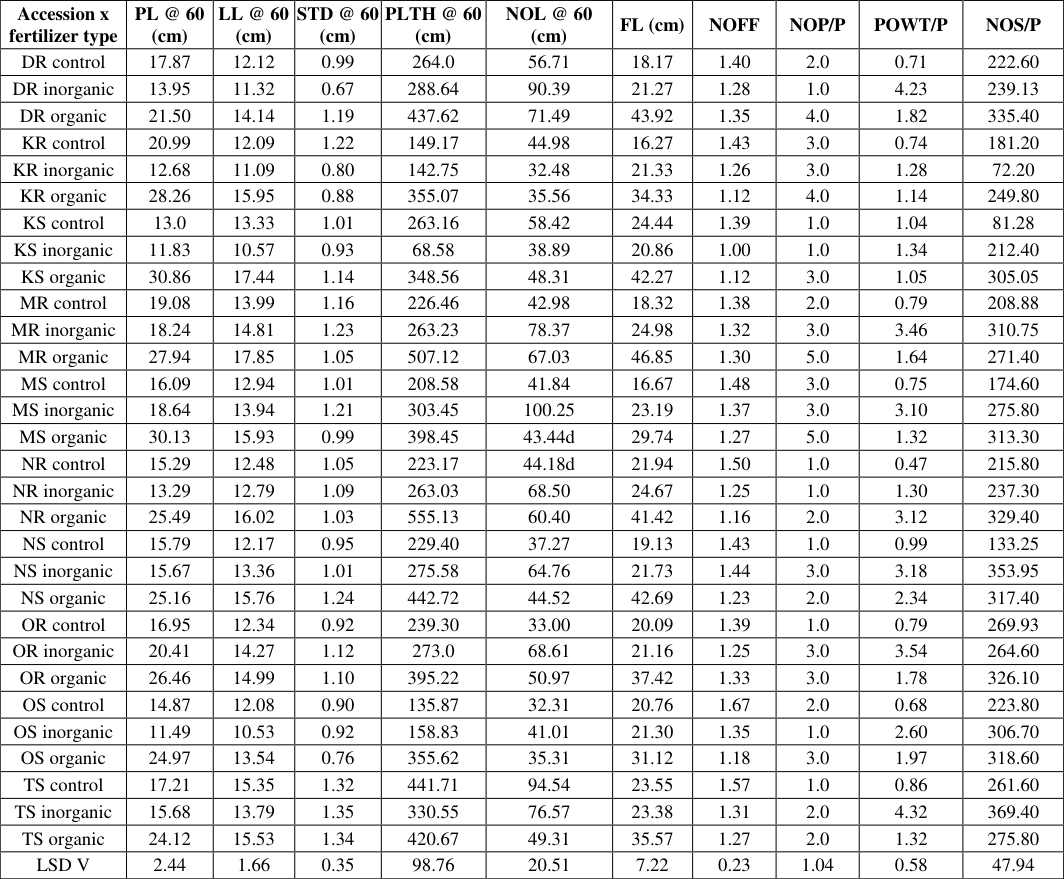 Table 3
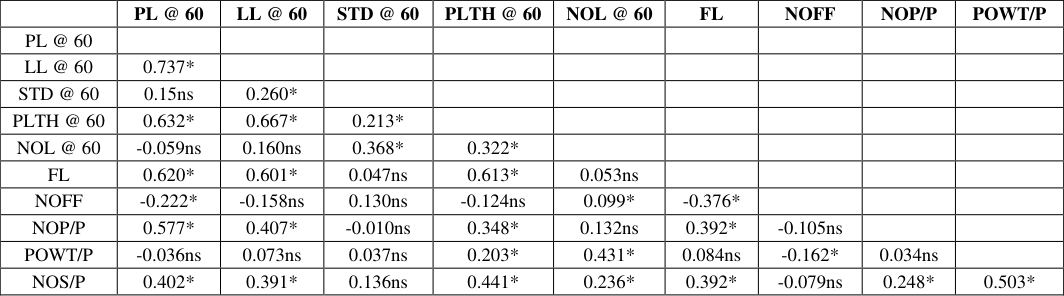 Table 4
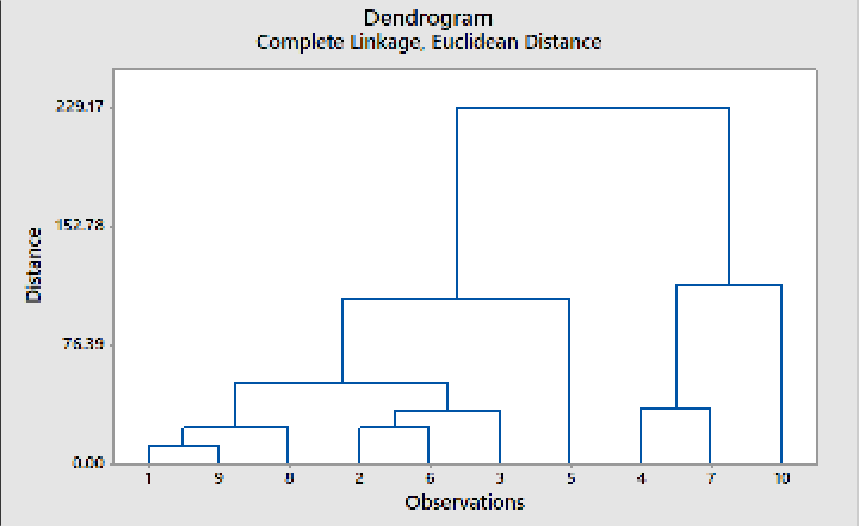 Figure 1
Introduction
Effect of fertilizer type on the growth and yield of Cucurbita moschata Duch. Ecotypes from six geopolitical zones of Nigeria. The genus, Cucurbita is from Cucurbitaceae family and contain about 130 genera and 800 species. There is a peculiar name it is called in different languages, for example, it is called in English, winter squash or pumpkin, Igbo calls it 'Anya'; 'Okoro'; 'Ogbokolo', Hausa calls it 'kabewa', Yoruba calls it 'Isi'; 'Elegede' and Nupe calls it 'Ebeshe' (Mohaammed et al., 2014) [22] . Pumpkin is regarded as an alternative food in some countries (Agbagwa and Ndukwu, 2004) [2] . Pumpkin fruit is rich in Vitamin A, needed for body growth, shield from diseases and sound eyes, also rich in other vitamins like A, E and fiber (Ward, 2007) [35] . The ovary of pumpkin is inferior (Agbagwa and Ndukwu, 2004) [2] . The leaves of pumpkin during cooking degrades bioactive substances which aids in water absorption that leads to the dissolving of active ingredients (Podsedek, 2007) [36] The pulp of pumpkin is used to cure diseases like stomach disorder, inflammation and dyspepsia. World production of pumpkins is Asia (61.6%), Europe (16.3%), America (11.7%), Africa (8.9%) and Oceania (1.4%) (FAOSTAT, 2014) [10] . The pumpkin is cultivated and eaten in so many countries (Jun et al., 2006) [17] . Suitable application of fertilizer is good for pumpkin production, but when there is excess nitrogen fertilizer, early during production, it leads to delayed fruit set, poor crop yield, and large leaf growth (Napier, 2009) [23] . Bannayan et al., (2017) [6] opined that plant growth can be influenced positively by optimum nitrogen and also increase its ability to resist high temperatures. There are plants that are nutritious but have not been discovered by man to exploit its benefits (Oladale and Oshodi 2007) [26] . Cucurbits are rich food crops that are often described as neglected despite their numerous benefits. Research and breeding efforts on the crop are scarce in Nigeria. Moreover, there is need for detailed morphological studies on the crop from different agro ecological zones (Geopolitical zones). There is also need to identify the best manure that is suitable for pumpkin production, which would yield enormous information especially to those interested in carrying out more research work on the crop. Therefore, this study was designed to assess the effect of organic and inorganic manure (cow dung, NPK and control) on the growth and yield of Cucurbita moschata Duch. ecotypes. Specific objectives were to: assess Cucurbita moschata Duch. ecotypes using yield related parameters; evaluate the responses of the various ecotypes to different manure treatments (organic, and inorganic and control).
Materials and Methods
Seed source: Two different Cucurbita seeds (from both the rough and the smooth fruits respectively) used in the study were sourced from six geopolitical zones in Nigeria, where Pumpkins are cultivated by the communities, making a total of (12 collections). The seeds were extracted manually, dried, stored, and labeled in brown envelops. Accessions and place of collection are represented in Table 1.
| Name of accession | Place of collection |
|---|---|
| DR-Delta rough | Delta State |
| KR-Kaduna rough | Kaduna State |
| KS-Kaduna smooth | Kaduna |
| MR-Makurdi rough | Benue State |
| MS-Makurdi smooth | Benue State |
| NR-Nsukka rough | Nsukka (Enugu State) |
| NS-Nsukka smooth | Nsukka (Enugu State) |
| OR-Ogun rough | Ogun State |
| OS-Ogun smooth | Ogun State |
| TS-Taraba smooth | Taraba State |
Table text extracted from the original PDF; superscript letters are shown inline. The original table image is below.
View original table image
Experimental design and treatment
A Randomized Complete Block Design (RCBD) was adopted where the 12 collections from six geopolitical zones were replicated five times, making a total of 180 accessions. Three plots were used, plot one had 60 accessions with manure application (cow dung) 10 g in all, plot two had 60 accessions with fertilizer application NPK 20-10-10, 10 g in all and the last plot had 60 accessions without any application (Control).
Site preparation
The experiment was carried out in Teaching and Research Farm, Federal University of Agriculture Makurdi. The land was cleared with a hoe and was made ready for planting. Heaps of 10 meters high from the ground were constructed. Sign posts with Zinc were constructed and mounted having the accession names for easy identification.
Planting
The seeds were planted in April; the rain water was sufficient for them. Four viable seeds were planted per a heap and the seedlings were thinned to one plant per stand at 2 weeks after planting. Planting distance between each of the accessions was 20 cm and the distance between each ridge was 40 cm, it was measured with the help of a meter rule. Insecticides (lambda-cyhalothrin) were applied fortnightly 6 to 10 weeks after planting. Weeds were controlled manually.
Data collection
Data were collected for quantitative characters and were done by direct measurement in the field by meter rule.
Data analysis
The data obtained were subjected to statistical analysis using Mini Tab 17 software. The Mean, Analysis of Variance (ANOVA) and Mean separation were computed. Cluster analysis was carried out based using the Single Linkage method based on Euclidean distance and Correlation analysis was also carried out using the Pearson's method.
Results and Discussion
Out of 180 accessions planted, a total of 150 accessions survived while 30 accessions did not survive. Accession Delta Smooth (DS) and Taraba Smooth (TR) did not germinate at all. A total of 150 accessions were studied The results for the variability of measured traits as revealed by Analysis of Variance, indicated that there was no significant difference among the replicates. However, there were significant differences among the accessions on all the growth parameters. There were significant differences among the different fertilizer types except in stem diameter, which showed no significant difference (0.02). [4] . The findings of this work is in tandem with the report of Ngatinem et al., (2022) [24] , in their work on the 'Response of the use of Organic Fertilizer and Mulch to the Growth and Yield of Pumpkin' observed that the use of organic fertilizer positively influenced the yield and growth of pumpkin more than other types of fertilization. Clementina (2013) [7] studies on 'the impact of organic and inorganic manure on the cultivation of pumpkin (Cucurbita maxima)' also revealed that cow dung proved to perform better in leaf and fruit yields more than poultry and N.K.P. fertilizers. Michael (2021) [21] revealed that organic fertilizer can hinder washing away of nutrients ensuring that essential elements like Ca, N, C, and Mg can last. Massri and Labban (2014) [20] described that cows manure is preferable than other organic and inorganic fertilizers in watermelon production, which also can reduce the environmental hazards caused by chemical fertilizer. Hong-mei et al., (2014) [13] reported that organic fertilizer had proven to be the best in cucumber production, its sugar content, protein and vitamin C. Ghasem et al., (2014) [11] reported that cow manure did better than chemical fertilizer and others in cucumber production, because it had the highest yield. Kumar et al., (2017) [18] revealed organic manures supplies the essential nutrients in vegetables. The findings of Shafeek et al., (2015) [32] stated that organic manure increased the quality of fruit and yield, including plant growth etc. in cantaloupe plants. According to the result of Ghorbani et al., (2013) [12] , the cattle manure application in 20 t ha-1 of land during pumpkin production yields better with a good number of seed oil. Isfahani and Besharati (2012) [14] revealed that biological fertilizers improved the yield of cucumber fruits. Qun et al., (2015) stated that biological manure increases the activities of soil enzyme, enhance the quality of the soil and mitigate disease such as wax gourd. Eifediyi et al., (2017) [8] revealed that organic manure gave high yield and are less dangerous to the environment than NPK fertilizer in watermelon production as regards the properties of soil. The differences observed in the number of fruits per plant, among the accessions, is in agreement with earlier reports by (Abdullah et al., 2003) [1] and (Precheur et al., 2007) [29] who reported that variety can influence fruit number, thereby making them have different sizes Accessions with fertilizer application had the highest in stem diameter, number of seeds, number of leaves and pod weight. This indicates that the fertilizer applied provided nutrients that help in the production of pods with more number of seeds and more number of leaves, which disagrees with the findings of Alam et al., (2017) that NPK improved the growth and yield of pumpkin. Eifediyi and Remison (2009) [9] also concluded that inorganic fertilizer improves the growth and yield of cucumber. Jilani et al., (2009) [16] revealed that NPK fertilizer influence fruiting and flowering early, maturity, and fruit yield in cucumber. Song et al., (2006) [33] stated that increase in fertilizer, increases the assimilation of nitrogen, phosphorus, and potassium in cucumber. Umamaheswarappa et al., (2005) [34] stated that the application of nitrogen improved days to flowering and fruit, phosphorus initiates flower and its development and then potassium does not have effect on fruits and flowers of cucumber. Arshad et al., (2014) [5] also revealed that NPK application improved flower earliness, and fruit yield in cucumber. However, Oloyede et al., (2013) [27] findings 'on the effect of NPK fertilizer on fruit development of Pumpkin (Cucurbita pepo Linn.)' reported that NKP did not improve fruit yield in pumpkin. Martinetti et al., (2006) [19] also stated that the application of fertilizer reduced the number of fruits during pumpkin production in Lithuania.
Oga and Umekwe (2013) [25] reported that the flower and yield of watermelon was reduced due to NPK application The linear correlation coefficients (r) among the traits revealed that, petiole length (PL @ 60) had a strong significant positive correlation occurred with Leaf Length (LL @ 60) (0.7*), Plant Height (PLTH @ 60) (0.6*), Flower Length (FL) (0.6*) and Number of Pods Per Pant (NOP/P @ 60) (0.5*). Plant Height (PLTH @ 60) had a strong correlation with Flower Length (FL) (0.6*). Pod Weight Per Plant (POWT/P) had a positive correlation with Number of Seeds Per Pod (NOS/P) (0.5*). This indicates that increase in one influences the other positively. Other characters showed weak to moderate correlations (Table 7). Cluster analysis (Figure 1) gave rise to two distinct clusters on the dendrogram on the basis of shared attributes. Taraba Smooth (TS) accession diverged from cluster 2, with the highest genetic distance from all other groups in the dendrogram while Ogun Smooth (OS) accession diverged from cluster 1.
Conclusion
The use of organic and inorganic fertilizers had proven the be the best choice for the production of pumpkin, for they did better than the control (without any application), suggesting why the plant is scarcely available. However, your choice of fertilizer to be applied either organic or inorganic depends on what you desire. In this work, organic manure produced more number of pods per plant, while inorganic manure produced more number of leaves and more number of seeds.
Figures and tables from the paper
| Sov | DF | PL @ 60 | LL @ 60 | STD @ 60 | PLTH @ 60 | NOL @ 60 | FL | NOFF | NOP/P | POWT/P | NOS/P |
|---|---|---|---|---|---|---|---|---|---|---|---|
| Block | 4 | 1.87ns | 0.29ns | 0.11ns | 2708ns | 419.0ns | 16.57ns | 0.03ns | 0.41ns | 0.29ns | 462ns |
| Acc | 9 | 43.97* | 16.15* | 0.24* | 55469* | 2494.6* | 86.87* | 0.07* | 9.24* | 2.65* | 25202* |
| Ft3type | 2 | 1879.9* | 1449* | 0.02ns | 555901* | 4481.6* | 5105.35* | 0.74* | 35.70* | 52.73* | 145951* |
| Acc X Ft3type | 18 | 34.75* | 5.71* | 0.11* | 18563* | 1203.2* | 64.26* | 0.04ns | 1.70* | 3.14* | 15480* |
| Error | 116 | 3.38 | 1.56 | 0.07 | 5524 | 238.3 | 29.49 | 0.03 | 0.61 | 0.19 | 1302 |
| Total | 149 |
Table text extracted from the original PDF; superscript letters are shown inline. The original table image is below.
View original table image
| Accession x fertilizer type | PL @ 60 (cm) | LL @ 60 (cm) | STD @ 60 (cm) | PLTH @ 60 (cm) | NOL @ 60 (cm) | FL (cm) | NOFF | NOP/P | POWT/P | NOS/P |
|---|---|---|---|---|---|---|---|---|---|---|
| DR control | 17.87 | 12.12 | 0.99 | 264.0 | 56.71 | 18.17 | 1.40 | 2.0 | 0.71 | 222.60 |
| DR inorganic | 13.95 | 11.32 | 0.67 | 288.64 | 90.39 | 21.27 | 1.28 | 1.0 | 4.23 | 239.13 |
| DR organic | 21.50 | 14.14 | 1.19 | 437.62 | 71.49 | 43.92 | 1.35 | 4.0 | 1.82 | 335.40 |
| KR control | 20.99 | 12.09 | 1.22 | 149.17 | 44.98 | 16.27 | 1.43 | 3.0 | 0.74 | 181.20 |
| KR inorganic | 12.68 | 11.09 | 0.80 | 142.75 | 32.48 | 21.33 | 1.26 | 3.0 | 1.28 | 72.20 |
| KR organic | 28.26 | 15.95 | 0.88 | 355.07 | 35.56 | 34.33 | 1.12 | 4.0 | 1.14 | 249.80 |
| KS control | 13.0 | 13.33 | 1.01 | 263.16 | 58.42 | 24.44 | 1.39 | 1.0 | 1.04 | 81.28 |
| KS inorganic | 11.83 | 10.57 | 0.93 | 68.58 | 38.89 | 20.86 | 1.00 | 1.0 | 1.34 | 212.40 |
| KS organic | 30.86 | 17.44 | 1.14 | 348.56 | 48.31 | 42.27 | 1.12 | 3.0 | 1.05 | 305.05 |
| MR control | 19.08 | 13.99 | 1.16 | 226.46 | 42.98 | 18.32 | 1.38 | 2.0 | 0.79 | 208.88 |
| MR inorganic | 18.24 | 14.81 | 1.23 | 263.23 | 78.37 | 24.98 | 1.32 | 3.0 | 3.46 | 310.75 |
| MR organic | 27.94 | 17.85 | 1.05 | 507.12 | 67.03 | 46.85 | 1.30 | 5.0 | 1.64 | 271.40 |
| MS control | 16.09 | 12.94 | 1.01 | 208.58 | 41.84 | 16.67 | 1.48 | 3.0 | 0.75 | 174.60 |
| MS inorganic | 18.64 | 13.94 | 1.21 | 303.45 | 100.25 | 23.19 | 1.37 | 3.0 | 3.10 | 275.80 |
| MS organic | 30.13 | 15.93 | 0.99 | 398.45 | 43.44d | 29.74 | 1.27 | 5.0 | 1.32 | 313.30 |
| NR control | 15.29 | 12.48 | 1.05 | 223.17 | 44.18d | 21.94 | 1.50 | 1.0 | 0.47 | 215.80 |
| NR inorganic | 13.29 | 12.79 | 1.09 | 263.03 | 68.50 | 24.67 | 1.25 | 1.0 | 1.30 | 237.30 |
| NR organic | 25.49 | 16.02 | 1.03 | 555.13 | 60.40 | 41.42 | 1.16 | 2.0 | 3.12 | 329.40 |
| NS control | 15.79 | 12.17 | 0.95 | 229.40 | 37.27 | 19.13 | 1.43 | 1.0 | 0.99 | 133.25 |
| NS inorganic | 15.67 | 13.36 | 1.01 | 275.58 | 64.76 | 21.73 | 1.44 | 3.0 | 3.18 | 353.95 |
| NS organic | 25.16 | 15.76 | 1.24 | 442.72 | 44.52 | 42.69 | 1.23 | 2.0 | 2.34 | 317.40 |
| OR control | 16.95 | 12.34 | 0.92 | 239.30 | 33.00 | 20.09 | 1.39 | 1.0 | 0.79 | 269.93 |
| OR inorganic | 20.41 | 14.27 | 1.12 | 273.0 | 68.61 | 21.16 | 1.25 | 3.0 | 3.54 | 264.60 |
| OR organic | 26.46 | 14.99 | 1.10 | 395.22 | 50.97 | 37.42 | 1.33 | 3.0 | 1.78 | 326.10 |
| OS control | 14.87 | 12.08 | 0.90 | 135.87 | 32.31 | 20.76 | 1.67 | 2.0 | 0.68 | 223.80 |
| OS inorganic | 11.49 | 10.53 | 0.92 | 158.83 | 41.01 | 21.30 | 1.35 | 1.0 | 2.60 | 306.70 |
| OS organic | 24.97 | 13.54 | 0.76 | 355.62 | 35.31 | 31.12 | 1.18 | 3.0 | 1.97 | 318.60 |
| TS control | 17.21 | 15.35 | 1.32 | 441.71 | 94.54 | 23.55 | 1.57 | 1.0 | 0.86 | 261.60 |
| TS inorganic | 15.68 | 13.79 | 1.35 | 330.55 | 76.57 | 23.38 | 1.31 | 2.0 | 4.32 | 369.40 |
| TS organic | 24.12 | 15.53 | 1.34 | 420.67 | 49.31 | 35.57 | 1.27 | 2.0 | 1.32 | 275.80 |
| LSD V | 2.44 | 1.66 | 0.35 | 98.76 | 20.51 | 7.22 | 0.23 | 1.04 | 0.58 | 47.94 |
Table text extracted from the original PDF; superscript letters are shown inline. The original table image is below.
View original table image
| — | PL @ 60 | LL @ 60 | STD @ 60 | PLTH @ 60 | NOL @ 60 | FL | NOFF | NOP/P | POWT/P |
|---|---|---|---|---|---|---|---|---|---|
| PL @ 60 | |||||||||
| LL @ 60 | 0.737* | ||||||||
| STD @ 60 | 0.15ns | 0.260* | |||||||
| PLTH @ 60 | 0.632* | 0.667* | 0.213* | ||||||
| NOL @ 60 | -0.059ns | 0.160ns | 0.368* | 0.322* | |||||
| FL | 0.620* | 0.601* | 0.047ns | 0.613* | 0.053ns | ||||
| NOFF | -0.222* | -0.158ns | 0.130ns | -0.124ns | 0.099* | -0.376* | |||
| NOP/P | 0.577* | 0.407* | -0.010ns | 0.348* | 0.132ns | 0.392* | -0.105ns | ||
| POWT/P | -0.036ns | 0.073ns | 0.037ns | 0.203* | 0.431* | 0.084ns | -0.162* | 0.034ns | |
| NOS/P | 0.402* | 0.391* | 0.136ns | 0.441* | 0.236* | 0.392* | -0.079ns | 0.248* | 0.503* |
Table text extracted from the original PDF; superscript letters are shown inline. The original table image is below.
View original table image
References
34 in the original paper- Abdullah AA, Hegazi HH, Almousa IA. Evaluation of Locally grown Pumpkin Genotypes in the Central Region of Saudi Arabia. Journal of the Saudi Society of Agricultural Sciences. 2003;15(1):13-24.
- Agbagwa IO, Ndukwu BC. The value of morphoanatomical features in the systematics of Cucurbita L. (Cucurbitaceae) species in Nigeria. African Journal of Biotechnology. 2004;3(10):541-546.
- Alam MN, Jahan MK, Ali MS, Khandakar SM. Effect of vermicompost and NPK fertilizer on growth and yield components of red Cucurbita. Australian Journal of Basic and Applied Sciences. 2017;1(4):706-716.
- Antonious GF, Turley ET, Hill RR, Snyder JC. Chicken manure enhanced yield and quality of field-grown kale and collard greens. Journal of Environmental Science Health, Part B. 2021;49(4):299-304.
- Arshad I, Ali W, Khan ZA. Effect of different levels of NPK fertilizers on the growth and yield of greenhouse cucumber (Cucumis sativus L.) by using drip irrigation technology. International Journal of Research. 2014;1(8):650-660.
- Bannayan M. Growth Analysis of Pumpkin (Cucurbita pepo L.) Under Various Management Practices and Temperature Regimes. Agricultural Research & Technology: Open Access. 2017;11(1):555801.
- Clementina U. The Impact of Organic and Inorganic Manure on the Cultivation of Pumpkin (Cucurbita maxima). International Journal of Pharma and Bio Sciences. 2013;8(1):18-20.
- Eifediyi EK, Remison SU. The effects of inorganic fertilizer on the yield of two varieties of cucumber (Cucumis sativus L.). Report and Opinion. 2009;1:7480.
- Eifediyi EK, Remison SU, Ahamefule HE, Azeez KO, FesobiP O. Performance of watermelon (Citrullus lanatus L.) in response to organic and NPK fertilizers. Acta Universitatis Sapientiae Agricultural Environmental. 2017;9(1):5-175.
- FAOSTAT. Agricultural data. Available at: https://www.fao.org/faostat/en/#home. Accessed 2014.
- Ghasem S, Morteza AS, Maryam T. Effect of organic fertilizers on cucumber (Cucumis sativus) yield. International Journal of Agriculture and Crop Sciences. 2014;7(11):808-814.
- Ghorbani R, Jahan M, Koocheki A, Nassiri M, Salari MD. The effects of manure application and branch management methods on some agro ecological aspects of summer squash (Cucurbita pepo L.) in a low input cropping system. Journal of Agriculture and Sciences. 2013;3:428-434.
- Hong-mei Z, Hai-jun J, Xiao-tao D, Ting H. Effects of application of organic and inorganic fertilizers on the growth, yield quality of cucumber in greenhouse. Journal of Plant Nutrition and Fertilizers. 2014;20(1):247-253.
- Isfahani FM, Besharati H. Effect of biofertilizers on yield and yield components of cucumber. Journal of Biology and Earth Sciences. 2012;2(2):83-92.
- Jeffrey C. A new system of Cucurbitaceae. Bot Zhurn. 2005;90:332-335.
- Jilani MS, Bakar A, Waseem KA, Kiran M. Effect of different levels of NPK on the growth and yield of cucumber (Cucumis sativus L.) under the plastic tunnel. Journal of Agriculture and Social Sciences. 2009;5(3):99-101.
- Jun H, Lee CH, Song GS, Kim YS. Characterization of the pectic polysaccharides from pumpkin peel. Lebensmittel-Wissenschaft & Technologie Food Science Technology. 2006;39(5):554-561.
- Kumar PT, Bonny BP, Midhila R, John R, Divya MR, Roch CV et al. Effect of organic and inorganic nutrient sources on the yield of selected tropical vegetables. Scientia Horticulturae. 2017;224:84-92.
- Martinetti L, Paganini F. Effect of organic and mineral fertilization on yield and quality of zucchini. Acta Horticulturae. 2006;700:125-138.
- Massri M, Labban L. Comparison of Different Types of Fertilizers on Growth, Yield and Quality Properties of Watermelon (Citrllus lanatus). AgriSciences. 2014;5:475-482.
- Michael TA. Effect of tillage, biochar, poultry manure and NPK 15-15-15 fertilizer, and their mixture on soil properties, growth and carrot (Daucus carota L.) yield under tropical conditions. Heliyon. 2021;7(6):e07391
- Mohaammed SS, Paiko YB, Mann A, Ndamitso MM, Matthew JT, Maa S. Proximate, mineral and Antinutritional composition of Cucurbita maxima Fruit parts. Nigerian Journal of Chemical Research. 2014;19:1-12.
- Napier T. Pumpkin production. Primefacts. 2009;964:18.
- Ngatinem HP, Farikha IA, Agus HS. Response of the use of Organic Fertilizer and Mulch to the Growth and Yield of Pumpkin (Cucurbita moschata). International Journal of Innovative Science and Research. 2022;7:2456-2165.
- Oga IO, Umekwe PN. Effects of NPK fertilizer and staking methods on the growth and yield of watermelon (Citrullus lanatus L.). Int J Sci Res. 2013;23:19-64.
- Oladale PO, Oshodi AA. Nutritional potential s of Berlandier Nettle Spurge (Jatropha cathartica) seed. Pak J Nutr. 2007;6:343-348.
- Oloyede FM, Agbaje GO, Obisesan IO. Effect of NPK fertilizer on fruit Development of pumpkin (Cucurbita pepo Linn). Amer J Experi Agric. 2013;3(2):403-411.
- Podşedek A. Natural antioxidants and antioxidant capacity of Brasicca vegetables: A review. Lebensmittel Wissenschaft and Technol. 2007;40(1):1-11.
- Qun C, Juan DW, Feng ZL, Feng LX, Ying L, Xing LH et al. Effects of biological organic fertilizer on wax gourd wilt disease, microorganism and on pancreatic cancer cells. Cancer Res. 2015;69:5876.
- Setu S, Debjani G. Effect of ripe fruit pulp extract of Cucurbita pepo Linn in: Aspirin-induced Gastric and Duodenal ulcer in Rats, S.N. Pradhan center for Neuroscience, University of Calcutta, Kolkata, India. 2007;46:639-645.
- Shafeek MR, Shaheen AM, Abd El-Samad EH, Rizk FA, Abd El-Al FS. Response of Growth, Yield and Fruit Quality of Cantaloupe Plants (Cucumis melo L.) to Organic and Mineral Fertilization. Middle East Journal of Applied Sciences. 2015;5:76-82.
- Cui S, Han XR, Zou GY. Effect of different rate of organic fertilizer on growth of cucumber and its nutrients uptake. Acta Agriculturae Boreali-Sinica. 2006;21:125-128
- Umamaheswarappa P, Gowda VN, Murthy PV. Nitrogen, phosphorus and potassium content in vine, leaf, fruit and root of cucumber cv. Poinsette as affected by varying levels of NPK. The Mysore Journal of Agricultural Sciences. 2005;39(2):275-280.
- Podsędek A. Natural antioxidants and antioxidant capacity of Brassica vegetables: A review. LWT-Food Science and Technology. 2007 Jan 1;40(1):1-11.