
Research article · 2024 · Full text
International Journal of Veterinary Sciences and Animal HusbandryA study on management practices and productivity status of goats in Tripura
Volume 9(3S) · Pages 177–181 · DOI: 10.22271/veterinary.2024.v9.i3sc.1454 ↗
Research areasLivestock Management and Performance ImprovementAgricultural Economics and PracticesAgricultural Systems and Practices
Abstract
Author-writtenThe present study was carried out in Mandai and Jampuijala block of West and Sepahijala district respectively in Tripura in order to elucidate the management practices, growth performances, reproductive and economic prospects of Black Bengal goats rearing. The study based upon the information unflustered through participatory approach, investigation and rapid rural appraisal technique from the 100 farmers of different designated villages through repeated interactions from April, 2023 to September, 2023. The parameters such as housing, breeding, feeding, body weight, body measurements, reproductive characteristics, health monitoring and pre-weaning kid mortality were assessed in this study and statistical analysis was performed by using data analysis package of Microsoft Excel and were subjected to t-test procedures in IBM SPSS version 21.0 (IBM SPSS, 2012). This study revealed, more than 80% of farmers provided proper housing, veterinary aids and vaccinated against PPR and goat pox. Besides that, exchange of bucks during breeding, supplementation of concentrate feed and extra care during pregnancy were recorded during study. There was significant variation (p
Summary
Source-checkedPlain-language reading of the full paper, prepared with AI and checked against the text. Each point links to the authors' own words.
Why it matters
- Goat farming is vital for millions of small and marginal farmers in India, providing food security and sustainable livelihoods with low investment. View evidence ↗
- The Black Bengal goat is a popular dwarf breed in the region, valued for its high prolificacy and high-quality skin and meat. View evidence ↗
The question
- The study aimed to evaluate current management practices and body weight gain across different age groups of goats in two districts of Tripura. View evidence ↗
What they did
- Data were collected from 100 farmers between April and September 2023 using a participatory approach and rapid rural appraisal techniques. View evidence ↗
- The research was conducted in the Mandai block of West district and the Jampuijala block of Sepahijala district in Tripura. View evidence ↗
- Body weight measurements were recorded at three specific time points: birth, 3 months, and 6 months of age. View evidence ↗
What they found
- Housing practices were generally good, with 92% of farmers in Jampuijala and 86% in Mandai providing full covering sheds. View evidence ↗
- There was a significant difference in birth weight between the two blocks, with kids in Mandai weighing 1.15±0.02 kg compared to 1.10±0.01 kg in Jampuijala. View evidence ↗
- Male kids consistently weighed more than females at all measured stages: birth (1.14 vs 1.06 kg), 3 months (4.70 vs 4.14 kg), and 6 months (8.46 vs 8.13 kg). View evidence ↗
- The male to female sex ratio was nearly similar across both blocks, recorded as 1:1.14 in Jampuijala and 1:1.16 in Mandai. View evidence ↗
- Twinning was the most common birth outcome, occurring in 72% of cases in Jampuijala and 78% in Mandai. View evidence ↗
- The primary cause of pre-weaning kid mortality was non-specific diarrhoea (34%), followed by pneumonia (20%). View evidence ↗
- Ninety percent of the surveyed farmers considered goat farming to be a profitable business. View evidence ↗
What it means
- The authors conclude that a detailed investigation of management practices across all districts of Tripura is necessary to optimize outcomes. View evidence ↗
- The authors state that further research is needed to understand disease outbreak factors, seasonal mortality patterns, and regional comparisons. View evidence ↗
Visual summary
1 visualsIllustrations explain the paper; they do not show study data.
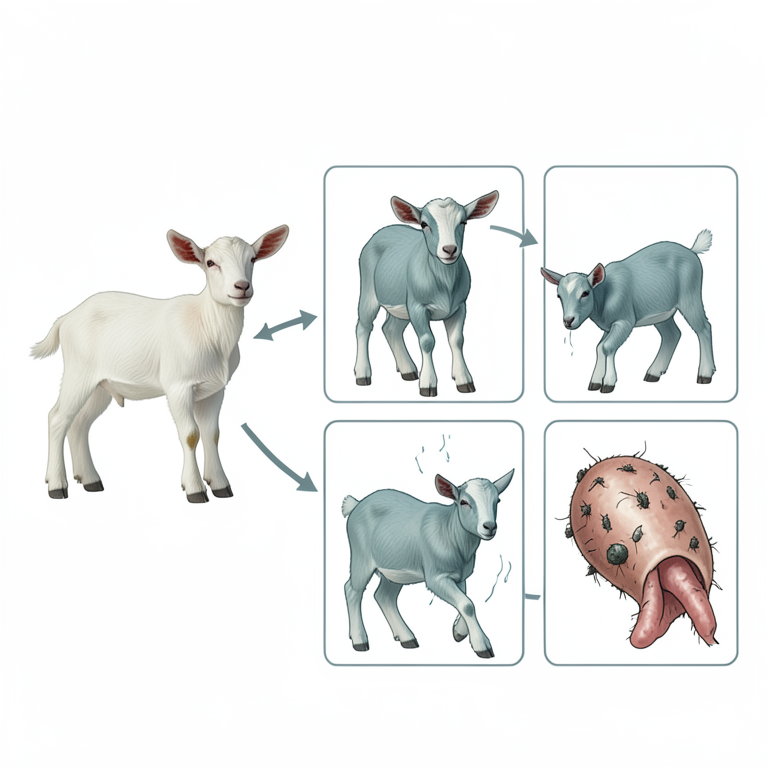
Causes of Pre-weaning Mortality
AI-generated conceptual illustration (goat kids). It explains the idea and does not show study data.
View source evidence ↗Figures & tables
From the original paper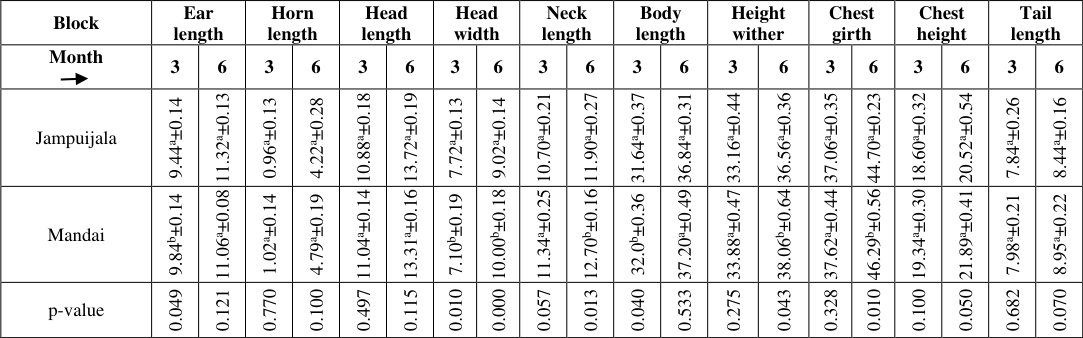 Table 1
Introduction
In India, the goat is being considered as the poor man's cow due to its potential of high returns with smallest amount of investment and it provides sustainable livelihood and food security to the millions of small, marginal farmers. India holds the second position in the list of goat population, second in goat meat production, 5 th in the export of live goat and in milk production it occupied the top spot in the world. Out of total GDP from agriculture and allied sector, 8.4 percent is being contributed by goat farming. Apart from that, it generates about 4.2 percent rural employment and generates 70 million work forces as farmers in remote villages of India. Goats can efficiently survive on available shrubs and trees in adverse harsh environment in low productive lands. Goat is the principal meat-producing domestic animals of high in demand as well as with no social, cultural, and religious restrictions. Despite the popularity this sector has been undermined as a medium to large scale entrepreneurship. The geo-strategic position and widespread rainfall, the entire NEH region is rich in forest and natural vegetation and makes goat rearing an economically viable in this region. The state Tripura is having an incredible potential for the goat rearing as because only 40% of total land is cultivable and rest is being covered under forest and mountain terrain. This state has recorded as 3,60,204 numbers of goats (20 th livestock census, 2019) and besides that, the Black Bengal meat-type goat breed has established itself as a principal and popular dwarf breed with high prolificacy and also renowned for its superior-quality meat and skin. Goat accounts for about 27.33% of Tripura's ruminant livestock (ARDD, Govt. of Tripura Annual Report 2019). The only constraint is that, goats are reared in small groups as traditional manner but no steps have been taken from private or public stake holders for its all-round development in terms of enhancing meat production in order to mitigate the high demand, alleviate unemployment and empower state economy. The Black Bengal breed of goat has proved itself a champion in terms of exploiting local available resources, climatic condition and therefore it could be reared and managed in an organized way to take advantage of the market opportunities and demand of goat meat. In Tripura, the goat meat is generally consumed locally but per capita availability is the far below the requirement. India ranks high among the goat skin exporting countries. Goat shows adaptability to varying environments, thrives on sparse vegetation, and is profitably raised with low investment. Therefore, majority of rural population depends on goat rearing for their livelihood. The chance of ecological imbalances does not arise as because the cattle, sheep and goats are mainly browsers and hardly rely upon grown up trees (Lu, 1988) [13] . Acharya et al. (1980) [1] recognized that goats spend more than 90% time on browsing and hardly graze. In several behavioral studies it has been observed that, the goats have been found to reclaim saline soils by consuming salt-laden leaves of range plants (Shankaranarayanan et al., 1985) [17] and contribute fertility to soil by even distribution of essential manure of soil. There was no negative effect on soil run off and erosion in hot arid regions of India in spite of intensive grazing of 2 to 4 goats/hector and it has been also observed that, the cattle exploit 3-5 times more of phytomass than goats. For rearing, the does are selected based upon reproductive efficacy and disease resistance. The studies are meager with regard to the goat husbandry practices in Tripura and role of women in greater numbers in rearing of goats in rural India. With respect to the goat breed availability, adoptability; demand and popularity, the Black Bengal goats has placed itself in the pivotal and principal spot in this state due to unique characteristics of high prolificacy, short kidding interval, early slaughter weight, delicious lean meat and super fine skin quality. In view of the above context, the goat rearing is the most profitable family business in Tripura state but this sector has been passing through lots of stumble blocks and hurdle in terms of innovation and scientific intervention towards economically viable, profitable, sustainable production. The major draw backs in the way of best possible production need to be addressed such as provision of grazing pasture as it is dwindling due to urbanization and increase population, high feed cost, increase kid mortality, faulty breeding and unregulated market system. Keeping in views of the above, the present study has been undertaken in two districts of Tripura to study the present status of management practices and also to evaluate the body weight gain of goat in different age groups with respect to different managemental conditions in order to find out the best possible effective management practices for minimizing losses and promoting better production.
Materials and Methods
The present study was done in the West and Sepahijala districts of Tripura. The data pertaining to the growth performance, management practices and health status of goats were carried out in Mandai and Jampuijala blocks of West and Sepahijala districts respectively. The Black Bengal breed was nominated based upon its phenotypic genetic attributes in the present study. The geographical topography, temperature, climate are more or less similar type in both the blocks. The location lies between latitude 23.8603° North, longitude 91.4797° East, Height from sea level is 69 meters and latitude 23.7149° North and longitude 91.4483° East, Height from sea level is 41 meters of Mandai and Jampuijala blocks respectively. The climate of Mandai was hot, humid and rainfall varies from 841to4500 mm and average maximum temperature was found to be 28.2 °C in summer and minimum 17.9 °C during winter. The Jampuijala witnessed humid summer and a dry cool winter with average annual rainfall was about 2000 mm but the temperature was recorded as 35.23 °C and 7.43 °C during summer and winter respectively during study period.
Collection of Information:
The information regarding the present study were collected by participatory approach, investigation and rapid rural appraisal technique (Schonuth et al., 1995) [16] from 100 goat owners in respective villages in repeated interactions from April, 2023 to September, 2023 based upon Management practices such as housing, breeding, and feeding practices: both grazing & supplements. The black Bengal breed was selected for this present study due to its popularity, high demand and adoptability to this climate of Tripura. The information with regard to body weight was collected at birth, 3rd and 6th month of age. Apart from that, information with respect to reproductive characteristics, gastro-intestinal parasites, pre-weaning kid mortality and economic index were recorded.
Housing, breeding and feeding practices:
There are different types of housing system in terms of floor space, height, cleanliness and drainage system were recorded on the basis of certain parameters such as kutcha house, pucca house, kutcha house for mixed livestock and animals with human. The breeding practices were recorded on the basis of recognition of estrus, source of buck, change of bucks in successive mating and care of doe during pregnancy. Supplementation of concentrate, mineral mixture, cereal byproduct, kitchen wastes and provision of drinking water sources were documented in order to evaluate the feeding practices.
Body weight and body measurements: Body weight was recorded by using hanging spring balance at random. All the data were classified according to location and sex at different ages in the study area. Statistical analysis was done to examine the effect of location, sex, housing, grazing and type of supplementation practices. The height was measured by taking vertical distance between grounds to point at withers. The heart girth was measured as circumference of the chest behind the shoulder and forelegs and the body length was measured by taking linear distance between shoulder joint and pin bone.
Reproductive characteristics of does:
The first-time heat or estrus was taken as age of puberty. The estrous signs were observed as wagging of tail, restlessness, buck mounting, mucus discharge, frequent urination, swollen vulva and bleating for determining the course estrus. The numbers of kids born per animal during the experimental period were recorded and expressed in numbers. Birth weights of the kids were taken by a digital spring balance within two hours after birth. The different types of birth as single, twin, triplet and quadruplet at birth were recorded and expressed as percentage. The male: female sex ratio and kidding interval were recorded during the present study for one year.
Health Monitoring and pre-weaning kid mortality:
The vaccinations, deworming and other managemental practices to prevent any diseases that include cleaning, disinfection and sanitary measures were documented. Besides that, any illness of animals, treatment, deworming schedule, colostrum feeding, castration practice etc. was also recorded during study. Information regarding the mortality up to weaning was collected from the field units, on the basis of number of kids born and number of deaths in order to study the location wise effect on mortality. The common diseases like pneumonia, enteritis, and coccidiosis were recorded and apart from that, anorexia, internal parasitic load, malnutrition, cold shock, toxemia, septicemias, snake bite, dog bite, predators' attacks were also recorded.
Statistical analysis:
The analysis of data such as frequency, percentage, means, standard deviation and standard error were documented by using data analysis package of Microsoft Excel and were subjected to t-test procedures in IBM SPSS version 21.0 (IBM SPSS, 2012). The level of significance at 5% (p<0.05) were used to interpret the results.
Results and Discussion:
The present study was performed with comparison in the body weight, managemental practices, pre-weaning kid mortality, health care practices and economic prospects of goat production.
Housing management practices:
In the present study total 100 numbers of farmers units were taken in to account in terms of housing management practices. Study showed 92% and 86% provided full covering sheds to their animals in Jampuijala block and Mandai block, respectively. It has been observed that, 84% and 92%of farmers maintained their goats at optimum height of house and the proper ventilation were provided to 82% and 90% houses and cleanliness of shed was found to be 76% and 92%in Jampuijala and Mandai respectively. Kuchha floors were provided by all most all farmers to their animals and are in agreement with Tanwar and Rohilla (2012) [19] . Studies showed, 70-90% of farmers kept the provision of reasonable drainage system.
Health management:
In this study, it has been observed that, 86% and 84% of famers have consulted Veterinary doctors during the health challenges in Jampuijala and Mandai respectively but, 15% of farm owners also availed the service of para-veterinary workers. Study recorded90% and 88%animals were properly vaccinated against Peste-Des-Petits Ruminants (PPR) and goat pox in Jampuijala and Mandai block, respectively and these findings were in agreement with Deshpande et al. (2009) [8] . Besides that, 90% and 86% of farmers dewormed their goats in the Jampuijala and Mandai block, respectively but the findings were not in harmonious with Deshpande et al. (2009) [8] . More than 80% of farmers in both the study areas, found to be practiced proper naval cord cutting and feeding of colostrum just after birth and findings was completely consistent with Thombre et al. (2010) [20] . Study revealed more than 90% of farmers practiced castration of their bucks and results are parallel with Deshpande et al. (2009) [8] and around 80% of owners castrated their male kid by trained persons.
Breeding and feeding management practices:
All the farmers could detect the symptoms of oestrus such as bleating, micturition, standing heat and vaginal secretions.
Study revealed84% and 70% used their own buck and exchanged their buck regularly for breeding in Jampuijala, Mandai respectively and finding was in harmonious with Dhuppe et al. (2008) [9] . This study also showed, all the farmers used to take extra care of their pregnant animals in both the blocks. All the farmers from both the blocks took extra care of their pregnant animals in terms of provision of extra allowances of feed and study revealed farmers of Jampuijala were more aware about proper care and attention in comparison to Mandai block. Study revealed, only 20% farmers supplemented concentrate to their animals but mineral mixture, cereal by-products, kitchen wastes and clean drinking was provided by about 20-35% of farmers in Jampuijala and Mandai.
Body weight of Black Bengal goats at different ages:
Statistical analysis showed significant variation (p<0.05) among the two blocks in respect of birth weight, that birth weight of Black Bengal kids of Jampuijala and Mandai was 1.10±0.01 and 1.15±0.02 kg respectively. Body weight of kids at 3 months showed highly significant (p<0.01) difference but study did not show any significant (p>0.05) difference at six months. The overall birth weight, 3 months & 6 months weights of male and female kids were 1.14±0.02 & 1.06±0.01 kg, 4.70±0.05 & 4.14±0.08 kg and 8.46±0.12 & 8.13±0.10 kg, respectively. Both the male and female goats of different blocks showed highly significant (p<0.05) difference in case of 3 months of age and this finding is in agreement with Das et al. (2002) [6] , Singh, (2002) [18] and Nahardeka et al. (2002) [14] .
Effect of grazing system on body weight:
In the course of this study, it was noted that goats subjected to a tethering system twice a day exhibited greater weight gain than those tethered once a day, possibly owing to increased daily feed consumption. Similarly, in case of free grazing system, goats allowed to graze freely whole day showed comparatively higher weight gain than their counterparts in other free grazing systems. As depicted in the above-mentioned table, the Mean ± SE of body measurements in terms of lengths and width of ear, horn, head, neck, body, wither, chest girth, chest height, and tail were also recorded at 3 and 6 months of age (Table -1). Statistical analysis showed significant (p<0.05) difference in case of ear length, head width, body length at 3 months of age and neck length, height wither, chest girth at 6 months of age between Jampuijala and Mandai. These findings of the present study harmonious with the report of Paul et al. (2011) [15] .
Reproductive performances:
The studies with regard to the age (month) at puberty, age (year) at first kidding, kidding interval (days) were recorded and findings were in agreement with Hassan et al. (2007) [21] . Male to female sex ratio was 1: 1.14 and 1: 1.16 for Jampuijala block and Mandai block, respectively. The usual number of kids at one time kidding in Black Bengal such as twins 72% and 78%, triplet births 14% and 18%, single births 12% and 0% and quadruplet were 2% and 4%were documented during this study in Jampuijala and Mandai respectively and Hussain et al. (1995) [11] documented similar result in the alike study. [12] reported around 49% pre-weaning mortality. Chowdhury et al. (2002) [5] and Donkin and Boyazoglu (2004) [10] reported about mortality mainly due to pneumonia and Bera et al. (2007) [3] reported kid mortality were due to enteritis, PPR and pneumonia etc. The majority of the farmers (90%) in the study areas reported goat farming as a profitable business. Black Bengal goat meat and skin have high demand and can fetch high price in the market and acceptance of goat rearing due to financial emergency in the family and study showed selling of adults was more profitable than kids. It has been observed that, majority of farmers used to sale their goat sale before scarcity of fodder or before lean season and middle men were actively involved in the marketing of animals and Choudary et al. (2013) [4] reported the similar findings in their earlier studies.
Conclusion
In view of the above study, it has been concluded that, the production traits of goats were not differing significantly due to similar practices in terms of housing, feeding, grazing etc. Majority of the farmers were sensible enough about proper vaccination and other essential veterinary aids. The birth weight and body weight of goats at 3 months of age showed highly significant difference (p<0.01) in comparison to different areas of studies. Further, the goat rearing was found to be highly demanding and profitable business. In order to accomplish reasonable outcome a detailed investigation should be carried out on managemental practices of Black Bengal goat in all the districts of Tripura. Further research work will uncover the possible factors responsible for disease outbreak or prevalence, seasonal variation on mortality pattern and a comparative study between different regions of this state would be helpful in generating information with respect to climate, feed availability, disease prevalence, market, breed suitability, size of the profitable flock, viable reproductive traits and type of housing system in order to evaluate best possible economic growth and all-round development of goat farmers.
Figures and tables from the paper
| Block | Ear length | — | Horn length | — | Head length | — | Head width | — | Neck length | — | Body length | — | Height wither | — | Chest girth | — | Chest height | — | Tail length | — |
|---|---|---|---|---|---|---|---|---|---|---|---|---|---|---|---|---|---|---|---|---|
| Month | 3 | 6 | 3 | 6 | 3 | 6 | 3 | 6 | 3 | 6 | 3 | 6 | 3 | 6 | 3 | 6 | 3 | 6 | 3 | 6 |
| Jampuijala | 9.44a±0.14 | 11.32a±0.13 | 0.96a±0.13 | 4.22a±0.28 | 10.88a±0.18 | 13.72a±0.19 | 7.72a±0.13 | 9.02a±0.14 | 10.70a±0.21 | 11.90a±0.27 | 31.64a±0.37 | 36.84a±0.31 | 33.16a±0.44 | 36.56a±0.36 | 37.06a±0.35 | 44.70a±0.23 | 18.60a±0.32 | 20.52a±0.54 | 7.84a±0.26 | 8.44a±0.16 |
| Mandai | 9.84b±0.14 | 11.06a±0.08 | 1.02a±0.14 | 4.79a±0.19 | 11.04a±0.14 | 13.31a±0.16 | 7.10b±0.19 | 10.00b±0.18 | 11.34a±0.25 | 12.70b±0.16 | 32.0b±0.36 | 37.20a±0.49 | 33.88a±0.47 | 38.06b±0.64 | 37.62a±0.44 | 46.29b±0.56 | 19.34a±0.30 | 21.89a±0.41 | 7.98a±0.21 | 8.95a±0.22 |
| p-value | 0.049 | 0.121 | 0.770 | 0.100 | 0.497 | 0.115 | 0.010 | 0.000 | 0.057 | 0.013 | 0.040 | 0.533 | 0.275 | 0.043 | 0.328 | 0.010 | 0.100 | 0.050 | 0.682 | 0.070 |
Table text extracted from the original PDF; superscript letters are shown inline. The original table image is below.
View original table image
References
20 in the original paper- Acharya RM, Singh RN. Society for the Advancement of Breeding Researches in Asia and Oceania (SABRAO). Proceedings of Workshops on Animal Genetic Resources. Internat. Goat Sheep Res. 1980;1:226-33.
- Animal Resources Development Department. Annual Administrative Report; c2019-2020.
- Bera S, Samanta AK, Santra AK. Factors associated with kid mortality in Bengals goats reared under village condition of West Bengal. Indian j. animal prod. manag. 2007;23(1-4):107-09.
- Choudary PV, Ekambaram B, Prakash MG, Rajanna N. Socio-economics characteristics and marketing attributes of Macherla brown Sheep farmers. Indian j. animal prod. manag. 2013;29(1-2):96-01.
- Chowdhary SA, Bhuiyan MS, Faruk AS. Rearing Black Bengal goat under semi-intensive management. Physiological and Reproductive Performances. Asianaustralas. J Anim. Sci. 2002;15(4):477-484.
- Das B, Das D, Roy TC, Goswami RN, Aziz A. Factors affecting post-weaning body measurements of Assam local and crossbred goats. Indian Vet. J. 2002;79:123124.
- Deshpande SB, Sabapara GP, Kharadi V. A study on breeding and healthcare management practices followed by goat keepers in south Gujarat region. Indian J. Anim. Res. 2009;43:259-62.
- Dhuppe SU, Shinde SB, Mote MG, Chavan KD. Study of management practices of goats in Sangamner Tahsil in Maharashtra. J. Maharashtra Agric. Univ. 2008;33(3):377-380.
- Donkin EF, Boyazoglu PA. Diseases and mortality of goat kids in a South Africa milk goat herd. S. Afr. j. anim. Sci. 2004;34(supplement l).
- Husain SS, Horst P, Islam ABMM. Effect of different factors on pre-weaning survivality of Black Bengal kids. Small Rumin. Res. 1995;18:1-5.
- Lodh C, Chakrabarti A, Mukhopadhyay S. Factors affecting kid mortality in West Bengal. Indian Vet. J. 1993;70:48-50.
- Lu CD. Grazing behaviour and diet selection of goats. Small Rumin. Res. 1988;1(3):205-216.
- Nahardeka N, Das D, Roy TC, Goswami RN, Das GC, Gogoi PK. Pre-weaning body measurements of Assam local goats and their crosses with Beetal. Indian Vet. J. 2002;79:491-493.
- Paul S, Khandoker MAMY, Moinuddin MA, Paul RC. Characterization of Black Bengal goat. J. Bangladesh Agric. Univ. 2011;9(452-2016-35723):61-66.
- Schonuth MS, Michael S, Kievelitz HT. Participatory learning approaches, PRA, Participatory appraisal-an introductory guide. Extension Digest. 1995;3:4-10.
- Shankarnarayana KA, Bohra HC, Ghosh PK. The goat: an appropriate animal for arid and semi-arid regions. Economic and Political Weekly. 1985;20:1965-72.
- Singh DK. Factor affecting body weight and body measurements of kids at six months of age. Indian Vet. J. 2002;79:243-246.
- Tanwar PS, Rohilla PP. Goat management practices adopted by farmers in Jaipur district of Rajasthan. Indian j. small ruminants. 2012;18(1):121-124.
- Thombre BM, Suradka DD, Mande JV. Adaption of improved goat rearing practices in Osmanabad district. Indian Vet. J. 2010;44:260-264.
- Hassan M, Qayyum A, Ahmad R, Murtaza G, Zakaullah M. Nitriding of titanium by using an ion beam delivered by a plasma focus. Journal of Physics D: Applied Physics. 2007 Jan 19;40(3):769.
Cited by 2
From OpenAlex, OpenCitations and reference lists read by Scinovex
- Influence of different floor types on the behavior, growth performance, and morphometric traits of male beetal kids ↗
Samee Ullah, Nisar Ahmad, Imran Mohsin, Ehsaan Ullah Khan, Faisal Shahzad · Tropical Animal Health and Production · 2026
❝ 0 - A study on health management practices and prevalence of gastrointestinal parasitic infections of goats in Tripura, India
Aritra Saha, Nibash Debbarma, Sukanta Datta, Debasish Behera · International Journal of Advanced Biochemistry Research · 2024
A study has been undertaken in two districts of Tripura to illustrate the health management practices and also to analyze the prevalence of gastrointestinal parasitic infections in goats. Black Bengal goat was selected for this study because of its popularity and wide-scale acceptability. The information about this study was collected from two blocks such as Mandai and Jampuijala under the district of West and Sepahijala of Tripura respectively. Studies showed that more than 80% of the goat farmers, used to practice vaccination against Peste-Des-Petits Ruminants (PPR) and Goat Pox. In both the