
Research article · 2024 · Full text
International Journal of Research in AgronomyAn economic analysis of rice-based cropping sequence at NICRA adopted village in Darrang district of Assam
Volume 7(6S) · Pages 149–153 · DOI: 10.33545/2618060x.2024.v7.i6sc.831 ↗
Research areasAgricultural risk and resilienceAgricultural Economics and PracticesClimate change impacts on agriculture
Abstract
Author-writtenThis research paper presents an economic analysis of rice-based cropping sequences in a NICRA (National Innovations on Climate Resilient Agriculture) adopted village in the Darrang district of Assam. Climate change poses a significant threat to traditional agricultural practices in the region, jeopardizing food security and farmer livelihoods. NICRA's interventions aim to enhance agricultural resilience by promoting specific cropping patterns. The study evaluates the economic viability and sustainability of cropping sequences involving rice, a staple crop in the region, under changing climatic conditions. Data were collected through field surveys, farmer interviews, and secondary sources to assess the cost of cultivation, gross returns, net returns, and benefit-cost ratios of different cropping patterns. The findings revealed that adopting diversified rice-based cropping sequences can significantly enhance farm income and resilience to climate variability. The rice-toria cropping sequence yielded in net profit of Rs. 70,609.64 with benefit cost ration of 2.10, whereas rice-fallow system accumulated a net profit of Rs. 27844.73 with benefit cost ratio of 1.53. The analysis highlights that integrating pulses and oilseeds with rice not only improves soil health but also optimizes resource use and increases economic returns. The study underscores the importance of policy support for promoting sustainable cropping systems and provides recommendations for enhancing the economic stability of smallholder farmers in the Darrang district. Through this economic analysis, the paper contributes valuable insights into the potential benefits of rice-based cropping sequences in climate-vulnerable regions, emphasizing the need for adaptive strategies to ensure food security and sustainable agricultural development in Assam. The findings can inform future research on developing and promoting more resilient and productive cropping systems that address the specific needs of Assamese farmers. Additionally, the information can be used by agricultural extension services to provide targeted recommendations to farmers in the region.
Summary
Source-checkedPlain-language reading of the full paper, prepared with AI and checked against the text. Each point links to the authors' own words.
Why it matters
- Rice cultivation is the primary driver of the agrarian economy in Assam, supporting many smallholder farmers. View evidence ↗
- Traditional rice monocropping in the region has caused issues such as reduced soil fertility and increased susceptibility to pests, diseases, and climate changes. View evidence ↗
- The NICRA initiative by ICAR was established to promote agricultural practices that can withstand climate-related challenges. View evidence ↗
The question
- The study aims to evaluate the economic performance of different rice-based cropping sequences in a NICRA-adopted village in Assam's Darrang district. View evidence ↗
What they did
- The study sampled 40 households, consisting of 20 NICRA project beneficiaries and 20 random villagers practicing solo rice cropping. View evidence ↗
- The diversified sequence tested involved the medium-duration rice variety Numali followed by the toria variety TS-38. View evidence ↗
- Economic data, including production costs, yields, and market prices, were gathered using structured field surveys. View evidence ↗
- The research was conducted during the 2023-24 financial year. View evidence ↗
What they found
- The Rice-Toria cropping sequence produced a significantly higher average net return of INR 70,609.64 per hectare compared to INR 27,844.73 for sole rice cropping. View evidence ↗
- Gross returns for the Rice-Toria sequence (Rs. 134,800.22) were higher than those for solo rice cropping (Rs. 80,381.96). View evidence ↗
- The Rice-Toria system achieved a higher benefit-cost ratio of 2.10, compared to 1.53 for the rice-fallow system. View evidence ↗
- A paired t-test confirmed that the difference in net returns between Rice-Toria and sole rice cropping was statistically significant (p < 0.05). View evidence ↗
- Farmer interviews indicated that the Rice-Toria sequence is more resilient to climate variability, especially during periods of heavy rainfall. View evidence ↗
What it means
- The authors conclude that promoting crop diversification and climate-resilient practices can improve food security and sustain livelihoods against climate change. View evidence ↗
- The authors state that future research should evaluate the environmental impacts of diversified cropping, specifically regarding biodiversity and soil health. View evidence ↗
Visual summary
3 visualsIllustrations explain the paper; charts are replotted from the paper's own table values.
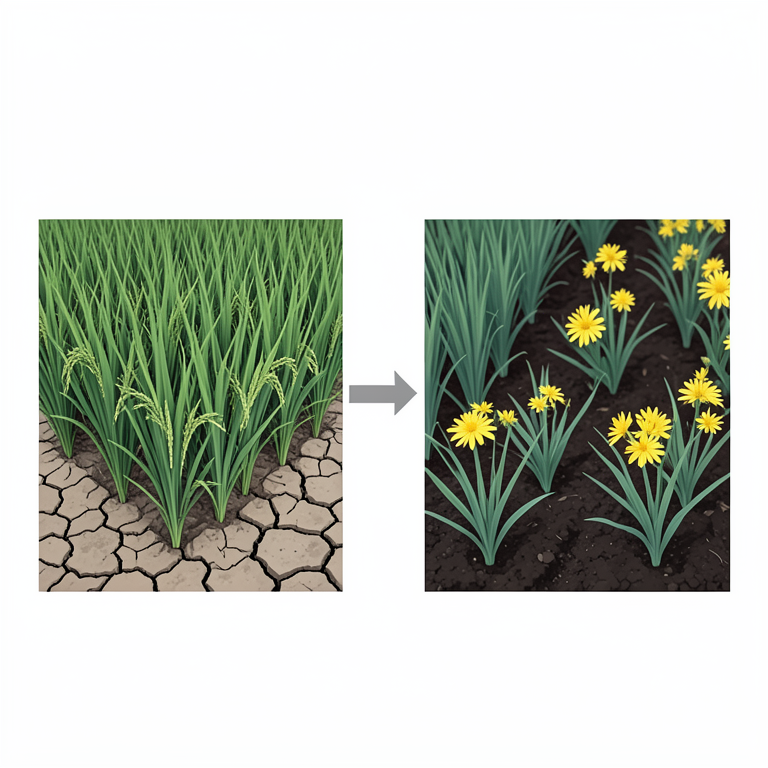
Transition from Monocropping to Diversified Systems
AI-generated conceptual illustration (Rice plants and Toria (mustard) plants in a field setting). It explains the idea and does not show study data.
View source evidence ↗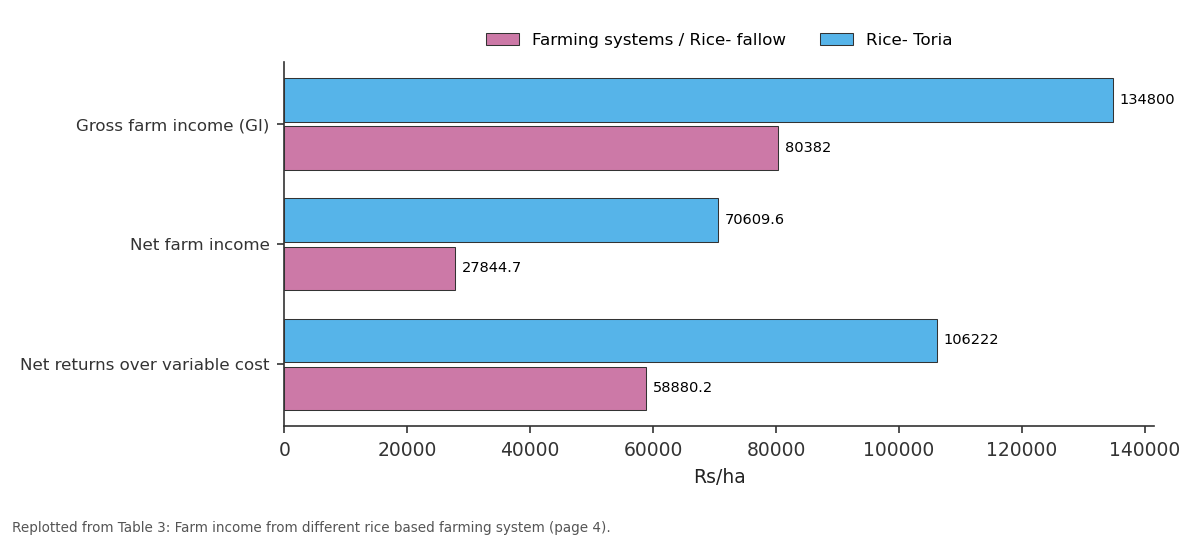
Farming systems / Rice- fallow and Rice- Toria: Gross farm income (GI) vs Net farm income vs Net returns over...
Replotted from Table 3 (page 4) of the original paper. Every bar is the paper's own table value.
View source evidence ↗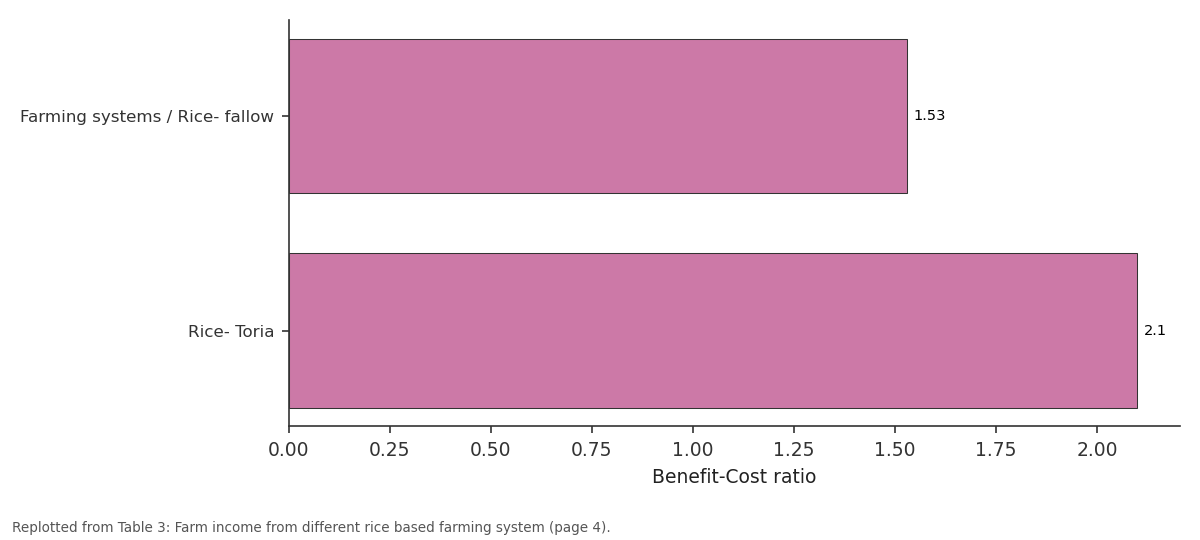
Benefit-Cost ratio: Farming systems / Rice-... vs Rice- Toria
Replotted from Table 3 (page 4) of the original paper. Every bar is the paper's own table value.
View source evidence ↗Figures & tables
From the original paper Table 1
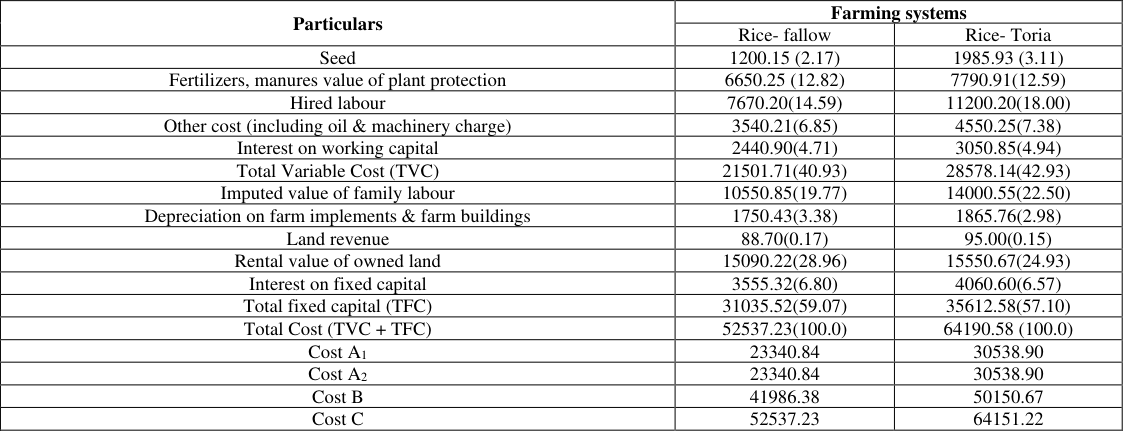 Table 2
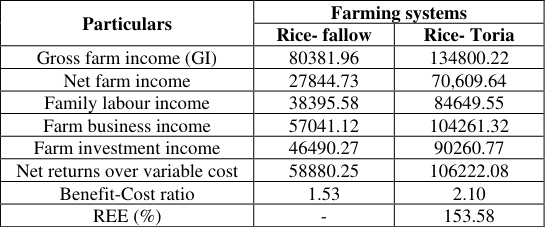 Table 3
Introduction
Agriculture in Assam is predominantly characterized by rice cultivation, which serves as the backbone of the state's agrarian economy. As the primary food crop, rice supports the livelihoods of a significant portion of the population, especially smallholder farmers. However, the traditional rice monocropping system, which involves cultivating only rice season after season on the same land, has led to several agronomic and economic challenges. These include declining soil fertility, increased pest and disease incidence, and heightened vulnerability to climatic fluctuations (Baruah et al., 2020) [2] . Moreover, Erratic rainfall patterns, rising temperatures, and increased occurrences of floods and droughts disrupt traditional farming practices, threaten crop yields, and jeopardize the livelihoods of countless Assamese farmers (Verma et al., 2016) [14] . In light of these issues, there is a pressing need to explore alternative cropping strategies that can enhance agricultural productivity, economic returns, and resilience to climate change. The National Innovations on Climate Resilient Agriculture (NICRA) initiative, launched by the Indian Council of Agricultural Research (ICAR), aims to address these challenges by promoting climate-resilient agricultural practices across India.
NICRA's multi-pronged approach emphasizes promoting climate-smart agricultural practices, including the adoption of drought-tolerant crop varieties, water-efficient irrigation techniques, and diversification of cropping patterns. A central tenet of this strategy involves advocating for rice-based cropping sequencesintegrated planting patterns that incorporate additional crops alongside the staple rice cultivation (Bhuiyan et al., 2017) [3] . One of the key strategies advocated by NICRA is the diversification of cropping systems, which involves integrating rice with other crops such as pulses and oilseeds.This approach is believed to enhance soil health, optimize resource use, and provide better economic returns compared to traditional monocropping systems (Das et al., 2018) [5] . The Darrang district of Assam, with its predominantly agrarian landscape and susceptibility to climatic variability, presents a unique case for studying the impacts of rice-based cropping sequences under the NICRA framework. Traditionally, farmers in this region have relied on rice monocropping, which has become increasingly unsustainable due to declining yields and profitability. Diversified cropping sequences, which involve growing multiple crops in rotation or simultaneously on the same piece of land, offer a potential solution to these problems by enhancing soil fertility, reducing pest and disease incidence, and improving economic returns (Hazarika and Bora, 2019) [8] . Crop diversification has been extensively studied and advocated as a means to improve agricultural sustainability and profitability. Several studies have demonstrated the benefits of integrating crops like pulses and oilseeds with rice. For instance, Hazarika and Bora (2019) [8] found that diversified cropping sequences not only improve yields but also enhance farm income by providing multiple sources of revenue. Similarly, Sharma et al. (2017) [12] emphasized that diversified cropping systems are crucial for maintaining soil fertility, reducing dependency on chemical fertilizers, and mitigating the risks associated with market and climate variability.Among these sequences, the combination of rice and toria (Brassica campestris L.) cultivation has emerged as a promising strategy to enhance agricultural productivity, profitability, and resilience to climate variability. Toria, also known as Indian rapeseed, is an oilseed crop well-suited for cultivation in the rice fallow period, offering rotational benefits such as soil fertility improvement and pest management Despite the recognized benefits of crop diversification, there is a paucity of empirical evidence specifically evaluating the economic performance of rice-based cropping sequences in NICRA-adopted villages. This study aims to fill this gap by conducting a comprehensive economic analysis of various ricebased cropping patterns in a NICRA-adopted village in the Darrang district. By focusing on key economic indicators such as the cost of cultivation, gross returns, net returns, and benefitcost ratios, this research seeks to provide actionable insights for policymakers, researchers, and farmers. The relevance of this study extends beyond the Darrang district, as it provides insights that can be applied to other regions facing similar agronomic and economic challenges. By demonstrating the economic benefits of diversified cropping sequences, this research aims to encourage policymakers to support and promote sustainable agricultural practices that enhance resilience to climate change. Moreover, the findings can help researchers and extension workers develop targeted interventions and recommendations for farmers, ultimately contributing to improved agricultural productivity and economic stability in the region.
Materials and Methods
The present study aimed to work out the cost and return of ricebased farming system adopted by the respondent farmers along of NICRA village Kamapara of Darrang district of Assam. Medium duration rice variety Numali was followed by the toria variety TS-38 among the beneficiary of the project. 20 beneficiaries of the project and other 20 random villagers who followed solo rice cropping was selected and thus, total 40 households were finally selected for the study for collection of relevant data and information with respect to rice based cropping system. To assess the economic viability of NICRA-promoted rice-based cropping sequences, this study employed a multi-pronged data collection approach. A purposive sampling technique targeted the villagers actively participating in NICRA's programs within Darrang district (Bryman, 2016) [4] . From the village, a random sample of farmers adopting the rice-based sequences was chosen for further investigation. Data collected through structured field surveys designed to capture details of the specific cropping sequences practiced, land allocation, production costs per crop, average yields under Darrang district conditions, and market prices for harvested produce (Dillman, 2007) [6] . Additionally, secondary data from NICRA reports, government agricultural statistics, and relevant academic sources supplemented the primary data collection. Comprehensive analysis involved descriptive statistics to understand the economic landscape, costbenefit analysis to assess the profitability of each sequence, and comparative analysis to evaluate NICRA's sequences against traditional practices. Rigorous data management practices ensured confidentiality and anonymity throughout the research process. The sample households were stratified in to threesize groups, on the basis of their farm size. As onlyfew farmers were found to have more than 3 ha of land hence, the stratification was done as follows: Group I: Less than 1 ha Group II: Between 1 -2 ha Group III: Above 2 ha
Return analysis
The following types of farm income were considered for analyzing the returns from rice based cropping systems Gross income (GI) = Quantity of total product X price of main product)
Farm business income = GI -Cost A1
Family labour income = GI -Cost B Net income = GI-Cost C
Farm investment income = Farm business income -imputed value of family labour
Farm investment income = Farm business income -imputed value of family labour
Net return over variable cost = Gross income-total variable cost
Benefit-Cost Ratio: Gross farm Income/Total cost
Relative Economic Efficiency (REE)
The relative economic efficiency (REE) of the system was calculated and expressed in percentage (Samanta T.K, 2015) [10] . REE% = (B-A)/A × 100Where, A = Net return of existing system & B = Net return of diversified cropping system.
The economics were computed as per market prices during crop season.
To ensure reliability and validity, the study followed rigorous protocols in data collection and analysis, adhering to methodologies outlined by similar studies in agricultural economics (Singh and Sharma, 2017) [12] .
The study pertained to the FY 2023-24.
Results and Discussion
The economic analysis of the Rice-Toria (Brassica campestris L.) cropping sequence compared to sole rice cropping in NICRA (National Innovations on Climate Resilient Agriculture) adopted villages in the Darrang district of Assam provides crucial insights into the comparative economic performance and potential benefits for farmers. Through meticulous data collection and analysis, it was revealed that the Rice-Toria sequence outperformed sole rice cropping in terms of average net returns per hectare. The Rice-Toria sequence yielded an average net return of INR 70,609.64, while sole rice cropping yielded INR 27844.73per hectare. Table 2 showed the per-hectare cost of the rice-based farming system under investigation. According to the study, the total cost per hectare for rice-fallow and rice-toria farming systems were found to be Rs. 52537.23and Rs.64190.58 respectively. In both cropping systems, hired and family labor accounted for the largest portion of the total cost. The variable cost of rice-fallow (Rs.21501.71) and rice-toria (Rs.28578.14) were less than the total fixed cost. There was no leased in or leased out land, as the values for Costs A1 and A2 were equal. The values of cost A1 andA2were estimated as Rs. 23340.84 for rice-fallow and Rs. 30538.90 for rice-toria cropping sequence. The value of cost B and cost C for ricefallow and rice-toria cropping sequence were Rs. 41986.38, Rs. 52537.23and Rs. 50150.67, Rs. 64151.22respectively. The returns over cost were calculated for the different cropping sequences represented Table 2. In return analysis, it could be seen from the table that the net returns were higher in rice-toria than rice-fallow as high value crop like toria resulted in more net income. The gross returns were also higher in rice-toria cropping sequence (Rs. 134800.22) than solo rice cropping (Rs. 80381.96). The Table showed that rice-toria had obtained higher benefit cost ratio (2.10) compared to rice-fallow (1.53). Statistical analysis employing paired t-tests unveiled a statistically significant difference (p<0.05) in net returns between the Rice-Toria cropping sequence and sole rice cropping. This underscores the economic advantages of diversifying cropping patterns and incorporating toria cultivation into the agricultural landscape. Qualitative assessments through farmer interviews further highlighted the resilience of the Rice-Toria sequence to climatic variability, particularly during periods of excess rainfall, where toria cultivation served as an effective risk mitigation strategy.
| Particulars | Farming systems | — |
|---|---|---|
| Rice- fallow | Rice- Toria | |
| Seed | 1200.15 (2.17) | 1985.93 (3.11) |
| Fertilizers, manures value of plant protection | 6650.25 (12.82) | 7790.91(12.59) |
| Hired labour | 7670.20(14.59) | 11200.20(18.00) |
| Other cost (including oil & machinery charge) | 3540.21(6.85) | 4550.25(7.38) |
| Interest on working capital | 2440.90(4.71) | 3050.85(4.94) |
| Total Variable Cost (TVC) | 21501.71(40.93) | 28578.14(42.93) |
| Imputed value of family labour | 10550.85(19.77) | 14000.55(22.50) |
| Depreciation on farm implements & farm buildings | 1750.43(3.38) | 1865.76(2.98) |
| Land revenue | 88.70(0.17) | 95.00(0.15) |
| Rental value of owned land | 15090.22(28.96) | 15550.67(24.93) |
| Interest on fixed capital | 3555.32(6.80) | 4060.60(6.57) |
| Total fixed capital (TFC) | 31035.52(59.07) | 35612.58(57.10) |
| Total Cost (TVC + TFC) | 52537.23(100.0) | 64190.58 (100.0) |
| Cost A1 | 23340.84 | 30538.90 |
| Cost A2 | 23340.84 | 30538.90 |
| Cost B | 41986.38 | 50150.67 |
| Cost C | 52537.23 | 64151.22 |
Table text extracted from the original PDF; superscript letters are shown inline. The original table image is below.
View original table image
The findings of this study emphasize the economic benefits and resilience-enhancing potential of the Rice-Toria cropping sequence over sole rice cropping in NICRA adopted villages of the Darrang district. By diversifying cropping patterns and integrating toria cultivation, farmers can not only enhance their income and livelihoods but also mitigate risks associated with mono-cropping systems. The rotational benefits of toria cultivation, including soil fertility improvement and pest management, contribute significantly to its enhanced profitability and long-term sustainability (Singh and Sharma, 2017) [12] . Comparative analysis with sole rice cropping reveals the superior economic performance of the Rice-Toria sequence, underlining the importance of crop diversification in maximizing returns and enhancing agricultural resilience. These findings are consistent with previous research conducted by Sharma et al.
(2019) [11] , which demonstrated the agronomic and economic benefits of integrating oilseed crops into rice-based systems. The socio-economic implications of adopting the Rice-Toria sequence extend beyond financial gains, encompassing aspects such as food security, employment generation, and environmental sustainability. Moreover, the adoption of the Rice-Toria cropping sequence aligns with the objectives of NICRA initiatives aimed at promoting climate-resilient agriculture. By diversifying crops, farmers can reduce vulnerability to climate-induced risks such as droughts, floods, and pest outbreaks, thereby enhancing the overall resilience of agricultural systems.
Conclusion
The study provides valuable insights into the economic dynamics of rice-based cropping sequences in NICRA (National Innovations on Climate Resilient Agriculture) adopted villages in the Darrang district of Assam. Through meticulous data collection, analysis, and comparison, it was demonstrated that crop diversification, particularly through the integration of toria (Brassica campestris L.) cultivation, offers significant economic benefits over sole rice cropping. The findings revealed that cropping sequences involving toria cultivation, such as Rice-Toria, exhibit higher average net returns per hectare compared to sole rice cropping. Additionally, the Rice-Toria sequence demonstrates lower input costs, contributing to its enhanced profitability and economic sustainability. These results underscore the importance of diversifying cropping patterns to maximize returns and mitigate risks associated with mono-cropping systems. Moreover, the adoption of diversified cropping sequences aligns with the objectives of NICRA initiatives aimed at promoting climateresilient agriculture. By integrating toria cultivation into ricebased systems, farmers can enhance their adaptive capacity to climate variability while improving their income and livelihoods. The rotational benefits of toria cultivation, including soil fertility enhancement and pest management, further contribute to the long-term sustainability of agricultural systems in the region.
Overall, the findings of this study have significant implications for agricultural policy and practice in Assam and beyond. By promoting crop diversification and adopting climate-resilient agricultural practices, policymakers and stakeholders can enhance the resilience of agricultural systems, improve food security, and sustain livelihoods in the face of climate change challenges.
Future research endeavors should focus on assessing the environmental impacts, including soil health and biodiversity, of diversified cropping sequences and exploring innovative strategies to further enhance the economic and ecological sustainability of agriculture in the region.
Acknowledgement
AcknowledgementThe authors deeply acknowledge ICAR-Central Research Institute for Dryland Agriculture (ICAR-CRIDA), Hyderabad for providing the necessary financial requirements for this study under project NICRA.
Figures and tables from the paper
| Sl. No. | Distribution of sample households according to the stratification | — | — | — | — | — | — | — |
|---|---|---|---|---|---|---|---|---|
| Cropping sequence | No. of respondents/group | Total | System duration (Days) | No. of households under different farming systems | ||||
| Kharif | Rabi | I | II | III | ||||
| 1. | Rice | Fallow | 10 | 7 | 3 | 20 | 140 | 60.47% |
| 2. | Rice | Toria | 12 | 6 | 2 | 20 | 230 | 39.53% |
| Total | 22 | 13 | 5 | 40 |
Table text extracted from the original PDF; superscript letters are shown inline. The original table image is below.
View original table image
| Particulars | Farming systems | — |
|---|---|---|
| Rice- fallow | Rice- Toria | |
| Gross farm income (GI) | 80381.96 | 134800.22 |
| Net farm income | 27844.73 | 70,609.64 |
| Family labour income | 38395.58 | 84649.55 |
| Farm business income | 57041.12 | 104261.32 |
| Farm investment income | 46490.27 | 90260.77 |
| Net returns over variable cost | 58880.25 | 106222.08 |
| Benefit-Cost ratio | 1.53 | 2.10 |
| REE (%) | - | 153.58 |
Table text extracted from the original PDF; superscript letters are shown inline. The original table image is below.
View original table image
References
9 in the original paper- Baruah S, Sharma S, Saikia J. Climate Change and Agriculture in Assam: Challenges and Opportunities. Agric. Res J. 2020;57(2):123-132.
- Bhuiyan MIH, Islam MJ, Khan BM, Sattar MA. An economic analysis of rice-based cropping patterns in some selected areas of Bangladesh. J Bangladesh Agric Univ. 2017;15(2):205-212.
- Das A, Roy A, Bhattacharyya R. Enhancing Resilience of Agriculture through Crop Diversification: A Study in Eastern India. J Agron Crop Sci. 2018;204(4):341-352.
- Hazarika P, Bora P. Economic Analysis of Crop Diversification in Assam. Indian J Agric Econ. 2019;74(3):317-332.
- Samanta TK. System productivity, profitability, sustainability, and soil health as influenced by rice-based cropping systems under mid central table land zone of Odisha. Int J Agric Sci. 2015;7(11):0975-9107.
- Sharma A, et al. Agronomic and Economic Evaluation of Rice-Based Cropping Systems in Assam. J Sustain Agric. 2019;67(3):215-230.
- Sharma R, Singh S, Verma R. Crop Diversification for Sustainable Agriculture in India. Sustain Agric Rev. 2017;22:45-67.
- Singh R, Sharma P. Profitability and Sustainability of RiceBased Cropping Systems. Agric Res J. 2017;54(4):567-580.
- Verma M, Baruah K, Das P. Impact of changing climate on agriculture of Assam, India. Int. J Agric. Sci. Res. 2016;6(6):181-188.
Cited by 2
From OpenAlex, OpenCitations and reference lists read by Scinovex
- Residual effects of different establishment methods and weed management practices in rice on growth and yield of succeeding relay field pea (Pisum sativum L.) in Assam
Priyanka Bora, Anjan Sarmah, Priyanka Dutta, Khagen Kurmi · International Journal of Agriculture Extension and Social Development · 2026
A field experiment entitled “Residual effects of different establishment methods and weed management practices in rice on growth and yield of succeeding relay field pea (Pisum sativum L.)” was carried out in the farmer’s field at Hongshobil, Gossaigaon, Kokrajhar, Assam during the year 2023-24 and 2024-25. The experiment consisted of 18 treatment combinations with 3 crop establishment methods viz., M1: Conventional transplanting, M2: Direct seeding by drum seeder, M3: Direct seeding with 50% reduced tillage and 6 weed management practices viz., W1: Pretilachlor 750 g/ha PE, W2: Pretilachlor 75
- A Comparative cost and return analysis of different cropping systems and integrated farming systems adopted in climate smart agricultural situation in upper Brahmaputra Valley Zone of Assam
Ajanta Borah, Ghana Kanta Sarma, Matukdhari Singh, Tovinoli Shohe · International Journal of Research in Agronomy · 2025
Rice is the staple crop in the state of Assam. The study was conducted in locations which are climate resilient in nature. Two Agriculture Development Officer’s circles and from each circle three villages were selected. From each village, 20 farm families were selected randomly. Here, different cropping sequences were studied to analyze economically viable one. It was revealed from the study that out of six different combinations of cropping sequences/patterns both Flood tolerant rice - Cauliflower and Fishery cum Duckery sequence in adopter’s combination were found the most viable one and the