
Research article · 2024 · Full text
International Journal of Research in AgronomyPerformance of genotypes for growth, yield and quality of cucumber (Cucumis sativus L.)
Volume 7(6) · Pages 102–105 · DOI: 10.33545/2618060x.2024.v7.i6b.804 ↗
Research areasAdvances in Cucurbitaceae Research
Abstract
Author-writtenA well-liked vegetable from the gourd family (Cucurbitaceae) is the cucumber. Its crisp and refreshing texture has made it a popular crop and food around the world. Usually grown as annual climbing or creeping vines, cucumbers bear edible seeds and are long, cylindrical, or oval-shaped fruits with green skin. They are a great low-calorie and highly hydrating food choice because of their high-water content. It tastes mild with a hint of sweetness. Therefore, the present investigation was carried out at the Department of Horticulture, Naini Agricultural Institute, Sam Higginbottom University of Agriculture Technology and Sciences, Prayagraj, Uttar Pradesh during the Kharif season 2022-2023 with a view to check performance of different Genotypes of cucumber under Prayagraj agro climatic conditions. From the above experimental finding it was concluded that the genotype 2021/CUCUVAR6 performed best in terms of growth parameters like vine length (181.79 cm), earliness in maturity (59.00 days for first fruit harvest) and yield parameters like fruit length (15.96 cm), fruit diameter (3.75 cm), and fruit yield per hectare (124.48 q/ha). It also showed best performance for quality parameters also TSS (6.15 °Brix), Vitamin C content (5.42 mg/100 g).
Summary
Source-checkedPlain-language reading of the full paper, prepared with AI and checked against the text. Each point links to the authors' own words.
Why it matters
- Cucumber is a globally popular vegetable from the Cucurbitaceae family, valued for its crisp and refreshing texture. View evidence ↗
- Cucumber cultivation in Prayagraj faces challenges including water stress from hot, dry summers, fungal diseases due to monsoon humidity, and various pest infestations. View evidence ↗
- Evaluating different cultivars is necessary for successful breeding programs to identify the best performing genotypes for specific conditions. View evidence ↗
The question
- The study aimed to evaluate the performance of various cucumber genotypes under the agro-climatic conditions of Prayagraj. View evidence ↗
What they did
- The research was conducted during the 2022-23 winter season at the Horticultural Research Farm of SHUATS in Prayagraj. View evidence ↗
- The experiment utilized a randomized block design featuring eight cucumber genotypes with three replications. View evidence ↗
- Researchers measured growth (vine length, flowering days), yield (fruit length, diameter, yield per vine), and quality (TSS and vitamin C content). View evidence ↗
What they found
- Genotype 2021/CUCUVAR6 exhibited the longest vines, whereas 2021/CUCUVAR1 had the shortest vine length of 108.33 cm. View evidence ↗
- Genotype 2021/CUCUVAR6 was the earliest to harvest (59.00 days), while 2021/CUCUVAR4 took the longest (70.00 days). View evidence ↗
- The highest number of fruits per vine was found in genotype 2021/CUCUVAR6 (7.71 fruits), and the lowest in 2021/CUCUVAR1 (4.33 fruits). View evidence ↗
- Genotype 2021/CUCUVAR6 and GREEN NUTRATE shared the highest yield per hectare (124.48 q/ha), significantly higher than 2021/CUCUVAR1 (81.32 q/ha). View evidence ↗
- The highest total soluble solids (TSS) were recorded for genotype 2021/CUCUVAR6 (6.15 °Brix), while 2021/CUCUVAR1 had the lowest (4.29 °Brix). View evidence ↗
- Genotype 2021/CUCUVAR6 showed the highest vitamin C content (5.42 mg), compared to the lowest in 2021/CUCUVAR1 (4.01 mg). View evidence ↗
What it means
- The authors concluded that genotype 2021/CUCUVAR6 is the best performing variety across growth, earliness, yield, and quality parameters. View evidence ↗
Visual summary
3 visualsIllustrations explain the paper; charts are replotted from the paper's own table values.
Experimental Setup
AI-generated conceptual illustration (cucumber plants (Cucumis sativus L.)). It explains the idea and does not show study data.
View source evidence ↗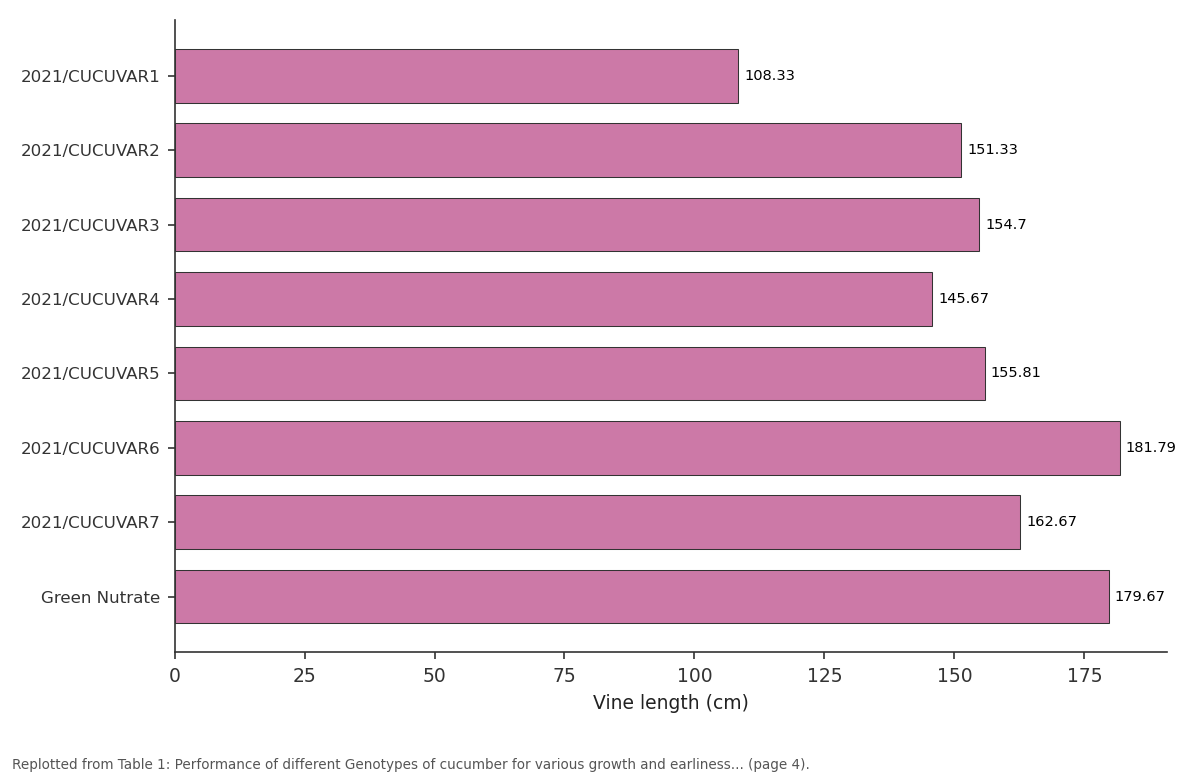
Vine length (cm): 2021/CUCUVAR1 vs 2021/CUCUVAR2 vs 2021/CUCUVAR3 vs 2021/CUCUVAR4 vs 2021/CUCUVAR5
Replotted from Table 1 (page 4) of the original paper. Every bar is the paper's own table value.
View source evidence ↗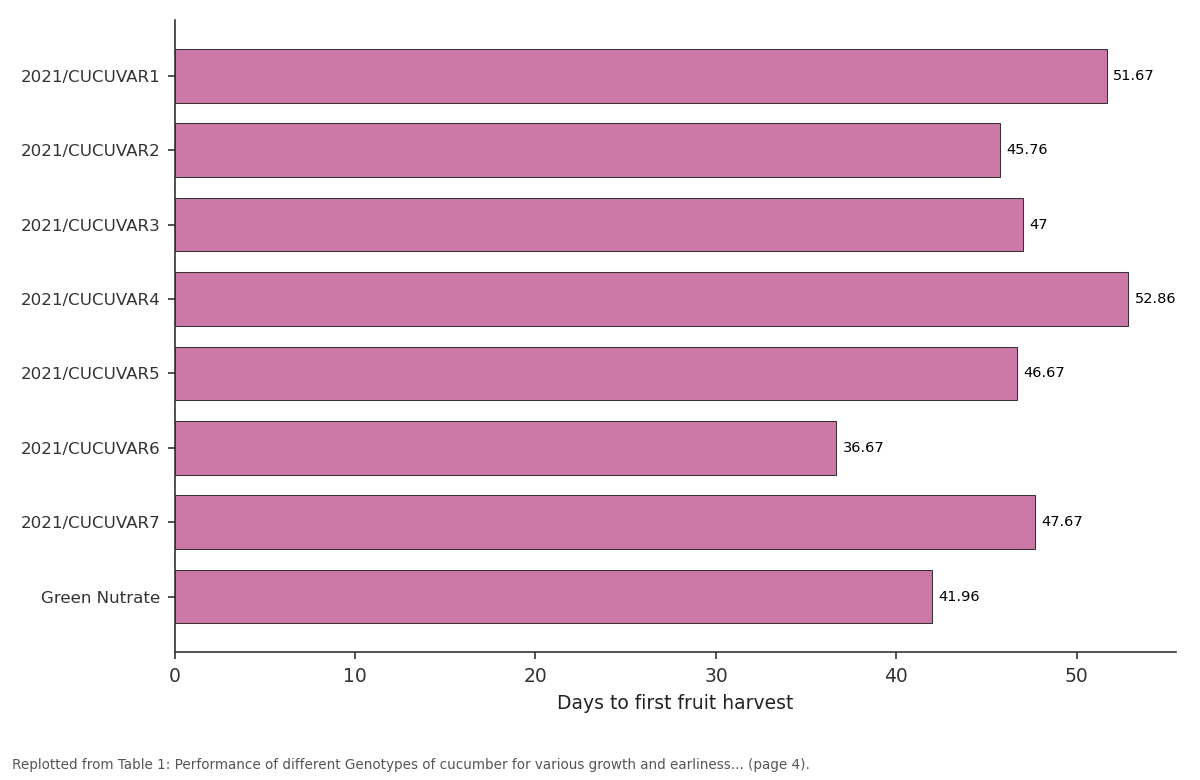
Days to first female flowering: 2021/CUCUVAR1 vs 2021/CUCUVAR2 vs 2021/CUCUVAR3 vs 2021/CUCUVAR4 vs 2021/CUCUVAR5
Replotted from Table 1 (page 4) of the original paper. Every bar is the paper's own table value.
View source evidence ↗Figures & tables
From the original paper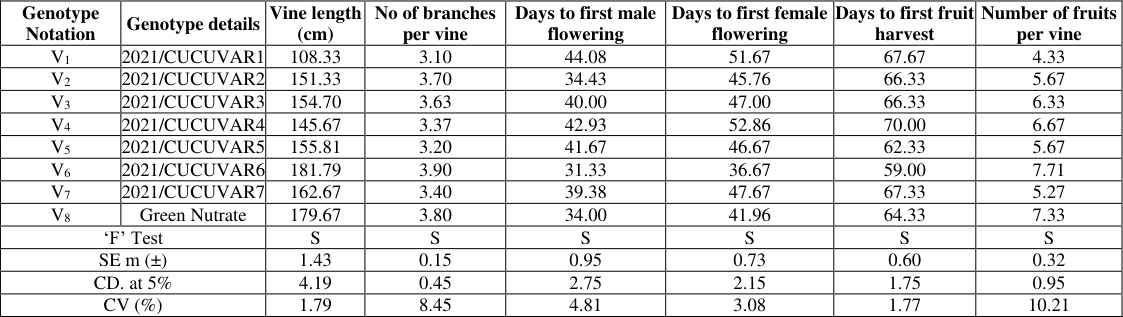 Table 1
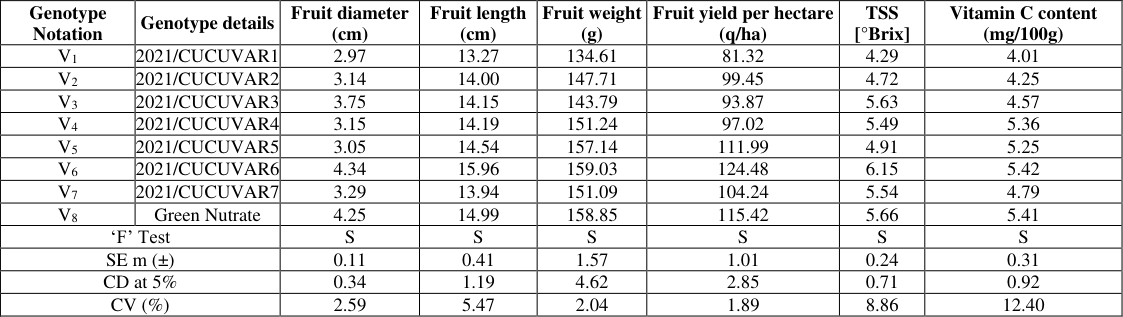 Table 2
Introduction
In the Cucurbitaceae family, cucumber is a well-known and widely cultivated crawling vine plant. It generates long, cylindric fruits that are used as vegetables. This annual plant, which is now grown on several continents, was originally native to South Asia. There are three main types of cucumber: slicing, pickling, and burpless/seedless, each with a number of cultivars that have been created over time. Even though they are not closely related to the cultivated cucumber, plants in the Echinocystis and Marah genera are referred to as "wild cucumber" in North America. Most cucumber cultivars depend on bees, especially honeybees, which are frequently brought in large numbers to cucumber fields during the blooming season to ensure successful pollination and fruit formation. Other bee species, including bumblebees, can act as pollinators. Interesting cucumber cultivars are those that display parthenocarpy, or the capacity to develop seedless fruits in the absence of pollination. Cucumbers are well-known for being thermophilic, diploid, and day-neutral in many regions of India. In the cucurbit family, they are the second most important crop, only surpassed by watermelon. Additionally, the DNA of cucumbers was the first vegetable crop to be sequenced. Cucumbers are bitter because of a chemical compound called cucurbitacin. Botanically Cucumber is known as Cucumis sativus L. belongs to family Cucurbitaceae. It is a diploid self-pollinated species with chromosome number 2n=2x=14 (Mckay, 1930) [5] . According to Vavilov (1935) [9] , the Indo-Burma region of Hindustan is where cucumbers first appeared. It is primarily grown in China, India, Turkey, Iran, and other south-east Asian nations. "Cucumis hardwickii" is the ancestor of the cucumber. 15:1 is the economic sex ratio. India's 94 million hectares of cucumber land will yield 1608.29 million tonnes of cucumbers in 2020-21 (Source: NHB, Ministry of Agriculture & Farmers Welfare, Government of India, 2021-22). West Bengal leads the pack in terms of cucumber production and area in 2021-2022, with Madhya Pradesh and Haryana following closely behind. In Jammu and Kashmir, cucumber production is expected to reach 20.68 million tonnes by 2022. Cucumbers are cooked vegetables that can be added to salads and pickles.
It is used in many different ways in Ayurvedic medicine. "Unani" medicines claim that the oil extracted from the seed is divine for both the body and the brain. Cucumber has 96.3 g water, magnesium 11 mg, sodium 10.2 mg, Vitamin C 7 mg, 2.5g Carbohydrates, Oxalic acid 15 mg, Calcium 10 mg, Sulphur 17 mg, Potassium 50 mg and many other nutrients out of 100 g of edible portion (Choudhary, 2013) [2] . It is considered as quality dietary food due to its excellent digestibility and rich water content (96.3 g/100 g). There are several difficulties with growing cucumbers in the Prayagraj area. Firstly, the region experiences hot and dry summers, which can lead to water stress for cucumber plants, requiring efficient irrigation systems. Secondly, the high humidity during the monsoon can promote the spread of fungal diseases like powdery mildew and downy mildew, necessitating careful disease management practices. Additionally, the region is prone to pest infestations such as aphids, whiteflies, and cucumber beetles, demanding proper pest control strategies. The soil in some areas may lack essential nutrients, requiring appropriate soil amendments and fertilization to support cucumber growth. Finally, extreme weather events like hailstorms and heavy rains can damage cucumber plants and reduce yield. Addressing these challenges through proper water management, disease control, pest management, and soil improvement practices is crucial for successful cucumber cultivation in Prayagraj. Few local varieties have gained importance in Uttar Pradesh climatic conditions. Varietal evaluation in a group of cultivars is a prerequisite for a successful breeding program. Thus, study was done to evaluate the best performing genotypes compared to local variety. There are many good performing varieties which are available in the market also. According to Prayagraj agro-climatic conditions Cucumber can be grown successfully with higher yield. In view of the above-mentioned facts, the present study on the varietal evaluation of Cucumber varieties under Prayagraj agro-climatic condition.
Materials and Methods
The present investigation entitled was done to understand the plant growth, fruit yield and quality of fruit of different genotypes of cucumber. The investigation was carried out at Horticultural Research Farm (HRF), Department of Horticulture, Naini Agricultural Institute, Sam Higginbottom University of Agriculture, Technology and Sciences (SHUATS), Prayagraj during the winter season of 2022-23. The experiment was laid in Randomized block design with 08 Genotypes and 3 replications.
(2021/CUCUVAR5), V 6 (2021/CUCUVAR6), V 7 (2021/CUCUVAR7) and V 8 (GREEN NUTRATE). Observations were recorded at different stages of growth for parameters like vine length, days to flower emergence, fruit length, fruit diameter and yield per vine and quality parameters like TSS and vitamin C content. The data were statistically analysed by the method suggested by Fisher and Yates, 1936. The experimental site is levelled land with sandy loam soil of uniform fertility status with low clay and high sand percentage. Soil samples were collected randomly from depth of 0-30 cm and the soil was analysed for pH found to be slight neutral (6.9), organic carbon was 0.36%, available nitrogen was 212.56 kg ha -1 , available phosphorus was 14.59 kg ha -1 , and available potassium was 225.10 kg ha -1 . The preparation of the experimental field involved several steps to ensure optimal conditions for cultivation. Initially, a Tractor drawn disc plough was used to plough the field. Following this primary ploughing, two cross harrowing sessions were conducted, and the field was then planked. To achieve a uniform surface, a leveller was employed to thoroughly level the field before proceeding with the experimental layout. This sequence of activities was undertaken to create an environment conducive to the study's objectives and to promote consistent and reliable results. To maintain a weed-free field, regular and shallow cultivation was performed frequently. This process aimed to eliminate weeds, enhance soil aeration, and support healthy root development. Furthermore, two to three hoeing sessions and earthing up were conducted to meticulously control weed growth and maintain the crop's weed-free status. Around FYM 40 t/ha as basal was applied to field and 35 kg of N/ha at 30 days after sowing. NPK are required for genotype cucumber is 150:75:75 kg NPK/ha, accordingly urea, DAP, MOP was applied in field. Light irrigation was provided at critical stages of crop growth, such as just after transplanting, pre flowering, fruit formation.
Results and Discussion
Results and Discussion
Growth Parameters
The data pertaining to Vine length and number of branches per vine significantly varied among different Genotypes. The genotype 2021/CUCUVAR6 had the longest vines overall, measuring 18.79 cm, while GREEN NUTRATE had the second longest, measuring 179.67 cm. In 2021/CUCUVAR1, shortest vine length of 108.33 cm was noted. With 3.90 branches, the genotype 2021/CUCUVAR6 had the most vines overall; GREEN NUTRATE had the second-highest number of branches, with 3.80 branches. The lowest number of branches per vine (3.10) was observed in 2021/CUCUVAR1. Genotype 2021/CUCUVAR6 of cucumber likely exhibits a longer vine length and a greater number of branches per vine compared to other genotypes due to its specific genetic makeup and environmental interactions. Genetic factors may include traits favouring vine elongation, such as genes related to internode elongation, cell expansion, or hormone regulation. These genetic traits could contribute to increased cell division and elongation, resulting in longer vines and enhancement in branches. Moreover, 2021/CUCUVAR6 might possess alleles promoting vine growth under varying environmental conditions, ensuring consistent elongation throughout the growing season. Environmental factors like temperature, light intensity, and soil fertility can also influence vine length by affecting plant hormone levels and physiological processes. Therefore, the combination of favourable genetic attributes and environmental conditions likely contributes to the longer vine length and branches per plant observed in genotype 2021/CUCUVAR6, potentially leading to increased yield and productivity in cucumber cultivation. Research on cucumber (Shah et [8,7,1] reported similar results.
Earliness parameters
The data pertaining to days to emergence of first male flower and female flower along with first fruit harvest significantly varied among different Genotypes. With 31.33 days, the genotype 2021/CUCUVAR6 was earlier most for male flowering overall; GREEN NUTRATE came second most early in number of days to first male flowering, with 34.00 days. The maximum days to first male flowering (42. 93 [8,7,1] .
Yield parameters
The genotype 2021/CUCUVAR6 had maximum number of fruits per vine (7.71 fruits), followed by GREEN NUTRATE (7.33 fruits). In 2021/CUCUVAR1, the minimum number of fruits per vine (4.33 fruits) was noted. The genotype 2021/CUCUVAR6 exhibited the longest fruit (15.96 cm), with GREEN NUTRATE coming in second (14.99 cm). The minimum fruit length (13.27 cm) was observed in 2021/CUCUVAR1. The genotype 2021/CUCUVAR6 exhibited the maximum fruit diameter (15.96 cm), with GREEN NUTRATE coming in second (14.99 cm). The minimum fruit diameter (13.27 cm) was observed in 2021/CUCUVAR1. Genotype 2021/CUCUVAR6 of cucumber likely exhibits maximum fruit diameter compared to other genotypes due to specific genetic attributes and environmental factors. Genetic traits within 2021/CUCUVAR6 may include alleles governing fruit development processes such as cell division, expansion, and fruit shape determination. These genetic characteristics contribute to the formation of fruits with larger diameters during growth and maturation stages. The significance of maximum fruit diameter in genotype 2021/CUCUVAR6 lies in its potential to enhance market appeal and consumer preference. Larger fruit diameters typically indicate higher fruit yield and provide more substantial portions for consumption, thus offering better value to consumers. Additionally, cucumbers with larger diameters may be preferred by processors for slicing or pickling purposes, increasing their marketability. Therefore, the genetic predisposition of genotype 2021/CUCUVAR6 for maximum fruit diameter presents a desirable trait with economic benefits for growers and consumers in the cucumber market. The findings were earlier reported in studies on cucumber by Shah et al., 2017;Pal et al., 2017;Bhagwat et al., 2018 [8, 7, 1] . The genotype 2021/CUCUVAR6 exhibited the maximum fruit weight (159.03 grams) at par with GREEN NUTRATE having 158.85 grams. The minimum fruit weight (134.61 grams) was observed in 2021/CUCUVAR1. The highest fruit yield per hectare (124.48 q/ha) was displayed by the genotype 2021/CUCUVAR6, which was comparable to GREEN NUTRATE's 124.48 q/ha. In 2021/CUCUVAR1, the lowest fruit yield per hectare (81.32 q/ha) was recorded. Genotype 2021/CUCUVAR6 of cucumber likely achieves maximum fruit yield per hectare compared to other genotypes due to its advantageous genetic traits and favourable environmental interactions. Genetic factors within 2021/CUCUVAR6 may include alleles associated with high fruit set, vigorous growth, and efficient resource utilization. These genetic characteristics contribute to the production of a greater number of fruits per plant. The significance of maximum fruit yield per hectare in genotype 2021/CUCUVAR6 lies in its potential to increase profitability and meet market demand. Higher fruit yield translates to greater marketable produce per unit area, enhancing overall productivity and economic returns for growers. Additionally, increased yield per hectare can help meet consumer demand, maintain market competitiveness, and ensure food security. Therefore, the genetic predisposition of genotype 2021/CUCUVAR6 for maximum fruit yield per hectare presents a desirable trait with significant implications for commercial cucumber cultivation and sustainable agriculture. The findings were earlier reported in studies on cucumber by Shah et al., 2017;Pal et al., 2017;Bhagwat et al., 2018 [8, 7, 1] .
Quality Parameters
The highest TSS (6.15 °Brix) was displayed by the genotype 2021/CUCUVAR6, which was comparable to GREEN NUTRATE's 5.66 °Brix. In 2021/CUCUVAR1, the lowest TSS (4.29 °Brix) was recorded. The highest vitamin C content (5.42 mg) was displayed by the genotype 2021/CUCUVAR6, which was comparable to GREEN NUTRATE's 5.41 mg. In 2021/CUCUVAR1, the lowest vitamin C content (4.01 mg) was recorded. Cucumbers of genotype 2021/CUCUVAR6 probably have higher vitamin C content in their fruits than other genotypes because of particular genetic characteristics and environmental factors. Alleles that control biosynthetic pathways involved in vitamin C synthesis and accumulation in fruits may be among the genetic factors underlying 2021/CUCUVAR6. The fruits of genotype 2021/CUCUVAR6 have higher levels of vitamin C content as a result of these genetic traits. The increased nutritional value and health advantages of higher vitamin C content in genotype 2021/CUCUVAR6 are significant. With its antioxidant qualities, vitamin C is a vital micronutrient that supports collagen synthesis, immune system performance, and general health. Higher vitamin C content in fruits gives consumers more nutritional value while enhancing their health and wellbeing. Furthermore, genotype 2021/CUCUVAR6 has a higher vitamin C content fruits may enhance market competitiveness and consumer preference, leading to higher demand and potentially increased profitability for growers. Therefore, the genetic predisposition of genotype 2021/CUCUVAR6 for better Vitamin C content presents a valuable trait with significant implications for both health and commercial success in cucumber cultivation. The results were previously published in studies on cucumber by Bhagwat et al. (2018) [1] , Pal et al. (2017) [7] , and Shah et al. (2017) [8] .
Conclusion
From the above experimental finding it was concluded that the genotype 2021/CUCUVAR6 performed best in terms of growth parameters like vine length (181.79 cm), earliness in maturity (59.00 days for first fruit harvest) and yield parameters like fruit length (15.96 cm), fruit diameter (3.75 cm), and fruit yield per hectare (124.48 q/ha). It also showed best performance for quality parameters also TSS (6.15 °Brix), Vitamin C content (5.42 mg/100g).
Acknowledgement
AcknowledgementThe author is thankful to the Advisor and Department of Horticulture, Naini Agricultural Institute, Sam Higginbottom University of Agriculture Technology and sciences, Prayagraj (U.P.) India for providing necessary facilities to undertake this research. This manuscript has not received any grant from any sources.
Figures and tables from the paper
| Genotype Notation | Genotype details | Fruit diameter (cm) | Fruit length (cm) | Fruit weight (g) | Fruit yield per hectare (q/ha) | TSS [°Brix] | Vitamin C content (mg/100g) |
|---|---|---|---|---|---|---|---|
| V1 | 2021/CUCUVAR1 | 2.97 | 13.27 | 134.61 | 81.32 | 4.29 | 4.01 |
| V2 | 2021/CUCUVAR2 | 3.14 | 14.00 | 147.71 | 99.45 | 4.72 | 4.25 |
| V3 | 2021/CUCUVAR3 | 3.75 | 14.15 | 143.79 | 93.87 | 5.63 | 4.57 |
| V4 | 2021/CUCUVAR4 | 3.15 | 14.19 | 151.24 | 97.02 | 5.49 | 5.36 |
| V5 | 2021/CUCUVAR5 | 3.05 | 14.54 | 157.14 | 111.99 | 4.91 | 5.25 |
| V6 | 2021/CUCUVAR6 | 4.34 | 15.96 | 159.03 | 124.48 | 6.15 | 5.42 |
| V7 | 2021/CUCUVAR7 | 3.29 | 13.94 | 151.09 | 104.24 | 5.54 | 4.79 |
| V8 | Green Nutrate | 4.25 | 14.99 | 158.85 | 115.42 | 5.66 | 5.41 |
| ‘F’ Test | S | S | S | S | S | S | |
| SE m (±) | 0.11 | 0.41 | 1.57 | 1.01 | 0.24 | 0.31 | |
| CD at 5% | 0.34 | 1.19 | 4.62 | 2.85 | 0.71 | 0.92 | |
| CV (%) | 2.59 | 5.47 | 2.04 | 1.89 | 8.86 | 12.40 |
Table text extracted from the original PDF; superscript letters are shown inline. The original table image is below.
View original table image
References
9 in the original paper- Bhagwat A, Srinivasa V, Bhammanakati S, Shubha AS. Evaluation of Cucumber (Cucumis sativus L.) Genotypes under Hill Zone of Karnataka, India. International Journal of Current Microbiology and Applied Sciences. 2018;7(9):837-842.
- Choudhary B. Vegetables-Cucurbits, Cucumber nutritional quality. National Book Trust India. Reprint edition. 2013, p. 142.
- FAOSTAT. www.fao.org/faostat/en/data/CC. Food SupplyCrops Primary Equivalent. Visited on 15/12/2021, 2020.
- Fisher RA, Yates F. Statistical Tables for Biological, Agricultural and Medical Research. Oliver and Boyd, London, 1963, p. 143.
- McKay JW. Chromosome numbers in the Cucurbitaceae. Botanical Gazette. 1930;89:416-417.
- NHB. nhb.gov.in/statistics/2020-21. Area and Production of Horticulture Crops-All India, 2021. Visited on 08/12/2022.
- Pal S, Sharma HR, Yadav N. Evaluation of cucumber genotypes for yield and quality traits. Journal of Hill Agriculture. 2017;8(2):144-150.
- Shah KN, Rana DK, Singh V. Evaluation of different cucumber strains for various horticultural traits under valley conditions of Garhwal Himalaya. Journal of Plant Development Sciences. 2017;8(12):599-603.
- Vavilov NI. Origin and geography of cultivated plants. Archives of natural history. 1935;21(1):142.