
Research article · 2024 · Full text
International Journal of Agriculture Extension and Social DevelopmentManagement of dystocia due to deviation of head and neck in a Nili Ravi buffalo: A case report
Volume 7(6S) · Pages 01–02 · DOI: 10.33545/26180723.2024.v7.i6sa.664 ↗
Research areasLivestock Management and Performance ImprovementReproductive Physiology in Livestock
Abstract
Author-writtenDifficult parturition process is also termed as dystocia that is of great concern for survivability of fetus as well as dam. A pluriparous buffalo was presented with history of completion of gestation and vigorous straining but no fetal delivery. Upon per vaginal examination, the fetus was found dead. The dam was given epidural anaesthesia and traction was applied coupled with adequate lubrication of birth canal. The delivered fetus was having lateral deviation of head which prevented normal parturition. Following delivery, pain management medications and antiobiotic was given to dam and animal recovered eventually without any complications.
Summary
Source-checkedPlain-language reading of the full paper, prepared with AI and checked against the text. Each point links to the authors' own words.
Why it matters
- Dystocia, or difficult parturition, is a significant concern because it threatens the survival of both the dam and the fetus. View evidence ↗
- Lateral deviation of the fetal head and neck is one of the most frequent postural abnormalities encountered during anterior presentation dystocia. View evidence ↗
- Prior research in graded Murrah buffaloes indicated that 41% of dystocia cases were caused by fetal factors, with head deviations accounting for 42.22% of those. View evidence ↗
The question
- The objective of this case report is to describe the management of dystocia caused by the deviation of the head and neck in a Nili Ravi buffalo. View evidence ↗
What they did
- The subject was a 9-year-old Nili Ravi buffalo at the Central Institute for Research on Buffaloes in Punjab, India, presenting with labor at full term. View evidence ↗
- Diagnosis was performed via per vaginal examination using a lubricated gloved hand, which revealed a right lateral deviation of the fetal head and neck. View evidence ↗
- To manage pain and reduce straining, epidural anesthesia was administered at the sacro-coccygeal joint. View evidence ↗
- The fetus was delivered by capping the muzzle with a lubricated gloved hand, applying dorsal and backward pressure to align the head and neck, followed by traction. View evidence ↗
- Post-delivery care for the dam included three days of intramuscular Flunixin Meglumine (1.1mg/Kg) for pain and Ceftriaxone+ Tazobactum (4.5 g) as a broad-spectrum antibiotic. View evidence ↗
What they found
- The fetus was found to be dead upon examination, with evidence of rigor mortis. View evidence ↗
- Screening of the maternal birth canal after delivery confirmed that no injuries or tears to the reproductive tract occurred during the traction process. View evidence ↗
- The dam recovered fully without complications and showed no signs of uterine infection. View evidence ↗
What it means
- The authors conclude that early detection, adequate lubrication of the birth canal, and careful handling are essential for favorable outcomes and minimizing maternal injury. View evidence ↗
- The authors recommend administering 2-3 litres of 1% carboxy methyl cellulose lubricant into the birth canal before retropulsing the fetus. View evidence ↗
Visual summary
1 visualsIllustrations explain the paper; they do not show study data.
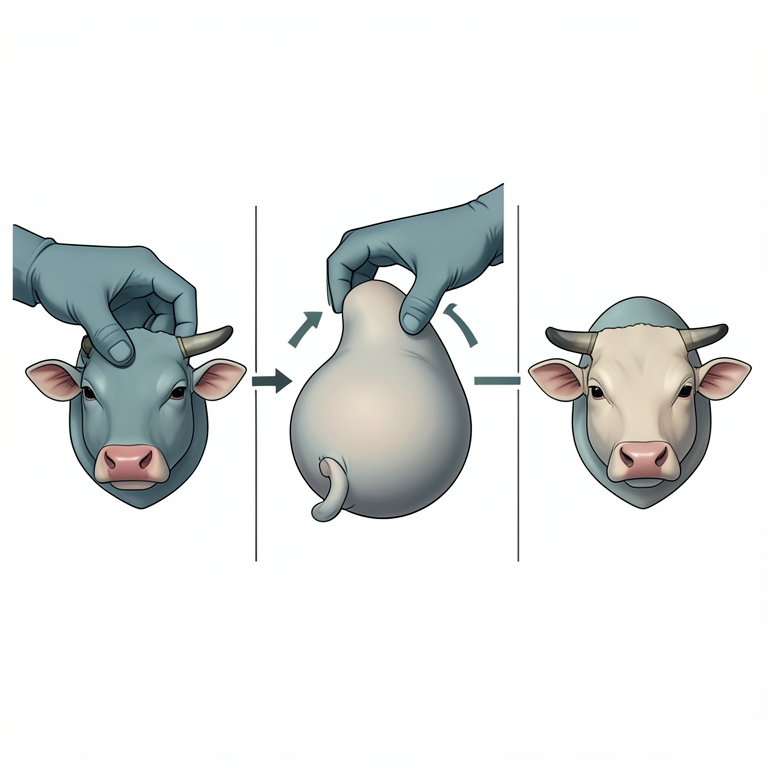
Fetal Head Realignment Process
AI-generated conceptual illustration (Nili Ravi buffalo fetus). It explains the idea and does not show study data.
View source evidence ↗Figures & tables
From the original paper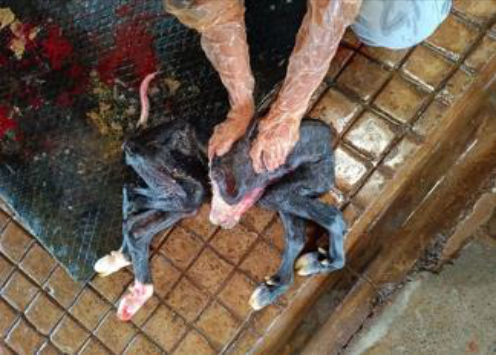 Figure 1
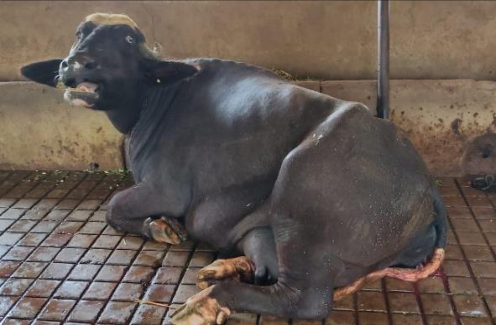 Figure 2
Introduction
Dystocia can be termed as delay or difficulty in normal parturition. The primary reasons for the condition are abnormalities/lack of expulsive force, abnormalities of presentation, position, posture or development of the fetus; and abnormalities of the maternal bony pelvis or birth canal. Abnormality of posture may involve head, neck, forelimbs, hindlimbs or combination of these. However, dystocia due to lateral deviation of fetal head and neck constitutes one of the most common types of postural abnormality in anterior presentation which may arise during late gestation rather than during birth (Noakes et al., 2019) [1] . Srinivas et al, (2007) [2] reported that 41% of dystocia in graded Murrah buffalo was due to fetal cause, among which head deviations contributed significant proportion of cases (42.22%).
Case history and observations
A 9-year-old Nili Ravi buffalo at farm of 'Central Institute for Research on Buffaloes, Sub campus Nabha, Punjab, India" started showing signs of labour at full term. The animal was in lateral recumbency, straining and increased respiration rate. One fetal limb was visible on vulva. On per vaginal examination the other limb was also palpated in birth canal. The fetal head could not be palpated at first. After through screening using lubricated gloved hand, right lateral deviation of head and neck was observed. The fetus was in anterior presentation, dorso-sacral position. No sign of fetal life was observed and onset of rigor mortis was evident.
Treatment and Discussion
Upon per vaginal examination, the case was diagnosed as lateral deviation of head and neck. Epidural anesthesia was administered at sacro-coccygeal joint to alleviate pain sensation and to reduce straining of animal. The maternal birth canal was not dried so the fetus could be retropulsed by applying pressure at brisket region using hand. Fetal head was identified and the muzzle was capped by well lubricated gloved hand. Pressure was then applied dorsally and backward to align fetal head and neck inside maternal birth canal. Thereafter, traction was applied to deliver the fetus (Fig 1). Following fetal delivery, the maternal birth canal was screened to rule out any injury if caused during traction. There was no injury/ tear of reproductive tract. The dam was given pain medication (Inj. Flunixin Meglumine @ 1.1mg/ Kg body weight I/M) and broad-spectrum antibiotic (Inj. Ceftriaxone+ Tazobactum, 4.5 g I/M) for three days. The animal showed no sign of uterine infection and recovered fully without any complications (Fig2). The origin of dystocia can either be maternal or fetal. Jackson, (2004) [3] reported that, out of the total dystocia conditions in large ruminants, fetopelvic disproportion constitute 45% and fetal malpresentation constitute 26%. In buffaloes, significant proportion of dystocia of fetal origin is contributed by lateral head and neck deviation. The case is life saving and relatively easy if identified at early stages. However, majority cases are diagnosed at delayed phase where the maternal birth canal is dried up which makes mutation procedures difficult. Therefore, significant quantity of lubricants (2-3 litres of 1% carboxy methyl cellulose) to be administered in birth canal before retropulsion of fetus. One more important aspect of relieving dystocia due to lateral deviation of head and neck is proper capping of fetal muzzle by palm while rotation at dorsal and backward direction so to minimize injury to maternal birth canal by sharp teeth or bony extremities of fetus. The prognosis is good for dam and for calf (if delivered alive). www.extensionjournal.com
Conclusion
In conclusion, the successful management of dystocia in the 9-year-old Nili Ravi buffalo underscores the importance of timely intervention and proper technique. The use of epidural anesthesia, coupled with gentle manipulation and retropulsion of the fetus, facilitated the delivery process. Moreover, the administration of pain medication and antibiotics ensured the well-being of both the dam and potential calf. This case highlights the prevalence of dystocia in buffaloes, particularly due to fetal malpresentation such as lateral deviation of the head and neck. Early detection and intervention are crucial for a favorable outcome, emphasizing the need for adequate lubrication of the birth canal and careful handling to minimize maternal injuries. with appropriate management, the prognosis for both the dam and calf remains promising.
References
3 in the original paper- Srinivas M, Sreenu M, Lakshmi RN. Studies on dystocia in graded Murrah buffaloes: A retrospective study in a cow. Buffalo Bull. 2007;26:40-45.
- Purohit GN, Kumar P, Solanki K, Shekher C, Yadav SP. Perspectives of fetal dystocia in cattle and buffalo. Veterinary Science Development. 2012 Apr 16;2(1):e8.
- Mota-Rojas D, Bragaglio A, Braghieri A, Napolitano F, Domínguez-Oliva A, Mora-Medina P, et al. Dairy buffalo behavior: Calving, imprinting and allosuckling. Animals. 2022 Oct 22;12(21):2899.