
Research article · 2024 · Full text
International Journal of Research in AgronomyEffect of spacing and nitrogen on growth and yield of foxtail millet (Setaria italica L.)
Volume 7(6S) · Pages 41–44 · DOI: 10.33545/2618060x.2024.v7.i6sa.810 ↗
Research areasAgricultural Science and FertilizationLeaf Properties and Growth MeasurementRice Cultivation and Yield Improvement
Abstract
Author-writtenThe field experiment was conducted during kharif season 2023 at the experimental field of Crop Research Farm, Department of Agronomy, Naini Agricultural Institute, Sam Higginbottom University of Agriculture, Technology and Sciences, Prayagraj, Uttar Pradesh, India. The experiment was layout in Randomized Block Design with ten treatments each replicated thrice. The treatment combinations are mentioned as T1 -25 cm x 10 cm spacing + 30 kg/ha nitrogen, T2 - 25 cm x 10 cm spacing + 40 kg/ha nitrogen, T3 - 25 cm x 10 cm spacing + 50 kg/ha nitrogen, T4 - 30 cm x 10 cm spacing + 30 kg/ha nitrogen, T5 - 30 cm x 10 cm spacing + 40 kg/ha nitrogen, T6 - 30 cm x 10 cm spacing + 50 kg/ha nitrogen, T7 - 35 cm x 10 cm spacing + 30 kg/ha nitrogen, T8 - 35 cm x 10 cm spacing + 40 kg/ha nitrogen, T9 - 35 cm x 10 cm spacing + 50 kg/ha nitrogen, T10 – Control (NPK 40:20:20 kg/ha). The application of 35 cm x 10 cm spacing + 40 kg/ha nitrogen recorded significantly higher Plant height (68.84 cm) (56.93), plant dry weight (6.95 g/plant), number of ear head/m2 (170.8), number of seeds/ear head (181.33), test weight (2.50 g), grain yield (1.06 t/ha).
Summary
Source-checkedPlain-language reading of the full paper, prepared with AI and checked against the text. Each point links to the authors' own words.
Why it matters
- Foxtail millet is a significant minor millet crop from the Poaceae family. View evidence ↗
- The crop is valued for its nutritional properties, including micro-nutrients that benefit diabetic patients and provide protection against heart disease and cancer. View evidence ↗
- Current productivity of foxtail millet is low relative to its potential because of a lack of appropriate crop management practices. View evidence ↗
What they did
- The experiment took place during the 2023 kharif season at the Naini Agricultural Institute's Crop Research Farm in Prayagraj, India. View evidence ↗
- Researchers used a Randomized Block Design consisting of ten different treatment combinations, each replicated three times. View evidence ↗
- Treatments varied spacing (25, 30, or 35 cm x 10 cm) and nitrogen levels (30, 40, or 50 kg/ha), with a control group receiving NPK 40:20:20 kg/ha. View evidence ↗
What they found
- The highest plant height of 56.83 cm was significantly achieved using 35 cm x 10 cm spacing and 40 kg/ha of nitrogen. View evidence ↗
- The maximum number of tillers per square meter (157.33) occurred with 25 cm x 10 cm spacing and 40 kg/ha of nitrogen. View evidence ↗
- The highest plant dry weight of 6.95 g/plant was significantly recorded in the 35 cm x 10 cm spacing and 40 kg/ha nitrogen treatment. View evidence ↗
- Between 40-60 days after sowing (DAS), the highest crop growth rate of 6.62 g/m²/day was found in the 25 cm x 10 cm spacing and 40 kg/ha nitrogen treatment. View evidence ↗
- The highest number of ear heads per square meter (170.80) was recorded at harvest for the 25 cm x 10 cm spacing and 40 kg/ha nitrogen treatment. View evidence ↗
- The 35 cm x 10 cm spacing and 40 kg/ha nitrogen treatment produced the most grains per panicle (181.33). View evidence ↗
- The highest grain yield of 1.06 t/ha was significantly achieved with 35 cm x 10 cm spacing and 40 kg/ha of nitrogen. View evidence ↗
- The highest harvest index of 24.58% was significantly recorded for the 35 cm x 10 cm spacing and 40 kg/ha nitrogen treatment. View evidence ↗
What it means
- The authors conclude that 35 cm x 10 cm spacing combined with 40 kg/ha of nitrogen is the best combination for growth and yield and recommend it to farmers. View evidence ↗
Visual summary
3 visualsIllustrations explain the paper; charts are replotted from the paper's own table values.
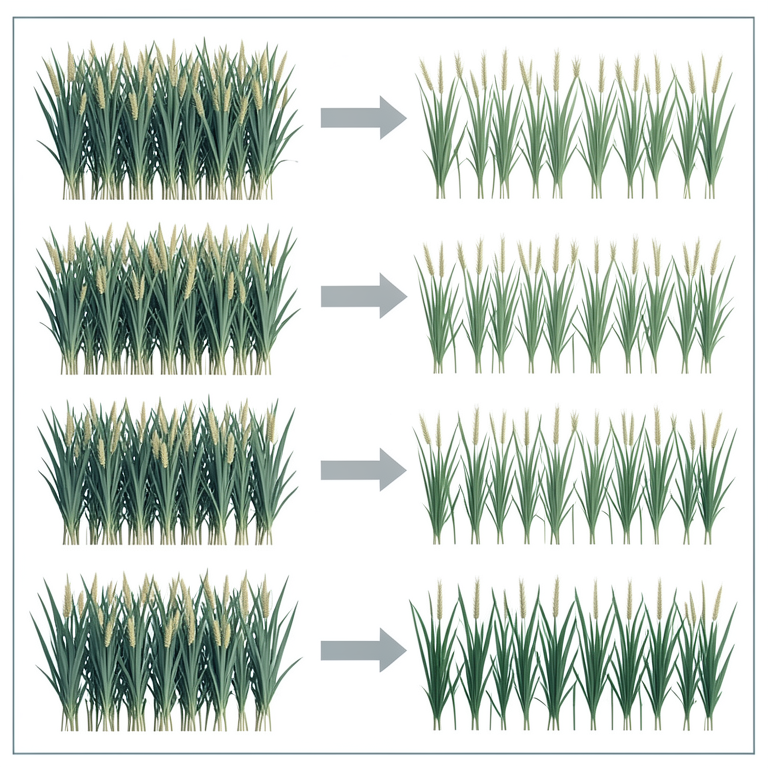
Experimental Treatment Matrix
AI-generated conceptual illustration (foxtail millet (Setaria italica L.)). It explains the idea and does not show study data.
View source evidence ↗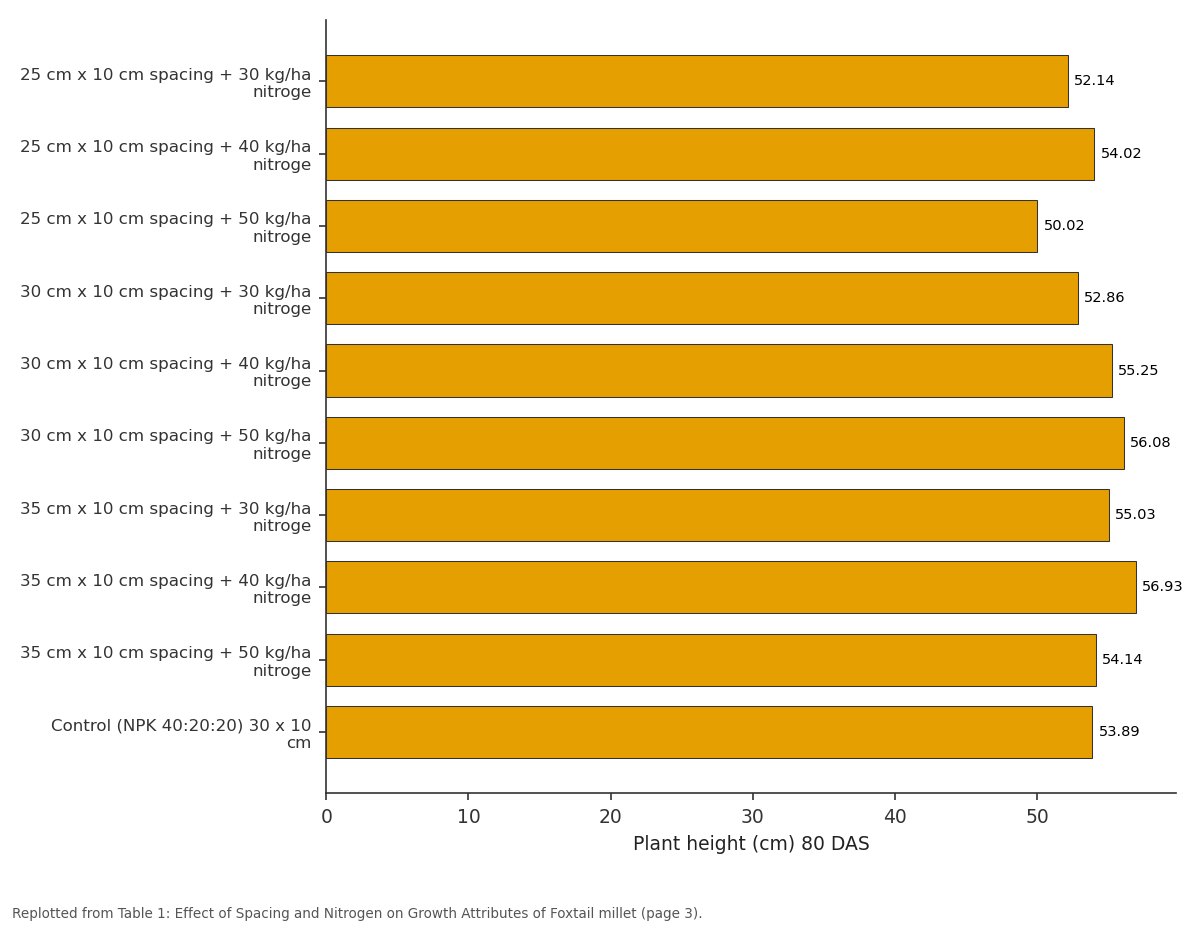
Plant height (cm) 80 DAS: 25 cm x 10 cm spacing +... vs 25 cm x 10 cm spacing +... vs 25 cm x 10 cm spacing +... vs 30 cm x 10 cm spacing +... vs 30 cm x 10 cm spacing +...
Replotted from Table 1 (page 3) of the original paper. Every bar is the paper's own table value.
View source evidence ↗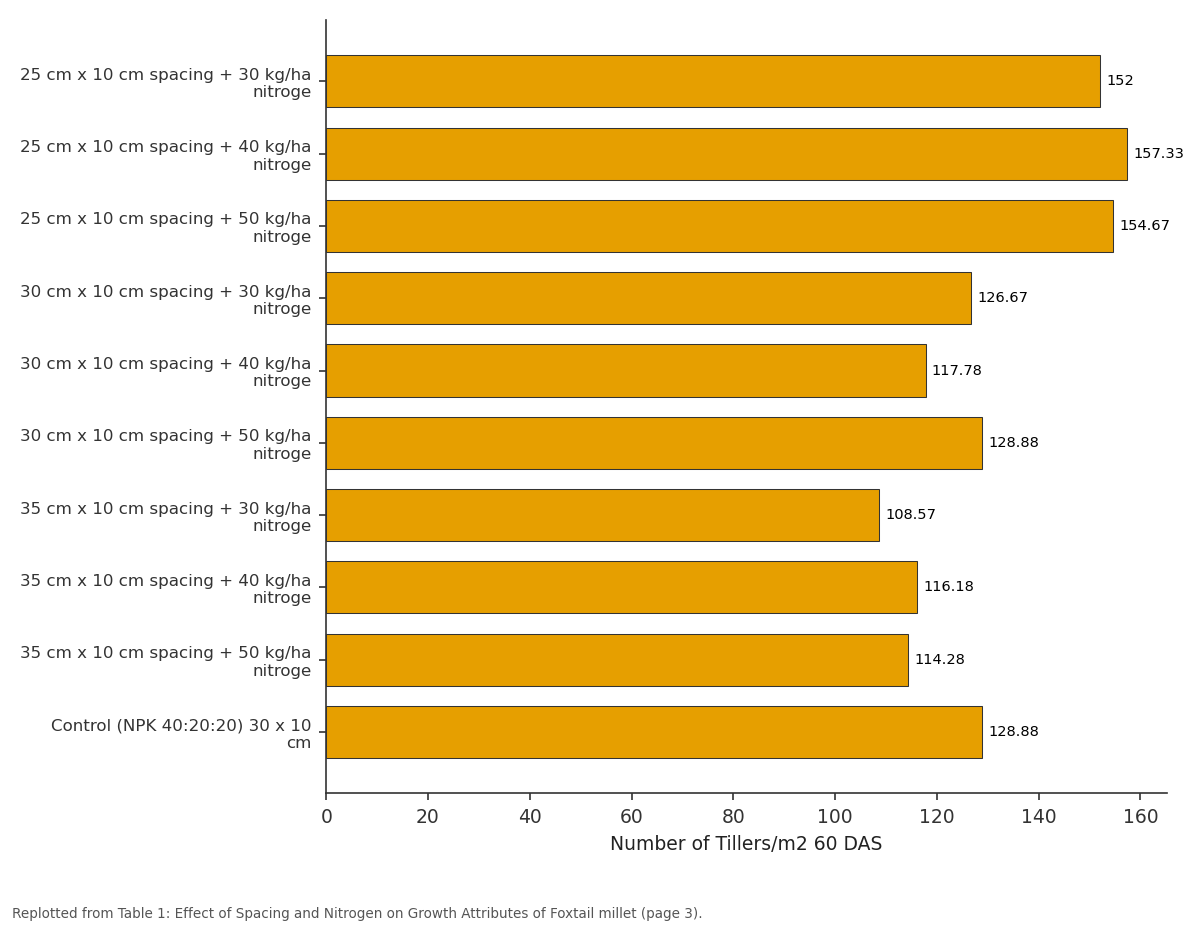
Number of Tillers/m2 60 DAS: 25 cm x 10 cm spacing +... vs 25 cm x 10 cm spacing +... vs 25 cm x 10 cm spacing +... vs 30 cm x 10 cm spacing +... vs 30 cm x 10 cm spacing +...
Replotted from Table 1 (page 3) of the original paper. Every bar is the paper's own table value.
View source evidence ↗Figures & tables
From the original paper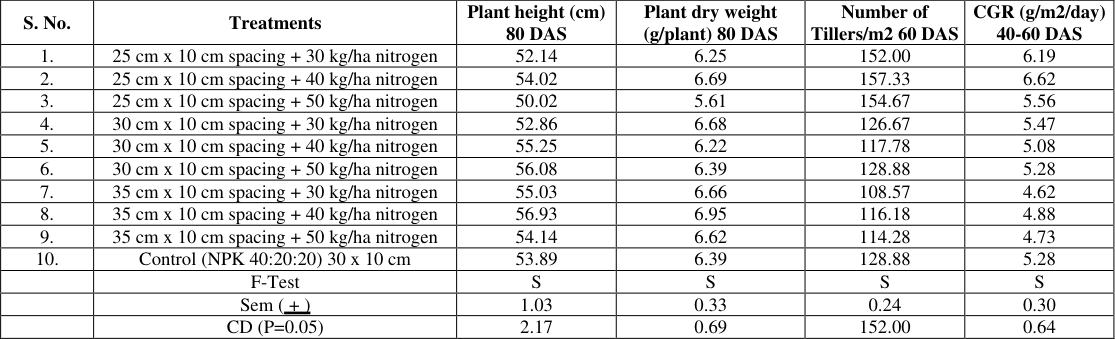 Table 1
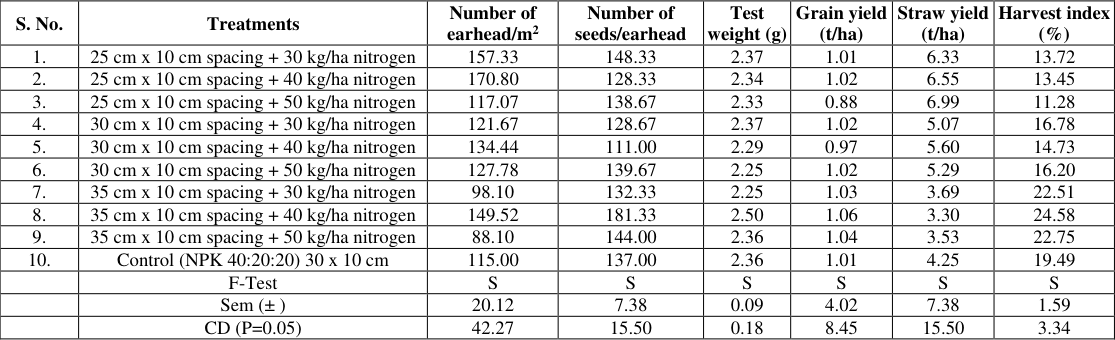 Table 2
Introduction
Foxtail millet (Setaria italica L.) is important minor millet belonging to the family Poaceae. In India, the cultivation of foxtail millet is confined to Andhra Pradesh, Karnataka, and Tamil Nadu. It's grain used for human consumption and a feed for poultry and cage birds. It is used in several food preparations like chapati, fermented bread, biscuits, malts, etc. the stalks are used as fodder. (Marwein et al., 2019) [2] . Foxtail millet is believed to be originated in China. It can grow in altitudes from sea level to 2000 m. It is adapted to a wide range of elevations, soils and temperatures. In India, it is cultivated on about 0.8 lakh ha area with 0.6 lakh tonnes production in Andhra Pradesh, Karnataka, Telangana, Rajasthan, Maharashtra, Tamil Nadu and north eastern states. The area under foxtail millet in India has come down by more than half during 1990's mainly due to introduction of more profitable crops like sunflower and soybean in black soils. Foxtail millet ranks second in the world's total millet production It is rich in micronutrients and good for diabetic patients. It protects against cancer and related heart diseases. Foxtail millet comes under drought tolerant crop and it can be grown as a short-term catch crop. It is adapted to a wide range of elevation, soils, and temperatures. Millets are better adapted to dry, infertile soils than most other crops and are therefore often cultivated under extremely harsh conditions -for example, highest temperatures, low and erratic precipitation, short growing seasons and acidic and infertile soils with poor water-holding capacity. Most millets have strong, deep rooting systems and short life cycles, and can grow rapidly when moisture is available. Foxtail millet is an annual grass grown for human food. It is the second-most widely planted species of millet and the most important in East Asia. This is extensively grown in the arid and semi-arid regions of Asia and Africa, as well as in some other economically developed countries of the world. Nutritional composition of foxtail millet per100 g edible portion is proteins (12.3 g), carbohydrates (60.9 g), fat (4.3 g), crude fibre (8.0 g), calcium (31 mg), minerals (3.3g) and thiamine (0.59 mg). The crop water requirement of foxtail millet is less which is suitable to grow in summer season. The productivity of foxtail millet is very low compared to its potentially achievable yield owing to a lack of suitable crop management practices.
Spacing is one of the major agronomic practices which requires due attention as it is being broadcasted by the farmers. (Jyothi et al., 2021) [1] Varieties of foxtail millet are more responsive to nitrogenous fertilizers. Nitrogen is considered to be an important nutrient for growth and development of plants. It plays an important role in building units of proteins in the plant system. Nitrogen nutrition not only influence productivity but also quality. (Reddy et al., 2019) [7] population causes changes due to light intensity, humidity and temperature within canopy. Under wider spacing, plants tend to put forth a vigorous vegetative growth, while closer spacing tend to restrict the same [1][2][3] . Optimum population level is the one, which provides the plant with the best environment to express its full capacity under the given conditions. Nutritional demand of crop can be determined by measuring nutrient uptake which may change with changing nitrogen rates and plant population In addition, to include millets into the mainstream and exploit its nutritionally superior qualities and promote its cultivation, Government of India has declared Year 2018 as the "Year of Millets" and FAO Committee on Agriculture forum has declared Year 2023 as "International Year of Millets" [11] .
Materials and Methods
The experiment was carried out during the kharif season of 2022 at Crop Research Farm, Department of Agronomy, Naini Agricultural Institute, SHUATS, Prayagraj (Allahabad) which is located at 25o 24' 42" N latitude, 81o 50' 56" E longitude, and 98 m altitude above the mean sea level. This area is situated on the right side of the river Yamuna by the side of Allahabad Rewa Road about 5 km away from Prayagraj (Allahabad) city. The soil of the experimental field constitutes a part of central gangetic alluvium and is neutral and deep. The soil was sandy loam in texture, low in organic carbon and medium in available nitrogen, phosphorus, and low in potassium and zinc. The soil samples were collected randomly from 5spots at 0 to 15 cm depth with the help of auger just before layout of experiment. The soil reaction of the sandy was 15.13%, the organic Carbon was 1.48%, the available, the phosphorus was 13.6 Kg/ha, the potassium was 215.4 Kg/ha, the zinc was 0.76ppm. Foxtail millet (Setaria italica L.) variety 3088 were selected for sowing. Seeds were sown in line manually on 2023. Seeds were covered with the soil immediately after sowing. The spacing adopted was according to the treatment details and the seeds were drilled at 3-4 cm depth. All the treatments were applied by balancing to the initial soil test values and crop requirements to justify the crop response to the supplied nutrients in both years.
Results and Discussion
Growth Parameters Plant height Data in Table 1, tabulated that significantly the highest plant height (56.83) was observed in treatment-8 (35 cm x 10 cm spacing + 40 kg/ha nitrogen) over all the other treatments. However, treatment-6 (30 cm x 10 cm spacing + 50 kg/ha nitrogen) and treatment-5 (30 cm x 10 cm spacing + 40 kg/ha nitrogen) were found to be significantly at par with treatment-8 (35 cm x 10 cmspacing + 40 kg/ha nitrogen) as compared to all the treatments. Increase in plant height might be due to boosting of cellular division, production of growth promoting hormones, meristematic activity combined with increase in length and size of cells and intercellular spaces producing longer plants. The results are in consonance with the findings of Ramyasri (2018) [4] , Radha Kumari et al., (2017) [8] and Shanthi et al., (2017) [8] . Spacing shows the higher plant height, inthe foxtail millet. It might be due to better utilization of minerals, nutrients, water, solar radiation etc. Similar findings were also reported by Yadav et al., (2023) [11] .
| S. No. | Treatments | Plant height (cm) 80 DAS | Plant dry weight (g/plant) 80 DAS | Number of Tillers/m2 60 DAS | CGR (g/m2/day) 40-60 DAS |
|---|---|---|---|---|---|
| 1. | 25 cm x 10 cm spacing + 30 kg/ha nitrogen | 52.14 | 6.25 | 152.00 | 6.19 |
| 2. | 25 cm x 10 cm spacing + 40 kg/ha nitrogen | 54.02 | 6.69 | 157.33 | 6.62 |
| 3. | 25 cm x 10 cm spacing + 50 kg/ha nitrogen | 50.02 | 5.61 | 154.67 | 5.56 |
| 4. | 30 cm x 10 cm spacing + 30 kg/ha nitrogen | 52.86 | 6.68 | 126.67 | 5.47 |
| 5. | 30 cm x 10 cm spacing + 40 kg/ha nitrogen | 55.25 | 6.22 | 117.78 | 5.08 |
| 6. | 30 cm x 10 cm spacing + 50 kg/ha nitrogen | 56.08 | 6.39 | 128.88 | 5.28 |
| 7. | 35 cm x 10 cm spacing + 30 kg/ha nitrogen | 55.03 | 6.66 | 108.57 | 4.62 |
| 8. | 35 cm x 10 cm spacing + 40 kg/ha nitrogen | 56.93 | 6.95 | 116.18 | 4.88 |
| 9. | 35 cm x 10 cm spacing + 50 kg/ha nitrogen | 54.14 | 6.62 | 114.28 | 4.73 |
| 10. | Control (NPK 40:20:20) 30 x 10 cm | 53.89 | 6.39 | 128.88 | 5.28 |
| F-Test | S | S | S | S | |
| Sem ( + ) | 1.03 | 0.33 | 0.24 | 0.30 | |
| CD (P=0.05) | 2.17 | 0.69 | 152.00 | 0.64 |
Table text extracted from the original PDF; superscript letters are shown inline. The original table image is below.
View original table image
Number of tillers/m 2
The highest no. of tillers per m2 (157.33) was observed in the treatment-2 (25 cm x 10 cm spacing + 40 kg/ha nitrogen), which was significantly higher over rest of the treatments. However, the treatments 3 (25 cm x 10 cm spacing + 50 kg/ha nitrogen) was found to be statistically at par with treatment-2 (25 cm x 10 cm spacing + 40 kg/ha nitrogen). Nitrogen improves the improvement of strong cell walls and consequently, straw which might be resulted into profuse tillering. These results are already in agreement reported by Rajput (2008) [3] . Nitrogen role in increased supply of auxins, synthesis of growth promoting hormones like cytokinin enhanced the production and activation of tiller of all the shoot nodes might be the reason for production of significantly more number of tillers/m 2 . These findings are in consonance with Ramyasri (2018) [4] and Raundal and Patil (2017) [6] .
Plant dry weight
Treatment-8 (35 cm x 10 cm spacing + 40 kg/ha nitrogen) was recorded with a significantly maximum dry weight (6.95g/plant) over all the treatments. However, the treatment-2 (25 cm x10 cm spacing + 40 kg/ha nitrogen), treatment-4, which were found to be statistically at par withtreatment-8 (35 cm x 10 cm spacing + 40 kg/ha nitrogen). Spacing shows the higher dry weight itmight be due to better utilization of minerals, nutrients, water, solar radiation etc. Yadav et al., (2023) [11] . Nitrogen application which has many important functions in plant growth and development, such as involvement in the biosynthesis of chlorophyll, respiration, chloroplast development and improves the performance of photosystems, which resulted in higher dry weight.
Crop growth rate (g/m 2 /day) At 40-60 DAS, a significant and higher crop growth rate (6.62 g/m2/day) was recorded in treatment-2 (25 cm x 10 cm spacing + 40 kg/ha nitrogen) as compared to rest of the treatments. However, treatment-1 (25 cm x 10 cm spacing + 30 kg/ha nitrogen) were found to be statistically at par with treatment-2.
Yield attributes Number of ear head/m 2
At harvest, the data recorded highest number of ear head/m2 (170.80) in treatment 2 [25 cm x 10 cm spacing + 40 kg/ha nitrogen]. However, treatment 1 [25 cm x 10 cm spacing + 30 kg/ha nitrogen] was statistically at par with treatment 2.
Number of seeds/ear head
At harvest, the data recorded more grains/panicle (181.33) in treatment 8 [35 cm x 10 cm spacing + 40 kg/ha nitrogen]. However, treatment 1 [25 cm x 10 cm spacing + 30 kg/ha nitrogen] was statistically at par with treatment 8.Nitrogen provides potential for many of the enzymatic transformations. Several of these enzymes are involved in chlorophyll synthesis and grain formation resulting in higher grains/panicle. Similar results are observed by Vaja et al. 2020 [10] .
The data recorded higher test weight (2.50 g) in treatment 8 [35 cm x 10 cm spacing + 40 kg/ha nitrogen] there was no statistical difference among the treatments.
Significantly highest grain yield (1.06 t/ha) was recorded with treatment-8 (35 cm x 10 cm spacing + 40 kg/ha nitrogen) over all the treatments. However, treatment-9 (35 cm x 10 cm spacing + 50 kg/ha nitrogen) was found to be statistically at par with treatment-8 (35 cm x 10 cmspacing + 40 kg/ha nitrogen). The sufficient amount of sunlight promotes efficient photosynthesis activities and ultimately greater accumulation of photosynthates under wider spacing. Yadav et al., (2023) [11] . Nitrogen plays a major role in the biosynthesis of IAA and especially due to its role in the initiation of primordial reproductive parts portioning of photosynthetic towards them which promotes the grain yield. Rao et al., (2019) [5] .
Application of 50 kg/ha nitrogen along with 25 cm x 10 cm spacing over all the treatments (6.99 t/ha) was recorded highest straw yield. However, the treatment-2 (25 cm x 10 cm spacing + 40 kg/ha nitrogen) were found to be statistically at par with treatment-3 (25 cm x 10 cm spacing + 50 kg/ha nitrogen). More uptake of nutrients by application of nitrogen probably favored better growth and development of crops, resulting into increased fodder yield. These findings corroborate the results of Tiwana et al., (2004) [9] .
Significantly highest harvest index (24.58%) was recorded in treatment-8 (35 cm x 10 cm spacing + 40 kg/ha nitrogen) over all the treatments. However, the treatment-9 (35 cm x 10 cm spacing + 50kg/ha nitrogen) were found to be statistically at par with treatment-8 (35 cm x 10 cm spacing + 40 kg/ha nitrogen).
Conclusion
Based on experimental findings it is concluded that Treatment -8 (35 cm x 10 cm spacing + 40 kg/ha nitrogen) performed better in growth and yield attributes and hence, can be recommended to the farmers.
Figures and tables from the paper
| S. No. | Treatments | Number of earhead/m2 | Number of seeds/earhead | Test weight (g) | Grain yield (t/ha) | Straw yield (t/ha) | Harvest index (%) |
|---|---|---|---|---|---|---|---|
| 1. | 25 cm x 10 cm spacing + 30 kg/ha nitrogen | 157.33 | 148.33 | 2.37 | 1.01 | 6.33 | 13.72 |
| 2. | 25 cm x 10 cm spacing + 40 kg/ha nitrogen | 170.80 | 128.33 | 2.34 | 1.02 | 6.55 | 13.45 |
| 3. | 25 cm x 10 cm spacing + 50 kg/ha nitrogen | 117.07 | 138.67 | 2.33 | 0.88 | 6.99 | 11.28 |
| 4. | 30 cm x 10 cm spacing + 30 kg/ha nitrogen | 121.67 | 128.67 | 2.37 | 1.02 | 5.07 | 16.78 |
| 5. | 30 cm x 10 cm spacing + 40 kg/ha nitrogen | 134.44 | 111.00 | 2.29 | 0.97 | 5.60 | 14.73 |
| 6. | 30 cm x 10 cm spacing + 50 kg/ha nitrogen | 127.78 | 139.67 | 2.25 | 1.02 | 5.29 | 16.20 |
| 7. | 35 cm x 10 cm spacing + 30 kg/ha nitrogen | 98.10 | 132.33 | 2.25 | 1.03 | 3.69 | 22.51 |
| 8. | 35 cm x 10 cm spacing + 40 kg/ha nitrogen | 149.52 | 181.33 | 2.50 | 1.06 | 3.30 | 24.58 |
| 9. | 35 cm x 10 cm spacing + 50 kg/ha nitrogen | 88.10 | 144.00 | 2.36 | 1.04 | 3.53 | 22.75 |
| 10. | Control (NPK 40:20:20) 30 x 10 cm | 115.00 | 137.00 | 2.36 | 1.01 | 4.25 | 19.49 |
| F-Test | S | S | S | S | S | S | |
| Sem (± ) | 20.12 | 7.38 | 0.09 | 4.02 | 7.38 | 1.59 | |
| CD (P=0.05) | 42.27 | 15.50 | 0.18 | 8.45 | 15.50 | 3.34 |
Table text extracted from the original PDF; superscript letters are shown inline. The original table image is below.
View original table image
References
11 in the original paper- Jyothi KN, Sumathi V, Subramanyam D, Sudhakar P, Krishna TG, Sagar GK. Productivity and profitability of foxtail millet (Setaria italica L.) as influenced by varied agro techniques under southern agro-climatic zone of Andhra Pradesh. The Pharma Innovation Journal. 2021;10(7):907-911.
- Marwein BS, Singh R, Chhetri P. Effect of integrated nitrogen management on yield and economics of foxtail millet genotypes. International Journal of Current Microbiology and Applied Sciences. 2019;8(8):2543-2546.
- Rajput SC. Effect of integrated nutrient management on productivity and monetary returns of pearl millet (Pennisetum glaucum L.). Research on Crops. 2008;9(2):248-250.
- Ramyasri K, Ramana AV, Upendra Rao A, Guru Murthy P. Nutrient uptake vis a vis grain yield of foxtail millet varieties as influenced by nitrogen levels in rice fallows. International Journal of Current Microbiology and Applied Sciences. 2018;7(9):2626-2629.
- Rao V, Yadav BJKS, Jeeterwal RC. Response of pearl millet (Pennisetum glaucum L.) to integrated nitrogen management. International Journal of Current Microbiology and Applied Sciences. 2019;8(2):429-437.
- Raundal PU, Patil VU. Response of little millet varieties to different levels of fertilizers under rainfed condition. International Advanced Research Journal in Science, Engineering and Technology. 2017;4(8):55-58.
- Reddy UM, Roja M, Reddy MD, Barman S. Effect of nitrogen and phosphorus management on growth and yield of foxtail millet [Setaria italica L.] during summer season in Odisha, India. Indian Journal of Agricultural Research. 2019;A-5322:1-5.
- Shanthi P, RadhaKumari C, Niveditha M, Reddy PKY, Reddy S. Genetic variability studies in Italian millet (Setaria italica (L.) Beauv) varieties under rainfed conditions in scarce rainfall zone of Andhra Pradesh. The Andhra Agricultural Journal. 2017;64(2):330-334.
- Tiwana MS, Puri KP, Tiwana US, Singh A. Forage production potential of napier bajra hybrid varieties under different nitrogen levels. Forage Res. 2004;30(2):83-85.
- Vaja RP, Bhuva HM, Mokariya LK, Jani CP. Effect of zinc and iron fortification on growth and yield of summer pearl millet (Pennisetum glaucum (L.) R. Br. Emend. Stuntz). International Journal of Current Microbiology Applied Sciences. 2020;9(10):2699-2704.
- Yadav BB, Singh R, Thakur I, Pradhan A. Effect of spacing and potassium levels on growth and yield of foxtail millet (Setaria italica L). International journal of plant & soil science. 2023;35(5):46-52.
Cited by 1
From OpenAlex, OpenCitations and reference lists read by Scinovex
- A New Early Maturing, Yellowish Grain and Non-glutinous Foxtail Millet (Setaria italica B eauv.) Variety ‘Olchanme’ ↗
Ju Hyun Im, Hye-Lim Moon, Sol-Ji Noh, Woo-Ri Han, Jae-ho Park, J Kim et al. · Korean Journal of Breeding Science · 2026
‘Olchanme’ is a new foxtail millet variety developed by Chungcheongbukdo Agricultural Research & Extension Service from 2011 to 2021. This variety was collected in Jecheon and developed through pure-line selection. The culm length of ‘Olchanme’ is similar to that of the standard variety ‘Samdame,’ but its panicle length is longer. The panicle shape differs between ‘Olchanme’ and ‘Samdame,’ but other…
❝ 0PDF