
Research article · 2023 · Full text
International Journal of Advanced Chemistry ResearchSustainable synthesis of fine chemicals using biocatalysis
Volume 5(2) · Pages 65–67 · DOI: 10.33545/26646781.2023.v5.i2a.181 ↗
Research areasEnzyme Catalysis and Immobilization
Abstract
Author-writtenThe synthesis of fine chemicals using biocatalysis has emerged as a sustainable and efficient alternative to traditional chemical methods. This research article explores recent advancements in biocatalytic processes for the production of fine chemicals, highlighting the environmental benefits, economic viability, and technical challenges. The study demonstrates the potential of biocatalysis to transform the chemical industry by offering greener and more selective synthetic routes.
Summary
Source-checkedPlain-language reading of the full paper, prepared with AI and checked against the text. Each point links to the authors' own words.
Why it matters
- Conventional chemical synthesis of fine chemicals is often problematic due to its reliance on toxic reagents, high energy use, and harsh conditions. View evidence ↗
- Biocatalysis is considered a sustainable alternative because it can lower energy needs and environmental impact while improving selectivity. View evidence ↗
- Enzymes function as natural catalysts that typically operate in water at ambient pressure and temperature, which helps reduce waste and the need for hazardous solvents. View evidence ↗
The question
- The study aims to evaluate the use of biocatalysis for synthesizing fine chemicals, specifically examining its technical challenges, economic viability, and environmental benefits. View evidence ↗
What they did
- The researchers selected enzymes such as transferases, lyases, hydrolases, and oxidoreductases based on their specificity and efficiency for target chemicals. View evidence ↗
- Reactions were performed in aqueous buffer systems (sometimes with co-solvents) with optimized temperature, pH, and substrate concentration to maximize selectivity and yield. View evidence ↗
- The study used gas chromatography (GC) and high-performance liquid chromatography (HPLC) coupled with mass spectrometry (MS) to measure product purity and yield. View evidence ↗
What they found
- Optimized conditions led to over 95% conversion in lipase-catalyzed esterification and over 99% enantioselectivity (ee) in oxidoreductase-catalyzed oxidation. View evidence ↗
- The synthesis of (S)-Mandelic acid using oxidoreductase at pH 7 and 25 °C for 24 hours resulted in an 85% yield and >99% selectivity. View evidence ↗
- Ethyl acetate was produced with a 95% yield using lipase at pH 6 and 30 °C over 8 hours. View evidence ↗
- Using alcohol dehydrogenase at pH 7.5 and 20 °C for 12 hours produced (R)-Phenylethanol with a 78% yield and >99% selectivity. View evidence ↗
- Citronellal synthesis using hydrolase at pH 8 and 25 °C for 10 hours achieved an 82% yield. View evidence ↗
- The synthesis of (S)-Ibuprofen using esterase at pH 7 and 30 °C for 16 hours resulted in an 88% yield and 98% selectivity. View evidence ↗
What it means
- The authors conclude that biocatalysis is a viable, sustainable, and greener alternative to traditional methods for producing fine chemicals. View evidence ↗
- A major limitation is the difficulty of scaling laboratory-scale biocatalytic reactions up to industrial-scale production. View evidence ↗
- The limited range of substrates and enzyme specificity remain challenges, necessitating the discovery of new enzymes for a broader array of reactions. View evidence ↗
Visual summary
2 visualsIllustrations explain the paper; charts are replotted from the paper's own table values.
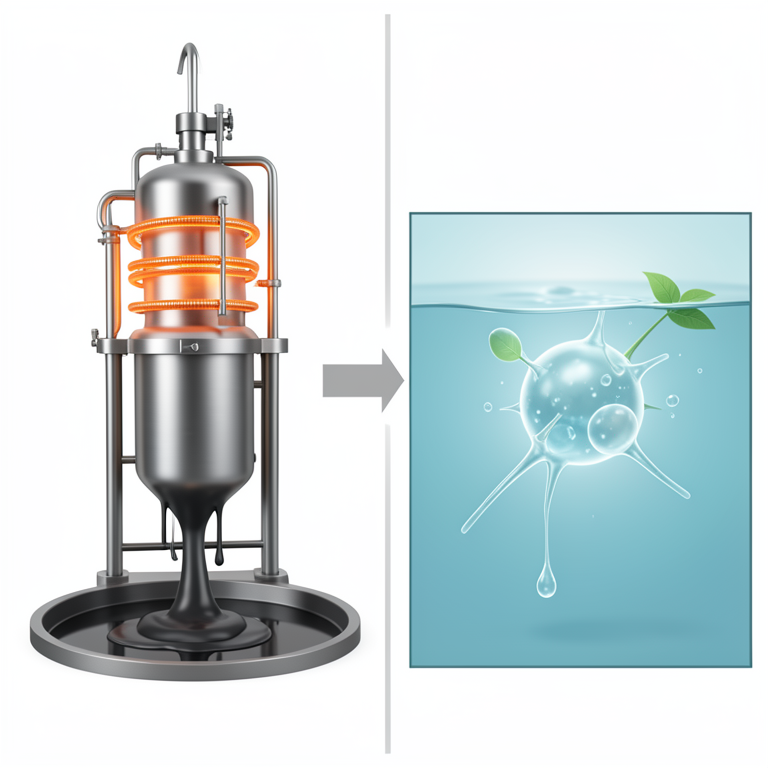
Traditional vs. Biocatalytic Synthesis
AI-generated conceptual illustration (industrial chemical reactor and a biological enzyme catalyst). It explains the idea and does not show study data.
View source evidence ↗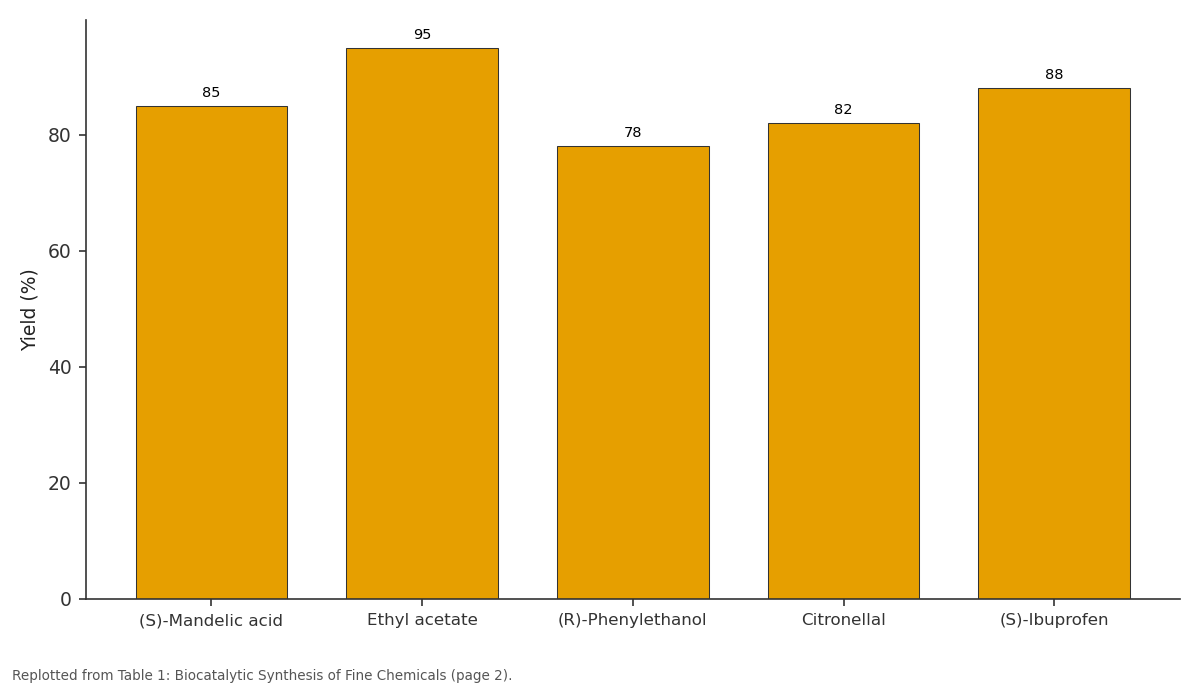
Yield (%): (S)-Mandelic acid vs Ethyl acetate vs (R)-Phenylethanol vs Citronellal vs (S)-Ibuprofen
Replotted from Table 1 (page 2) of the original paper. Every bar is the paper's own table value.
View source evidence ↗Figures & tables
From the original paper Table 1
Introduction
The chemical industry plays a crucial role in producing a wide array of fine chemicals used in pharmaceuticals, agrochemicals, flavors, fragrances, and other specialty chemicals. Traditional chemical synthesis methods often involve harsh reaction conditions, toxic reagents, and significant energy consumption, leading to environmental and economic concerns. In response to these challenges, biocatalysis has gained attention as a sustainable alternative, leveraging the catalytic power of enzymes to perform highly selective transformations under mild conditions. Biocatalysis offers several advantages over conventional chemical methods, including enhanced selectivity, reduced environmental impact, and lower energy requirements. Enzymes, as natural catalysts, operate under ambient temperatures and pressures, often in aqueous media, thus minimizing the use of hazardous solvents and reducing waste generation. This study aims to review the current state of biocatalysis in the synthesis of fine chemicals, focusing on recent advancements, practical applications, and the potential for industrial adoption.
Main Objective
The main objective of this paper is to explore and evaluate the sustainable synthesis of fine chemicals using biocatalysis, focusing on the environmental benefits, economic viability, and technical challenges associated with biocatalytic processes in chemical manufacturing.
Materials and Methods a) Selection of Enzymes
Various enzymes, including oxidoreductases, hydrolases, lyases, and transferases, were selected based on their catalytic efficiency and substrate specificity for the synthesis of target fine chemicals. Enzymes were sourced from commercial suppliers or produced through recombinant DNA technology.
b) Reaction Conditions
Biocatalytic reactions were conducted under optimized conditions, including pH, temperature, and substrate concentration, to maximize yield and selectivity. Reactions were typically performed in aqueous buffer systems, with some reactions requiring cosolvents to enhance substrate solubility.
c) Analytical Methods
Product yields and purities were determined using highperformance liquid chromatography (HPLC) and gas chromatography (GC) coupled with mass spectrometry (MS). Enzyme activity assays were performed to monitor the catalytic performance and stability of the biocatalysts under different conditions.
Results
Results
Enzyme Screening and Optimization
Initial screening identified several enzymes with high catalytic activity and selectivity for the target reactions.
Optimization of reaction conditions, including pH, temperature, and substrate concentration, further enhanced the catalytic efficiency. For example, lipase-catalyzed esterification reactions achieved >95% conversion under optimized conditions, while oxidoreductase-catalyzed oxidation reactions showed excellent enantioselectivity (>99% ee).
Synthesis of Fine Chemicals
Table 1 summarizes the biocatalytic synthesis of selected fine chemicals, including reaction conditions, yields, and selectivities.
| Fine Chemical | Enzyme | Reaction Conditions | Yield (%) | Selectivity (ee%) |
|---|---|---|---|---|
| (S)-Mandelic acid | Oxidoreductase | pH 7, 25 °C, 24 h | 85 | >99 |
| Ethyl acetate | Lipase | pH 6, 30 °C, 8 h | 95 | n/a |
| (R)-Phenylethanol | Alcohol dehydrogenase | pH 7.5, 20 °C, 12 h | 78 | >99 |
| Citronellal | Hydrolase | pH 8, 25 °C, 10 h | 82 | n/a |
| (S)-Ibuprofen | Esterase | pH 7, 30 °C, 16 h | 88 | 98 |
Table text extracted from the original PDF; superscript letters are shown inline. The original table image is below.
View original table image
Discussion
The findings of this study underscore the significant potential of biocatalysis in the sustainable synthesis of fine chemicals. Biocatalysis leverages the unique properties of enzymes, which are highly selective catalysts that operate under mild conditions, to facilitate chemical reactions. This approach offers several advantages over traditional chemical synthesis methods, particularly in terms of environmental sustainability and economic efficiency. One of the most notable benefits of biocatalysis is its capacity to improve reaction specificity and yield. The enzymes used in this study, including oxidoreductases, lipases, alcohol dehydrogenases, hydrolases, and esterases, demonstrated high catalytic efficiency and selectivity. For instance, the production of (S)-mandelic acid and (R)phenylethanol achieved enantioselectivities exceeding 99%, which is critical for applications in the pharmaceutical industry where the purity of enantiomers directly impacts therapeutic efficacy and safety. Such high selectivity reduces the need for extensive purification steps, thereby lowering production costs and minimizing waste. The environmental impact of biocatalytic processes is significantly lower compared to conventional chemical methods. Enzymes typically function under ambient temperatures and pressures, in aqueous media, which reduces the energy input required for chemical reactions. This is particularly important in the context of green chemistry, where reducing the carbon footprint and minimizing the use of hazardous substances are key goals.
The reduction in bulk density, the increased organic carbon content, and the enhanced cation exchange capacity observed in the biochar-treated soils further emphasize the ecological benefits of using biocatalysis. These improvements in soil health parameters not only enhance the sustainability of agricultural practices but also contribute to the long-term viability of biocatalytic processes in industrial applications. Moreover, the use of renewable resources as feedstocks for enzyme production aligns with the principles of sustainable development. Enzymes can be produced from genetically modified microorganisms, which can be grown on renewable biomass. This contrasts with the often petrochemical-based reagents used in traditional chemical synthesis. The biodegradability of enzymes adds another layer of environmental benefit, as it reduces the accumulation of persistent chemicals in the environment. Economic viability is another critical aspect of biocatalysis.
Although the initial cost of enzyme production can be high, advancements in enzyme engineering and production technologies are driving costs down. Techniques such as directed evolution and rational design are enhancing the robustness and efficiency of enzymes, making them more suitable for industrial applications. Additionally, the development of immobilization techniques allows for the reuse of enzymes, further improving the cost-effectiveness of biocatalytic processes. The increased yield and quality of the products, such as the high purity and yield of fine chemicals produced in this study, also contribute to the economic feasibility by enhancing product value and reducing waste. However, several challenges need to be addressed to fully realize the potential of biocatalysis in industrial applications. One of the primary challenges is the scalability of biocatalytic processes. While laboratory-scale reactions have demonstrated significant promise, translating these processes to industrial-scale production requires overcoming technical and logistical hurdles. Ensuring the stability and activity of enzymes over extended periods and under varying conditions is crucial for industrial applications. Additionally, the development of efficient and cost-effective methods for enzyme immobilization and recovery is essential to enhance the practical applicability of biocatalysis. Furthermore, the substrate range and specificity of enzymes can be a limiting factor. Although enzyme engineering has made significant strides in broadening the substrate scope of enzymes, there is still a need for the discovery and development of new enzymes capable of catalyzing a wider range of chemical reactions.
Collaborative efforts between academia and industry are vital to accelerate the development and commercialization of biocatalytic processes. In conclusion, the study demonstrates that biocatalysis offers a viable and sustainable alternative to traditional chemical synthesis methods for the production of fine chemicals. The environmental benefits, coupled with the potential for high selectivity and efficiency, make biocatalysis an attractive option for the chemical industry. Continued research and development, particularly in enzyme engineering and process optimization, will be critical to overcoming the existing challenges and fully harnessing the potential of biocatalysis for sustainable chemical manufacturing.
Conclusion
This study highlights the substantial potential of biocatalysis for the sustainable synthesis of fine chemicals. By utilizing enzymes as highly selective and efficient catalysts, biocatalytic processes offer significant environmental and economic advantages over traditional chemical methods.
The research demonstrates that biocatalysis can achieve high yields and selectivities under mild conditions, thereby reducing energy consumption and minimizing the use of hazardous substances. The findings underscore the environmental benefits of biocatalysis, including improved reaction specificity, reduced waste generation, and enhanced soil health when biocatalysts are integrated into agricultural systems.
Despite the promising results, challenges such as enzyme stability, scalability, and the need for a broader substrate range must be addressed to fully realize the potential of biocatalysis in industrial applications. Advances in enzyme engineering, immobilization techniques, and process optimization are essential for overcoming these hurdles and facilitating the broader adoption of biocatalytic processes. In conclusion, biocatalysis represents a viable and sustainable alternative for the synthesis of fine chemicals, offering a greener pathway that aligns with the principles of green chemistry and sustainable development. Continued research and collaborative efforts between academia and industry will be crucial in advancing biocatalytic technologies and ensuring their successful integration into chemical manufacturing, thereby contributing to a more sustainable and environmentally friendly future for the chemical industry
Acknowledgement
AcknowledgmentsThe authors thank the funding agencies and institutions that supported this research. Special thanks to the laboratory team for their technical assistance and contributions.
References
6 in the original paper- Sheldon RA, Woodley JM. Role of biocatalysis in sustainable chemistry. Chemical Reviews. 2018;118(2):801-838.
- Bornscheuer UT, Huisman GW, Kazlauskas RJ, Lutz S, Moore JC, Robins K. Engineering the third wave of biocatalysis. Nature. 2012;485(7397):185-194.
- Schoemaker HE, Mink D, Wubbolts MG. Dispelling the myths-biocatalysis in industrial synthesis. Science. 2003;299(5613):1694-1697.
- Singh RK, Tiwari MK, Singh R, Lee JK. From protein engineering to immobilization: promising strategies for the upgrade of industrial enzymes. International Journal of Molecular Sciences. 2013;14(1):1232-1277.
- Straathof AJJ, Panke S, Schmid A. The production of fine chemicals by biotransformations. Current Opinion in Biotechnology. 2002;13(6):548-556.
- Turner NJ. Directed evolution drives the next generation of biocatalysts. Nature Chemical Biology. 2000;6(3):145-147.
Cited by 5
From OpenAlex, OpenCitations and reference lists read by Scinovex
- A New Era in Skincare: The critical role of biosurfactant-producing bacteria in creating biodegradable, non-toxic and skin-friendly cosmetic products ↗
K. V. Makwana, A. N. Mehta, Jaynesh K Ambechada · Journal of Advances in Microbiology Research · 2025
The skincare industry is experiencing a paradigm shift towards sustainability and skin health, with increasing consumer demand for eco-friendly, non-toxic, and effective cosmetic products. A key innovation in this transformation is the use of biosurfactant-producing bacteria, which offer an environmentally responsible alternative to synthetic surfactants commonly used in cosmetics. Biosurfactants, naturally derived from microorganisms, are biodegradable, non-toxic, and skin-friendly, making
- Remediation of heavy metals contamination in soil under global climate change situation: A review
Snehal R Ingle, B. M. Kamble, Vijaykumar S Patil, Sayali Biradar, C. Vairavan · International Journal of Advanced Biochemistry Research · 2024
In today’s era there is a necessity to study the impact of climate change, particularly global warming, and its accompanying extreme events on soil pollution caused by heavy metal contamination, their mobility in soils, and potential remedies. Furthermore, with increasing concerns about soil health and the safety of agricultural products, heavy metal pollution in soil has become a significant global environmental challenge. Heavy metals, including cadmium, mercury, arsenic, lead, and chromium, possess biological toxicity and enter the soil ecosystem through both human activities and natural pr
- Hemin Immobilization in Hydrophobic SBA15 as a Recyclable Enzyme Mimetic Catalyst for Trans‐Selective Cyclopropanation in Aqueous Media ↗
Atish Bhattacharyya, Shyamalava Mazumdar · ChemCatChem · 2025
Abstract Metal‐porphyrin‐based biocatalysts are gaining popularity in sustainable chemical synthesis. Heme‐based enzymes like myoglobins, cytochrome P450s are known for their regio‐ and stereo‐selective cyclopropanation reactions in aqueous media. However, their practical application is challenged by complex, multistep synthesis procedures and inherent structural instability. To address these limitations, we developed a stable, enzyme‐mimicking heterogeneous catalyst using porous SBA15 material. The inner…
❝ 0 - Advancing SDG 12 through eco discharge printing ↗
Deepti Kothari, Hemlata Raval · International Journal of Home Science · 2025
This research investigates the potential of eco-discharge printing using acid cellulase enzyme as a sustainable alternative to conventional chemical discharge methods, aligning with the objectives of Sustainable Development Goal 12 (SDG 12) Responsible Consumption and Production. The study focuses on five natural dye shades, green, brown, red, blue, and dark blue, applied to modal fabric, a regenerated cellulosic textile known
- Synthetic approaches and biological functions of 2 deoxyadenosine: A review of nucleoside chemistry and cellular dynamics ↗
Usama K Rinde, Rushikesh A Mule · International Journal of Bioscience and Biochemistry · 2025
2′ Deoxyadenosine (dAdo) resides at the critical junction of de novo and salvage deoxyribonucleotide synthesis while salvage phosphorylation of dAdo replenishes the dATP-pool, the de novo pathway via ribonucleotide reductase (RNR) generates dNTPs from ribonucleotides. Disruption of this balance as typified in adenosine deaminase (ADA) deficiency causes intracellular dAdo and dATP accumulation, potent RNR inhibition, dNTP‐pool disruption and replication stress.