
Research article · 2024 · Full text
International Journal of Research in AgronomyPerformance evaluation of manually operated seed drill for finger millet and comparison of manually operated seed drill with broadcasting
Volume 7(5) · Pages 737–743 · DOI: 10.33545/2618060x.2024.v7.i5j.774 ↗
Research areasAgricultural Engineering and MechanizationSoil Mechanics and Vehicle DynamicsSmart Agriculture and AI
Abstract
Author-writtenFinger millet is called a climate change compliant crop, owing to its capability to withstand water stress, nutrition stress and warming stress.Finger millet is one of the most important minor millet abundantly grown in Chhattisgarh.A manually operated pull type three row seed drill was evaluated for its performance in laboratory and field test.The overall dimension of the seed drill was 1.17 m 1.1 m 0.4 m.The parameter under study in laboratory test was calibration test while the field test examined the field efficiency, field capacity, draft, hill populations.The average amount of seed in twenty revolutions of drive wheel was observed 90.57g during calibration.It has a field efficiency of 68% and field capacity of 0.09 ha/h.
Summary
Source-checkedPlain-language reading of the full paper, prepared with AI and checked against the text. Each point links to the authors' own words.
Why it matters
- Finger millet is considered a climate-resilient crop because it can withstand warming, nutrition, and water stress. View evidence ↗
- Traditional sowing methods are inefficient due to poor seed and fertilizer rates, improper spacing, and high time consumption. View evidence ↗
- Manual planting causes physical strain (back ache) for farmers and results in poor seed placement and spacing. View evidence ↗
The question
- The research aimed to evaluate the performance of a manually operated seed drill and compare it to the broadcasting method of sowing. View evidence ↗
What they did
- The study tested a manually operated pull-type three-row seed drill measuring 1.17 m × 1.1 m × 0.4 m through laboratory and field tests. View evidence ↗
- Field tests for both line sowing (via seed drill) and broadcasting were conducted on plots of 10m x 10m (100m²). View evidence ↗
- The researchers measured calibration in the lab, and field efficiency, field capacity, draft, and hill populations in the field. View evidence ↗
What they found
- Calibration tests showed seed rates of 0.092 kg/h, 1.06 kg/h, and 1.19 kg/h for door opening areas of 10%, 20%, and 30%, respectively. View evidence ↗
- A door opening area of 20% was found to be the most suitable for finger millet based on agronomical seed rate requirements. View evidence ↗
- The seed drill achieved an average seed-to-seed distance of 20.86 cm, which the authors noted as similar to the standard distance. View evidence ↗
- The seed drill required a pushing force of 13.3 kg and 0.093 Db/hp during performance tests. View evidence ↗
- The effective field capacity of the planter was measured at 0.11 ha/h. View evidence ↗
- The seed drill demonstrated a field efficiency of 68%. View evidence ↗
- Line sowing with the seed drill required a significantly lower seed rate (1.02 kg/ha) compared to broadcasting (12 kg/ha). View evidence ↗
- Broadcasting had a higher field capacity (0.3–0.5 ha/h) than line sowing with the seed drill (0.060 ha/h). View evidence ↗
What it means
- The authors conclude that the seed drill is superior for ensuring proper seeding depth, rate, and soil coverage. View evidence ↗
- The seed drill is concluded to be a less time-consuming process compared to broadcasting. View evidence ↗
Visual summary
2 visualsIllustrations explain the paper; charts are replotted from the paper's own table values.
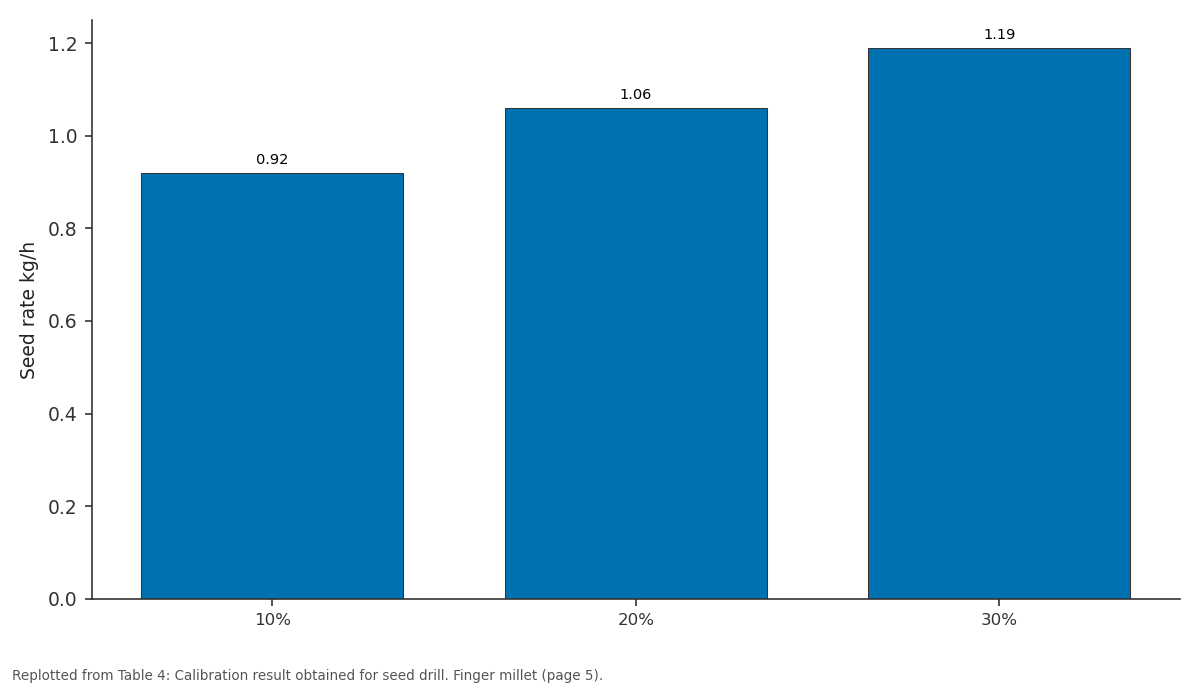
Seed rate kg/h: 10% vs 20% vs 30%
Replotted from Table 4 (page 5) of the original paper. Every bar is the paper's own table value.
View source evidence ↗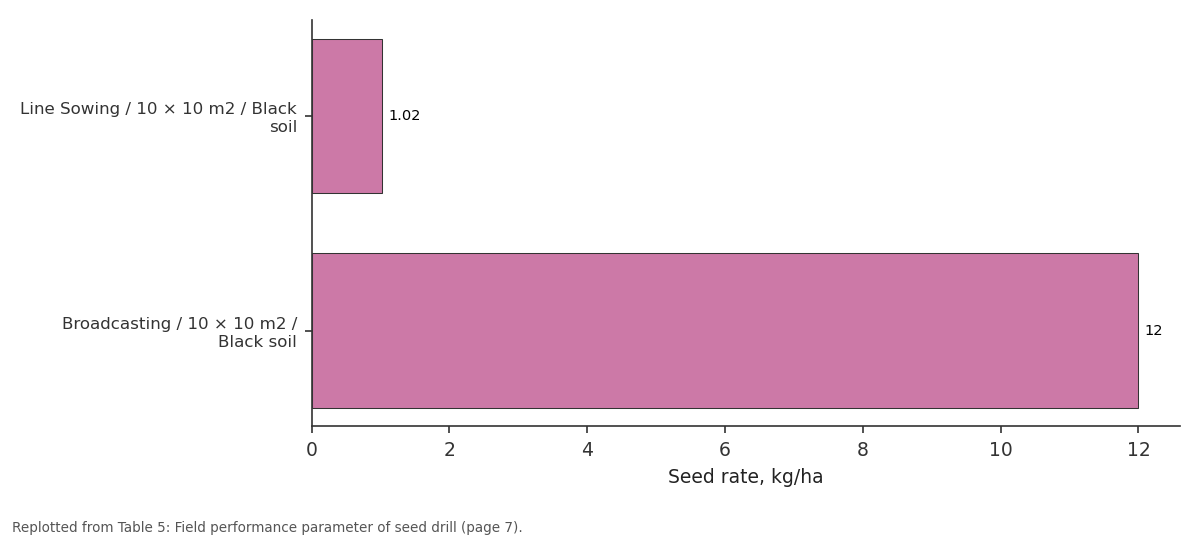
Seed rate, kg/ha: Line Sowing / 10 × 10... vs Broadcasting / 10 × 10...
Replotted from Table 5 (page 7) of the original paper. Every bar is the paper's own table value.
View source evidence ↗Figures & tables
From the original paper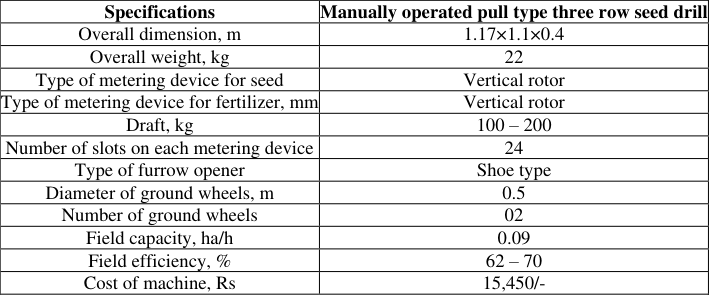 Table 1
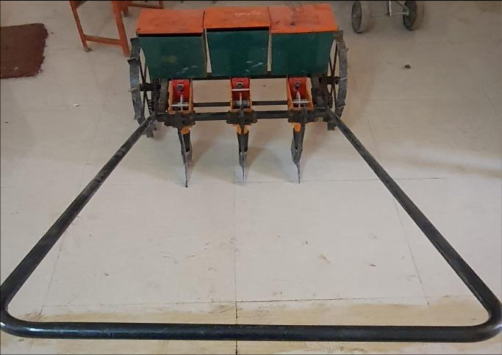 Figure 1
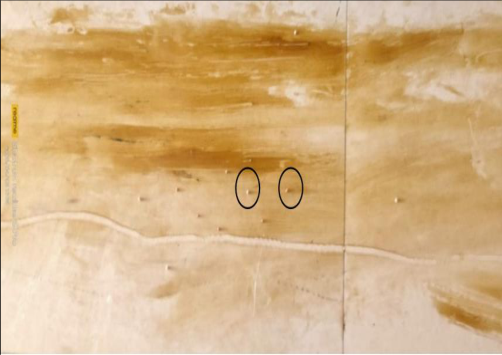 Figure 2
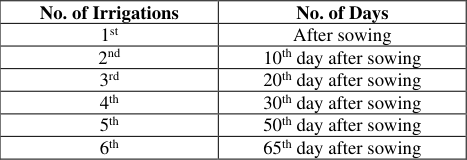 Table 2
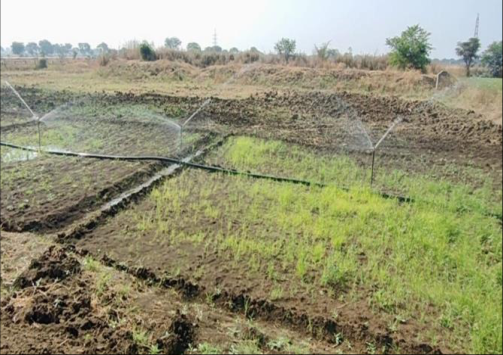 Figure 7
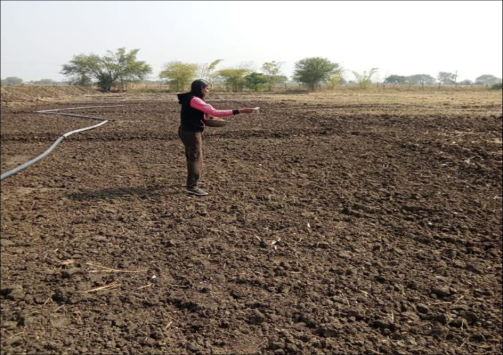 Figure 6
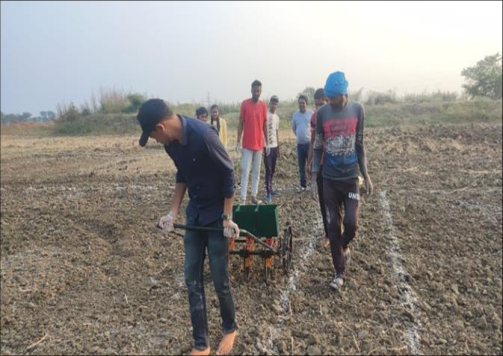 Figure 5
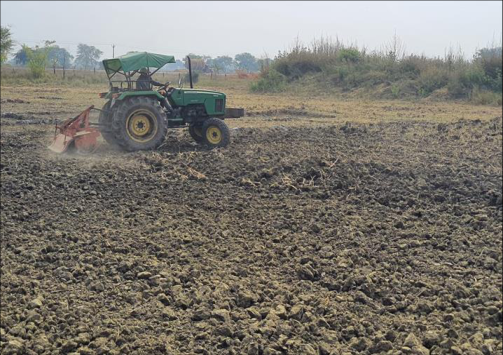 Figure 3
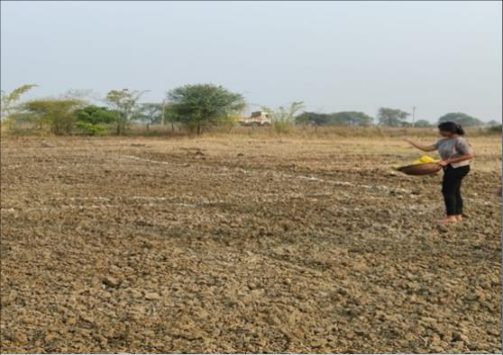 Figure 4
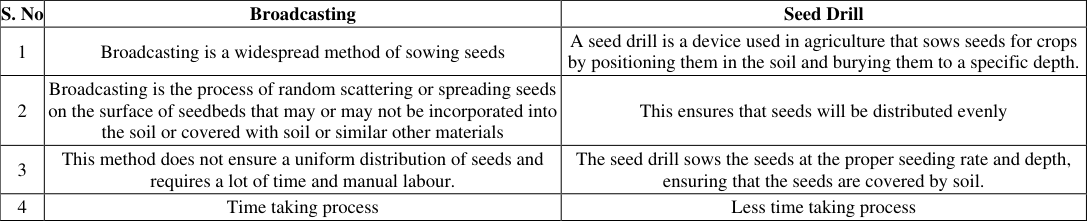 Table 3
 Table 4
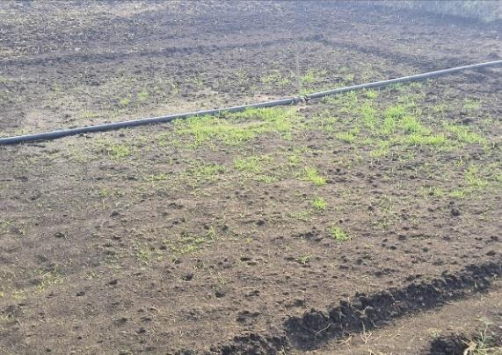 Figure 9
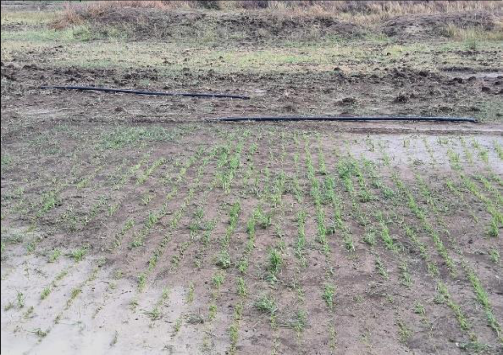 Figure 9
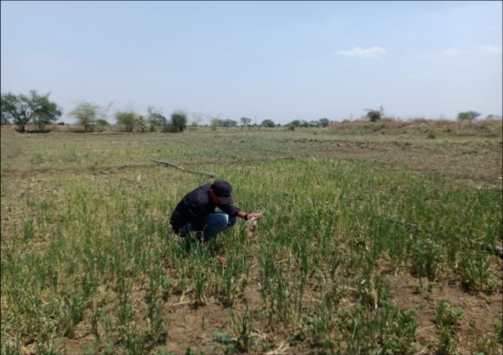 Figure 8
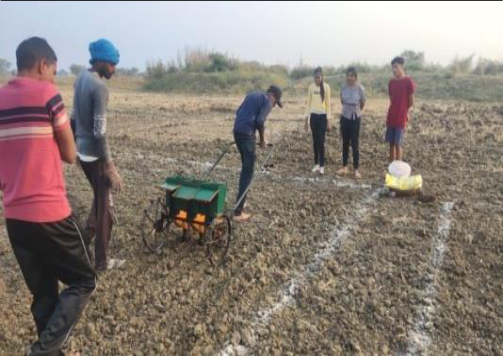 Figure 10
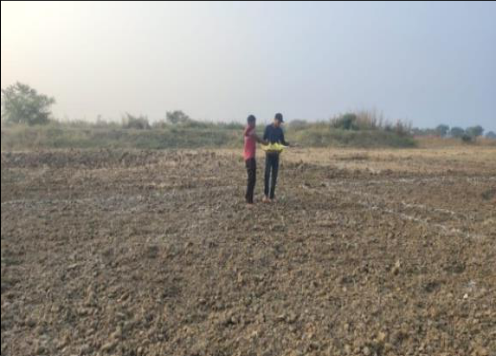 Figure 10
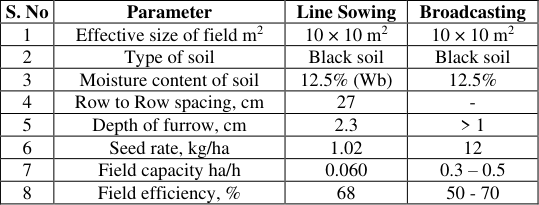 Table 5
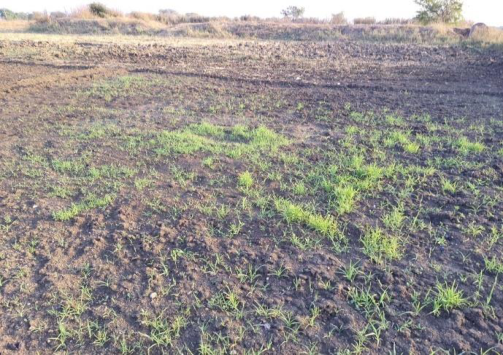 Figure 11
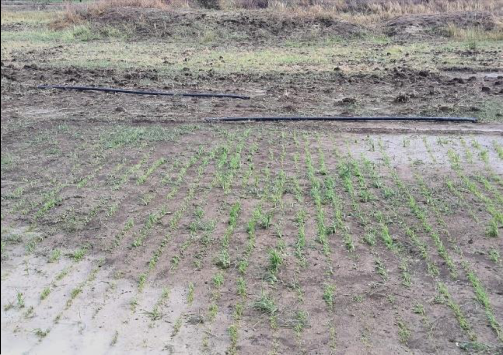 Figure 11
Introduction
Finger millet, commonly called Ragi, is one of the main crops grown in Southern Karnataka. The popularity of ragi is due to its medicinal and nutritional value such as high fiber content which helps in slow digestion of food in the body. Millets are a group of highly variable smallseeded grasses that were under cultivation from ancient times in arid and semi-arid regions of the world. Finger millet (Eleusine coracana), also known as "Ragi" or "Mandua," is a cereal crop that belongs to the family Poaceae. It is one of the oldest cultivated grains and is widely grown in various parts of the world, particularly in Africa and Asia, including India. Finger millet is a hardy crop that can thrive in diverse agro-climatic conditions, including dry and marginal lands. It is known for its nutritional value and is considered a staple food in many regions. The grain is small and round, resembling the shape of a finger, which gives it its name "finger millet." Finger millet is rich in essential nutrients such as protein, dietary fiber, calcium, iron, and B vitamins, making it a highly nutritious food source. It has a low glycemic index, which means it releases sugar into the bloodstream at a slow and steady rate, making it suitable for managing diabetes and providing sustained energy. Finger millet is primarily used for human consumption and is used to make a variety of traditional foods, such as porridge, malt-based beverages, flatbreads, and snacks. It is also used as a fodder crop for livestock and has potential as a source of biofuel and in the production of value-added products. Finger millet is known for its resilience to drought, pests, and diseases, making it a sustainable and environmentally friendly crop. It requires minimal inputs such as water, fertilizers, and pesticides, making it a viable option for small-scale farmers and in agroecological farming systems. In recent years, there has been a growing interest in finger millet due to its nutritional benefits, climate resilience, and potential for sustainable agriculture. It has gained attention as a "smart food" and a "future crop" that can contribute to food and nutrition security, climate change adaptation, and sustainable and agriculture practices.
The grains of finger millet are nutritionally rich and superior to many kinds of cereal and hence designated as "Nutri cereal". It contains protein (9.2%), carbohydrates (76.32%), and fat (1.29%). It is very rich in minerals (2.70%) such as calcium (452 mg /1000 g) and iron (3.90 mg/100 g). Ragi grain has a low glycemic index, and the absence of gluten makes it an ideal food for diabetic and coeliac disease patients. Further, ragi protein is a complete protein biologically as in the case of milk. It is regarded as an antidote for obesity. It is a good infant food as well as geriatric food. The grain has a long storage life also. Due to these qualities, ragi has been termed as "super grain" by FAO. Traditional method of sowing has many disadvantages such as not proper seed rate, fertilizer rate, seed spacing, problem in inter cultivation and consuming more time. The manual method of seed planting results in low seed placement, spacing efficiencies and serious back ache for the farmer which limits the size of field that can be planted. Present farmers by adopting modern technology can do much to increase food production, especially grains, if drudgery can be reduced from their planting operations. To achieve the best performance from a seed planter, there above limits are to be optimized by proper design and selection of the components required on the machine to suit the needs of crops. The study carried out in this research was to test the performance of manually operated seed drill and compare it with broadcasting method of sowing.
Materials and Methods
A manually operated seed drill was selected for trial on farm and broadcasting method was also tried on a plot to make a comparative study of it. The crop selected for sowing is finger millet. The materials, equipments and methodology followed during the course of the research work are discussed as under. In manually operated seed drill seed is placed in a furrow opened by seed drill. The function of a seed drill was to carry the seeds, open furrow to a uniform depth, to meter the seeds, to place the seed in furrow in an acceptable pastern to cover the seeds. This seed drill with manually pulling handle consists of mechanical seed metering device, frame, seed box, furrow openers, transport wheels, seed delivery tubes, handle and frame. The specification of manually operated seed grill is given below: The procedure of testing the seed drill for correct seed rate is called calibration of seed drill.
Purpose of Calibration of Seed Drill
It is necessary to calibrate the seed drill before operating in the field to get a predetermined seed rate of the machine.
Seed
Seed
Mechanically damage test
The seeds discharged from the seed tube were observed for any external damage. Similar test was carried out for each crop seed.
Uniformity test
To determine the uniformity of seed spacing (seed to seed spacing in row) of manually operated multicrop planter, the planter was fully loaded with seed. A 10 m thin layer of grease layer was laid out on the plain ground and the machine was run at walking speed of approximately 2.5 km/hr. A measuring steel tape was used to measure the distance between seed to seed in the row. This process was repeated five times and measurement of distance between seed to seed was recorded.
1) Draft
The draft requirement of different working component of the planter was studied in order to determined power losses. The planter was run on a well-prepared uniform seedbed under optimum soil condition. It is the horizontal component of the pull, parallel to the line of motion. The draft was calculated by the following equation.
D = P cosθ
Where, D = draft, kg P = pull, kg θ = Angle between line of pull and horizontal.
2) Hills population
To ensure adequate plant stand in research plots, a higher seed rate is used at sowing and excess plants are later removed to maintain the required plant population. It is therefore necessary to know the spacing between plants within the row and also the number of plants to be maintained in a given length of row. The hill population was calculated by the following formula.
Hill population /ha = 10000/ (inter row spacing × plant to plant spacing)
3) Theoretical field capacity
The theoretical field capacity was determined by considering the width of coverage of planter and its average operating speed. Similar test was carried out for each crop b. Theoretical field capacity was calculated by the following formula.
Theoretical field capacity = (W x S) / 10
Where, W = width of operation, m S = Speed of operation, km/hr.
Effective field capacity
Where, A = field coverage, ha T = actual time of operation, hr.
4) Field efficiency
Field efficiency represents the ratio of effective field capacity and was expressed as percentage. The field capacity was calculated by following formula.
Field efficiency % = (Effective field capacity, ha/h) / (Theoretical field capacity, ha/h) x 100
Field Operation Field preparation Sowing Fertigation Irrigation Weeding
Field Operation Field preparation Sowing Fertigation Irrigation Weeding
Field preparation
As seeds are small, it requires to prepare a fine seedbed for best germination. Plough two or three times with a cultivator (tine type) or three to five times with a rotavator. We divided three plots in 10 ×10m 2. After the formation of seedbeds, we used FYM (farmyard manure)
Sowing method 1) Broadcasting
This is the most common method practiced and the finger millet seeds are directly sown in the field by broadcasting. 2) Manually operated seed drilling in rows-In this method, seed are sown using seed drill. Sowing seeds by seed drill is very beneficial in line sowing.
No. of Irrigations No. of Days 1 st
After sowing 2 nd 10 th day after sowing 3 rd 20 th day after sowing 4 th 30 th day after sowing 5 th 50 th day after sowing 6 th 65 th day after sowing
Weeding
In irrigated crop weeding is an important operation to be carried out on regular base in finger millet cultivation. Hand weeding can be done, or weedicides can apply in the field. Hand weed should be given twice 9 th and 19 th day after transplanting the seedings. The inter cultivation and weedingshould be done with hand hoe after 4 weeks of sowing. 2 or 3 hoeing would be sufficient. Thinning operation need to be done 2 weeksafter sowing as Finger millet is densely sown crop. Usually, hand thinning is practiced.
In rainfed crop in line sown Finger millet crop requires 2 to 3 inter cultivation operation. This chapter deals with the selection of suitable metering device with slot size. The metering devices were evaluated in laboratory as well as in field for sowing of selected evaluation of millets. The chapter also envies the developed manually operated seed-cum-fertilizer drill in the field with cost of operation. Seed rate for finger millets corresponding to the opening area of 10%, 20% and 30% of the total opening area for 20 revolutions was 0.092 kg/h, 1.06 kg/h and 1.19 kg/h respectively. According to agronomical requirement of seed sowing rate, the opening area of 20% is more suitable for finger millets as compared 10% and 30%.
Uniformity Test
The standard seed to seed distance of ragi was 10 cm and row to row distance was 27 cm. We observed that the planter should have to plant 50 seeds but due to missing seeds it planted less that was planted seed by the planter was varying from 44 to 48 seeds and seed to seed distances were varying from 17 to 40cm. The averaged seed to seed distance was found as 20.86 cm which is similar to standard seed distance. Its difference was significant at the 5% level.
Seed Damage Test-
In these seed damage test, there is no damage in seeds.
Field Test Draft
The manually operated seed drill required less power to push in sandy loam soil compared to clay soil during performance test. It was observed that 13.3 kg pushing force and 0.093 Db/hp. When the pushing angle was increased then the draft force automatically decreased. It was significant in sandy loam soil and clay soil at 5% level. (Hossain, 2014) [42, 43] calculated similar 10 kg pushing force or 0.044 kW drawbar power for developed maize seeder and 8.5 kg pushing force or 0.037 kW drawbar power for modified maize seeder was observed during the performance test.
Hill Populations
Hills populations of ragi in black soil. The recommended average hill populations of ragi in sandy loam soil and clay soil should have 50 hills in every row. But Actual average hills populations were 41.4 and 41 hills in sandy loam soil and clay soil respectively. The overall theoretical hills population according to plant to plant spacing and row to row spacing in one hectare in both soils was found 111111 hills. But due to hills missing actual hills populations in one hectare in black soil were 92000 hills.
Field capacity
The theoretical field capacity of the planter was defined as the area covered by the planter in unit time (hour). So, for the measurement of the effective field capacity, the area covered by the planter in one row for a particular crop and in particular time has been calculated. Then measurement of allareas covered in one hour has been calculated. The effective field capacity was 0.11ha / h It was non-significant at 5% level.
Field efficiency
We observed that due to the increase of speed ofthe planter and row to row distance so field efficiency, percentage of the damaged seed also increased and also affected hill spacing. So we found that speed should be manageable for operation in the field. It was approximately 2.5-2.8km / hr in field. The field efficiency of planter was 68%.
Field evaluation of seed drill
The field evaluation of the developed manually operated seed drill for sowing of finger millet seeds at 30×10 cm spacing was conducted with selected slot sizes of metering devices. The seeds used for the field testing had an average moisture content of 7% (Wb) for finger millet seeds. It was operated at an average forward speed of 2 km/h. In order to obtain an intra-row plant spacing of 10 cm, a sprocket of appropriate size (26 teeth) was fixed Operation of manually operated seed drill for sowing of little millet seeds during one of the field trials is shown in the The field tests were conducted on the research farm 1. The type of soil was black soil and the moisture content of the soil during sowing operation was 12.5% (Wb). The plot size selected for sowing of the millets by both line sowing and broadcasting was 10m * 10m (100m 2 ) 2. Two methods were used for sowing; former was line sowing by seed drill and later was broadcasting. Performance parameters of both sowing methods are given in table. Row to row spacing for millets was kept 27 cm and seed to seed spacing was 10 cm. Average depth of operation was found to be 2.3 cm for millets. Seed rate in line sowing was found to be 1. 1.02kg / h for millets. The theoretical field capacity calculated for the manually operated seed drill was 0.06 for millets. Field efficiency of the machine for sowing of millet was 68%. Total man-hour required for seed drill was 23.64 millets. Villalobos et al., (1991) developed a manually operated seed cum fertilizer drill for pea and reported the requirement of 33.33h / ha for sowing operation.
The seed rate for broadcasting of millets was kept as 12 kg/ha, as it is used in traditional method of line sowing. Time required for broadcasting of millets was found to be 6 h/ha and 6.66 h/ha respectively.
Acknowledgement
AcknowledgementFor the completion of this trial BRSM College of Agricultural Engineering and Technology and Research station has provided land and equipment. Miss J. Chandrakar and A Dewangan has also made contribution towards completion of this task.
Figures and tables from the paper
| Specifications | Manually operated pull type three row seed drill |
|---|---|
| Overall dimension, m | 1.17×1.1×0.4 |
| Overall weight, kg | 22 |
| Type of metering device for seed | Vertical rotor |
| Type of metering device for fertilizer, mm | Vertical rotor |
| Draft, kg | 100 – 200 |
| Number of slots on each metering device | 24 |
| Type of furrow opener | Shoe type |
| Diameter of ground wheels, m | 0.5 |
| Number of ground wheels | 02 |
| Field capacity, ha/h | 0.09 |
| Field efficiency, % | 62 – 70 |
| Cost of machine, Rs | 15,450/- |
Table text extracted from the original PDF; superscript letters are shown inline. The original table image is below.
View original table image
| No. of Irrigations | No. of Days |
|---|---|
| 1st | After sowing |
| 2nd | 10th day after sowing |
| 3rd | 20th day after sowing |
| 4th | 30th day after sowing |
| 5th | 50th day after sowing |
| 6th | 65th day after sowing |
Table text extracted from the original PDF; superscript letters are shown inline. The original table image is below.
View original table image
| S. No | Parameter | Line Sowing | Broadcasting |
|---|---|---|---|
| 1 | Effective size of field m2 | 10 × 10 m2 | 10 × 10 m2 |
| 2 | Type of soil | Black soil | Black soil |
| 3 | Moisture content of soil | 12.5% (Wb) | 12.5% |
| 4 | Row to Row spacing, cm | 27 | - |
| 5 | Depth of furrow, cm | 2.3 | > 1 |
| 6 | Seed rate, kg/ha | 1.02 | 12 |
| 7 | Field capacity ha/h | 0.060 | 0.3 – 0.5 |
| 8 | Field efficiency, % | 68 | 50 - 70 |
Table text extracted from the original PDF; superscript letters are shown inline. The original table image is below.
View original table image
References
5 in the original paper- Anonymous. Krishi Dainandini (Diary), Dr. Balasaheb Sawant Konkan Krishi Vidyapeeth, Dapoli, Maharashtra, India. 2017; p. 21-22.
- Ghoshal MK, Sarkar B. A study on line sowing of black gram seeds by a low cost manually operated cup feed metering seed drill. International Journal of Agricultural Engineering. 2013;6(2):380-385.
- Kachman SD, Smith JA. Alternative measures of accuracy in plant spacing for planters using single seed metering. Transactions of the ASAE. 1995;38(2):379-387.
- Basavaraj TB, Rao MRG. Integrated nutrient management in finger millet under rainfed conditions. Karnataka Journal of Agricultural Sciences. 1997;10(3):855-856.
- Bhatta LR, Subedi R, Joshi P, Gurung SB. Effect of crop establishment methods and varieties on tillering habit, growth rate and yield of finger millet. Agricultural Research and Technology: Open Access Journal. 2017;47(3):367371.