
Research article · 2024 · Full text
International Journal of Research in AgronomyResponses of phenology, yield attributes and early yield of drip irrigated sweet pepper under low tunnels
Volume 7(5S) · Pages 160–165 · DOI: 10.33545/2618060x.2024.v7.i5sc.758 ↗
Research areasPlant Physiology and Cultivation StudiesAgricultural Practices and Plant GeneticsFlowering Plant Growth and Cultivation
Abstract
Author-writtenThis study investigates the impact of low tunnels and drip irrigation on the phenological development, yield attributes, and early yield of sweet pepper. The study aims to provide insights into the potential benefits of these agricultural practices in enhancing productivity and ensuring early yields. The research was conducted over a specified period, and the findings suggest significant positive responses in phenology, yield attributes and early yield of sweet pepper under the combined application of drip irrigation and low tunnels. Remarkably, our experiments unveiled that the I1H2 treatment regime yielded the most accelerated phenological milestones, with days to flowering, fruit initiation, and fruit maturity occurring within a mere 80.13, 86.20, and 113.4 days, respectively. Conversely, the I5H1 treatment exhibited the longest duration for these developmental stages, extending to 98.26, 105.60, and 127.2 days, respectively. Moreover, among the various tunnel heights and irrigation treatments studied, it was observed that the H2 and I2 treatments consistently outperformed their counterparts in terms of fruit yield per plant, fruit length, and girth. This underscores the significant influence exerted by both irrigation strategies and tunnel heights on these critical yield attributes.
Summary
Source-checkedPlain-language reading of the full paper, prepared with AI and checked against the text. Each point links to the authors' own words.
Why it matters
- Sweet pepper is an economically important global vegetable crop known for its nutritional value and culinary uses. View evidence ↗
- Pepper cultivation is hindered by water scarcity, unstable climates, and the market demand for high-quality, early yields. View evidence ↗
- Drip irrigation and low tunnels are used to improve water efficiency and protect crops from harsh weather to promote growth. View evidence ↗
The question
- The study investigates how the combination of drip irrigation and low tunnels affects the phenology, yield attributes, and early yield of sweet pepper. View evidence ↗
What they did
- The research was conducted as a field experiment at the Punjab Agricultural University Research Farm in Ludhiana. View evidence ↗
- The study used a split plot design with five irrigation treatments (three drip levels and two furrow methods) and three low tunnel heights (60cm, 75cm, and 90cm). View evidence ↗
- Each combination of irrigation and tunnel height was replicated three times to ensure reliability. View evidence ↗
- Plant height, leaf area index, and dry matter accumulation were measured every 15 days during the growth cycle. View evidence ↗
What they found
- The fastest flowering occurred in the I1H2 treatment (80.13 days), while the slowest was in the I5H1 treatment (98.26 days). View evidence ↗
- Fruit initiation was quickest in the I1H2 treatment (86.20 days) and slowest in the I5H1 treatment (105.60 days). View evidence ↗
- Fruit maturity was reached fastest in the I1H2 treatment (113.4 days) and slowest in the I5H1 treatment (127.2 days). View evidence ↗
- The highest number of fruits per plant was found in the I2H2 treatment (10.64), compared to the lowest in I5H1 (9.13). View evidence ↗
- The I2H2 treatment produced the longest fruits (6.80 cm), while the I5H1 treatment produced the shortest (5.46 cm). View evidence ↗
- The widest fruit girth was observed in the I2H2 treatment (20.93 cm), and the narrowest in the I5H1 treatment (16.92 cm). View evidence ↗
- The highest early yield was achieved by the I2H2 treatment (61.11 q/ha), while the I5H1 treatment had the lowest (30.31 q/ha). View evidence ↗
What it means
- The authors conclude that combining drip irrigation and low tunnels significantly improves the phenology, yield attributes, and early yield of sweet pepper. View evidence ↗
Visual summary
1 visualsIllustrations explain the paper; they do not show study data.
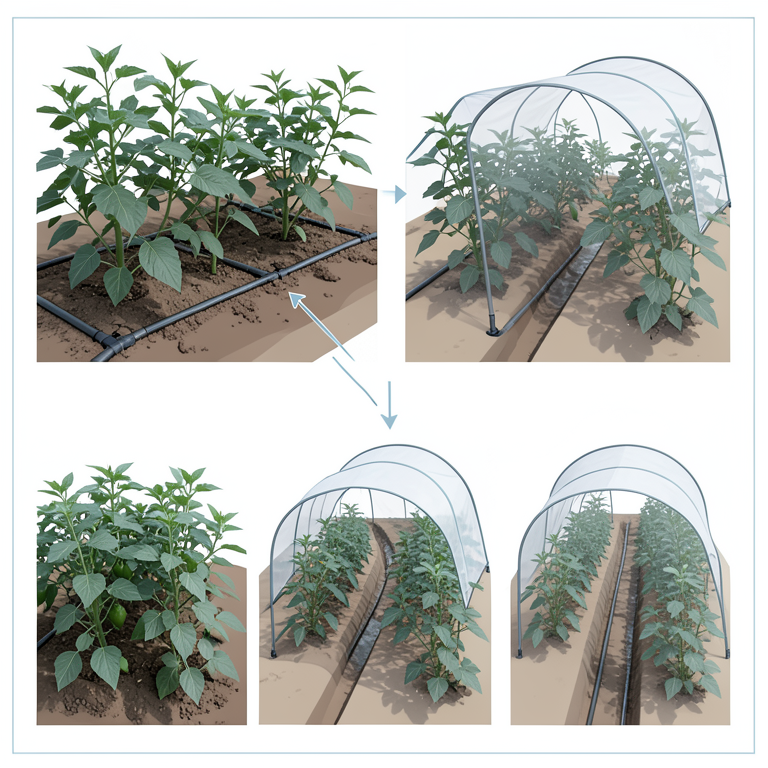
Experimental Setup Layout
AI-generated conceptual illustration (sweet pepper plants under plastic low tunnels). It explains the idea and does not show study data.
View source evidence ↗Figures & tables
From the original paper Table 1
 Table 2
 Table 3
 Table 4
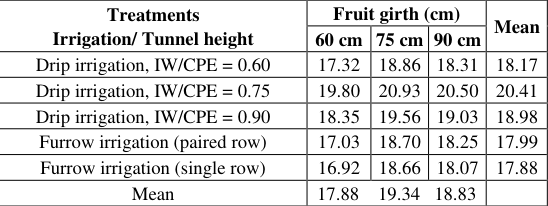 Table 6
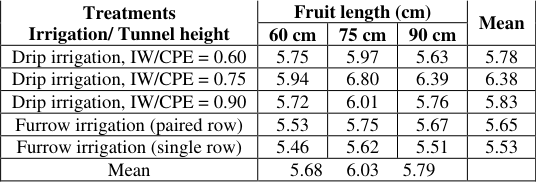 Table 5
 Table 7
Introduction
Sweet pepper (Capsicum annuum) is a widely cultivated vegetable crop valued for its culinary versatility, nutritional richness, and economic significance in global agriculture. However, the cultivation of sweet pepper faces numerous challenges, including water scarcity, fluctuating climatic conditions, and the need for early and high-quality yields to meet market demands [1,2,3] . In response to these challenges, innovative agricultural practices have been developed to enhance crop productivity and resource efficiency. Among these practices, drip irrigation and the use of low tunnels have gained attention for their potential to improve water management, create favorable microclimates, and promote early crop development [4,5] . Drip irrigation delivers water directly to the root zone, minimizing water loss through evaporation and runoff, while low tunnels provide protection from adverse weather conditions and create a conducive environment for plant growth [6.7] . The integration of these techniques offers a promising approach to address the constraints faced by sweet pepper growers, particularly in regions with limited water availability or unfavorable climatic conditions [8,9,10] . Understanding the responses of sweet pepper phenology, yield attributes, and early yield to drip irrigation under low tunnels is essential for optimizing production practices and maximizing crop performance. Phenological development, including flowering, fruit set, and maturity, is a crucial aspect of crop growth that directly influences yield potential and harvest timing [11,12,13] . Additionally, yield attributes such as fruit weight, size, and quality are important determinants of market value and consumer acceptance. Early yield, defined as the yield obtained during the initial stages of crop development, is particularly significant for growers seeking to capitalize on market opportunities and minimize production risks. This study aims to investigate the responses of sweet pepper phenology, yield attributes, and early yield to drip irrigation under low tunnels, with the goal of providing insights into the potential benefits of these integrated practices for sustainable and efficient crop production.
By elucidating the effects of drip irrigation and low tunnels on sweet pepper cultivation, this research seeks to inform growers, agronomists, and policymakers about viable strategies for enhancing productivity, optimizing resource use, and mitigating environmental pressures in vegetable production systems.
Materials and Methods
Field experiments of considerable scale were meticulously conducted at the Research Farm of the Department of Soil and Water Engineering, Punjab Agricultural University (PAU), located in Ludhiana. Ludhiana is positioned at a latitude of 30° 54' N and a longitude of 75° 48' E, at an average elevation of 247 meters above sea level. The climatic profile of Ludhiana is characterized by distinct seasons, with scorching and arid summers prevailing from April to June, followed by a sultry and humid monsoon period. Winters, extending from December to January, bring a stark contrast with their cold embrace. The region receives an average annual rainfall of approximately 600 mm, with the majority of precipitation occurring during the monsoon season. Temperature fluctuations are notable, with average minimums plummeting to 3°C in winter and maximums soaring to 43°C during the summer months. A field plot spanning approximately 550.8 m 2 (54m x 10.2m) was meticulously prepared for the experiment, utilizing a split plot design. The main plots were assigned five distinct irrigation treatments: drip irrigation with 0.60 IW/CPE ratio (I1), drip irrigation with 0.75 IW/CPE ratio (I2), drip irrigation with 0.90 IW/CPE ratio (I3), furrow irrigation paired row planting (I4), and furrow irrigation single row planting (I5). Within each main plot, subplots were designated to accommodate three different heights of low tunnels: 60cm (H1), 75cm (H2), and 90cm (H3). This layout facilitated the examination of the interaction between irrigation treatments and tunnel heights. To ensure robustness and reliability, each treatment combination was replicated three times. In drip irrigated treatment water was applied for three different irrigation levels IW/CPE ratio of 0.60, 0.75 and 0.90. Drip irrigation water was applied after 10mm cumulative pan evaporation. In furrow irrigated treatment water was applied in single row planting and paired row planting. The irrigation water was applied using siphon tubes having discharge of 1 litre/s for both furrow irrigation with paired and single row planting. Irrigation water was applied after 30mm cumulative pan evaporation for both furrow irrigated treatments. Following the transplanting of the crop, a protective measure was implemented by covering the crop with a polyethylene sheet measuring 50 microns in thickness. The width of the polysheet varied according to the height of the low tunnel frame: 150 cm for H1, 185cm for H2, and 240cm for H3. This arrangement effectively shielded the crop from potential frost damage and other environmental hazards. The low tunnel frames, strategically positioned at the beginning and end of paired rows, were spaced at intervals of 2.50 meters to ensure adequate coverage and protection across the field. Throughout the growth cycle, various parameters including plant height, leaf area index (LAI), and dry matter accumulation (DMA) were meticulously monitored at 15-day intervals. Plant height, measured from the base to the tallest point, was recorded in centimeters using a scale, with an average value computed for each treatment. The leaf area index was determined utilizing a PAR/LAI ceptometer LP-80 electronic leaf area meter, providing precise measurements to assess vegetative canopy development. Phenological observations encompassing days to flowering, fruit initiation, and fruit maturity were documented from five randomly selected plants within each subplot, with averages calculated to ensure representative data for analysis. Yield and its attributes, including the number of fruits per plant and average fruit size (comprising fruit length and girth), were also meticulously quantified to gauge productivity. The collected data underwent rigorous statistical analysis employing a split plot experimental design, with irrigation treatments designated as the main plot and varying low tunnel heights as subplots. Analysis of variance (ANOVA) techniques were employed to discern significant differences, with a 5% significance level used to validate findings, ensuring robustness and reliability in the interpretation of results.
Results and Discussion
Results and Discussion
Phenology 3.1.1 Days to flowering
The findings regarding the average number of days to flowering across various irrigation methods and low tunnel heights are presented in Table 1. The data distinctly illustrate that the shortest duration to flowering occurred in the 75 cm tunnel height treatment, followed by the 90 cm and 60 cm tunnel height treatments. This trend is likely attributed to the higher air and soil temperatures prevailing within the 75 cm tunnel height, fostering optimal conditions for accelerated flowering. Among the irrigation treatments, drip irrigation with a 0.60 IW/CPE (irrigation water/crop pan evaporation) ratio exhibited the swiftest flowering onset, outpacing drip irrigation with 0.75 IW/CPE ratio, drip irrigation with 0.90 IW/CPE ratio, furrow irrigation paired row planting, and furrow irrigation single row planting. This disparity may be attributed to water deficiency in the I1 treatment, prompting plants to expedite their life cycles under stress conditions. These outcomes align with the findings of [15] , elucidating that plants subjected to stress tend to expedite their life cycles in an attempt to cope, thereby leading to abbreviated durations to flowering and fruiting. Delving into treatment combinations, the I1H2 treatment combination boasted the shortest duration to flowering, clocking in at a mere 80.13 days, while the I5H1 treatment recorded the lengthiest period at 98.26 days. These results corroborate earlier research, such as that by [14] , which highlighted accelerated flowering under low tunnel conditions. Statistical analysis of different irrigation treatments and tunnel heights, as presented in Table 1, underscored a significant effect of both irrigation methods and tunnel heights on the duration to flowering. However, the interaction between irrigation treatments and tunnel height was deemed non-significant, indicating that the impact of these factors on flowering duration operates independently.
| Treatments Irrigation / Tunnel height | Number of days to flowering | — | — | Mean |
|---|---|---|---|---|
| 60 cm | 75cm | 90cm | ||
| Drip irrigation, IW/CPE = 0.60 | 85.13 | 80.13 | 82.53 | 82.60 |
| Drip irrigation, IW/CPE = 0.75 | 89.06 | 85.40 | 87.60 | 87.35 |
| Drip irrigation, IW/CPE = 0.90 | 96.93 | 90.20 | 93.13 | 93.42 |
| Furrow irrigation (paired row) | 97.66 | 91.86 | 96.06 | 95.20 |
| Furrow irrigation (single row) | 98.26 | 92.80 | 96.86 | 95.97 |
| Mean | 93.41 88.07 91.24 |
Table text extracted from the original PDF; superscript letters are shown inline. The original table image is below.
View original table image
Days to fruit initiation
The tabulated results for the average number of days to fruit initiation across varied irrigation methods and low tunnel heights are delineated in Table 2. A clear pattern emerges, indicating that the 75 cm tunnel height facilitated the swiftest onset of fruit initiation, trailed by the 90 cm and 60 cm tunnel height treatments. This phenomenon could be attributed to the elevated air and soil temperatures prevailing within the 75 cm tunnels. Among the irrigation modalities, drip irrigation employing a 0.60 IW/CPE ratio exhibited the quickest transition to fruit initiation, outpacing drip irrigation with 0.75 IW/CPE ratio, drip irrigation with 0.90 IW/CPE ratio, furrow irrigation with paired row planting, and furrow irrigation with single row planting. This discrepancy might also be linked to inadequate irrigation water provision within the I1 treatment. These findings are consistent with the observations of [15] , elucidating that plants subjected to stress tend to expedite their life cycles in a bid to adapt, thereby resulting in abbreviated durations to both flowering and fruiting. Upon analyzing treatment combinations, the I1H2 treatment combination boasted the shortest duration to fruit initiation, registering at 86.20 days, while the I5H1 treatment recorded the lengthiest duration at 105.60 days. These outcomes align with prior research by [16] . Statistical analysis of the various irrigation treatments and tunnel heights, as depicted in Table 2, unveiled a significant impact of both irrigation and tunnel height on the duration to fruit initiation. However, the interaction between irrigation treatments and tunnel height was found to be non-significant, suggesting that their combined effect on fruit initiation duration operated relatively independently of one another.
| Treatments Irrigation / Tunnel height | Number of days to fruit initiation | — | — | Mean |
|---|---|---|---|---|
| 60 cm | 75 cm | 90 cm | ||
| Drip irrigation, IW/CPE = 0.60 | 91.33 | 86.20 | 89.93 | 89.15 |
| Drip irrigation, IW/CPE = 0.75 | 96.26 | 92.86 | 94.26 | 94.46 |
| Drip irrigation, IW/CPE = 0.90 | 104.13 | 96.53 | 100.20 | 100.28 |
| Furrow irrigation (paired row) | 104.06 | 98.00 | 102.73 | 101.60 |
| Furrow irrigation (single row) | 105.60 | 99.40 | 103.66 | 102.88 |
| Mean | 100.28 94.60 98.16 |
Table text extracted from the original PDF; superscript letters are shown inline. The original table image is below.
View original table image
Days to fruit maturity
The results depicting the average days to fruit maturity across diverse irrigation methodologies and low tunnel heights are elucidated in Table 3. A distinct pattern emerges, showcasing that the 75 cm tunnel height facilitated the shortest duration to fruit maturity, followed by the 90 cm and 60 cm tunnel height treatments. This trend likely stems from the elevated air and soil temperatures characteristic of the 75 cm tunnel height. Among the irrigation techniques, drip irrigation employing a 0.60 IW/CPE ratio exhibited the most expedited transition to fruit maturity, surpassing drip irrigation with 0.75 IW/CPE ratio, drip irrigation with 0.90 IW/CPE ratio, furrow irrigation with paired row planting, and furrow irrigation with single row planting. This discrepancy might also be attributable to insufficient irrigation water provision within the I1 treatment. These findings align with the research of [17] , indicating that certain stress conditions prompt plants to accelerate their life cycles in a bid to adapt, resulting in abbreviated durations to both flowering and fruiting. When analyzing treatment combinations, the I1H2 treatment combination boasted the shortest duration to fruit maturity, clocking in at 113.4 days, while the I5H1 treatment exhibited the lengthiest duration at 127.2 days. These results are in concurrence with the findings of [17] . Statistical analysis of the various irrigation treatments and tunnel heights, as depicted in Table 3, revealed a significant influence of both irrigation and tunnel height on the duration to fruit maturity. However, similar to the previous analyses, the interaction between irrigation treatments and tunnel height was found to be non-significant, indicating that their combined effect on fruit maturity duration operated relatively independently of one another.
| Treatments Irrigation / Tunnel height | Number of days to fruit maturity | — | — | Mean |
|---|---|---|---|---|
| 60 cm | 75cm | 90cm | ||
| Drip irrigation, IW/CPE = 0.60 | 115.06 | 113.40 | 114.66 | 114.37 |
| Drip irrigation, IW/CPE = 0.75 | 121.93 | 116.50 | 119.13 | 119.20 |
| Drip irrigation, IW/CPE = 0.90 | 126.73 | 122.60 | 123.26 | 124.20 |
| Furrow irrigation (paired row) | 127.06 | 122.60 | 124.06 | 124.57 |
| Furrow irrigation (single row) | 127.20 | 123.20 | 125.73 | 125.37 |
| Mean | 123.60 119.66 121.37 |
Table text extracted from the original PDF; superscript letters are shown inline. The original table image is below.
View original table image
Yield Attributes 3.2.1 Number of fruits per plant
The findings pertaining to the average number of fruits per plant across varied irrigation methodologies and low tunnel heights are encapsulated in Table 4. A conspicuous trend emerges, indicating that throughout the crop season, the 75 cm tunnel height fostered the highest number of fruits per plant, trailed by the 90 cm and 60 cm tunnel height treatments. This trend likely emanates from the elevated air and soil temperatures prevailing within the 75 cm tunnels. Among the irrigation techniques, drip irrigation employing a 0.75 IW/CPE ratio yielded the most abundant harvest in terms of fruits per plant throughout the season, surpassing drip irrigation with 0.90 IW/CPE ratio, drip irrigation with 0.60 IW/CPE ratio, furrow irrigation with paired row planting, and furrow irrigation with single row planting. When considering treatment combinations, the I2H2 treatment combination boasted the highest number of fruits per plant, totaling 10.64, while the I5H1 treatment exhibited the lowest count at 9.13. These results corroborate the findings of [18] . Statistical scrutiny of the various irrigation treatments and tunnel heights, as delineated in Table 4, revealed a significant influence of both irrigation and tunnel height on the number of fruits per plant. Moreover, the interaction between irrigation treatments and tunnel height was also deemed significant, highlighting the intricate interplay between these factors in shaping fruit production dynamics.
| Treatments Irrigation/ Tunnel height | Fruit number per plant | — | — | Mean |
|---|---|---|---|---|
| 60 cm | 75 cm | 90 cm | ||
| Drip irrigation, IW/CPE = 0.60 | 9.24 | 9.81 | 9.62 | 9.56 |
| Drip irrigation, IW/CPE = 0.75 | 9.52 | 10.64 | 10.06 | 10.07 |
| Drip irrigation, IW/CPE = 0.90 | 9.33 | 9.94 | 9.84 | 9.70 |
| Furrow irrigation (paired row) | 9.19 | 9.75 | 9.52 | 9.48 |
| Furrow irrigation (single row) | 9.13 | 9.61 | 9.41 | 9.38 |
| Mean | 9.28 9.95 9.69 |
Table text extracted from the original PDF; superscript letters are shown inline. The original table image is below.
View original table image
Average fruit size 3.2.2.1 Fruit length
The findings regarding the average fruit length across diverse irrigation methods and low tunnel heights are detailed in Table 5. A clear trend emerges, showcasing that the 75 cm tunnel height yielded fruits with the greatest average length, followed by the 90 cm and 60 cm tunnel height treatments. This pattern likely arises from the heightened air and soil temperatures within the 75 cm tunnels, fostering optimal conditions for fruit elongation. Among the irrigation techniques, drip irrigation employing a 0.75 IW/CPE ratio yielded fruits with the longest average length, surpassing drip irrigation with 0.90 IW/CPE ratio, drip irrigation with 0.60 IW/CPE ratio, furrow irrigation with paired row planting, and furrow irrigation with single row planting. When examining treatment combinations, the I2H2 treatment combination boasted the longest average fruit length, measuring 6.80 cm, while the I5H1 treatment exhibited the shortest length at 5.46 cm. This observation aligns with the notion that optimal moisture levels enhance cellular metabolism, thereby promoting energy release and facilitating growth. These results similar to the findings of [19] . Statistical analysis of the various irrigation treatments and tunnel heights, as depicted in Table 5, underscored a significant influence of both irrigation and tunnel height on average fruit length. Moreover, the interaction between irrigation treatments and tunnel height was also deemed significant, emphasizing the nuanced interplay between these factors in shaping fruit morphology.
| Treatments Irrigation/ Tunnel height | Fruit length (cm) | — | — | Mean |
|---|---|---|---|---|
| 60 cm | 75 cm | 90 cm | ||
| Drip irrigation, IW/CPE = 0.60 | 5.75 | 5.97 | 5.63 | 5.78 |
| Drip irrigation, IW/CPE = 0.75 | 5.94 | 6.80 | 6.39 | 6.38 |
| Drip irrigation, IW/CPE = 0.90 | 5.72 | 6.01 | 5.76 | 5.83 |
| Furrow irrigation (paired row) | 5.53 | 5.75 | 5.67 | 5.65 |
| Furrow irrigation (single row) | 5.46 | 5.62 | 5.51 | 5.53 |
| Mean | 5.68 6.03 5.79 |
Table text extracted from the original PDF; superscript letters are shown inline. The original table image is below.
View original table image
Fruit girth
The tabulated results concerning the average fruit girth across various irrigation methods and low tunnel heights are detailed in Table 6. A distinct trend emerges, indicating that the 75 cm tunnel height yielded fruits with the greatest average girth, followed by the 90 cm and 60 cm tunnel height treatments. This pattern is likely attributed to the elevated air and soil temperatures within the 75 cm tunnels, fostering optimal conditions for fruit expansion. Among the irrigation techniques, drip irrigation employing a 0.75 IW/CPE ratio resulted in fruits with the widest average girth, surpassing drip irrigation with 0.90 IW/CPE ratio, drip irrigation with 0.60 IW/CPE ratio, furrow irrigation with paired row planting, and furrow irrigation with single row planting. When analyzing treatment combinations, the I2H2 treatment combination boasted the widest average fruit girth, measuring 20.93 cm, while the I5H1 treatment exhibited the narrowest girth at 16.92 cm. This observation aligns with the notion that optimal moisture levels enhance cellular metabolism, leading to increased energy release and subsequent fruit size augmentation. Statistical analysis of the various irrigation treatments and tunnel heights, as depicted in Table 6, underscored a significant influence of both irrigation and tunnel height on average fruit girth. However, intriguingly, the interaction between irrigation treatments and tunnel height was found to be non-significant, suggesting that their combined effect on fruit girth operated relatively independently of each other.
| Treatments Irrigation/ Tunnel height | Fruit girth (cm) | — | — | Mean |
|---|---|---|---|---|
| 60 cm | 75 cm | 90 cm | ||
| Drip irrigation, IW/CPE = 0.60 | 17.32 | 18.86 | 18.31 | 18.17 |
| Drip irrigation, IW/CPE = 0.75 | 19.80 | 20.93 | 20.50 | 20.41 |
| Drip irrigation, IW/CPE = 0.90 | 18.35 | 19.56 | 19.03 | 18.98 |
| Furrow irrigation (paired row) | 17.03 | 18.70 | 18.25 | 17.99 |
| Furrow irrigation (single row) | 16.92 | 18.66 | 18.07 | 17.88 |
| Mean | 17.88 19.34 18.83 |
Table text extracted from the original PDF; superscript letters are shown inline. The original table image is below.
View original table image
Early yield of sweet pepper
The analysis of early sweet pepper yield, encompassing the initial three harvests were priced at twice the standard seasonal rate, under various irrigation regimes and low tunnel heights is detailed in Table 7. Notably, the data vividly demonstrate that the mean early yield of sweet pepper was most prolific in the 75 cm tunnel height treatment, followed by the 90 cm and 60 cm tunnel height treatments. This hierarchy likely stems from the optimal microclimate conditions provided by the 75 cm tunnel height, fostering enhanced growth and yield. Among the irrigation methods, drip irrigation with a 0.75 IW/CPE (irrigation water/crop pan evaporation) ratio yielded the highest mean early sweet pepper yield, followed by drip irrigation with 0.90 IW/CPE ratio, drip irrigation with 0.60 IW/CPE ratio, furrow irrigation in paired row planting, and furrow irrigation in single row planting. Notably, drip irrigated treatments consistently outperformed furrow irrigated treatments, underscoring the efficacy of drip irrigation in promoting early yield. Regarding treatment combinations, the I2H2 treatment exhibited the highest mean early sweet pepper yield at 61.11 q/ha, while the I5H1 treatment recorded the lowest yield at 30.31 q/ha. This variation can be attributed to the earlier flowering and fruit initiation observed in the respective treatments, thus facilitating a more robust early yield. These findings align with prior research by [20] , reinforcing the notion that specific irrigation methods and low tunnel configurations can significantly impact early sweet pepper yield, offering valuable insights for optimizing production strategies.
| Treatments Irrigation/ Tunnel height | Early Yield (q/ha) of sweet pepper | — | — | Mean |
|---|---|---|---|---|
| 60 cm | 75cm | 90cm | ||
| Drip irrigation, IW/CPE = 0.60 | 44.63 | 50.39 | 49.29 | 48.11 |
| Drip irrigation, IW/CPE = 0.75 | 48.27 | 61.11 | 57.37 | 55.59 |
| Drip irrigation, IW/CPE = 0.90 | 42.91 | 55.98 | 51.77 | 50.22 |
| Furrow irrigation (paired row) | 34.04 | 38.24 | 35.21 | 35.83 |
| Furrow irrigation (single row) | 30.31 | 32.42 | 30.78 | 31.17 |
| Mean | 40.038 | 47.63 | 44.88 |
Table text extracted from the original PDF; superscript letters are shown inline. The original table image is below.
View original table image
Conclusion
This study investigates the impact of low tunnels and drip irrigation on the phenological development, yield attributes, and early yield of sweet pepper. The study aims to provide insights into the potential benefits of these agricultural practices in enhancing productivity and ensuring early yields. The research was conducted over a specified period, and the findings suggest significant positive responses in phenology, yield attributes and early yield of sweet pepper under the combined application of drip irrigation and low tunnels.
The shortest duration to days to flowering, fruit initiation, and fruit maturity was noted in the H2 and I1 treatments among various tunnel heights and irrigation methods. In treatment combinations, I1H2 exhibited the quickest progression, with days to flowering, fruit initiation, and fruit maturity at 80.13, 86.20, and 113.4 days respectively, while I5H1 showed the longest durations at 98.26, 105.60, and 127.2 days respectively. Both irrigation and tunnel height had a significant impact on these developmental stages, whereas their interaction was found to be non-significant.
Optimal fruit length and girth emerged prominently within the H2 and I2 treatment combination, showcasing superior growth characteristics among tunnel heights and irrigation methods. Notably, the I2H2 treatment boasted the highest fruit length of 6.80 cm and girth of 20.93 cm, while the I5H1 treatment exhibited the lowest measurements at 5.46 cm and 16.92 cm, respectively. Significant effects of both irrigation methods and tunnel heights were discerned on fruit length and girth. However, while the interaction between these factors significantly influenced fruit length, its impact on fruit girth was deemed non-significant. The pinnacle of sweet pepper early yield (q/ha) was achieved within the H2 and I2 treatment combination, showcasing superior performance among tunnel heights and irrigation methods. Notably, H2 exhibited an 11.03% increase in yield over H1 and a 3.40% increase over H3, while drip irrigated treatments outperformed furrow irrigated ones, with I2 yielding 30.67% more than I4 and 33.74% more than I5. In treatment combinations, the I2H2 treatment reigned supreme with a yield of 298.86 q/ha, surpassing the lowest yield of 202.62 q/ha in the I5H1 treatment. The initial three harvests, considered as early yield, were priced at double the standard seasonal rate, underscoring their significance. Statistical analysis revealed significant effects of both irrigation methods and tunnel heights on sweet pepper yield, with their interaction also proving significant. These findings illuminate the critical role of cultivation practices in maximizing yield potential and optimizing agricultural outcomes.
References
20 in the original paper- Lodhi AS, Chouhan SS, Bhalawe S. Impact of low tunnel heights and irrigation regimes on growth parameters of capsicum. J Exp Agric Int. 2024;46(1):7-16.
- Lodhi AS, Kaushal A, Singh KG. Impact of irrigation regimes on growth, yield and water use efficiency of sweet pepper. Indian J Sci Technol. 2014;7(6):790-794.
- Kaushal A, Lodhi AS, Singh KG. Economics of growing sweet pepper under low tunnels. Prog Agri. 2011;11(1):6772.
- Lodhi AS, Kaushal A, Singh KG. Effect of irrigation regimes and low tunnel height on microclimatic parameters in the growing of sweet pepper. Int. J Eng. Sci. Inv. 2013;2(7):20-29.
- Acharya TP, Welbaum GE, Arancibia RA. Low tunnels reduce irrigation water needs and increase growth, yield, and water-use efficiency in Brussels sprouts production. HortScience. 2019;54(3):470-475.
- Lodhi AS, Kaushal A, Singh KG. Performance of sweet pepper under low tunnel technology. In: Best Management Practices for Drip Irrigated Crops. 2015:53-74.
- Lodhi AS, Kaushal A, Singh KG. Adoption of Low Tunnel Technology for Vegetable Production-A Review. Environ & Eco. 2009;27(1A):448-452.
- Antony E, Singandhupe RB. Impact of drip and surface irrigation on growth, yield and WUE of capsicum (Capsicum annuum L.). Agric Water Mgmt. 2004;65:121132.
- Arin L, Ankara S. Effect of low tunnel, mulch and pruning on the yield and earliness to tomato in unheated green house. J Appl Hort. 2001;3:23-27.
- Horton R, Beese F, Wierenga PJ. Physiological response of chille pepper to trickle irrigation. Agron J. 1982;74:551555.
- Lodhi AS, Kaushal A, Singh KG. Low tunnel technology for vegetable crops in India. In: Best Management Practices for Drip Irrigated Crops. 2015:45-52.
- Kaushal A, Lodhi AS, Singh KG. Economics of Growing Sweet Pepper in Low Tunnels. In: Best Management Practices for Drip Irrigated Crops. 2015:75-84.
- Lodhi AS. Studies on the effect of low tunnel environment on growth and yield of drip irrigated sweet pepper (Capsicum annuum L. var. grossum). M. Tech thesis, Punjab Agricultural University, Ludhiana; 2009.
- Pritts MP, Worden KA, Eames SM. Row cover material and time of application and removal affect ripening and yield of strawberry. J Amer Soc Hoel Sci. 1989;14:531-536.
- Khan MH, Chattha TH, Saleem N. Influence of different irrigation intervals on growth and yield of bell pepper (Capsicum annuum grossum group). Res J Agric Bio Sci. 2005;1:125-128.
- Singh R, Asrey R, Kumar S. Effect of plastic tunnel and mulching on growth and yield of strawberry. Indian J Hort. 2006;63:18-20.
- Ibarra L, Flores J, Diaz-Peert JC. Growth and yield of muskmelon in response to plastic mulch and row covers. Sciential Hort. 2000;87:139-145.
- Mary SS, Balakrishanan R. Studies on the effect of irrigation, nitrogen and potassium on growth and yield of chilli. Indian J Hort. 1990;47:413-416.
- Pandey V, Ahmed Z, Tewari HC, Kumar N. Effect of greenhouse models on plant-growth and yield of capsicum in Northwest Himalayas. Indian J Hort. 2005;62:312-313.
- Shara EA, George HC. Spunbonded row cover and capsicum fertilization improve quality and yield in bell pepper. Hort Sci. 1998;33:1150-1152.
Cited by 1
From OpenAlex, OpenCitations and reference lists read by Scinovex
- Water Management in Chile Peppers and Plant Susceptibility to Phytophthora capsici and Development of Phytophthora Blight: A Review ↗
Yusuf O. Anifowoshe, Dennis N. Lozada, Soum Sanogo, Koffi Djaman · Agronomy · 2025
The response of chile peppers (Capsicum spp.) to different irrigation systems is an important factor affecting crop yield, quality parameters, and resistance to soil-borne diseases. The choice of irrigation method significantly impacts fruit size development, water-use efficiency, and overall crop production. Research shows that proper irrigation management can increase yields, improve physiological response, and reduce the incidence of Phytophthora blight,…
❝ 3PDF