
Research article · 2024 · Full text
International Journal of Advanced Chemistry ResearchA review on nano particles with various sources
Volume 6(1) · Pages 129–133 · DOI: 10.33545/26646781.2024.v6.i1b.177 ↗
Research areasLaser-Ablation Synthesis of NanoparticlesNanotechnology research and applications
Abstract
Author-writtenThrough this research work simple reviewing the overall presentation of nanoparticles with all its various sources through which it can be created or synthesised and all other characteristics features with inclusivity of environmental correlations on it.
Summary
Source-checkedPlain-language reading of the full paper, prepared with AI and checked against the text. Each point links to the authors' own words.
Why it matters
- Nanoscale materials are highly versatile and are used across numerous fields, including electronics, biomedicine, energy, and catalysis. View evidence ↗
- There has been a massive global increase in nanotechnology funding, with billions of dollars invested across the US, Europe, and Asia as of 2005. View evidence ↗
- Researchers have a responsibility to correct public misconceptions and 'fiction' regarding nanotechnology by providing accurate scientific communication. View evidence ↗
The question
- The aim of this review is to present the various sources of nanoparticle synthesis, their characteristics, and their correlations with the environment. View evidence ↗
What they did
- The review categorizes nanoparticle sources into fixed industrial sources (e.g., incinerators), mobile sources (e.g., diesel vehicles), and occupational environments (e.g., welding). View evidence ↗
- The paper outlines several characterization methods, including electron microscopy for morphology, X-ray diffraction for crystallite size (4-40 nm), and BET for surface area. View evidence ↗
What they found
- The fuel type significantly affects nanoparticle size: medium sulfur bituminous coal produced peaks at 40-50 nm, fuel oil at 70-100 nm, and petroleum gas at 15-25 nm. View evidence ↗
- Diesel engines are major sources of nanoparticles around 50 nm in size, which dominate in terms of number concentration. View evidence ↗
- Research on diesel engine emissions identified a mode width of 60 nm when measured at ambient temperature. View evidence ↗
- Atmospheric 'nucleation mode' particles, known as the Aiken mode, typically range from 20 to 50 nm. View evidence ↗
- Ultrafine particles have a short atmospheric lifetime (e.g., 15 minutes for 10-nm particles) but can evolve into fine particles that travel long distances. View evidence ↗
What it means
- The authors recommend establishing emission regulations based on particle number rather than just mass, including regulations for nanoparticle precursors. View evidence ↗
- The authors suggest the development of a comprehensive database linking the toxicological properties of nanoparticles to their specific size and composition. View evidence ↗
Visual summary
1 visualsIllustrations explain the paper; they do not show study data.
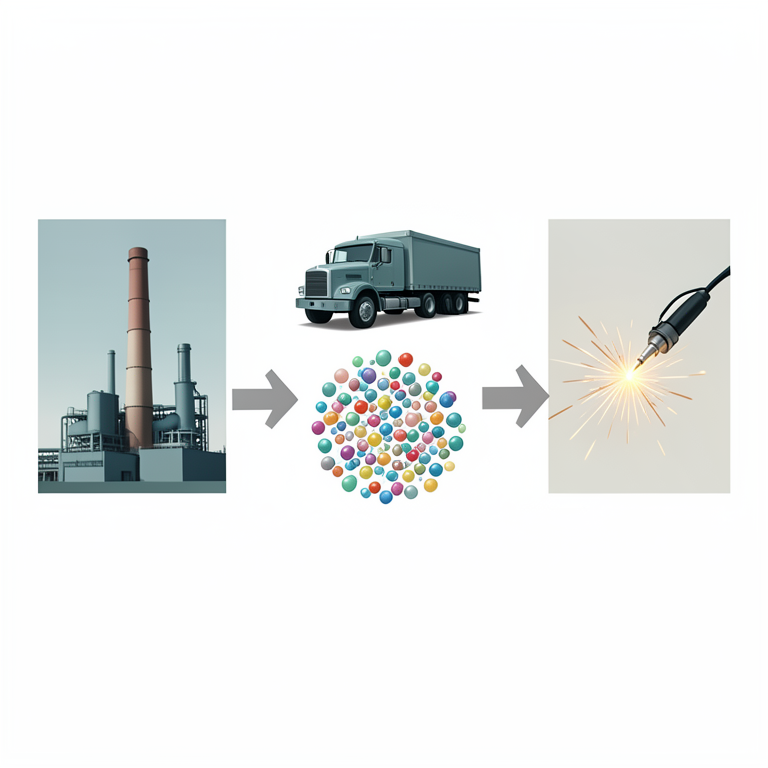
Sources of Nanoparticles
AI-generated conceptual illustration (industrial factory, diesel truck, and welding torch). It explains the idea and does not show study data.
View source evidence ↗Introduction
Nanotechnology has been characterized as innovative work at the nuclear, sub-atomic or macromolecular scales [1] . Nanoparticles are viewed as the structure blocks for nanotechnology and are alluded to as particles with in any event one aspect of 100 nm. Particles in these size ranges have been involved by a few enterprises and mankind for millennia; notwithstanding, there has been a new resurgence due to the capacity to incorporate and control such materials. Nanoscale materials track down use in a wide range of regions, for example, electronic, attractive and optoelectronic, biomedical, drug, corrective, energy, natural, synergist, and materials applications. Due to the capability of this innovation, there has been an overall expansion in interest in nanotechnology research and development [2] . The speculation for nanotechnology research by the central government in the US will be roughly $1 billion, in Western Europe about $600 million, in Japan $800 million, in Korea $200 million, and different nations adding up to about $800 million out of 2005. This is a 7-crease expansion in nanotechnology exploration and financing beginning around 1999. Significant accentuation is likewise being placed on guaranteeing more extensive cultural enhancements and reasonable development [3] . Albeit the above worries are applicable, fitting, and support, there are numerous different reports in the well-known writing that most likely ought to be grouped in the "fiction" class. The book Prey [6] is a model and makes sense of how a bombed explore brought about discharges of nanoparticles (A significant part of this survey) that self-replicate to frame robots that become dangerous and can't be obliterated, and individuals become the "prey." Albeit one can't question that such books are exceptionally compelling at carrying the consciousness of the topic to the lay per user, tragically the articulations are misjudged (Even by the Ruler of Grains). For instance, certain bunches have required a ban on nanotechnology research [7] . Confronting such inaccurate translation and understanding by people in general, researchers are the ones who have the obligation to bring up the issues, plan studies to respond to them, and successfully impart the outcomes to both people in general and the arrangement producers. The subject of nanoparticles and the climate is exceptionally expansive, and equity isn't possible in a basic survey as introduced herewith. With expanded financing, there has been an expansion of innovative work projects and with it an extraordinary expansion in the quantity of distributions. Inclusion, all things considered, can't be given here. In this way, a concise depiction of the numerous logical what's more, innovative difficulties and open doors is furnished with a representation of the requirement for multidisciplinary endeavors to additional our comprehension. To begin with, there are a few sources that outcome in nanoparticle development: fixed modern sources [8] , like coal terminated burning frameworks and incinerators; versatile sources [9] , for example, cars and diesel fueled vehicles; and word related environments [10] , for example, those where welding processes are common and those where designed nanoparticles are intentionally blended. There are a few normal sources furthermore, nanoparticles of natural origin [11] that likewise need critical consideration.
For instance, dust sections are likely reasons for sensitivities, and viral nanoparticles can be utilized as immunizations or can assume a huge part in the spread of sickness. Once nanoparticles are discharged to the climate they are promptly changed, and this might bring about adjustments in size and organization from their starting place. Besides, nanoparticles are likewise shaped in the climate by nucleation events [12] emerging out of photochemical cycles. These nanoparticles are mean quite a bit to cloud arrangement, however, they can likewise be moved in the climate over enormous distances and can ultimately result in human openness by means of inward breath routes [13] . Nanoparticles can likewise be saved onto the dirt and water bodies and bring about auxiliary defilement or other ecological impacts.
Sources of nanoparticles Fixed sources
Fixed ignition frameworks have for quite some time been known to be a significant wellspring of fine molecule emanations. Nonetheless, ultrafine or nanometer-sized particulate matter discharge portrayal is simply now beginning to get consideration. Maguhn et al. [14] broke down ultrafine particles in the pipe gas and in the heap of a city squander incinerator. The pinnacle size was viewed as 90 nm at 700 °C (In the combustor). The particles developed to bigger sizes in the cooler downstream areas, and grew up by coagulation, buildup, and receptive holding of vaporous synthetic substances onto the nucleated particulate matter. Discontinuous times of high emanations of ultrafine particles 40 nm later the wet Electrostatic Precipitator (ESP) were noticed, likely shaped by nucleation of gas-stage constituents in cooler locales downstream of the ESP (as a result of the nonattendance of molecule surfaces on which to consolidate, which would have brought about bigger particles). The number of ultrafine particles at the exit of the wet ESP was related to the SO 2 focus in the profluent. The utilization of backup oil burners likewise brought about the development of a predominant pinnacle of 30-nm particles. Chang et al. [8] revealed ultrafine molecule size dissemination from coal-, oil-, and gas-terminated fixed ignition sources. Tops in molecule size (In the number circulation) were seen at 40-50, 70-100, and 15-25 nm on combusting medium sulfur bituminous coal, No. [6] fuel oil, and petroleum gas, individually. Obviously, the creation of the fuel assumes a significant part in the resultant size conveyance. Research center scale concentrates on grasping the discharges from coal combustors have been led, and pathways of change of metallic species have been laid out to decide nanoparticle formation [15,16] .
Mobile sources
Diesel motors are significant wellsprings of nanoparticles (50 nm), which overwhelm by number focus, while the mass circulation is overwhelmed by the collection mode (50 nm molecule distance across 1 m), Nanoparticles from diesel motors are commonly hydrocarbons (dissolvable natural division) or sulfate particles shaped by nucleation, though the collection mode particles are basically carbonaceous ash totals. Tobias et al. [17] announced that diesel fumes nanoparticles are contained essentially of unburned fuel and greasing up oil. Sulfuric corrosive represented a little percent, however assumed a basic part as cores that give a surface to buildup of natural species. Sakurai et al. [18] completed internet based estimations of diesel fumes nanoparticle synthesis and revealed the unpredictable part to be contained 95% unburned greasing up oil. Settle for what is most convenient option for diesel motors lessen molecule mass discharges, yet nanoparticle number fixations might expand in light of the lower accessibility of buildup surfaces. Burtscher et al. [19] inspected discharges from a diesel motor and revealed a mode width 60 nm estimated at encompassing temperature. They announced that the unpredictable division diminished, while polycyclic fragrant hydrocarbons on the molecule surface expanded as the heap expanded. Impetuses can be utilized to upgrade the oxidation of natural mixtures, and successful use in after-engine fumes treatment will assist with diminishing both the mass fixations and the possibility of framing the cores mode downstream. McDonald et al. [20] concentrated on the effect of diesel truck discharges on the surrounding spray near parkways. The mass focus was accounted for not to be a capability of distance from the expressway, while the number focuses showed clear tops in the ultrafine range in the close area of the interstate, diminishing to upwind levels inside 50 m of the downwind side of the road.
Atmospheric conversion
Nucleation has for quite some time been known as a cycle that outcomes in the arrangement of ultrafine particles in the environment. Aiken [21] in the late piece of the nineteenth century announced the perception of the cores mode particles, commonly in the scope of 20-50 nm, which is currently otherwise called the Aiken mode. The critical species in the air are sulfuric corrosive, nitric corrosive, and natural gases [22] . With the advances in instrumentation lately, for the recognition of ultrafine particles [23][24][25] , the development of a new method of climatic particles of sizes of a couple of nanometers has been accounted for. This peculiarity has been seen in metropolitan Atlanta, GA;12,26 the Pittsburgh, Dad, area; [27] metropolitan Birmingham, AL;49 metropolitan Helsinki, Finland; [28] Furthermore, tolerably dirtied mainland air in Germany [29] , as well as distant climatic districts, like the North Pole [30,31] , South Pole [32] , Mauna Loa [33] , high mountains [34,35] , and in a Finnish forest [36] . Scientists have additionally contended that nucleation mode particles can be created overhead in the free lower atmosphere cloud surges that are then shipped to the surface [30,33,37] . Ultrafine molecule development in the upper lower atmosphere is a wellspring of worldwide air particles [38,39] . These nucleation mode particles can keep on developing by coagulation furthermore, fume buildup turns into the Aiken mode and gathering mode particles, which bring about barometrical optical impacts and, consequently, environmental change on a worldwide scale. The lifetime of ultrafine particles in the air is ordinarily short (15 min for 10nm particles 9), however, they can turn out to be fine particles that can be shipped over significant distances adding provincial air quality corruption. The number centralization of ultrafine particles and PM2.5 mass focus are not really correlated [38,39] , at the end of the day, PM2.5 mass fixation is definitely not a steady substitute for wellbeing impact end focuses that are related with number fixation.
Nanoparticle characterization techniques 1. Electron microscopy (transmission and scanning) Real
space structure-particle size and morphology; particle morphology 2. X-ray diffraction Phase and crystallite size measurements in the 4-40 nm range from Bragg peak line widths using Scherrer formula 120.
Filtration frameworks
Filtration gadgets are additionally utilized for molecule control, and there are different plans for nanoparticle assortment. Nobleman and Willeke, Friedlander, and Hinds give definite data on ways to deal with deciding the all-out assortment effectiveness of filtration frameworks. The first step includes deciding the single objective gatherer proficiency and afterwards consolidating it in a pressed setup of specific porosity to lay out the general assortment effectiveness. A charming element in such frameworks is the progress moment that a tiny molecule can be thought of to act like a gas particle. The fact that gas makes its outstanding atoms go through channels, and the main impact is a related pressure drop. Though the diffusional transport of nanometersized particles is supposed to result in a catch on the channel components, it isn't clear at what size the particles will act like atoms and fall through. Key examination should be directed in this field to respond to the above questions obviously.
Summary of overall recommendations
Summary of overall recommendations
Acknowledgement
AcknowledgementThe authors would like to acknowledge Bharati Vidyapeeth (Deemed to be University) & Parul University for providing us with this platform to utilise our knowledge in the right propagation.
References
38 in the original paper- Roco MC. Broader societal issues of nanotechnology. Journal of Nanoparticle Research. 2003;5:181-189.
- Masciangioli T, Zhang WX. Environmental technologies at the nanoscale. Environmental Science & Technology. 2003;37:102a-108a.
- Colvin V. Point of impact: Where technology collides with society, business, and personal lives. Technology Review-Palm Coast. 2003;106(2):71-73.
- Crichton M. Prey. New York, NY: Harper Collins; c2002. ETC Group. Available at: http://www.etcgroup.org/documents/TheBigDown.pdf (accessed 2003).
- Chang MCO, Chow JC, Watson JG, Hopke PK, Yi SM, England GC. Measurement of ultrafine particle size distributions from coal-, oil-, and gas-fired stationary combustion sources. Journal of the Air & Waste Management Association. 2004;54(12):1494-1505.
- Kittelson DB. Engines and nanoparticles: A review. Journal of Aerosol Science. 1998;29(5-6):575-588.
- Vincent JH, Clement CF. Ultrafine particles in workplace atmospheres. Philosophical Transactions of the Royal Society A -Journals. 2000;358(1775):26732682.
- Hogan CJ, Lee MH, Biswas P. Capture of viral particles in soft X-ray-enhanced corona systems: charge distribution and transport characteristics. Aerosol Science and Technology. 2004;38(5):475-486.
- McMurry PH, Woo KS, Weber R, Chen DR, Pui DYH. Size distributions of 3-10 nm atmospheric particles: implications for nucleation mechanisms. Philosophical Transactions of the Royal Society A -Journals. 2000;358(1775):2625-2642.
- Donaldson K, Li XY, MacNee W. Ultrafine (nanometre) particle mediated lung injury. Journal of Aerosol Science. 1998;29(5-6):553-560.
- Maguhn J, Karg E, Kettrup A, Zimmermann R. On-line analysis of the size distribution of fine and ultrafine aerosol particles in the flue and stack gas of a municipal waste incineration plant: effects of dynamic process control measures and emission reduction devices. Environmental Science & Technology. 2003;37(20):4761-4770.
- Liu Y, Daum PH. The effect of refractive index on size distributions and light scattering coefficients derived from optical particle counters. Journal of Aerosol Science. 2000;31(8):945-957.
- Zhuang Y, Biswas P. Sub-micrometer particle formation and control in a bench-scale pulverized coal combustor. Energy Fuels. 2001;15(3):510-516.
- Tobias HJ, Beving DE, Ziemann PJ, Sakurai H, Zuk M, McMurry PH, et al. Chemical analysis of diesel engine nanoparticles using a nano-DMA/thermal desorption particle beam mass spectrometer. Environmental Science & Technology. 2001;35(11):2233-2243.
- Sakurai H, Tobias HJ, Park K, Zarling D, Docherty S, Kittelson DB, et al. On-line measurements of diesel nanoparticle composition and volatility. Atmos Environ. 2003;37(9-10):1199-1210.
- Burtscher H, Kunzel S, Huglin C. Characterization of particles in combustion engine exhaust. Journal of Aerosol Science. 1998;29(4):389-396.
- McDonald R, Hu SH, Martuzevicius D, Grinshpun SA, LeMasters G, Biswas P. Intensive short-term measurements of the ambient aerosol in the greater Cincinnati airshed. Aerosol Science and Technology. 2004;38(S2):70-79.
- Aitken J. XV. On the formation of small clear spaces in dusty air. Earth and Environmental Science Transactions of the Royal Society of Edinburgh. 1884;32(2):239-272.
- Saros MT, Weber RJ, Marti JJ, McMurry PH. Ultrafine aerosol measurement using a condensation nucleus counter with pulse height analysis. Aerosol Science and Technology. 1996;25(2):200-213.
- Chen DR, Pui DYH, Hummes D, Fissan H, Quant FR, Sem GJ. Design and evaluation of a nanometer aerosol differential mobility analyzer (Nano-DMA). Journal of Aerosol Science. 1998;29(5-6):497-509.
- Chen DR, Pui DYHA. High efficiency, high throughput unipolar aerosol charger for nanoparticles. Journal of Nanoparticle Research. 1999;1:115-126.
- McMurry PH, Woo KS. Size distributions of 3-100-nm urban Atlanta aerosols: measurement and observations. Journal of Aerosol Medicine Deposition Clear Effects Lung. 2002;15(2):169-178.
- Stanier CO, Khlystov AY, Pandis SN. Ambient aerosol size distributions and number concentrations were measured during the Pittsburgh Air Quality Study (PAQS). Atmospheric Environment. 2004;38(20):32753284.
- Hussein T, Puustinen A, Aalto PP, Makela JM, Hameri K, Kulmala M et al. Urban aerosol number size distributions. Atmospheric Chemistry and Physics. 2004;4(2):391-411.
- Birmili W, Wiedensohler A. The influence of meteorological parameters on ultrafine particle production at a continental site. Journal of Aerosol Science. 1998;29:S1015-S1016.
- Covert DS, Wiedensohler A, Aalto P, Heintzenberg J, Mcmurry PH, Leck C et al. Aerosol number size distributions from 3 to 500 nm diameter in the arctic marine boundary layer during summer and autumn. Tellus B: Chemical and Physical Meteorology. 1996;48(2):197-212.
- Tunved P, Hansson HC, Kulmala M, Aalto P, Viisanen Y, Karlsson H et al. One year boundary layer aerosol size distribution data from five Nordic background stations. Atmospheric Chemistry and Physics. 2003;3(6):21832205.
- Park J, Sakurai H, Vollmers K, McMurry PH. Aerosol size distributions were measured at the South Pole during ISCAT. Atmospheric environment. 2004;38(32):54935500.
- Covert DS, Kapustin VN, Bates TS, Quinn PK. Physical properties of marine boundary layer aerosol particles of the mid-Pacific in relation to sources and meteorological transport. Journal of Geophysical Research: Atmospheres. 1996;101(D3):6919-630.
- Weber RJ, Marti JJ, McMurry PH, Eisele FL, Tanner DJ, Jefferson A et al. Measurements of new particle formation and ultrafine particle growth rates at a clean continental site. Journal of Geophysical Research: Atmospheres. 1997;102(D4):4375-4385.
- Wiedensohler A, Hansson HC, Orsini D, Wendisch M, Wagner F, Bower KN, et al. Night-time formation and occurrence of new particles associated with orographic clouds. Atmospheric Environment. 1997;31(16):25452559.
- Makela JM, Aalto P, Jokinen V, Pohja T, Nissinen A, Palmroth S, et al. Observations of ultrafine aerosol particle formation and growth in boreal forest. Geophysical Research Letters. 1997;24(10):1219-1222.
- Wiedensohler A, Covert DS, Swietlicki E, Aalto P, Heintzenberg J, Leck C et al. Occurrence of an ultrafine particle mode less than 20 nm in diameter in the marine boundary layer during Arctic summer and autumn. Tellus B: Chemical and Physical Meteorology. 1996;48(2):213-222.
- Clarke AD. Atmospheric nuclei in the Pacific midtroposphere -their nature, concentration, and evolution. J Geophys Res Atmos. 1993;98:20633-20647.
- Clarke AD, Varner JL, Eisele F, Mauldin RL, Tanner D, Litchy M et al. Particle production in the remote marine atmosphere: cloud outflow and subsidence during ACE 1. Journal of Geophysical Research: Atmospheres. 1993;98(D11): 16397-16409.
- Hughes LS, Cass GR, Gone J, Ames M, Olmez I. Physical and chemical characterization of atmospheric ultrafine particles in the Los Angeles area. Environmental Science & Technology. 1998;32(9):1153-1161.
- Chung A, Herner JD, Kleeman MJ. Detection of alkaline ultrafine atmospheric particles at Bakersfield, California. Environmental Science & Technology. 2001;35(11):2184-2190.
- Laakso L, Hussein T, Aarnio P, Komppula M, Hiltunen V, Viisanen Y, et al. Diurnal and annual characteristics of particle mass and number concentrations in urban, rural and Arctic environments in Finland. Atmos Environ. 2003;37(19):2629-2641.
Cited by 8
From OpenAlex, OpenCitations and reference lists read by Scinovex
- The role of caffeine-synthesized silver nanoparticles in mitigating radiation-induced liver damage in Swiss albino mice: A histopathological study ↗
Lavina Bagoria, Shweta Ratanpal, Rohit Gangawat, Ritu Kamal Yadav · Journal of Pharmacognosy and Phytochemistry · 2025
This study investigates the potential protective effects of caffeine-synthesized silver nanoparticles (AgNPs) on liver damage induced by ionizing radiation in Swiss Albino mice. The liver, a vital organ for detoxification and metabolism, is highly susceptible to radiation-induced injury, which manifests as cellular necrosis, inflammation, and fibrosis. The synthesis of silver nanoparticles using caffeine, a natural antioxidant and radioprotective agent, aims
- Nanoparticles-enabled smart materials for artificial intelligence applications ↗
Sonam Sonam, Shama Parveen · International Journal of Multidisciplinary Trends · 2025
In this paper, we are exploring the applications of nanoparticles in different domain of artificial intelligence (AI) based systems. The integration of nanoparticles into smart materials has revolutionized the development of AI systems. NMs become the first choice for every field of AI. There are different aspects for design, synthesis, and characterization of nanoparticle-based smart materials that enhance AI performance.
- Formulation and characterization of polyherbal phytosomal nanoparticles ↗
S.P. Pawar, Swati J. Patil · International Journal of Pharmacognosy and Life Science · 2025
This research focuses on the formulating and characterizating of polyherbal phytosomal nanoparticles with Methotrexate, (MTX) and polyherbal extracts for enhanced cancer therapy. Nanoparticles were synthesized using soya lecithin and evaluated for particle size (310 nm), zeta potential (-18.3 mV), encapsulation efficiency (79.71%), FTIR compatibility, and stability. Stability studies demonstrated the formulation's robustness at room temperature for three months. The results
- Innovative perspectives and critical implications of nanotechnology in food science ↗
E Akshaya · International Journal of Home Science · 2025
Nanotechnology is transforming food science by introducing ground-breaking solutions that improve food safety, quality, and sustainability. This study examines the cutting-edge uses of nanotechnology in food systems, with an emphasis on nutrition delivery, packaging innovation, contaminant detection, and agricultural breakthroughs. Ten contemporary studies (2021-2024) are analysed to identify breakthroughs and obstacles. The summary examines technology deployment patterns and includes key
- Green biosynthesis of silver nanoparticles: An eco-friendly and sustainable alternative: Review ↗
Ghufran Ahmed Khudair, Nawal Mahmoud Alwan, Mateen Yilmaz Al-Bayati · South Asian Journal of Agricultural Sciences · 2025
Chemical methods of manufacturing nanoparticles have adverse environmental effects due to some toxic chemicals that may be absorbed on their surface, as well as chemical methods are an environmental burden, and therefore the green manufacture of plant extracts provides an economical, sustainable and environmentally friendly way, metal nanoparticles in particular have attracted a lot of attention recently due to their
- Autonomous motion of Janus particles in presence of space dependent propulsion strength ↗
M. K. Sen · International Journal of Physics and Applications · 2025
I have studied effect of fuel concentration gradient on autonomous rectification and mobility of Janus particles in confined geometries as well as in presence of interaction with substrates. For this purpose dynamics of an over damped Janus particle in presence of a space dependent self-propulsion have been considered. At first I have calculated the rectification average current and diffusivity of
- Study of various nanoparticle synthesized from Clitoria ternatea: A therapeutic plant ↗
S. S. Nigam, Goodnews E. Charles · Journal of Medicinal Plants Studies · 2025
In the Ayurveda, “Bhasma” i.e., the ash of metallic or mineral or herbal nanoparticles, has been used to treat diseases. Along the course of time, through many researches and studies, nanoparticles have established themselves as an area of immense potential and applications in almost all fields. As their application increases, so does their demand, and to meet this requisition, large
- Nano therapeutics: A modern approach to pulmonary care ↗
Sahana Ravi · International Journal of Pharmacy and Pharmaceutical Science · 2025
Every year, millions of people's health and quality of life are impacted by the rising number of respiratory disease cases worldwide. Many hospital admissions and fatalities are caused by acute respiratory infections (ARIs) and chronic respiratory disorders (CRDs), which call for advanced therapies that make the delivery of medications with regulated release to particular target sites. Various nanoparticles (NPs), including