
Research article · 2024 · Full text
International Journal of Research in AgronomyResponse of organic pigeonpea to drip irrigation, micronutrients and growth regulators in northern dry zone of Karnataka
Volume 7(5S) · Pages 82–86 · DOI: 10.33545/2618060x.2024.v7.i5sb.716 ↗
Research areasAgricultural Science and FertilizationAgricultural Economics and PracticesAgricultural pest management studies
Abstract
Author-writtenA field experiment was conducted to study the “Response of organic pigeonpea to drip irrigation, micronutrients and growth regulators in Northern Dry Zone of Karnataka” under medium deep black soilsat Instructional Farm, agriculture college, Vijayapura during Kharif 2018. The experiment was laid out in strip-split plot design and replicated thrice. There were twenty treatment combinations comprise of five irrigation levels as main plots and foliar application of micronutrients and growth regulators as four sub plots. The result show that among different irrigation levels, scheduling of irrigation at 40 mm Ep recorded significantly higher number of pods plant-1 (185.6), seed weight plant-1 (72.9), grain yield (1942 kg ha-1), stalk yield (6437 kg ha-1), net returns (Rs.61341 ha-1) and BC ratio (2.11) and which were on par with irrigation at 30 mm Ep. Among different growth regulators and micronutrients, foliar application of 50 ppm NAA + 0.2% boron + 0.5% ZnSO4 recorded significantly higher number of pods plant-1 (183.0), seed weight plant-1 (69.8), grain yield (1851 kg ha-1), stalk yield (6249 kg ha-1), net return (Rs. 58,844 ha-1) and BC ratio (2.07). Among the interactions scheduling of irrigation at 40 mm Ep along with foliar spray of 50 ppm NAA + 0.2% boron + 0.5% ZnSO4 recorded significantly higher number of pods plant-1 (196.3), seed weight plant-1 (87.6), grain yield (2259 kg ha-1), stalk yield (7203 kg ha-1), net returns (Rs. 81,017 ha-1) and BC ratio (2.50).
Summary
Source-checkedPlain-language reading of the full paper, prepared with AI and checked against the text. Each point links to the authors' own words.
Why it matters
- Pigeonpea is a protein-rich legume and the second most important pulse crop after chickpea, typically grown in semi-arid tropical regions under rainfed conditions. View evidence ↗
- Precise irrigation scheduling is critical for pigeonpea productivity, as both over-irrigation and under-irrigation can negatively impact yields. View evidence ↗
- A significant challenge in pigeonpea cultivation is the shedding of flowers and pods, which can occur in up to 80% of cases, severely limiting yield. View evidence ↗
The question
- The study aimed to evaluate how organic pigeonpea responds to different drip irrigation levels, micronutrients, and growth regulators in the Northern Dry Zone of Karnataka. View evidence ↗
What they did
- The experiment took place during the 2018 Kharif season in Vijayapur, Karnataka, using medium depth black soils (pH 8.34, EC 0.29 dS m-1). View evidence ↗
- The research used a strip-split plot design with three replications, with each plot measuring 7.2 m by 5 m. View evidence ↗
- Twenty treatment combinations were tested, including five irrigation levels (40 mm Ep, 30 mm Ep, 20 mm Ep, critical stages, and rainfed control) and four foliar sprays (50 ppm NAA + 0.2% boron + 0.5% ZnSO4, 10% Vermiwash, 10% Cow urine, and no spray). View evidence ↗
What they found
- Irrigation at 40 mm Ep produced a significantly higher grain yield (1,942 kg ha-1) compared to the rainfed control (1,302 kg ha-1), though it was statistically similar to the 30 mm Ep level (1,757 kg ha-1). View evidence ↗
- The highest grain yield (2,259 kg ha-1) was achieved by combining 40 mm Ep irrigation with the NAA + ZnSO4 + boron spray, a result comparable to combining 40 mm Ep with 10% vermiwash (2,023 kg ha-1). View evidence ↗
- The combination of 40 mm Ep irrigation and the NAA + boron + ZnSO4 spray resulted in the highest net returns of 81,017 Rs. ha-1, significantly exceeding the control's 12,890 Rs. ha-1. View evidence ↗
- The best benefit-cost (B:C) ratio of 2.50 was observed with 40 mm Ep irrigation and the NAA + boron + ZnSO4 spray, compared to 1.26 for the control. View evidence ↗
- Irrigation at 40 mm Ep improved key yield traits over the control, increasing pod number (185.65 vs 159.2 per plant), grain weight (72.99 vs 52.0 g per plant), and 100-grain weight (12.12 vs 10.55 g). View evidence ↗
What it means
- The authors conclude that the most effective treatment for maximizing yield, yield parameters, net returns, and the benefit-cost ratio is scheduling irrigation at 40 mm Ep combined with a foliar spray of 50 ppm NAA, 0.2% boron, and 0.5% ZnSO4. View evidence ↗
Visual summary
3 visualsIllustrations explain the paper; charts are replotted from the paper's own table values.
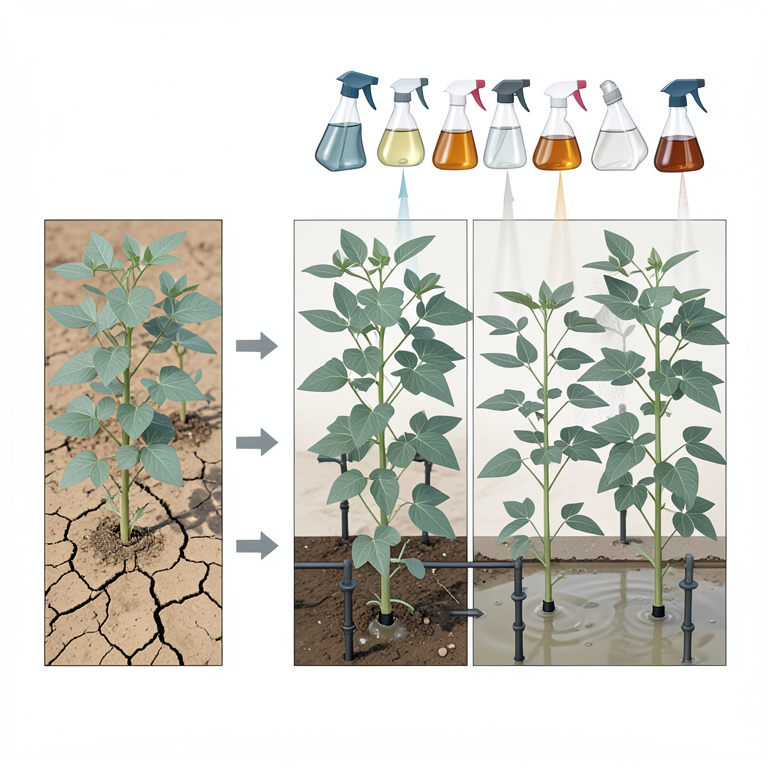
Experimental Treatment Matrix
AI-generated conceptual illustration (pigeonpea plants in a field). It explains the idea and does not show study data.
View source evidence ↗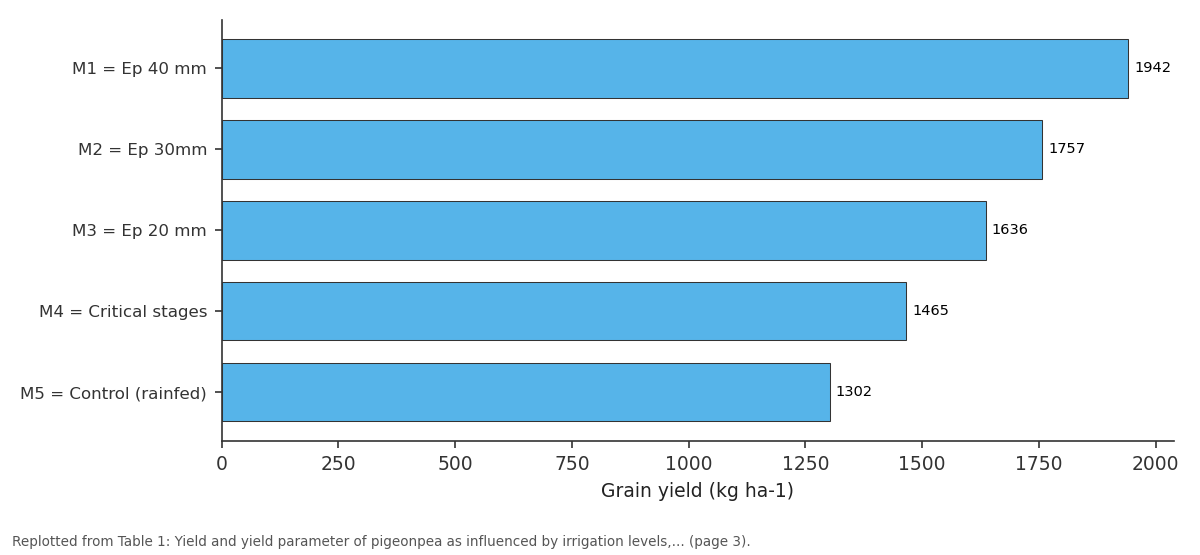
Grain yield (kg ha-1): M1 = Ep 40 mm vs M2 = Ep 30mm vs M3 = Ep 20 mm vs M4 = Critical stages vs M5 = Control (rainfed)
Replotted from Table 1 (page 3) of the original paper. Every bar is the paper's own table value.
View source evidence ↗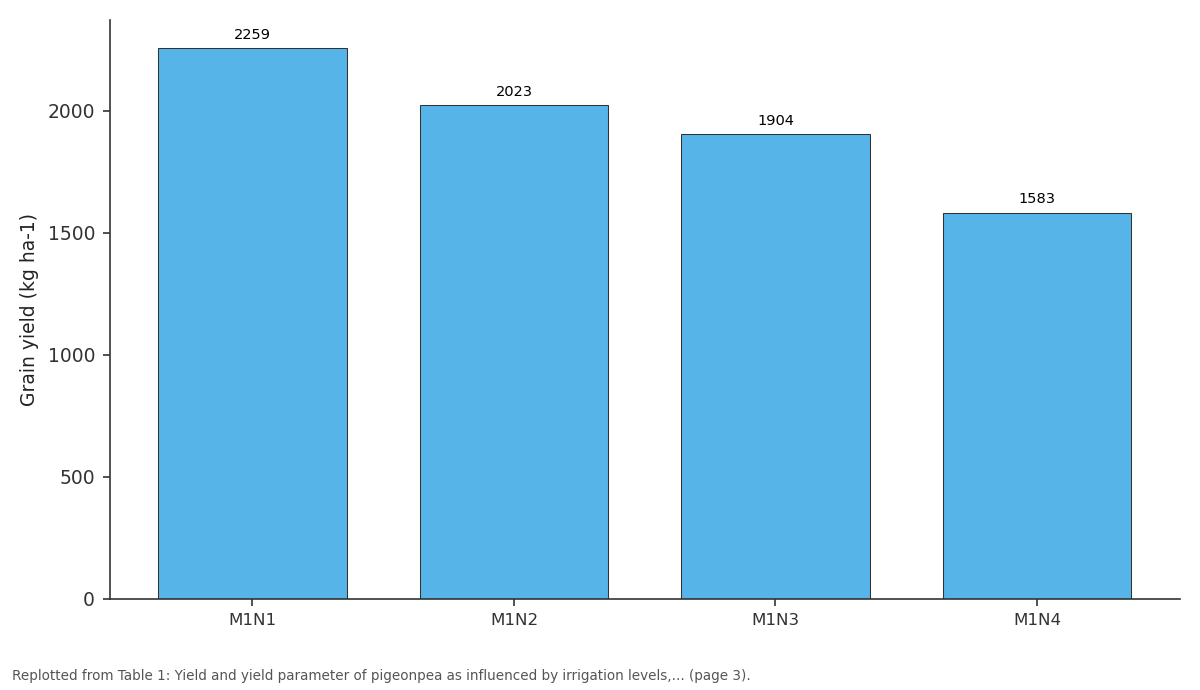
Grain yield (kg ha-1): M1N1 vs M1N2 vs M1N3 vs M1N4
Replotted from Table 1 (page 3) of the original paper. Every bar is the paper's own table value.
View source evidence ↗Figures & tables
From the original paper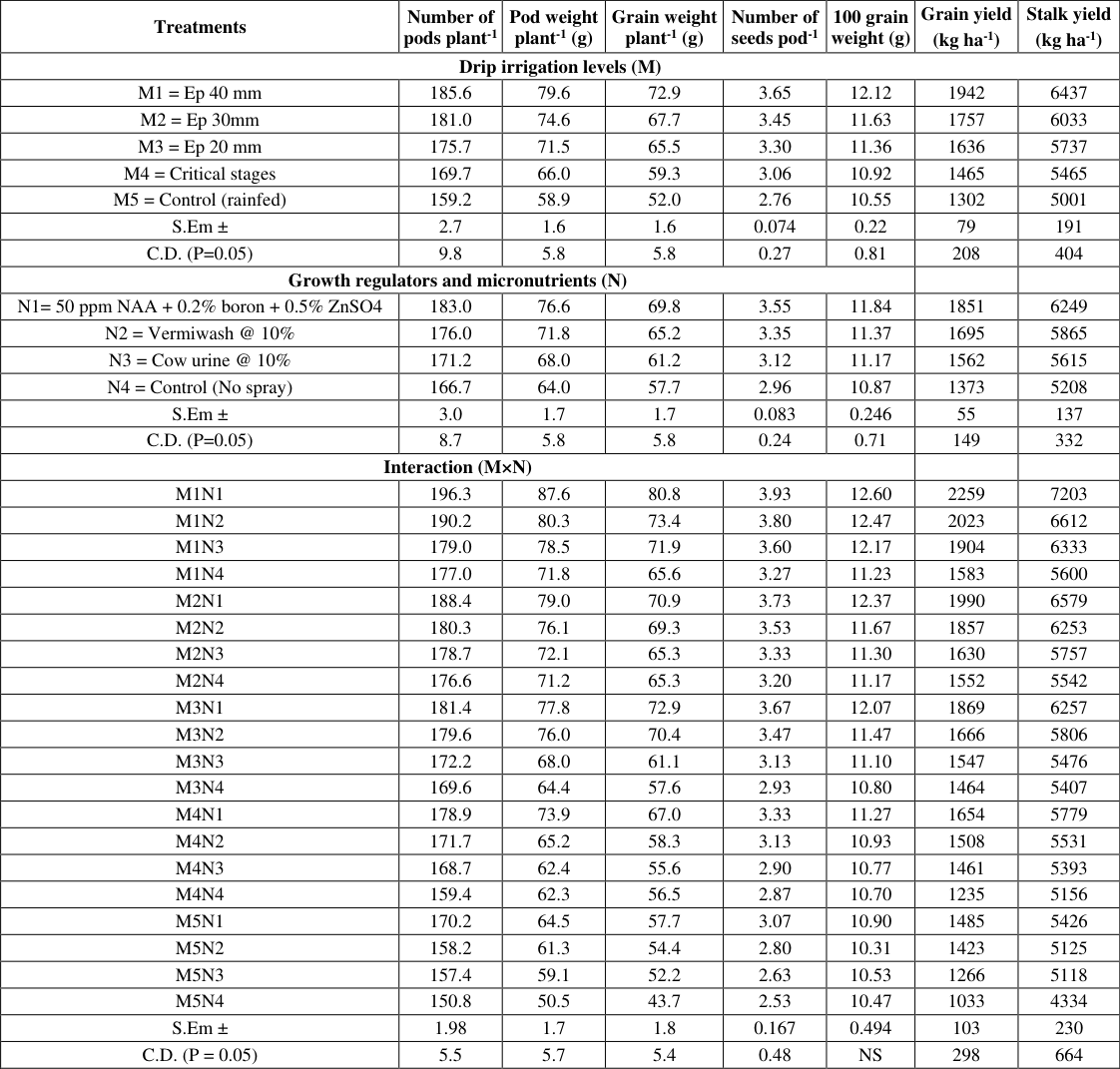 Table 1
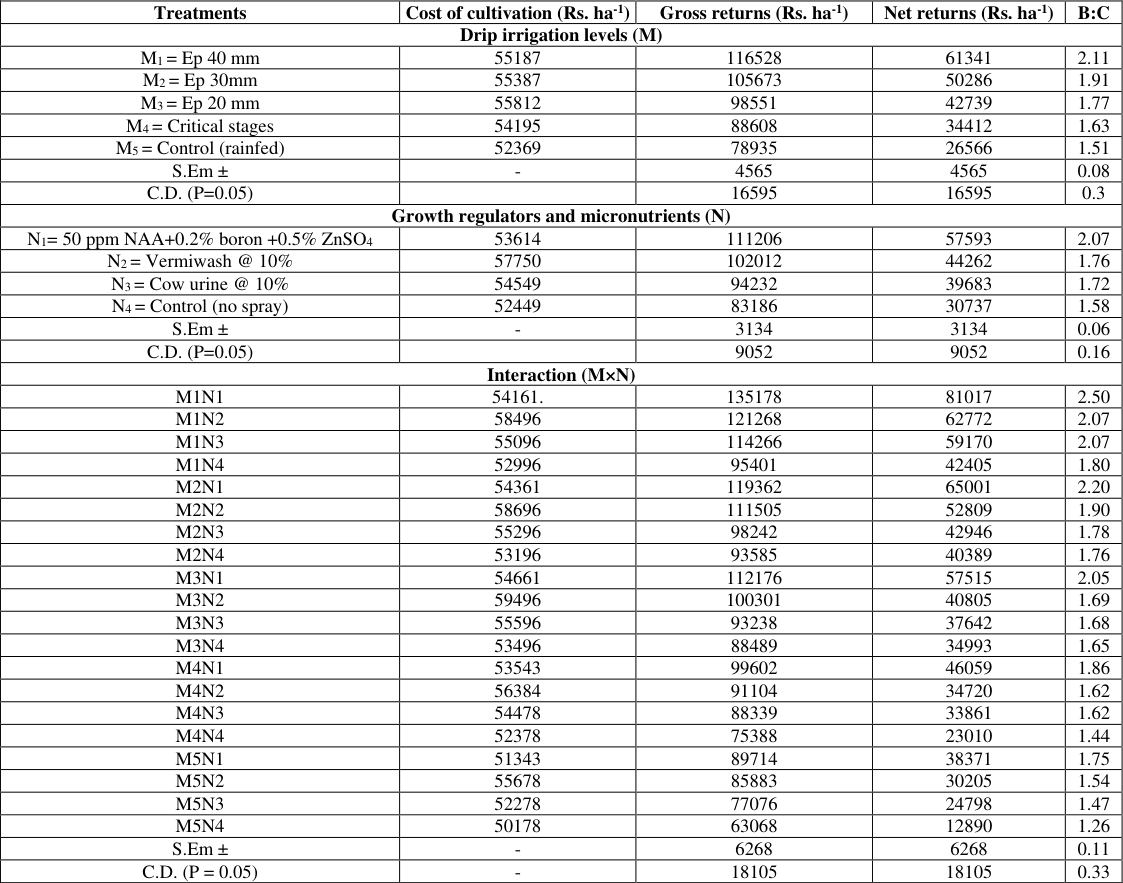 Table 2
Introduction
Pigeonpea [Cajanus cajan (L.) Millsp.] is one among the protein loaded legumes of semi-arid tropics primarily cultivated under rainfed situations. It is the second most imperative crop of pulse after chickpea. It is C 3 and short-day plant produced across the world's tropical and subtropical regions from 30 0 N to 35 0 S latitudes. In India, the most important area under pigeonpea falls around 14 0 and 28 0 N latitudes. It is most drought charitable among pulse crops. It is profound rooted and having many drought tolerant traits. Pigeonpea occupies 6.22 mha area and 4.74 mt of world's pulse manufacture (Anon., 2015-16) [1] . In India it is grown over an area of 3.96 mha with an annual production of 2.56 mt. Pigeonpea is extensively cultivated in states such as Maharashtra, Uttar Pradesh, Madhya Pradesh and Karnataka. Scheduling of irrigation is a dynamic component to produce maximum irrigation efficiency as excess or low irrigation equally have harmful effects on productivity of pigeonpea (Jayapaul et al., 1995) [2] . In general, surface irrigation methods mainly furrow irrigation and controlled flooding i.e., ridges and furrow are the common methods of irrigation in pigeonpea. Among these methods, higher amount of irrigation water is lost because of conveyance, evaporation and percolation besides, low application, distribution and use efficiencies. The use of current micro irrigation techniques, such as drip and sprinkler increase crop growth and yield, due to effective use of nutrients and water. Drip irrigation is a slow and accurate application of water in the form of drops directly to the rhizosphere of the crop and thereby it minimizes the loss of water by percolation and evaporation besides, increasing field application and supply efficiencies, finally resulting in improved water use efficiency. Common problem in pulses, especially in pigeonpea is flower and pod shedding and it is almost 80%, leading to very poor yield (Kaul et al., 1996) [5] . Foliar spray of plant growth regulators at the pre-flowering and po.d filling stages reduce the flower drop to some extent. The plant growth regulators (PGRs) help to retain flowers on the plant when positive at the time of flowering (Ramesh and Thirumuguran, 2001) [9] . Cow urine is used as a foliar spray @ 10% to supply nitrogen, phosphorus, potassium and other nutrients which are essential for healthy plant growth. Vermiwash is a gathering of excretory products and mucus exudation of earthworms if collected properly, is a clear and translucent, pale yellow colour fluid. Vermiwash treatment gives higher levels of total macronutrients (N, P and K) and micronutrients (Fe, Cu, Mg and Zn). There by improve the growth and development of the crop (Varghese and Prabha, 2014) [14] . Application of micronutrients (zinc, iron and molybdenum) are the metallic compounds which are involved in various physiological functions and thereby increase the leaf area index, crop growth rate and relative growth rate leading to better development and productivity of plant. Further they also enhance flower numbers, improve pod set (Prasad 1998) [8] .
Materials and Methods
The field experiment was conducted during Kharif season 2018 at College of Agriculture, Vijayapur, Karnataka on medium depth black soils with pH 8.34 and EC 0.29 dS m -1 . The soil was medium in organic carbon (0.65%) and available P2O5 (26.1 kg ha -1 ) and low in available N (260 kg ha -1 ) and K (280.33). The research trial area falls under the Northern Dry Zone (Zone 3) of Karnataka. There were twenty treatments as given in Table1 i.e. scheduling of irrigation at 40 mm Ep, 30 mm Ep, 20 mm Ep, critical stages and control (rainfed). Foliar application of growth regulators and micronutrients viz. 50 ppm NAA + 0.2% boron + 0.5% ZnSO 4, Vermiwash @ 10%, Cow urine @ 10% and control (no spray) at flower initiation and pod formation stage. The experiment was laid out in strip-split plot design with three replications in plot size of 7.2 m x 5 m. The recommended dose of FYM @ 6 tones ha -1 was incorporated into the soil before sowing and compost and vermicompost in equal proportion were applied equivalent to recommended dose of phosphorus (50 kg P 2 O 5 ha -1 ), so that the recommended nutrients for pigeonpea (25:50 N:P 2 O 5 kg ha -1 ) were met. The crop was sown on 9 th July 2018. The growth, yield observations and yield were recorded from the net plots the economics of each structure was computed with prevailing market prices. The yield was advance computed for, gross and net returns as well B:C to assess the productivity.
| Treatments | Number of pods plant-1 | Pod weight plant-1 (g) | Grain weight plant-1 (g) | Number of seeds pod-1 | 100 grain weight (g) | Grain yield (kg ha-1) | Stalk yield (kg ha-1) |
|---|---|---|---|---|---|---|---|
| Drip irrigation levels (M) | |||||||
| M1 = Ep 40 mm | 185.6 | 79.6 | 72.9 | 3.65 | 12.12 | 1942 | 6437 |
| M2 = Ep 30mm | 181.0 | 74.6 | 67.7 | 3.45 | 11.63 | 1757 | 6033 |
| M3 = Ep 20 mm | 175.7 | 71.5 | 65.5 | 3.30 | 11.36 | 1636 | 5737 |
| M4 = Critical stages | 169.7 | 66.0 | 59.3 | 3.06 | 10.92 | 1465 | 5465 |
| M5 = Control (rainfed) | 159.2 | 58.9 | 52.0 | 2.76 | 10.55 | 1302 | 5001 |
| S.Em ± | 2.7 | 1.6 | 1.6 | 0.074 | 0.22 | 79 | 191 |
| C.D. (P=0.05) | 9.8 | 5.8 | 5.8 | 0.27 | 0.81 | 208 | 404 |
| Growth regulators and micronutrients (N) | |||||||
| N1= 50 ppm NAA + 0.2% boron + 0.5% ZnSO4 | 183.0 | 76.6 | 69.8 | 3.55 | 11.84 | 1851 | 6249 |
| N2 = Vermiwash @ 10% | 176.0 | 71.8 | 65.2 | 3.35 | 11.37 | 1695 | 5865 |
| N3 = Cow urine @ 10% | 171.2 | 68.0 | 61.2 | 3.12 | 11.17 | 1562 | 5615 |
| N4 = Control (No spray) | 166.7 | 64.0 | 57.7 | 2.96 | 10.87 | 1373 | 5208 |
| S.Em ± | 3.0 | 1.7 | 1.7 | 0.083 | 0.246 | 55 | 137 |
| C.D. (P=0.05) | 8.7 | 5.8 | 5.8 | 0.24 | 0.71 | 149 | 332 |
| Interaction (M×N) | |||||||
| M1N1 | 196.3 | 87.6 | 80.8 | 3.93 | 12.60 | 2259 | 7203 |
| M1N2 | 190.2 | 80.3 | 73.4 | 3.80 | 12.47 | 2023 | 6612 |
| M1N3 | 179.0 | 78.5 | 71.9 | 3.60 | 12.17 | 1904 | 6333 |
| M1N4 | 177.0 | 71.8 | 65.6 | 3.27 | 11.23 | 1583 | 5600 |
| M2N1 | 188.4 | 79.0 | 70.9 | 3.73 | 12.37 | 1990 | 6579 |
| M2N2 | 180.3 | 76.1 | 69.3 | 3.53 | 11.67 | 1857 | 6253 |
| M2N3 | 178.7 | 72.1 | 65.3 | 3.33 | 11.30 | 1630 | 5757 |
| M2N4 | 176.6 | 71.2 | 65.3 | 3.20 | 11.17 | 1552 | 5542 |
| M3N1 | 181.4 | 77.8 | 72.9 | 3.67 | 12.07 | 1869 | 6257 |
| M3N2 | 179.6 | 76.0 | 70.4 | 3.47 | 11.47 | 1666 | 5806 |
| M3N3 | 172.2 | 68.0 | 61.1 | 3.13 | 11.10 | 1547 | 5476 |
| M3N4 | 169.6 | 64.4 | 57.6 | 2.93 | 10.80 | 1464 | 5407 |
| M4N1 | 178.9 | 73.9 | 67.0 | 3.33 | 11.27 | 1654 | 5779 |
| M4N2 | 171.7 | 65.2 | 58.3 | 3.13 | 10.93 | 1508 | 5531 |
| M4N3 | 168.7 | 62.4 | 55.6 | 2.90 | 10.77 | 1461 | 5393 |
| M4N4 | 159.4 | 62.3 | 56.5 | 2.87 | 10.70 | 1235 | 5156 |
| M5N1 | 170.2 | 64.5 | 57.7 | 3.07 | 10.90 | 1485 | 5426 |
| M5N2 | 158.2 | 61.3 | 54.4 | 2.80 | 10.31 | 1423 | 5125 |
| M5N3 | 157.4 | 59.1 | 52.2 | 2.63 | 10.53 | 1266 | 5118 |
| M5N4 | 150.8 | 50.5 | 43.7 | 2.53 | 10.47 | 1033 | 4334 |
| S.Em ± | 1.98 | 1.7 | 1.8 | 0.167 | 0.494 | 103 | 230 |
| C.D. (P = 0.05) | 5.5 | 5.7 | 5.4 | 0.48 | NS | 298 | 664 |
Table text extracted from the original PDF; superscript letters are shown inline. The original table image is below.
View original table image
Results and Discussion
Results and Discussion
Effect of irrigation levels and growth regulators on yield and yield attributes of pigeonpea
In the current analysis, it was discovered that irrigation levels and the foliar application of micronutrients and growth regulators had a significant impact on the growths as well as yield-attributing characteristics of pigeonpea. Grain yield was statistically on par (1,757 kg ha -1 ) with irrigation scheduling at 30 mm Ep, but it was significantly higher (1,942 kg ha-1 ) with irrigation scheduling at 40 mm Ep compared to control (1,302 kg ha -1 ). The increase in yield observed when irrigation was scheduled at 40 mm Ep (300 mm of water) compared to control was 49%, primarily due to drip irrigation, which maximizes water availability during the crop's growing season. These results are consistent with the pigeonpea research conducted by Mahalaxmi et al. (2011) [6] . Among various foliar sprays of micronutrients and growth regulators during flowering and pod filling stage of pigeonpea, foliar spray of 50 ppm NAA + ZnSO 4 (0.5%) + soluble boron (0.2%) recorded significantly greater grain yield (1,851 kg ha -1 ) compared to no spray which recorded significantly lower grain yield (1, 373 kg ha -1 ). The next best method, which produced results comparable to grain yield (1,695 kg ha-1), was foliar spraying 10% vermiwash. NAA promotes cell division, apical dominance, and increased cell enlargement. It increases the amount of flowers and fruit set, promotes uniform flowering, and stimulates the growth of the shoots. Micronutrient foliar spray enhances the production of protein and carbohydrates as well as their translocation to the site of seed formation. These results concur with those of Tekale (2003) [13] and Sondge et al. (1993) [12] in pigeonpea.
In the current study, scheduling irrigation at 40 mm Ep recorded significant impact on the stalk and husk yield (6,437 kg ha -1 ) of pigeonpea but it was comparable to scheduling of irrigation at 30 mm Ep (Table 1). Similar results were observed by Kantwa et al. (2005) [4] . Foliar spraying of 50 ppm NAA + ZnSO 4 (0.5%) + soluble boron (0.2%) resulted in significantly higher stalk and husk yield (6,249 kg ha -1 ) compared to no spray which recorded significantly lower stalk yield (5,208 kg ha -1 ). In comparison to the control (159.2 plant-1, 52.0 g plant-1, and 10.55 g, respectively), scheduling irrigation at 40 mm Ep produced higher yield traits, primarily pod number (185.65 plant-1), grain weight (72.99 g plant-1), and 100-grain weight (12.12 g) of pigeonpea. The main reason for the higher yield attribute when irrigation was set at 40 mm Ep was that there was enough moisture in the soil to meet the crop's water needs. These results are consistent with the research conducted on chickpea by Muniyappa et al. (2017) [7] and pigeonpea by Rana and Malhotra (1989) [9] . Foliar spray of 50 ppm NAA + ZnSO 4 (0.5%) + soluble boron (0.2%) recorded significantly higher yield traits mainly pod number (183 plant -1 ), grain weight (69.8 g plant -1 ) and 100-grain weight (11.84 g) of pigeonpea compared to control (166.7 plant - 1 , 64.0 g plant -1 and 57.7 g, respectively). It was principally because of decreased flower bud drop and improved number of pod set plant -1 with foliar spray of micronutrients and growth regulators Boron treatment might have played a essential role in reducing the flower and pod drop perhaps by avoiding abscission layer progress and is also involved in translocation of sugars from source which finally lead to increased yield of pigeonpea (Ratna et al., 1993) [10] .
Interactions between nutrient levels and foliar spray of micronutrients and growth regulators
Growth regulators and irrigation levels work together to maintain higher productivity pigeonpea yields. When compared to the previous treatment combinations, the grain yield (2,259 kg ha-1) was significantly higher when irrigation was scheduled at 40 mm Ep along with foliar spray of 50 mm NAA + ZnSO 4 (0.5%) + soluble boron (0.2%), with the exception of the scheduling of irrigation at 40 mm Ep along with foliar spray of vermiwash 10% (2023 kg ha-1), which were comparable (Table 1). Rameshwar observed similar outcomes in pigeonpea (2003) [9] . When irrigation was scheduled at 40 mm Ep and foliar sprayed with 50 ppm NAA + ZnSO 4 (0.5%) + soluble boron (0.2%), the grain yield was significantly higher than in the control. On par, however, were the results of scheduling irrigation at 40 mm Ep combined with foliar spraying 10% vermiwash (2023 kg ha -1 ) (Table 1). Significantly higher husk and stalk yield (7,203 kg ha -1 ) was recorded with scheduling of irrigation at 40 mm Ep along with foliar spray of 50 ppm NAA + ZnSO 4 (0.5%) + soluble boron (0.2%) when compared to control (4,334 kg ha -1 ) and it was on par with scheduling of irrigation at 40 mm Ep along with foliar spray of vermiwash 10% (Table 1).
Interactions between nutrient levels and foliar spray of micronutrients and growth regulators
Among the treatment combinations, scheduling irrigation at 40 mm Ep in conjunction with foliar spraying 50 ppm NAA + 0.2% boron + 0.5% ZnSO 4 yielded significantly higher net returns (81,017 Rs. ha -1 ) than the control (12,890 Rs. ha -1 ). It was also statistically comparable to scheduling irrigation at 30 mm Ep in conjunction with foliar spraying 50 ppm NAA + 0.2% boron + 0.5% ZnSO 4 (62,772 Rs. ha-1).Among the treatment combinations significantly superior B:C was obtained with scheduling of irrigation at 40 mm Ep along with the foliar spray of 50 ppm NAA + 0.2% boron + 0.5% ZnSO 4 (2.50) than control (1.26) and it was statistically at par with scheduling of irrigation at 30 mm Ep in combination with foliar spray of 50 ppm NAA + 0.2% boron + 0.5% ZnSO 4 (2.20) (Rameshwar, 2003) [9] .
Conclusion
It can be concluded that the above result that, scheduling of irrigation at 40 mm Ep along with foliar application of 50 ppm NAA + 0.2% boron + 0.5% ZnSO 4 recorded superior yield, yield parameters, net returns and benefit cost ratio.
Figures and tables from the paper
| Treatments | Cost of cultivation (Rs. ha-1) | Gross returns (Rs. ha-1) | Net returns (Rs. ha-1) | B:C |
|---|---|---|---|---|
| Drip irrigation levels (M) | ||||
| M1 = Ep 40 mm | 55187 | 116528 | 61341 | 2.11 |
| M2 = Ep 30mm | 55387 | 105673 | 50286 | 1.91 |
| M3 = Ep 20 mm | 55812 | 98551 | 42739 | 1.77 |
| M4 = Critical stages | 54195 | 88608 | 34412 | 1.63 |
| M5 = Control (rainfed) | 52369 | 78935 | 26566 | 1.51 |
| S.Em ± | - | 4565 | 4565 | 0.08 |
| C.D. (P=0.05) | 16595 | 16595 | 0.3 | |
| Growth regulators and micronutrients (N) | ||||
| N1= 50 ppm NAA+0.2% boron +0.5% ZnSO4 | 53614 | 111206 | 57593 | 2.07 |
| N2 = Vermiwash @ 10% | 57750 | 102012 | 44262 | 1.76 |
| N3 = Cow urine @ 10% | 54549 | 94232 | 39683 | 1.72 |
| N4 = Control (no spray) | 52449 | 83186 | 30737 | 1.58 |
| S.Em ± | - | 3134 | 3134 | 0.06 |
| C.D. (P=0.05) | 9052 | 9052 | 0.16 | |
| Interaction (M×N) | ||||
| M1N1 | 54161. | 135178 | 81017 | 2.50 |
| M1N2 | 58496 | 121268 | 62772 | 2.07 |
| M1N3 | 55096 | 114266 | 59170 | 2.07 |
| M1N4 | 52996 | 95401 | 42405 | 1.80 |
| M2N1 | 54361 | 119362 | 65001 | 2.20 |
| M2N2 | 58696 | 111505 | 52809 | 1.90 |
| M2N3 | 55296 | 98242 | 42946 | 1.78 |
| M2N4 | 53196 | 93585 | 40389 | 1.76 |
| M3N1 | 54661 | 112176 | 57515 | 2.05 |
| M3N2 | 59496 | 100301 | 40805 | 1.69 |
| M3N3 | 55596 | 93238 | 37642 | 1.68 |
| M3N4 | 53496 | 88489 | 34993 | 1.65 |
| M4N1 | 53543 | 99602 | 46059 | 1.86 |
| M4N2 | 56384 | 91104 | 34720 | 1.62 |
| M4N3 | 54478 | 88339 | 33861 | 1.62 |
| M4N4 | 52378 | 75388 | 23010 | 1.44 |
| M5N1 | 51343 | 89714 | 38371 | 1.75 |
| M5N2 | 55678 | 85883 | 30205 | 1.54 |
| M5N3 | 52278 | 77076 | 24798 | 1.47 |
| M5N4 | 50178 | 63068 | 12890 | 1.26 |
| S.Em ± | - | 6268 | 6268 | 0.11 |
| C.D. (P = 0.05) | - | 18105 | 18105 | 0.33 |
Table text extracted from the original PDF; superscript letters are shown inline. The original table image is below.
View original table image
References
13 in the original paper- Anonymous. 2015, All India area, production and yield of pigeon pea 2015-2016. Indiastat.com https://www.indiastat.com
- Jayapaul P, Uthayakumar B, Pandian BJ, Palchamy A, Swaminathan V. Effect of irrigation schedule under varying land management and soil moisture conservation amendments on morpho-physiological characters of irrigated soybean (Glycine max L. Merr.). Crop Res., 1995;10(1): 4550.
- Kalyani RR, Sreedevi V, Satyanarayana NRM, Rao KV. Effect of foliar spray of boron on crop growth and yield of pigeonpea (Cajanus cajan L.,). Indian J. Plant Ph., 1993;4:223-226.
- Kaul JN, Singh KB, Sekhon HS. Effect of growth regulators on growth and yield of pigeonpea. J. Agric. Sci., 1996;86(2):219-220.
- Mahalakshmi K, Kumar KA, Reddy MD, Devi MU. Response of rabipigeonpea [Cajanus cajan (L.)] to different levels of drip irrigation. J. Res. ANGRAU, 2011;39(4):101103.
- Muniyappa, Mudalagiriyappa GK, Halesh BK, Ramachandrappa, Nagaraju, Sathish A. Growth parameters, yield attributes, yield and quality of chickpea (Cicer arietinum L.) as influenced by depth and interval of drip irrigation. Global J. Biosci. Biotechnol., 2017;6(2):229-232.
- Prasad R, Efficient fertilizer use: The key to food security and better environment. J. Trop. Agric., 1998;47(1-2):1-17.
- Ramesh K, Thirumurugan V. Effect of seed pelleting and foliar nutrition on growth of soybean. Madras Agric. J., 2001;88:465-468.
- Rana KS, Malhotra OP. Response of summer pigeonpea to irrigation. Indian J. Agron., 1989;34(2):249-250.
- Ratna KR, Sree D, Satyanarayana NV, Madhavarao KV, Effect of foliar spray of boron on crop growth and yield of pigeonpea (Cajanus cajan (L.). Millspaugh). Indian J. Plant Physiol., 1993;4(2):223-226.
- Sondge VD, Rodge RP, Oza SR, Dahiphale VV. Yield and water relations in winter pigeonpea. J. Maharashtra Agric. Univ., 1993;18 (1):17-19.
- M.Sc. (Agri.) Thesis, Indira Gandhi Agric. Uni., Raipur. 2003.
- Varghese SM, Prabha ML. Biochemical characterization of vermiwash and its effect on growth of Capsicum frutescens. Malaya J. Biosciences, 2014;1(2):8691-1696.