
Research article · 2024 · Full text
International Journal of Research in AgronomyEnhancing agricultural sustainability through integrated weed management
Volume 7(5S) · Pages 87–92 · DOI: 10.33545/2618060x.2024.v7.i5sb.717 ↗
Research areasWeed Control and Herbicide ApplicationsBiological Control of Invasive SpeciesAllelopathy and phytotoxic interactions
Abstract
Author-writtenIntegrated Weed Management (IWM) is a holistic approach that integrates various strategies to control weeds while promoting sustainability in agriculture. This abstract highlights the significance of IWM in enhancing crop productivity and reducing environmental impact. The first step in IWM program is to monitor the fields for signs of weed infestation or potential weed problems. Proper weed management involves a thorough survey of each field after crop harvest to identify major weed species in the field. IWM integrates cultural practices (e.g. crop rotation, cover cropping), mechanical methods (e.g. tillage, mulching), biological control (e.g. bio control agents, allelopathy), and selective use of herbicides to effectively manage weed populations. By diversifying weed management tactics, IWM minimizes reliance on chemical inputs, reduces weed-related yield losses, and promotes soil health and biodiversity. By adopting IWM practices, farmers can optimize yields, preserve soil health, and conserve biodiversity. Successful implementation of IWM requires farmer education, policy support, and adoption of innovative technologies. Embracing IWM principles can contribute to sustainable agriculture by improving crop yields, conserving natural resources, and mitigating environmental risks associated with conventional weed control methods. Continued research and widespread adoption of IWM practices are essential for ensuring the long-term resilience and sustainability of global food production systems.
Summary
Source-checkedPlain-language reading of the full paper, prepared with AI and checked against the text. Each point links to the authors' own words.
Why it matters
- Weeds are undesirable plants that negatively impact human welfare by interfering with the use of water and land resources. View evidence ↗
- Weeds reduce farm profitability and crop yields by competing for sunlight, water, and nutrients. View evidence ↗
- Integrated Weed Management (IWM) is a sustainable strategy that combines multiple control techniques to reduce environmental, health, and economic risks. View evidence ↗
The question
- The paper aims to highlight how IWM can reduce environmental impacts and enhance the productivity of crops. View evidence ↗
What they did
- Potential yield losses for six major crops were calculated by comparing data from weed-free conditions against weedy check plots. View evidence ↗
- IWM employs a combination of chemical, biological, mechanical, and cultural methods tailored to specific weed species and cropping systems. View evidence ↗
- Cultural practices like crop rotation are used to reduce weed pressure by disrupting weed life cycles. View evidence ↗
- Mechanical control includes mulching, which uses organic materials to conserve moisture and smother weeds. View evidence ↗
- Chemical control in IWM involves rotating herbicides to prevent weeds from developing resistance. View evidence ↗
What they found
- In India, it has been estimated that weeds reduce overall crop yields by 31.5%. View evidence ↗
- Yield losses due to weeds in India vary by season, with a 22.7% loss during winter and 36.5% during the summer and Kharif seasons. View evidence ↗
- Potential yield losses for maize range from 18% to 65%, while transplanted rice ranges from 15% to 66%. View evidence ↗
- Actual yield losses vary significantly, including maize (7-51%), direct-seeded rice (6-49%), sugarcane (7-43%), and pigeon pea (5-42%). View evidence ↗
- Transplanted rice experiences lower yield losses than direct-seeded rice because puddling and flooding effectively control the initial weed flush. View evidence ↗
What it means
- The authors conclude that IWM is essential for sustainable agriculture as it balances environmental protection with crop productivity. View evidence ↗
- IWM is not universally applicable; its success depends on site-specific factors including climate, soil, and specific cropping systems. View evidence ↗
Visual summary
1 visualsIllustrations explain the paper; they do not show study data.
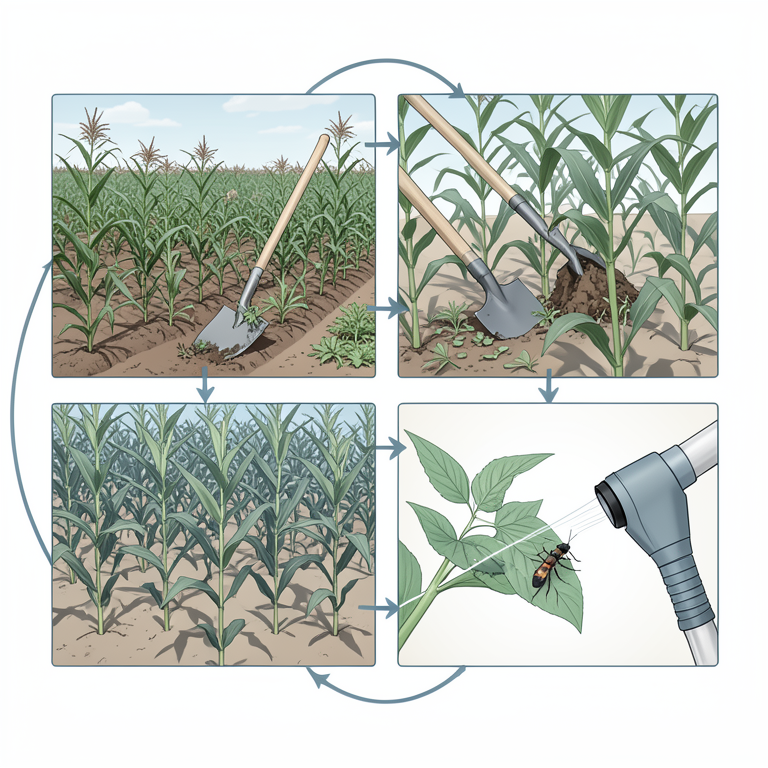
IWM Components Framework
AI-generated conceptual illustration (maize plants in a field). It explains the idea and does not show study data.
View source evidence ↗Figures & tables
From the original paper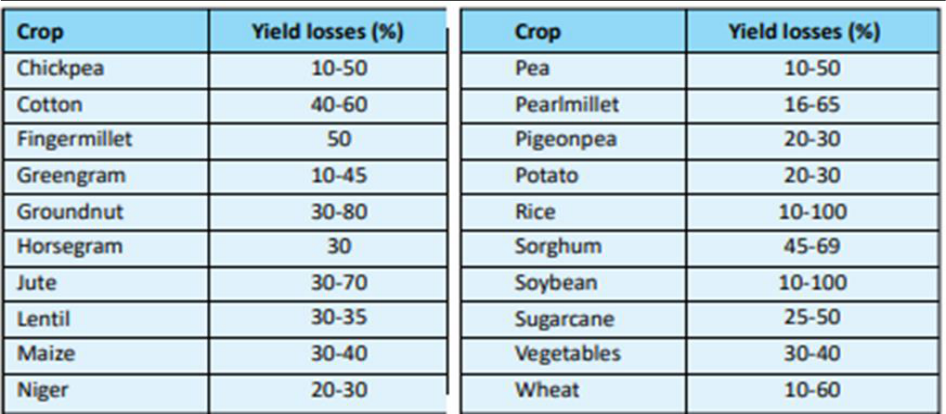 Figure 1
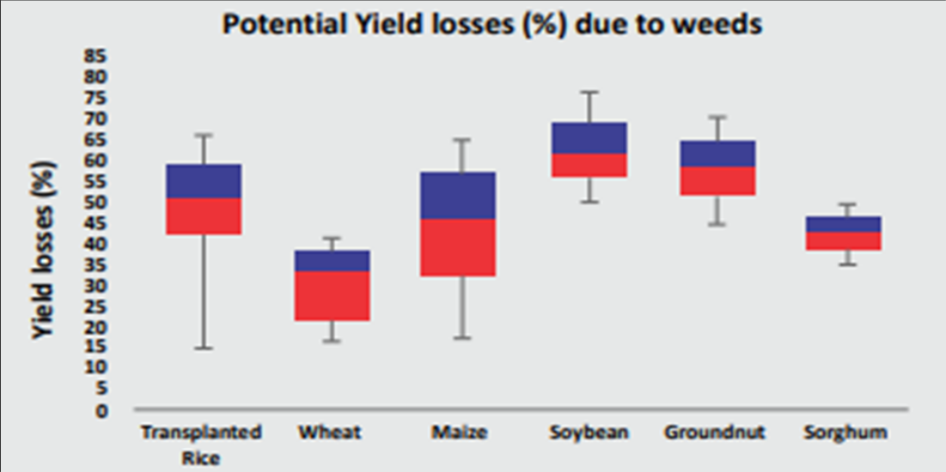 Figure 2
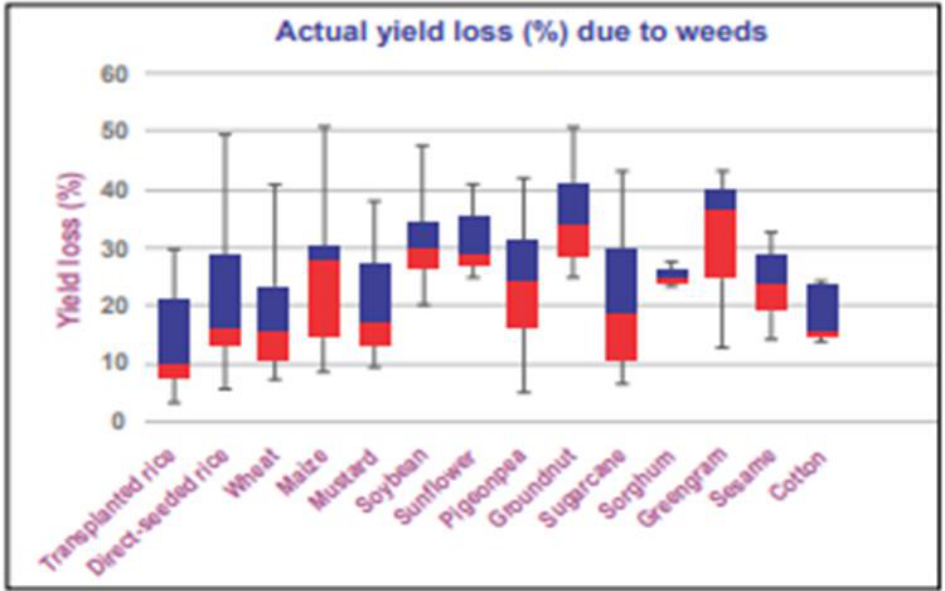 Figure 3
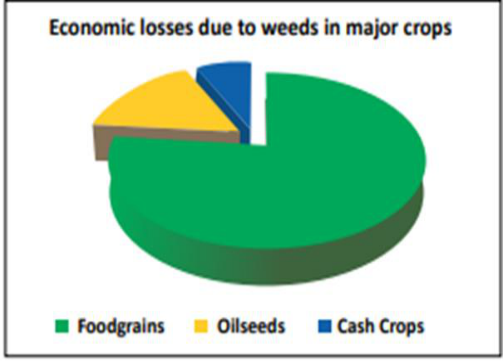 Figure 4
Introduction
In modern agriculture, effective weed management is crucial for sustaining crop productivity and minimizing environmental impact. According to other researchers, "Weeds are unwanted and undesirable plants which interfere with the utilization of land and water resources and thus adversely affect human welfare" (Rao, 2000) [1] . Therefore, weed management at an early growth stage is of paramount importance that needs immediate attention from farmers, plant scientists, breeders and extension workers (Bretagnolle and Gaba, 2015) [2] . It is a critical aspect of the sustainable agricultural production to control weeds, in order to achieve the target yield and to maintain a good yield potential (Oerke, 2006) [3] . Integrated Weed Management (IWM) is a sustainable approach that combines various weed control techniques to minimize economic, health, and environmental risks. It integrates preventive measures, monitoring, and a diverse array of strategies including: Crop rotations, Tillage practices, Crop competition, Mechanical and physical control (e.g.-hand weeding, cultivation), Herbicide rotation and mixtures, Biological control (e.g.-bio control agents), Nutritional management, Irrigation strategies, controlled burning etc. in a way that minimizes economic, health, and environmental risks (Malidža and Vrbničanin, 2015) [4] . By adopting IWM practices, farmers can optimize yields, preserve soil health, and conserve biodiversity. Weeds compete with crops for essential resources such as nutrients, water, and sunlight, leading to yield losses and reduced farm profitability. Integrated Weed Management (IWM) offers a holistic approach that combines various strategies to control weeds while promoting sustainability in agriculture.
Yield and economic losses attributable to weeds in India
In India, Bhan et al., (1999) [13] estimated that weeds reduce crop yields by 31.5%, with a breakdown of 22.7% during winter and 36.5% during summer and Kharif seasons. Other studies have also reported that weeds can cause up to one-third of total yield losses, in addition to degrading the quality of produce and posing health and environmental hazards (DWSR, 2013). However, the overall economic losses would be significantly greater if we consider the indirect effects of weeds on factors such as human health, biodiversity loss, nutrient depletion, grain quality degradation, and other related aspects. [14] Potential yield losses due to weeds Using yield data comparing weedy check plots with weed-free conditions, potential yield losses due to weeds were calculated and illustrated using a box plot diagram (data was available for 6 major crops). The analysis revealed significant potential yield loss, particularly in soybean (50-76%) and groundnut (45-71%). Variability in yield losses across different states was observed, with transplanted rice showing losses ranging from 15% to 66%, and maize from 18% to 65%.
Actual yield losses due to weeds
The average actual yield loss (%) is higher for major pulses and oilseed crops compared to major cereal crops like wheat and rice. Crops such as soybean, sunflower, groundnut, chickpea, black gram, and green gram experience greater yield losses compared to wheat and rice. Moreover, the extent of yield loss varies significantly among different states depending on crop growth conditions and weed intensity. This variation is particularly notable in crops like maize (7-51% yield loss), direct-seeded rice (6-49% yield loss), pigeon pea (5-42% yield loss), and sugarcane (7-43% yield loss). Notably, yield losses due to weeds are lower in transplanted rice compared to direct-seeded rice, likely due to effective control of initial weed flush through puddling and flooding in transplanted conditions. Additionally, direct-seeded rice tends to face more intense weed competition compared to transplanted rice.
Economic losses due to weeds
Economic losses caused by weeds are crucial statistics for policymakers, researchers, and others seeking to understand the economic impact of weeds. However, it's important to note that these estimates may still underestimate the actual economic losses, as they do not account for states where yield data for specific crops was unavailable. The true economic impact of weeds could be significantly higher than what is currently estimated based on available data. The Concept of Integrated Weed Management Integrated Weed Management (IWM) involves the coordinated use of multiple weed control strategies to achieve sustainable weed management goals. The concept of IWM is to maintain balanced weed flora and to reduce the reliance of cropping systems on herbicides, by adopting all available tools for the decrease of weed pressure and competition (Malidža and Vrbničanin, 2015) [4] . These strategies include cultural, mechanical, biological, and chemical methods tailored to specific cropping systems and weed species. Unlike conventional approaches that rely solely on herbicides, IWM emphasizes diversified tactics that minimize reliance on chemical inputs and reduce the risk of herbicide resistance. The concept of Integrated Weed Management (IWM) is rooted in the principles of sustainability, aiming to achieve effective weed control while minimizing negative impacts on the environment, human health, and economic resources.
Components of Integrated Weed Management
Integrated weed management (IWM) is basically integration of effective, dependable and workable weed management practices such as cultural, mechanical, chemical and biological that can be used economically by the farmers for improving crop yield. IWM strategies are dynamic in nature and vary across crops, seasons and soil and climatic characteristics.
Cultural Practices: This point explores diverse cultural weed management practices and highlights the advantages of integrating these practices to create more efficient and sustainable weed management systems (Blackshaw et al., 2007) [5] . Crop Rotation: Alternating different crops in sequence to disrupt weed life cycles and reduce weed pressure. Cover Cropping: Planting non-cash crops to provide ground cover and suppress weed growth. Intercropping: Growing different crops together in the same field to create competition for resources against weeds.
Mechanical Control: Mechanical weed management encompasses a range of techniques, including hand and machine tillage, mulching, flooding, draining, heating, cutting, pulling, and dragging. Mechanical methods are the oldest methods of managing weeds. They are characterized by their suitability for unskilled labor, cost-effectiveness, environmental friendliness, lack of residual hazards, and safety for operators. In developing countries, mechanical approaches remain the traditional and widely used methods for weed management (Wicks et al., 2017) [6] . Tillage: Using mechanical tools to disturb soil and uproot weeds. Hand Weeding: Manual removal of weeds, particularly in smaller-scale or organic farming systems. Mulching: Applying organic materials on the soil surface to smother weeds and conserve soil moisture.
Biological Control: Biological control of weeds (BCW) is defined as the action of parasites, predators, or pathogens in maintaining another organisms' population at a lower average density than the one which would occur in their absence (McFadyen, 1998) [7] . This point explores the application of biological agents in weed management. Biological management encompasses the utilization of living organisms or their derivatives to inhibit the growth and reproduction of weeds. The range of organisms employed for biological weed management is diverse and includes animals, plants, fungi, and bacteria (Cardina J., 2017) [8] . Biocontrol Agents: Introducing natural enemies of weeds, such as insects or pathogens, to reduce weed populations. Allelopathy: Using plant-derived substances that inhibit weed germination or growth without harming crops.
Chemical Control:
The use of chemicals by man to control unwanted vegetation dates back several centuries, but modern chemical weed management emerged with the discovery of hormone like herbicides in the 1940s. The initial hormone like herbicides developed was the substituted phenoxyacetic acids (Harrison et al., 2017) [9] . Selective Herbicides: Targeting specific weed species while minimizing harm to desirable plants. Herbicide Rotation: Alternating herbicide modes of action to prevent the development of herbicide-resistant weeds.
Components of Integrated weed management (Gupta et al., 2022) [17] Benefits of Integrated Weed Management Improved Crop Yields: Reduced competition from weeds allows crops to access essential resources, leading to increased yields and better quality produce. Environmental Sustainability: IWM practices promote soil health by reducing erosion, preserving beneficial soil organisms, and minimizing chemical runoff into water bodies. Cost-Effectiveness: While initial adoption costs may be higher, IWM can result in long-term savings by reducing herbicide inputs and mitigating weed-related losses.
Successful Implementation of Integrated Weed Management
Case studies from diverse agricultural settings demonstrate the effectiveness of IWM in enhancing sustainability: Organic Farming Systems: IWM is integral to organic agriculture, where synthetic herbicides are prohibited. Conservation Agriculture: IWM supports minimum tillage systems that maintain soil structure and reduce weed emergence.
Challenges and Considerations
An IWM approach may not be uniformly applicable to all crops across locations. It is highly site-specific and crop-or cropping system-specific and depends on many factors like soil, crops, climate, and production/management practices adopted (Das et al.) [10] . Knowledge and Training: Farmers need education and support to adopt IWM practices effectively. Economic Viability: Initial investment costs and labor requirements can be perceived as barriers to adoption. Policy Support: Government policies that incentivize sustainable agriculture can encourage widespread adoption of IWM.
Future Directions and Innovations
Further research on IWM must continue to further advance the principles of weed science. Opportunities exist to explore methods for reducing management risks and minimizing the environmental impact of agricultural production systems. It is crucial for the agro industry, farmers, and governments to recognize Integrated Weed Management (IWM) as a vital aspect of herbicide and environmental stewardship. IWM offers a flexible approach that is not prescriptive. However, weed scientists should consider the need for simple, effective, and adaptable weed management methods to address the challenges posed by increasing farm sizes (Buhler, 2002) [11] .
In the future, decision support systems should integrate various weed management strategies, historical field data, and real-time environmental conditions to recommend the most suitable weed management strategies (Swanton et al., 2008) [11] . Advancements in technology and research are shaping the future of IWM: Precision Agriculture: Use of sensors and data analytics for targeted weed control. Biological Innovations: Development of bioherbicides and genetically engineered crops with enhanced weed competitiveness.
Conclusion
Integrated Weed Management is a cornerstone of sustainable agriculture, offering a balanced approach to weed control that promotes productivity while safeguarding the environment.
Continued research, education, and policy support are essential for scaling up IWM practices and ensuring the long-term sustainability of global food production systems. By embracing IWM principles, farmers can achieve optimal weed management outcomes while contributing to agricultural sustainability and resilience. By integrating weed management into a holistic IPM framework, farmers can achieve sustainable agricultural production while minimizing adverse impacts on the environment and human health.
Figures and tables from the paper
References
10 in the original paper- Bretagnolle V, Gaba S. Weeds for bees? A review. Agron Sustain Dev. 2015;35:891-909.
- Oerke EC. Crop losses to pests. J Agric Sci. 2006;44:31-43.
- McFadyen REC. Biological control of weeds. Annu Rev Entomol. 1998;43:369-393.
- Buhler DD. 50th Anniversary-Invited Article Challenges and opportunities for integrated weed management. Weed Sci. 2002;50:273-280.
- Swanton CJ, Mahoney KJ, Chandler K, Gulden RH. Integrated Weed Management: Knowledge Based Weed Management Systems. Weed Sci. 2008;56(1):168-172. doi:10.1614/WS-07-126.1.
- Bhan VM, Sushilkumar, Raghuwanshi MS. Weed Management in India. Indian J Plant Prot. 1999;17:171-202.
- Rao AN, Wani SP, Ladha JK. Weed management research in India -an analysis of the past and outlook for future. In: Souvenir (1989-2014). Jabalpur: Directorate of Weed Research; c2014. p. 1-26.
- Korres NE, Burgos NR, Travlos I, Vurro M, Gitsopoulos TK, Varanasi VK, et al. New directions for integrated weed management: Modern technologies, tools and knowledge discovery. In: Advances in Agronomy. 2019;155:243-319.
- Subramanian E, Martin GJ. Effect of chemical, cultural and mechanical methods of weed control on wet seeded rice. Ind J Weed Sci. 2006;38:218-220.
- Gonzalez-Andujar JL. Integrated Weed Management: A Shift towards More Sustainable and Holistic Practices. Agronomy. 2023;13(10):2646.
Cited by 4
From OpenAlex, OpenCitations and reference lists read by Scinovex
- Management of weeds in the organic production system: A comprehensive review
Banu Priya M, Sreelakshmi P, Pooja Krishna J, Jerish J R, Kannabiran K, Babiga Mano Lighty M · International Journal of Research in Agronomy · 2026
Weed management in organic production systems presents unique challenges due to the absence of synthetic herbicides and the reliance on natural agricultural practices. Effective weed control is essential for maximizing crop yield while maintaining ecological balance. This review explores various non-chemical strategies employed in organic weed management, with a focus on mechanical, cultural, and biological approaches. Mechanical methods include tillage, mowing, and flaming, whereas cultural practices involve crop rotation, mulching, and cover cropping. Biological control strategies utilize na
- Management of grassy weeds in kharif niger (Guizotia abyssinica (L.f.) Cass.)
Devika Shajy, K Ramesh, K. Bhanu Rekha, Ratnakumar Pasala · International Journal of Research in Agronomy · 2026
A field experiment was conducted during the kharif season of 2025 at the ICAR–Indian Institute of Oilseeds Research (IIOR), Rajendranagar, Hyderabad, to evaluate integrated weed management practices in kharif niger. The experiment was laid out in a randomized block design with twelve treatments and three replications. The treatments comprised pre-emergence application of pendimethalin 30% EC @ 0.75 kg a.i. ha⁻¹, pyroxasulfone 85% WG @ 127.5 g a.i. ha⁻¹ and pendimethalin + imazethapyr 2% EC @ 480, 720 and 960 g a.i. ha⁻¹, each followed by hand weeding at 30 DAS, pre-emergence application of pen
- Climate resilence in integrated weed management approaches
Babiga Mano Lighty M, Sreelakshmi P, Pooja Krishna J, Jerish JR, Kannabiran ., S Hariharan · International Journal of Research in Agronomy · 2026
Climate-smart agriculture can bring adaptation and mitigation strategies to sustain Agricultural crop production. Climate smart Agriculture contributes the climate-resilient agricultural systems by increasing soil characteristics and the efficiency of water and nutrient use and providing stable yields and reducing emissions of Grean house gases. CO₂ and temperature major contributing factors for climate change, shift in rainfall pattern also pose weed management challenges and increased crop -weed competition. Integrated weed component including summer tillage, crop rotation, modified land pre
- Crop Productivity and Sustainable Agricultural Systems in Snow-Receiving Hazardous Himachal Mountains: A Review ↗
Anand Verdhan · Indian Journal of Soil Conservation · 2026
The snow-receiving regions of Himachal Pradesh — Lahaul-Spiti, Kinnaur, upper Kullu and parts of Chamba, lying broadly above 2,000 m amsl — sustain agriculture under severe constraints: short growing seasons, snowmelt-dependent irrigation, fragmented holdings, steep erodible slopes and recurrent natural hazards. This paper reviews published literature, government statistical reports, and institutional assessments for the period 2000–2025 to assess crop types,…
❝ 0PDF