
Research article · 2024 · Full text
International Journal of Research in AgronomyEvaluating carrot (Daucus carota L.) physical properties and static coefficient of friction for equipment design
Volume 7(5) · Pages 532–536 · DOI: 10.33545/2618060x.2024.v7.i5g.729 ↗
Research areasAgricultural Practices and Plant GeneticsPlant Physiology and Cultivation StudiesAgronomic Practices and Intercropping Systems
Abstract
Author-writtenTo facilitate the design of equipment for carrot harvesting and processing, this study aimed to determine key physical properties of carrots (Daucus carota L). The wet-basis moisture content of carrots was found to be 89%. Linear dimensions ranged from 62 to 186mm in length, with 88% falling within the 80-150mm length and 20-40mm diameter range. The mean mass and volume were measured at 111g and 115cm³, respectively. Carrot density, bulk density, and porosity were determined as 1122.44 kg/m³, 470 kg/m³, and 58.03%, respectively. The arithmetic mean and geometric mean diameters were 55mm and 44.96mm, respectively. Roundness, sphericity, and cylindricity were measured as 0.4540, 0.4675, and 0.5694, respectively, while the angle of repose and surface area were 44° and 40-60 cm², respectively. Additionally, the mean coefficients of static friction were observed to be 0.6114, 0.6990, and 0.7124 on stainless steel, galvanized iron steel, and mild steel surfaces, respectively.
Summary
Source-checkedPlain-language reading of the full paper, prepared with AI and checked against the text. Each point links to the authors' own words.
Why it matters
- Carrots are a significant root crop in South Asian agriculture, and India is the second-largest producer of vegetables globally. View evidence ↗
- A detailed understanding of the physical characteristics of agricultural products is necessary to design effective machinery for harvesting, handling, and storage. View evidence ↗
- Physical properties like size, shape, and density are critical for sorting, transporting, and determining the packaging logistics of vegetables. View evidence ↗
The question
- The study aimed to determine the key physical properties of carrots to help in the design of harvesting and processing equipment. View evidence ↗
What they did
- The researchers used 100 randomly selected carrots of the Early Nantes variety obtained from a local market in Coimbatore. View evidence ↗
- Experiments were performed in a controlled environment with temperatures between 25 and 30 °C. View evidence ↗
- Moisture content was determined by drying samples in an oven at 105 °C for three days. View evidence ↗
- Carrot volume was measured using the water displacement method. View evidence ↗
- The static coefficient of friction was tested on three different surfaces: mild steel, galvanized iron steel, and stainless steel. View evidence ↗
What they found
- The carrots had an average wet-basis moisture content of 89%. View evidence ↗
- The length of the carrots ranged from 62 to 186 mm, with a mean length of 108.82 mm. View evidence ↗
- The majority of the carrots (88%) had lengths between 80-150 mm and diameters between 20-40 mm. View evidence ↗
- The mean mass of the carrots was 111 g (ranging from 18 to 212 g) and the mean volume was 115 cm³ (ranging from 19 to 216 cm³). View evidence ↗
- The mean static coefficient of friction was highest on mild steel (0.7124), followed by galvanized iron steel (0.6990) and stainless steel (0.6114). View evidence ↗
What it means
- The authors conclude that the analyzed physical properties provide essential data for developing and optimizing machinery for carrot handling, sorting, and processing. View evidence ↗
Visual summary
2 visualsIllustrations explain the paper; charts are replotted from the paper's own table values.
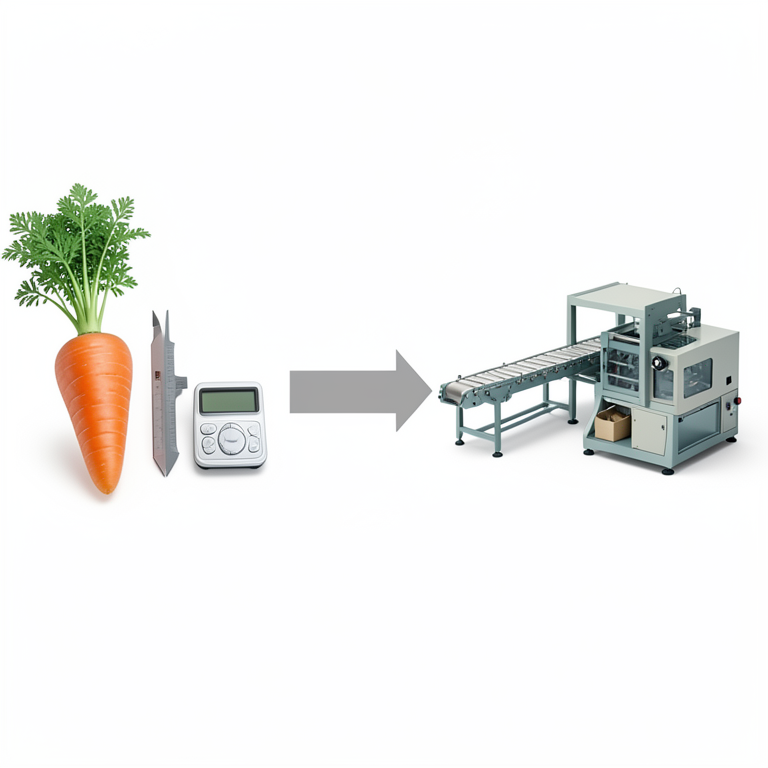
Equipment Design Workflow
AI-generated conceptual illustration (carrots (Daucus carota L.)). It explains the idea and does not show study data.
View source evidence ↗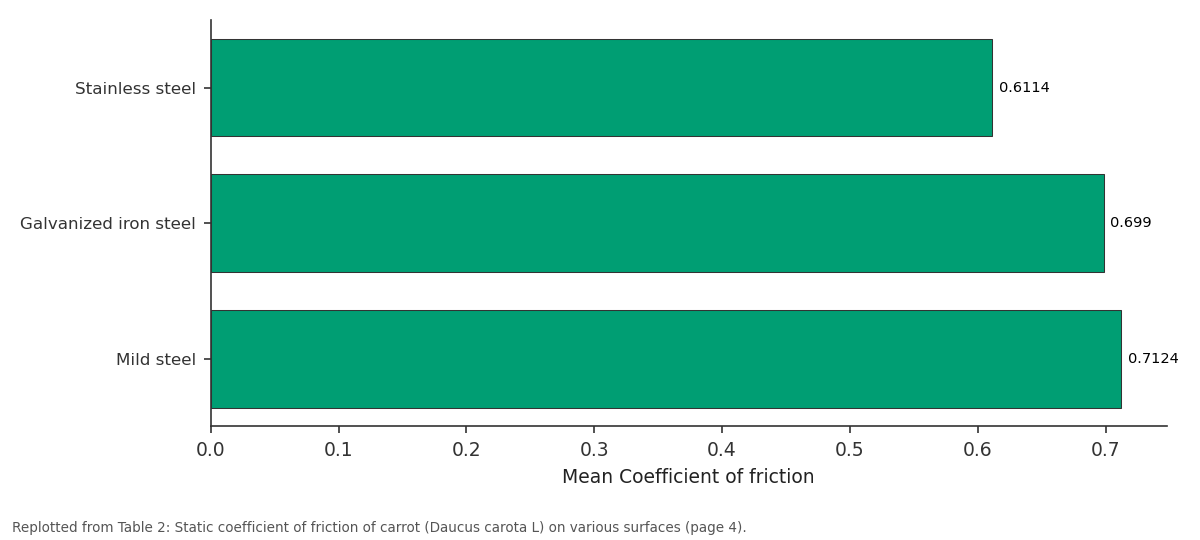
Mean Coefficient of friction: Stainless steel vs Galvanized iron steel vs Mild steel
Replotted from Table 2 (page 4) of the original paper. Every bar is the paper's own table value.
View source evidence ↗Figures & tables
From the original paper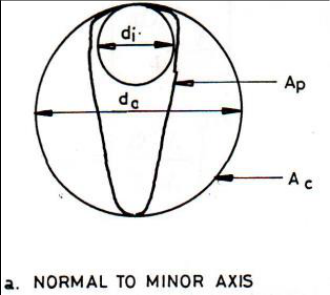 Figure 1
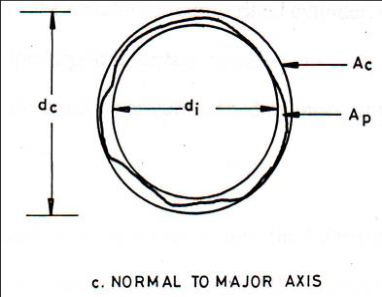 Figure 1
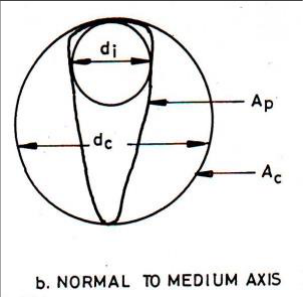 Figure 1
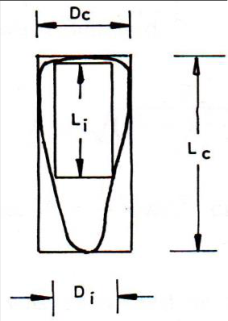 Figure 2
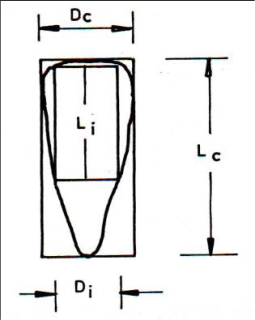 Figure 2
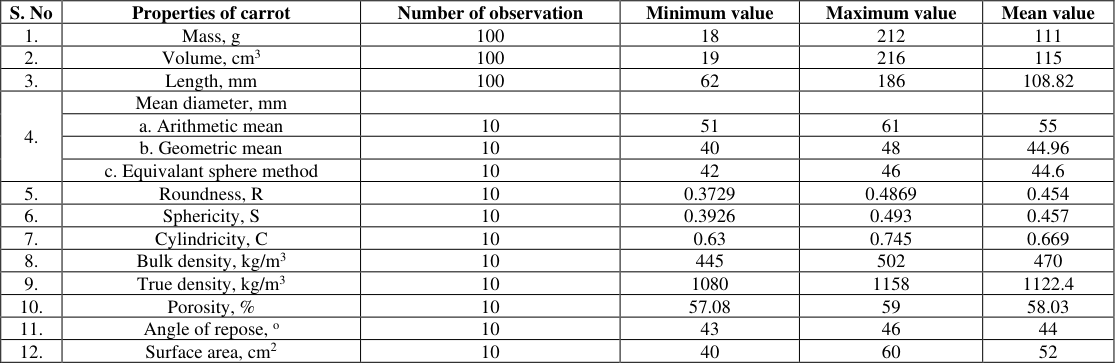 Table 1
 Table 2
Introduction
India ranks as the world's second-largest producer of vegetables, with carrots (Daucus carota L.) holding a significant place in South Asian agriculture. This root crop, rich in vitamin A and minerals, has a lineage stretching back to ancient Greece and Latin origins, shaping its modern English name (Yadav et al., 2020) [21] . Carrots are celebrated not only for their nutritional value but also for their versatile culinary uses and numerous health benefits, ranging from antioxidant properties to potential anticancer effects (Ikram et al., 2024) [4] . They are consumed worldwide, both fresh and processed, making them the second most popular vegetable globally. The cultivation of carrots for the fresh market demands specific soil conditions such as deep well drained, friable, loose, loamy and sandy soil, emphasizing the importance of understanding agricultural materials' unique properties. Designing machinery and processes for harvesting, handling, and storing agricultural products requires a deep understanding of their physical characteristics. Physical characters such as Size, shape, and density play key roles in sorting, sizing, and transporting fruits and vegetables, impacting packaging and transportation logistics (Sharma, R., 2022) [16] . The parameters of size and shape frequently serve as fundamental descriptors in characterizing grains, seeds, fruits, and vegetables (Moreda, et al., 2009) [12] . These attributes assume critical significance in various processes, including the screening of solids to eliminate foreign matter and the classification and sizing of fruits and vegetables. Size and shape considerations play a pivotal role in determining the packing capacity of shipping containers or plastic containers of predetermined dimensions. Moreover, difference in quality among fruits, vegetables, grains, and seeds often manifest through variations in density (Mohsenin, 1986) [11] . Particularly, in scenarios involving the pneumatic conveyance of grains and other particulate solids or the hydraulic transport of fruits and vegetables, the optimal design of fluid that is air velocities is intricately linked to both density and shape parameters. Additionally, knowledge of volume, surface area, and porosity is vital for accurately modeling heat and mass transfer during processing such as drying, cooling and storage (Wang, L, & Sun, D. W., 2003) [20] . The porosity, denoting the proportion of air space within particulate solids, exerts a notable influence on the resistance encountered by air as it traverses through bulk materials.
This airflow resistance, in a reciprocal manner, significantly influences the efficacy of systems engineered for force convection drying of bulk solids, as well as aeration mechanisms employed to regulate the temperature of stored bulk solids. Frictional properties are essential considerations in the design of handling equipment, ensuring efficient and safe operations (Dhineshkumar, 2015) [2] . Several physical properties of black gram and green gram were evaluated by Sharon et al. (2015) [17] and Nimkar, P. M., & Chattopadhyay, P. K., 2001 [13] respectively. Previous studies on the physical properties of various fruits and crops have contributed valuable insights into optimizing processing technologies and equipment design such as cleaning, sorting, washing and grading. Jahromi et al. (2008) [6] determine the physical properties of date fruit (cv. Mazafati) in order to facilitate the design of machines for its processing. Owolarafe and Shotonde (2004) [14] determined some physical properties for okro fruit at a moisture content of 11.42% (wet basis). Kashaninejad et al. (2006) [9] determined some physical and aerodynamic properties of pistachio nut and its kernel in order to design processing equipment and facilities. Vursavus et al., (2008) [19] determined the physiomechanical properties of different sweet cherry varieties. The objective of this study is to determine the physical properties of carrots, laying the groundwork for the development of appropriate processing technologies and design of equipment for handling, processing and storing. tailored to this important vegetable. The properties studied were size, static coefficient of friction, roundness, Sphericity, cylindricity, angle of repose, mass, density and volume.
Materials and Methods
In this investigation, the carrot specimens chosen belonged to the Early Nantes variety. A total of 100 randomly selected carrots were procured from a local market in Coimbatore. All experimental procedures were conducted within a controlled temperature environment spanning 25-30 °C. To ascertain the moisture content, the samples underwent a drying process in an oven set at 105 °C for a duration of three days. The moisture content was determined by measuring the weight loss upon drying until a consistent final weight was attained, adhering to the methodology recommended by the Association of Official Analytical Chemists (AOAC.,2000) [1] . The moisture content was calculated employing the prescribed equation.
Where, MC is moisture content (w.b.), M0 is initial mass and Md is the final mass of carrot (g).
The mass of the carrots was ascertained employing an electronic balance with a sensitivity of 0.01 g. Carrot volumes were determined using the water displacement method, wherein the carrots were weighed in air and subsequently submerged in water, recording the mass of water displaced by each individual carrot. Carrot densities (expressed in kg/cm³) were then computed using the formula delineated by Mohsenin (1986) [11] ,
Where, ρf and ρw denoting the densities of the carrot and water, respectively, Ma and Mw represent the masses of the carrot in air and water. Furthermore, bulk density was determined utilizing the mass-tovolume relationship, in accordance with methodologies outlined by Suthar et al. (1996) [18] and Owolarafe et al. (2004) [14] . This involved filling an empty plastic container of predetermined volume and mass with the fruits, which were poured from a constant height and subsequently weighed. The bulk density of carrot was found by using the following formula.
Here, ρb represents the bulk density (kg/m³), with M denoting the bulk mass of the carrot and V indicating the volume of the plastic container. Porosity (ε) was calculated as the ratio of the differences between the fruit and bulk densities to the fruit density value, expressed as a percentage, as per methodologies described by Vursavus et al., (2006) [19] , and Owolarafe et al. (2004) [14] as follows.
Additionally, the size of the carrots was determined by measuring along their three principal axes (major, medium, and minor axis). The dimensions were measured utilizing a Vernier calliper with a least count of 0.10 mm. The mean diameter of the carrot was calculated through the arithmetic and geometric means of the three axial dimensions. Furthermore, an alternative method for determining the mean diameter was employed, akin to the approach delineated by Kaleemullah (1992) [8] , considering it as an effective diameter in terms of true density and the weight of 100 carrots. The assessment of carrot shape encompassed an evaluation of roundness, sphericity, and cylindricity. The determination of roundness and sphericity followed methodologies outlined by Dutta et al. (1988) [3] and Kaleemullah (1992) [6] , respectively. Cylindricity, on the other hand, was computed through measurements taken of carrots in two orthogonal orientations, as prescribed by Kaleemullah (2002) [7] . The determination of roundness and sphericity involved measuring the carrot's dimensions in three orthogonal orientations on a graph sheet with the assistance of an overhead projector (Fig. 1 and Fig. 2). Subsequently, roundness and sphericity were calculated utilizing the following formula: The determination of surface area involved tracing slices of carrot onto a graph sheet and quantifying the enclosed squares, as per the methodology outlined by Mohsenin (1980) [11] . The angle of repose (θ) was calculated by piling one bag (60 kg) of carrots onto a horizontal surface. The slant height (l) of the resulting pile was measured at various points, and the average value was derived. Subsequently, the radius (r) of the pile was determined from its circumference. The angle of repose was then computed utilizing the formula: Θ = cos -1 (r/l) Furthermore, in accordance with methodologies described by Kaleemullah (1992) [8] the coefficients of static friction were obtained for three distinct surfaces-stainless steel, galvanized iron steel, and mild steel. This was accomplished through an experimental setup comprising a frictionless pulley affixed to a frame, a topless and bottomless box with dimensions of 30x30x15 cm, a loading pan, and the respective test surfaces. The static coefficient of friction was determined employing the formula: μ = F/N Where, μ-static coefficient of friction, decimal F-Weight of pan plus weight kept on the pan to move the box, kg N-weight of carrot plus weight of the box, kg
Results and Discussion
The results of various physical properties and static coefficient of friction for carrot samples were given in Table 1. The investigation conceded an average wet basis moisture content of 89% for carrots. Mass and volume exhibited a range from 18 to 212 g and 19 to 216 cm³, respectively, with mean values of 111 g and 115 cm³. The range of mass and volume provides insights into the variability in size among the carrots sampled. Understanding the distribution of mass and volume helps in designing equipment such as sorting and grading machines to handle carrots of different sizes efficiently. Analysis of the size distribution indicated that 88% of carrots fell within the dimensions of 80-150 mm in length and 20-40 mm in diameter. Individual dimensions varied from 62 to 186 mm in length, with an average length of 108.8 mm. The analysis of size distribution reveals the predominant dimensions of the carrots sampled. This information is vital for designing equipment such as conveyor belts, chutes, and packaging systems to accommodate carrots of varying sizes during processing and packaging operations. The mean length, width, thickness, mass and volume of the carrot were observed as 154.55, 28.61, 27.60, 72.74 g, 70 cm 3 respectively by Jahanbakhshi et al. (2018) [5] . Various methods were employed to determine the mean diameter, resulting in values of 55 mm (arithmetic mean), 44.96 mm (geometric mean), and 44.60 mm (equivalent sphere method). Jahanbakhshi et al., 2018 [5] also observed carrot arithmetic mean diameter, and geometric mean diameter of 70.49 mm and 49.54 mm respectively. The true density of carrots was measured at 1122.44 kg/m³, while bulk density and porosity were calculated as 470.99 kg/m³ and 58.03%, respectively. Kaymak et al. (2010) [10] determined bulk density and porosity of two common verities of tomato as 550.486.07 kg/m³, 563.03±8.92 kg/m³ and 48.54±0.63%, 45.08±1.27% for tomato Alida F1 and H2274 varieties respectively. Jahanbakhshi et al., 2018 [5] also observed similar result for true density of carrot as 1.04 g/cm 3 . True density represents the density of the carrot material itself, while bulk density reflects the density of a mass of carrots and their packing arrangement. Porosity indicates the void space within the carrot mass. These parameters are critical for designing storage bins, transportation containers, and processing equipment such as hoppers and conveyors. The roundness, sphericity, and cylindricity of carrots ranged from 0.3729 to 0.4869, 0.3926 to 0.493, and 0.63 to 0.745, with mean values of 0.4540, 0.457, and 0.669, respectively. The spericity value of 0.32 was observed by Jahanbakhshi et al., 2018 [5] for carrot. The result revealed that the shape of the carrot is approaching cylinder and depart from sphere and round. These parameters quantify the geometric shape of the carrots and provide insights into their uniformity and symmetry. Understanding these characteristics aids in designing equipment for handling, sorting, and processing carrots with specific shape requirements.
| S. No | Properties of carrot | Number of observation | Minimum value | Maximum value | Mean value |
|---|---|---|---|---|---|
| 1. | Mass, g | 100 | 18 | 212 | 111 |
| 2. | Volume, cm3 | 100 | 19 | 216 | 115 |
| 3. | Length, mm | 100 | 62 | 186 | 108.82 |
| 4. | Mean diameter, mm | ||||
| a. Arithmetic mean | 10 | 51 | 61 | 55 | |
| b. Geometric mean | 10 | 40 | 48 | 44.96 | |
| c. Equivalant sphere method | 10 | 42 | 46 | 44.6 | |
| 5. | Roundness, R | 10 | 0.3729 | 0.4869 | 0.454 |
| 6. | Sphericity, S | 10 | 0.3926 | 0.493 | 0.457 |
| 7. | Cylindricity, C | 10 | 0.63 | 0.745 | 0.669 |
| 8. | Bulk density, kg/m3 | 10 | 445 | 502 | 470 |
| 9. | True density, kg/m3 | 10 | 1080 | 1158 | 1122.4 |
| 10. | Porosity, % | 10 | 57.08 | 59 | 58.03 |
| 11. | Angle of repose, o | 10 | 43 | 46 | 44 |
| 12. | Surface area, cm2 | 10 | 40 | 60 | 52 |
Table text extracted from the original PDF; superscript letters are shown inline. The original table image is below.
View original table image
Additionally, the mean coefficients of static friction were determined as 0.6114, 0.6990, and 0.7124 on stainless steel, galvanized iron steel, and mild steel surfaces, respectively (Table 2). The static coefficient of friction of carrot on mild steel is more than stainless steel, galvanized iron steel. Riyahi et al., 2011 [15] observed static coefficient of friction of pomogranite fruit against Galvaized steel, glass and wood as 0.74±0.01, 0.82±0.02 and 0.45±0.01 respectively. The coefficient of static friction on different surfaces determines the resistance to motion when carrots come into contact with equipment surfaces. This information guides the selection of materials for equipment components and the design of surfaces to minimize frictional losses during processing and handling. The angle of repose and surface area of carrots were measured at 44° and 40 to 60 cm², respectively. Notably, the angle of repose was utilized in the design and construction of a feed hopper. The angle of repose indicates the natural angle at which a pile of carrots will rest on a flat surface, providing insights into their flow properties. A summary of the determined physical parameters is provided in the accompanying table. These findings contribute to the optimization and enhancement of tools, equipment, machines, and systems utilized in carrot processing. By comprehensively analyzing these physical properties, engineers and food scientists can optimize the design and operation of equipment, tools, and systems for carrot processing, ensuring efficient production, quality preservation, and product safety.
| Surfaces | Number of observation | Minimum Coefficient of friction | Maximum Coefficient of friction | Mean Coefficient of friction |
|---|---|---|---|---|
| Stainless steel | 10 | 0.5938 | 0.62 | 0.6114 |
| Galvanized iron steel | 10 | 0.612 | 0.708 | 0.699 |
| Mild steel | 10 | 0.7059 | 0.718 | 0.7124 |
Table text extracted from the original PDF; superscript letters are shown inline. The original table image is below.
View original table image
Conclusion
In conclusion, the comprehensive analysis of the physical properties of carrots conducted in this study provides valuable insights crucial for the design and development of processing machinery and equipment. By elucidating parameters such as size, density, porosity, shape characteristics, angle of repose, and coefficients of static friction, this research lays a solid foundation for optimizing processes involved in carrot handling, sorting, grading, and processing. The findings underscore the variability and complexity inherent in carrot characteristics, highlighting the need for tailored solutions in equipment design to accommodate these variations effectively. For instance, the determination of bulk density and porosity informs the design of storage and transportation containers, while measurements of size and shape parameters aid in the development of sorting and grading systems. Furthermore, the quantification of coefficients of static friction on different surfaces provides essential data for selecting suitable materials and surface treatments to minimize frictional losses and ensure smooth operation of processing equipment. Ultimately, the knowledge gleaned from this study serves to enhance the efficiency, reliability, and performance of processing operations in the carrot industry, contributing to improved product quality, cost-effectiveness, and overall sustainability of carrot processing systems.
References
20 in the original paper- Dhineshkumar V, Ramasamy D, Sudha K. Physical and engineering properties of pomegranate fruit and arils. International Journal of Farm Sciences. 2015;5(3):89-97.
- Datta SK, Nema VK, Bhardwaj RK. Physical properties of Grain. J Agric. Eng. Res. 1988;35(4):227-34.
- Ikram A, Rasheed A, Ahmad Khan A, Khan R, Ahmad M, Bashir R, et al. Exploring the health benefits and utility of carrots and carrot pomace: a systematic review. International Journal of Food Properties. 2024 Dec 31;27(1):180-93.
- Jahanbakhshi A, Abbaspour-Gilandeh Y, Gundoshmian TM. Determination of physical and mechanical properties of carrot in order to reduce waste during harvesting and post-harvesting. Food Science & Nutrition. 2018;6(7):1898903.
- Jahromi MK, Mohtasebi SS, Jafari A, Mirasheh R, Rafiee S. Determination of some physical properties of date fruit (cv. Mazafati). Journal of Agricultural Technology. 2008;4(2):19.
- Shaik K. Studies On Engineering Properties And Drying Kinetics Of Chillies (Doctoral dissertation, Tamil Nadu Agricultural University; Coimbatore)..2002
- Kaleemullah S. The effect of moisture content on the physical properties of groundnut kernels. Tropical Science. 1992 Dec 12;32(2):129-36.
- Kashaninejad M, Mortazavi A, Safekordi A, Tabil LG. Some physical properties of Pistachio (Pistacia vera L.) nut and its kernel. Journal of Food Engineering. 2006 Jan 1;72(1):30-8.
- Kaymak HC, Ozturk I, Kalkan F, Kara M, Ercisli S. Color and physical properties of two common tomato (Lycopersicon esculentum Mill.) cultivars. Journal of Food, Agriculture & Environment. 2010 Apr 1;8(2):44-6.
- Mohsenin NN. Physical characteristics: physical properties of plant and animal materials.2nd edition; Gordon & Breach Science Publishers: New York.1986.
- Moreda GP, Ortiz-Cañavate J, García-Ramos FJ, RuizAltisent M. Non-destructive technologies for fruit and vegetable size determination-a review. Journal of Food Engineering. 2009 May 1;92(2):119-36..
- Nimkar PM, Chattopadhyay PK. PH-Postharvest Technology: some physical properties of green gram. Journal of Agricultural Engineering Research. 2001 Oct 1;80(2):183-9.
- Owolarafe OK, Shotonde HO. Some physical properties of fresh okro fruit. Journal of food Engineering. 2004 Aug 1;63(3):299-302.
- Riyahi R, Rafiee S, Dalvand MJ, Keyhani A. Some physical characteristics of pomegranate, seeds and arils. Journal of Agricultural Technology. 2011 Dec 14;7(6):1523-37.
- Sharma R. Chapter-8 Evaluation of Physical, Chemical Properties and Nutritional Qualities of Fruit and Vegetable. Nutrition and Food Science. 2022:139.
- Sharon ME, Abirami CK, Alagusundaram K, RPS JA. Moisture dependent physical properties of black gram. Agricultural Engineering International: CIGR Journal. 2015 Mar 23;17(1).
- Suthar SH, Das SK. Some physical properties of karingda [Citrullus lanatus (Thumb) seeds. Journal of Agricultural Engineering Research. 1996 Sep 1;65(1):1522..
- Vursavuş K, Kelebek H, Selli S. A study on some chemical and physico-mechanic properties of three sweet cherry varieties (Prunus avium L.) in Turkey. Journal of Food Engineering. 2006 Jun 1;74(4):568-75.
- Wang L, Sun DW. Recent developments in numerical modelling of heating and cooling processes in the food industry-a review. Trends in Food Science & Technology. 2003 ;14(10):408-423.
- Yadav SK, Kauldhar BS, Sandhu PP, Thakur K, Sucheta, Sharma TR. Retrospect and prospects of secondary agriculture and bioprocessing. Journal of plant biochemistry and biotechnology. 2020 Mar;29(1):1-4.
Cited by 2
From OpenAlex, OpenCitations and reference lists read by Scinovex
- Evaluating the Performance of the Carrot Slicer Machine ↗
Amanuel Erchafo · Black Sea Journal of Agriculture · 2024
The study was carried out to evaluate the performance of the carrot slicer machine. An experiment was conducted with a multi-factor factorial design under a randomized complete block design. Using the Statistix 8 software, the experiments' collected data were statistically examined. The analysis of variance indicated that the effects of machine speed and feed rate on throughput capacity, efficiency, and…
❝ 1PDF - Physical and engineering characterization of selected vegetables for post-harvest handling applications
Sushant Balasaheb Bakal, Sagar M Chavan, Mangal A Patil, Sujata V Patil · International Journal of Advanced Biochemistry Research · 2025
Accurate characterization of the physical and engineering properties of fresh vegetables is fundamental for optimizing post-harvest processing technologies. This study systematically quantified the dimensional, geometric, and flow-related attributes of carrots, tomatoes, and spinach to support the design and performance assessment of advanced vegetable handling and washing systems. Carrots exhibited an average length of 158 mm, while tomatoes and spinach leaves measured 51.38 mm and 120 mm, respectively. Geometric mean diameter and sphericity values highlighted distinct morphological patterns,