
Research article · 2024 · Full text
International Journal of Research in AgronomyOptimizing nutrient absorption in basmati rice: A study on drip irrigation and fertigation methods
Volume 7(5) · Pages 435–443 · DOI: 10.33545/2618060x.2024.v7.i5f.715 ↗
Research areasRice Cultivation and Yield Improvement
Abstract
Author-writtenTransplanting rice cultivation is causing a fast depletion of groundwater. The goal of the drip method used nowadays is to produce more rice with less water. India has 143 million hectares of arable land, which presents a huge opportunity for micro irrigation. An environment that is favourable for roots to absorb nutrients and moisture is produced by drip irrigation. It was demonstrated that 100% NPK significantly increased grain absorption when compared to 50% and 75% NPK level. In comparison to the drip method, the flood approach showed lower N, P, and K absorption by rice grains and straw in 2016 and 2017.
Summary
Source-checkedPlain-language reading of the full paper, prepared with AI and checked against the text. Each point links to the authors' own words.
Why it matters
- Rice is a critical global staple crop that serves as a primary source of food and income for millions. View evidence ↗
- Traditional rice cultivation faces sustainability and productivity challenges, including water scarcity and climate change. View evidence ↗
- The practice of transplanting rice is contributing to the rapid depletion of groundwater resources. View evidence ↗
The question
- The study aimed to evaluate how different levels of NPK (nitrogen, phosphorus, and potassium) and drip irrigation affect nutrient content and uptake in basmati rice grains and straw. View evidence ↗
What they did
- The research was conducted over two consecutive kharif seasons (2016 and 2017) at G. B. Pant University of Agriculture and Technology in Uttarakhand, India. View evidence ↗
- The experiment tested three NPK levels (50%, 75%, and 100%) and three drip irrigation levels (50%, 75%, and 100% CPE), using direct-seeded rice with flood irrigation as the control. View evidence ↗
- Nutrient intake of nitrogen, phosphorus, and potassium was measured in both the grain and straw at the harvest stage. View evidence ↗
What they found
- Increasing crop evapotranspiration (CPE) from 100% to 150% led to an average increase in nitrogen content of approximately 4.9% in grains and 4.7% in straw. View evidence ↗
- Increasing NPK levels from 50% to 100% of the recommended dose resulted in an average nitrogen content increase of 13.1% in grains and 12.6% in straw. View evidence ↗
- Drip irrigation produced higher nitrogen content (1.46% in 2016 and 1.55% in 2017) compared to the flood method, with increases of 22.7% and 19.2% respectively. View evidence ↗
- The drip method significantly increased potassium (K) content in grains compared to the flood method, by 28.9% in 2016 and 47.4% in 2017. View evidence ↗
- Nitrogen uptake was significantly higher at 150% CPE (59.65 kg/ha in 2016 and 73.59 kg/ha in 2017) than at 100% CPE. View evidence ↗
- Phosphorus (P) uptake in rice straw was significantly higher at 100% NPK (11.20 kg/ha in 2016 and 16.63 kg/ha in 2017) than at 50% or 75% NPK levels. View evidence ↗
- Potassium (K) uptake in rice grains was significantly higher using the drip method than the flood method, by 60.2% in 2016 and 87.95% in 2017. View evidence ↗
What it means
- The authors conclude that 150% CPE drip irrigation and 100% NPK levels maximize the uptake of nitrogen, phosphorus, and potassium in both grains and straw. View evidence ↗
- The study concludes that the flood irrigation method results in lower nutrient uptake compared to drip irrigation. View evidence ↗
Visual summary
1 visualsIllustrations explain the paper; they do not show study data.
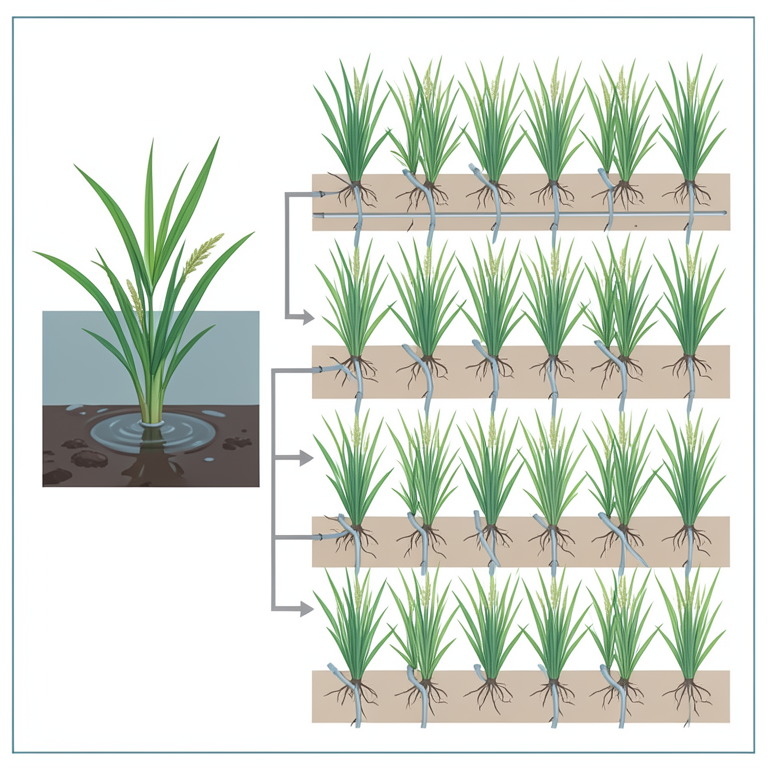
Experimental Treatment Matrix
AI-generated conceptual illustration (basmati rice plants). It explains the idea and does not show study data.
View source evidence ↗Figures & tables
From the original paper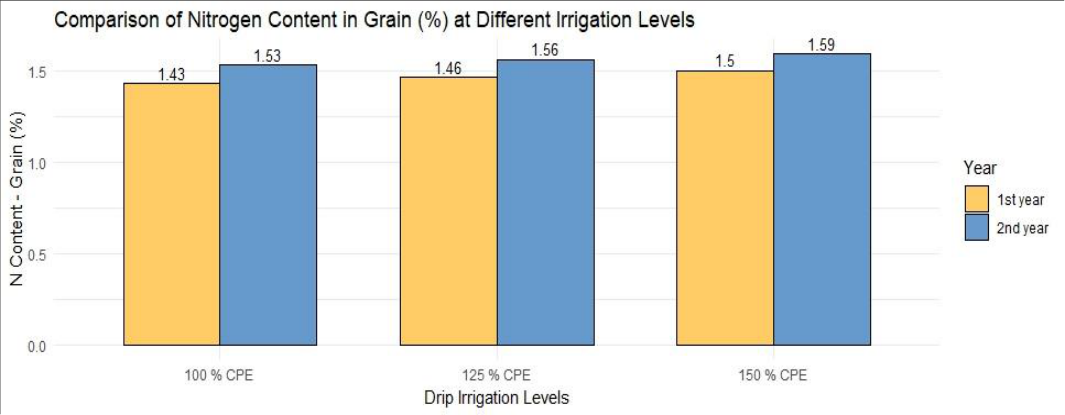 Figure 1
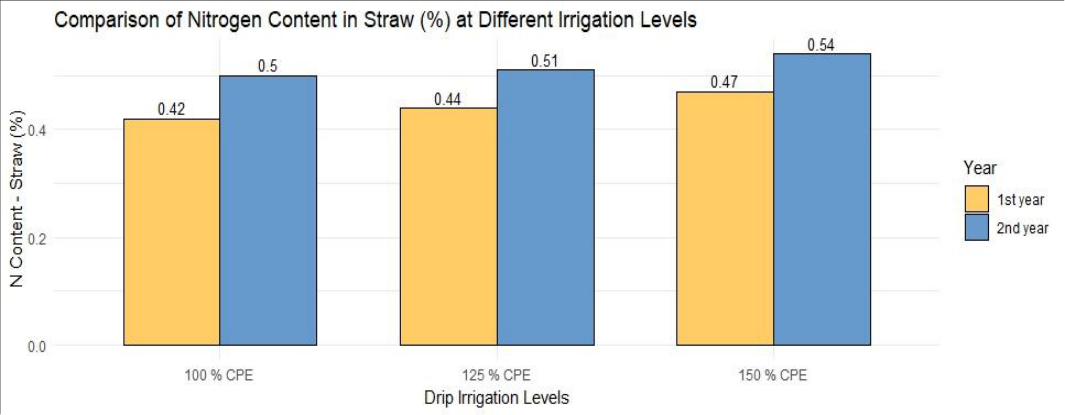 Figure 2
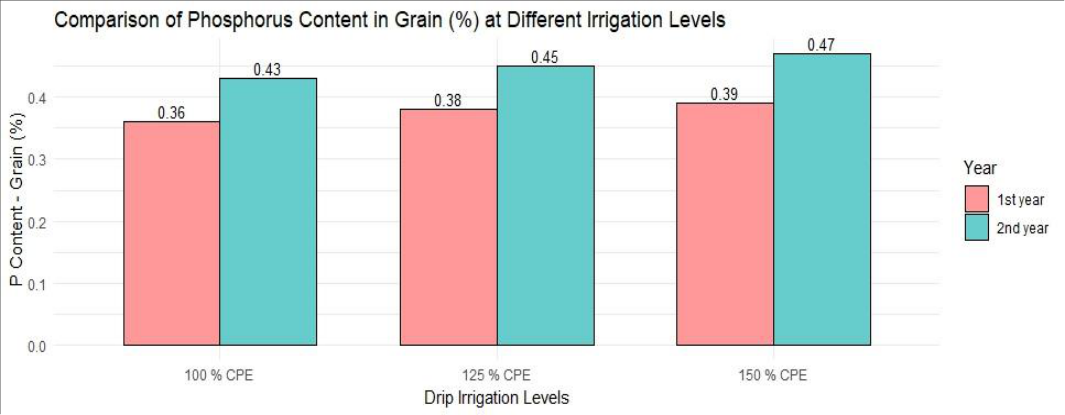 Figure 3
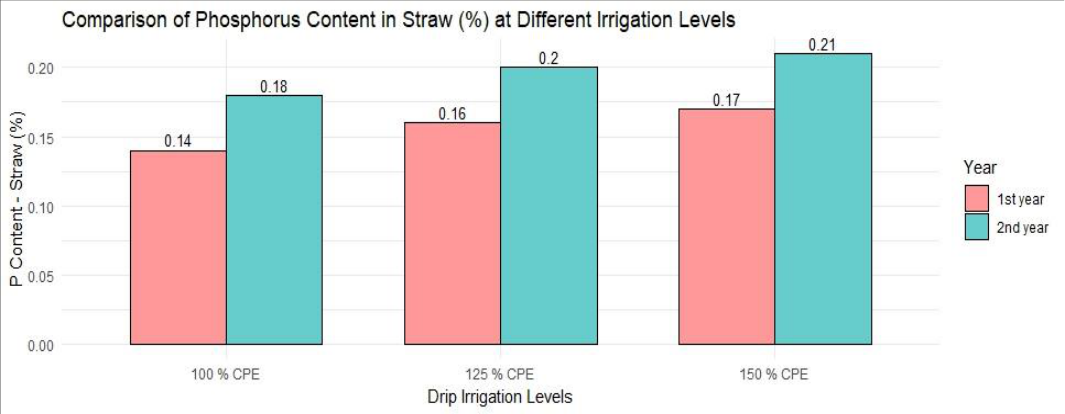 Figure 4
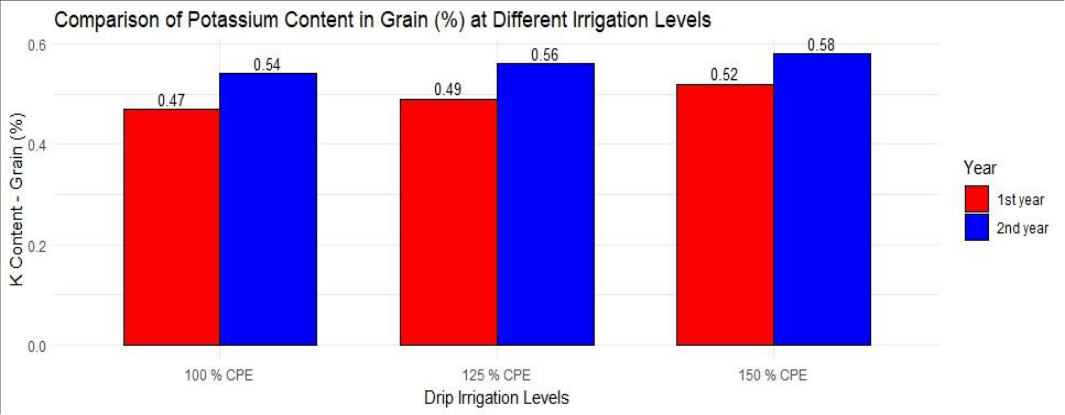 Figure 5
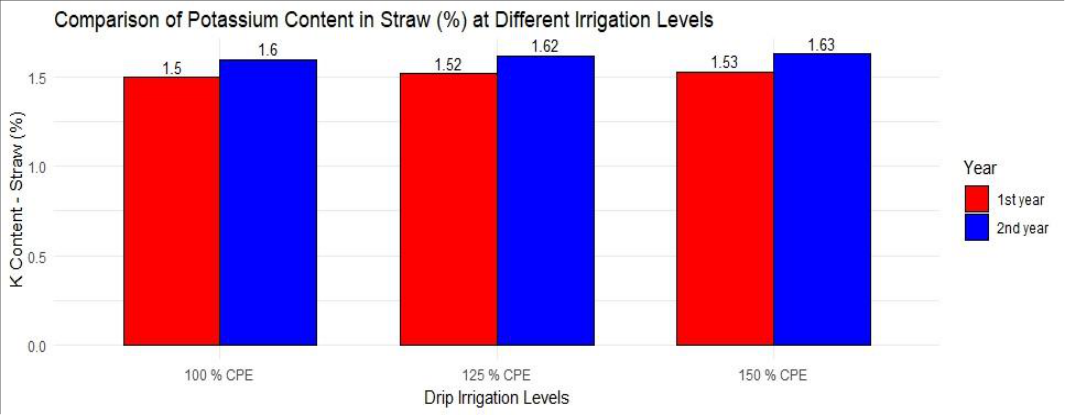 Figure 6
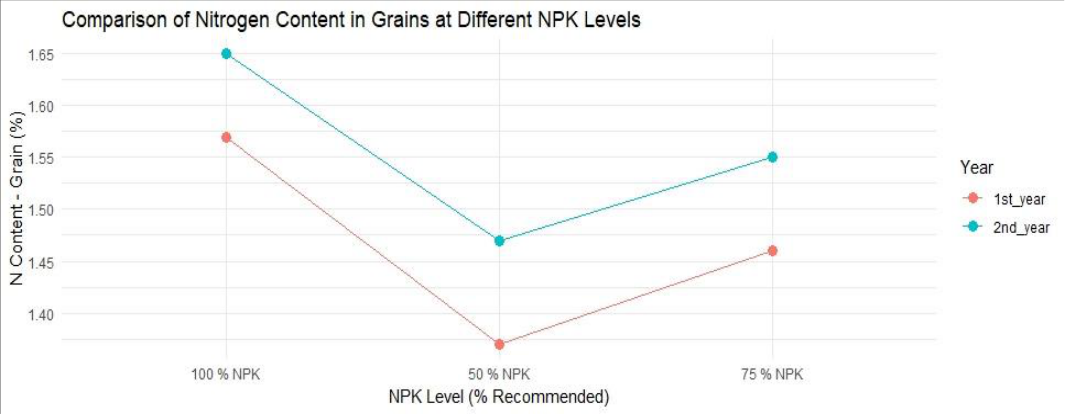 Figure 7
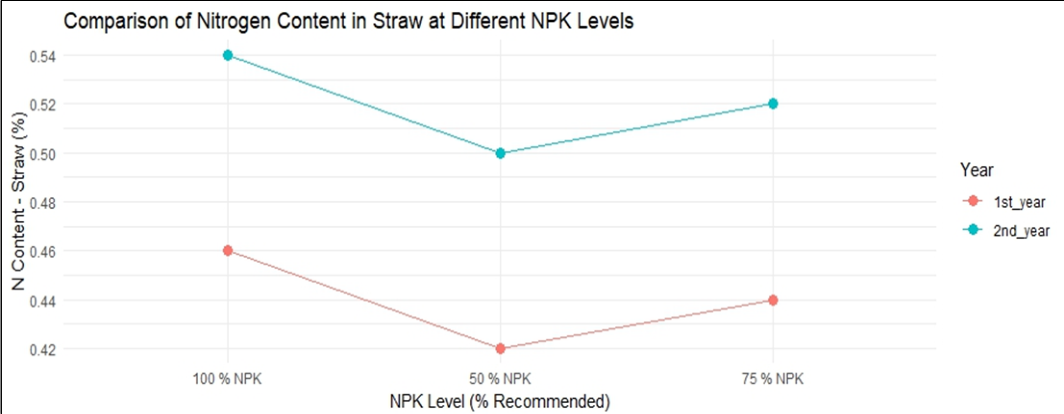 Figure 8
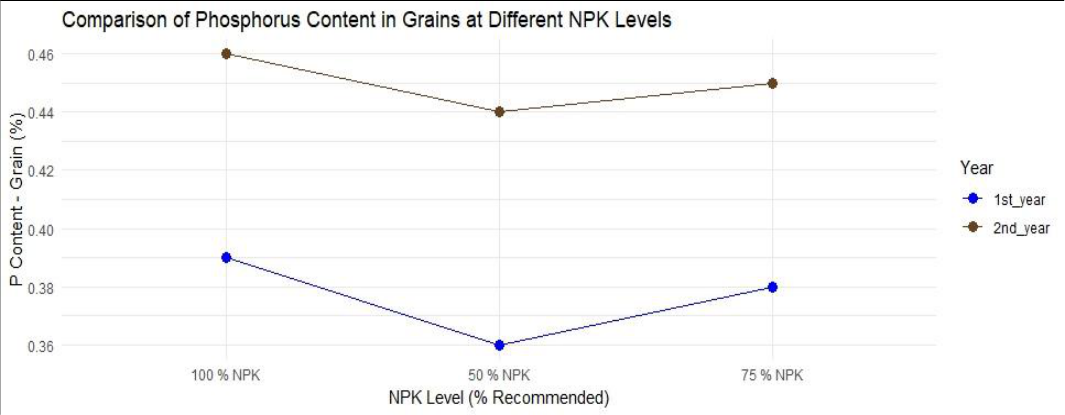 Figure 9
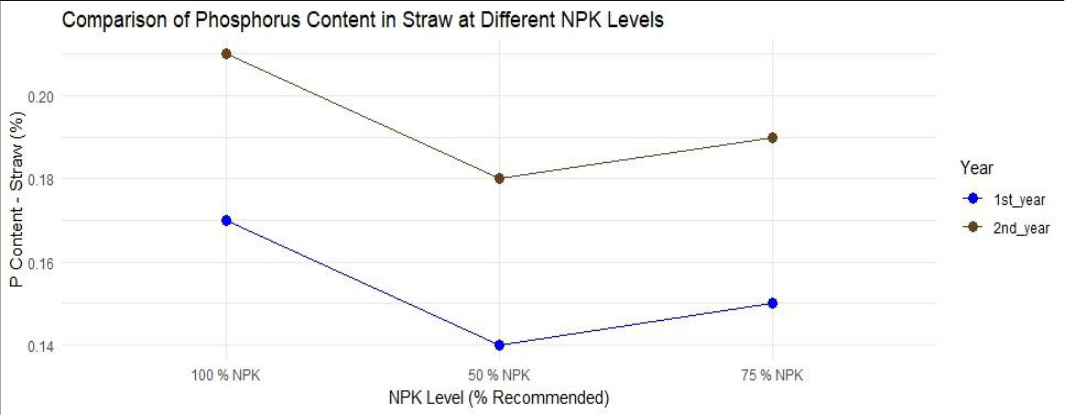 Figure 10
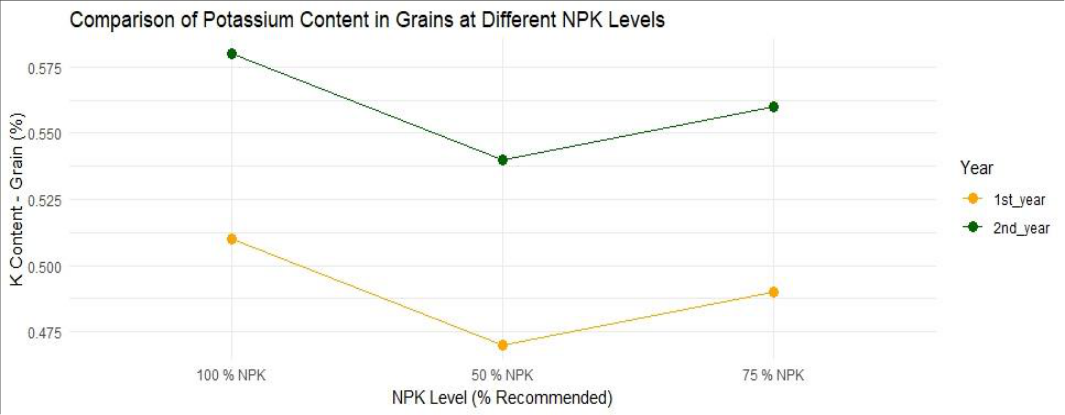 Figure 11
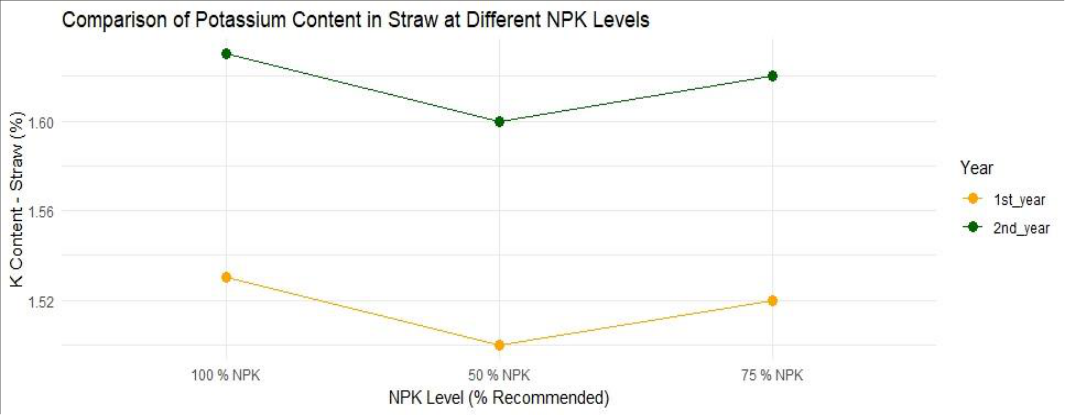 Figure 12
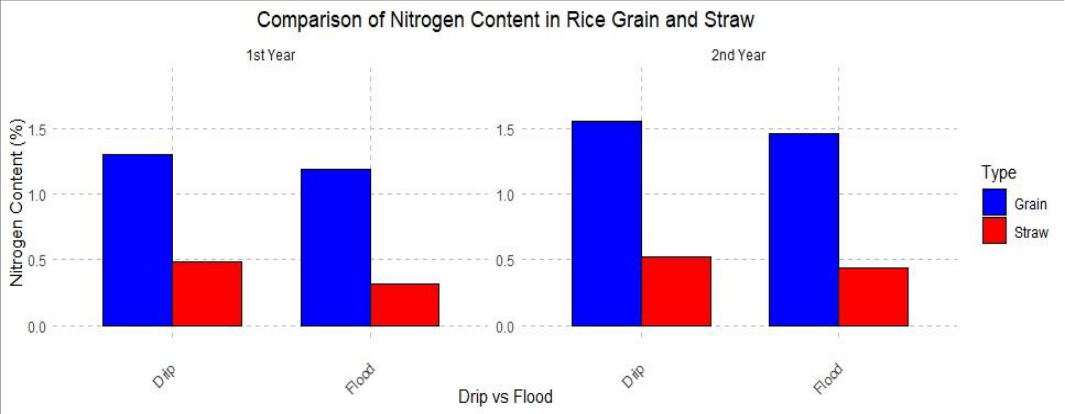 Figure 13
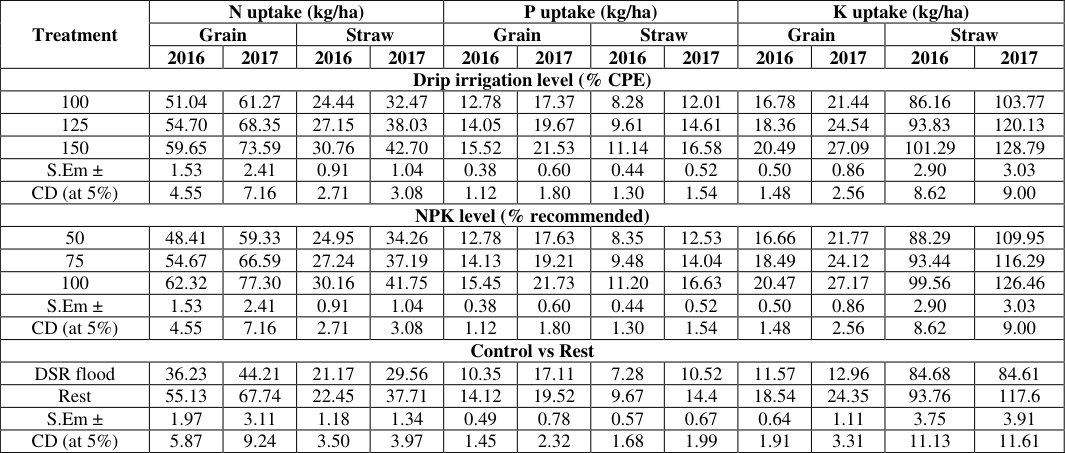 Table 1
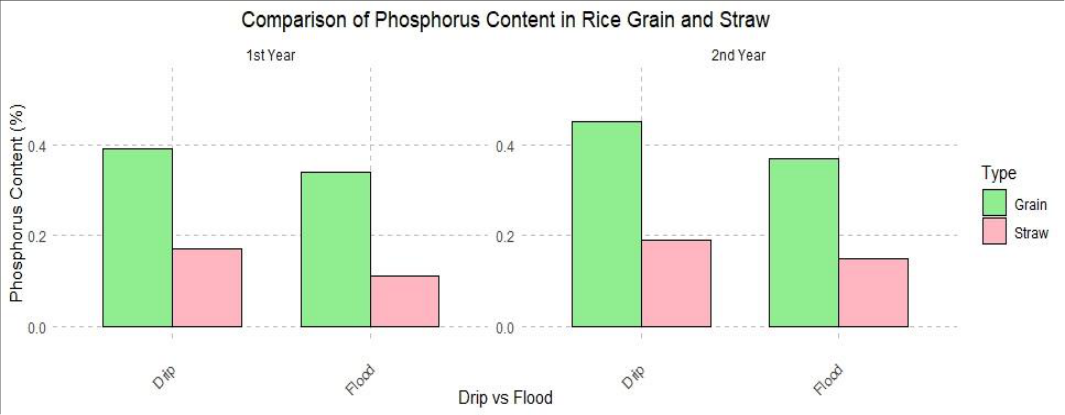 Figure 14
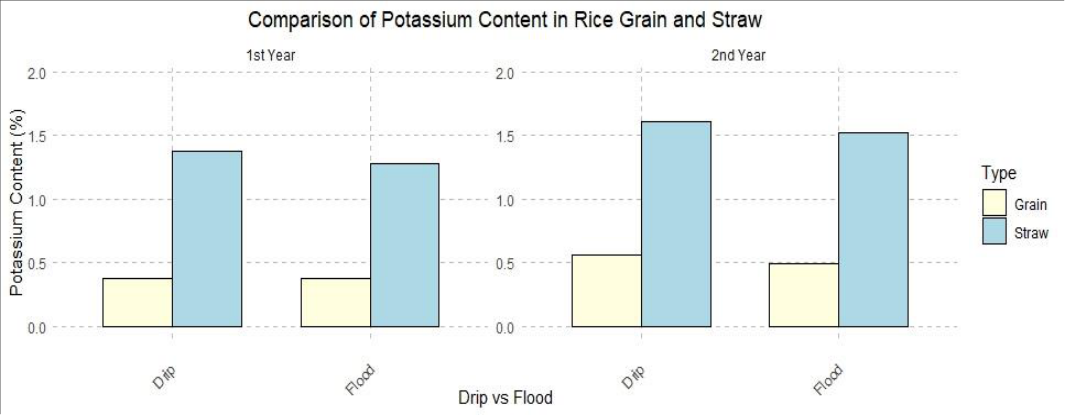 Figure 15
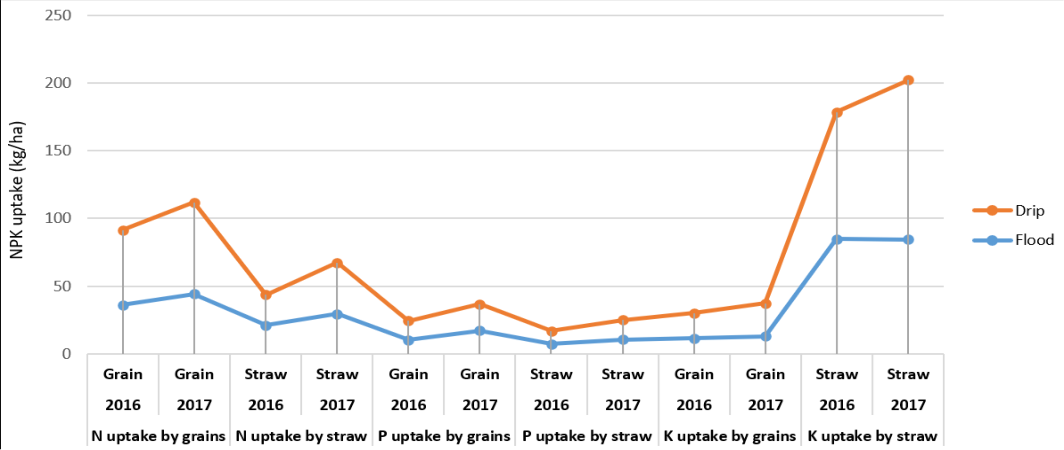 Figure 16
Introduction
Rice is one of the world's most important staple crops, providing a substantial source of food and money for millions of people. FAO (2022) [8] reported that 509 million metric tons of rice were produced worldwide with China, India, and Indonesia being the world's top producers. Additionally, rice is a necessary commodity for food security, especially in South East Asia, which produces more than 90% of the world's rice (Cheng et al., 2020) [6] . Among the rice varieties, Basmati rice is gaining popularity across the world because of its distinct characteristics. With over 70% of the global output of basmati rice, India leads the globe in this regard, with Pakistan in second (Kumari et al., 2022) [15] . India is the biggest exporter of basmati rice with 70% of the world's basmati export (ITC, 2021) [12] . Although traditional rice cultivation techniques have been used for many years, there are several drawbacks that hinder productivity and sustainability such as pests and diseases, water scarcity, changing land uses, and climate change, are posing a threat to rice production (Zhang et al., 2019; Hussain et al., 2020) [25,11] , uneven plant spacing, which can result in lower yields and poorer-quality grains (Phung et al., 2017) [18] , excessive use of water and fertilizer, which can degrade the environment and reduce profitability (Lin et al., 2018) [17] , manual labor, which can be labor-intensive and time-consuming and puddling, which can cause compaction and soil degradation (Chowdhury et al., 2019) [7] . Farmers experience social and economic injustices as a result, in addition to higher production costs (Chen et al., 2019) [5] . Alternative growing techniques, such direct planting, have been studied recently since they can increase yield and profitability while requiring less work and water (Xu et al., 2021) [23] . As an alternative to conventional techniques, the use of drip irrigation for direct rice sowing has gained popularity in recent years. South East Asian rice growers found drip irrigation to be a desirable alternative as it uses water more effectively and requires less effort (Hang et al., 2022) [10] . Drip irrigation consistently increased rice yield, water use efficiency, and nutrient uptake when compared to conventional methods (Gao et al. (2017) [9] ; Zhang et al. (2018) [24] ; Rahman et al. (2019) [19] and Li et al. (2020)) [16] . In developing countries, fertilizer is applied unevenly and in insufficient amounts that led to poor efficiency of nutrients and drip irrigation has potential in rice farming for raising nutrient use efficiency (Kumar (2009); Singh et al. (2019)) [14,20] . Nitrogen is the most significant and effective nutrient among the others, controlling vegetative growth and grain yield to a significant degree.
It is a necessary component of many plant hormones, nucleic acids, amino acids, chlorophyll, and ATP, among other cell compounds (Wang et al., 2021) [22] . Due to many losses via runoff, leaching, ammonia volatilization, and denitrification, rice's nitrogen utilization efficiency (NUE) in field conditions can be as low as 25-34% (Brar et al., 2012) [3][4] . Rice output and quality are negatively impacted by the application of nitrogenous fertilizers, either in excess or below the ideal amount (Tyagi et al., 2022) [21] . When compared to the surface technique of irrigation, fertilization increases production, improves quality, and conserves water while using less fertilizer. With drip irrigation, the nitrogen utilization efficiency of aerobic rice was increased from 100% CPE to 175% CPE. Growing rice with drip irrigation and fertigation is a recent concern. Therefore, dose needs to be standardized. Keeping the above facts in view, the present experiment was conducted to check the effect of NPK levels and drip irrigation levels on content and its uptake in rice grain and straw.
Materials and Methods Experimental Site
The field experiment was conducted at G. B. Pant University of Agriculture and Technology, Pantnagar, district U. S. Nagar, Uttarakhand, during two consecutive kharif seasons in 2016 and 2017. The location of the study is in the Himalayan foothills range, at an altitude of 243.83 meters above mean sea level, at 29 N latitude and 79.5 E longitude.
Treatment details
In total, nine treatment combinations with three levels of each of two factors-nutrient levels (50, 75, and 100% of required NPK) and drip irrigation (50%, 75%, and 100% CPE)-were used in the experiment. The control, direct-seeded rice with flood irrigation, was reproduced three times.
Analysis
The analysis of data was done by Control vs Rest two stage method.
Chemical Analysis of Plants
At the harvest stage, rice plants' intake of nitrogen, phosphorus, and potassium was assessed in grain and straw. Plant samples were stored in drier at 70+ 20C till consistent weight after being sun dried for two to three days. Dried plant samples were ground to fine powder and were analyzed for nitrogen, phosphorus and potassium (Jackson, 1973) [13] . Methods used for analysis of N, P and K in crop are given below:
Methods used for analysis of N, P and K in crop are given below
Elements
Method used N Modified micro kjeldahl method (Jackson, 1973) [13] P Vanado-molybdo phosphoric acid yellow color method using blue filter (Jackson, 1973) [13] K Flame photometry (Jackson, 1973) [13] Using the dry matter of the crop plant and the N, P, and K content values, the nutrient absorption (kg/ha) by the rice crop was computed. The formula are given below.
Results and Discussion
Results and Discussion
NPK content
The first year of the study had a larger nitrogen content in rice grains and straw than the second year, which may have been caused by the second year's higher rainfall, that increased the volume and weight density of the roots and improved N absorption. Grain and straw nitrogen contents varied greatly depending on irrigation and nitrogen levels in both years. Nutrient dynamics critical to crop production were compellingly highlighted by examining the nitrogen (N), phosphorus (P), and potassium (K) content in grains and straw with respect to different drip irrigation levels and nitrogen-phosphoruspotassium (NPK) treatments. Perturbing trends are shown by analysing the percentage variations in nutritional content.
The nitrogen content of grains and straw showed an average rise of around 4.9% for grains and 4.7% for straw when crop evapotranspiration (CPE) was increased from 100% to 150% (Fig. 1 and Fig. 2). This significant increase indicates the significant influence of increased irrigation on promoting nitrogen absorption, which is probably due to increased moisture availability and increased nutrient uptake efficiency. On the other hand, the NPK level study showed an average increase of around 13.1% nitrogen content in grain and 12.6% in straw, moving from 50% to 100% of the suggested NPK (Fig. 7 and Fig. 8). This indicates a stronger reaction to optimal nutritional dosages in increasing nitrogen absorption in both grain and straw.
In 2016 and 2017, the nitrogen content of rice harvested using the drip technique (1.46% and 1.55%, respectively) was considerably greater than that of rice harvested using the flood method (by 22.7 and 19.2%, respectively). In comparison to the flood approach, drip irrigation produced directed seeded rice with a straw nitrogen content that was 3.7% and 8.3% higher in 2016 and 2017, respectively (Fig. 13).
In terms of phosphorus content, the percentage changes in grain and straw with respect to drip irrigation levels showed a little average rise of around 8.3% and 7.7%, respectively, as irrigation intensified from 100% to 150% CPE (Fig. 3 and Fig. 4). These little variations point to a complex phosphorus uptake response to different watering rates. Analysing the effect of NPK levels also revealed a marginal average increase in straw when switching from 50% to 100% NPK (Fig. 9 and Fig. 10). This suggests that phosphorus absorption is moderately dependent on balanced NPK treatments in both grain and straw.
In direct seeded rice, the P content of the grain under the drip technique increased by 8.8 and 15.3% in 2016 and 2017, respectively, to a substantially higher level (0.37% in 2016 and 0.45% in 2017) than under the flood method. In comparison to the flood approach, the drip method of direct seeded rice achieved a considerably higher P content in the straw (0.15% in 2016 and 0.19% in 2017). The clear comparison is being depicted in Fig. 14.
Regarding potassium content, the percentage changes showed that increasing drip irrigation levels from 100% to 150% CPE resulted in an average increase of around 8.5% in grain and 9.1% in straw (Fig. 5 and Fig. 6). This little rise suggests a potassium absorption mechanism that is susceptible to increased watering techniques. On the other hand, when NPK treatments rose from 50% to 100%, the evaluation of NPK levels showed a discernible average rise of K content Fig. 11 and Fig. 12). This highlights the importance of balanced nutrient dosages in enhancing potassium absorption in both grain and straw. By 28.9% in 2016 and 47.4% in 2017, the drip method of direct seeded rice achieved a much greater K content in the grain compared to the flood approach. The drip method and the flood method of drip irrigation showed notable differences in the K content of the rice straw. In comparison to the flood approach, the drip method recorded 18.7 and 16.6% considerably higher K content in rice straw in 2016 and 2017, respectively (1.52% in 2016 and 1.61% in 2017). Furthermore, there are wider ramifications for sustainable agriculture from these findings. In addition to increasing crop yield, adjusting irrigation schedules and making the most of NPK applications also lowers the chance of fertiliser leakage into the environment, minimising pollution and resource waste.
To sum up, with the use of precision agriculture techniques and effective fertiliser management catered to the requirements of individual crops, agricultural systems may be made resilient and sustainable.
The N uptake by rice grain and straw varied significantly with irrigation and nutrient levels during both the years.150% CPE recorded significantly higher N uptake (59.65 kg/ha in 2016 and 73.59 kg/ha in 2017) than 100% CPE during 2016 and 2017, respectively. The rice straw uptake with 150% CPE was 30.76 and 42.7Kg/ha during 2016 and 2017 respectively. It was significantly higher than 100 and 125% CPE during both the years (Table 1). The N uptake in grain under 100% NPK was found significantly higher than 50% and 75% NPK. The 100% NPK level gained significantly higher nitrogen uptake by grain than 50 and 75% NPK levels. Drip method recorded higher N uptake in grain and straw than flood system. (Fig 15). The phosphorus uptake by grain under 150% CPE was found significantly higher than 100 and 125% CPE in both the years. The phosphorus uptake by rice straw under 150% CPE was significantly higher (11.14 kg/ha in 2016 and 16.58 kg/ha in 2017) than 100 and 125% CPE. The 100% NPK levels recorded significantly higher P uptake by rice straw (11.20 kg/ha in 2016 and 16.63 kg/ha in 2017) over 50 and 75% levels of NPK (Table 1). P uptake under drip system was significantly higher in grain and straw during both the years (Fig 15). The potassium uptake by rice straw and grains with 150% CPE was significantly higher (20.49 kg/ha in 2016 and 27.09 kg/ha in 2017) than 100% CPE during both the years. The 100% NPK level recorded significantly higher K uptake in grain and in straw than 50% NPK level. It was found significantly higher than 75% NPK in 2016 and remained statistically at par in 2017 (Table 1). Drip method recorded 60.2 and 87.95% significantly higher K uptake by rice grain than flood method during 2016 and 2017, respectively with significantly higher K uptake by rice straw with an increase of 9.08 and 32.9 kg/ha during 2016 and 2017, respectively.
| Treatment | N uptake (kg/ha) | — | — | — | P uptake (kg/ha) | — | — | — | K uptake (kg/ha) | — | — | — |
|---|---|---|---|---|---|---|---|---|---|---|---|---|
| Grain | Straw | Grain | Straw | Grain | Straw | |||||||
| 2016 | 2017 | 2016 | 2017 | 2016 | 2017 | 2016 | 2017 | 2016 | 2017 | 2016 | 2017 | |
| Drip irrigation level (% CPE) | ||||||||||||
| 100 | 51.04 | 61.27 | 24.44 | 32.47 | 12.78 | 17.37 | 8.28 | 12.01 | 16.78 | 21.44 | 86.16 | 103.77 |
| 125 | 54.70 | 68.35 | 27.15 | 38.03 | 14.05 | 19.67 | 9.61 | 14.61 | 18.36 | 24.54 | 93.83 | 120.13 |
| 150 | 59.65 | 73.59 | 30.76 | 42.70 | 15.52 | 21.53 | 11.14 | 16.58 | 20.49 | 27.09 | 101.29 | 128.79 |
| S.Em ± | 1.53 | 2.41 | 0.91 | 1.04 | 0.38 | 0.60 | 0.44 | 0.52 | 0.50 | 0.86 | 2.90 | 3.03 |
| CD (at 5%) | 4.55 | 7.16 | 2.71 | 3.08 | 1.12 | 1.80 | 1.30 | 1.54 | 1.48 | 2.56 | 8.62 | 9.00 |
| NPK level (% recommended) | ||||||||||||
| 50 | 48.41 | 59.33 | 24.95 | 34.26 | 12.78 | 17.63 | 8.35 | 12.53 | 16.66 | 21.77 | 88.29 | 109.95 |
| 75 | 54.67 | 66.59 | 27.24 | 37.19 | 14.13 | 19.21 | 9.48 | 14.04 | 18.49 | 24.12 | 93.44 | 116.29 |
| 100 | 62.32 | 77.30 | 30.16 | 41.75 | 15.45 | 21.73 | 11.20 | 16.63 | 20.47 | 27.17 | 99.56 | 126.46 |
| S.Em ± | 1.53 | 2.41 | 0.91 | 1.04 | 0.38 | 0.60 | 0.44 | 0.52 | 0.50 | 0.86 | 2.90 | 3.03 |
| CD (at 5%) | 4.55 | 7.16 | 2.71 | 3.08 | 1.12 | 1.80 | 1.30 | 1.54 | 1.48 | 2.56 | 8.62 | 9.00 |
| Control vs Rest | ||||||||||||
| DSR flood | 36.23 | 44.21 | 21.17 | 29.56 | 10.35 | 17.11 | 7.28 | 10.52 | 11.57 | 12.96 | 84.68 | 84.61 |
| Rest | 55.13 | 67.74 | 22.45 | 37.71 | 14.12 | 19.52 | 9.67 | 14.4 | 18.54 | 24.35 | 93.76 | 117.6 |
| S.Em ± | 1.97 | 3.11 | 1.18 | 1.34 | 0.49 | 0.78 | 0.57 | 0.67 | 0.64 | 1.11 | 3.75 | 3.91 |
| CD (at 5%) | 5.87 | 9.24 | 3.50 | 3.97 | 1.45 | 2.32 | 1.68 | 1.99 | 1.91 | 3.31 | 11.13 | 11.61 |
Table text extracted from the original PDF; superscript letters are shown inline. The original table image is below.
View original table image
Conclusion
Drip irrigation at 150% CPE recorded higher N, P and K uptake in grains and straw than other irrigation levels during both the years. The 100% NPK accumulated higher N, P and K uptake in grains and straw than 50 and 75% NPK levels during both the years. The flood method recorded lower N,P and K uptake by rice grains and straw during both the years.
Figures and tables from the paper
References
21 in the original paper- Bouman BAM. How much water does rice use? Rice Today. 2009;8:28-29.
- Brar B, Singh K, Dhillon N. Factors affecting nitrogen utilization efficiency in rice farming: A field study. J Soil Sci Plant Nutr. 2012;12(4):567-578.
- Brar SK, Mahal SS, Brar AS, Vashist KK, Sharma N, Buttar GS. Transplanting time and seedling age affect water productivity, rice yield and quality in North-West India. Agric Water Manage. 2012;115:217-222.
- Chen L, Wu Y, Li H, Zhang Q. Social and economic injustices in traditional rice cultivation: Implications for production costs. J Agric Econ Dev. 2019;7(2):45-56.
- Cheng L, Wang H, Liu X, Cheng L. Rice as a necessary commodity for food security in Southeast Asia. J Agric Resour Econ. 2020;45(1):123-136.
- Chowdhury MR, Islam MR, Uddin MS, Rahman MM. Challenges of traditional rice cultivation techniques: A focus on manual labor and puddling. Int J Agric Sci Res Technol. 2019;9(4):78-88.
- Gao S, Wang J, Zhang H. Impact of drip irrigation on rice yield and water use efficiency: A comparative analysis. J Irrig Drain Eng. 2017;143(6):04017014.
- Hang L, Nguyen T, Nguyen H, Phan T. Adoption of drip irrigation for direct rice sowing: A case study in Southeast Asia. J Agric Water Manage. 2022;245:102356.
- Hussain S, Khan A, Ali A, Ahmed S. Challenges to traditional rice cultivation techniques: A comprehensive review. J Sustain Agric. 2020;44(3):211-225.
- Kumar A. Nutrient use efficiency in rice farming: Role of drip irrigation. J Agric Sci Technol. 2009;11(3):123-35.
- Kumari S, Singh R, Gupta A. Global output and distribution of basmati rice: A comparative analysis of India and Pakistan. Int J Agric Manag Dev. 2022;12(1):45-58.
- Li X, Chen L, Wu Y. Drip irrigation: An effective method for improving rice yield and nutrient uptake. J Agron Crop Sci. 2020;206(3):301-11.
- Lin C, Huang J, Wang X. Environmental and economic impacts of excessive water and fertilizer use in traditional rice cultivation. J Environ Manage. 2018;217:865-873.
- Phung DT, Mendoza TC, Ngo TM. Impact of uneven plant spacing on rice productivity and grain quality. J Agric Sci Technol A. 2017;7(5):289-297.
- Rahman M, Hasan M, Islam M. Comparative assessment of drip irrigation on rice yield and water use efficiency. J Water Soil Sci. 2019;23(4):156-165.
- Singh R, Sharma S, Kumar V. Improving nutrient use efficiency in rice farming through drip irrigation: A review. J Sustain Agric. 2019;43(2):87-99.
- Tyagi S, Singh R, Kumar A. Impact of nitrogen fertilizers on rice output and quality: A meta-analysis. J Crop Improv. 2022;34(1):45-58.
- Wang J, Li H, Zhang Q. Role of nitrogen in rice growth and development: A comprehensive review. Plant Nutr Fertil Sci. 2021;27(4):1023-1036.
- Xu H, Liu Y, Wang J, Zhang L. Impact of alternative growing techniques on rice yield, profitability, and resource use efficiency: A systematic review. J Sustain Agric Environ. 2021;15(2):78-89.
- Zhang Y, Liu C, Wang L. Effects of drip irrigation on nutrient uptake and rice yield: A field study. Agric Water Manage. 2018;206:15-23.
- Zhang Y, Zhang H, Lin Z, Chen R, Wang Y. Challenges and threats to traditional rice cultivation techniques: A global perspective. J Agric Sci. 2019;11(5):1-1.