
Research article · 2024 · Full text
International Journal of Research in AgronomyEffect of biostimulants on growth and yield of rice
Volume 7(5) · Pages 282–287 · DOI: 10.33545/2618060x.2024.v7.i5d.703 ↗
Research areasCrop Yield and Soil FertilityPlant Growth Enhancement Techniques
Abstract
Author-writtenThe field experiment was planned to assess the impact of this fertilizer on growth and yield of paddy during Kharif 2022-23 at Jawahar Lal Nehru Krishi Vishwavidyalaya, Jabalpur to evaluate the efficacy of AGMA-foliar Biostimulant on growth and yield of rice. The maximum grain yield of was recorded with application of AGMA BIOSTIMULANT GRANULE + 100% (T3) compared to all the remaining treatments and control and it was statistically at par with AGMA Biostimulant Granule + 100% NPK At the time of transplanting. The highest straw yield was recorded AGMA Biostimulant Granule + 100% NPK At the time of transplanting. benefit cost (B:C) ratio was higher in the application AGMA Biostimulant Granule + 100% NPK At the time of transplanting followed by AGMA Biostimulant Granule + 80% NPKat 30 days after transplanting over other treatment.
Summary
Source-checkedPlain-language reading of the full paper, prepared with AI and checked against the text. Each point links to the authors' own words.
Why it matters
- Rice is a critical global crop, serving as the primary staple food for over half of the world's population. View evidence ↗
- In Madhya Pradesh, India, rice productivity (3.04 tonnes ha-1) is significantly lower than its potential yield of 5.0 tonnes ha-1. View evidence ↗
- Conventional agricultural methods to increase yield often face limitations including high costs and negative impacts on the environment and human health. View evidence ↗
The question
- The study aims to evaluate the efficacy of AGMA-foliar biostimulants on the growth and yield of rice. View evidence ↗
What they did
- The field experiment was conducted during the Kharif 2022-23 season at Jawahar Lal Nehru Krishi Vishwavidyalaya in Jabalpur. View evidence ↗
- The researchers used the rice variety 'JR-206', which is recommended for cultivation in Madhya Pradesh. View evidence ↗
- The study used a randomized block design with three replications, applying fertilizer doses of 120 kg N, 60 kg P2O5, and 40 kg K2O ha-1. View evidence ↗
- Treatments included varying the NPK dose (100% or 80%) and the timing of the 4 kg AGMA Biostimulant Granule application (at transplanting, 15, 30, or 40 days after transplanting). View evidence ↗
What they found
- The highest grain yield was 6332 kg ha-1 (T4), compared to the lowest yield of 4065 kg ha-1 in the Control + 80% NPK group (T8). View evidence ↗
- The highest straw yield was 9496 kg ha-1 (T4), while the lowest was 6903 kg ha-1 (T8). View evidence ↗
- The highest benefit-cost (B:C) ratio was 3.50, recorded for AGMA Biostimulant + 100% NPK applied at transplanting (T1). View evidence ↗
- The integrated application of AGMA Biostimulant Granule + 100% NPK did not significantly affect post-harvest soil pH, electrical conductivity (EC), or organic carbon. View evidence ↗
What it means
- The authors conclude that AGMA biostimulant granules improve vegetative growth, ear number, ear size, and overall yield per plant compared to the control. View evidence ↗
Visual summary
3 visualsIllustrations explain the paper; charts are replotted from the paper's own table values.
Treatment Matrix
AI-generated conceptual illustration (rice plants (Oryza sativa)). It explains the idea and does not show study data.
View source evidence ↗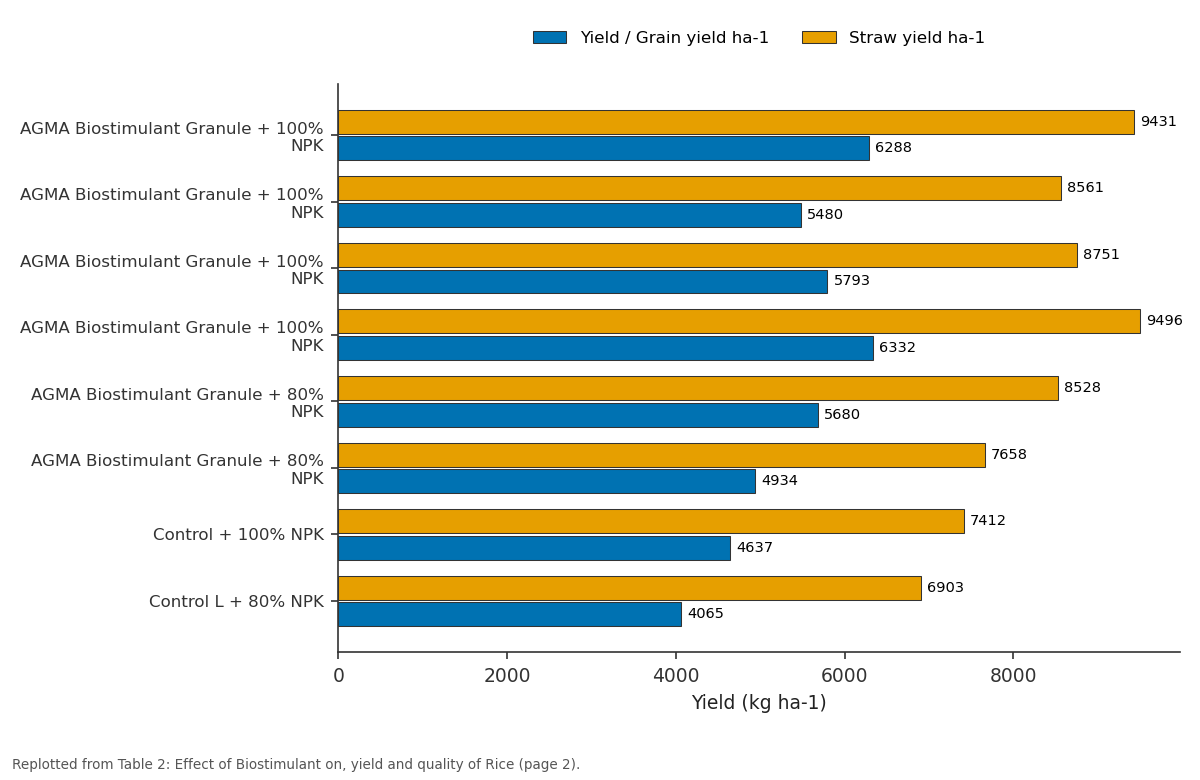
Yield / Grain yield ha-1 and Straw yield ha-1: AGMA Biostimulant... vs AGMA Biostimulant... vs AGMA Biostimulant... vs AGMA Biostimulant... vs AGMA Biostimulant...
Replotted from Table 2 (page 2) of the original paper. Every bar is the paper's own table value.
View source evidence ↗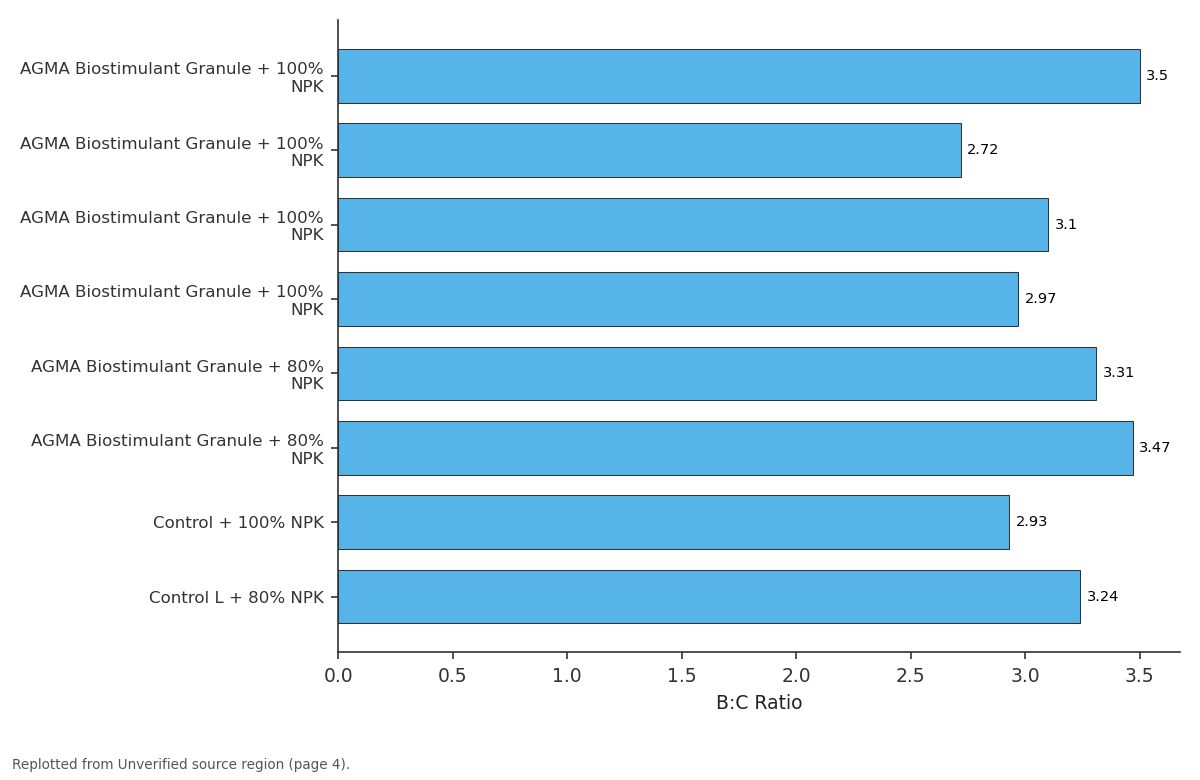
B:C Ratio: AGMA Biostimulant... vs AGMA Biostimulant... vs AGMA Biostimulant... vs AGMA Biostimulant... vs AGMA Biostimulant...
Replotted from a table (page 4) of the original paper. Every bar is the paper's own table value.
View source evidence ↗Figures & tables
From the original paper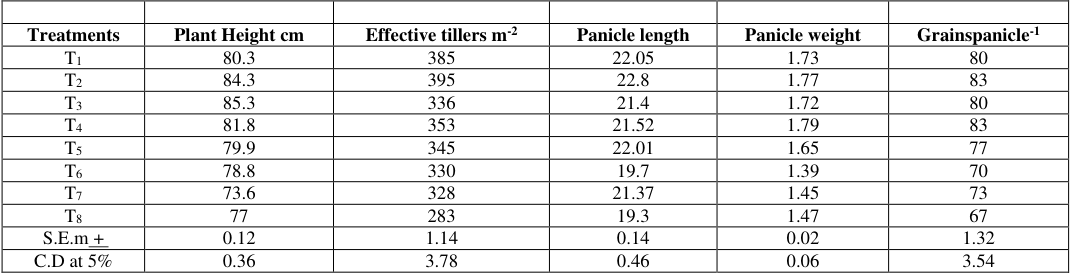 Table 1
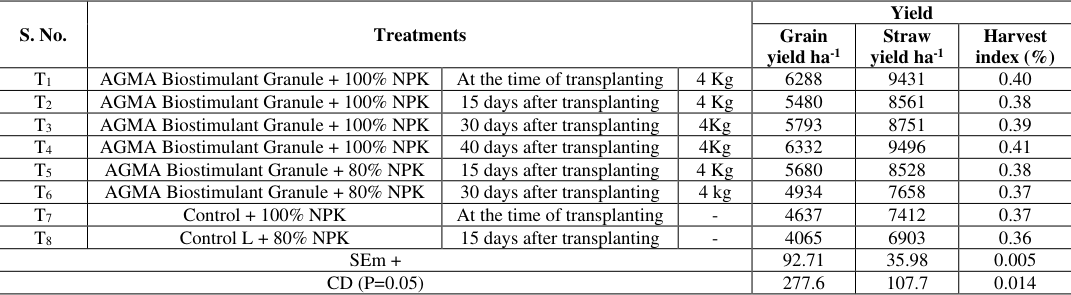 Table 2
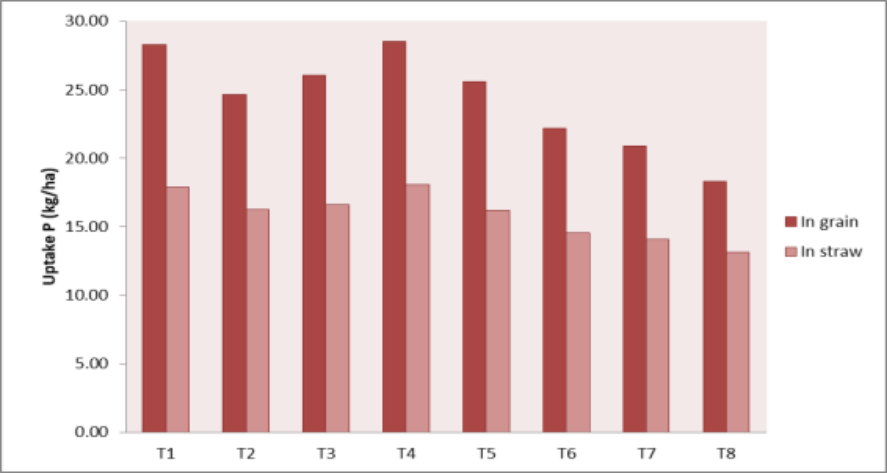 Figure 2
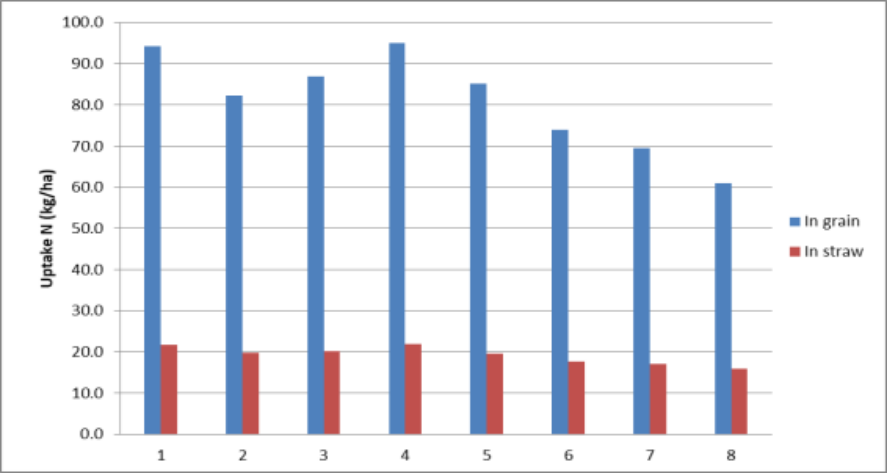 Figure 1
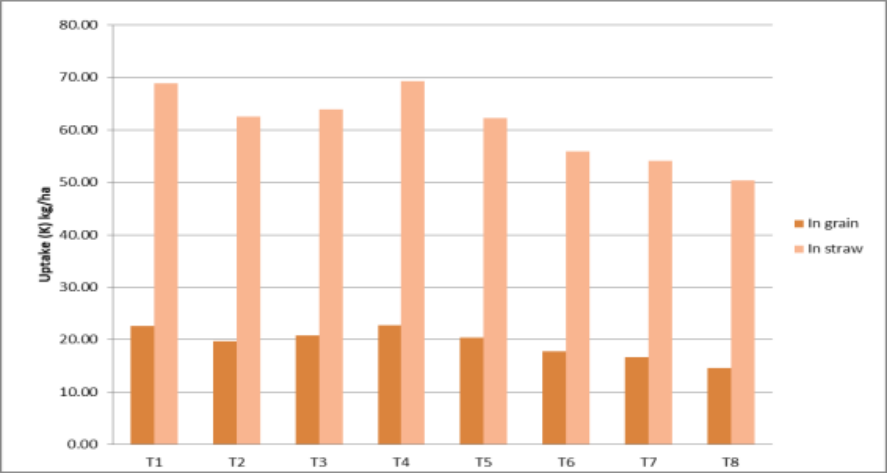 Figure 3
Introduction
Rice (Oryzae sativa L.) belongs to family Poaceae and genus "Oryzae". It contains 28.6% carbohydrate, 2.7% protein, 0.3% fat, and considerable proportion of Vitamin B6, Magnesium, Calcium, Iron. It is the primary staple for more than half of the world's population. Rice is grown globally on an area of about 164.84 million ha with the production of 755.5 million tones and productivity of 4.59 tonnes ha -1 . In India rice is grown in 45 million ha area, with a production of 122.27 million tones and productivity of 4.08 tonnes ha -1 . Madhya Pradesh contributes nearly 2.04 million ha and 6.19 million tonnes to the total area and production of rice in the country respectively. But the productivity (3.04 tonnes ha -1 ) is far below the yield potential i.e. 5.0 tonnes ha -1 . Various agricultural practices have been employed to enhance paddy yields, including the use of fertilizers, irrigation systems, and crop protection measures. However, these conventional methods often have limitations, such as high costs, negative environmental impacts, and potential risks to human health. Raghuwanshi et al., 2023a; Yadav et al., 2023a [44,47,48,23] . In recent years, there has been growing interest in the utilization of foliar biostimulants as a sustainable alternative for enhancing crop performance. Foliar biostimulants are substances that, when applied to plant leaves, promote physiological processes, nutrient absorption, and overall plant growth. They are typically composed of natural compounds such as seaweed extracts, amino acids, humic substances, and plant growthpromoting substances. This research study aims to comprehensively review the existing literature on the effects of AGMA-foliar biostimulants on paddy growth and yield.
Materials and Methods
In view of this a sponsored trial is planned to assess the impact of this fertilizer on growth and yield of paddy during Kharif 2022-23 at Jawahar Lal Nehru Krishi Vishwavidyalaya, Jabalpur to evaluate the efficacy of AGMA-foliar Biostimulant on growth and yield of rice. The field experiment was carried out at the Breeder seed production unit of JNKVV, Jabalpur, Madhya Pradesh (India). It is situated between 23 o 90′North latitude and 79 o 58′East longitude at an altitude of 411.78 meters above mean sea level and classified as "Kymore plateau and Satpura hills agro-climatic zone". The experimental plot was provided with assured irrigation facility having uniform topography and proper drainage.
The crop variety "JR-206" recommended for cultivation in Madhya Pradesh which was used in the experimental The major plant nutrients i.e. nitrogen, phosphorus and potash were given by urea, DAP and MOP respectively. The dose of fertilizer viz. 120 kg N, 60 kg P 2 O 5 and 40 kg K 2 O ha -1 was applied in accordance to the treatments given in Table 1. Half of total nitrogen and full dose of phosphorus, and potassium were applied as basal application before sowing according to the treatments. Treatments were arranged in randomized block design with three replications. Remaining half dose of nitrogen in the form of urea was applied as top dressing in two equal splits, at the active tillering and panicle initiation stage. Harvesting of individual plots was done manually with the use of a sickle when the grains in panicles had fully matured. The data collected from both the stover and grain analyses were meticulously compiled and interpreted to glean valuable insights into the effects of the different treatments on nutrient uptake and crop yield
| — | — | — | — | — | — |
|---|---|---|---|---|---|
| Treatments | Plant Height cm | Effective tillers m-2 | Panicle length | Panicle weight | Grainspanicle-1 |
| T1 | 80.3 | 385 | 22.05 | 1.73 | 80 |
| T2 | 84.3 | 395 | 22.8 | 1.77 | 83 |
| T3 | 85.3 | 336 | 21.4 | 1.72 | 80 |
| T4 | 81.8 | 353 | 21.52 | 1.79 | 83 |
| T5 | 79.9 | 345 | 22.01 | 1.65 | 77 |
| T6 | 78.8 | 330 | 19.7 | 1.39 | 70 |
| T7 | 73.6 | 328 | 21.37 | 1.45 | 73 |
| T8 | 77 | 283 | 19.3 | 1.47 | 67 |
| S.E.m + | 0.12 | 1.14 | 0.14 | 0.02 | 1.32 |
| C.D at 5% | 0.36 | 3.78 | 0.46 | 0.06 | 3.54 |
Table text extracted from the original PDF; superscript letters are shown inline. The original table image is below.
View original table image
Results
Results
On Growth parameters
Plant population m-2 remained significant with application of biostimulant treatments at harvest whereas, non-significant at 20 DAS. The data presented in Table 1 and Table 2 revealed that all the characters were influenced significantly by the given treatments. The highest height of plant at time of harvest (85.3 cm) was recorded in the treatment T 3 followed by T 2 and T 1 . The Highest number of tillers per plant was recorded in T 3 followed by T 2 and T 1 as compared to control.
| S. No. | Treatments | — | — | Yield | — | — |
|---|---|---|---|---|---|---|
| Grain yield ha-1 | Straw yield ha-1 | Harvest index (%) | ||||
| T1 | AGMA Biostimulant Granule + 100% NPK | At the time of transplanting | 4 Kg | 6288 | 9431 | 0.40 |
| T2 | AGMA Biostimulant Granule + 100% NPK | 15 days after transplanting | 4 Kg | 5480 | 8561 | 0.38 |
| T3 | AGMA Biostimulant Granule + 100% NPK | 30 days after transplanting | 4Kg | 5793 | 8751 | 0.39 |
| T4 | AGMA Biostimulant Granule + 100% NPK | 40 days after transplanting | 4Kg | 6332 | 9496 | 0.41 |
| T5 | AGMA Biostimulant Granule + 80% NPK | 15 days after transplanting | 4 Kg | 5680 | 8528 | 0.38 |
| T6 | AGMA Biostimulant Granule + 80% NPK | 30 days after transplanting | 4 kg | 4934 | 7658 | 0.37 |
| T7 | Control + 100% NPK | At the time of transplanting | - | 4637 | 7412 | 0.37 |
| T8 | Control L + 80% NPK | 15 days after transplanting | - | 4065 | 6903 | 0.36 |
| SEm + | 92.71 | 35.98 | 0.005 | |||
| CD (P=0.05) | 277.6 | 107.7 | 0.014 |
Table text extracted from the original PDF; superscript letters are shown inline. The original table image is below.
View original table image
Effect on crop yield
Among all the treatment combined application AGMA BIOSTIMULANT GRANULE + 100% NPK at the 15 days after transplanting showed higher plant population at harvest, plant height, leaf area index, tillers per meter row length and crop dry weight compared to other treatments as well as 100% RDF and control. The treatment AGMA BIOSTIMULANT GRANULE + 100% NPK was however at par to the treatment given.
Yield attributes viz., effective tillers m-2, length of panicle, weight of panicle, grains panicle-1 and test weight were significantly influenced by integrated application. Among the various nutrient management treatments, application of AGMA BIOSTIMULANT GRANULE + 100% (T 3 ) showed significantly higher effective tillers m-2, panicle length, panicle weight, grains panicle-1 and test weight, over the control plot as well as the plot given recommended fertilizer dose.
The maximum grain yield of was recorded with application of AGMA BIOSTIMULANT GRANULE + 100% (T 3 ) compared to all the remaining treatments and control and it was statistically at par with AGMA Biostimulant Granule + 100% NPK At the time of transplanting (Singh et al., 2022; Jha et al., 2023) [30,23] . The highest straw yield was recorded AGMA Biostimulant Granule + 100% NPK At the time of transplanting. [27,47,18,23,43,44,47,48,51,52] .
Effect on chemical properties of soil and nutrient uptake
Post harvest soil parameters like pH, EC, organic carbon were not significantly influenced by the integrated application of AGMA Biostimulant Granule + 100% NPK. Singh et al., 2013a [18] ; Sahu et al., 2022 [49] ; Patel et al., 2023 [33,34,35] . The available N, P, K in soil was significantly influenced with application of AGMA Biostimulant Granule + 100% NPK. Kumar et al., 2022 [30] ; Raghav et al., 2023 [46] . The available N, P, K in soil after harvest was minimum with treatment Control L + 80% NPK (Kumar et al., 2023 and Shri et al., 2014) [35,14] . Previous by Jha and Soni (2014) [14] and Verma et al. (2023) [23,43,44,47,48,51,52 . However, the nutrient uptake of (Nitrogen, Phosphorus, Potassium) in grain and straw (kg ha -1 ) was highest in plots AGMA Biostimulant Granule + 100% NPK At the time of transplanting fetched higher values of gross and net returns ha -1 ) followed by the treatment where the dose AGMA Biostimulant Granule + 100% NPK 15 days after transplanting over the control plots and RDF plots. Sanodiya et al. (2013) [51] , Verma et al. (2022) [49] , Kantwa et al. (2019) [27] , Jha et al.
(2007) [26] and Kumbhare et al., 2023a [33,34,35] .
Economics of treatments
Application of AGMA Biostimulant Granule + 100% NPK At the time of transplanting fetched higher values of gross and net returns ha -1 ) followed by the treatment where the dose AGMA Biostimulant Granule + 100% NPK at 15 days after transplanting. Sahu et al., 2022 [49] ; Verma et al., 2023 [23,43,44,47,48,50,51,52] , Verma et al., 2022 [49] ; Malviya et al., 2012 [40] .
Whereas, benefit cost (B:C) ratio was higher in the application AGMA Biostimulant Granule + 100% NPK At the time of transplanting followed by AGMA Biostimulant Granule + 80% NPKat 30 days after transplanting over other treatment. Mengel et al., 2001 [41] ; Kumhar et al., 2022 [36] ; Kumbhare et al., 2023 [33, 34, 35] ; Sahu et al., 2023 [49] ; Patidar et al., 2023 [ 39] , Jha et al., 2008 [25] ; Jha et al., 2011 [20] ; Pahade et al., 2023 [43] .
Conclusion
The study conducted at JNKVV on Paddy variety JR -206 during Kharif, 2022-23 revealed that the application of AGMA bio-stimulant Granule gave good vegetative growth, more number of ears per plant, good size of ears and highest yield per plant as compared to control.
Figures and tables from the paper
References
100 in the original paper- Aleksandrova P, Donov D. Nitrogen content and its uptake by maize as influenced by some meteorological elements and fertilization. Int Agrophys. 2003;17:41-45.
- Arvadiya LK, Raj VC, Patel TU, Arvadiya MK. Influences of plant population and weed management on weed flora and productivity of sweet corn (Zea mays). Indian J Agron. 2012;57(2):162-167.
- Bak K, Gaj R, Budka A. Accumulation of nitrogen, phosphorus and potassium in mature maize under variable rates of mineral fertilization. Fragmenta Agron. 2016;33:719.
- Dwivedi AP, Mishra A, Singh SRK, Singh RP, Jha A. Multiplier effect of zero tillage technology on Resource Conservation in wheat cultivation. J Community Mobilization Sustainable Dev. 2012;7(1):137-140.
- Gangwar S, Naik KR, Jha A, Bajpai A. Soil properties as influenced by organic nutrient management practices under rice-based cropping systems. Res Crops. 2016;17(1):8-12.
- Gautam AK, Shrivastava AK, Jha A. Design Parameters of Tractor Drawn Pressurized Aqueous Fertilizer Drill. AMAAgricultural Mechanization in Asia Africa and Latin America. 2021;52(3):54-60.
- IGFRI Vision 2050. Jhansi, India: Indian Grassland and Fodder Research Institute; c2015. p. 7-23.
- Integrated control of hardy weeds in maize (Zea mays L.). Indian J Weed Sci. 1997;39(1&2):17-20.
- Jha AK, Shrivastava A, Mehta AK, Billaiya SK, Raghuvanshi NS. Effect of Different Concentrations of Seaweed Saps on Quality, Green Fodder, and Seed Yields of Berseem (Trifolium alexandrinum). Int J Biores Stress Manage. 2016;7(5):1008-1011.
- Jha AK, Dwivedi BS, Shrivastava AK, Soni M, Taniwaki K, Kokuryu T, et al. Effect of drainage, tillage, and land configurations on root, nodules, and yield of soybean in Vertisols. Soybean Res. 2014;12(1, Special Issue):194-198.
- Jha AK, Shri S, Shrivastava A. Influence of physiological parameters and yield by different maize-based cropping systems. Bioscan. 2015;10(1):203-205.
- Jha AK, Shrivastava A, Mehta AK, Billaiya SK, Raghuvanshi NS. Effect of Different Concentrations of Seaweed Saps on Quality, Green Fodder, and Seed Yields of Berseem (Trifolium alexandrinum). Int J Biores Stress Manage. 2016;27(5):1008-1011.
- Jha AK, Shrivastava A, Raghuvansi NS, Kantwa SR. Effect of weed control practices on fodder and seed productivity of Berseem in Kymore plateau and Satpura hill zone of Madhya Pradesh. Range Manag Agrofor. 2014;35(1):61-65.
- Jha AK, Srivastava A, Raghuvanshi NS, Singh AK. Effect of nitrogen levels on fodder yield and quality of pearl millet genotypes under irrigated conditions of Madhya Pradesh. JNKVV Res J. 2013;47(2):165-168.
- Jha Amit, Kewat ML. Weed compositions and seed bank as affected by different tillage and crop establishment techniques in rice-wheat system. Indian J Weed Sci. 2013;45(1):19-24.
- Jha Amit Kumar, Kewat ML, Upadhyay V, Vishwakarma SK. Effect of tillage and sowing management on productivity, economics, and energetics of rice-wheat cropping system for Kamore Plateau and Satpura hill zone of Madhya Pradesh. Indian J Agron. 2011;56(1):35-50.
- Jha AK, Soni M. Weed management by sowing methods and herbicides in soybean. Indian J Weed Sci. 2013;45(4):250-252.
- Jha AK, Shrivastava A, Nayak S. Integrated Nutrient Management in Forage Based Cropping System (Jowar + Cowpea -Berseem). Int J Pure App Biosci. 2018;6(5):12061211.
- Jha AK, Yadav PS, Shrivastava A, Upadhyay AK, Sekhawat LS, Verma B, et al. Effect of nutrient management practices on productivity of perennial grasses under high moisture condition. AMA, Agricultural Mechanization in Asia, Africa and Latin America. 2023;54(3):12283-12288.
- Jha AK, Shrivastava A, Raghuvanshi NS. Effect of different phosphorus levels on growth, fodder yield and economics of various cowpea genotypes under Kymore plateau and Satpura hills zone of Madhya Pradesh. Int J Agric Sci. 2014;10:409-411.
- Jha AK, Kewat ML, Chaturvedi PL, Sharma RS, Vishwakarma SK. Effect of varying tillage and sowing methods on weed dynamics under rice-wheat cropping system in Kymore plateau and Satpura hill zone of Madhya Pradesh. Indian J Weed Sci. 2008;40(1 & 2):37-40.
- Jha AK, Sharma RS, Vishwakarma SK. Development of resource conservation techniques for tillage and sowing management in rice-wheat cropping system under irrigated production system of Kymore Plateau and Satpura hill zone of Madhya Pradesh. JNKVV Res J. 2007;41(1):26-31.
- Kantwa SR, Agrawal RK, Jha A, Pathan SH, Patil SD, Choudhary M. Effect of different herbicides on weed control efficiency, fodder and seed yields of berseem (Trifolium alexandrinum L.) in central India. Range Manag Agrofor. 2019;40(2):323-328.
- Kewat ML, Meena V, Sharma N, Jha AK. Effect of time application on the efficacy of combi and glyphosate against Para grass (Brachiaria mutica) in non-cropped area. Indian J Weed Sci. 2009;40(3&4):159-161.
- Kumar D, Singh M, Kumar S, Meena RK, Yadav MR, Makarana G, et al. Productivity and Quality Enhancement in Fodder Maize (Zea mays) Cultivars through Nutrient Management Strategies. Indian J Agric Sci. 2022;92:12630.
- Kumar B, Shaloo, Bisht H, Meena MC, Dey A, Dass A, et al. Nitroger management sensor optimization, yield, economics, and nitrogen use efficiency of different wheat cultivars under varying nitrogen levels. Front Sustain Food Syst. 2023;7:1228221.
- Kumar R, Bohra JS, Kumawat N, Kumar A, Kumari A, Singh AK. Root growth, productivity and profitability of baby corn (Zea mays L.) as influenced by nutrition levels under irrigated eco-system. Res Crops. 2016;17:41-46.
- Kumbhare R, Jha AK, Patel R, Jaiswal A, Gupta V, Kumar P, Dwivedi DK, Sharma PB. Optimum dose of fertilizer with growth regulators for higher yield of wheat (Triticum aestivum L.). The Pharma Innovation Journal. 2023;12(11):1117-1123.
- Kumbhare R, Jha AK, Gopilal A, Patel R, Tekam Y. Combination of Fertilizer and Growth Regulators Impact on Nutrient Balance in Wheat Crop (Triticum aestivum L.). Int J Plant Soil Sci. 2023;35(22):823-832.
- Kumbhare R, Jha AK, Patel R, Jaiswal A, Gupta V, Kumar P, et al. Optimum dose of fertilizer with growth regulators for higher yield of wheat (Triticum aestivum L.). The Pharma Innovation Journal. 2023;12(11):1117-1123.
- Kumhar BL, Agrwal KK, Jha AK, Rai HK, Kumar V, Choudhary M, et al. Productivity and economical viability of grass-based cropping systems. Range Manag Agrofor. 2022;43(1):167-171.
- Kumhar BL, Agrawal KK, Jha AK. Weed screening in grass based cropping system in Central India. J Biotechnol Crop Sci. 2020;9(14):94-99.
- Kumhar BL, Agrawal KK, Jha AK, Rai HK. Variability of soil infiltration rate in different grass based cropping system in Kymore Plateau Satpura Hills region. Forage Res. 2021;47(3):325-328.
- Patidar J, Kewat ML, Sondhiya S, Jha AK, Gupta V. Bioefficacy of fomesafen + fluazifop-p-butyl mixture against weeds and its effect on productivity and profitability of soybean (Glycine max L.) in Central India. Indian J Agric Sci. 2023;93(7):750-755.
- Malviya P, Jha AK, Upadhyay VB. Effect of different proportions of vermicompost and fertilizers on growth and yield of scented rice and soil properties. Ann Agric Res New Ser. 2012;33(4):228-234.
- Mengel K, Kirkby E. Principles of plant nutrition. 5th edition. Kluwer Academic Publisher; 2001. p. 849.
- Olsen SR, Cole CV, Watanabe FS. Estimation of Available Phosphorus in Soils by Extraction with Sodium Bicarbonate. USDA Circular No. 939, US Government Printing Office, Washington DC; 1954.
- Pahade S, Jha AK, Verma B, Meshram RK, Toppo O, Shrivastava A. Efficacy of sulfentrazone 39.6% and pendimethalin as a pre emergence application against weed spectrum of soybean (Glycine max L. Merrill). Int J Plant Soil Sci. 2023;35(12):51-58.
- Patel R, Jha AK, Verma B, Porwal M, Toppo O, Raghuwanshi S. Performance of pinoxaden herbicide against complex weed flora in wheat (Triticum aestivum L.). Int J Environ Clim Change. 2023;13(7):339-345.
- Piper CS. Soil and plant analysis. Asia Publishing House, Bombay and New Delhi; 1967.
- Raghav P, Jha AK, Badal V, Rahul K, Richa S. Bioefficacy of pinoxaden as post-emergence herbicide against weeds in wheat crop. Pollution Res. 2023;42(1):115-117.
- Raghuwanshi M, Jha AK, Verma B, Yadav PS, Shrivastava. Weed dynamics of fodder maize as influenced by different herbicides. Int J Environ Clim Change. 2023;13(7):245-251.
- Raghuwanshi M, Jha AK, Verma B, Sahu MP, Dubey A. Assessing the effect of weed management practices on weed flora, growth and yield of fodder maize (Zea mays L.). Int J Plant Soil Sci. 2023;35(11):112-120.
- Sahu MP, Kewat ML, Jha AK, Sondhia S, Choudhary VK, Jain N, Verma B. Weed prevalence, root nodulation and chickpea productivity influenced by weed management and crop residue mulch. AMA, Agric Mechanization Asia Afr Latin Am. 2022;53(6):8511-8521.
- Sahu V, Kewat ML, Verma B, Singh R, Jha AK, Sahu MP, et al. Effect of carfentrazone-ethyl on weed flora, growth and productivity in wheat. Pharma Innovation J. 2023;12(3):3621-3624.
- Sahu MP, Kewat ML, Jha AK, Choudhary VK, Verma B, Patidar J, Singh V, Sanodiya. Effect of crop residue and weed management on weed incidence, soil moisture and yield of chickpea. Indian J Agronomy. 2023;68(4):404-412.
- Sairam G, Jha AK, Verma B, Porwal M, Dubey A, Meshram RK. Effect of mesotrione 40% SC on weed growth, yield and economics of maize (Zea mays L.). Int J Environ Clim Change. 2023;13(7):608-616.
- Sairam G, Jha AK, Verma B, Porwal M, Sahu MP, Meshram RK. Effect of pre and post-emergence herbicides on weed flora of maize. Int J Plant Soil Sci. 2023;35(11):6876.
- Sanodiya P, Jha AK, Shrivastava A. Effect of integrated weed management on seed yield of fodder maize. Indian J Weed Sci. 2013;45(3):214-216.
- Satao RN, Nalamwar RV. Studies on uptake of nitrogen, phosphorus and potassium by weeds and sorghum as influenced by integrated weed control. In: Proceedings of the International Symposium on Weed Science; November 18-20, Hissar, India. 1993;II:103-107.
- Shri Sonam, Jha AK, Shrivastava A. Evaluation of different intercropping system for maximum productivity and economics in maize. Ann Agric Res New Ser. 2014;35(2):201-205.
- Singh DN, Bohra JS, Tyagi V, Singh T, Banjara TR, Gupta G. A review of India's Fodder Production Status and Opportunities. Grass Forage Sci. 2022;77(1):1-10.
- Sinodiya P, Jha AK. Effect of weed management control practices on nutrient uptake and soil properties in fodder maize. JNKVV Res J. 2014;48(1):60-63.
- Skowronska M, Filipek T. Accumulation of nitrogen and phosphorus by maize as the result of the reduction in the potassium fertilization rate. Ecol Chem Eng Soc. 2010;17:83-88.
- Stoyanov P, Donov D. Sustainable effectiveness of nitrogen fertilization on various soils in maize grown as monoculture II. Nitrogen economy of maize crops. Soil Sci Agrochem Ecol. 1996;31:147-1490.
- Subbiah BV, Asija GH. A rapid procedure for the estimation of nitrogen in soils. Curr Sci. 1956;25:259-260.
- Swati S, Agrawal SB, Badal V, Singh YP, Richa S, Muskan P, et al. Weed dynamics and productivity of chickpea as affected by weed management practices. Pollut Res. 2023;42(2):21-24.
- Tanisha Nirala, Jha AK, Badal Verma, Pushpendra Singh Yadav, Mahendra Anjna, Lakhan Bhalse. Bio efficacy of pinoxaden on weed flora and yield of wheat (Triticum aestivum L.). Biol Forum Int J. 2022;14(4):558-561.
- Tiwari RK, Dwived B, Deshmukh G, Pandey AK, Jha A. Effect of weed control treatments on growth of little seed cannary grass and productivity of wheat. Indian J Weed Sci. 2011;43(3 & 4):239-240.
- Tiwari RK, Jha A, Tripathi SK, Khan IM, Rao SK. Rice based cropping system and climate change. JNKVV Res J. 2013;47(1):239-247.
- Tomar DS, Jha AK, Porwal M, Verma B, Tirkey S, Khare Y, et al. Efficacy of Halauxifen-methyl+ Florasulam against Complex Weeds in Wheat under Kymore Plateau and Satpura Hill Zone of Madhya Pradesh, India. Int J Plant Soil Sci. 2023;35(15):161-171.
- Tomar DS, Jha AK, Verma B, Meshram RK, Porwal M, Chouhan M, et al. Comparative Efficacy of Different Herbicidal Combinations on Weed Growth and Yield Attributes of Wheat. Int J Environ Climate Change. 2023;13(8):889-898.
- Verma B, Bhan M, Jha AK, Porwal M. Influence of weed anagement practices on direct-seeded rice grown under rainfed and irrigated agroecosystems. Environ Conserv J. 2023;24(3):240-248.
- Verma B, Bhan M, Jha AK, Agrawal KK, Kewat ML, Porwal M. Weed management in direct-seeded rice (Oryza sativa) in central India. Indian J Agron. 2023;68(2):217220.
- Verma B, Bhan M, Jha AK, Khatoon S, Raghuwanshi M, Bhayal L, et al. Weeds of direct-seeded rice influenced by herbicide mixture. Pharma Innovation. 2022;11(2):10801082.
- Verma B, Bhan M, Jha AK, Porwal M, Patel R. Assessment of different herbicides for effective weed management in direct seeded rice technology. Eco Env Cons. 2023;29(3):211-217.
- Verma B, Bhan M, Jha AK, Singh V, Patel R, Sahu MP, Kumar V. Weed management in direct-seeded rice through herbicidal mixtures under diverse agroecosystems. AMA. 2022;53(4):7299-7306.
- Verma D, Gontia AS, Jha A, Anita D. Study of cutting management on proximate analysis in wheat, oat and barley crops. Int J Agric Env Biotechnol. 2016;9(4):593-597.
- Verma D, Gontia AS, Jha A, Anita D. Study on leaf area index and leaf area duration of growth analytical parameters in Wheat, Barley, and Oat. Int J Agric Env Biotechnol. 2016;9(5):827-831.
- Walkley A, Black CA. Methods of soil analysis soil sciences. 1934;37:28.
- Yadav PS, Kewat ML, Jha AK, Sahu MP, Verma B, Toppo O. Floristic composition of weeds as influence by sowing time and herbicides in berseem. Eco Env Cons. 2023;29(3):64-68.
- Yadav PS, Jha AK, Pachauri V, Verma B, Shrivastava A, Chouhan M, et al. Oat genotypes response to different nitrogen levels under agro-climatic condition of Kymore Plateau zone of Madhya Pradesh. Pharma Innovation. 2023;12(4):2371-2374.
- Yadav PS, Kewat ML, Jha AK, Hemalatha K, Verma B. Effect of sowing management and herbicides on the weed dynamics of berseem (Trifolium alexandrinum). Pharma Innovation. 2023;12(2):2845-2848.
- Yadav PS, Jha AK, Kewat ML, Sahu MP, Verma B. Effect of sowing management and herbicides application on weeds and yield of berseem (Trifolium alexandrinum). Indian Journal of Agronomy. 2024 Mar;69(1):71-77.
- Raghuwanshi M, Jha AK, Naik K, Pandey A. Influence of weed management strategies on nutrient uptake and soil properties in fodder maize cultivation. International Journal of Research in Agronomy. 2024;7(5):24-29.
- Jha AK, Yadav PS, Shrivastva A, Dubey A, Jaiswal A. Influence of tillage and nutrient management on fodder productivity and economics of Oat in rice-oat cropping system. International Journal of Research in Agronomy. 2024;7(4):607-614.
- Lakhan B, Jha AK, Verma B, Raghuvanshi S, Porwal M, Sahu MP. Efficacy of pyroxasulfone and its combination against weeds in wheat (Triticum aestivum). Indian Journal of Agronomy. 2023;68(4):443-446.
- Chauhan A, Jha G, Chourasiya A, Jha A, Joshi J. Effect of tillage and weed management practices on growth productivity and energy analysis of late-sown chickpea. International Journal of Agriculture Sciences. 2017;9(5):3779-3781.
- Agrawal KK, Bhadauria UPS, Jha A, Jain S. Crop weather relationship studies on chickpea for improving crop adaptation to climate change. Indian Journal of Tropical Agriculture. 2010;28:239-242.
- Chauhan PS, Jha AK, Soni M. Efficacy of chlorimuronethyl against weeds in transplanted rice. Indian Journal of Weed Science. 2013;45(2):135-136.
- Dwivedi BS, Pandey AK, Tiwari RK, Jha AK, Khamparia NK. Performance of integrated nutrient management on yield and uptake of direct seeded rice. Progressive Agriculture. 2012;12(2):381-385.
- Patidar J, Kewat ML, Jha AK. Present status of weed flora in soybean crop. The Pharma Innovation. 2019;8(7):717720.
- Singh V, Agrawal KK, Jha AK, Sahu MP. Effect of Forchlorfenuron on Yield and Economics of Transplanted Rice. Indian Journal of Pure and Applied Biosciences. 2019;7(4):411-414.
- Bhawana S, Jha G, Jha AK, Pratik S. Efficacy of chlorimuron for controlling weeds in soybean. Indian Journal of Weed Science. 2015;48(1):86-89.
- Porwal M, Verma B, Jha AK. New and innovative technologies and machinery in conservation agriculture. In: Climate smart agriculture: Principles and practices. 2023. p. 113-127. ISBN: 978-81-19149-15-5.
- Tiwari RK, Mahajan G, Jha A, Singh SK, Tripathi SK. Growth efficiency, productivity and economics of direct seeded rice as influenced by nitrogen level and weed management. Journal of Pure and Applied Microbiology. 2017;11(2):987-991.
- Kumar S, Sanodiya P, Jha AK, Sahu MP, Verma B. Effect of 2,4-D sodium salt on weeds, growth and yields in rabi maize (Zea mays L.). Indian Journal of Agronomy. 2023;68(4):100-103.
- Jha AK, Pandey S, Pandey D, Meshram RK. Effect of fertilizer management with growth regulator on growth and yield of wheat. Pharma Innovation Journal. 2022;11(2):2999-3000.
- Sahu MP, Kewat ML, Jha AK, Tiwari RK, Choudhary VK, Singh V, Verma B, Kumar N, Sahu A, Kumhare A, Singh S. Effect of weed control and crop residue mulches on weeds and yield of chickpea in Kymore plateau and Satpura hills of Madhya Pradesh. The Pharma Innovation Journal. 2023;12(12):242-245.
- Jain S, Jha AK. Effect of different tillage system on yield and economics of mustard varieties and soil properties for Kymore Plateau and Satpura Hillzone of Madhya Pradesh. Journal of Research on Crops. 2012;13(1).
- Dubey JK, Kushwaha HS, Jha AK. Growth and biomass productivity of maize as influenced by maize cultivars and maize-based cropping system. The Pharma Innovation Journal. 2022;SP-11(7):749-751.
- Dubey JK, Kushwaha HS, Jha AK. Yield and economics of maize under maize-based cropping system in Kymore Plateau of Madhya Pradesh. Annals of Agricultural Research. 2022;43(4):409-412.
- Chauhan BS, Matloob A, Mahajan G, Aslam F, Florentine SK, Jha P. Emerging challenges and opportunities for education and research in weed science. Frontiers in Plant Science. 2017;8:1537-1550.
- Jha SK, Sharma AK, Jha AK. Influence of sowing dates and time of fertilizer application on nutrient uptake in soybean crop for Malawa region of Madhya Pradesh. JNKVV Research Journal. 2010;44(2):143-145.
- Singh V, Agrawal KK, Jha AK, Sahu MP. Effect of Forchlorfenuron on Yield and Economics of Transplanted Rice. Indian Journal of Pure and Applied Biosciences. 2019;7(4):411-414.
- Singh V, Agrawal KK, Jha AK. Effect of forchlorfenuron on yield and economics of transplanted rice. Progressive Agriculture. 2019;2:290-292.
- Lodhi BS, Kumar P, Chouhan M, Rajpoot A, Jha A. Comprehensive Genetic Analysis of Yield and YieldRelated Traits in Soybean Germplasms for Enhanced Crop Improvement. International Journal of Plant & Soil Science. 2023;35(22):9-17.
- Toppo O, Kewat ML, Jha AK, Yadav PS, Verma B. Effect of Sowing time and weed management practices on weed dynamics, productivity and economics of direct-seeded rice. Ecology, Environment and Conservation. 2023;29(3):80-85.
- Chauhan A, Chourasiya A, Singh P, Jha A. Effect of different tillage and weed management practices on growth and yield of chickpea. Journal of Plant Development Sciences. 2019;11(5):273-279.
- Chauhan A, Jha G, Chourasiya A, Jha A. Effect of tillage and weed management practices on soil microbial. Journal of Pharmacognosy. 2018;7(1S):1106-1108.
Cited by 1
From OpenAlex, OpenCitations and reference lists read by Scinovex
- Effect of plant growth regulators and biostimulants on growth characters and yield of transplanted rice
S. Parvathi, Ashwani Kumar Thakur, Sandeep Kumar, T. Chandrakar, Shri Vikas Ramteke, Purnima Janghel · International Journal of Research in Agronomy · 2025
A field trial was conducted during the Kharif- 2024 at the Research cum Instructional Farm of Shaheed Gundadhur College of Agriculture and Research Station, IGKV, Jagdalpur, Chhattisgarh, to evaluate the effectiveness of various plant growth regulators and biostimulants on growth and yield performance of transplanted rice. The study was laid out in a Randomized Complete Block Design (RCBD) with eleven treatments, it was replicated three times. The findings of the study indicated that application of Paclobutrazol @ 0.5 ml L-1 (T10) recorded highest number of effective tillers at 60, 90, and 120