
Research article · 2024 · Full text
International Journal of Agriculture Extension and Social DevelopmentConstraints perceived in adoption of Pradhan Mantri Ujjwala Yojana in Rohtas district in Bihar
Volume 7(5) · Pages 123–125 · DOI: 10.33545/26180723.2024.v7.i5b.607 ↗
Research areasSouth Asian Studies and ConflictsAgricultural Economics and PracticesSocial and Economic Development in India
Abstract
Author-writtenConsidering the perception of the LPG dealers and households towards Pradhan Mantri Ujjwala Yojana, the current study is carried out in the Rohtas district of Bihar in 2023. A total of 120 respondents i.e., 120 women households were taken for the study from 10 villages of 2 blocks under Rohtas district. 22 specific constraints perceived by households were categorized into 4 broad constraints, viz., social, cultural, economic, and physical constraints. Analysis was performed by using Garrett’s ranking method, and specific constraints were ranked accordingly. Garrett’s mean scores of specific constraints ranged 33.45 to 72.45 for social constraints, 42.98 to 65.03 for cultural constraints, 35.48 to 75.57 for economic constraints, and 40.530 to 70.60 for physical constraints as perceived by households. The paper may provide a better insight into the grassroots level constraints for implementation and acceptance of Pradhan Mantri Ujjwala Yojana in rural villages of India.
Summary
Source-checkedPlain-language reading of the full paper, prepared with AI and checked against the text. Each point links to the authors' own words.
Why it matters
- Traditional cooking methods using solid fuels like firewood and cow dung cakes release pollutants that harm the respiratory health of women and children in India. View evidence ↗
- The Pradhan Mantri Ujjwala Yojana (PMUY), launched in 2016, aims to reduce household air pollution by providing cleaner LPG to underprivileged households. View evidence ↗
- Despite the program's goals, high refill costs and low socioeconomic conditions make the sustained use of LPG difficult in rural areas such as Bihar. View evidence ↗
The question
- The study aimed to evaluate the perceptions of LPG dealers and households regarding the adoption of the Pradhan Mantri Ujjwala Yojana in the Rohtas district of Bihar. View evidence ↗
What they did
- Data was collected using a semi-structured interview schedule, personal interviews, and open discussions. View evidence ↗
- The study used Garrett's ranking method to analyze and rank the specific constraints perceived by the households. View evidence ↗
What they found
- The most significant social constraint was the easy availability of traditional fuels, which received the highest mean score of 72.45. View evidence ↗
- High refilling costs were identified as the primary economic constraint, with a mean score of 74.57. View evidence ↗
- The leading physical constraint was the lack of proper kitchen infrastructure to install the stove, scoring 70.60. View evidence ↗
- The primary cultural constraint was that large cooking pots did not fit on the provided stoves, with a mean score of 65.03. View evidence ↗
- A lack of awareness regarding interest-free loans for new connections was a significant social barrier, scoring 58.80. View evidence ↗
- Fear of cylinder explosions in 'kutcha' (temporary/mud) houses was a major physical concern, with a mean score of 59.40. View evidence ↗
- Difficulty in arranging immediate funds for refills (score 63.39) often led to gaps in fuel availability lasting 3 to 10 days or more. View evidence ↗
What it means
- The authors conclude that the main challenges to PMUY implementation are the high cost of LPG refills and the easy availability of free traditional solid fuels. View evidence ↗
- The authors recommend that policymakers and government officials address these practical barriers to ensure the long-term sustainability of the LPG initiative. View evidence ↗
Visual summary
3 visualsIllustrations explain the paper; charts are replotted from the paper's own table values.
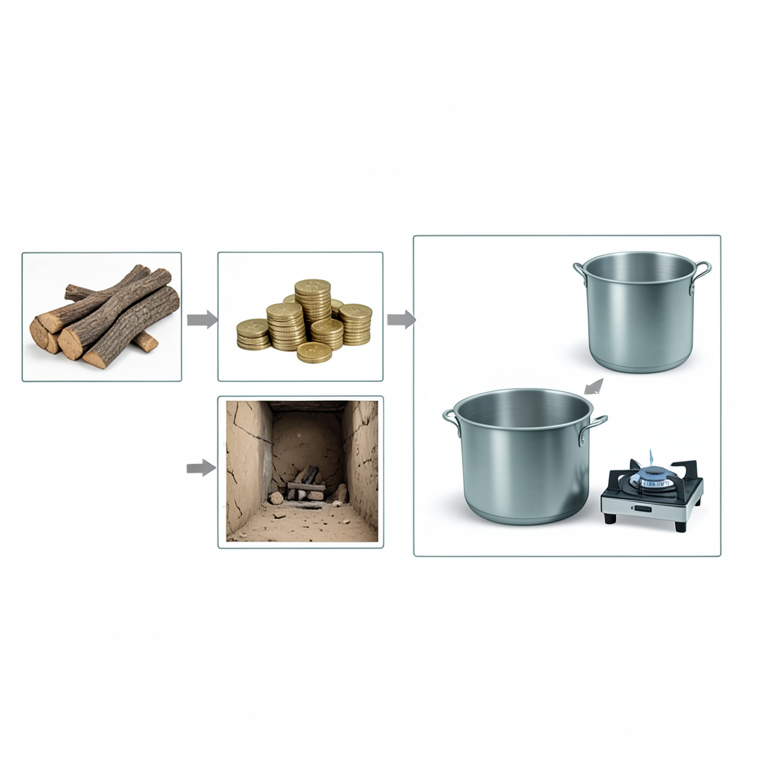
Categorization of PMUY Adoption Constraints
AI-generated conceptual illustration (Rural Indian household kitchen setting with LPG stoves and traditional cooking tools). It explains the idea and does not show study data.
View source evidence ↗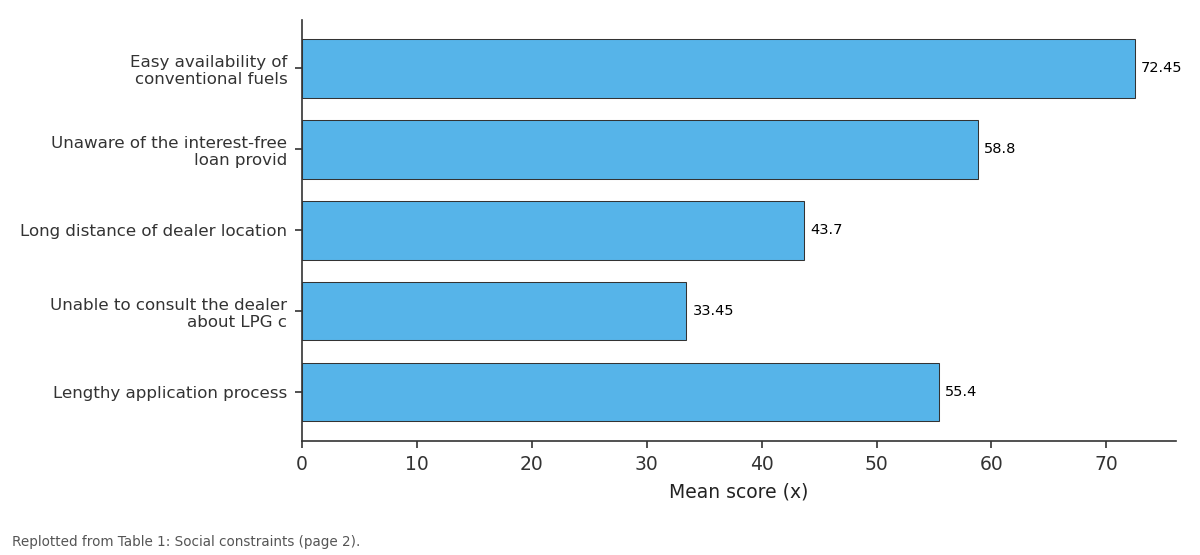
Mean score (x): Easy availability of... vs Unaware of the... vs Long distance of dealer... vs Unable to consult the... vs Lengthy application...
Replotted from Table 1 (page 2) of the original paper. Every bar is the paper's own table value.
View source evidence ↗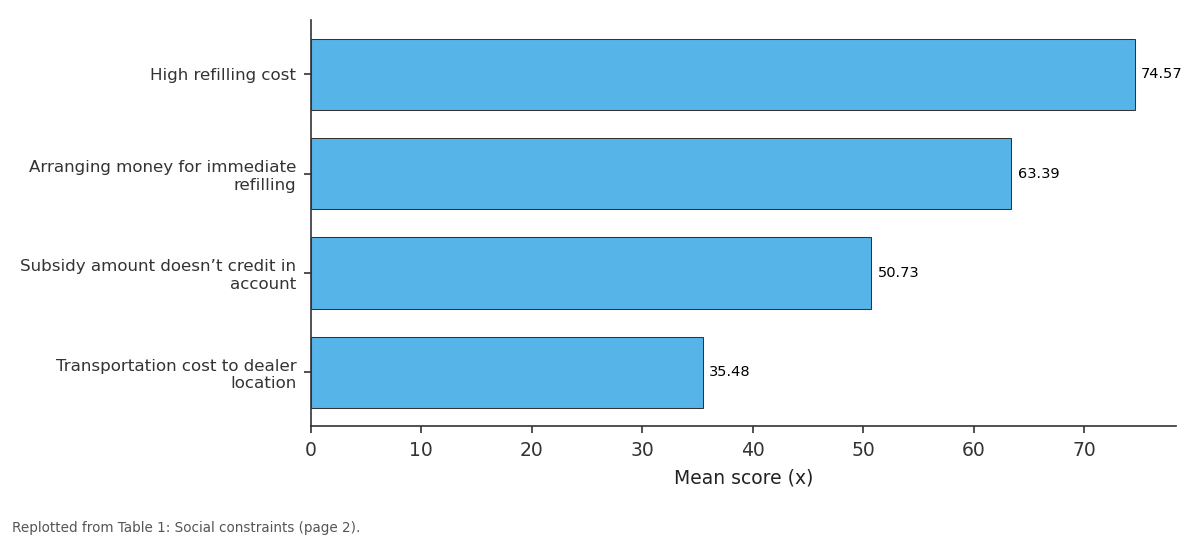
Mean score (x): High refilling cost vs Arranging money for... vs Subsidy amount doesn’t... vs Transportation cost to...
Replotted from Table 1 (page 2) of the original paper. Every bar is the paper's own table value.
View source evidence ↗Figures & tables
From the original paper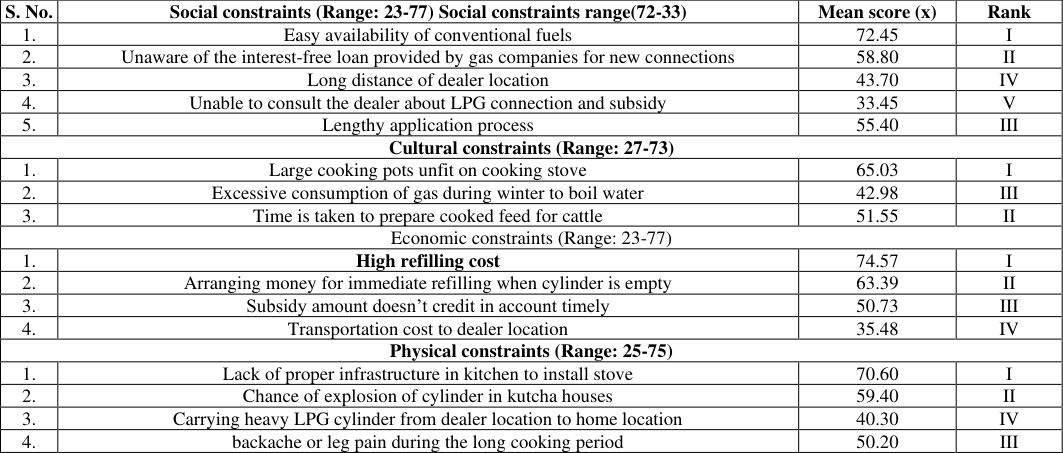 Table 1
Introduction
Cooking, a major daily task for Indian women, often involves using traditional chulhas that burn solid fuels such as firewood, cow dung cakes, crop residue, and coal. This practice releases harmful pollutants that can negatively affect the respiratory health of women and children, who typically spend more time at home (Sahoo B et al., 2022) [6] . In response, the Pradhan Mantri Ujjwala Yojana (PMUY) was launched on May 1, 2016, in Uttar Pradesh's Ballia district. This significant government initiative aims to substitute these traditional fuels with cleaner Liquefied Petroleum Gas (LPG) for underprivileged households, thereby reducing household air pollution (Sidhu et al., 2017; National Portal of India, n.d.). The scheme successfully distributed 8 Crore LPG connections ahead of schedule and was followed by an additional 1.6 Crore connections under Ujjwala Yojana 2.0 in 2022 (Ministry of Petroleum and Natural Gas, n.d.). Despite these achievements, the adoption and sustained use of LPG remain challenging due to high refill costs, low socioeconomic conditions, and a lack of awareness, especially in rural areas like Bihar where a significant portion of the population is still illiterate (Census, 2011) [4] . These factors contribute to the discontinuation or non-use of LPG cylinders post initial adoption (Cabiyo et al., 2020) [3] . Furthermore, research by Sahani et al. (2020) [9] identified multiple constraintsproduction, economic, post-harvest, marketing, social, and institutional-faced by farmers in adopting new agricultural technologies. Similarly, the study on PMUY categorized challenges into four main types: social, cultural, economic, and physical, aiming to prioritize and address these for smoother implementation and uptake of the scheme among the target communities.
Materials and Methods
The study is conducted in 2023 by using an exploratory research design. State Bihar ranked third in the number of beneficiaries covered under PMUY. Rohtas district was selected purposively for the study and data collection. Rohtas district consists of 19 blocks, out of that, Suryapura and Dawath blocks were selected. 5 villages were selected from each of the blocks and from each village 12 respondents are taken. A total of 120 women respondents were finalized for the study. To determine the constraints perceived by the respondents and, a semi-structured interview schedule was prepared. Primary data was collected through personal interviews and open discussion methods with respondents.
Results and Discussion
Results and Discussion
Constraints faced by beneficiaries
The predominant social constraint identified was the easy availability of traditional fuels like firewood, cow dung cake, agricultural residues, and kerosene oil, with a mean score of 72.45 Rural beneficiaries, having convenient access to these fuels, showed a low inclination towards the scheme, a finding supported by the CAG Report of 2019 [4] . Additionally, a significant barrier was the lack of awareness about the interest-free loans offered by gas companies for new connections, with a mean score of 58.80. Challenges www.extensionjournal.com such as the lengthy application process (55.40), the distant location of dealers (43.70), and difficulties in communicating with dealers about LPG connections and subsidies (33.45) were also noted. Many respondents, particularly the illiterate, perceived the application process as cumbersome and lengthy. The scarcity of gas agencies nearby made regular contact difficult, and respondents felt uncomfortable discussing their issues with dealers. Cultural constraints included issues like large cooking pots not fitting on the provided stoves, with a score of (65.03). Families in joint living arrangements found it challenging to cook due to the stove's inability to accommodate large utensils. Other notable issues were the time required to prepare cooked feed for cattle (51.55) and the higher gas consumption during winter for boiling water (42.98), as most families have livestock and rely on hot water daily, with gas failing to meet these demands compared to traditional fuels. Furthermore, there was a preference for the taste and aroma of food cooked over firewood and coal. Economic constraints were led by high refilling costs (74.57), challenges in arranging immediate funds for cylinder refills (63.39), delays in subsidy credits (50.73), regular maintenance costs for gas stoves (46.48), and transportation costs to dealer locations (35.48). Despite a government subsidy of Rs. 1600 for new connections, the cylinder refilling cost rose to Rs. 1132, leading to significant gaps in refilling time, often between 3 to 10 days or more, due to limited financial control (Cabiyo et al., 2020) [3] . Mentioned that the respondents often resorted to using chulha due to irregular and insufficient income, with women dependent on the family's primary earners for gas refills. During the COVID-19 pandemic, the situation worsened as people had to purchase LPG cylinders at full price without any subsidies (Sahoo et al., 2022) [6] , illustrating further economic challenges. Respondents perceived lack of proper infrastructure in the kitchen to install stove (70.60), chance of cylinder explosion in kutcha houses (59.40), backache or leg pain during the long cooking period (50.20), carrying heavy LPG cylinder from dealer location to home location (40.30) were important physical constraints.
Conclusion
Since its launch in 2016, the Pradhan Mantri Ujjwala Yojana (PMUY) has been notably successful in distributing new LPG connections to BPL women. However, it's crucial to identify and address the scheme's shortcomings in implementation and LPG adoption at the levels of both dealers and households. Research has identified several practical barriers as perceived by users, with the prominent ones being the easy availability of traditional fuels and the high cost of refilling LPG cylinders. Additionally, the accessibility of free solid fuels for traditional stoves and the socio-economic status of impoverished families were the main challenges in implementing PMUY. To ensure the sustainability of this widespread initiative, government officials and policymakers need to effectively address these issues.
Figures and tables from the paper
| S. No. | Social constraints (Range: 23-77) Social constraints range(72-33) | Mean score (x) | Rank |
|---|---|---|---|
| 1. | Easy availability of conventional fuels | 72.45 | I |
| 2. | Unaware of the interest-free loan provided by gas companies for new connections | 58.80 | II |
| 3. | Long distance of dealer location | 43.70 | IV |
| 4. | Unable to consult the dealer about LPG connection and subsidy | 33.45 | V |
| 5. | Lengthy application process | 55.40 | III |
| Cultural constraints (Range: 27-73) | |||
| 1. | Large cooking pots unfit on cooking stove | 65.03 | I |
| 2. | Excessive consumption of gas during winter to boil water | 42.98 | III |
| 3. | Time is taken to prepare cooked feed for cattle | 51.55 | II |
| Economic constraints (Range: 23-77) | |||
| 1. | High refilling cost | 74.57 | I |
| 2. | Arranging money for immediate refilling when cylinder is empty | 63.39 | II |
| 3. | Subsidy amount doesn’t credit in account timely | 50.73 | III |
| 4. | Transportation cost to dealer location | 35.48 | IV |
| Physical constraints (Range: 25-75) | |||
| 1. | Lack of proper infrastructure in kitchen to install stove | 70.60 | I |
| 2. | Chance of explosion of cylinder in kutcha houses | 59.40 | II |
| 3. | Carrying heavy LPG cylinder from dealer location to home location | 40.30 | IV |
| 4. | backache or leg pain during the long cooking period | 50.20 | III |
Table text extracted from the original PDF; superscript letters are shown inline. The original table image is below.
View original table image
References
7 in the original paper- Behera B, Mallick B. Constraints perceived by dealers and households for execution and adoption of pradhan Mantri Ujjwala Yojana. Indian Journal of Extension Education. 2023 Jul 6;59(3):156-159.
- Behera B, Rahut DB, Jeetendra A, Ali A. Household collection and use of biomass energy sources in South Asia. Energy. 2015;85:468-480.
- Cabiyo B, Ray I, Levine DI. The refill gap: Clean cooking fuel adoption in rural India. *Environmental Research Letters. 2020;16(1):014035.
- Devi G, Jain DK. Constraints faced in functioning of self help groups by the members under Rajasthan condition. Indian Journal of Extension Education. 2012;48(1&2):48-51.
- Sahoo B, Saha A, Dhakre DS, Sahoo S. Perceived constraints of organic turmeric farmers in Kandhamal District of Odisha. Indian Journal of Extension Education. 2022;59(1):107-111.
- Sawshilya A. A review of strengths and weaknesses of Pradhan Mantri Ujjwala Yojana. Journal of Advances and Scholarly Researches in Allied Education. 2018;14(2):1781-1784.
- Shasani S, Banerjee P, De HK, Panda S. Constraints in adoption of groundnut cultivation technology by the farmers of Odisha. Indian Journal of Extension Education. 2020;56(2):39-44.