
Research article · 2024 · Full text
International Journal of Agriculture Extension and Social DevelopmentFarming in the digital age: Unleashing the power of farming as a service (FaaS)
Volume 7(5) · Pages 99–102 · DOI: 10.33545/26180723.2024.v7.i5b.601 ↗
Research areasFood Supply Chain TraceabilitySmart Cities and TechnologiesInnovation and Socioeconomic Development
Abstract
Author-writtenFarming as a Service (FaaS) is a modern agricultural approach that uses advanced technologies such as the Internet of Things (IoT), artificial intelligence (AI), and precision farming to achieve optimal crop yields, enhance sustainability, and address global food security challenges. Fundamental components of FaaS include precision agriculture, IoT integration, livestock monitoring, and supply chain optimization. These components use technologies like satellite imagery, GPS, sensor networks, and blockchain to improve efficiency in agricultural supply chains and promote sustainable farming practices. Satellite imagery and blockchain improve decision-making processes, while precision agriculture and IoT integration enable real-time monitoring and management. FaaS offers many benefits, including heightened productivity, increased resource efficiency, and equitable access to advanced farming technologies. It particularly benefits small-scale farmers who may lack the financial means to invest in expensive equipment. However, FaaS adoption faces challenges such as initial investment barriers, concerns about data security, the imperative for technological literacy, and the necessity for customized ICT strategies tailored to diverse farming communities. Looking towards the future, FaaS will continue to evolve by incorporating technologies like blockchain for transparent supply chains, 5G connectivity for real-time data transfer, and further integration of IoT devices. This future trajectory is expected to be supported by Decision Support Systems (DSS) and Information and Communication Technology (ICT), crucial in bridging the digital divide and fostering sustainable agriculture practices. Ultimately, FaaS is positioned as a transformative force poised to bring about efficiency, sustainability, and inclusivity in modern agriculture.
Summary
Source-checkedPlain-language reading of the full paper, prepared with AI and checked against the text. Each point links to the authors' own words.
Why it matters
- Farming as a Service (FaaS) is a modern approach integrating AI, IoT, and precision farming to improve crop yields and global food security. View evidence ↗
- Cloud-based precision agriculture systems are intended to reduce price barriers and information imbalances while promoting eco-friendly revenue models. View evidence ↗
- Innovative agricultural strategies are necessary to feed a growing global population and mitigate the effects of climate change. View evidence ↗
The question
- The objective of this study is to critically examine the role and impact of Farming as a Service (FaaS) within digital agriculture. View evidence ↗
What they did
- The research was conducted using secondary data sources, including books, reports, research works, and journal articles. View evidence ↗
What they found
- Satellite imagery allows farmers to more effectively manage fields by providing data on vegetation indices, soil moisture, and crop health. View evidence ↗
- Precision agriculture techniques contribute to reduced labor costs and improved monitoring of soil, crops, and irrigation. View evidence ↗
- IoT systems use sensors to collect and transmit data on animal behavior, crop health, and environmental conditions to cloud platforms for analysis. View evidence ↗
- FaaS improves supply chain efficiency by using digital marketplaces to create direct exchange channels between consumers and farmers. View evidence ↗
- FaaS democratizes technology access for small and medium-sized farmers through pay-per-use or subscription models, bypassing high initial equipment costs. View evidence ↗
- High initial investment costs act as a barrier to FaaS adoption, necessitating support and financial incentives from private stakeholders and governments. View evidence ↗
- The use of FaaS raises significant concerns regarding the privacy and security of sensitive agricultural data, requiring ethical guidelines and robust cybersecurity. View evidence ↗
- Future FaaS evolution is expected to include 5G for real-time data transfer, blockchain for supply chain transparency, and deeper IoT integration. View evidence ↗
What it means
- The authors conclude that FaaS is a powerful tool for revolutionizing agriculture, promising improved food security, sustainability, and crop yields. View evidence ↗
- The authors note that diversity in farming practices and issues with interoperability require customized ICT strategies for different farmer types. View evidence ↗
Visual summary
1 visualsIllustrations explain the paper; they do not show study data.
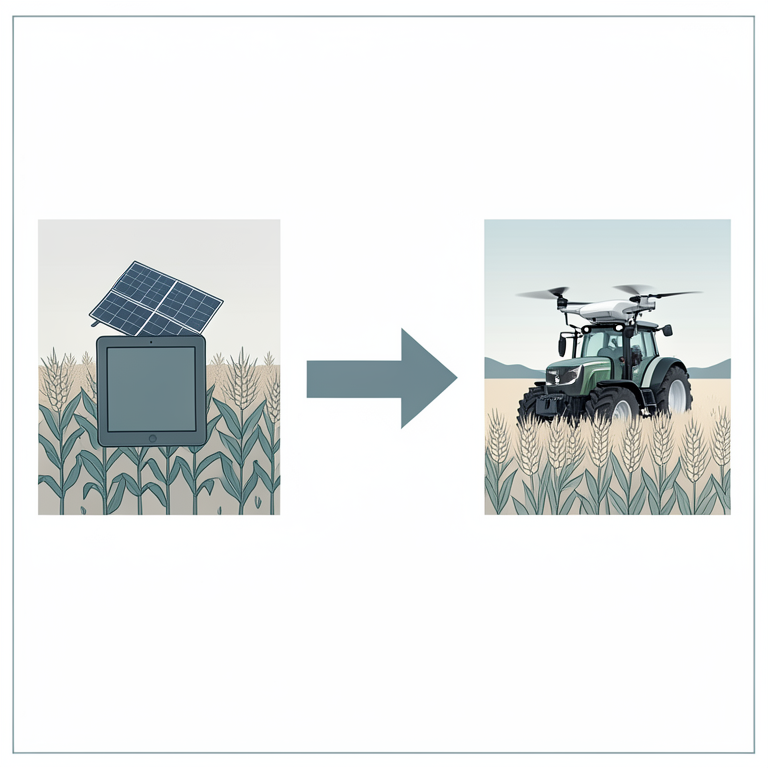
Study overview
AI-generated conceptual illustration (a diverse agricultural landscape with corn and wheat fields). It explains the idea and does not show study data.
View source evidence ↗Introduction
Farming as a Service (FaaS) is a concept similar to smart farming, focusing on precision agriculture through data collection and management for optimal growth environments. FaaS technology is essential for farm cloud services, offering pest management, growth management, and resource management based on analysis from IoT devices (Singh et al., 2022) [16] . Developing a cloud-based precision agriculture management system aims to overcome information imbalances, resolve price barriers, and establish environmentally friendly practices and revenue models. Traditional farming practices, such as agroforestry, intercropping, crop rotation, cover cropping, and organic composting, have been crucial for centuries, promoting sustainable food production and environmental conservation (Hua et al., 2023) [9] . These practices enhance soil fertility, sequester carbon, optimise resource use, maintain biodiversity, and ensure sustainability (Bilotta et al., 2023) [5] . Despite facing challenges like slash-and-burn farming and pesticide use, which have negative environmental impacts, traditional agricultural knowledge persists and is passed down, enhancing farming system resilience. Future efforts should focus on innovative strategies to promote sustainable agriculture, address the challenges of feeding a growing population, and mitigate climate change (Pechlivani et al., 2023) [15] . Farming as a Service (FaaS) is a concept from Agriculture 4.0, using digital technologies to optimise crop yields and sustainability (Singh et al., 2022) [16] . It relies on real-time data from remote sensing and digital tools for decisionmaking, enabling precision farming. FaaS integrates AI algorithms and user-friendly interfaces for proactive pest and nutrient management, offering new opportunities for sustainable farming (Gebresenbet et al., 2023) [8] . Technological integration in modern agriculture, including IoT, smart sensors,image processing, data analytics, artificial intelligence, and machine learning, addresses challenges like water scarcity and pests while improving productivity (Bretas et al., 2023) [6] . These technologies enable intelligent agriculture systems, aiding in crop monitoring, animal production, food safety, and farm management. ICT in agriculture facilitates data compilation and knowledge exchange, while integrating robotics, geospatial systems, and AI enhances production efficiency and decision support (Aleluia et al., 2023) [3] . This integration enables on-demand production and distribution, digitising rural industries, and transforming rural areas. Motivations for farming as a service stem from economic factors, environmental concerns, and addressing global food security (Akudugu et al., 2023) [2] . Farmers are driven by cooperative services offering opportunities for improvement, market guarantees, and agency rules. www.extensionjournal.com Adopting sustainable intensification practices offers personal satisfaction, eco-diversity, and eco-efficiency. Technology-enabled services enhance economic sustainability, food security, and data-driven decisionmaking (Menon et al., 2023) [13] . The Chinese socialised agricultural service system has notably boosted production efficiency and met food needs (Myalo et al., 2023) [14] . Overall, motivations for farming as a service emphasise efficiency, cost-effectiveness, sustainability, and global food security (Singh et al., 2022) [16] . As the global population continues to grow, innovative strategies that blend traditional practices with modern technological solutions are essential. The future of sustainable agriculture lies in addressing the dual challenges of feeding the world and mitigating climate change impacts. Farming as a Service offers a promising by providing scalable, cost-effective solutions that emphasize environmental care and resource management. This synergy not only enhances agricultural productivity but also ensures sustainability and resilience in food systems worldwide. The objective of the current study is to critically examine the following objective. To critically examine the role and impact of farming as a service in the context of digital agriculture.
Materials and Methods
The study relies primarily on secondary sources of data. Data from secondary sources include journal articles, books, reports, and research works.
The genesis of farming as a service (Faas)
Farming as a Service (FaaS) has emerged as a means to ensure sustainability and improve productivity in agriculture. FaaS combines technology-driven innovations with best farming practices to enhance food security and eliminate poverty and hunger (Singh et al., 2022) [16] . It involves using relevant technology-enabled services to enable data-driven decision-making by various stakeholders such as farmers, agri-businesses, and agri-tech start-ups. Smart Farming, a critical component of FaaS, utilizes integrated technologies to increase feed and food production, predict diseases, and monitor plant growth cycles. Artificial intelligence (AI) and remote-sensing technologies, including drones, are crucial in implementing FaaS and improving agriculture efficiency. Using edge computing and service offloading techniques further optimizes the performance of real-time controls and overall edge services in smart Farming (Myalo et al., 2023) [14] . The concept of FaaS also extends to the maintenance and repair of agricultural machinery, aiming to improve efficiency and reduce costs.
Critical components of FaaS
Farming as a Service (FaaS) encompasses various key precision farming components. Satellite imagery provides valuable information about crop health, soil moisture, and vegetation indices, enabling farmers to monitor and manage their fields more effectively. GPS technology allows for precise positioning and mapping, facilitating accurate field measurements and targeted application of inputs. Sensor networks collect real-time data on soil moisture, temperature, and other environmental factors, providing farmers with insights to optimize irrigation and nutrient management (Ingle et al., 2023) [11] . These components of precision farming contribute to the digitization of agriculture and enable farmers to make informed decisions for sustainable and efficient farming practices (Tejaswi et al., 2023) [18] .
Precision agriculture
Precision agriculture is a management approach that uses technology to optimize crop production and improve efficiency. It involves the use of satellite and computer technologies, the Internet of Things (IoT), and wireless sensor networks (WSN) to gather real-time information about environmental aspects, crop development, soil quality, and nutrient content. This information is analyzed using predictive analytics to make informed decisions about irrigation, pest management, fertilizer application, and crop yield optimization (Ingle et al., 2023) [11] . Precision agriculture techniques include irrigation, crop monitoring, crop protection, soil monitoring, and reduced labour costs. The implementation of precision agriculture has shown significant advancements, resulting in the development of precision agriculture apps that allow farmers to monitor and manage their crops remotely. Overall, precision agriculture plays a crucial role in enhancing crop yields, cutting expenses, and increasing productivity in the agricultural industry.
Iot integration
Technological integration in Farming Farming involves the core technologies of IoT, AI, robotics, and data analytics. These technologies are applied in various aspects of Farming to enhance productivity and efficiency. For example, in the agricultural field, IoT and AI are used for intelligent Farming, where smart sensors with AI capabilities offer sensor-based devices and equipment for crop monitoring and management (Kumar et al., 2022) [12] . Data analytics is used to analyze and control water consumption, temperature, humidity, and soil conditions to improve plant growth. Additionally, the integration of IoT, big data, and cloud computing plays a vital role in agriculture by facilitating connectivity, availability of data, and catering to various user needs (Bhanumurthy et al., 2022) [4] . The integration of these technologies enables resource optimization, decision-making support, and awareness of crop, land, weather, and market conditions for farmers.
Livestock monitoring and management
FAAS technologies, such as precision livestock farming (PLF) and the Internet of Things (IoT), are being applied to livestock farming to improve monitoring and management. PLF techniques, including machine learning, remote sensing, and precision agriculture technologies, automate data collection and support on-farm decision-making. IoTbased systems using sensors and devices collect data on environmental conditions, animal behaviour, and crop health, then process and transmit to a cloud-based platform for analysis (Castagnolo et al., 2023) [7] . These technologies offer benefits such as improved animal welfare, early detection of health issues, increased productivity, and reduced costs. However, there are challenges to www.extensionjournal.com implementing FAAS in livestock management, including the need for reliable reference data, variability in datasets, battery life of devices, and computational costs. Overcoming these challenges requires collaboration between farmers and researchers, software development, and further research and development.
Supply chain optimization
Farming as a Service (FaaS) is a concept that contributes to improving efficiency in agricultural supply chains. Using digital marketplaces, FaaS connects farmers with consumers, creating a direct and efficient channel for the exchange of agricultural products. For example, Tudouec, a potato e-commerce platform in Inner Mongolia, China, is a multi-functional platform that enhances supply chain capabilities by interacting information flow with capital and material flows (Huang and Lian (2024)) [10] . Additionally, blockchain technology in supply chain management (SCM) can optimize and reconfigure the agricultural supply chain. Blockchain-based digital twin solutions can promote the digitization and intelligence of SCM, resulting in time and energy savings. These advancements in supply chain optimization, such as FaaS and blockchain-based solutions, enable better coordination between farmers and service providers, leading to improved efficiency in agricultural supply chains. [1] . ▪ It enables farmers to optimize their processes, leading to increased productivity. Precision farming and automation reduce resource wastage and human errors, allowing for more efficient use of land, water, and inputs. ▪ FaaS promotes sustainable farming practices by emphasizing resource efficiency and environmental conservation. ▪ Intelligent irrigation systems can significantly reduce water usage, while predictive analytics help minimize the use of pesticides and fertilizers. ▪ FaaS has the potential to democratize access to advanced farming technologies. ▪ Small and medium-sized farmers who may not have the financial means to invest in expensive equipment can benefit from FaaS on a subscription or pay-per-use basis, making technology more accessible.
Benefits of farming as a service (FAAS) (Abdullah et al., 2023)
Benefits of farming as a service (FAAS) (Abdullah et al., 2023)
Challenges in the adoption of FaaS
Adopting Farming as a Service (FaaS) in agriculture faces several challenges and considerations.
• The initial investment required for implementing advanced technologies can be a barrier for some farmers, and financial incentives and support from governments and private stakeholders are needed to encourage adoption (Menon et al., 2023) [13] . • Data collection and utilization in FaaS raises concerns about data security and privacy, highlighting the need for robust cyber security measures and ethical guidelines to protect sensitive agricultural information (Kumar et al., 2022) [12] . [15] Information and communication technology (ICT) can also bridge the digital divide faced by smallholder farmers, promoting sustainable agriculture and supporting their adoption of agricultural socialized services. Agricultural social networks (ASNs) are also crucial in digitalizing the agricultural value chain, enabling an inclusive digital economy and contributing to sustainability.
Conclusion
Conclusion
References
15 in the original paper- Akudugu MA, Nkegbe PK, Wongnaa CA, Millar KK. Technology adoption behaviors of farmers during crises: What are the key factors to consider? J Agric Food Res. 2023;14:100694. https://doi.org/10.1016/j.jafr.2023.100694.
- Aleluia VM, Soares VN, Caldeira JM, Gaspar PD. Livestock Monitoring Prototype Implementation and Validation. Rev Inform Teor Aplicada. 2023;30(1):5365.
- Bhanumurthy Y, Haq SE, Anne K, Melingi SB. Integration of Artificial Intelligence and IoT on www.extensionjournal.com Agricultural Applications. In: Proceedings of the Intelligent Systems for Social Good: Theory and Practice. Singapore: Springer Nature Singapore; 2022. p. 29-38.
- Bilotta G, Genovese E, Citroni R, Cotroneo F, Meduri GM, Barrile V. Integration of an Innovative Atmospheric Forecasting Simulator and Remote Sensing Data into a Geographical Information System in the Frame of agriculture 4.0 Concept. Agri. Engineering. 2023;5(3):1280-1301.
- Bretas IL, Dubeux Jr JC, Cruz PJ, Oduor KT, Queiroz LD, Valente DS. Precision livestock farming applied to grazing land monitoring and management-a review. Agron J. 2023;24:1638-1662.
- Castagnolo G, Mancuso D, Porto SM. Cow Behavioural Activities in Extensive Farms: Challenges of Adopting Automatic Monitoring Systems. Sensors. 2023;23(8):3828.
- Gebresenbet G, Bosona T, Patterson D, Persson H, Fischer B, Mandaluniz N, et al. A concept for applying integrated digital technologies to enhance future innovative agricultural systems. Smart Agric Technol. 2023;5:100255.
- Hua J, Wang H, Kang M, Wang X, Guo S, Chang F, et al. The design and implementation of a distributed agricultural service system for smallholder farmers in China. Int. J Agric Sustainability. 2023;21(1):2221108.
- Huang M, Lian J. Research on the optimization of the path of the agricultural logistics industry under the innovative mode of "blockchain + supply chain finance". Apply Math Nonlinear Sci. 2024;9(1). https://doi.org/10.2478/amns.2023.1.00265.
- Ingle A, Gupta P, Gaikwad N, Bhatye S. Precision Agriculture Application using Machine Learning. Int. J Adv. Res Sci. Commun Technol. 2023;3(7):1-8. DOI: 10.48175/jars-9463.
- Kumar A, Gupta DN, Kumar R. Integration Aspects of AI, IoT, Big Data, and Blockchain in Healthcare Industry. In: Transformation in Healthcare with Emerging Technologies. 2022. p. 81-104.
- Myalo OV, Prokopov SP, Myalo VV, Maltseva EI. Concept for the formation of technical service of agricultural machinery in Western Siberia. In: E3S Web of Conferences. 2023;392:01044.
- Pechlivani EM, Gkogkos G, Giakoumoglou N, Hadjigeorgiou I, Tzovaras D. Towards Sustainable Farming: A Robust Decision Support System's Architecture for Agriculture 4.0. In: Proceedings of the 2023 24th International Conference on Digital Signal Processing (DSP); c2023. p. 1-5.
- Talero L, Parra-Sanchez D, Lamos D. Opportunities and Barriers of Smart Farming Adoption by Farmers Based on a Systematic Literature Review. In: Proceedings of the International Conference on Innovation, Documentation and Education; 2023. p. 5364. DOI:10.4995/INN2022.2022.15746.
- Tejaswi K, Jyothi BN, Jabbar MA, Vasavi B, Begum R. An insight into applications of IoT in the Agricultural Sector. In: Emerging Trends, Techniques, and Applications in Geospatial Data Science. IGI Global; 2023. p. 96-112. https://www.igiglobal.com/chapter/an-insight-into-applications-of-iotin-the-agricultural-sector/322476.
Cited by 4
From OpenAlex, OpenCitations and reference lists read by Scinovex
- Community-based business models for agricultural and forestry data ecosystems: A systematic literature review ↗
Samin Ghalandarzadeh, Arianit Kurti, Cecilia Unell, Adam Hallborg, Zenun Kastrati, Tinh Sjökvist · Smart Agricultural Technology · 2025
Data-driven solutions are becoming essential to modern business models, changing traditional business practices and complex value chains in multi-stakeholder and community-based sectors such as agriculture and forestry. Nevertheless, there is a lack of consolidated knowledge about the benefits and challenges that data-driven community-based business models may present in these domains. This study conducts a systematic literature review of scientific publications…
❝ 5PDF - Environmental impacts of cage fish farming: A review ↗
Edwin Baluku, Barirega Akankwasah, Dennis Twinomujuni, Adson Tumwebaze, Francis Sabino Ogwal, Angelina Ngonzebwa et al. · International Journal of Fisheries and Aquatic Studies · 2025
As global fish consumption rises, driven by population growth, aquaculture has emerged as a vital solution to meet fish demand, particularly with the declining capture fisheries and constrained terrestrial food production. A narrative literature review was conducted, focusing on the impact of cage fish farming on the environment, and the economic contributions of aquaculture. While cage farming offers economic opportunities
- Yogic farming practices: The sustainable approach for agriculture development ↗
Dikshant R Khanderao, A. S. Thakare, Diwakar Z. Shende, Kailas L. Wasewar · Journal of Pharmacognosy and Phytochemistry · 2025
Present paper provides a comprehensive analysis of the historical evolution, current practices, and future directions of agriculture, with a particular focus on the innovative concept of yogic farming. Tracing the development of agriculture from ancient subsistence systems through the Neolithic and Green revolutions to the advent of precision and sustainable agriculture, the paper highlights the technological, ecological, and socio-cultural transformations
- Digital mapping and data communication for efficient papaya farming in the Niayes Area, Senegal ↗
Johnathan M Pires, Fatoumata K Diouf, Abdoulaye B Keita, Léa S Mamboury · International Journal of Electrical and Data Communication · 2025
Papaya farming in the Niayes area of Senegal faces challenges in production efficiency, primarily due to inadequate access to timely and accurate information regarding environmental conditions, pest outbreaks, and crop management practices. Digital mapping and data communication technologies have emerged as potential solutions to these challenges, offering real-time data to improve farming practices. This research aims to explore the application