
Research article · 2024 · Full text
International Journal of Research in AgronomyEffect of plantation season on growth of different genotypes of Jatropha curcas as controlled irrigation and Mycorrhizal association under semi-arid region
Volume 7(5) · Pages 244–250 · DOI: 10.33545/2618060x.2024.v7.i5d.683 ↗
Research areasSeed Germination and PhysiologyBioenergy crop production and managementAgricultural pest management studies
Abstract
Author-writtenAn experiment was conducted at Research and Development farm, Ruchi Biofuel Private Limited Maheshwer (situated between 24022o12/25// N latitude, 75035/26// E longitudes, at an elevation of 600 m above the mean sea level), to study the effect of seed source and best propagation season of Jatropha curcas, on germination and growth, which can be used in genetic improvement programme. The five provenances were selected from Madhya Pradesh (Neemuch), Rajasthan (Udaipur), Gujrat (Dahod), and Chhattisgarh (Pendra and Jagdalpur). The germination and related parameters indicate that the seedlings transplanted during rainy season gave the significantly (P=0.05) maximum value for germination percentage as comparison of those planted of winter and summer season. The seedling growth parameters indicated that the provenance of Neemuch exhibited maximum growth, in comparison to other provenance/sources in decreasing order as Dahod, Pendra, Udaipur and Jagdalpur. Authentically overall results exhibited that the seeds collected from Neemuch and Dahod perform consistently in term of germination and growth under semi arid region of Maheshwar after 3 years of plantation.
Summary
Source-checkedPlain-language reading of the full paper, prepared with AI and checked against the text. Each point links to the authors' own words.
Why it matters
- Biodiesel from plant species is a significant renewable energy source, with Jatropha curcas and Pongamia pinnata identified as highly potential species. View evidence ↗
- Jatropha curcas is considered a superior oil seed plant because of its hardiness, short gestation period, adaptability, and high oil quality and recovery. View evidence ↗
- Large-scale production of Jatropha oil is of interest for reducing carbon emissions, addressing energy shortages, and increasing farmer income by replacing petroleum diesel. View evidence ↗
The question
- The study aimed to determine the best seed source and propagation season for Jatropha curcas to improve germination and growth for genetic improvement programs. View evidence ↗
What they did
- The experiment used five provenances of Jatropha curcas from Madhya Pradesh, Chhattisgarh, Rajasthan, and Gujarat, conducted at a farm in Maheshwar, M.P. View evidence ↗
- 150 seedlings were planted in 10 replications across three seasons: summer (April-May), rainy (June-July), and winter (November-December). View evidence ↗
- The study applied 2g of mycorrhiza per plant and used drip irrigation at a capacity of 2 liters per hour. View evidence ↗
- Plant height and root collar diameter were measured three months after planting using a height rod and vernier caliper. View evidence ↗
What they found
- Saplings planted during the rainy season had the highest survival rate at 81.42%, compared to 58.07% in winter and 19.41% in summer. View evidence ↗
- Rainy season propagation resulted in the maximum average height of 77.97 cm, which was significantly higher than summer (74.97 cm) and winter (74.65 cm). View evidence ↗
- The Neemuch seed source showed the highest growth (height 97.12 cm, basal diameter 26.26 cm), while the Jagdalpur source showed the minimum growth (height 67.389 cm, basal diameter 14.72 cm). View evidence ↗
- Mycorrhizal association increased growth in irrigated and rainfed conditions, adding 4.64 cm to height and 2.06 cm to basal diameter compared to plants without mycorrhiza. View evidence ↗
- Under irrigated conditions with mycorrhiza, there was a negative correlation between plant height and elevation for seedlings transplanted in summer (-0.60) and winter (-0.59). View evidence ↗
What it means
- The authors conclude that seeds from Neemuch performed best, and transplantation during the rainy season with mycorrhizal association provided the best survival and growth. View evidence ↗
- The identified seed sources are recommended for use in large-scale reforestation programs in the region to ensure high vegetative growth and seed yield. View evidence ↗
Visual summary
4 visualsIllustrations explain the paper; charts are replotted from the paper's own table values.
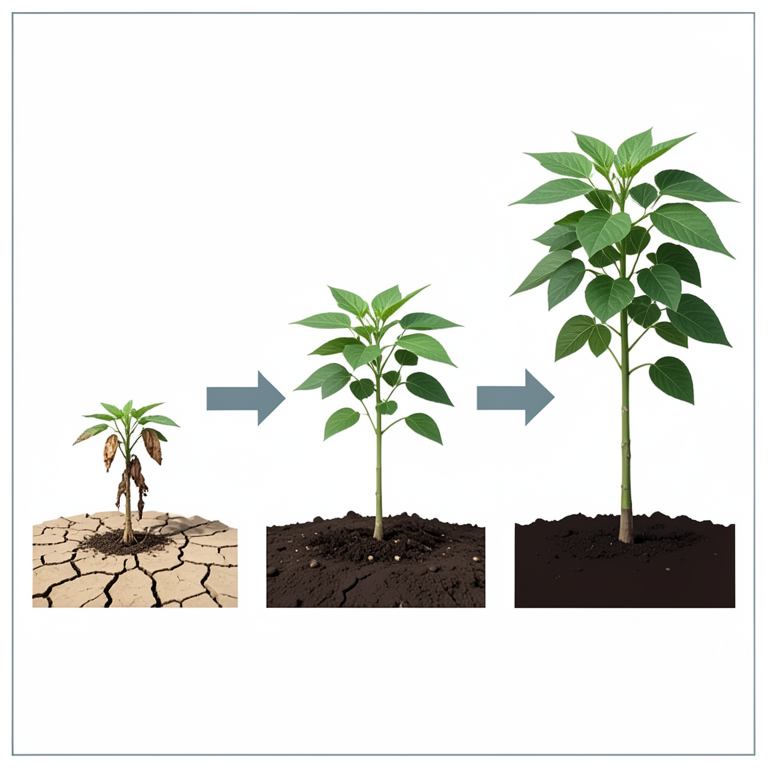
Seasonal Growth Comparison
AI-generated conceptual illustration (Jatropha curcas saplings). It explains the idea and does not show study data.
View source evidence ↗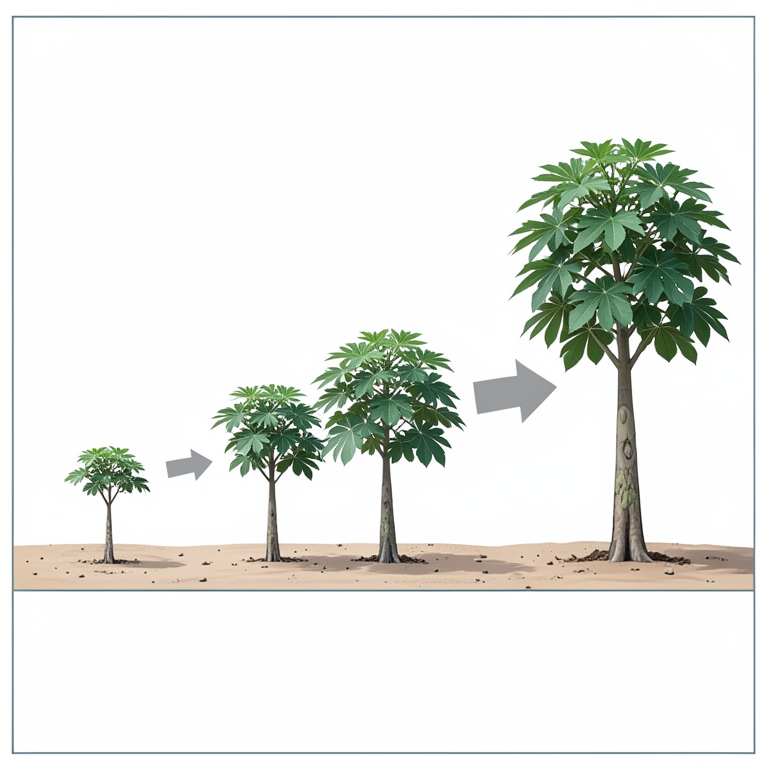
Provenance Performance
AI-generated conceptual illustration (Jatropha curcas plants). It explains the idea and does not show study data.
View source evidence ↗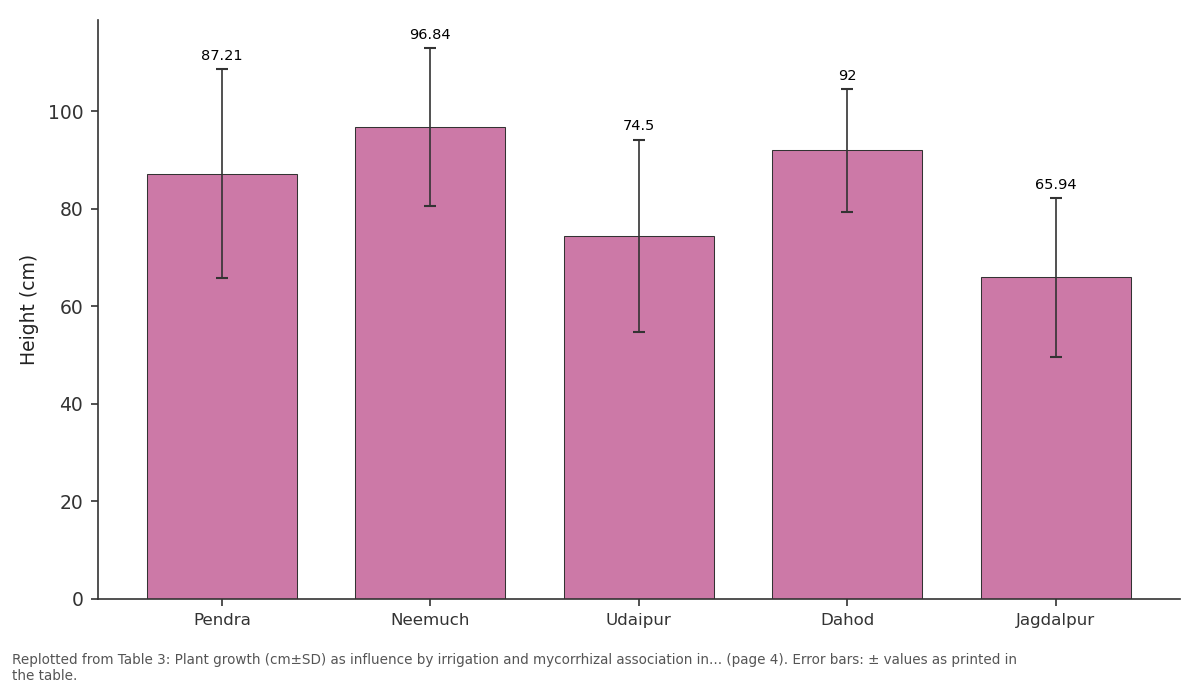
Summer / Height (cm): Pendra vs Neemuch vs Udaipur vs Dahod vs Jagdalpur
Replotted from Table 3 (page 4) of the original paper. Every bar is the paper's own table value.
View source evidence ↗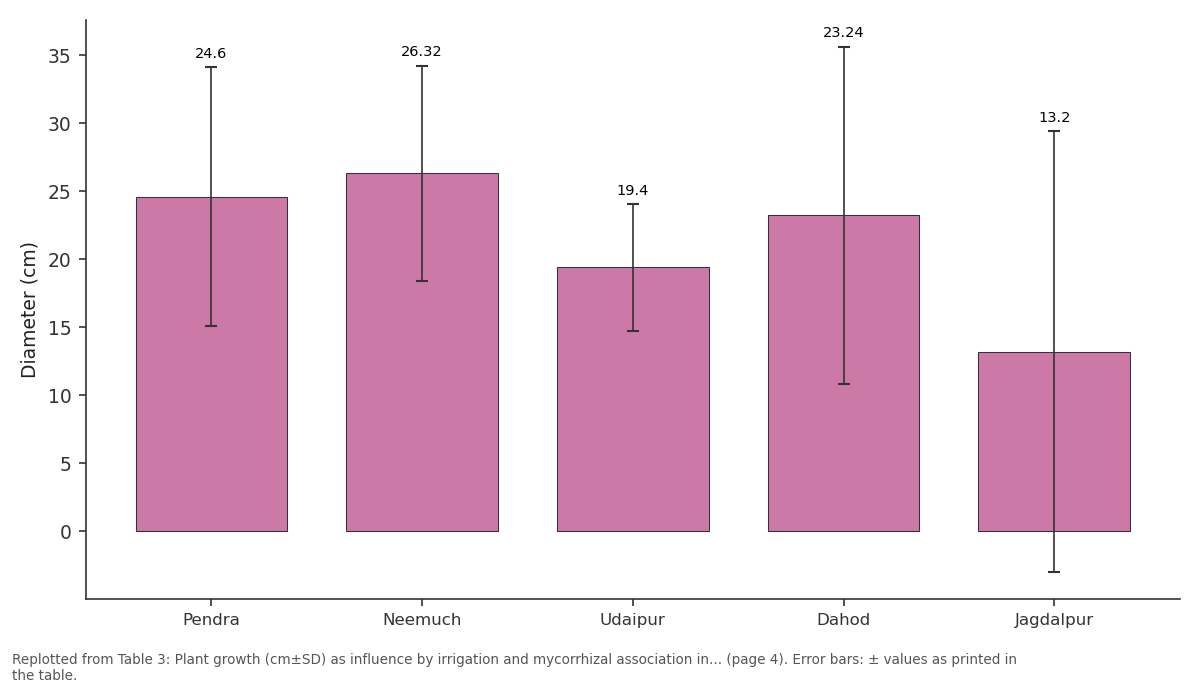
Diameter (cm): Pendra vs Neemuch vs Udaipur vs Dahod vs Jagdalpur
Replotted from Table 3 (page 4) of the original paper. Every bar is the paper's own table value.
View source evidence ↗Figures & tables
From the original paper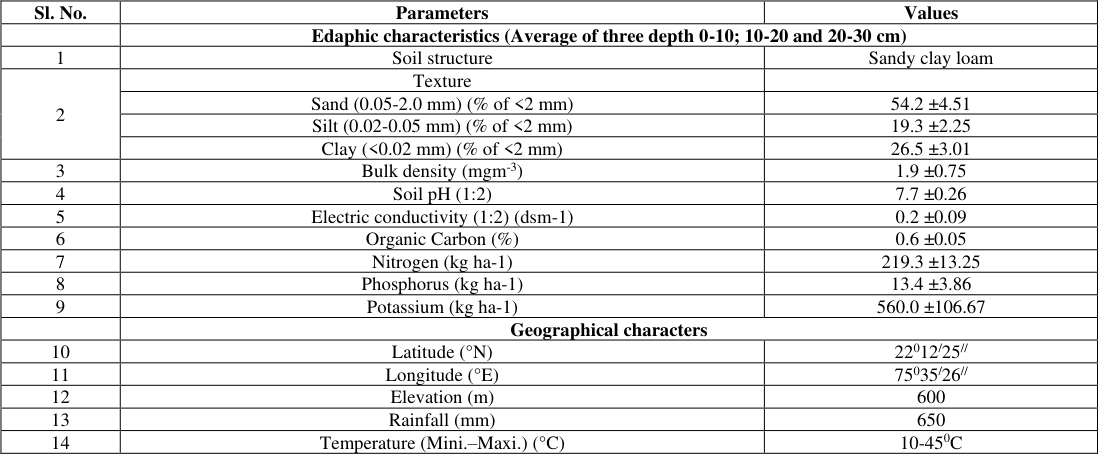 Table 1
 Table 2
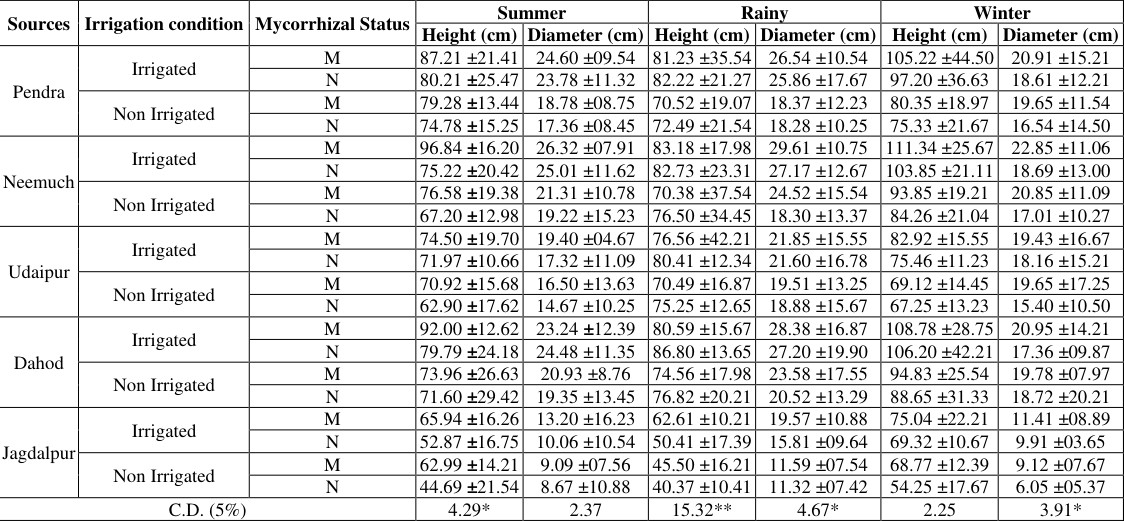 Table 3
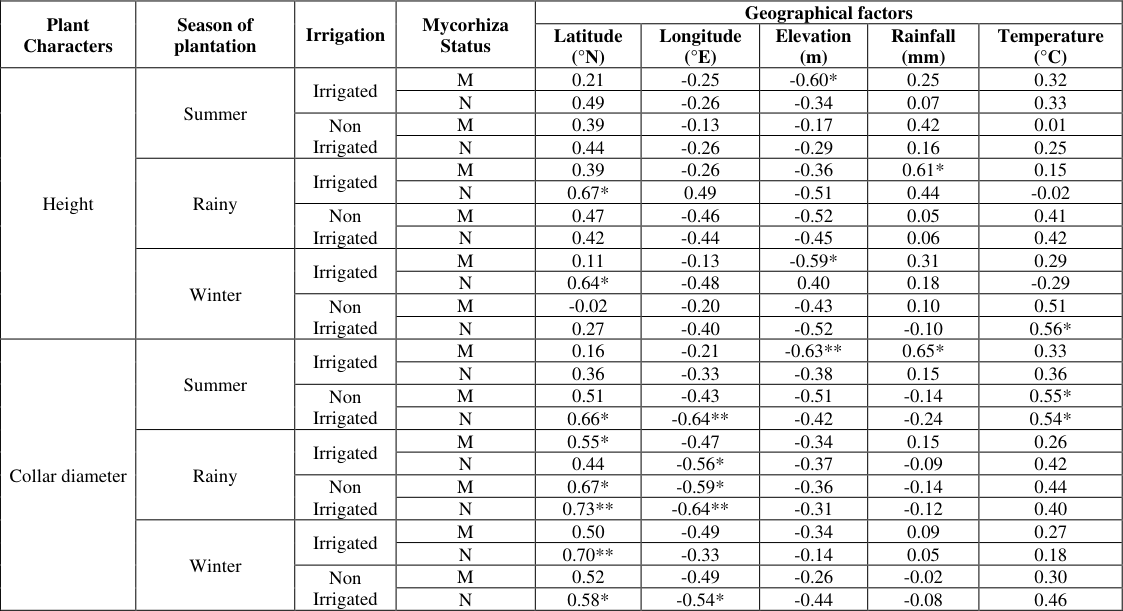 Table 4
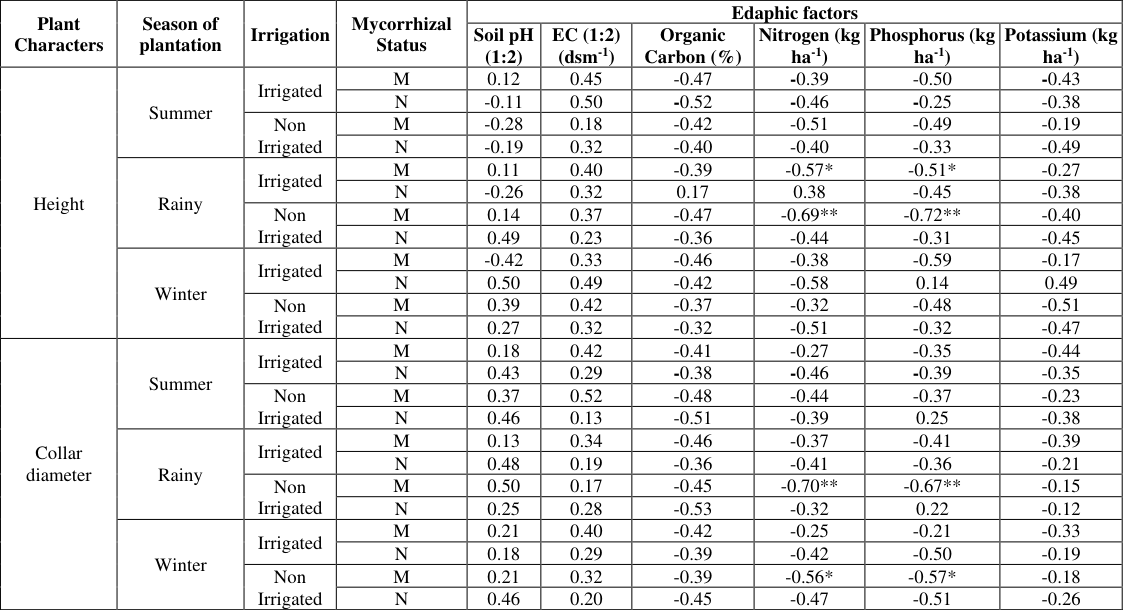 Table 5
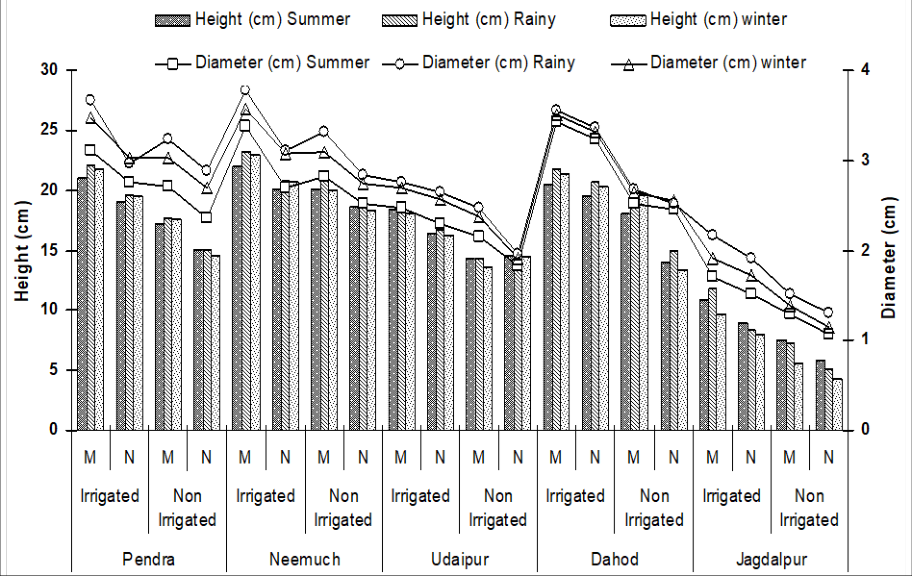 Figure 2
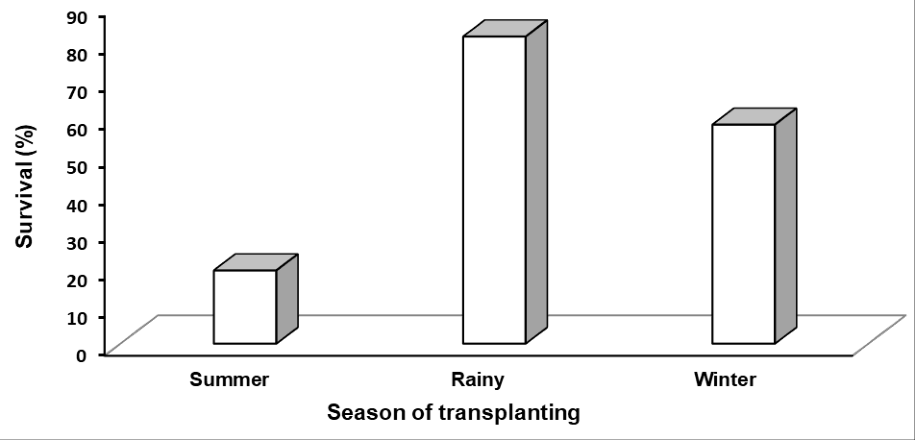 Figure 1
Introduction
"Countries lacking energy sources require the inclusion of alternative ones, with a high impact on the country's economy. This is the case of renewable energy and biofuels in particular." In the recent past, bio-diesel derived from plant species has been a major renewable source of energy. Among various plants Jatropha curcas and Pongamia pinnata have been chosen as most potential species for varying situations. Between these two species Jatropha curcas is considered most potential not only to the growers but also to the processors and end users. To the rural society, the crop can create regular employment opportunities, as it provides never ending marketing potential. Due to potential demand and better marketing opportunities, cultivation of Jatropha curcas appears viable. Jatropha curcas may not replace other important food crops since it is meant for flood free wastelands and unutilized fallow lands / less productive lands and in turn will not have a major impact on cropping pattern (Tedla et al., 2020; Singh et al., 2022; Arunyanark et al., 2023) [35,31,3] . Among the many species, which yield oil as a source of energy in the form of biodiesel, Jatropha curcas L. has been identified as most suitable oil seed bearing plant due to its various favourable attributes like hardy nature, short gestation period, adaptability in a wide range agroclimatic conditions, high oil recovery and quality of oil etc. It can be planted on degraded lands through Joint Forest Management (JFM), farmer's field boundaries, road sides, both sides railway track, fallow lands and as agro forestry crop. It grows up to a height of 5 m. and can be maintained to a desired height and shape by trimming and pruning. Planning Commission, Govt. of India has identified two species for mass production of seeds for biodiesel viz., J Jatropha curcas and Pongamia. J Jatropha curcas is suitable for upland while Pongamia found adaptive for both uplands as well as wetland conditions. Among these two species the following differences made Jatropha superior if otherwise the conditions are not unsuitable for it (Sarraf et al., 2011; Maftuchaha et al., 2020) [29,21] .
In India, the growth and management of J. curcas be it on private, public or community lands have been poorly documented with little field experience being shared amongst researchers and farmers. To reduce dependence on crude oil and to achieve energy independence by the year 2012, Jatropha has been promoted under the National Biodiesel Mission in India. The seed oil 'Jatropha oil' can be easily processed to partially or fully replace petroleum-based diesel fuel (Forson, 2004) [9] . Thus, the use of this plant for large-scale biodiesel production is of great interest with regard to solving the energy shortage, reducing carbon emission and increasing the income of farmers (Banerji et al., 1985; Martin and Mayeux, 1985; Gubitz et al., 1999; Keith, 2000; Zhou et al., 2006; Sarraf et al., 2011; Singh et al., 2022) [5,22,11,16,29,31] . Recently, the high yield of seeds from the tree (~5 t/ha/yr) and the high oil content of the seeds (~66.4%) attracted global attention for the development of J. curcas as a source of bio-fuel (Keith, 2000, Chen, et [16,7,1,19,24,2,29] . The plant can be propagated on a massive scale by direct seedling, planting stem cuttings, stumps and root cuttings. Hot and humid weather is preferred for good germination of seeds and plant growth. Therefore, keeping the above mentioned fact about the Jatropha the present study was sought to determine suitable period and situation specific propagation method and input management method for the cultivation Jatropha curcas for seed production in order to maintain genetic purity, uniformity and gainful exploitation of useful variation, and also to meet the required demand for high-quality planting material at commercial scale.
Materials and Methods
The present study was carried out with five provenances were selected from Madhya Pradesh, Chhattisgarh, Rajasthan and Gujarat, at the research and demonstration farm of Ruchi Bio Fuels Pvt. Ltd. at village Gawla Talab, Maheshwar District-Khargone M.P located between 22 o 12 / 25 // N latitude, 75 0 35 / 26 // E longitude with an elevation of 600 meter from sea level, The soil texture of the experiment site is sandy clay loam having 54.2, 19.3 and 26.5% of sand, silt and clay, respectively. Soil colour varied from red at the upper part of the experimental site to dark brown at the lower part. Blocking was done perpendicular to the soil gradient and slope and available nitrogen originate inferior (219.3 kg/ha) and available potassium was determined higher (560 kg/ha) side as per requirement of species in soil. Mean annual rain fall ranges from 500 to 650 mm and occurs during a single rainy season extending from June to September. Mean annual temperatures range from 10 ºC to 45 ºC. Sometimes the area experiences frost from December to January (Table 1.) Homogeneous dimension cuttings about 25 cm long and 5 cm in diameter were collected from five selected provenances of Neemuch (Madhya Pradesh), Pendra and Jagdalpur (Chhattisgarh), Udaipur (Rajasthan) and Dahod (Gujarat) (Table 2). Uniformed sized seedlings of an average height of 45 cm and a root collar diameter of 11 mm are using for the experiment. 150 seedlings were planted in 10 replications inside 30 cm deep and 15 cm diameter pits by using soil mixture of 1:1:1 of soil, sand and FYM. Transplanting of seedlings was done in the season of summer (April-May), rainy (June-July) and winter (November-December) from the nursery to the plantation site. Mycorrhiza @ 2g/plant was also applied in soil at the time of plantation, uniform water intensity level was maintained through drip irrigation by the capacity of 2 lts/hrs. (drip diameter 32 mm) and duration of irrigation was fixed as 4 hrs. per week. Spot weed management practices were done after two months of planting. The total plant density was maintained as1000 sapling/acre in entire plantation side. The planting densities was chosen after Singh et al. (2007) [34] and Heller (1996) [12] recommendations that J. curcas planting densities for commercial plantations be 2500 stems/ha. Measurements were done on all the plants in the plots after three month of plantation. Plant survival was determined after three months of planting by using following formula.
| SN. | Location | Latitude (°N) | Longitude (°E) | Elevation (m) | Rainfall (mm) | Temperature (Mini.–Maxi.) (°C) |
|---|---|---|---|---|---|---|
| 1 | Pendra (Chhattisgarh) | 22.76 | 81.95 | 591 | 1060 | 9.5-40.3 |
| 2 | Neemuch (MP) | 24.27 | 74.52 | 452 | 950 | 12.5-40.5 |
| 3 | Udaipur (Rajasthan) | 28.11 | 70.25 | 600 | 665 | 08.0-46.2 |
| 4 | Dahod (Gujarat) | 22.53 | 74.19 | 313 | 680 | 15.0-45.0 |
| 5 | Jagdalpur (Chhattisgarh) | 19.07 | 82.03 | 552 | 860 | 10.0-41.5 |
Table text extracted from the original PDF; superscript letters are shown inline. The original table image is below.
View original table image
| Sl. No. | Parameters | Values |
|---|---|---|
| Edaphic characteristics (Average of three depth 0-10; 10-20 and 20-30 cm) | ||
| 1 | Soil structure | Sandy clay loam |
| 2 | Texture | |
| Sand (0.05-2.0 mm) (% of <2 mm) | 54.2 ±4.51 | |
| Silt (0.02-0.05 mm) (% of <2 mm) | 19.3 ±2.25 | |
| Clay (<0.02 mm) (% of <2 mm) | 26.5 ±3.01 | |
| 3 | Bulk density (mgm-3) | 1.9 ±0.75 |
| 4 | Soil pH (1:2) | 7.7 ±0.26 |
| 5 | Electric conductivity (1:2) (dsm-1) | 0.2 ±0.09 |
| 6 | Organic Carbon (%) | 0.6 ±0.05 |
| 7 | Nitrogen (kg ha-1) | 219.3 ±13.25 |
| 8 | Phosphorus (kg ha-1) | 13.4 ±3.86 |
| 9 | Potassium (kg ha-1) | 560.0 ±106.67 |
| Geographical characters | ||
| 10 | Latitude (°N) | 22012/25// |
| 11 | Longitude (°E) | 75035/26// |
| 12 | Elevation (m) | 600 |
| 13 | Rainfall (mm) | 650 |
| 14 | Temperature (Mini.–Maxi.) (°C) | 10-450C |
Table text extracted from the original PDF; superscript letters are shown inline. The original table image is below.
View original table image
Plants established-Total plants dead x 100 Total plants established
Growth in height and root collar diameter was measured after three months after planting, using a height rod and a verneer caliper, respectively. Plant height was measured as the distance in cm. However, in some of the plants, the apical meristem was damaged by herbivores, frost or pathogens. In these cases, branch leader meristems were considered for height measurement (Balderrama and Chazdon, 2005) [4] . The data was statistically analyzed for 3 3 Factorial Randomized Design and analysis of variance (ANOVA) was done for all trials and simple correlation (r) was calculated following the method of Shnedecor and Cochran (1967) [30] .
Results and Discussion
Survival data showed that saplings established during rainy season (81.42%) outperformed (p>0.05) and those planted during winter and summer season exhibited 58.07, and 19.41%, respectively. In turn, Jatropha curcas planted during winter season outperformed (p<0.05) the ones propagated in summer season in terms of survival (Fig 1). This observation is scientifically sensible because the cultivation of seedlings under closely monitored nursery conditions gives them a physiological advantage over plants established by direct planting of either seed or cuttings. The well-developed root system and stem increase the potential to survive water and other stresses. Although the cultivated seedlings were observed to initially lose leaves due to transplantation shock, the roots and stem organs enabled them to quickly develop new leaves thereby increasing chances of survival. Thus, pre-cultivated seedlings easily adapted to the harsh, less controlled field environment than nonrooted cuttings and seed. However, during winter, plants established by planting pre-cultivated seedlings were the most affected, losing their apical meristems to frost, forcing the plants to develop some shoots in response tothe loss of apical dominance. This is consistent with observations by Wini et al.
(2006) [36] and Singh et al. (2007) [34] that J. curcas cannot withstand frost. The mortality was mainly attributed to frost which attacked the saplings' shoots during winter (Wini et al., 2006; Singh et al., 2007) [36,34] and defoliation by mammals, rodents and locusts (Heller, 1992 [27,32] and thus impacted on shoot length and basal diameter resulting in the lack of significant difference between J. curcas established by pre-cultivated seedlings and seedlings.
It may be possible that the effect of the transplanting shock was prolonged enough to overshadow the established root system and shoot advantage characteristic of pre-cultivated seedlings (Singh et al., 2024) [32] . Mean annual increment in height and basal diameter growth of three year old plant has represented in fig 2. Significant (p<0.05) different were noticed for height and basal diameter in all provinces studied but there was no significant (p>0.05) different was found in growth characters of various sources while were planted in different season. However maximum growth was found in Neemuch, followed by Dahod and Pendra, whereas, the minimum growth found in Udaipur and Jadalpur provinces with mycorrhizal association in irrigated condition and in nonmycorrhizal application of rainfed condition as well. This might be because of unlike pre-cultivated seedlings, directly planted seed need to germinate and survive the critical, early stages of growth and development which occurs in an unpredictable natural environment characterized by harsh weather conditions and pests and diseases. This partly explains the high mortality observed on J. curcas established by direct seeding. Similar results were observed elsewhere (Kobilke, 1989; Heller, 1992 [17, 11, 8 32] . Salisbury and Ross (1992) [28] explained that the period from germination to the time the seedling becomes established as an independent organism constitute the most critical phase in the life history of the plant. During this period, the plant is most susceptible to injury by a wide range of insect pests and parasitic fungi and water stress can prove to be fatal. Direct field observations from this study attributed the high mortality to pests and diseases chief of which were damping off (Heller, 1992; Singh, 1983) [11,33] , defoliation by millipedes (Heller, 1992) [11] , locusts (Heller, 1996) [12] , termites and rodents ( 5). For the correlation matrix it is observed that there are certain trials like collar diameter and shoot length which have influencing to weight of the seedling and significant correlation (p<0.05) were obtained shoot weight and root weight with collar diameter. This incidence that the differences observed for morphological trials pertaining to seeds may very well be influenced by seasonal variation of respective sources spread over an immense geographical area, experiencing varied environmental conditions. Since the experiment was conducted under a uniform condition where the environmental deviations are negligible, therefore the observed phenotype value will be equivalent to the genotype value. With this assumption the differences observed for grown seedling trials could be genetic in nature. Similar observations were also made by Ginwal et al. (1996) [10] for Acacia nilotica. Neelu et al., (2000) [25] , Iverson et al., (2002) [14] and Hossain et al., (2004) [13] are also opined that considerable variation occurs in germination capacity of seeds of Pongamia pinnata from different places under different conditions (Muhammad et al., 2020; Sarraf et al., 2011) [24,29] .
Conclusion
The results of the present study determined that the seeds were collected from the source of Neemuch performed well again to other sources under nursery condition of Maheshware. Dahod and pendra collection is also being valuable for the conservation of genetic variation, prospects of improvement and assessment of the potential of the locally adapted accession source. Transplant was done during the rainy season exhibited best survival and growth with mycorrhizal association. The apparent variability in growth performance during rainy season with mycorrhiza application indicates that economic benefits may be obtained. These sources can safely be used for large-scale reforestation programmes in the region for high seed yield and vegetative growth. Germplasm used in afforestation programmes in India and other countries, generally utilizes only locally available material. Thus opportunities for using materials with higher yield potential or with more desirable characteristics might have been missed. This work will facilitate selection of promising accessions for multi-location evaluation and will also hasten the process of utilization of germplasm. It further gives a direction to the effect and practice studies for genetic improvement of this species.
Figures and tables from the paper
| Sources | Irrigation condition | Mycorrhizal Status | Summer | — | Rainy | — | Winter | — |
|---|---|---|---|---|---|---|---|---|
| Height (cm) | Diameter (cm) | Height (cm) | Diameter (cm) | Height (cm) | Diameter (cm) | |||
| Pendra | Irrigated | M | 87.21 ±21.41 | 24.60 ±09.54 | 81.23 ±35.54 | 26.54 ±10.54 | 105.22 ±44.50 | 20.91 ±15.21 |
| N | 80.21 ±25.47 | 23.78 ±11.32 | 82.22 ±21.27 | 25.86 ±17.67 | 97.20 ±36.63 | 18.61 ±12.21 | ||
| Non Irrigated | M | 79.28 ±13.44 | 18.78 ±08.75 | 70.52 ±19.07 | 18.37 ±12.23 | 80.35 ±18.97 | 19.65 ±11.54 | |
| N | 74.78 ±15.25 | 17.36 ±08.45 | 72.49 ±21.54 | 18.28 ±10.25 | 75.33 ±21.67 | 16.54 ±14.50 | ||
| Neemuch | Irrigated | M | 96.84 ±16.20 | 26.32 ±07.91 | 83.18 ±17.98 | 29.61 ±10.75 | 111.34 ±25.67 | 22.85 ±11.06 |
| N | 75.22 ±20.42 | 25.01 ±11.62 | 82.73 ±23.31 | 27.17 ±12.67 | 103.85 ±21.11 | 18.69 ±13.00 | ||
| Non Irrigated | M | 76.58 ±19.38 | 21.31 ±10.78 | 70.38 ±37.54 | 24.52 ±15.54 | 93.85 ±19.21 | 20.85 ±11.09 | |
| N | 67.20 ±12.98 | 19.22 ±15.23 | 76.50 ±34.45 | 18.30 ±13.37 | 84.26 ±21.04 | 17.01 ±10.27 | ||
| Udaipur | Irrigated | M | 74.50 ±19.70 | 19.40 ±04.67 | 76.56 ±42.21 | 21.85 ±15.55 | 82.92 ±15.55 | 19.43 ±16.67 |
| N | 71.97 ±10.66 | 17.32 ±11.09 | 80.41 ±12.34 | 21.60 ±16.78 | 75.46 ±11.23 | 18.16 ±15.21 | ||
| Non Irrigated | M | 70.92 ±15.68 | 16.50 ±13.63 | 70.49 ±16.87 | 19.51 ±13.25 | 69.12 ±14.45 | 19.65 ±17.25 | |
| N | 62.90 ±17.62 | 14.67 ±10.25 | 75.25 ±12.65 | 18.88 ±15.67 | 67.25 ±13.23 | 15.40 ±10.50 | ||
| Dahod | Irrigated | M | 92.00 ±12.62 | 23.24 ±12.39 | 80.59 ±15.67 | 28.38 ±16.87 | 108.78 ±28.75 | 20.95 ±14.21 |
| N | 79.79 ±24.18 | 24.48 ±11.35 | 86.80 ±13.65 | 27.20 ±19.90 | 106.20 ±42.21 | 17.36 ±09.87 | ||
| Non Irrigated | M | 73.96 ±26.63 | 20.93 ±8.76 | 74.56 ±17.98 | 23.58 ±17.55 | 94.83 ±25.54 | 19.78 ±07.97 | |
| N | 71.60 ±29.42 | 19.35 ±13.45 | 76.82 ±20.21 | 20.52 ±13.29 | 88.65 ±31.33 | 18.72 ±20.21 | ||
| Jagdalpur | Irrigated | M | 65.94 ±16.26 | 13.20 ±16.23 | 62.61 ±10.21 | 19.57 ±10.88 | 75.04 ±22.21 | 11.41 ±08.89 |
| N | 52.87 ±16.75 | 10.06 ±10.54 | 50.41 ±17.39 | 15.81 ±09.64 | 69.32 ±10.67 | 9.91 ±03.65 | ||
| Non Irrigated | M | 62.99 ±14.21 | 9.09 ±07.56 | 45.50 ±16.21 | 11.59 ±07.54 | 68.77 ±12.39 | 9.12 ±07.67 | |
| N | 44.69 ±21.54 | 8.67 ±10.88 | 40.37 ±10.41 | 11.32 ±07.42 | 54.25 ±17.67 | 6.05 ±05.37 | ||
| C.D. (5%) | 4.29* | 2.37 | 15.32** | 4.67* | 2.25 | 3.91* |
Table text extracted from the original PDF; superscript letters are shown inline. The original table image is below.
View original table image
| Plant Characters | Season of plantation | Irrigation | Mycorhiza Status | Geographical factors | — | — | — | — |
|---|---|---|---|---|---|---|---|---|
| Latitude (°N) | Longitude (°E) | Elevation (m) | Rainfall (mm) | Temperature (°C) | ||||
| Height | Summer | Irrigated | M | 0.21 | -0.25 | -0.60* | 0.25 | 0.32 |
| N | 0.49 | -0.26 | -0.34 | 0.07 | 0.33 | |||
| Non Irrigated | M | 0.39 | -0.13 | -0.17 | 0.42 | 0.01 | ||
| N | 0.44 | -0.26 | -0.29 | 0.16 | 0.25 | |||
| Rainy | Irrigated | M | 0.39 | -0.26 | -0.36 | 0.61* | 0.15 | |
| N | 0.67* | 0.49 | -0.51 | 0.44 | -0.02 | |||
| Non Irrigated | M | 0.47 | -0.46 | -0.52 | 0.05 | 0.41 | ||
| N | 0.42 | -0.44 | -0.45 | 0.06 | 0.42 | |||
| Winter | Irrigated | M | 0.11 | -0.13 | -0.59* | 0.31 | 0.29 | |
| N | 0.64* | -0.48 | 0.40 | 0.18 | -0.29 | |||
| Non Irrigated | M | -0.02 | -0.20 | -0.43 | 0.10 | 0.51 | ||
| N | 0.27 | -0.40 | -0.52 | -0.10 | 0.56* | |||
| Collar diameter | Summer | Irrigated | M | 0.16 | -0.21 | -0.63** | 0.65* | 0.33 |
| N | 0.36 | -0.33 | -0.38 | 0.15 | 0.36 | |||
| Non Irrigated | M | 0.51 | -0.43 | -0.51 | -0.14 | 0.55* | ||
| N | 0.66* | -0.64** | -0.42 | -0.24 | 0.54* | |||
| Rainy | Irrigated | M | 0.55* | -0.47 | -0.34 | 0.15 | 0.26 | |
| N | 0.44 | -0.56* | -0.37 | -0.09 | 0.42 | |||
| Non Irrigated | M | 0.67* | -0.59* | -0.36 | -0.14 | 0.44 | ||
| N | 0.73** | -0.64** | -0.31 | -0.12 | 0.40 | |||
| Winter | Irrigated | M | 0.50 | -0.49 | -0.34 | 0.09 | 0.27 | |
| N | 0.70** | -0.33 | -0.14 | 0.05 | 0.18 | |||
| Non Irrigated | M | 0.52 | -0.49 | -0.26 | -0.02 | 0.30 | ||
| N | 0.58* | -0.54* | -0.44 | -0.08 | 0.46 |
Table text extracted from the original PDF; superscript letters are shown inline. The original table image is below.
View original table image
| Plant Characters | Season of plantation | Irrigation | Mycorrhizal Status | Edaphic factors | — | — | — | — | — |
|---|---|---|---|---|---|---|---|---|---|
| Soil pH (1:2) | EC (1:2) (dsm-1) | Organic Carbon (%) | Nitrogen (kg ha-1) | Phosphorus (kg ha-1) | Potassium (kg ha-1) | ||||
| Height | Summer | Irrigated | M | 0.12 | 0.45 | -0.47 | -0.39 | -0.50 | -0.43 |
| N | -0.11 | 0.50 | -0.52 | -0.46 | -0.25 | -0.38 | |||
| Non Irrigated | M | -0.28 | 0.18 | -0.42 | -0.51 | -0.49 | -0.19 | ||
| N | -0.19 | 0.32 | -0.40 | -0.40 | -0.33 | -0.49 | |||
| Rainy | Irrigated | M | 0.11 | 0.40 | -0.39 | -0.57* | -0.51* | -0.27 | |
| N | -0.26 | 0.32 | 0.17 | 0.38 | -0.45 | -0.38 | |||
| Non Irrigated | M | 0.14 | 0.37 | -0.47 | -0.69** | -0.72** | -0.40 | ||
| N | 0.49 | 0.23 | -0.36 | -0.44 | -0.31 | -0.45 | |||
| Winter | Irrigated | M | -0.42 | 0.33 | -0.46 | -0.38 | -0.59 | -0.17 | |
| N | 0.50 | 0.49 | -0.42 | -0.58 | 0.14 | 0.49 | |||
| Non Irrigated | M | 0.39 | 0.42 | -0.37 | -0.32 | -0.48 | -0.51 | ||
| N | 0.27 | 0.32 | -0.32 | -0.51 | -0.32 | -0.47 | |||
| Collar diameter | Summer | Irrigated | M | 0.18 | 0.42 | -0.41 | -0.27 | -0.35 | -0.44 |
| N | 0.43 | 0.29 | -0.38 | -0.46 | -0.39 | -0.35 | |||
| Non Irrigated | M | 0.37 | 0.52 | -0.48 | -0.44 | -0.37 | -0.23 | ||
| N | 0.46 | 0.13 | -0.51 | -0.39 | 0.25 | -0.38 | |||
| Rainy | Irrigated | M | 0.13 | 0.34 | -0.46 | -0.37 | -0.41 | -0.39 | |
| N | 0.48 | 0.19 | -0.36 | -0.41 | -0.36 | -0.21 | |||
| Non Irrigated | M | 0.50 | 0.17 | -0.45 | -0.70** | -0.67** | -0.15 | ||
| N | 0.25 | 0.28 | -0.53 | -0.32 | 0.22 | -0.12 | |||
| Winter | Irrigated | M | 0.21 | 0.40 | -0.42 | -0.25 | -0.21 | -0.33 | |
| N | 0.18 | 0.29 | -0.39 | -0.42 | -0.50 | -0.19 | |||
| Non Irrigated | M | 0.21 | 0.32 | -0.39 | -0.56* | -0.57* | -0.18 | ||
| N | 0.46 | 0.20 | -0.45 | -0.47 | -0.51 | -0.26 |
Table text extracted from the original PDF; superscript letters are shown inline. The original table image is below.
View original table image
References
38 in the original paper- Adebowale KO, Adedire CO. Chemical composition and insecticidal properties of the underutilized Jatropha curcas seed oil. Afr J Biotechnol. 2006;10:901-906.
- Adebusuyi GA, Oyedeji OF, Alaje VI, Sowunmi IL, Dunmade YA. Morphological diversity in growth characteristics of Jatropha curcas L. accessions from South-West Nigeria. Nig J Biotech. 2021;38(1):109-119.
- Arunyanark A, Tanya P, Liangsakul P, Srinives P. Genotype performance and relationship between leaf traits, biomass yield and wood quality on interspecific hybrids of Jatropha. Agr Nat Resour. 2023;57:309-320.
- Balderrama SIV, Chazdon RC. Light-dependent seedling survival and growth of four tree species in Costa Rican second-growth rain forests. J Trop Ecol. 2005;21:383-395.
- Banerji R, Chowdhury AR, Misra G, Sudarsanam G, Verma SC, Srivastava GS. Jatropha curcas seed oils for energy. Biomass. 1985;8:277-282.
- Biswas S, Kaushik N, Srikanth G. Biodiesel: Technology and Business Opportunities-An Insight. Papers presented at the Biodiesel Conference Towards Energy IndependenceFocus on Jatropha, Rashtrapati Nilayam, Bolaram, Hyderabad, India. 2006.
- Chen YX, Mao ZQ, Wu ZB, Zhu HP, Tang ZY. Comprehensive exploitation and utilization of Jatropha oil plants. China Oils Fats. 2006;31:63-65.
- Feike T, Weis K, Claupein W, Mueller J. Propagation of physic nut (Jatropha curcas L.) on Leyte Island, Philippines. Conference contribution, Tropentag, Witzenhausen, Germany. 2007.
- Forson FK. Performance of Jatropha oil blends in a diesel engine. Renew Energy. 2004;29:1135-1145.
- Ginwal HS, Gera M, Srivastava RL. Seed source variability in some seed and seedling characteristics of twenty provenances of Acacia nilotica Willd. EX. Del. Range Management & Agroforestry. 1996;17(1):49-59.
- Gubitz GM, Mittelbach M, Trabi M. Exploitation of the tropical seed plant Jatropha curcas L. Bioresour Technol. 1999;67:73-82.
- Kovac, Hamburg. 1992.
- Heller J. Physic nut. Jatropha curcas L. Promoting the conservation and use of underutilized and neglected crops. Institute of Plant Genetics and Crop Plant Research, Gatersleben, International Plant Genetic Resources Institute, Rome. 1996.
- Hossain MK, Hossain MS, Koilara B. Acacia auriculiformis provenances for large-scale plantation in degraded hilly areas of Bangladesh. J Trop Forest Sci. 2004;16(2):265-267.
- Iversen P, Jensen JS, Mtika J. Assessment of four Neem (Azadirachta indica A. Juss) international provenance trials in Tanzania. Forest Genetic Resources. 2002;30:36-39.
- Kar AK, Das A. New records of fungi from India. Indian Phytopathol. 1988;41(3):505.
- Keith O. A review of Jatropha curcas: an oil plant of unfulfilled promise. Biomass Bioenergy. 2000;19:1-15.
- Kobilke H. Jatropha curcas a promising agroforestry crop. Shree Offset Press, Nashik. 1989.
- Jatropha, Rashtrapati Nilayam, Bolaram, Hyderabad, India. 2006.
- Li K, Yang WY, Li L, Zhang CH, Cui YZ, Sun YY. Distribution and development strategy for Jatropha curcas L. For Stud China. 2007;9:120-126.
- Maftuchah B, Zainudin A, Winaya A, Rahmadesi Y. Biodiesel generated from Jatropha (Jatropha curcas Linn.) seeds selected based on various genotypes crossbred. Energy Report. 2020;6(8):345-350.
- Maftuchaha B, Zainudinb A, Ikhwanb A, Winayac A, Purnamab A, Sudarmod H. The potential of physic nut (Jatropha curcas Linn.) hybrid plant as a source of biodiesel at different planting location for dry land utilization. Energy Report. 2020;6(1):921-926.
- Martin G, Mayeux A. Curcas oil (Jatropha curcas L.): a possible fuel. Agric Troop. 1985;9:73-75.
- Meshram PB, Joshi KC. A new report of Spodoptera litura (Fab.) Boursin (Lepidoptera: Noctuidae) as a pest of Jatropha curcas Linn. Indian Forester. 1994;120(3):273274.
- Muhammad M, Muhammad S, Abbas G, Muhammad AR, Mustafa A, Syed AS, et al. Evaluating the contribution of growth physiological, ionic components towards salinity and drought stress tolerance in Jatropha curcas. Plant. 2020;9(11):1574-1592.
- Neelu Gera, Gera M, Purohit M. Source variation in seed germination characteristics in Acacia nilotica Will. Ex. Del. Seed Research. 2000;28(1):27-31.
- Rao VR. The Jatropha Hype: Promise and Performance. Papers presented at the Biodiesel Conference Towards Energy Independence-Focus on Jatropha, Rashtrapati Nilayam, Bolaram, Hyderabad, India. 2006.
- Sakurai N, Kuraishi S. Water potential and mechanical properties of the cell wall of hypocotyls of dark-grown squash under water stress conditions. Plant Cell Physiol. 1988;29(8):1337-1343.
- Salisbury FB, Ross CW. Plant Physiology. 4th Edition, Wadsworth Publishing Company, Belmont, California. 1992.
- Sarraf A, Singh K, Singh AK, Dubey S. Deviation on seed germination, growth and biomass performance of Jatropha curcas L. as predisposed by plantation period and water intensity. J Interacademicia. 2011;15(4):535-543.
- Shnedecor GW, Cochran WG. Statistical methods, VI Edn. Oxford and IBH, New Delhi. 1967;593.
- Singh K, Dhingra N, Singh N. Effect of different soil and weeding management on early field performance and establishment of Jatropha curcas L. Int. J Sci. Res (IJSR). 2022;11(6):1132-1139.
- Singh K, Wasnik G, Afrayeem S. Clonal propagation of Jatropha curcas L. Influenced by growth hormones and different treatment of root media. Inter J Tro Agri. 2024;42(1&2):Accepted.
- Singh ID. New leaf spot diseases of two medicinal plants. Madras Agric J. 1983;70(7):490.
- Singh RA, Munish K, Haider E. Synergistic cropping of summer groundnut with Jatropha curcas. A new two-tier cropping system for Uttar Pradesh. ICRISAT journal. 2007;5(1):1-2.
- Tedla A, Minale M, Eshetu R. Determination of the Upper Limit Age of Jatropha curcas Plantation for Optimum Yield Production. Asian Bus Rev. 2020. p. 37-42.
- Wini SP, Osman M, Emmanuel DS, Sreedevi T. Improved livelihoods and environmental protection through biodiesel plantations in Asia. Asian Biotechnology and Development Review. 2006;8(2):11-29.
- Zhou H, Lu H, Liang B. Solubility of multi-component systems in the biodiesel production by trans esterification of Jatropha curcas L. oil with methanol. J Chem Eng. Data. 2006;51:1130-1135.