
Research article · 2024 · Full text
International Journal of Veterinary Sciences and Animal HusbandryImpact of awareness campaigns on sustainable development in ecologically sensitive areas
Volume 9(3S) · Pages 03–07 · DOI: 10.22271/veterinary.2024.v9.i3sa.1367 ↗
Research areasTourism, Volunteerism, and DevelopmentEnvironmental Education and Sustainability
Abstract
Author-writtenThe escalating challenges of wildlife habitat reduction and human-animal conflicts demand urgent attention from conservationists and governments worldwide. Among the pivotal stakeholders in this endeavor are the tribal communities residing around protected areas. Recognizing their pivotal role, this study delves into the awareness levels and attitudes of tribal populations in five villages in Gondia, India, towards jungles, wildlife, and cohabitation challenges. Employing a questionnaire-based approach, the study initially gauges the baseline awareness among tribal communities. Subsequently, an awareness campaign comprising pamphlet distribution and seminars was conducted, followed by a reassessment of the communities' awareness levels. Results indicate a notable awareness among tribal populations regarding the significance of forests, with a significant increase in awareness regarding the use of artificial insemination and the drawbacks of electrical fencing around farms. However, the study reveals a prevalent aversion among tribal communities towards the presence of wild animals in their vicinity, particularly elephants, underscoring the necessity for targeted interventions. The urgent need to address wildlife habitat reduction and human-animal conflicts is evident, with tribal communities around protected areas playing a crucial role. This study highlights their awareness levels and attitudes toward conservation efforts in Gondia.
Summary
Source-checkedPlain-language reading of the full paper, prepared with AI and checked against the text. Each point links to the authors' own words.
Why it matters
- Global conservation efforts are urgently needed to address the reduction of wildlife habitats and the resulting conflicts between humans and animals. View evidence ↗
- Ensuring the survival of both humans and wildlife depends on protecting natural habitats and encouraging tribal communities to accept wild animals. View evidence ↗
- Providing tribal communities with modern animal husbandry knowledge and improved breeds can reduce pressure on natural resources and improve local economies. View evidence ↗
The question
- The study aims to understand how tribal communities contribute to wildlife conservation and how to foster collaboration for sustainable coexistence. View evidence ↗
What they did
- Researchers used questionnaires to assess awareness of forests and wildlife among residents of five tribal villages in Gondia, India. View evidence ↗
- The study implemented an awareness campaign using seminars and the distribution of pamphlets to engage the community in conservation. View evidence ↗
- The researchers used chi-square analysis with a significance threshold of P < 0.05 to compare responses before and after the campaign. View evidence ↗
What they found
- Awareness of forest conservation was already high at 83.33% before the campaign and remained unchanged afterward. View evidence ↗
- Preference for artificial insemination for cow breeding increased significantly from 63.33% to 86.67% (P = 0.036) following the campaign. View evidence ↗
- Willingness to coexist with wild animals decreased slightly from 33.33% to 26.66% after the campaign, a result that was not statistically significant. View evidence ↗
- Opposition to electrical fencing increased significantly from 50% to 80% (P = 0.0163) after the campaign. View evidence ↗
What it means
- The authors conclude that awareness campaigns are effective in changing certain attitudes and behaviors regarding wildlife management and conservation. View evidence ↗
- The authors recommend further targeted efforts to address deep-rooted perceptions to better mitigate conflicts and promote coexistence. View evidence ↗
- The study notes that raising awareness alone may be insufficient to create meaningful shifts in community attitudes toward wildlife. View evidence ↗
Figures & tables
From the original paper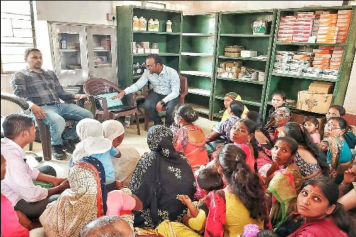 Figure 1
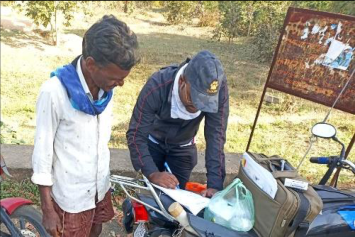 Figure 1
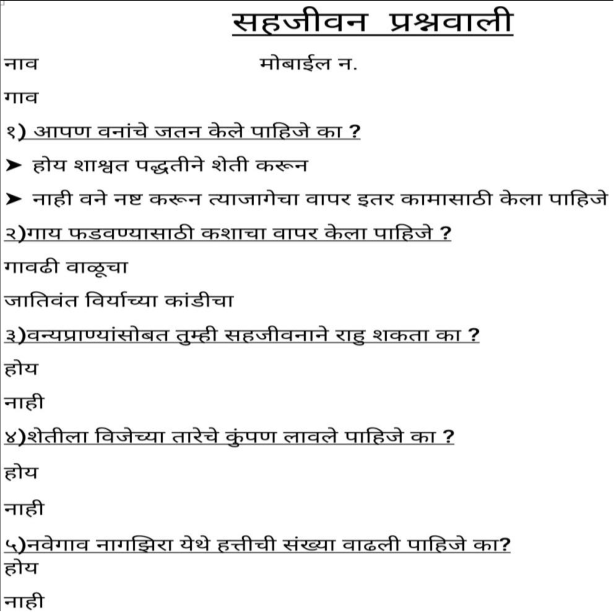 Figure 2
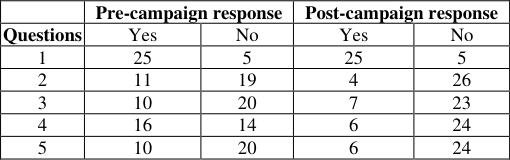 Table 1
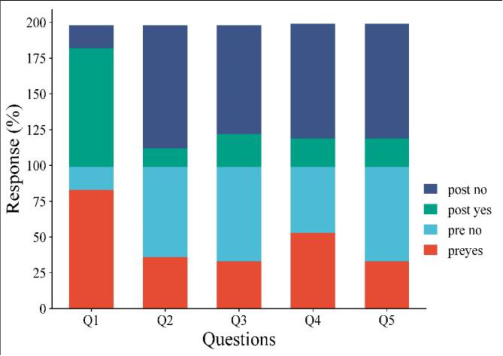 Figure 3
Introduction
India stands as a beacon of biodiversity, boasting a rich tapestry of flora and fauna that places it among the world's most cherished wildlife habitats. With iconic species like tigers, lions, and elephants roaming its landscapes, India earns its reputation as a global biodiversity hotspot. Maharashtra, in particular, shines as a sanctuary of diverse ecosystems, harboring six tiger reserves and nine wildlife sanctuaries (Tritsch, 2001; Soni, 2020) [1,2] . Within the northeastern expanse of Maharashtra lies the Vidarbha region, home to a unique tropical dry deciduous forest nestled within the Satpuda ranges. Despite its ecological splendor, Vidarbha grapples with challenges like soaring temperatures, inadequate infrastructure, and widespread poverty, especially among its substantial tribal populace (Gudadhe et al., 2012; Gudadhe et al., 2020) [3,4] . The pressing issue of wildlife habitat reduction and human-animal conflicts confronts conservationists and governments globally. Rural communities, especially those reliant on protected areas for their livelihoods, bear the brunt of these challenges (Rodgers, 1989; Gadgil, 1990; Mishra et al., 1992) [7,5,6] . With India's burgeoning population, currently the largest globally with an average age of 28 years, the coexistence of humans and wildlife is at a critical juncture. Protecting these natural habitats and fostering acceptance of wild animals among tribal communities is paramount for the survival of both humans and wildlife. In this context the protected areas of the country and the peoples living around these protected areas are the keys to resolve the problem. The tribal peoples around protected areas should be the main focus of the government and conservationist as acceptance of wild animals by these peoples and simultaneously sustainable development of their own is seems to be the only way the wild animals and humans can thrive until the population starts to decline so that our natural resources could be saved for the next generation. These tribal communities, deeply rooted in traditional agricultural and husbandry practices, often find themselves marginalized, lacking access to modern technologies that could uplift their livelihoods (Gour et al., 2015; Gandhale et al., 2022) [8,9] . By equipping these communities with modern resources and knowledge-such as advanced animal husbandry techniques and improved livestock breeds-it becomes possible to alleviate pressure on natural resources while simultaneously bolstering tribal economies. Artificial insemination emerges as a pivotal tool in this pursuit, offering the promise of transforming local livestock into high-yielding breeds capable of reducing grazing pressures and enhancing tribal livelihoods (Meena et al., 2007) [10] . However, effective conservation and sustainable coexistence with wildlife require more than just technological advancements. Bridging the communication gap between tribal communities, governmental bodies, and conservationists becomes paramount. This necessitates targeted awareness campaigns and meaningful community engagement initiatives aimed at fostering understanding and cooperation among stakeholders. Recognizing the pivotal role of tribal communities in wildlife conservation, particularly in the realm of animal husbandry practices, this study embarks on a comprehensive exploration. The objective is to elucidate the contributions of tribal communities to wildlife conservation and to cultivate collaboration for sustainable coexistence with wildlife. Focused within the tribal regions of Gondia, encompassing five villages, the study employs questionnaires to assess the awareness levels of residents regarding forests, wild animals, and the challenges associated with cohabiting with wildlife. Subsequently, an awareness campaign is implemented through pamphlet distribution and seminar facilitation, aimed at disseminating study findings and fostering community engagement in wildlife conservation discussions. Through this study and the subsequent awareness campaign, the aim is to empower tribal communities to assume more active roles in wildlife conservation endeavors and to bridge the gap between them, governmental bodies, and conservationists.
Materials and Methods Study Area Selection
The present study was conducted in five purposively selected villages surrounding the Navegaon-Nagzira Tiger Reserve, namely Kulpa, Sonekhari, Sitepar, Alezari, and Balapur (Fig 1).
Pre-Awareness Campaign Data Collection
Prior to the implementation of any awareness campaign, the questionnaire was randomly distributed among residents and farmers of the selected villages. This pre-awareness campaign data collection aimed to establish a baseline understanding of the community's perspectives and practices regarding wildlife conservation and farming.
Awareness Campaign Implementation and data collection
An extensive awareness campaign was conducted, encompassing educational seminars, widespread distribution of informational pamphlets, and direct engagement with the local community to disseminate relevant information and foster understanding. Subsequent to the culmination of the awareness campaign, the same questionnaire was readministered to the residents and farmers of the selected villages to gauge any shifts in perceptions or attitudes following exposure to the campaign.
Selection of Response Samples
Thirty responses were meticulously selected from both preand post-awareness campaign questionnaires for in-depth scrutiny and statistical analysis. These chosen responses were specifically from individuals who participated in both the pre and post-campaign assessments. This meticulous selection process aimed to determine the effectiveness and impact of the awareness campaign on the targeted population.
Data analysis
The data collected from the pre-and post-awareness campaign questionnaires were subjected to rigorous statistical analysis to discern any significant changes or trends in the responses of the participants. This analysis involved employing chi-square test to compare the responses before and after the intervention. Furthermore, qualitative insights gleaned from the direct interactions during the awareness campaign were also considered to provide a comprehensive understanding of the community's perceptions and receptivity to the conservation messages conveyed.
Results
The survey data was segregated into two phases: precampaign and post-campaign, and subjected to chi-square analysis with a significance level of P < 0.05 indicating statistical significance. The pre-and post-campaign responses depicted in table 1. Concerning the initial survey question about the significance of forest conservation, our findings indicate no notable changes in positive attitudes following the awareness campaign. Prior to the commencement of the awareness campaign, a majority of respondents, comprising 83.33%, exhibited a positive inclination toward forest conservation, while a minority, constituting 16.67%, espoused a negative response. Subsequent to the campaign, the distribution of responses remained consistent, with the same proportion of individuals retaining their preference for the initial response.
| — | Pre-campaign response | — | Post-campaign response | — |
|---|---|---|---|---|
| Questions | Yes | No | Yes | No |
| 1 | 25 | 5 | 25 | 5 |
| 2 | 11 | 19 | 4 | 26 |
| 3 | 10 | 20 | 7 | 23 |
| 4 | 16 | 14 | 6 | 24 |
| 5 | 10 | 20 | 6 | 24 |
Table text extracted from the original PDF; superscript letters are shown inline. The original table image is below.
View original table image
In the subsequent question regarding the preferred breeding method for cows, respondents were presented with the options of utilizing local bulls or opting for artificial insemination with high-breed bulls. In the pre-campaign phase, 36.67% of respondents opted for local bulls, while the majority, accounting for 63.33%, leaned towards artificial insemination. However, following the awareness campaign, a significant shift occurred, with a remarkable increase in respondents preferring artificial insemination, reaching 86.67%. Utilizing a chi-square test, the statistical analysis revealed a P value of 0.036, signifying a significant disparity between pre and postcampaign data. In another question probing the possibility of coexisting with wild animals in their vicinity, 33.33% of respondents expressed a willingness to coexist, while the majority, constituting 66.66%, opted for a negative response in the pre-campaign phase. However, in the post-campaign phase response, a slight shift was observed, with 26.66% of respondents choosing the affirmative response, and 73.33% selecting the negative response. Statistical analysis revealed a non-significant result, indicating that there was no significant difference between pre and post-campaign data regarding the willingness of individuals to coexist with wild animals in their vicinity.
During the pre-campaign phase, the study's findings regarding the fourth question revealed a balanced perspective among respondents. Specifically, it was noted that 50% of participants favored the adoption of electrical fencing as a means to protect farms from wildlife intrusion. Conversely, an equal proportion of respondents advocated for refraining from its use. This symmetrical distribution of opinions reflected the existing discourse on the effectiveness and ethical considerations surrounding electric fencing in agriculture. However, the dynamics shifted notably during the post-campaign period, revealing a substantial shift in public opinion. Surprisingly, up to 80% of participants now strongly advocated against the use of electrical fencing to protect farms from wildlife incursions. This drastic increase in opposition to electric fencing was accompanied by a statistically significant p-value of 0.0163, indicating a robust and meaningful change in attitudes. In question five of the survey, it was found that 33.33% of the respondents were in favor of increasing the elephant population in the Navegaon-Nagzira Tiger Reserve, while 66.67% expressed opposition to this proposition. This division of opinions highlights a significant divergence within the community regarding the management of elephant populations in the reserve. Furthermore, the post-campaign analysis revealed that there was no significant difference between the pre and postcampaign data. Percentage-wise presentation of pre-and postcampaign responses for all questions as illustrated in fig 3.
Overall, this study revealed a significant improvement in post-awareness campaign responses compared to preawareness campaign responses, suggesting an enhanced level of awareness within the community. However, it is evident that additional endeavors are required to amplify this awareness.
Discussion
Long histories of sharing space and resources have forged complex, resilient, and enduring relationships between humans and wildlife in many communities worldwide. To comprehend the dynamics enabling cohabitation between humans and wildlife, we must extend our gaze beyond ecological and socio-economic studies of damages wrought by human-wildlife conflict. We need to delve into the cultural and social context within which coexistence is entrenched (Nair et al., 2021) [11] . The survey conducted in this study initially examined the importance of forest conservation, revealing no significant shift in attitudes following the campaign. The majority of respondents maintained their positive inclination toward forest conservation both before and after the campaign, indicating a consistent level of awareness in this regard. Artificial insemination (AI) has played a pivotal role in the dairy cattle industry since its commercial availability in the 1940s, significantly shaping the genetic composition of national dairy herds (Meena et al., 2007) [10] . However, the accessibility of AI facilities remains a challenge for farmers seeking to enhance the productivity and disease resistance of their local animals. In many villages, the scarcity of AI facilities forces farmers to resort to natural services for breeding their cattle and buffaloes. Nevertheless, a significant shift towards the preference for artificial insemination over the use of local bulls has been observed following awareness campaigns in this study. This change suggests a meaningful impact on farming practices, indicating an improved understanding among farmers of the benefits associated with AI. The findings highlight a surge in community awareness regarding the advantages of modern breeding methods, which not only transform unproductive livestock into productive ones but also address grazing issues. These observations underscore the importance of ongoing efforts to promote and educate communities, especially tribal groups, about the benefits and implementation of artificial insemination. [12] . The research underscores significant concerns among tribal communities regarding wildlife, particularly regarding crop damage, perceived as a major issue in most villages. Crop losses are influenced by factors such as the proximity of the village to protected area borders, underscoring the necessity for targeted interventions to address human-wildlife conflicts. Achieving sustainable coexistence between humans and wildlife demands the development of innovative approaches to safeguard farm produce, livestock, and human life from wildlife intrusion. This necessitates practical solutions that address the concerns of local communities and secure their acceptance of wildlife in their vicinity. While raising awareness is crucial, the study suggests that it alone may not suffice to bring about meaningful shifts in community attitudes toward wildlife.
In the Vidarbha region, wildlife faces a significant threat from electrocution due to electrical fencing surrounding farms, with wildlife often falling victim to it. The study yielded significant results, indicating a substantial increase in public awareness about the drawbacks of using electrical fencing. The notable increase in opposition to electrical fencing among respondents highlights a growing recognition of its harmful effects on wildlife and the environment, prompting a reconsideration of traditional farming practices. Despite efforts to raise awareness and advocate for alternative methods of wildlife protection, the study found minimal shift in public sentiment regarding the presence of elephants in the vicinity. This stagnant response underscores deep-rooted negativity among the local populace towards the presence of elephants, suggesting the need for more targeted and nuanced approaches to address this issue effectively.
In conclusion, the study underscores the efficacy of awareness campaigns in shaping attitudes and behaviors related to conservation and wildlife management practices. It emphasizes the critical role of raising awareness and fostering community engagement in wildlife conservation efforts, particularly in regions prone to human-wildlife conflicts. Continued efforts are needed to cultivate a culture of conservation within communities, emphasizing ongoing education and engagement initiatives.
Conclusion
In conclusion, the analysis of pre-and post-campaign survey data reveals intriguing shifts in community attitudes and behaviors towards forest conservation and wildlife management practices. While the awareness campaign demonstrated a significant impact on certain aspects, such as promoting artificial insemination and raising awareness about the drawbacks of electric fencing, it showed limited influence on others, such as attitudes towards coexistence with wild animals and the presence of elephants in the vicinity. These findings underscore the importance of ongoing education and engagement initiatives in fostering a culture of conservation within communities, particularly in regions susceptible to human-wildlife conflicts. Despite the progress made, further targeted efforts are necessary to address deep-rooted perceptions and effectively mitigate conflicts while promoting sustainable coexistence between humans and wildlife.
Acknowledgement
AcknowledgmentWe extend our gratitude to Mr. Simpal G, Bansode and Mina Chandrakant Gajare for their invaluable assistance during the fieldwork and data collection process.
Figures and tables from the paper
References
8 in the original paper- Soni VK. Wildlife conservation in India: issues and challenges. Journal of Interdisciplinary Cycle Research. 2020;12(10):796-802.
- Gudadhe SK, Manik VS, Deshbhratar PB, Ramteke DS. Study of Levels of Heavy Metal in Soil under Amravati Municipal Jurisdiction, Maharashtra (India): Asian Journal of Experimental Science. 2012;26(2):11-18.
- Gudadhe SK, Niranjane MA, Manik VS. Junona Reserve Forest, Chandrapur, Vidarbha Region, India: A Biodiversity Study. Journal of Critical Reviews. 2020;7(16):1048-1052.
- Gadgil M. India's deforestation: patterns and processes. Society and Natural Resources. 1990;3:131-143.
- Gour S, Mandal MK, Singh R. Training needs assessment of tribal farmers of Madhya Pradesh in Animal Husbandry practices. Veterinary Clinical Sciences. 2015;3(4):17-21.
- Meena HR, Ram H, Singh SK, Mahapatra RK, Sahoo A, Rasool TJ. Animal husbandry practices at high altitude (> 6000 feet) in Kumaon region of Uttrakhand, India. Livestock Research for Rural Development. 2007, 19(163).
- Nair Ramya, et al. Sharing spaces and entanglements with big cats: The Warli and their Waghoba in Maharashtra, India. Frontiers in Conservation Science. 2021;2:683356.
- Korche M, Tokse S, Shirbhate S, Thakre V, Jolhe SP. Smart crop protection system. International Journal of Latest Engineering Science (IJLES), 2021;4(4):1-6.
Cited by 1
From OpenAlex, OpenCitations and reference lists read by Scinovex
- Adverse ecological changes along transitional buffer zone of Jim Corbett National Park increasing human-tiger conflict risk: geospatial approach ↗
M. S. Rawat, Ananya Rawat, Pradeep Kumar Rawat · Environmental Monitoring and Assessment · 2026
❝ 0