
Research article · 2024 · Full text
International Journal of Advanced Biochemistry ResearchImpact of glycated hemoglobin on iron deficiency anemia in type 2 diabetes mellitus
Volume 8(5) · Pages 160–164 · DOI: 10.33545/26174693.2024.v8.i5b.1080 ↗
Research areasDiabetes, Cardiovascular Risks, and LipoproteinsDiabetes Management and Research
Abstract
Author-writtenBackground:One of the key laboratory markers for tracking blood glucose levels throughout the previous two to three months is HbA1c. Numerous factors influence HbA1c levels, according to studies, thus this is not the sole test used to diagnose diabetes mellitus. Given the high prevalence of both diabetes mellitus and iron deficiency anaemia, it is necessary to assess how HbA1c affects Iron deficiency anaemia. Numerous elements include pregnancy, nutritional deficits, and haemolytic anaemia. Methodology: This cross-sectional study, conducted from 2023 to 2024 at Pacific Medical College and Hospital, involved 200 patients aged 30-65 years. Ethical approval was obtained. This study had two groups of participants. Group 1 included diabetic patients with iron deficiency anaemia and group 2 included diabetic patients without iron deficiency anaemia. Results:There is a noteworthy association observed between iron deficient anaemia and HbA1C. In diabetics with iron deficit anaemia, PCV, MCH, MCHC, and MCV are low, whereas in diabetics without iron deficiency anaemia, they are high. Prior designing treatment plan for iron deficiency anemia in type 2 diabetes mellitus patients, levels of HbA1c levels should be controlled. Conclusion: Control of Diabetes Mellitus is required to treat Iron Deficiency Anemia.
Summary
Source-checkedPlain-language reading of the full paper, prepared with AI and checked against the text. Each point links to the authors' own words.
Why it matters
- HbA1c is a critical laboratory marker used to track blood glucose levels over a period of two to three months. View evidence ↗
- Because both diabetes mellitus and iron deficiency anemia are highly prevalent, it is important to understand the relationship between HbA1c and iron deficiency anemia. View evidence ↗
- In diabetic patients, anemia can be caused by factors such as gastrointestinal bleeding and reduced iron absorption. View evidence ↗
The question
- The study aimed to determine the relationship between iron deficiency anemia (IDA) and HbA1c values in patients with diabetes. View evidence ↗
What they did
- The researchers conducted a cross-sectional study from 2023 to 2024 with 200 randomly selected patients from Pacific Medical College and Hospital. View evidence ↗
- Participants were adults between the ages of 30 and 65 years. View evidence ↗
- The study used a Sysmex Haematology analyser for red blood indices, a VITROS 5600 dry chemistry analyser for plasma glucose, and a BIORAD D 10 HPLC system for HbA1c. View evidence ↗
What they found
- Diabetic patients with iron deficiency anemia had significantly higher HbA1c levels (8.1) compared to those without iron deficiency anemia (6.1). View evidence ↗
- Mean hemoglobin levels were significantly lower in diabetic patients with IDA (9.5 ± 2.1 gm/dl) than in those without IDA (12.9 ± 1.9 gm/dl), with p < 0.0001. View evidence ↗
- Packed cell volume (PCV) was significantly lower in diabetic patients with IDA (31.5) compared to those without IDA (35.7), with p < 0.0001. View evidence ↗
- Mean corpuscular volume (MCV) was significantly lower in diabetic patients with IDA (78.7) than in those without IDA (81.3), with p < 0.0001. View evidence ↗
- Mean corpuscular hemoglobin (MCH) was significantly lower in diabetic patients with IDA (30.1) compared to those without IDA (39.3), with p < 0.0001. View evidence ↗
- Mean corpuscular hemoglobin concentration (MCHC) was significantly lower in diabetic patients with IDA (30.6) than in those without IDA (33.9), with p < 0.0001. View evidence ↗
- Red cell distribution width (RDW) was significantly lower in diabetic patients with IDA (12.9) compared to those without IDA (18.5), with p < 0.0001. View evidence ↗
What it means
- The authors recommend that HbA1c levels should be controlled before designing a treatment plan for iron deficiency anemia in patients with type 2 diabetes. View evidence ↗
- The authors conclude that there is a significant increase in HbA1c levels in diabetic patients who also have iron deficiency anemia compared to those who do not. View evidence ↗
- The authors state that large-scale studies are needed to better understand the enigmatic underlying processes. View evidence ↗
Visual summary
1 visualsIllustrations explain the paper; they do not show study data.
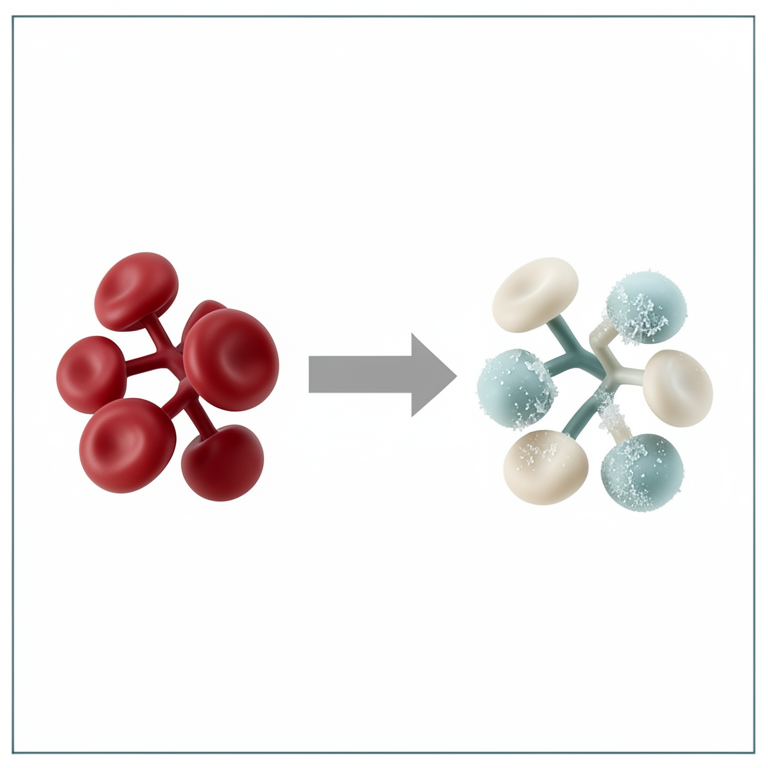
Relationship between IDA and HbA1c
AI-generated conceptual illustration (Human blood cells and hemoglobin molecules). It explains the idea and does not show study data.
View source evidence ↗Figures & tables
From the original paper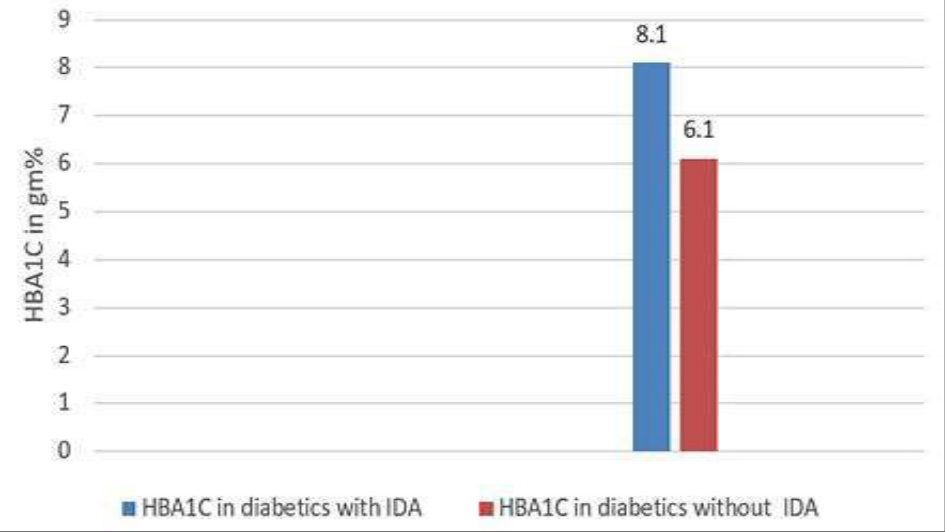 Figure 1
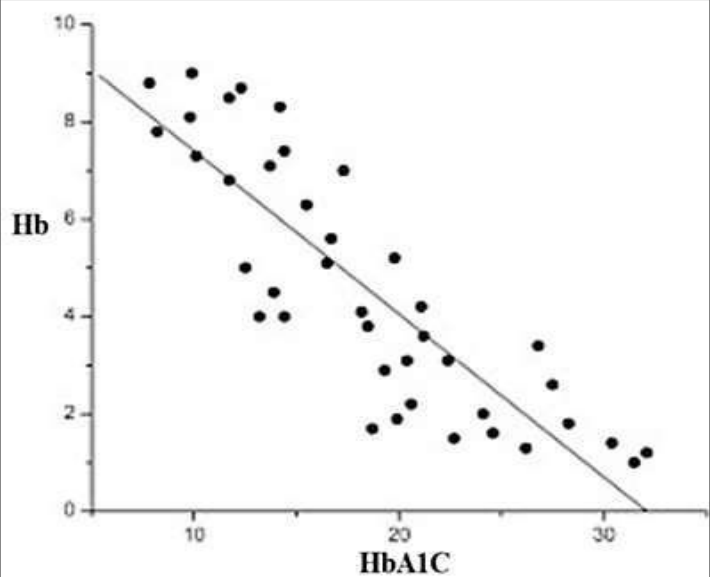 Figure 2
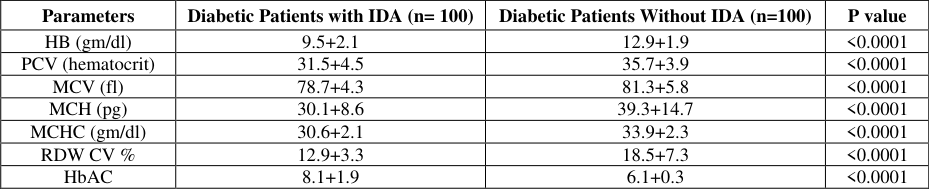 Table 1
Introduction
Anaemia is characterised by a decrease in the blood's ability to carry oxygen, and it is quantified by a Hb level cut-off value of less than 12.1 mg/dl for adult men and less than 13.0 mg/dl for adult women who are not pregnant [1] . The most frequent type of anaemia in India is iron deficient anaemia. A lack of iron can result from insufficient iron storage, poor iron utilisation, or increased iron loss. The haemoglobin molecule contains iron. Haemoglobin levels fall and red blood cell survival is decreased in chronic iron deficient anaemia. HbA1c have profound effect on All these changes. After receiving iron therapy, several researchers (Browns et al., Hansen et al., Coban et al.) discovered a significant drop in HbA1C in patients with diabetes who also had iron deficient anaemia [2][3][4] . Diabetes is a non-communicable metabolic disease characterised by persistent hyperglycemia caused by either inadequate insulin or insulin resistance. Globally, the number of people with diabetes is rising at an alarming rate. A sedentary lifestyle and increased prevalence of metabolic syndrome led to homeostatic imbalance. Insulin resistance leads to a disruption in glucose metabolism and its associated effects, particularly in muscle cells and adipocytes where glucose tolerance is reduced. Glycosylated haemoglobin is a more dependable test than plasma glucose estimates and urine glucose detection. The HbA1C test is quick and simple in comparison to the oral glucose tolerance test, and it also provides information on the patient's past glycemic status. While haemoglobin A1c (HbA1c) is the standard blood test used by the American Diabetic Association to diagnose diabetes, the relationship between HbA1c and anaemia has not been thoroughly studied [5] . HbA1C has proven to be a trustworthy indicator for diabetes screening as well as for making precise predictions about risks and consequences. HbA1C is created when glucose and the beta-chain N-terminal valine of the haemoglobin molecule combine to form an intermediate form of ketoamine. Glycation is the non-enzymatic addition of a sugar to a protein. It is a post-translational alteration that happens when blood glucose attaches to haemoglobin through the Amadori rearrangement. is an irreversible phenomenon as a result [6] . According to a theory, total haemoglobin continues to drop in cases of hyperglycemia associated with iron deficiency, although glycation proceeds at the same pace and HbA1C stays constant.The patient's glycemic condition throughout the preceding two to three months is reflected in the total rate of protein glycation, which is higher in cases of persistent hyperglycemia. The percentage of total haemoglobin to HbA1C is known as HbA1c. Additionally, the oxidative stress biomarker malondialdehyde speeds up the rate at which haemoglobin glycates. Reduced iron absorption, gastrointestinal bleeding, and related problems can all lead to anaemia in people with diabetes. Nephropathy-related problems strike 40% of diabetics. Anaemia is brought on by inflammatory cytokines and decreased renal function in diabetic nephropathy [7] . Advanced glycation end products (AGE) resulting from continuous hyperglycemia Increasing oxidative stress damages cells' DNA and triggers apoptosis [8] . Diabetes-related complications such as diabetic nephropathy can have an even greater effect on HBA1C levels because excessive uremic condition shortens the life span of red blood cells (RBCs) and carbamylated haemoglobin, which is generated in such environments, interferes with hemoglobin's glycosylation [9] . Diabetic autonomic neuropathy complicates and increases the incidence of anaemia in diabetes with CKD compared to non-diabetic controls by interfering with the generation of erythropoietin and reducing iron absorption [10] . Major antioxidant systems in RBCs are present, and anaemia causes oxidative stress and functionally deficient HDL particles. Most diabetes-related microvascular problems are directly related to anaemia [1] . The components of a complete blood count include WBC, PCV, RBC indices, MCH, MCHC, platelet count, and MCH. Glycation rate, mean age of red blood cells in the circulation, and HbA1C in reticulocytes upon release from the bone marrow are the three main variables that determine HbA1C levels. HbA1C levels are influenced by RBC longevity, which is unrelated to blood glucose levels [3] . Nitin et al. discovered a direct, unidirectional association between HbA1C levels and iron deficient anaemia. The current study was conducted to link HbA1C values in diabetics with IDA and diabetics without IDA since sustainable data is needed. A1C levels can be greatly impacted by several illnesses and pathological conditions, including anaemia and hemoglobinopathies, depending on the technique employed to assess HbA1C [11] . This makes it abundantly evident that additional research is required, particularly to determine the kinds and severity of anaemia that are most likely to have a substantial influence on the accuracy of HbA1C. Since the great majority of health conditions are caused by either iron deficiency anaemia or diabetes mellitus, it is crucial to rule out any variables that might alter the real levels. Considering all these variables, it becomes crucial to determine the impact that decreased haemoglobin has on the HbA1C levels in the diabetic population. Consequently, the current investigation was started to determine the relationship between iron deficient anaemia and HbA1C values.
Methodology
This cross-sectional study was conducted over one year from 2023 to 2024, involving 200 patients randomly selected from Pacific Medical College and Hospital, a tertiary care hospital. The present study obtained ethical approval from the institutional ethical committee before commencement. Criteria for diagnosis of diabetes mellitus include, fasting plasma glucose > 126 mg%, post prandial plasma glucose > 200 mg% and HbA1C > 6.5%. All the participants were given questionnaire regarding use of medications, food supplements, history of major surgery, smoking, physical activity. For diagnosis IDA, Diabetes mellitus using ADA and WHO criteria of 6.5%. Fasting blood glucose >126 mg% and post prandial blood glucose > 200 mg% Patients were anaemic when Hb < 13 gm in males and Hb < 12 gm in females. RBC indices used for diagnosis of microcytic hypochromic anaemia were MCV < 80 fl, MCH < 26 pg/L.
Inclusion Criteria
Inclusion Criteria
Exclusion Criteria
Individuals with a history of hemoglobinopathies, renal diseases, liver illnesses, or any other inflammatory ailments were not included in the study. Neither were participants using hematinic supplements. In a similar vein, participants in this trial were not allowed to have type 1 diabetes mellitus, complications from diabetes, severe illnesses, recent surgeries, trauma, acute blood loss, or transfusions. A questionnaire on medication usage, dietary supplements, history of major surgery, smoking, and physical activity was given to each participant.
Sample Collection
After overnight fasting, the sample was collected under all aseptic precautions by needle and syringe technique. After written informed consent, about 10 ml venous blood sample was collected in EDTA and fluoride bulb for estimation of red blood cell indices, HbA1C and plasma glucose respectively. Fasting as well as postprandial blood glucose estimations are done.
Sample Estimation
Red blood indices were estimated on Sysmex Haematology analyser, plasma glucose was analysed on VITROS 5600 dry chemistry analyser and HbA1C were BIORAD D 10 HPLC system.
Statistical Analysis
Data was analysed using SPSS software. Pearson's correlation, chi-square, and independent tests were calculated. The data was presented as mean + SD. A p value of < 0.05 was taken as statistically significant.
Results
In all, 200 patients with diabetes were involved in this investigation. There were two participant groups in this study. Patients with diabetes who also had iron deficiency anaemia made up Group 1, while patients with diabetes who did not have iron deficiency anaemia made up Group 2. In this study we found significantly elevated HBA1C levels in diabetic patients with IDA (8.1) as compared to diabetic patients without IDA (6.1). PCV in diabetic patients with IDA (31.5) is significantly low (p<0.0001) as compared to diabetic patients without iron deficiency anaemia (35.7).
MCV in diabetic patients with IDA (78.7) is significantly low (p<0.0001) as compared to diabetic patients without iron deficiency anaemia (81.3). MCH in diabetic patients with IDA (30.1) is significantly low (p<0.0001) as compared to diabetic patients without iron deficiency anaemia (39.3). MCHC in diabetic patients with IDA (30.6) is significantly low (p<0.0001) as compared to diabetic patients without iron deficiency anaemia (33.9). RDWin diabetic patients with IDA (12.9) is significantly low (p<0.0001) as compared to diabetic patients without iron deficiency anaemia (18.5).
Discussion
The most serious medical condition in the world is diabetes.
Complications and quality of life are two significant obstacles to the objective of therapy. Diabetes, a metabolic disease, affects the formation of red blood cells and modifies their appearance. Therefore, a great deal of research has been done to determine how diabetes affects red blood cell indices and how much anaemia can influence HbA1C levels. Patients in the first group had considerably lower mean haemoglobin than those in the second group. Similar research was conducted in Egypt and Bangladesh. as chronic hyperglycemia causes a significant percentage of the haemoglobin molecule to become glycated [3,4,[12][13] . Patients with diabetes had a higher chance of developing progressive renal disease, according to the NIDDM with Angiotensin II antagonist (RENAAL) study, which also revealed lower Hb levels [12] . The PCV and MCV levels of the first group are notably lower than those of the second. The observation might be attributed to oxidative damage and an inflammatory response brought on by a persistently hyperglycemic state [9] . Compared to group 2, MCH and MCHC are substantially lower in group 1. In diabetics, the production of free radicals changes the structure of red blood cells. An image with reduced haemoglobin is microcytic hypochronic [8] . One indicator of anisocytosis is RDW. Red cell distortion is suggested by a high RDW. In diabetes, oxidative stress is the cause because of ongoing hyperglycemia. The HBA1C values of the patients included in this study also exhibit a substantial association with the red blood cell indices as previously indicated [14] . According to Koga et al., RBC indices change with HBA1C regardless of plasma glucose levels [14] . Mean corpuscular volume (MCV) and HbA1C have been found by Rusak et al. to have a positive connection [7] . Our findings align with the analysis of the Diabetes Control and Complications Trial. According to this study, there is a substantial link between HBA1C levels and iron deficient anaemia [15] . Ford et al. have also reported comparable outcomes and significant changes in the HbA1c levels in diabetic individuals with or without iron deficiency anaemia before and after treatment with iron therapy [4] . Similar results were found by Kim et al. with a small upward change in HbA1C iron deficit [16] . According to English et al., IDA and iron deficiency are likely to have an impact on HbA1c, resulting in a false rise in HbA1c levels; on the other hand, non-IDA may cause a drop in HbA1c [10] . In their study, Hardikar et al. examined iron deficiency in young people to diagnose diabetes mellitus (DM) using HbA1C, which revealed elevated levels of MCV, MCH, MCHC, and RDW in comparison to non-anemic controls.The difference between the pre-and post-treatment HbA1c for anaemia was as much as 1.2% [11] .
All the body's organs experience cellular disruption due to an insulin shortage, which exacerbates diabetic problems. Unusual RBC features clearly indicate changes in hyperglycemia. Maintaining adequate glycemic control will help prevent issues from getting worse. Before beginning and continuing to monitor the patient's therapy for hyperglycemia, due consideration should be given to the patient's haemoglobin content and erythrocyte indices.
Conclusion
As compared to diabetic individuals without IDA, this study's findings indicate a considerable rise in HbA1C among IDA-positive diabetic patients. All these results are consistent with earlier research, and more research is needed to identify hazards associated with diabetes and its complications. When a patient has diabetes, iron replacement therapy and iron status correction become even more crucial. Large-scale studies are necessary to test the current ideas on the underlying process, which remain enigmatic. Further research is required to determine the nonglycemic variables influencing HbA1C levels. Alternative techniques for measuring HbA1C should be used for patients with IFG or prediabetes. It is necessary to look at iron deficient anaemia in these patients as well. Furthermore, a proven individualised strategy is necessary for the accurate diagnosis and ongoing care of diabetes mellitus and its chronic consequences. Given that anaemia and other variables have a substantial impact on HbA1C levels, it is critical to identify hyperglycemia accurately.
Figures and tables from the paper
| Parameters | Diabetic Patients with IDA (n= 100) | Diabetic Patients Without IDA (n=100) | P value |
|---|---|---|---|
| HB (gm/dl) | 9.5+2.1 | 12.9+1.9 | <0.0001 |
| PCV (hematocrit) | 31.5+4.5 | 35.7+3.9 | <0.0001 |
| MCV (fl) | 78.7+4.3 | 81.3+5.8 | <0.0001 |
| MCH (pg) | 30.1+8.6 | 39.3+14.7 | <0.0001 |
| MCHC (gm/dl) | 30.6+2.1 | 33.9+2.3 | <0.0001 |
| RDW CV % | 12.9+3.3 | 18.5+7.3 | <0.0001 |
| HbAC | 8.1+1.9 | 6.1+0.3 | <0.0001 |
Table text extracted from the original PDF; superscript letters are shown inline. The original table image is below.
View original table image
References
15 in the original paper- Naqash A, Bader GN. Influence of iron deficiency anemia on HbA1c: a review. Current Research Diabetes Obesity Journal. 2018;5(3):555665.
- Jaman M, Rahman S, Swarna RR, Mahato J, Miah M, Ayshasiddeka M. Diabetes and red blood cell parameters. Annals of Clinical Endocrinology and Metabolism. 2018;2.
- Gauci R, Hunter M, Bruce DG, Davis WA, Davis TE. Anaemia complicating type 2 diabetes: Prevalence, risk factors and prognosis. Journal of Diabetes and Its Complications. 2017;31(7):1169-1174.
- Hoque S, Muttalib MA, Islam MI, Khanam PA, Akter N, Akber T. Prevalence of Nephropathy with Evaluation of HbA1c Level and other Associated Risk Factors in Type 2 Diabetic Patients in a Tertiary Level Hospital. KYAMC Journal. 2017;8(1):21-26.
- Glycemic Targets: Standards of Medical Care in Diabetes-2021. Diabetes Care. 2021;44(Suppl 1):73-84.
- Klonoff DC. Hemoglobinopathies and hemoglobin A1c in diabetes mellitus. Journal of Diabetes Science and Technology. 2020;14(1):3-7.
- Rusak E, Rotarska-Mizera A, Adamczyk P, Mazur B, Polanska J, Chobot A. Markers of Anemia in Children with Type 1 Diabetes. Journal of Diabetes Research. 2018;2018:5184354.
- Adane T, Getaneh Z, Asrie F. RBC parameters and their correlation with renal function tests among diabetes mellitus patients: A comparative crosssectional study. Diabetes, Metabolic Syndrome and Obesity: Targets and Therapy. 2020;13:3937-3946.
- Risk Factors for Cardiovascular Disease in Type 1 Diabetes. Diabetes. 2016;65(5):1370-1379.
- Bhardwaj K, Sharma SK, Rajpal N, Sachdev A. Effect of iron deficiency anaemia on HbA1C levels. Annals of Clinical Laboratory Research. 2016;4(4):123.
- Ramaya K. India is home to 77 million diabetics, second highest in the world; 2019. Available from: https://www.thehindu.com/sci-tech/ health/india-hassecond-largest-number-of-people-with-diabetes/ article29975027.ece.
- Maheshwari VD, Capoor S, Chaturvedi S, Manglunia A, Singla A. Impact of iron and vitamin B12 anaemia at glycosylated hemoglobin level: a case control study. IOSR Journal of Dental and Medical Sciences. 2017;16(1):1-4.
- Schindler C, Birkenfeld AL, Hanefeld M, Schatz U, Köhler C, Grüneberg M, et al. Intravenous ferric carboxymaltose in patients with type 2 diabetes mellitus and iron deficiency: CLEVER trial study design and protocol. Diabetes Therapy. 2018;9(1):37-47.
- GuoW, Zhou Q, Jia Y, Xu J. Increased levels of Glycated hemoglobin and iron deficiency anaemia. A review. Medical Science Monitor. 2019;25:8371-8378.
- Solomon A, Hussein M, Negash M, Ahmed A, Bekele F, Kahase D. Effect of iron deficiency anemia on HbA1c in diabetic patients at Tikur Anbessa specialized teaching hospital, Addis Ababa Ethiopia. BMC Hematology. 2019;19(2). doi:10.1186/s12878-018-0132-1.