
Research article · 2024 · Full text
International Journal of Agriculture Extension and Social DevelopmentNutritional status and physical activity pattern of rural farm women
Volume 7(4) · Pages 642–644 · DOI: 10.33545/26180723.2024.v7.i4h.588 ↗
Research areasNutrition, Health and Food BehaviorHealth and Wellbeing ResearchObesity, Physical Activity, Diet
Abstract
Author-writtenWomen regarded as “Creator of all green things”. Besides performing domestic duties she provides crucial support to the family through the earning wages doing labor and carrying out household production activities. Agriculture is the largest industry in India and women constitute 50 per cent of the agricultural work force in our country. Women participate in almost all agricultural operations and recognized as backbone of Indian agriculture. The present study was conducted to assess the nutritional status and physical activity pattern of rural farm women of Kanpur district. To achieve the objective of the study sixty farm women from singhpur village were selected. Information regarding general profile, nutrient intake by 24 hour recall method was collected. Measurement of body weight, height, MUAC, waist and hip circumference were recorded (Gibson, 1990). Physical activity pattern of subjects was assessed by IPAQ and 24 hour physical activity recall method. Statistical analysis of the data was done and the result revealed that daily average nutrient intake of farm women was found to be less than RDA. Mean Body Mass Index (BMI) was found to be 19.39±1.52 which indicates energy deficit in rural farm women studied. Physical activity pattern revealed that rural farm women perform various activities related to agriculture; it was found that they spend maximum time in harvesting of crops during season. The study concludes that it is required to raise the nutritional status of farm women so that their efficiency can be increased.
Summary
Source-checkedPlain-language reading of the full paper, prepared with AI and checked against the text. Each point links to the authors' own words.
Why it matters
- Agriculture is India's largest industry, with women making up 50% of its workforce. View evidence ↗
- Rural women often perform 14 to 18 hours of physical labor daily across agricultural, allied, and domestic tasks. View evidence ↗
- Despite being food producers, the nutritional status of women in developing countries, including India, is often poor. View evidence ↗
The question
- The study aimed to evaluate the physical activity patterns and nutritional status of rural farm women in the Kanpur district. View evidence ↗
What they did
- Nutritional status was measured using a 24-hour recall method and compared against the ICMR 2020 Recommended Dietary Allowances (RDA). View evidence ↗
- Anthropometric measurements included height, weight, mid-upper arm circumference (MUAC), and waist and hip circumference. View evidence ↗
- The International Physical Activity Questionnaire (IPAQ) was used to assess the physical activity patterns of the participants. View evidence ↗
What they found
- The average daily energy intake was 1805±163.5 kcal, which is only 80.94% of the RDA (2230 kcal). View evidence ↗
- Protein intake was significantly low, with a mean of 28.47±2.24g, representing only 51.76% of the RDA (55g). View evidence ↗
- Iron intake averaged 9.21±2.47mg, which is 43.85% of the RDA (21mg). View evidence ↗
- The mean Body Mass Index (BMI) was 19.39±1.52 kg/m², indicating a low normal physiological status. View evidence ↗
- The average mid-upper arm circumference (MUAC) was 10.49±0.52 cm. View evidence ↗
- Approximately 91.66% of the women were involved in land preparation, seed preparation, and sowing. View evidence ↗
What it means
- The authors conclude that providing nutrition education to farm women is urgent to ensure balanced diets for themselves and their families. View evidence ↗
- The authors recommend that agricultural policies and programs become more sensitive to the health and productivity needs of farm families. View evidence ↗
- The authors note that the continued use of laborious traditional agricultural methods increases drudgery, which negatively affects nutritional status and productivity. View evidence ↗
Visual summary
2 visualsIllustrations explain the paper; charts are replotted from the paper's own table values.
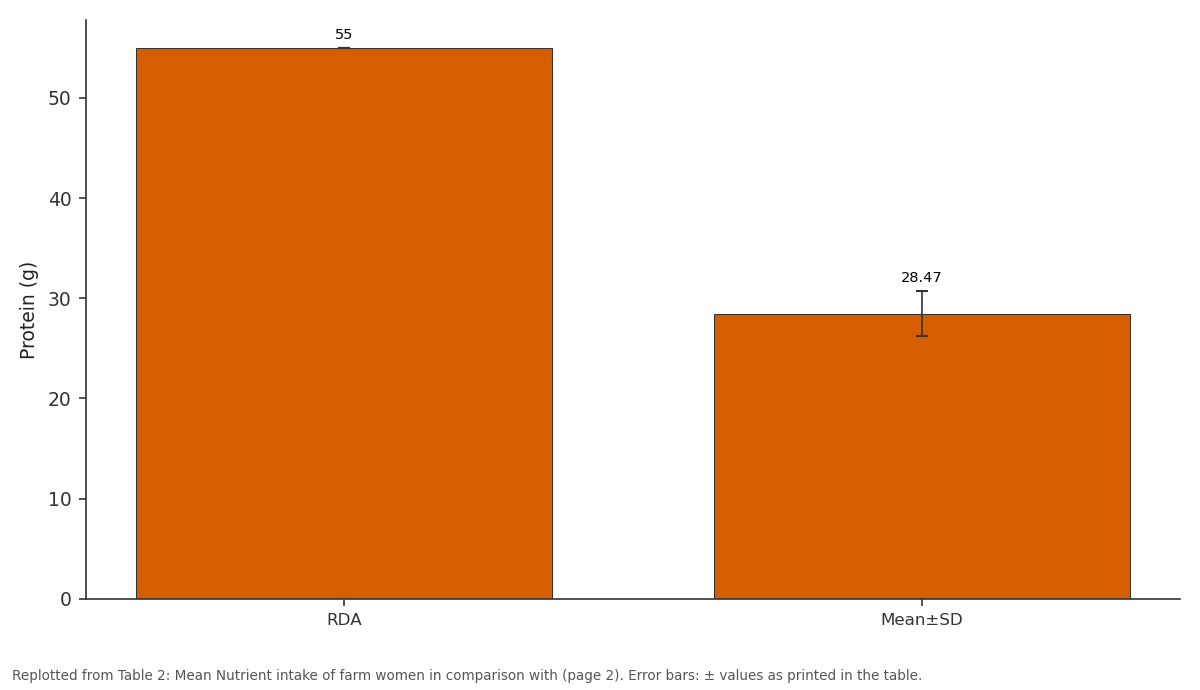
Protein (g): RDA vs Mean±SD
Replotted from Table 2 (page 2) of the original paper. Every bar is the paper's own table value.
View source evidence ↗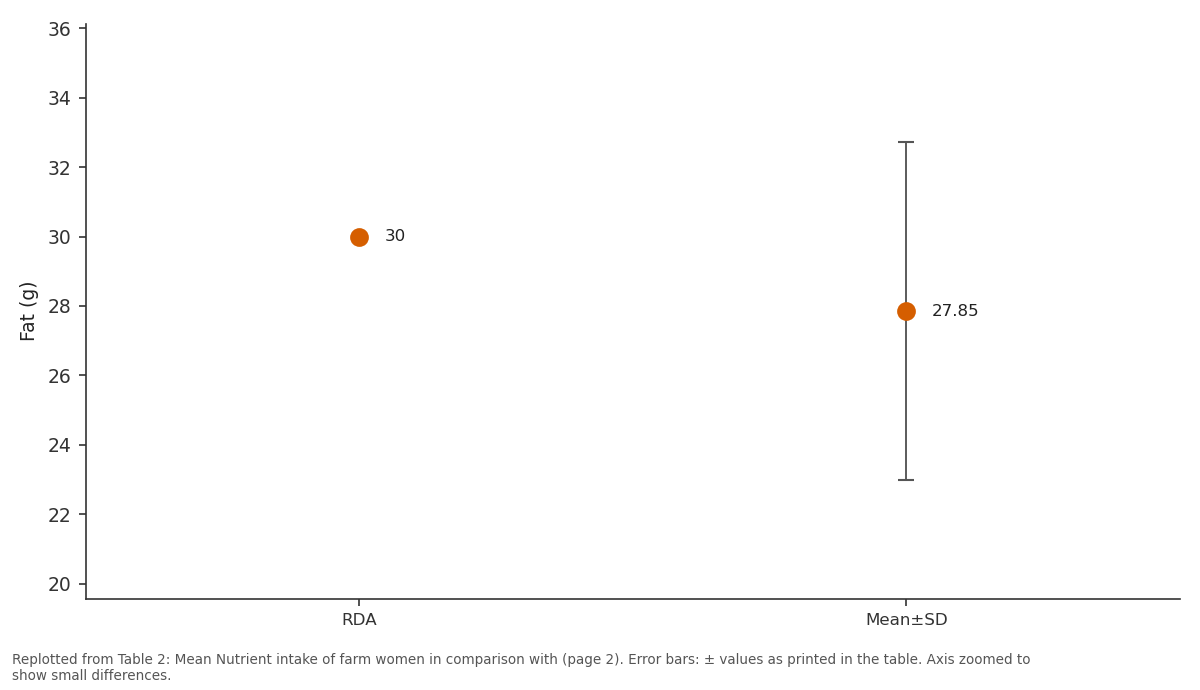
Fat (g): RDA vs Mean±SD
Replotted from Table 2 (page 2) of the original paper. Every bar is the paper's own table value.
View source evidence ↗Figures & tables
From the original paper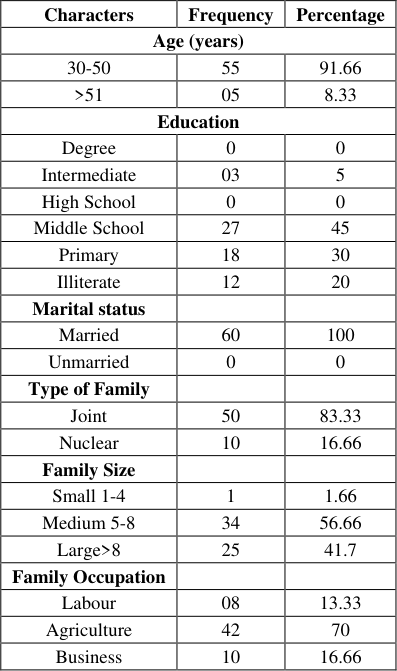 Table 1
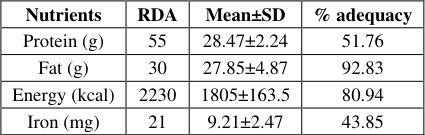 Table 2
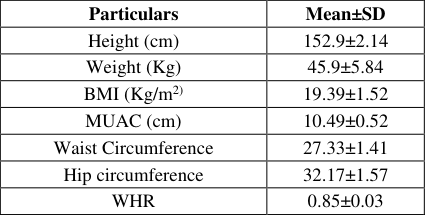 Table 3
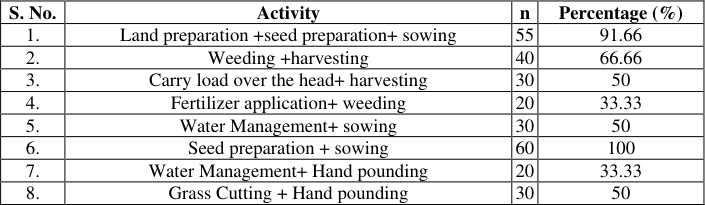 Table 4
Introduction
Agriculture is the largest industry in India and women constitute 50 per cent of the agricultural work force in our country. It is estimated that women are responsible for 70 per cent of actual farm and constitute up to 60 per cent of the farming population. Women participate in almost all agricultural operations and recognized as backbone of Indian agriculture. The women in India like in many other developing countries are silent workers labouring hard from dawn to dusk on the interest of their farm and home. Rural women often manage complex households and pursue multiple livelihood strategies. Irrespective of their degree of affluence, they provide 14-18 hours of productive physical labour every day in a wide variety of activities directly connected with agriculture, allied and domestic chores (Swarupa and Ashlesha,2019) [5] . Women are usually vulnerable to malnutrition for both social and biological reason throughout their life cycle (Yadav and Revana, 2017) [8] . Health status of women affect their productivity and thereby their roles in society and their own development (Vats,2006) [6] . A normal balanced diet must include daily foods from the various food groups in sufficient amount to meet the needs of an individual and to increase the immunity. Although women are food producers at farm and household level their own nutrition situation is not encouraging all over the developing countries including India (Misra and Singh, 2017) [4] .
Considering the importance of nutritional status of farm women, the present study was carried out with the objective to assess the nutritional status and physical activity pattern of farm women Objectives 1. To assess the anthropometric measurements of the rural farm women 2. To assess the food habits and nutrient intake of the rural farm women 3. To assess the physical activity pattern of the rural farm women
Methodology
Present study was carried out in district Kanpur of Uttar Pradesh. Sixty rural farm women who were performing agricultural and allied activities were selected from block Kalyanpur and village Singhpur. General information of the respondents was collected using structured questionnaire. Survey was done using a cross sectional study design Nutritional status of all selected rural farm women was assessed by determining the nutrient intake using 24 hour recall method. The nutrient intake was compared with recommended Dietary allowances (RDA) given by ICMR 2020 [1] . Height, Weight, MUAC, Waist and Hip circumference was measured using standard instruments and technique (Lohmann 1988) [3] . Body Mass index (BMI) was calculated and was categorised as per classification given by www.extensionjournal.com WHO (2004) [7] . Waist Hip Ratio (WHR) was calculated by dividing waist circumference and hip circumference. Physical activity pattern of subjects was assessed by The International Physical activity Questionnaire (IPAQ) method.
Results and Discussion
Survey results of the study revealed that maximum 83.3 per cent women surveyed were between 30 to 50 years of age All of the subjects 9100%) were married and 80 per cent were literate. Family Size varied from 3-12 members about 56.6 per cent of the women had medium family size having 5-8 members in the family. Most families had agriculture as their main occupation (Table1). It was found that 95 per cent of selected farm women were vegetarian and 63.3 per cent of women had twice meal consumption pattern. Table 2 clearly depicts the average daily intake of energy, protein and iron by the farm women is lower than the RDA values.
| Nutrients | RDA | Mean±SD | % adequacy |
|---|---|---|---|
| Protein (g) | 55 | 28.47±2.24 | 51.76 |
| Fat (g) | 30 | 27.85±4.87 | 92.83 |
| Energy (kcal) | 2230 | 1805±163.5 | 80.94 |
| Iron (mg) | 21 | 9.21±2.47 | 43.85 |
Table text extracted from the original PDF; superscript letters are shown inline. The original table image is below.
View original table image
| Characters | Frequency | Percentage |
|---|---|---|
| Age (years) | ||
| 30-50 | 55 | 91.66 |
| >51 | 05 | 8.33 |
| Education | ||
| Degree | 0 | 0 |
| Intermediate | 03 | 5 |
| High School | 0 | 0 |
| Middle School | 27 | 45 |
| Primary | 18 | 30 |
| Illiterate | 12 | 20 |
| Marital status | ||
| Married | 60 | 100 |
| Unmarried | 0 | 0 |
| Type of Family | ||
| Joint | 50 | 83.33 |
| Nuclear | 10 | 16.66 |
| Family Size | ||
| Small 1-4 | 1 | 1.66 |
| Medium 5-8 | 34 | 56.66 |
| Large>8 | 25 | 41.7 |
| Family Occupation | ||
| Labour | 08 | 13.33 |
| Agriculture | 42 | 70 |
| Business | 10 | 16.66 |
Table text extracted from the original PDF; superscript letters are shown inline. The original table image is below.
View original table image
Energy is essential for carrying out both voluntary and involuntary work. Certain amount of energy is used in basal metabolism like respiration, blood circulation, digestion, absorption and excretion. It is also used in rest, activity and growth. Average energy intake by rural farm women was found to be 1805±163.5 kcal per day which is only 80 per cent adequate when compared with RDA. Low protein intake and energy intake less than RDA results in malnutrition and invariably low productivity. Average protein intake was only 51 per cent adequate. In the present study protein intake was significantly less in the subjects as compared to energy. Iron intake was less than 50 per cent of RDA which indicates lack of green leafy vegetables and plant and animal protein in the diet.
The physical growth can be measured using various anthropometric parameters. The most widely anthropometric measurements of growth are height (stature) and body weight. The information on height indicates past nutritional status whereas body weight gives an indication of the current nutritional status to identify the individual as underweight, overweight or retarded growth. Indices could be constructed from raw growth measurements. Anthropometric indices are of increasing importance in nutritional assessment as these measurements are easy, quick and accurate. BMI is assessed by calculating the body weight and height to classify the subjects in to groups depending on their nutritional status. The pattern of physical growth is similar in all individuals but the rate varies depending upon various genetic and environmental factors. Rural farm women recorded mean height of 152.9±2.14cm and mean weight of 45.9±5.84kg which are below standards when compared at national level (Table 3). This could be due to type of food consumed by the selected population because the food consumption is one major factor which influences the nutritional status of the population. Mid upper arm Circumference (MUAC) indicates the muscle depot in the subject. Wasting of muscles occur in the condition of protein deficiency. Average MUAC was found to be 10.49±0.52 cm. Mean BMI was found to be 19.39±1.52 kg/m 2 which indicates low normal physiological status. Physical activity pattern of farm women revealed that 91.6 per cent were actively engaged in land and seed preparation and sowing activity. Seed preparation and sowing was being carried out by 100 per cent of farm women (Table 4). Agricultural activities are energy demanding process creating a sort of psycho-physiological stress on the body, while working in agricultural field for six to eight hours. Kishtwaria et al (2009) [2] reported that majority of women were involved in performing various farm activities i.e. cutting (85.52% and weeding 79.32%. Present study also agrees that farm women were engaged in grass cutting, sowing, harvesting etc.
| S. No. | Activity | n | Percentage (%) |
|---|---|---|---|
| 1. | Land preparation +seed preparation+ sowing | 55 | 91.66 |
| 2. | Weeding +harvesting | 40 | 66.66 |
| 3. | Carry load over the head+ harvesting | 30 | 50 |
| 4. | Fertilizer application+ weeding | 20 | 33.33 |
| 5. | Water Management+ sowing | 30 | 50 |
| 6. | Seed preparation + sowing | 60 | 100 |
| 7. | Water Management+ Hand pounding | 20 | 33.33 |
| 8. | Grass Cutting + Hand pounding | 30 | 50 |
Table text extracted from the original PDF; superscript letters are shown inline. The original table image is below.
View original table image
| Particulars | Mean±SD |
|---|---|
| Height (cm) | 152.9±2.14 |
| Weight (Kg) | 45.9±5.84 |
| BMI (Kg/m2) | 19.39±1.52 |
| MUAC (cm) | 10.49±0.52 |
| Waist Circumference | 27.33±1.41 |
| Hip circumference | 32.17±1.57 |
| WHR | 0.85±0.03 |
Table text extracted from the original PDF; superscript letters are shown inline. The original table image is below.
View original table image
Conclusion
The present study concludes that the nutrient intake of farm women was not adequate as per RDA and thereby their physical variables like height, weight and MUAC were also less than national standards. Physical activity pattern reveals that the farm women carry out various moderate energy consuming farm activities. The negative effects of malnutrition among women are compounded by heavy work demands and special nutritional needs of women resulting in increased susceptibility to illness and consequently higher morbidity. Therefore it is urgent and important to provide nutrition education to farm women so that they can provide balanced diet to their family and themselves too. Farm women are still using traditional methods of agricultural work which are laborious and adds burden on the shoulders of women thereby increases the drudgery level affecting their nutritional status and reducing productivity. Therefore, the agricultural policies and programmes need to be more sensitive to make positive impact on health and productivity of farm families.
References
8 in the original paper- ICMR. Dietary guidelines for Indians-A manual. National Institute of Nutrition, Hyderabad; 2020.
- Kishtawaria J, Aruna R, Sood S. Work pattern of hill farm women-A study of Himachal Pradesh. Home Comm Sci. 2009;3(1):67-70.
- Lohman TG, Roche AF, Martorell R. Anthropometric Standardization Reference Manual. Human Kinetics Books, Champagne, Illinois USA; 1988.
- Misra D, Singh R. A study on energy balance of farm women. Acta Scientific Nutritional Health. 2017;1(1):7-10.
- Swarupa, Ashlesha P. Nutritional status of farm women in village Maddirala Bhadradri District Gangavath. Int J Sci Res. 2019;8(5):1164-1166.
- Vats A. Nutritional and health status of rural farm women in Tehri Garhwal district of Uttarakhand state. Asian J Biosci. 2006;1(2):45-47.
- WHO. Appropriate Body mass index for Asian populations and its implications for policy and intervention strategies. The Lancet. 2004;363(9403):157-163.
- Yadav DK, Revana ML. Dietary pattern of farm women: A Study in Tumakuru District of Karnataka State. Mysore J Agric Sci. 2017;51930:506-510.