
Research article · 2024 · Full text
International Journal of Research in AgronomyImpact of organic and inorganic sources on productivity of groundnut (Arachis hypogaea L.): A review
Volume 7(4) · Pages 672–678 · DOI: 10.33545/2618060x.2024.v7.i4i.637 ↗
Research areasPeanut Plant Research Studies
Abstract
Author-writtenThe necessity for agricultural output is proliferating now to create strategies that are eco-friendly as well as to achieve high-quality needs. Inorganic fertilizers are necessary to encourage plant development and yield, but overuse of these fertilizers has reduced yield and quality of groundnut. To compensate for the damage made by the inorganic fertilizer, a combined application of inorganic as well as organic inputs significantly improved groundnut growth, yield, and productivity. Organic inputs improve the biological and biochemical properties of the soil. It strengthens the soil microbial community, while inorganic fertilizer fulfills the required nutrients needed for the growth and development of groundnut. The purpose of the review is to gain better knowledge about the responses to inorganic and organic sources of fertilizer as well as their interaction in optimizing nutrient requirements and improving growth and yield in groundnut.
Summary
Source-checkedPlain-language reading of the full paper, prepared with AI and checked against the text. Each point links to the authors' own words.
Why it matters
- Groundnut, often called the 'King of Oilseeds,' is a highly valuable crop containing 44-50% oil and 26% protein. View evidence ↗
- While inorganic fertilizers are needed for growth and yield, their excessive use can actually decrease the quality and yield of groundnuts. View evidence ↗
- Combining organic and inorganic inputs is seen as a way to mitigate the damage caused by sole reliance on inorganic fertilizers. View evidence ↗
The question
- The review aims to understand how groundnuts respond to organic and inorganic fertilizers, and how their interaction can optimize nutrients and improve yield. View evidence ↗
What they did
- This paper is a review that synthesizes data collected by various researchers rather than conducting a new primary experiment. View evidence ↗
What they found
- Research indicates that the optimal nitrogen dose for groundnut growth and yield is between 62 and 69 kg/ha. View evidence ↗
- Applying phosphorus at 60 kg/ha significantly increased pod yield to 3100 kg/ha and kernel yield to 2300 kg/ha compared to other treatments. View evidence ↗
- Potassium at 100 kg/ha, combined with recommended N and P2O5, led to a plant height of 55.2 cm and dry matter production of 5906 kg/ha. View evidence ↗
- Combining nitrogen with compost significantly increased pod weight by 60.34% and seed weight by 94.50%. View evidence ↗
- A combination of cow urine, 50 kg/ha N via vermicompost, 50 kg/ha phosphorus, and PSB resulted in a shelling percentage of 72.36% and plant height of 24.42 cm. View evidence ↗
- Applying 30 ton/ha of poultry manure with 25 kg/ha N and 45 kg/ha P2O5 increased dry matter accumulation to 65 g and leaf area index to 5.62. View evidence ↗
- Using farmyard manure (FYM) followed by poultry manure resulted in higher available nitrogen (236 kg/ha) and potassium (292 kg/ha) compared to other treatments. View evidence ↗
- Vermicompost applied at 2500 kg/ha led to a kernel yield of 2917.33 kg/ha and a harvest index of 51.62%. View evidence ↗
- An integrated approach using Bradyrhizobium, manure, compost, and starter nitrogen increased kernel yield by 44% compared to other treatments. View evidence ↗
- Combining NPK (20:80:60 kg/ha), 4 ton/ha vermicompost, and PSB increased pod yield by 83.25% and haulm yield by 86.02% compared to other treatments. View evidence ↗
What it means
- The authors conclude that combining inorganic inputs with organic sources (FYM, poultry manure, vermicompost, and biofertilizers) significantly increases growth, yield, and nutrient content. View evidence ↗
- The authors state that the optimum use of inorganic fertilizers is still necessary to provide the nutrients required for high yields. View evidence ↗
Visual summary
1 visualsIllustrations explain the paper; they do not show study data.
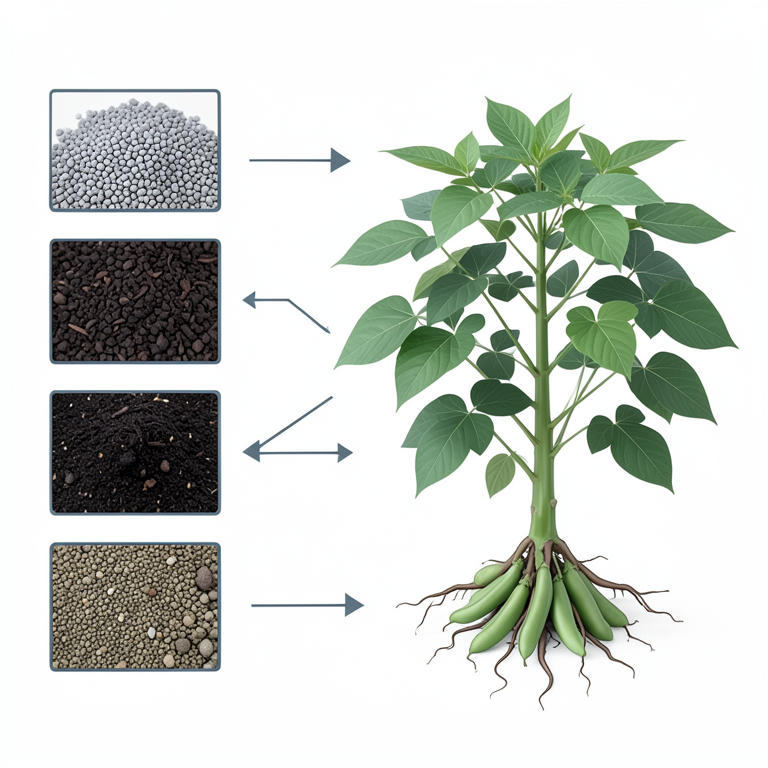
Integrated Nutrient Management Concept
AI-generated conceptual illustration (groundnut plants (Arachis hypogaea L.)). It explains the idea and does not show study data.
View source evidence ↗Figures & tables
From the original paper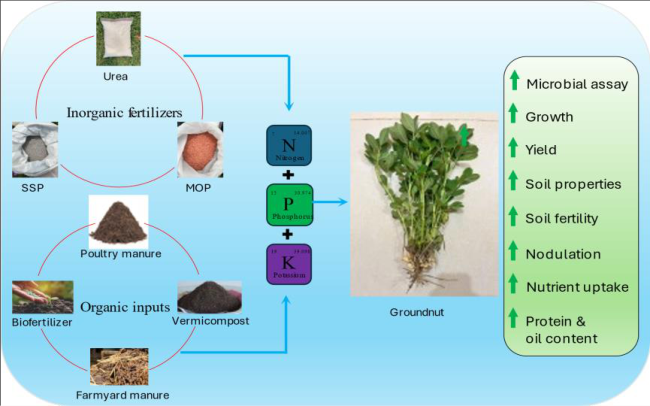 Figure 1
Introduction
Groundnut (Arachis hypogaea L.) belongs to the Fabaceae family, known as the King of Oilseeds. Groundnut is also known as Peanut, Earthnut, and Monkey nut (Biswas and Bhattacharjee, 2019) [13] . Groundnut kernels are used for edible oil production through various methods such as raw, boiling, roasting, or crushing. Its products are also used as animal feed and industrial raw materials. This crop is highly beneficial for both domestic and foreign markets in both developing and developed nations. Groundnut is an oilseed crop comprising 44-50%, 26%, 20%, and 5% oil, protein, carbohydrates, and fiber content respectively (Senthilkumar and Naveen, 2020) [53] . In the tropics and subtropics, groundnut is widely grown, and both small and large commercial growers depend on it. Due to their high oil content, they are classified as both cereal legumes and oil crops. Groundnut is a major oilseed crop grown in India, ranking first in terms of area and second in terms of production after soybean (Meghana et al., 2023) [40] . About 17.57 million tonnes of groundnut are produced in China followed by 6.73 million tonnes in India, 4.45 lakh tonnes in Nigeria, 2.83 million tonnes in Sudan, and 2.49 lakh tonnes in the US. These countries account for 36.01, 13.79, 9.12, 5.80, and 5.11 percent of the 48.80 million tonnes of groundnut produced worldwide in 2019-20 (Anonymous, 2023). India's average yield of groundnut is disproportionately low due to various factors including biotic and abiotic stressors, rainfed farming, and socioeconomic factors (Joshi, 2015) [26] . The intensification of agriculture along with the usage of inorganic fertilizers due to rising production levels have elevated the micronutrient demand in soil fertility management (Srinivasarao, 2021) [58] . Effective fertilizer management, timely and adequate supply of nutrients through appropriate application methods, and improved soil production and fertility. A possible way to improve sustainable agriculture soil is integrated nutrient management (INM). INM practices improve soil fertility and promote the optimal and slow release of nutrients, reducing nutrient losses and boosting plant nutrient absorption, leading to higher productivity (Jat et al., 2015) [25] . Nitrogen (N) affects the growth and yield of groundnut, so having sufficient amounts of available nitrogen is very important for enhancing crop yields (Singh, 1999) [56] . Enhancing soil fertility and crop yield is a major function of biofertilizers as these are sustainable and eco-friendly. They complement inorganic fertilizers to meet the integrated nutrient needs of plants by improving the availability of nutrients (Bhardwaj et al., 2014) [12] . The utilization of organic inputs and inorganic inputs together ensures a steady supply of nitrogen, reduces losses, and promotes more effective nitrogen uptake. The use of organic fertilizers has improved mineral and water absorption, root development, vegetative growth, and nitrogen fixation (Iqbal et al., 2019) [21] . The integrated application of Farmyard manure, poultry manure, biofertilizers, and vermicompost along with inorganic fertilizers improves the growth and productivity of groundnut. Utilization of organic inputs can reduce the reliance on inorganic fertilizers and improve crop quality and yield. They include micro-organisms that mobilize nutrients through a range of biological processes from inaccessible to usable forms (Itelima et al., 2018) [23] .
Effect of Inorganic Fertilizers on the Growth of Groundnut
Nowadays, one of the most popular types of inorganic fertilizers we utilize is nitrogen. Fertilizers function similarly to food for plants, with nitrogen-based fertilizers often being the most widely available and least expensive. The subgroups of nitrogen compounds include ammonium nitrate and urea. In general, nitrogen is the primary structural component of plant cells. It is an important constituent of metabolically active substances such as amino acids, proteins, nucleic acids, flavins, purines, pyrimidines, nucleotides, enzymes, and alkaloids. Roots absorb nitrogen in the form of ammonium or nitrate (Wink, 1997) [67] . It gives a dark green hue and encourages the growth and development of the leaves, stem, and other vegetative elements (Leghari et al., 2016) [31] . Nitrogen promotes the development of roots. Nitrogen boosts the protein content of groundnut. It also promotes the uptake and use of other nutrients, such as potassium and phosphorus, and regulates the general growth of groundnut (Madhu et al., 2023) [35] . (Taufiq et al., 2018) [59] reported that nitrogen has a more important role than phosphorus fertilizers in increasing groundnut yield on saline soil due to an increase in chlorophyll content. The optimum dose of nitrogen was 62-69 kg/ha for groundnut growth and yield. (Hasan et al., 2021) [20] claimed that the combined application of nitrogen @ 30 kg/ha and phosphorus @ 60 kg/ha resulted in a significant increase in nodulation and nitrogen availability. It also increased the content of protein, fiber, Mg, and amino acids. Phosphorus fertilizers provide a good supply of phosphorus to nutrientdeficient soils. Groundnut is a legume crop that requires a good amount of phosphorus. It is utilized by plants for the transmission of energy during metabolic processes such as starch and sugar conversion, nutrient transport, and photosynthesis (Malhotra et al., 2018) [38] . Apart from stimulating cell division, phosphorus is necessary for the growth and development of groundnut. It also plays a vital role in the ripening of crops, accelerating the breakdown of carbohydrates for the release of energy, and delaying the onset of maturity (Gundewadi et al., 2018) [19] . Phosphorus encourages the root development of groundnut, which makes it easier to absorb water and uptake nutrients from the soil's deeper layer. It also plays an important role in increasing the biological N fixation by raising the nitrogenase enzyme activity in the soil (Weisany et al., 2013) [65] . (Nazir et al., 2022) [42] reported that the application of phosphorus @ 60 kg/ha resulted in significantly higher growth parameters, and yield attributes viz. number of pods per plant (19), pod weight per plant (29.6 g), 100 kernel weight (61.3 g), shelling percentage (72.2%), and yields included pods yield (3100 kg/ha), kernel yield (2300 kg/ha), haulm yield (5300 kg/ha), and biological yield (8400 kg/ha) as compared to other treatments. (Sagar et al., 2020) observed that phosphorus along with gypsum of 400 kg/ha resulted in significantly higher plant dry weight of 56.3 g/plant and number of pods per plant (31.3) in groundnut as compared to other treatments due to better root development and phosphorus uptake. (Badar et al., 2015) [9] reported that phosphorus @ 60 kg/ha with rhizobium inoculant resulted in a significantly higher number of nodules, dry weight, shoot, and root length as compared to other treatments due to increasing in physiological processes of groundnut. The application of potassium fertilizers is vital for crop growth and development. Potassium is responsible for the uptake of water, minerals, and carbohydrates through plant tissue. It plays an important role in enzyme activation in groundnut which impacts the synthesis of starch, protein, and adenosine triphosphate (ATP). The rate of photosynthesis is controlled by the generation of ATP. Additionally, potassium aids in controlling the stomata's opening and closing which controls the exchange of oxygen, carbon dioxide, and water vapor (Hasanuzzaman et al., 2018) [21] . Deficiency of potassium results in stunted plant growth and reduces crop yield. Optimum use of potassium causes better absorption of nitrogen from the soil as well as increases the protein content of groundnut (Patel et al., 2022) [20] . Maintaining sufficient potassium levels is crucial for maximizing the plant's usage of nitrogen as there is a synergistic interaction between nitrogen and potassium (Umar and Moinuddin, 2002) [62] . (Karthikeyan et al., 2022) [28] reported that potassium @ 100 kg/ha with the recommended dose of N and P 2 O 5 resulted in significant plant height (55.2 cm), leaf area index (3.03), and dry matter production (5906 kg/ha).
Effect of Inorganic Fertilizers on
The Yield of Groundnut (Almaliki et al., 2019) [3] claimed that higher levels of nitrogen @ 200 kg/ha and 300 kg/ha resulted in significantly higher plant height and dry weight of groundnut as compared to 100 kg/ha. Further, the interaction between the levels of nitrogen and the addition of compost showed a significant increase in pod and seed weight by 60.34% and 94.50% due to better uptake of nitrogen. (Li et al., 2024) [32] reported that the application of nitrogen @ 60 kg/ha resulted in significantly higher enzyme activity in the pod and as well as regulated the expression of nitrogen metabolism-related genes including nitrogen reductase, nitrite reductase, etc in the pod. Furthermore, nitrogen application increased pod yield, protein content of the kernel, and nitrogen accumulation in groundnut due to an increase in nitrogen uptake. (Tekulu et al., 2020) [60] observed that the application of nitrogen @ 15 kg/ha resulted in significantly higher total biomass yield by 22.5% and haulm yield by 29.17% of groundnut. Average pod yield was also increased compared to other treatments. The combined application resulted in increased grain yield, and grain protein content due to better availability of nitrogen and phosphorus. (Everest et al., 2022) [17] reported that the application of phosphorus @ 80 kg/ha resulted in significantly improved protein and oil content by 24.27%, and 45.41% respectively as compared to other treatments. (Mamta Pandey and Pandey, 2019) reported that phosphorus @ 50 kg/ha with sulfur @ 40 kg/ha resulted in significantly higher oil quality and oil content of groundnut as compared to other treatments due to better root development in groundnut. (Umoh et al., 2022) [63] observed that potassium @ 25 kg/ha resulted in a significantly higher grain yield of 1392.64 kg/ha in coastal plain sands as compared to other treatments due to better root penetration in the soil surface and potassium uptake. (Karthikeyan et al., 2022) [28] reported that application of potassium @ 100 kg/ha with the recommended dose of N and P 2 O 5 resulted in significantly higher pod yield (2558 kg/ha), haulm yield (3348 kg/ha), shelling percentage (75.2), and kernel yield (1923 kg/ha) as compared to other treatments due to better nitrogen and phosphorus uptake by the plant. (Sakarvadia et al., 2020) [50] reported that the application of potassium @ 75 kg/ha resulted in a significantly higher haulm yield (4479 kg/ha), and pod yield (2505 kg/ha) in groundnut as compared to other treatments. (Sanadi et al., 2018) [51] observed that the split application of potassium along with foliar spray @ 2% resulted in significantly higher pod yield (3617 kg/ha), higher oil (47.84%), and protein (37.98%) as compared to other treatments. (Bhadiyatar et al., 2022) [10] observed that potassium @ 25 kg/ha along with sulfur @ 30 kg/ha resulted in a significantly higher number of pods (20.67per plant), pod weight (12.75), seed index (44.58), pod yield (2267 kg/ha), and haulm yield (3399 kg/ha) of groundnut crop as compared to other treatments due to better nutrient availability to groundnut crop.
Effect of Organic Inputs on the Growth of Groundnut
Vermicompost is defined as the process of conversion of organic matter into humus by the action of beneficial earthworms. Numerous studies have shown that vermicompost often has a richer nutritional profile than conventional compost (Lim et al., 2015) [33] . Vermicompost can improve soil fertility on physical, chemical, and biological levels. Soil treated with vermicompost has improved bulk density, aeration, porosity, and water retention on a physical level. On a chemical level, pH, EC, and organic matter content are improved (Ansari et al., 2020) [5] . Vermicompost improves plant growth by increasing the uptake of nutrients in groundnut by providing better root growth. It provides a suitable medium for the survival of microorganisms in the soil profile (Arsalan et al., 2016) [7] . Combined application of vermicompost with inorganic fertilizers increases the growth and yield of groundnut by improving the soil structure and providing a suitable environment for nodule formation and the same has been documented in different studies under variable soil and weather conditions (Maji et al., 2017) [37] . (Chavan et al., 2019) [16] reported that the combined application of cow urine, 50 kg/ha N through vermicompost, phosphorus @ 50 kg/ha, and PSB resulted in significantly higher dry matter (23.88 g), shelling percentage of 72.36, and plant height (24.42 cm) of groundnut as compared to other treatments due to improvement in microbial population and soil structure. Poultry manure increases soil fertility, strengthens roots, and lessens the vulnerability of groundnut to insect and disease assaults (Rao and Shaktawat, 2005) [47] . Poultry manures are incorporated in the soil for the nitrogen requirement of groundnut. Since nitrogen applied through inorganic fertilizers is lost in the atmosphere due to volatilization and leeching losses, the application of poultry manure maintains the pH of the soil and provides a good source of nitrogen to the crop. Other essential nutrients like phosphorus and trace elements are also provided by poultry manure (Aipa and Michael, 2018) [1] . (Chaudhari & Bhanwaria, 2018) [15] observed that the application of poultry manure @ 30 ton/ha along with RDF of 25 kg/ha N and 45 kg/ha of P 2 O 5 resulted in significantly higher dry matter accumulation (65 g) and higher leaf area index (5.62) in groundnut as compared to other treatments. (Umadevi et al., 2018) [61] reported that poultry manure along with inorganic fertilizer resulted in significantly higher soil microbial populations i.e. bacteria, fungi, and actinomycetes in groundnut as compared to other treatments due to improved aeration and root activity necessary for nutrient absorption. Farmyard manure is a mixture of animal waste from farms, most often cow dung and cow urine, but depending on the region, various types of manure are widely utilized as fertilizers worldwide. Farmyard manure increases the soil's structure. It increases the soil's ability to retain more nutrients and water. Additionally, it increases the microbial activity of the soil, which enhances groundnut growth and development (Williams and Cooke, 1961) [66] . Farmyard manure (FYM) helps to elevate the fertility of soil due to the increase in microbial population in the soil. The application of FYM along with inorganic fertilizer increases the nutrient uptake of groundnut crops (Ma et al., 2020) [34] . (Reddy et al., 2020) [48] claimed that the application of FYM followed by poultry manure resulted in a significantly higher concentration of available nitrogen (236 kg/ha), phosphorus (61 kg/ha), potassium (292 kg/ha), and micronutrients in groundnut (Fe, Zn, Cu, and Mn) as compared to other treatments. (Ghosh et al., 2023) [18] observed that farmyard manure along with rhizobium inoculation resulted in significantly higher plant biomass (22.34 g/plant), shoot length (21.78 cm), and the number of nodules per plant (17.30) at 30 DAS and (23.60) at 60 DAS in groundnut as compared to other treatments. Furthermore, the application of FYM and rhizobium inoculation showed the highest pod yield. "Biofertilizers" refers to a substance containing living microorganisms that colonize the rhizosphere of groundnut to enhance the ability to access the essential nutrients required for their growth and development. Biofertilizers are also termed "microbial inoculants" which are organic substances that include certain micro-organisms obtained from the root zone of the plant (Chakraborty and Akhtar, 2021) [14] . Biofertilizers stimulate plant development by increasing the concentration of nutrients in the soil that increase crop productivity and soil fertility but also provide protection against pest and disease infestation (Bhardwaj et al., 2014) [12] . The application of biofertilizers improves root growth, breaks down toxic compounds, and increases flowering development (Youssef and Eissa, 2014) [69] . Inorganic fertilizer disrupts soil health and reduces soil fertility due to continuous usage. The application of inorganic fertilizer along with biofertilizer improves the soil micro-organism biota and increases the growth and yield of groundnut (Ajmal et al., 2018) [2] . (Kamdi et al., 2014) [27] concluded that the application of rhizobium and vermicompost along with Trichoderma seed treatment resulted in significantly increased germination percentage (94.5%), seedling length (18.40 cm), seedling dry weight (0.39 g), protein (29%), and oil content (43.20%) in groundnut as compared to other treatments due to increasing activity of microbial organism and availability of nutrient. (Jani et al., 2021) [24] observed that the application of rhizobium and PSB along with castor cake of 0.5 t/ha and farmyard manure @ 5 ton/ha in groundnut resulted in significantly higher plant height (27.3 cm) at 60 DAS, no of branches per plant (8.3) and dry matter per plant (37.75 g) as compared to other treatments due to better fixation of nitrogen, thus increased nodulation can be concluded. The application of rhizobium and PSB with nitrogen @ 20 kg/ha resulted in a significantly higher plant height of 102.19 cm and root nodules per plant of 157.78 in 100 DAS of groundnut as compared to other treatments. (Bharathi et al., 2021) [11] . (Raju et al., 2022) [46] observed that the application of vermicompost at 2500 kg/ha resulted in significantly higher kernel yield (2917.33 kg/ha), haulm yield (2698 kg/ha), and harvest index (51.62%) due to the slow release of nutrients from the soil profile which increases nutrient uptake. (Chavan et al., 2019) [16] concluded that the combined application of 50 kg/ha N through vermicompost, phosphorus @ 50 kg/ha, and PSB resulted in significantly higher number of pod per hill (30.92), 100-kernel weight (54.17 g), shelling percentage (72.36%), pod yield (39.99 kg/ha), kernel yield (29.22 kg/ha) and haulm yield (48.70) of groundnut as compared to control. (Arsalan et al., 2024) observed that the combined application of inorganic fertilizers (NPK @ 20:80:60 kg/ha), vermicompost @ 4 ton/ha, and PSB resulted in significantly higher plant height (23%), number of plants (22.25%), number of pods (61.90%), pod yield (83.25%), and haulm yield (86.02%) in groundnut as compared to other treatments due to the integrated use of vermicompost with inorganic fertilizers. (Naik and Umesha, 2022) [41] claimed that application of poultry manure @ 50 ton/ha along with PSB resulted in significantly higher plant height (64.8 cm), number of branches (8.50), dry weight (38.27 g/plant), number of nodules per plant (16.59), seed yield (2733.87 kg/ha), haulm yield (3365.1 kg/ha), and biological yield (5630.2 kg/ha) in groundnut as compared to other treatments due to availability of nutrients by organic manures which increased the plant vegetative growth and improved yield. (Vyshnavi et al., 2021) [64] observed that the combined application of FYM and inorganic fertilizers along with PSB resulted in significantly higher growth and a higher pod yield (2747 kg/ha) of groundnut as compared to other treatments due to an increase in root nodules, and nitrifying bacteria. (Sowmya and Ganapathy, 2021) [57] concluded that the combined application of NPK and FYM at 10000 kg/ha resulted in significantly higher pod yield (2086 kg/ha) and kernel yield (1403 kg/ha) in groundnut as compared to other treatments due to better nutrient uptake. (Seran, 2018) observed that NPK @ 22.0:22.5:22.5 kg/ha and FYM @ 7500 kg/ha resulted in significantly higher seed yield (2558.02 kg/ha), protein (29.9 g), and oil content (46.6%) in groundnut as compared to other treatments due to better root development. (Jani et al., 2021) [24] observed that the application of rhizobium and PSB along with castor cake of 0.5 t/ha and farmyard manure @ 5 ton/ha in groundnut resulted in significantly higher pod yield (11.2 kg/ha) and no of pods per plant (12.5). (Bharathi et al., 2021) [11] observed that the application of rhizobium and PSB with nitrogen @ 20 kg/ha resulted in significantly higher no of pods per plant (28.80), no of kernels per pod (2.07), seed index (46.26 g), seed yield (2.65 kg/ha), haulm yield (3.58 kg/ha) and harvest index (42.31%) in groundnut as compared to other treatments.Combined application of rhizobium, phosphorus solubilizing bacteria (PSB), and vesicular-arbuscular mycorrhiza (VAM) resulted in significantly higher nitrogen and phosphorus concentrations in both kernels (3.99%, 0.73%) and haulm (1.85%, 0.15%) in groundnut as compared to other treatments due to better uptake of nitrogen and phosphorus (Sharma et al., 2014). (Poonia et al., 2014) reported that the application of rhizobium, PSB, FYM, and inorganic fertilizers resulted in significantly higher seed yield (2350 kg/ha). (Priya et al., 2022) [44] observed that the application of Bradyrhizobium @ 2 g/kg seed and Trichoderma harzianum along with gypsum of 400 kg/ha in groundnut resulted in significantly higher no of pods per plant (25), no of kernels per pod (2), seed index (40.33 g), shelling percentage (70), pod yield (3.64 kg/ha), seed yield (2.69 kg/ha), stover yield (4.45 kg/ha) and harvest index (33.29%) as compared to other treatments due to better microbial population which increases nutrient content in soil profile. The highest seed yield was recorded @ 2690 kg/ha. The process of optimizing the advantages from all potential sources of organic, inorganic, and biological components in an integrated order to maintain soil fertility and plant nutrient supply at an optimal level for maintaining high productivity in groundnuts is called integrated nutrient management (Selim, 2020) [52] . The application of inorganic fertilizer, organic fertilizer, and biofertilizer increases the chance of getting higher growth and yield in groundnut (Mahrous et al., 2015) [36] . The adverse effects of inorganic fertilizers due to excess application are also reduced by the application of integrated nutrient management (Wu and Ma, 2015) [33] . (Kulkarni et al., 2018) [29] concluded that the application of FYM, vermicompost, rhizobium, and PSB resulted in a significantly higher effect on the haulm yield (4067 kg/ha) of groundnut as compared to other treatments due to better availability of nutrients. (Laxminarayana and Patiram, 2005) [30] observed that the application of inorganic fertilizers and FYM @15000 kg/ha resulted in significantly higher pod and haulm yields (2260 kg/ha, 2950 kg/ha) in groundnut as compared to other treatments due to better efficiency of organic and inorganic inputs which improves the fertility status of the soil. (Sowmya and Ganapathy, 2021) [57] reported that farmyard manure @ 10 ton/ha along with organic inputs resulted in significantly higher pod yield (2086 kg/ha) and kernel yield (1403 kg/ha) in groundnut as compared to other treatments due to better nutrient management integration. Integrated application of Bradyrhizobium, manure, compost, and starter nitrogen resulted in significantly higher kernel yield by 44% as compared to other treatments due to better nitrogen accumulation in groundnut crops (Argaw et al., 2017) [6] .
Effect of Organic Inputs on the Yield of Groundnut
Effect of Organic Inputs on the Yield of Groundnut
Conclusion
With the help of the data collected by different researchers, it is concluded that the application of inorganic inputs can increase the growth and yield of groundnut. However excessive use of inorganic input has shown a decrease in yield and productivity. Soil health deteriorates with the continuous application of inorganic inputs. The microbial population gets minimized which ultimately reduces the yield of groundnut. However, this can be overcome with the combined application of organic sources of inputs with the inorganic ones. Growth, yield, nutrient uptake, oil content, protein content, and net returns of groundnut have significantly increased with the application of inorganic inputs along with organic inputs like FYM, poultry manure, vermicompost, and biofertilizers. Organic sources of nutrients provide a suitable environment for the growth and development of groundnut. Better root growth and nutrient uptake increase the yield of groundnut. Adequate or optimum use of inorganic fertilizer provides the necessary nutrients required to produce higher yields of groundnut.
Figures and tables from the paper
References
58 in the original paper- Aipa J, Michael PS. Poultry manure application and fallow improves peanut production in a sandy soil under continuous cultivation. Int J Environ Agric Res. 2018;4:6875.
- Ajmal M, Ali HI, Saeed R, et al. Biofertilizer as an alternative for chemical fertilizers. J Agric Allied Sci. 2018;7:1-7.
- Almaliki RJM, Mizel MS, Al-Karaawi AKM. Response of groundnut (Arachis hypogaea L.) to different dates and levels of nitrogen fertilizer. Plant Archives (09725210). 2019;19.
- Anonymous. Groundnut Outlook -February 2023. https://pjtsau.edu.in/files/AgriMkt/2023/February/groundnut -February-2023.pdf. 2023.
- Argaw A. Organic and inorganic fertilizer application enhances the effect of Bradyrhizobium on nodulation and yield of peanut (Arachis hypogea L.) in nutrient depleted and sandy soils of Ethiopia. Int J Recycling Organic Waste Agric. 2017;6:219-31.
- Arsalan M, Ahmed S, Chauhdary JN, Sarwar M. Effect of vermicompost and phosphorus on crop growth and nutrient uptake in mung bean. J Appl Agric Biotechnol. 2016;1:3847.
- Arsalan M, Latif A, Khan M, et al. Integrated Effect of Organic Amendments and Chemical Fertilizers on yield of Groundnut and Soil Health Under Rainfed Condition. J Appl Res Plant Sci. 2024;5:99-104.
- Badar R, Nisa Z, Ibrahim S. Supplementation of P with rhizobial inoculants to improve growth of Peanut plants. Int J Appl Res. 2015;1:19-23.
- Bhadiyatar AA, Patel JM, Patel PM, Malav JK. Effect of potassium and sulphur on growth, yield attributes and yield of summer groundnut in loamy sand. Pharm Innov J. 2022;11:2704-2707.
- Bharathi A, Umesha C, Korukonda L, Gaddam R, Kimudu G. Effect of levels of nitrogen and biofertilizers on growth and yield of groundnut (Arachis hypogaea L.). Asian J Microbiol Biotech Env Sci. 2021;23:290-293.
- Bhardwaj D, Ansari MW, Sahoo RK, Tuteja N. Biofertilizers function as key player in sustainable agriculture by improving soil fertility, plant tolerance and crop productivity. Microb Cell Fact. 2014;13:1-10.
- Biswas S, Bhattacharjee S. Groundnut: Multifarious utilities of the 'King of Oilseeds. Agriculture & Food: E-Newsletter. 2019;1:373.
- Chaudhari R, Bhanwaria R. Influence of Organic Manures and Iron on Growth & Yield of Groundnut (Arachis hypogaea L.). Trends Biosci. 2018;11:1945-1949.
- Chavan AR, Chavan SA, Yadav AM, Rajemahadik VA. Evaluation of effect of organic packages and bio-products on the growth parameters, yield parameters and yield of groundnut (Arachis hypogea L.). J Pharmacogn Phytochem. 2019;8:2136-2140.
- Everest L, Shyamal K, Haider D, et al. Effect of phosphorus on yield, nutrient acquisition and use efficiency of groundnut in West Bengal, India. Legume Res-Int J. 2022;45:1149-1154.
- Ghosh A, Gautam SK, Meetei TT, et al. Effect of Integrated Application of Bio-Fertilizer and Soil Amendments on Growth Parameters of Groundnut (Arachis hypogaea L.). Int J Plant Soil Sci. 2023;35:1120-1129.
- Gundewadi G, Reddy VR, Bhimappa BB. Physiological and biochemical basis of fruit development and ripening-a review. J Hill Agric. 2018;9:7-21.
- Hasan M, Uddin MK, Mohamed MTM, et al. Effect of nitrogen and phosphorus fertilizers on growth, yield, nodulation and nutritional composition of Bambara groundnut [Vigna subterranea (L.) Verdc.]. Legume Res-Int J. 2021;44:1437-1442.
- Hasanuzzaman M, Bhuyan MHMB, Nahar K, et al. Potassium: a vital regulator of plant responses and tolerance to abiotic stresses. Agronomy. 2018;8:31.
- Iqbal A, He L, Khan A, et al. Organic manure coupled with inorganic fertilizer: An approach for the sustainable production of rice by improving soil properties and nitrogen use efficiency. Agronomy. 2019;9:651.
- Jat LK, Singh YV, Meena SK, et al. Does integrated nutrient management enhance agricultural productivity. J Pure Appl Microbiol. 2015;9:1211-21.
- Joshi PK. Has Indian agriculture become crowded and risky? Status, implications and the way forward. Indian J Agric Econ. 2015;70.
- Karthikeyan PK, Sowmiyan T, Bhuvaneswari R, et al. Influence of potassium on growth, yield and nutrient uptake of groundnut (Arachis hypogaea) cv. TMV 13. Crop Res. 2022;57:21-27.
- Kulkarni MV, Patel KC, Patil DD, Pathak M. Effect of organic and inorganic fertilizers on yield and yield attributes of groundnut and wheat. Int J Chem Stud. 2018;6:87-90.
- Laxminarayana K, Patiram P. Influence of inorganic, biological and organic manures on yield and nutrient uptake of groundnut (Arachis hypogaea) and soil properties. Indian J Agric Sci. 2005;75.
- Leghari SJ, Wahocho NA, Laghari GM, et al. Role of nitrogen for plant growth and development: A review. Adv Environ Biol. 2016;10:209-219.
- Li G, Guo X, Sun W, et al. Nitrogen application in pod zone improves yield and quality of two peanut cultivars by modulating nitrogen accumulation and metabolism. BMC Plant Biol. 2024;24:48.
- Lim SL, Wu TY, Lim PN, Shak KPY. The use of vermicompost in organic farming: overview, effects on soil and economics. J Sci Food Agric. 2015;95:1143-1156.
- Ma Q, Wen Y, Wang D, et al. Farmyard manure applications stimulate soil carbon and nitrogen cycling by boosting microbial biomass rather than changing its community composition. Soil Biol Biochem. 2020;144:107760.
- Madhu H, Gunri SK, Roy D, et al. Effect of various doses of basal and foliar application of nitrogen and potassium with trace elements on summer groundnut (Arachis hypogaea). Indian J Agric Sci. 2023;93:1108-1113.
- Mahrous NM, Safina SA, Abo Taleb HH, El-Behlak SM. Integrated use of organic, inorganic and bio fertilizers on yield and quality of two peanut (Arachis hypogaea L.) cultivars grown in a sandy saline soil. Agric Environ Sci. 2015;15:1067-1074.
- Maji D, Misra P, Singh S, Kalra A. Humic acid rich vermicompost promotes plant growth by improving microbial community structure of soil as well as root nodulation and mycorrhizal colonization in the roots of Pisum sativum. Appl Soil Ecol. 2017;110:97-108.
- Naik VJ, Umesha C. Effect of organic manures and biofertilizers on growth and yield of Groundnut (Arachis hypogaea L.). Pharm Innov J. 2022;11:1249-51.
- Nazir R, Sayedi SA, Zaryal K, et al. Effects of phosphorus application on bunch and spreading genotypes of groundnut. J Agric Ecol. 2022;14:26-31.
- Patel M, Fatnani D, Parida AK. Potassium deficiency stress tolerance in peanut (Arachis hypogaea) through ion homeostasis, activation of antioxidant defense, and metabolic dynamics: Alleviatory role of silicon supplementation. Plant Physiol Biochem. 2022;182:55-75.
- Priya NS, Dawson J, Reddy N. Effect of biofertilizers and gypsum levels on growth and yield of groundnut (Arachis hypogaea). Pharm Innov J. 2022;11:708-713.
- Raju GV, Umesha C, Reddy SM, Krishna PV. Effect of spacing and organic manures on growth and yield of groundnut (Arachis hypogaea L.). Pharm Innov J. 2022;11:291-294.
- Rao SS, Shaktawat MS. Response of Organic Manure, Phosphorus and Gypsum to Nutrient Content and Uptake by Groundnut (Arachis hypogaea L.). Agropedology. 2005;15:100-6.
- Reddy RK, Madhuri KVN, Reddy P, Chandrika V. Effect of Organic Manures on Soil Nutrient Status in Rain fed Groundnut grown on an Alfisol. Andhra Pradesh J Agric Sci. 2020;6:22-28.
- Sagar D, Dawson J, Reddy RUK. Effect of phosphorus and gypsum on growth, yield and economics of groundnut (Arachis hypogea L.). Int J Curr Microbiol App Sci. 2020;9:1635-1638.
- Sakarvadia HL, Vekaria LC, Ponkia HP, Parkhia DV. Potassium fertilization to summer groundnut in medium black calcareous soil. Int J Chem Stud. 2020;8:30-33.
- Sanadi U, Math KK, Bidari BI, Yenagi BS. Effect of potassium nutrition on yield, quality and economics in groundnut (Arachis hpogaea L.) in a Vertisol. J Pharmacogn Phytochem. 2018;7:220-222.
- Selim MM. Introduction to the integrated nutrient management strategies and their contribution to yield and soil properties. Int J Agronomy. 2020; 2020.
- Seran TH. Effects of inorganic and organic nutrients combindly used on yield and quality of groundnut (Arachis hypogaea L.). Bangladesh J Sci Ind Res. 2018;53:289-296.
- Sharma S, Jat NL, Puniya MM, Shivran AC, Choudhary S. Fertility levels and biofertilizers on nutrient concentrations, uptake and quality of groundnut. Ann Agric Res. 2014;35.
- Singh AL. Mineral nutrition of groundnut. Adv Plant Physiol. 1999;2:161-200.
- Sowmya S, Ganapathy M. Effect of organic manures and biofertilizers on growth and yield of groundnut (Arachis hypogaea) in coastal soil. Crop Res. 2021;56:118-121.
- Srinivasarao C. Programmes and policies for improving fertilizer use efficiency in agriculture. Indian J Fertil. 2021;17:226-254.
- Taufiq A, Wijanarko A, Kristiono A. Nitrogen and phosphorus fertilization for groundnut in saline soil. J Degraded Mining Lands Manage. 2018;5:1307.
- Tekulu K, Taye G, Assefa D. Effect of starter nitrogen and phosphorus fertilizer rates on yield and yield components, grain protein content of groundnut (Arachis hypogaea L.) and residual soil nitrogen content in a semiarid north Ethiopia. Heliyon. 2020;6.
- Umadevi GD, Sunitha N, Ramu YR. Effect of various organic sources on soil microbial count and groundnut yield. J Pharmacogn Phytochem. 2018;7:1443-1445.
- Umar S, Moinuddin. Genotypic differences in yield and quality of groundnut as affected by potassium nutrition under erratic rainfall conditions. J Plant Nutr. 2002;25:1549-1562.
- Umoh FO, Ijah CJ, Essien OO, Effiong ET. Effects of Muriate of Potash Fertilizer on the Growth and Yield of Groundnut (Arachis hypogaea L.) Grown on Three Parent Materials in Akwa Ibom State, Nigeria. Aksu J Agric Food Sci. 2022;6:22-35.
- Vyshnavi A, Rao PM, Kumari AL, Lakshman K. Impact of phosphorus management along with FYM and bioinoculants on yield and yield attributes of groundnut. Pharma Innov J. 2021;10:393-397.
- Weisany W, Raei Y, Allahverdipoor KH. Role of some of mineral nutrients in biological nitrogen fixation. Bull Environ Pharmacol Life Sci. 2013;2:77-84.
- Williams RJB, Cooke GW. Some effects of farmyard manure and of grass residues on soil structure. Soil Sci. 1961;92:30-39.
- Wu W, Ma B. Integrated nutrient management (INM) for sustaining crop productivity and reducing environmental impact: A review. Sci Total Environ. 2015;512:415-427.
- Youssef MMA, Eissa MFM. Biofertilizers and their role in management of plant parasitic nematodes. A review. J Biotechnol Pharm Res. 2014;5:1-6.