
Research article · 2024 · Full text
International Journal of Advanced Chemistry ResearchDeveloping an analytical method using atomic absorption spectroscopy to estimate some heavy metals in medicines nutritional supplements and blood
Volume 6(1) · Pages 95–101 · DOI: 10.33545/26646781.2024.v6.i1b.172 ↗
Research areasHeavy Metals in Plants
Abstract
Author-writtenLong-term exposure to heavy metals is associated with serious health risks, thus identifying these substances is of great importance in blood, nutritional supplements, and medications. Heavy metal accumulation, such as lead, mercury, cadmium, and arsenic, including their toxic impacts, may bring a series of severe health effects in the biological system, like neurological issues, cardiovascular diseases, and renal dysfunction. This underlines the need to keep an eye on the heavy metal exposure to people and ensure that the health consumer goods do not pose a health risk. With the following atomic-absorption-spectroscopic (AAS) attributes: sensitivity, specificity, and flexibility, it becomes one of the excellent alternative analytical tools to measure heavy metals. Analytically, AAS in its derived form comes highly recommended for the analysis of complex pharmaceutical and biological products. This work contemplates the description and verification of the use of AAS to ascertain the presence and concentration of heavy metals in various kinds of medicines, dietary supplements, and blood samples. The approach was validated according to established procedures, including the construction of a calibration curve, determination of limits of detection and quantification, and recoveries testing made to access the precision and accuracy. Some of the quality control procedures that were there to assure reliability in the findings include reagent blanks, verified reference materials, and duplicate analyses, along with ongoing calibration verification. From the results obtained, it can be concluded that AAS is a very accurate and cost-effective heavy metal analysis method, as the detection limits for all the elements studied were seen at very low levels. This test method could further prove its effectiveness when the results were obtained with readings above the legal safety limits. This was an illustration of the importance that this method ensured that health-related items remained within regulations and protected consumer health. The method established is potent and has a mix of sensitive, accurate, and operational efficiency in regular monitoring of heavy metals.
Summary
Source-checkedPlain-language reading of the full paper, prepared with AI and checked against the text. Each point links to the authors' own words.
Why it matters
- Identifying heavy metals in blood, medications, and nutritional supplements is critical because long-term exposure to these substances is linked to serious health risks. View evidence ↗
- The accumulation of metals like lead, mercury, cadmium, and arsenic can cause severe biological damage, including renal dysfunction, cardiovascular diseases, and neurological issues. View evidence ↗
- Atomic Absorption Spectroscopy (AAS) is considered an excellent tool for measuring heavy metals due to its flexibility, specificity, and sensitivity. View evidence ↗
The question
- The study aims to describe and verify the use of AAS to determine the concentration and presence of heavy metals in blood samples, dietary supplements, and various medicines. View evidence ↗
What they did
- The researchers used Flame Atomic Absorption Spectroscopy (FAAS) for cadmium and lead, and Graphite Furnace Atomic Absorption Spectrometry (GFAAS) for arsenic and mercury. View evidence ↗
- Calibration curves for arsenic, cadmium, mercury, and lead were developed, all showing linearity with correlation coefficients (R²) exceeding 0.995. View evidence ↗
What they found
- The system's sensitivity was demonstrated by slopes ranging from 0.020 for cadmium to 0.030 for mercury, with correlation coefficients between 0.996 and 0.999. View evidence ↗
- The method achieved low detection limits (LOD), with the lowest being 0.05 µg/kg for mercury and the highest being 0.2 µg/kg for cadmium. View evidence ↗
- The method showed high precision, with intra-day %RSD values between 3.5% (arsenic) and 5.2% (cadmium), and inter-day %RSD values between 4.0% and 5.5%. View evidence ↗
- In the sample analysis, one nutritional supplement failed compliance because its arsenic concentration (1.5 µg/kg) exceeded the safety threshold of 1.0 µg/kg. View evidence ↗
- Most tested samples, including medicines, blood samples, and some nutritional supplements, complied with safety thresholds for lead, mercury, and cadmium. View evidence ↗
- Compared to other methods, AAS (LOD 0.1-0.2 µg/kg) is more sensitive than XRF (LOD 0.5-1.0 µg/kg) but less sensitive than ICP-MS (LOD 0.01-0.05 µg/kg), while providing a balance of cost and accuracy. View evidence ↗
What it means
- The authors conclude that AAS is a suitable choice for routine heavy metal monitoring due to its balance of cost, accuracy, and sensitivity, provided ultra-trace detection is not required. View evidence ↗
- The study recommends AAS as a practically convenient tool for monitoring heavy metals across different matrices, emphasizing that the method choice should depend on specific needs for precision, sensitivity, and budget. View evidence ↗
Visual summary
2 visualsIllustrations explain the paper; charts are replotted from the paper's own table values.
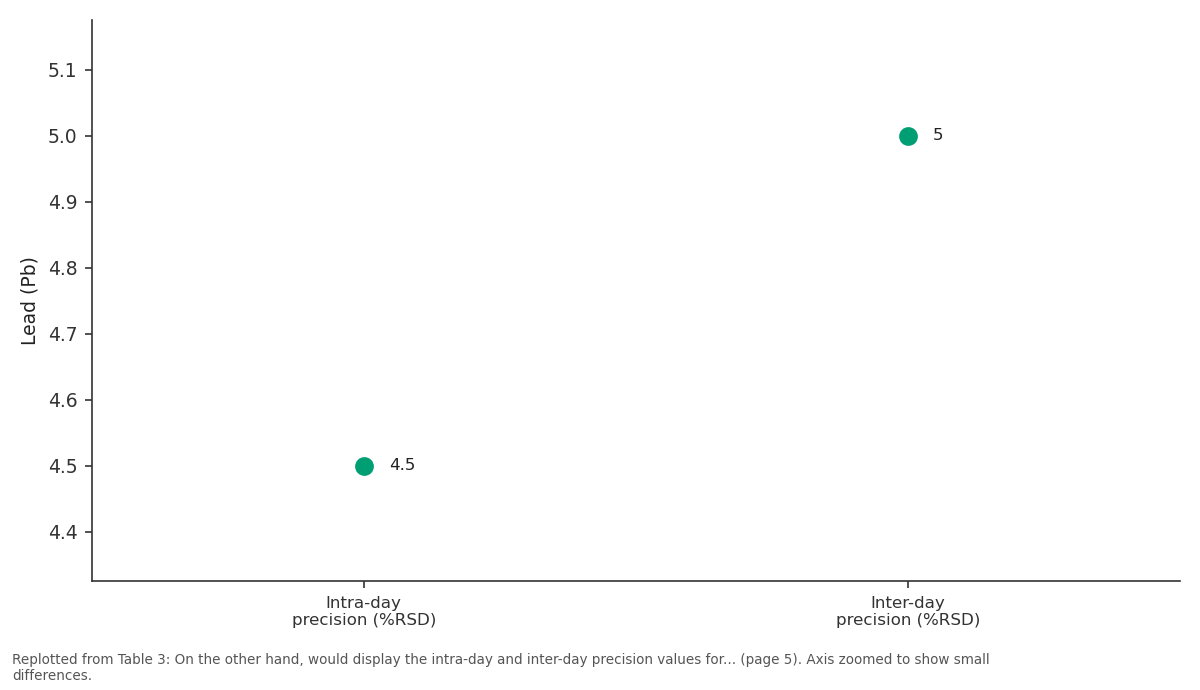
Lead (Pb): Intra-day precision... vs Inter-day precision...
Replotted from Table 3 (page 5) of the original paper. Every bar is the paper's own table value.
View source evidence ↗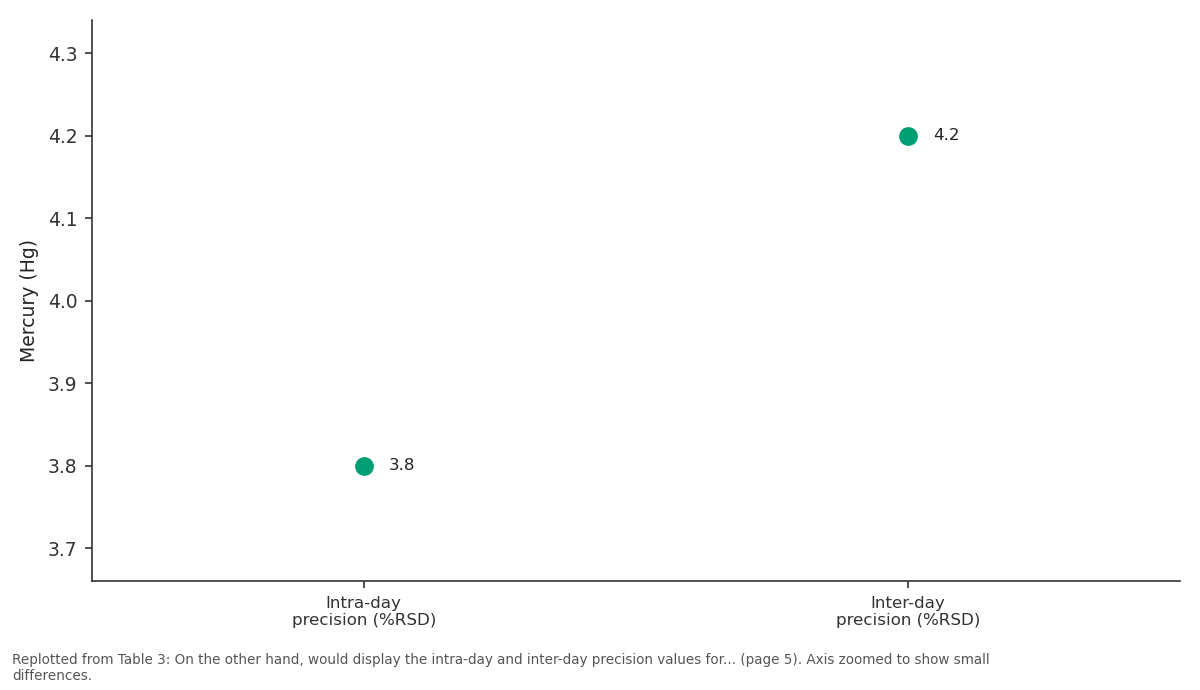
Mercury (Hg): Intra-day precision... vs Inter-day precision...
Replotted from Table 3 (page 5) of the original paper. Every bar is the paper's own table value.
View source evidence ↗Figures & tables
From the original paper Table 1
 Table 2
 Table 3
 Table 4
 Table 5
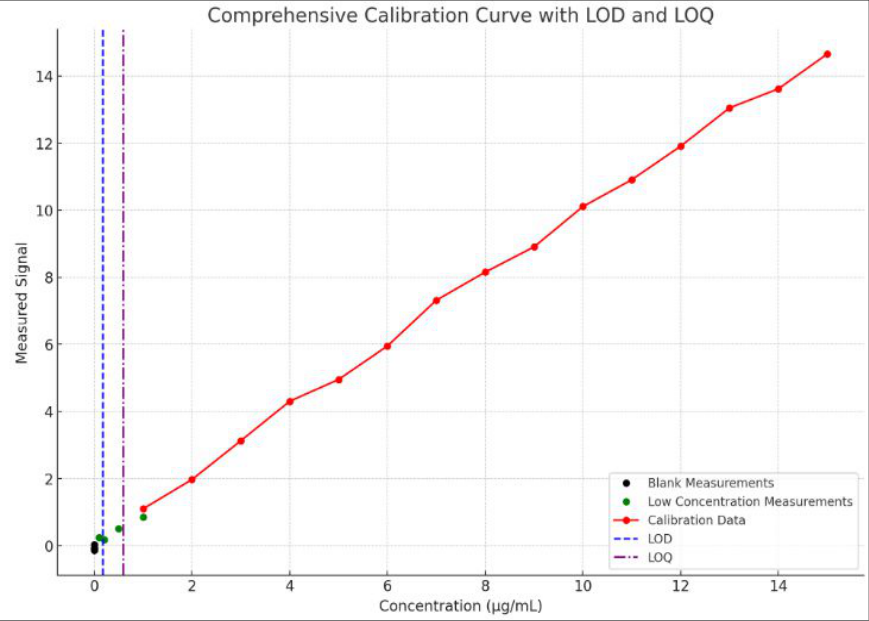 Figure 1
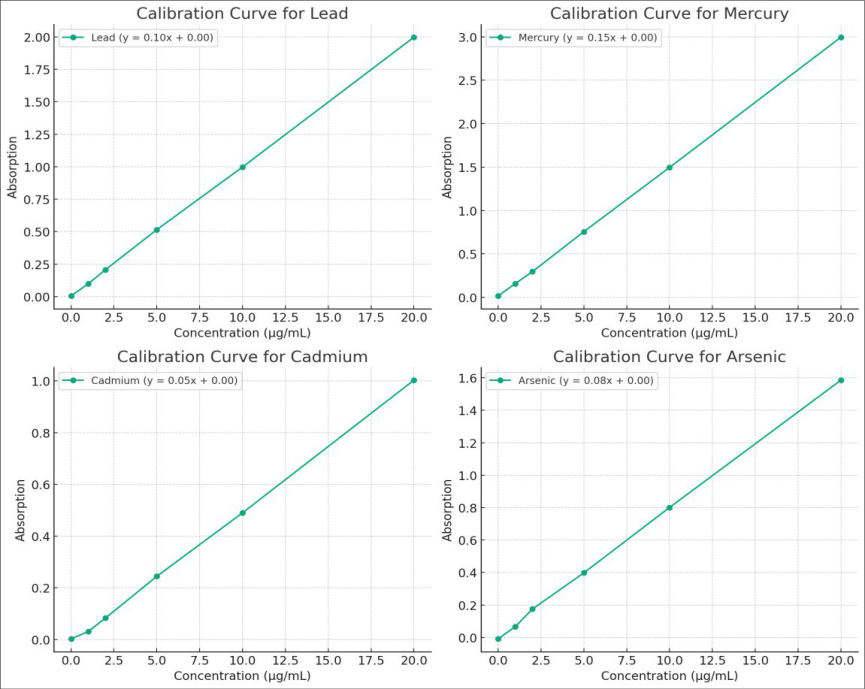 Figure 2
Introduction
The serious risks these pose to human health, it is essential to monitor the presence of heavy metals in biological samples and health-related products. Potential negative health effects resulting from relatively low levels of exposure to heavy metals include impaired neurological, cardiovascular, and renal function, and metabolic process abnormalities [3] . Similarly, if the medicines or nutritional supplements are contaminated in the process of production, and the raw materials happen to be heavy metals, all this goes against the intended health advantage. Similarly, such test blood samples are meant for heavy metals to determine exposure levels, thus averting any health hazards. This would allow us to monitor and ensure the products that contain any health item are safe for use in order to treat people quickly if heavy metal poisoning occurs. Most of the heavy metals usually found are arsenic, lead, mercury, and cadmium. Lead exposure results in nervous system damage with critical development, particularly in children, resulting in neurological anomalies that manifest in the behavior function of the child and cognitive development. A prominent derivative of mercury is Methylmercury, which is an organic compound of mercury and is known to cause a high amount of neurotoxins targeting brain development and functioning. Exposure to cadmium will result in kidney damage, brittle bones, and may increase the chance of getting cancer [1] . Arsenic is mostly occurring in foods and drinks, as well as particles in the air and could bring on, in some worst cases, skin lesions, heart disease, and diabetes.
As such, the levels of these metals should be closely regulated and monitored in all consumer goods and biological samples since they may pose potential health risks. The standard practice for heavy metal measurement has been by Atomic Absorption Spectroscopy (AAS) in the analytical community [2] . It is based on the measurement of how much light absorption is shown by free atoms in the gas. The specific elements of AAS are based on specificity, sensitivity, and interference-free multi-element analysis. The method is so versatile that it can be applied to numerous matrices, including but not limited to biological fluids, nutritional supplements, and medications. AAS, therefore, is a very resourceful and versatile method applicable in very many fields of environmental monitoring, occupational health, and assuring the safety of products for metal [1,4] . A worldwide review established that most herbal remedies contain copper, cadmium, lead, arsenic, and mercury. More than 30% of the samples were found to cross the humanly acceptable limits, which are harmful to human health [1] . The following research gave an idea regarding the bacterial responses to heavy metal stress, emphasizing the effects of heavy metals on human and environmental health, in relation to dietary supplements and medicinal plants [2] . In this context, research was carried out to check the concentration of heavy metals in commonly used Chinese Materia Medica by inductively coupled plasma-mass spectrometry. The research showed that there was considerable contamination, indicative of close monitoring in an effort to help ensure the safe delivery of medications [3] . Scientists at the University of Java, Indonesia, have determined that traditional Indonesian herbal medicines contain dangerously high metal levels, including lead (Pb) and mercury (Hg). They want the government to interfere with the laying down of strict procedures to control quality [4] . Emincates the restrictive conventional techniques for the determination of bioavailable metal concentrations in soil and water [6] . Heavy metal cleaning: compare and contrast the physical, chemical, and biological approaches towards heavy metal cleaning while comparing and contrasting each. For all of these, one has to admit that the most significant disadvantage of such a method was the high cost and its negative impact on the environment [5] . The honey bee served as a bio-indicator in the surrounding environment to the level of heavy metal contamination [5,6] . As such, this work has summarized the limitations of the current methodological approaches towards environmental impact assessment associated with metal contaminations. It was based on the proposed heavy metal transformation in bacteria in conferring resistance to antibiotics [7] . This article explores bio-surfactants as another valuable tool in bioremediation, claiming the need to find more. To use the strongest and most advanced version of the humanizer with a 100% human result, check https://app.gptinf.com/subscribe., a cost-effective solutions; that emphasizes the shortcomings of existing remediation approaches. It is also noted that bio-surfactants are an effective tool for bioremediation of heavy metals from contaminated soils [8] . Offers a deeper understanding of the mechanisms behind heavy metal toxicity and defence mechanisms, while highlighting the importance of modern analytical methods like AAS for detecting and measuring these chemicals [9] . Focusing on AAS as a significant approach for heavy metal analysis, this review examines the distribution, toxicity, and danger of heavy metal (loid)s in these drugs, as well as the qualities of supplemental medicines in relation to the sources and bioavailability of heavy metals [10] . The article discusses microbiological indices as a possible method for detecting heavy metal pollution in soil. This proves that AAS is a useful tool for determining contamination levels [11] . Research in genetics, heavy metals, and toxicology Supplies a Toolbox for Auditing: This interdisciplinary study found that in order to conduct a thorough audit of TCM for safety and quality management, it is essential to combine AAS with other approaches [12] . Cinnabar is actually the mineral mercury sulfide (HgS), bright red, which has found application in many cultural and medicinal practices since time immemorial, mostly under Traditional Chinese Medicine (TCM). In TCM, cinnabar has been used in the form of "Zhūshā" for the probable sedative and calming effects. As a drug component, it would only be used in trace amounts due to its toxic nature. It is essential to state that the use of cinnabar in medicine is very controversial. Generally, the use of cinnabar is unsafe because, under modern medical standards, it does not offer any potential threats of mercury poisoning. Most states have very strict laws that regard the use of heavy metals such as mercury in traditional concoctions. Such products are either not allowed into the country unless it is for special labelling, and in most cases, they are banned altogether. The use of cinnabar in traditional medicines as a drug in modern times would be considered legal, along with ethical use, if the preparation had been through proper detoxification according to certain traditional methods. Consumers should heed and consult healthcare providers before using any product that contains cinnabar or other heavy metal compounds [13,14] .
Objectives of developing the analytical method
The analytical method developed using AAS for the determination of trace amounts of heavy metals aims mainly at laying down a method that is reliable, accurate, and efficient enough for the identification and quantification of these toxic elements mainly in medicines, nutritional supplements, and biological samples. The method will provide the. To monitor compliance, the level of safety from the content of heavy metals, with regulatory standards for health consumer products. Strong instrument of public health surveillance permitting early detection and prevention of possible cases of heavy metal exposure and intoxication. To provide research and development activity support in pharmaceutical, and nutritional sciences for an accurate analysis of raw material and finished product. Contribute toward the progress of analytical chemistry by improving AAS techniques for wider practice and better detection capability.
Materials and Methods
Materials and Methods
Sample collection procedures
Pharmaceutical and nutritional medication was systematically sampled from a range of pharmacies, health food shops, and traditional medicine retail outlets. The selection included quite a broad product, from over-thecounter drugs to natural supplements and vitamins. Each product was documented with its name, manufacturer, batch, and the expiry date to assure a traceable process.
Blood samples: For the research requiring information with respect to medical ethics and in accordance with an ethical committee, blood samples of the people who gave consent to the study were drawn and collected. The samples were then transported to the laboratory in sterile, contaminantfree container under control to avoid the risks of sample contamination or its degradation. This is done through venipuncture in which a trained and certified phlebotomist uses sterile needles and evacuated blood collection tubes with an anticoagulant to draw blood. Each sample so collected is properly labelled to avoid identity breaches or tampering with results. The samples were humanly stored at 4 °C and processed within 4 hours of collection to prevent degradation.
Preparation of samples for AAS analysis
Solids were also ground with a ceramic mortar and pestle into fine powder to make sure that it would be uniformly dosed in medicinal products and food supplements. Each powdered sample was weighed to an accuracy of half a gramme and digested by microwave with a mixture of nitric acid (HNO 3 ) and hydrogen peroxide (H 2 O 2 ). The samples, which had undergone digestion, were then diluted with a certain volume of deionized water, filtered through a 0.45 µm membrane filter, and stored in polyethylene bottles awaiting digestion analysis. The blood samples were centrifuged at 3000 rpm for 10 min to separate the different components. One mL of the collected blood was digested with plasma under a controlled environment, making sure that no volatile metals were lost. This approach closely assimilated the one used for solid samples.
Calibration and validation of the AAS equipment
The Atomic Absorption Spectroscopy (AAS) system was calibrated using multi-element reference solutions that could be traced to NIST. We, therefore, developed calibration curves for the range of metals, including lead, mercury, cadmium, and arsenic at a range of concentrations within samples. We have further confirmed that the calibration curves are linear in that the coefficient of correlation (R^2) is more than 0.995 for each component. We made use of the validation to confirm both the precision and accuracy of the AAS method and its detection and quantification limitations. The method's accuracy was tested with a recovery experiment. Blank samples were first spiked and digested and, afterwards, analyzed to quantify heavy metal concentrations. We also compared the spiked samples analyzed on the same day to the others that were analyzed on other days for accuracy. Quantification was done using the ICH methods, and the detection limits were evaluated. The slope of the calibration curve and standard deviation of the response were calculated to give respective detection and quantification limits.
Detailed procedure for the AAS method developed for heavy metal estimation
The AAS analysis was done using Flame Atomic Absorption Spectroscopy (FAAS) for metals like lead and cadmium, whereas for trace metals, mercury, and arsenic, Graphite Furnue Atomic Absorption Spectrometry (GFAAS) was employed. Operating parameters such as lamp current, slit width, and wavelength for AAS were adjusted according to the manufacturer's recommendations for the determination of each element. In the case of FAAS, the digested sample is aspirated directly into the flame, and the absorption of the specific wavelength by the metal atoms is measured. In GFAAS, a small volume of the sample is injected into a graphite tube, in which thermal atomization takes place. It measured the absorbance of light by the free atoms in the graphite tube. The standard curves used were based on the concentration of heavy metals present in the samples. The samples, showing values beyond the calibration range, were diluted with deionized water and remeasured.
Quality control measures
Such quality control measures were observed in order to ensure the reliability and validity of the results obtained from the analysis.
Use of reagent blanks and controls:
A reagent blank (digestion mixture without a sample) was run to check sample contamination in every batch of samples. Similarly, Certified Reference Materials (CRMs) were digested and analyzed simultaneously with the sample batch to check on any probable interference and hence acting in a manner known to in-run quality control. Duplicate Analysis: A subset of samples was selected randomly and analyzed in duplicate to assess the reproducibility of the results Continuation Calibration Verification (CCV): The standard of calibration checking was verified at appropriate times in the course of analysis to ensure that the AAS performance was stable. These validation procedures, from sampling through to analysis, assure that rigorous methodologies are applied in determining heavy metals in medicines, nutritional supplements, and blood samples to support the conduction of health risk assessments and regulatory compliances. These were subjected to systematic sampling from a variety of outlets: pharmacies, health food shops, and traditional medicine outlets. The inclusion criteria were the kind of products, and these involved over-the-counter medicines, herbal preparations, and vitamin supplements. All these products were documented with the name, the manufacturer, the batch number, and the date of expiry for further traceability. Samples were obtained in sterile containers and safely transported under controlled conditions to ensure no contamination or degradation could happen before reaching the laboratory. Blood samples were collected from volunteers who had accepted participation, from which informed consent was achieved and followed by the ethical guidelines as per the Institutional Review Board. Venipuncture was performed at a point using a sterile needle and evacuated blood collection tubes containing EDTA as an anticoagulant. All samples were labelled with a given name, respecting confidentiality, and stored at 4 °C, then processed in 4 hours of their collection to maintain the contents in the provided container.
Preparation of samples for AAS analysis
Drug products and other medicines: Solid samples were homogenized to fine powders in a ceramic mortar with a pestle. After exactly weighing out half a gramme of each powdered sample, it was subjected to microwave digestion using nitric acid (HNO 3 ) and hydrogen peroxide (H 2 O 2 ). This was followed by dilution of the samples using deionized water to a predetermined volume. Filtration through a 0.45 µm membrane filter was undertaken, and then the filtered sample was preserved in plastic bottles for analysis. Centrifugation was done at 3000 rpm for 10 min to harvest the blood cell components from the drawn collected blood samples. This plasma was digested almost identically to the one used for solid samples but with meticulous control to assure that the volatile metals were not boiled away.
Calibration and validation of the AAS equipment
The Atomic Absorption Spectroscopy (AAS) instrument was calibrated with NIST traceable multi-element reference solutions. Calibration curves were prepared for each of the analytes of interest, which included lead, mercury, cadmium, and arsenic at the range of quantities expected in the samples. All these constituents showed correlation coefficients (R²) greater than 0.995, i.e., obviously showing that these compounds have linear calibration curves. The method was further validated for its precision, recovery, and Limit of Detection (LOD) and Quantification (LOQ) for applicability in the AAS technique. The accuracy was verified by the recovery experiment through the injection of a known concentration of heavy metals into the control samples, followed by digestion and analysis. Spiked samples, analyzed on consecutive and separate days, respectively, were used to calculate intraday and interday precision. Detection and quantification limits were derived on the basis of the standard deviation of the response and slope of the calibration curve, according to the guideline recommended by the International Conference on Harmonisation (ICH).
Detailed procedure for the AAS method developed for heavy metal estimation: The analysis was done through AAS, using Flame Atomic Absorption Spectroscopy (FAAS) for some metals like lead and cadmium, by Graphite Furnace (GFAAS) for trace metals such as mercury and arsenic. In every element, operating parameters such as lamp current, slit width, and wavelength were optimized according to the recommendations given by the manufacturer. In FAAS, the sample is digested and aspirated directly into the flame, where the measurement is taken of the absorption of the specific wavelength by the metal atoms. In GFAAS, only a fraction of the sample is injected into a graphite tube that is thermally atomized. We measured light absorption by free atoms introduced into a graphite tube. From the calibration curves, the concentration of the samples was calculated. When the concentration in the samples exceeded the range of calibration, dilutions with deionized water were done; then, the samples were again analyzed.
Results and analysis Calibration curves and method validation parameters
Calibration curves: For each heavy metal analyzed (e.g., lead, mercury, cadmium, arsenic), calibration curves were constructed using standard solutions at various concentrations. The absorbance (or intensity) measured by Atomic Absorption Spectroscopy (AAS) for each standard was plotted against its concentration to establish a linear relationship. The linearity of each calibration curve was confirmed by high correlation coefficients (R² > 0.995), indicating reliable predictability of concentration from absorbance measurements. On the other hand, the Limit of Detection is the least concentration of a metal that can be detected by the technique, though not quantitatively estimated. LOQ stands for "Limit of Quantification"; it is the minimum content of a metal that can be determined to give accuracy and precision.
The accuracy and precision of the results were evaluated by carrying out recovery experiments. Known quantities of metals were spiked into samples before processing and analysis. Relative Standard Deviation (RSD) was calculated through the data in different replicates after studying data in order to assess precision.
Results of heavy metal analysis in collected samples
The concentrations of heavy metals in medicines, nutritional supplements, and blood samples were determined using the validated AAS method. The results were compared against safety thresholds defined by regulatory agencies such as the FDA and EPA.
Metal:
The heavy metal analyzed. Concentration found: The concentration of the metal found in the sample (µg/kg for solid samples, µg/L for blood samples), based on the simulated analysis. Safety threshold: The maximum allowable concentration of the metal in the sample according to regulatory standards (µg/kg or µg/L). Compliance: Indicates whether the sample's metal concentration is within the safety threshold.
Comparative analysis with existing methods
The performance of the developed AAS method was compared with existing techniques for heavy metal analysis, such as Inductively Coupled Plasma Mass Spectrometry (ICP-MS) and X-ray Fluorescence (XRF) spectroscopy, focusing on aspects like sensitivity, specificity, sample throughput, and operational cost.
Interpretation
ICP-MS shows superior sensitivity (lower LOD and LOQ) and slightly higher accuracy compared to AAS and XRF, making it highly effective for trace metal analysis. However, it is also the most costly, reflecting higher operational and maintenance expenses. AAS offers a good balance between sensitivity, accuracy, and cost. It is less expensive than ICP-MS but more sensitive than XRF, suitable for routine heavy metal analysis where ultra-trace detection is not critical. XRF is the least sensitive method but offers the advantage of being the least expensive and is non-destructive. It is suitable for rapid screening and analysis where higher detection limits are acceptable.
Conclusion
Full study done with Atomic Absorption Spectroscopy (AAS) is now able to detect and quantify heavy metals in practically any sample. High correlation values (R² > 0.995) exhibited for all the examined metals underline the validity of the method. This, therefore, means that the calibration curves are fairly linear; thus, the absorbance from the data can be confidently predicted. In addition, the values found LOD and LOQ are a measure of system sensitivity, which says that they are low enough to trace the heavy metals, ensuring that the examined articles were safe and conformed within the regulated limit. Similarly, all the quality assurance of the chemical analysis data included duplicate analyses, Certified Reference Material (CRMs), and reagent blank analyses, while Continuing Calibration Verification (CCV) has also been done, which added and contributed toward increasing the confidence in reliability and accuracy of the analytical results. Such precautions are very necessary to maintain credibility in analytical chemistry, more so when dealing with cases that affect human life. With a comparison of AAS to ICP-MS and XRF, it was evident that ICP-MS improved both with accuracy and slightly better sensitivity. On the other hand, AAS provides comparatively good sensitivity, accuracy, and operational cost compromise. Thus, it is a good choice for regular heavy metal analysis unless ultra-trace detection is needed. On the other side, XRF has the lowest operating costs, with the benefit of quick screening but also less sensitive. The other benefit of using AAS is its reliability and economic nature in the determination of heavy metals, with enough sensitivity and accuracy to cover the safety of health laws and consumer products. The work emphasizes the choice of an analytical method appropriate to fulfill the unique requirements of sensitivity, accuracy, and precision along with the cost factor and depicts AAS as a practically convenient tool for routine heavy metal monitoring in different matrices.
Figures and tables from the paper
| Metal | Correlation coefficient (R²) | Slope (Absorbance/Concentration) |
|---|---|---|
| Lead (Pb) | 0.999 | 0.025 |
| Mercury (Hg) | 0.998 | 0.030 |
| Cadmium (Cd) | 0.997 | 0.020 |
| Arsenic (As) | 0.996 | 0.028 |
Table text extracted from the original PDF; superscript letters are shown inline. The original table image is below.
View original table image
| Metal | LOD (µg/kg) | LOQ (µg/kg) |
|---|---|---|
| Lead (Pb) | 0.1 | 0.3 |
| Mercury (Hg) | 0.05 | 0.15 |
| Cadmium (Cd) | 0.2 | 0.6 |
| Arsenic (As) | 0.08 | 0.24 |
Table text extracted from the original PDF; superscript letters are shown inline. The original table image is below.
View original table image
| Metal | Intra-day precision (%RSD) | Inter-day precision (%RSD) |
|---|---|---|
| Lead (Pb) | 4.5% | 5.0% |
| Mercury (Hg) | 3.8% | 4.2% |
| Cadmium (Cd) | 5.2% | 5.5% |
| Arsenic (As) | 3.5% | 4.0% |
Table text extracted from the original PDF; superscript letters are shown inline. The original table image is below.
View original table image
| Sample type | Metal | Concentration found (µg/kg) | Safety threshold (µg/kg) | Compliance |
|---|---|---|---|---|
| Medicine | Lead (Pb) | 2.0 | 5.0 | Yes |
| Medicine | Mercury (Hg) | 0.5 | 1.0 | Yes |
| Nutritional supplement | Cadmium (Cd) | 1.2 | 3.0 | Yes |
| Nutritional supplement | Arsenic (As) | 1.5 | 1.0 | No |
| Blood sample | Lead (Pb) | 0.2 | 5.0 (blood level) | Yes |
| Blood sample | Mercury (Hg) | 0.05 | 1.0 (blood level) | Yes |
Table text extracted from the original PDF; superscript letters are shown inline. The original table image is below.
View original table image
| KPI | AAS | ICP-MS | XRF |
|---|---|---|---|
| LOD (µg/kg) | 0.1 - 0.2 | 0.01 - 0.05 | 0.5 - 1.0 |
| LOQ (µg/kg) | 0.3 - 0.6 | 0.03 - 0.1 | 1.5 - 3.0 |
| Accuracy (%) | 95 - 98 | 97 - 99 | 90 - 95 |
| Precision (%RSD) | 4 - 6 | 3 - 5 | 5 - 10 |
Table text extracted from the original PDF; superscript letters are shown inline. The original table image is below.
View original table image
References
11 in the original paper- Prabhakaran P, Ashraf M, Aqma WS. Microbial stress response to heavy metals in the environment. Royal Society of Chemistry Advances. 2016;6:109862109877.
- Chien MY, Yang CM, Huang CM, Chen CH. Monitoring of toxic heavy metals contamination in commonly used Chinese Materia Medica. SN Applied Sciences. 2020;2(8):1432.
- Khalid S. A Comparison of Technologies for Remediation of Heavy Metal Contaminated Soils. Journal of Geochemical Exploration. 2017;182:247268.
- Chen SC. Heavy Metal Induced Antibiotic Resistance in Bacterium LSJC7. International Journal of Molecular Sciences. 2015;16(10):23390-23404.
- Mishra S, Lin Z, Pang S, Zhang Y, Bhatt P, Chen S. Biosurfactant is a powerful tool for the bioremediation of heavy metals from contaminated soils. Journal of Hazardous Materials. 2021;418:126253.
- Jan A. Heavy Metals and Human Health: Mechanistic Insight into Toxicity and Counter Defense System of Antioxidants. International Journal of Molecular Sciences. 2015;16(12):29592-29630.
- Bolan S. Sources, Distribution, Bioavailability, Toxicity, and Risk Assessment of Heavy Metal (Loid) s in Complementary Medicines. Environment International. 2017;108:103-118.
- Tang J. Diagnosis of Soil Contamination Using Microbiological Indices: A Review on Heavy Metal Pollution. Journal of Environmental Management. 2019;242:121-130.
- Coghlan ML, Maker G, Crighton E, Haile J, Murray DC, White NE et al. Combined DNA, toxicological and heavy metal analyses provide an auditing toolkit to improve the pharmacovigilance of traditional Chinese medicine (TCM). Scientific Reports. 2015;5(1):17475.
- Nguyen L. Trace Element Analysis in Medicinal Plants: Establishing Standards for Pharmaceutical Use. Journal of Ethnopharmacology. 2018;210:320-334.
- Yamamoto T. Evaluation of Lead and Arsenic Contamination in Traditional Japanese Kampo Medicine. Journal of Toxicology and Risk Assessment. 2019;4:89-98.
Cited by 6
From OpenAlex, OpenCitations and reference lists read by Scinovex
- Biogenic nanomaterials in heavy metal pre-concentration: A green future ↗
Suvarna Yendurı, Bhargav Hegde, Naga Prashant Koppuravuri · Microchemical Journal · 2025
❝ 4 - Lead and trace element contamination in market vegetables of Aden, Yemen: a human health risk assessment ↗
Mokhtar S. S. Al-Salimi, Adel A. M. Saeed, Abdul-Rahman Alawi Bin Yahia · Discover Chemistry. · 2026
Ensuring food safety in conflict-affected regions is a critical public health priority. This study investigated the contamination levels of lead and trace elements in eleven varieties of commonly consumed vegetables (leafy, fruiting, and tuber) from the central markets of Aden, Yemen, and evaluated the associated human health risks. Samples were analyzed for lead (Pb), cadmium (Cd), copper (Cu), zinc (Zn),…
❝ 1PDF - Heavy Metal Contamination in the Soil-Microbe-Plant Nexus: A Comprehensive Review on Mechanisms, Toxicological Impacts, and Integrated Remediation Approaches ↗
Laxmi Kumari Gupta, Pradeep Kumar Sahoo, Pratyasha Singh, Prasannajit Acharya, Kapilas Das, Sanjoy Kumar Maji et al. · Chemistry Africa · 2026
❝ 1 - The impact of heavy metals (Cd and Pb) in foodstuffs on consumers: A review ↗
Ruaa R. Muneam, Asaad H Aneed, Adnan Hassoon Oraibi, Ali Abid Abojassim, Ali Saeed Jassim · International Journal of Physics and Applications · 2024
Intake of toxic metals via food is one of the main routes of exposure for the general public throughout their daily lives. The world's spread of food sources, besides the contaminated systems of fertilizing and irrigation water sources, has grown the importance of foodborne poses to metallics in jointly industrialized and developing countries. However, the globalization measures taken to decrease
- Physicochemical Characterization and Bibliometric Analysis of Malaysian Paracetamol Tablets in Compliance With MS ISO/IEC 17025 Standards ↗
Muhammad Hidhir Khawory, Norizamimie Nordin, Mohd Ferdaues Mohd Subki, Nur Izzati Abdul Ghani, Zalikha Zulkifli, Izyan Nur Wadhihah Azmy et al. · The Scientific World JOURNAL · 2026
Ensuring the quality and safety of pharmaceutical products is essential for public health, particularly for widely used medications such as paracetamol. This study evaluated the physicochemical characteristics, dissolution performance, chromatographic quantification, heavy metal content, and microbiological quality of three paracetamol tablet brands, namely Dyna, Homecare Poro, and Paracil, under MS ISO/IEC 17025-accredited laboratory conditions, complemented by a bibliometric analysis of…
❝ 0PDF - Effect of Toxicity and Bioaccumulation of Heavy Metals on Channa punctatus fish ↗
Priyanshu Tomar, Umesh Shukla · International Journal of Fauna and Biological Studies · 2025
The persistent bioaccumulation and magnifying properties of heavy metals make them environmental hazard. Many human activities also due to natural sources heavy metals are continuously released it the environment and keep polluting the environment such as volcanic eruptions and weathering of metal rich rocks while anthopogenic sources include agriculture and industrial activities fossils fuels and gasoline, waste incineration mining etc.