
Research article · 2024 · Full text
International Journal of Agriculture Extension and Social DevelopmentInclusive tourism and disability empowerment
Volume 7(4) · Pages 623–627 · DOI: 10.33545/26180723.2024.v7.i4h.581 ↗
Research areasRecreation, Leisure, Wilderness ManagementTourism, Volunteerism, and DevelopmentUrban Transport and Accessibility
Abstract
Author-writtenAccessible tourism, inclusive tourism and even disabled tourism are all terms used synonymously. People who do not have any impairment get all the recreational opportunities but the people with disabilities have been historically continually excluded by the same. Thus, accessible tourism aims to remove any physical, informational and attitude obstacles so that everyone, regardless of gender, age, physical condition, or bias, may enjoy travel experiences. In India, the rights of persons with impairment in the context of tourism are primarily addressed under the Rights of Persons with Disabilities Act, 2016. This comprehensive legislation replaced the Persons with Disabilities (Equal Opportunities, Protection of Rights and Full Participation) Act, 1995 and it includes an extensive range of policies to protect and strengthen the rights of people with disabilities. This paper emphasizes the need to knowing importance and implementing a disability-inclusive design for heritage site managers. The paper highlights the current challenges faced by individuals with disabilities when engaging in tourism activities and also proposes innovative solutions to create a more inclusive and accommodating travel environment. Moreover, it features the advantages of accessible travel industry for disabled people like expanded social support, social advancement and working on prosperity. It suggests execute policies and practices that uplift disability inclusion and the involvement of disabled persons. This paper focuses on accessible transportations, barrier-free accommodations, Incorporation of assistive technologies and socio-economic benefits of promoting inclusive tourism, both for the disabled individuals as well as for the tourism industry as a whole.
Summary
Source-checkedPlain-language reading of the full paper, prepared with AI and checked against the text. Each point links to the authors' own words.
Why it matters
- People with disabilities have historically been excluded from the recreational opportunities available to those without impairments. View evidence ↗
- Difficulties in accessing infrastructure, services, and goods limit the ability of people with various impairments to participate in economic and social activities. View evidence ↗
- Accessible tourism is designed to eliminate physical, informational, and attitudinal barriers to ensure travel experiences are available to everyone. View evidence ↗
The question
- The paper aims to emphasize the importance of and the need for implementing disability-inclusive designs for managers of heritage sites. View evidence ↗
- The research seeks to highlight challenges faced by disabled individuals in tourism and propose innovative solutions for a more accommodating environment. View evidence ↗
What they did
- The review focuses on analyzing accessible transportation, barrier-free accommodations, the use of assistive technologies, and the socio-economic benefits of inclusive tourism. View evidence ↗
- The paper examines the legal context in India, specifically the Rights of Persons with Disabilities Act, 2016. View evidence ↗
What they found
- Major challenges for disabled persons include lack of information, inaccessible facilities, communication barriers, financial constraints, and poor social support. View evidence ↗
- Among people with disabilities, wheelchair users encounter the greatest number of accessibility obstacles in their daily lives. View evidence ↗
- The UN Convention on the Rights of Persons with Disabilities (Article 30) recognizes the right of disabled persons to access cultural heritage sites and participate in recreational and sporting life. View evidence ↗
- Vacations can help disabled individuals overcome low confidence and underestimation while motivating them to re-engage in social interaction and physical activity. View evidence ↗
- Tourism experiences have been found to improve subjective health across physiological, psychological, social, and spiritual dimensions. View evidence ↗
- The benefits of inclusive tourism extend beyond the disabled travelers to include the local populations. View evidence ↗
What it means
- The authors conclude that inclusive tourism serves as a roadmap for disability empowerment and overall financial, structural, and technological growth. View evidence ↗
- The authors recommend collaboration between governments, businesses, and advocacy groups to advance inclusive tourism. View evidence ↗
- The authors note that the full potential of accessible tourism is still hindered by persistent physical infrastructure limitations and societal barriers like stigma. View evidence ↗
Visual summary
1 visualsIllustrations explain the paper; they do not show study data.
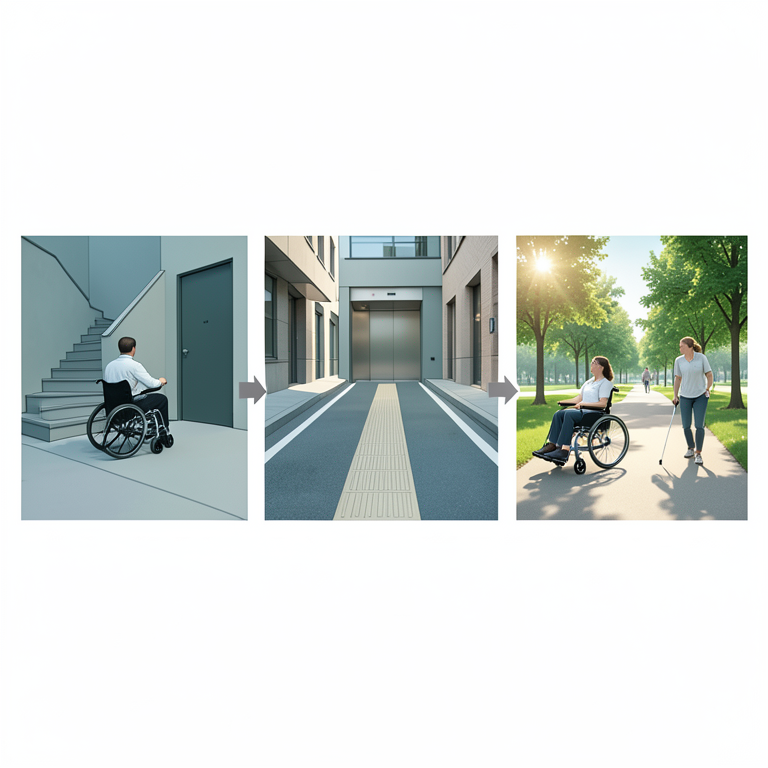
Inclusive Tourism Ecosystem
AI-generated conceptual illustration (People with various physical disabilities using assistive devices in a tourist city). It explains the idea and does not show study data.
View source evidence ↗Introduction
Accessing infrastructure, services and goods at different levels is difficult to access by people with physical, sensory, intellectual, and/or developmental impairments, which limits their ability to participate in social and economic activities. (UNWTO, 2016) [1] . These obstructions can be physical (entryway width, steps' limit, openness for wheelchair) or scholarly and tactile (improper data pursuance and deciphered). Many persons with disabilities are compelled to sacrifice their ability to travel because it requires physical, mental, and social coordination. Though they are definitely a more demanding group, people with disabilities have the same desires as people without any impairment (Yau et al., 2004) [2] . Accessible tourism, inclusive tourism, and even disabled tourism are same. Disabled individuals are to some extent rejected from the relaxation exercises proposed to individuals without portability issues under tourism. As a result, accessible tourism is about making tourism experiences accessible to all persons, regardless of sex, age, or physical condition (Münch and Ulrich, 2011) [3] . Accessibility is an important component of facilities and services offered to tourists. How easy tourists can access an interesting point makes it help them to visit and enjoy the place. While talking about openness, it is as often as possible to fail to remember that a few guests might have incapacities. Handicapped people have similar needs and desires for movement as physically fit (Gondos and Narai, 2019) [4] . However, accessibility issues have prevented them from participating in a variety of social activities, including tourism (Zahari et al., 2020) [5] . Wheelchair users face the most obstacles in their daily lives as compared to other disabled persons, in terms of accessibility (Page and Thorsteinsson, 2018; Zahari et al., 2019) [6,7] . To involve the get-togethers around them, they went around on their wheels. Be that as it may, they feel victimized in light of the fact that they can't get to various areas, particularly traveller areas of interest. It has been observed that inequality levels within a country can inhibit development, progress and societal unrest (Anand and Kanbur, 1993; Bourguignon and Morrisson, 1998) [8,9] . The concept of inclusive tourism is the tourism services and goods that make customers and guests of all abilities feel welcome and valued. It focuses specifically on the process of making tourist services accessible to individuals with disabilities and groups with identical access needs (Heavan, 2016) [10] .Inclusive tourism is a form of tourism that involves well thought planned collaboration proceeds between stakeholders that enable people with more requirements, including mobility, vision, hearing and cognitive dimensions of access to function www.extensionjournal.com independently with equity and dignity through the provision of universally design tourism location services and environments. It suggests physical access, wheelchair accessible toilets and ramps and related to compliance with regulations. The argument regarding the function of the tourism section in improvement has currently shifted from decreasing poverty to an additionally extra inclusive tourism (Hampton et al., 2017; Scheyvens and Biddulph, 2018) [11,12] .
Challenges faced by person with disability
A small and inaccurate amount of information about the state of persons with disabilities in the region as well as experience in providing effective travel services, can become an obstacle to understanding their all problems. Appropriate data on the quantity of people with impairment and their day-to-day environments can assist with fortifying the adequacy of endeavours pointed toward disposing of relational obstructions and boundaries to the arrangement of administrations. Taking care of the issues will assist with partaking all the more effectively in social life. Accessibility should be a significant part of ethical tourism practice. It should not be viewed as a theoretical decision or a specialty area, but rather as a universal value system for which all tourism growth and administration should be held accountable (Wantanee et al., 2014) [13] . There are different sorts of obstructions for putting together the travel industry for individuals with disabilities: inward, outer and communication boundaries. Inside obstructions are due to an individual's physical and mental capabilities. An environmental hindrance-outside to an individual with a disability-incorporates perspectives toward individuals with disabilities, design, natural circumstances, transportation, monetary components, rules and guidelines, and rejection boundaries. People's interactions with their social environment create communication barriers. Tourism is a part of a larger social connection. The travel industry dispenses with the sensation of loss of respect, inadequacy and incorporates into society. Demand for inclusive tourism is growing. Disabled tourism has its own unique characteristics due to the he requirements and expectations of handicapped tourists during their holidays at a place are likely to differ (Cengiz et al., 2016) [14] . Ivanov and Kisel (2020) [15] highlighted the following factors limiting or affecting the possibility of organizing accessible tourism: ▪ The physical condition of potential tourists (disability, limited legal capacity) ▪ The financial situation of potential tourists (lack of funds for travel) ▪ Expensive transport components of a tourist trip ▪ Inflated prices for accommodation facilities ▪ The presence of bureaucratic obstacles (for example, the complexity of visa processing procedures for foreign travel) ▪ Lack or poor development of measures for socials support of tourism and recreation ▪ The limited range of offered tourist services and tourist destinations available to persons with disabilities ▪ Lack of necessary motivation for people to travel Above researches indicates that major challenges for person with disabilities were lack of information, low experience, inappropriate statistics, inaccessibility of facilities, communication barriers, issues of respect and dignity, physical, social, financial and transport facilities, improper accommodation arrangements, procedural obstacles and poor social support. It is suggestive that strategies must be planned and proper modifications has to be done for making the tourism friendly for the person with disabilities.
Act and policies for inclusive tourism
The term "accessible tourism" refers to a collection of policies that offer universally tailored tourism products, services and surroundings to individuals with accessibility needs, such as mobility, vision, hearing, and cognitive access, allowing them to live autonomously and with dignity (Darcy and Dickson, 2009) [16] . The implementation and management of accessible tourism is particularly complex, as it necessitates the involvement and effective cooperation of both public and private stake-holders in order for accessible services to be incorporated across the whole production network, which comprises the guest's excursion inside a given objective (European Commission, 2007) [17] . To accomplish this, there are two potential methodologies, the proactive, which is in accordance with a more extensive cultural change, and the receptive methodology, which concerns individual changes implemented by a legitimate structure (Bickenbach, 2001) [18] . Accessibility has become a critical problem in today's cultures, where everyone has the right to live without interference from their bodily or mental health (Yakob et al., 2022) [19] . In any case, disabled people actually want to visit different spots for various reasons. One of the fundamental lists of social essential goods is the freedom of mobility (Rawls, 1999) [20] . According to Sen (1993) [21] , the capability approach demonstrates that people have different demands depending on different situations and surroundings, which have an impact on their ability to perform. To accomplish a comparative outcome throughout everyday life, disabled people could require an alternate number of assets. The capacity approach strives to change perceptions of human well-being and the evaluations of deprivation, equality and claims of justice and injustice (Day, 2018) [22] . The "good life" is a life one chooses for oneself, not what is forced upon them (Sen, 1993) [21] , as disabled persons usually experience. In this way, it is contended that an available climate might furnish impaired people with essentially more open doors for strengthening and consideration. Without any restrictions on physical access, disabled people can completely enjoy and participate in society as they desire, with complete control over where they can be instead of where they are only allowed to be. United Nations Convention on the Rights of Persons with Disabilities (UNCRPD, 2006) [23] is a human rights tool (Lid, 2022) [24] . It provides equal rights to people with disabilities for participating in social and cultural activities. Article 30 of this clearly recognizes the right of persons with disabilities to take part in cultural, recreational and sporting life. This Article 30 also provides the right to access the cultural heritage sites and structures as well as participation in other heritage tourism events. In India, the Right of Persons with Disabilities Act, (2016) [25] promotes and defend the rights of all persons with disabilities to have a cultural life and to participate in leisure www.extensionjournal.com activities equally with others which include-(a) facilities, support and funding to artists and writers with disability to pursue their interests and talents (b) establishment of a disability history museum which chronicles and interprets the historical experiences of persons with disabilities (c) making art accessible to persons with disabilities d) encourage recreation centers and other group activities more popular e) working with support in exploring, moving, craftsmanship classes, open air camps and adventure activities (f) upgrading courses in social and art subjects to empower cooperation and access for people with impairment (g) developing technology, equipment, and aiding devices to make it easier for people with disabilities to participate in recreational activities and be included (h) guaranteeing that people with hearing disability can approach television programs with gesture based communication understanding or captions. The United Nations has contributed significantly to the growth of the reactive approach in numerous nations since the late 1980s. In 1993, the UN General Gathering embraced the Standard Guidelines on the Levelling of Chances for People with impairment, A/RES/48/96, an instrument with no authoritative document, yet with huge strategy suggestions that stressed areas of strength for the and political responsibility of legislatures to make a move to accomplish balance of chances for individuals with disabilities. This drive has prompted the improvement of the UN (2006, 2008) [23] . The Convention on the Rights of Persons with Disabilities serves as the first international legal framework for the worldwide application of human rights for individuals with disabilities (Darcy and Dickson, 2009) [16] . It can be inferred from the above description that all over the world the acts and policies are framed to provide equal human rights to persons with disabilities in all areas whether it may be social, political, cultural, recreational, legislative or technological. It highlights the accessibility of universal tourism, maintenance of independence with due dignity, effective cooperation from public as well as private stake holders, offering individual as well as cultural change, improving cultural heritage sites for tourism activities, pursuance of interests, developing technology and devices, maintaining legislative balance for person with disabilities. But still the situation is not satisfying. Lot has to be done for making the situation well and progressive.
Disability inclusive approach
Inclusive tourism is presented as an under-utilized national resource, which should become a deep source of recovery for society. The developed project in inclusive tourism will be an integral part of social integration and rehabilitation of people with disabilities, which will be the process of preparing a disabled person to enter society, and on the alternative hand, the willingness of society to just accept human beings with disabilities. People with chronic illnesses would be able to take vacations because of inclusive tourism. For example, persons who are willing to travel but need to have frequent dialysis can increase the number of people in this target market. When on vacation, most people don't want to feel like they're in a hospital. By providing an inclusive product to this target population, tourist businesses may fulfil wishes, as well as increase their numbers of customers. Another point to consider is the freedom of mobility and the freedom of action associated with accessibility. Inclusive tourism has advantages not only for impaired travellers but also for locals. (Lilienthai, 2007) [26] . Therefore, the number of people requesting accessible products and services on the tourism sector is much larger than expected. Thus, making tourism accessible to the disabled and the elderly should be viewed as an opportunity rather than a duty (Rains, 2007) [27] . Regardless of the essential interest paid to the outside elements of accessibility, actual participation relies upon intrinsic motivation, too, despite the fact that the historical past of character intrinsic motivation is stimulated with a traditionally decided and evolved surrounding. Every human being is shaped, molded and socialized by their surroundings from infancy to the end of their life (Válková, 2014) [28] . Ivanov and Kisel (2020) [15] suggested following set of measures to solve such problems: ▪ Creation of delivery and visitor shape of inclusive tourism, such as the gadget of airports, railway and bus stations, wagons and buses, unique parking lots, lifts, provision of unique centers for resort rooms. ▪ Development of clinical tourism, a community of clinical institutions, because of which human beings with disabilities can enhance their fitness and, as a result, grow their potential to travel. ▪ Development of social tourism, support for tourist activity of low -income people, the promotion of family and off-season tourism. ▪ Development and improvement of streets, vehicles, further developing the ticketing framework. ▪ Extending the hotel network, empowering their development through tax reductions of people and lawful substances. ▪ Adoption of a state program for the improvement of social travel industry, open to all. ▪ The creation of a system of information support for disabled tourism and excursion services. ▪ The development of tourist destinations based on the requirements of the relevant population groups. ▪ Written and digital materials, signage for traffic and visitors, public transport accessible for the disabled, parking, accessible pathways and sight-seeing areas, services of board and accommodation, including helpful communication for persons with perception problems, positive interpersonal attitudes; ▪ Tools and equipment for compensation and adaptation include wheelchairs, hand bikes, tandems, mono skies, guide dog accessibility, and the ability to accept personalized assistance with specialized equipment (prostheses, hearing aids, visual compensative aids).
Accessible tourism takes into consideration economic, environmental and social concerns linked to long-term challenges (Capitaine, 2016) [29] . The environment's accessibility is the primary factor that influences people with disabilities to choose a particular tourist route. A potential goal for the advancement of accessible tourism should be the establishment of a tourism environment that caters to the demands of all visiting people, irrespective of their age, sex, level of education, and social status. www.extensionjournal.com
Accessibility should be dealt with in a global and integrated approach uniting construction, information and communication technologies, education, transportation and tourism (Naniopoulos et al., 2016) [30] . It can be deduced that the expansion of accessible tourism needs a system network of social, medical, technological, informational, entertainment and adaptive tourism for taking care of the diverse needs of persons with disabilities.
Tourism and disability empowerment
Vacation or holidays enrich each person with variety of positive traits. Vacations mitigate underestimation and low confidence as well as provides a motivation for reengagement with bodily activity, social interplay and an opportunity to reflect on life experiences (Quinn and Stacey, 2010) [31] . The fact that the holiday broke people's routines, which are sometimes boring and difficult and expanded their social circles is one of its best features. This improved the clients' subjective health on all levels-physiological, psychological, social, and spiritual. (Heintzman and Patriquin, 2012) [32] . According to Zahari et al., (2023) [33] biological, historical as well as psycho-social aspects of the impact of the 'Inclusive tourism' are as follows:
-Biological: Tourism is associated with physical activity and motor skills like walking, cycling, climbing, skiing, etc., and with different vehicles and equipment. Movement and motor activities have an impact on an individual's somatic and physiological factors, especially natural environments.
-Historical: It is important to keep in mind of such philosophers and educators as F. Rabelais (1494-1553), T. Campanella (1568-1639), J.A. Comenius (1592-1670), J.J. Rousseau (1712-1778). They declared that spending time in nature has a favourable impact on one's personality. "Nature -the best gym" has been a well-known tagline since then. Traveling has advantages for individuals of all ages and income levels.
-Psycho-social: Traveling, tourism, climbing and outdoor activities all primarily include social interaction through group or pair involvement, transportation and services. Engaging in natural activities on its own may also be considered a special psychological bond. Since childhood, it has been believed that the following factors are essential for personal development: emotional experience, positive selfawareness ('I mastered it'), leadership skills (dominance) and the opposite -skills to be led (submission); cognitive knowledge of various domains; and coping with stress (weather, physical loading) (Demetrović, 1988) [34] .
Conclusion
Inclusive tourism, also known as accessible tourism, represents a crucial endeavour in fostering social inclusion and empowerment for individuals living with disabilities. Despite progress, significant challenges persist, hindering the full realization of accessible tourism's potential. These challenges range from physical barriers, such as infrastructure limitations, to societal and attitudinal barriers, such as stigma and inadequate support systems. One of the fundamental challenges lies in the lack of comprehensive information and perception about the needs and preferences of individuals with impairment within the tourism sector. Addressing these challenges requires a multifaceted approach encompassing policy interventions, infrastructure development, and societal shifts in attitudes towards disability. Effective policies and legal frameworks, such as the UN Convention on the Rights of Persons with Disabilities (2006), provide a crucial foundation for promoting accessibility and inclusion within the tourism sector. These frameworks mandate equal access to cultural and recreational activities, driving efforts to dismantle systemic barriers. Infrastructure plays a pivotal role in facilitating inclusive tourism experiences. Investments in accessible transportation, accommodation, and tourist sites are essential for ensuring physical accessibility. Moreover, the integration of assistive technologies and adaptive measures can enhance the overall inclusivity of tourism offerings, catering to diverse needs and preferences. Empowering individuals with disabilities to participate actively in decision-making processes concerning tourism planning and development is also crucial for ensuring their voices are heard and their needs are met. Furthermore, collaboration between stakeholders, including governments, businesses, civil society organizations, and disability advocacy groups, is necessary for driving advancement towards inclusive tourism. By working together, these entities can strengthen their resources and knowledge to implement inclusive policies, enhance infrastructure and promote accessibility standards. Inclusive tourism holds immense potential for promoting social inclusion, empowerment, and equal opportunities for individuals with disabilities. However, realizing this potential requires concerted efforts to address systemic barriers, promote accessibility, and foster a culture of inclusivity. By prioritizing these objectives and embracing a collaborative approach, stakeholders can create tourism environments where everyone, regardless of ability, can fully participate and enjoy enriching experiences. Hence, inclusive tourism is a road map towards the disability empowerment, financial, structural and technological growth of the one and the all. It also promotes the idealized social structure in which the care, development, happiness, concern and involvement are bestowed to all.
References
30 in the original paper- UNWTO. Accessible Tourism for All: An Opportunity within Our Reach, 2016 [Internet]. Available from: http://cf.cdn.unwto.org/sites/all/files/docpdf/turismoacc esiblewebenok.pdf (Accessed: date).
- Yau MK, McKercher B, Packer TL. Traveling with a disability: More than an access issue. Ann Tour Res. 2004;31:946-960.
- Münch H, Ulrich R. Inclusive tourism. The Long Tail of Tourism. 2011. ISBN: 978-3-8349-3062-0.
- Gondos B, Narai M. The Opportunities in Accessible Tourism. USV Ann Econ Public Adm. 2019;19(1 (29)):48-57.
- Zahari NF, Ani AIC, Rashid RA. Profiling disabled facilities and accessibility provided in national heritage buildings in Malaysia. J Crit Rev. 2020;7(5):[page numbers].
- Page T, Thorsteinsson G. An Inclusive Design Study of Wheelchair Users in the Built Environment. J Eng Archit. 2018;6(1):1-18.
- Zahari NF, Che-Ani AI, Rashid ARB, Mohd Tahir MA, Amat S. Factors contribute in development of the www.extensionjournal.com assessment framework for wheelchair accessibility in National Heritage Buildings in Malaysia. Int. J Build Pathol Adapt. 2019;38(2):[page numbers].
- Anand S, Kanbur SR. The Kuznets process and the inequality-development relationship. J Dev Econ. 1993;40(1):25-52.
- Bourguignon F, Morrisson C. Inequality and development: The role of Dualism. J Dev Econ. 1998;57(2):233-257.
- Hampton MP, Jeyacheya J, Long PH. Can tourism promote inclusive growth? Supply chains, ownership and employment in Ha Long Bay, Vietnam. J Dev Stud. 2017;1-18.
- Scheyvens R, Biddulph. Inclusive tourism development. Tourism Geographies. 2018;20(4):1-21.
- Wantanee S. Best practice in accessible tourism: inclusion, disability, ageing population and tourism. Curr Issues Tourism. 2014;17(1):102-104.
- Cengiz F. Developing Training Programs for Disabled Guests: an Industry Perspective. Tourism Hosp. Manage. Advances Cult Tourism Hosp. Res. 2016;12:213-222.
- Ivanov VD, Kisel Accessible tourism as a way of socialization of people with disabilities. Phys Cult Sport Tourism. Motor Recreation. 2020;5:1.
- Darcy S, Dickson TJ. A whole-of-life approach to tourism: The case for accessible tourism experiences. J Hosp Tour Manag. 2009;16(1):32-44.
- Bickenbach JE. Disability human rights, law, and policy. In: Albrecht GL, Seelman KD, Bury M, editors. Handbook of disability studies. Thousand Oaks, CA: Sage; 2001. p. 565-84.
- Yakob H, Mazlan SA, Abdullah YA, Nasrudin N. Qualitative assessment of usability and accessibility of housing design elements for disabled people. Plan Malaysia. 2022;20(4):374-388.
- Rawls J. A Theory of Justice (Revised Ed). Oxford University Press; 1999.
- Sen A. Capability and well-being. In: Nussbaum M, Amartya S, editors. The Quality of Life. Clarendon Press; 1993.
- Day R. A capabilities approach to environmental justice. In: Holifield R, Chakraborty J, Walker G, editors. The Routledge Handbook of Environmental Justice. 2018. p. 124-135.
- United Nations. Convention on the Rights of Persons with Disabilities. 2006.
- Lid IM. The significance of relations. Rethinking autonomy in a disability perspective. Lived Citizenship Persons Vulnerable Life Situations. 2022. p. 99-113.
- The rights of persons with disabilities act, 2016. Chapter V: Social security, health, rehabilitation, and recreation. https://www.indiacode.nic.in/bitstream/123456789/159 39/1/the_rights_of_persons_with_disabilities_act%2C_ 2016.pdf (Accessed: date).
- Lilientha A. Der Reisemarkt für Senioren. Bremen, Germany: Salzwasser Verlag; 2007.
- Válková H. Tourism for all: challenge for persons with disabilities. Rozprawy naukowe Akademii Wychowania Fizycznego we Wrocławi. 2014;46:204-211.
- Capitaine V. In citing tourist accommodation managers to make their establishments accessible to people with disabilities. J Tourism Futures. 2016;2(2):196-205.
- Naniopoulos A, Tsalis P, Nalmpantis D. An effort to develop accessible tourism in Greece and Turkey: the MEDR A project approach. J Tourism Futures. 2016;2(1):56-70.
- Quinn B, Stacey J. The benefits of holidaying for children experiencing social exclusion: Recent Irish evidence. Leisure Studies. 2010;29(1):29-52.
- Heintzman P, Patriquin E. Leisure and social and spiritual wellbeing. In: Gibson HJ, Singleton JF, editors. Leisure and aging: Theory and practice. 2012. p. 159-178. Champaign, Illinois: Human Kinetics.
- Zahari NF, Kamarudin H, Zawawi ZA, Rashid RA, Bahari MM. Heritage tourism: a disabled person's rights to engage in social activity. J Malaysian Inst Planners. 2023;21(1):484-494.