
Research article · 2024 · Full text
International Journal of Agriculture Extension and Social DevelopmentProblems faced by farm women in the field of agriculture in Koch Bihar district, West Bengal
Volume 7(4) · Pages 389–397 · DOI: 10.33545/26180723.2024.v7.i4e.568 ↗
Research areasAgricultural Economics and PracticesLivestock Management and Performance ImprovementAgricultural risk and resilience
Abstract
Author-writtenNearly half of the available human resources in Koch Bihar are women and share huge responsibilities and perform wide spectrum of works in running family, maintaining households, agriculture and allied fields in the rural areas. Rural women are extensively involved in agricultural and livestock activities however, the nature and extent of their involvement differs with the variations in agro-production systems and socio-economic status. Taking the above situation in consideration, a study was conducted to identify the major problems of farm women in Koch Bihar district of West Bengal. The investigation indicated that majority of rural farm women experienced drudgery of agricultural activities mostly through the processes of weeding, transplanting, harvesting, threshing, cutting, carrying and storing grains. During field survey it was found that majority farm women stated that gender disparity on wage was the major problem and was ranked the first problem. Thus, second rank and third rank took less importance on decision making and more involvement in household activity of the farm women respectively.Although rural farm women played a vital role in agricultural operations, livestock production and household activities but for decision making their involvement was negligible. This study will help the planners, policy makers and extension personnel to realize the immense potential of rural farm women resources in agriculture and develop appropriate policy measures to solve their real and practical problems. Beside this, it is necessary to provide agricultural training and market linkages to rural farm women so that they get additional income and employment opportunity in future.
Summary
Source-checkedPlain-language reading of the full paper, prepared with AI and checked against the text. Each point links to the authors' own words.
Why it matters
- Agriculture is the primary livelihood system in Asia, providing employment for approximately 60% of the workforce. View evidence ↗
- Women make up 48.27% of the population and manage a wide range of responsibilities across domestic, agricultural, and allied sectors. View evidence ↗
- The economy of the Koch Bihar district relies heavily on agriculture, where population growth has increased land pressure, making the adoption of improved production technology essential. View evidence ↗
The question
- The study aimed to identify the primary problems faced by farm women in the Koch Bihar district of West Bengal. View evidence ↗
What they did
- The researchers used the Ranking Based Question (RBQ) method to prioritize the problems identified by the farm women. View evidence ↗
- The identified problems were categorized into two main groups: health problems (including occupational hazards) and socio-economic/technological problems. View evidence ↗
What they found
- Gender disparity in wages was ranked as the top problem (RBQ value 96.97), with women earning Rs 130-170 per day compared to men's Rs 170-190 per day. View evidence ↗
- Lack of importance in decision-making was the second highest ranked problem (RBQ value 77.80). View evidence ↗
- High levels of involvement in household activities was ranked as the third most significant problem (RBQ value 74.17). View evidence ↗
- Threshing and transplanting/planting were identified as the most physically demanding activities, with 94.50% and 89.83% of women reporting 'Heavy' drudgery, respectively. View evidence ↗
- Approximately 79% of farm women reported being denied their right to equal pay under the Equal Remuneration Act of 1976. View evidence ↗
- Field surveys indicated that 78% of farm women were dissatisfied with their family life, primarily due to a lack of personal cash. View evidence ↗
- Only 27% of farm women aged 15 to 49 years had completed primary education. View evidence ↗
- The maternal mortality rate in rural Koch Bihar was reported as 98 per 100,000 live births in 2018. View evidence ↗
What it means
- The authors recommend strict enforcement of government wage policies to eliminate gender-based pay discrimination. View evidence ↗
- The authors suggest providing women with more training and skills to operate agricultural tools and equipment independently of men. View evidence ↗
- The authors state that further research is needed to examine the relationship between pesticide use and specific illness symptoms in women farmers. View evidence ↗
Visual summary
2 visualsIllustrations explain the paper; charts are replotted from the paper's own table values.
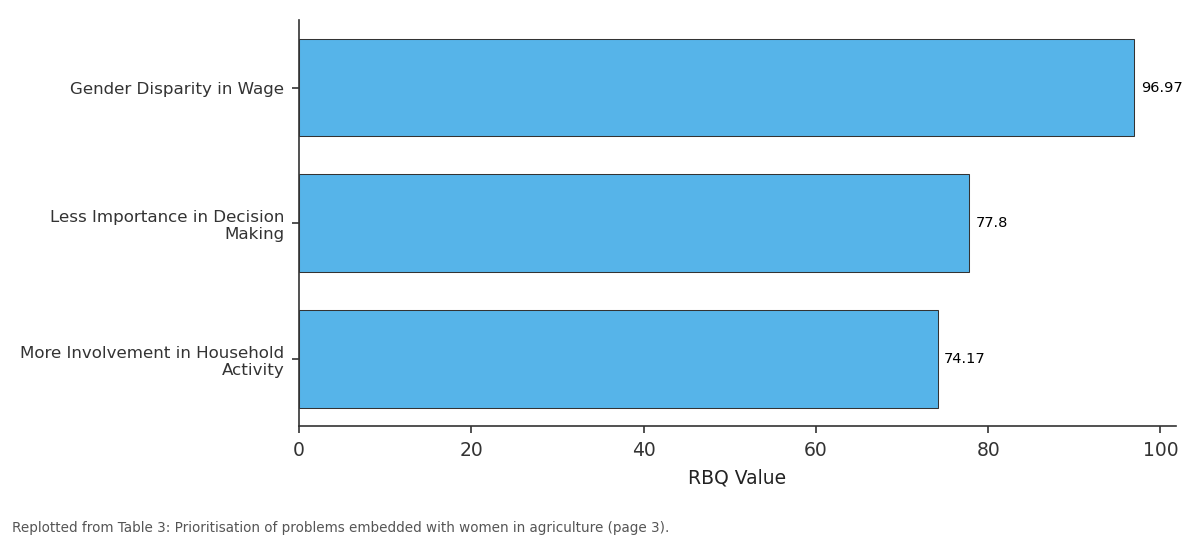
RBQ Value: Gender Disparity in Wage vs Less Importance in... vs More Involvement in...
Replotted from Table 3 (page 3) of the original paper. Every bar is the paper's own table value.
View source evidence ↗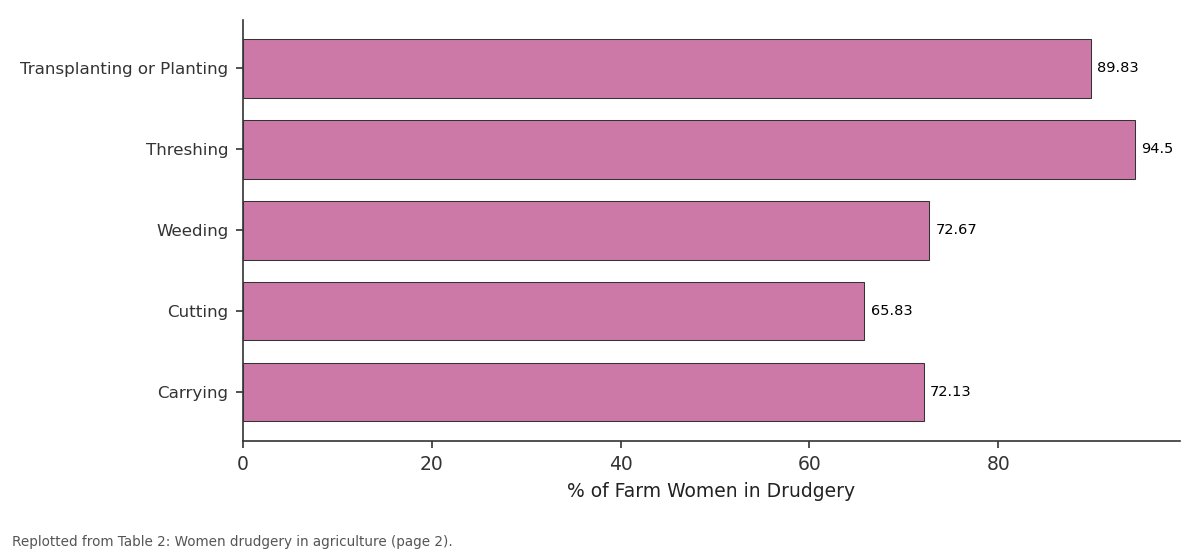
% of Farm Women in Drudgery: Transplanting or... vs Threshing vs Weeding vs Cutting vs Carrying
Replotted from Table 2 (page 2) of the original paper. Every bar is the paper's own table value.
View source evidence ↗Figures & tables
From the original paper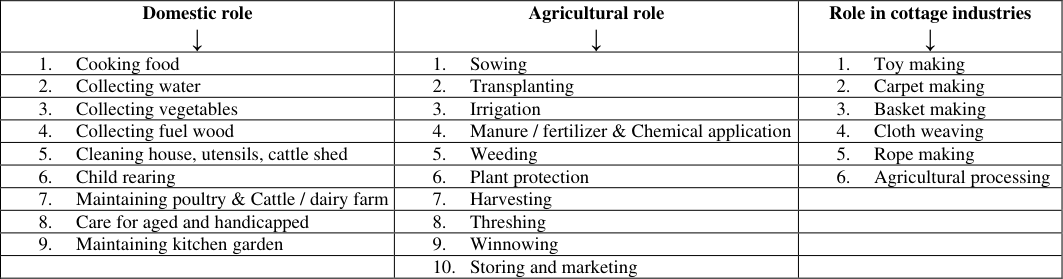 Table 1
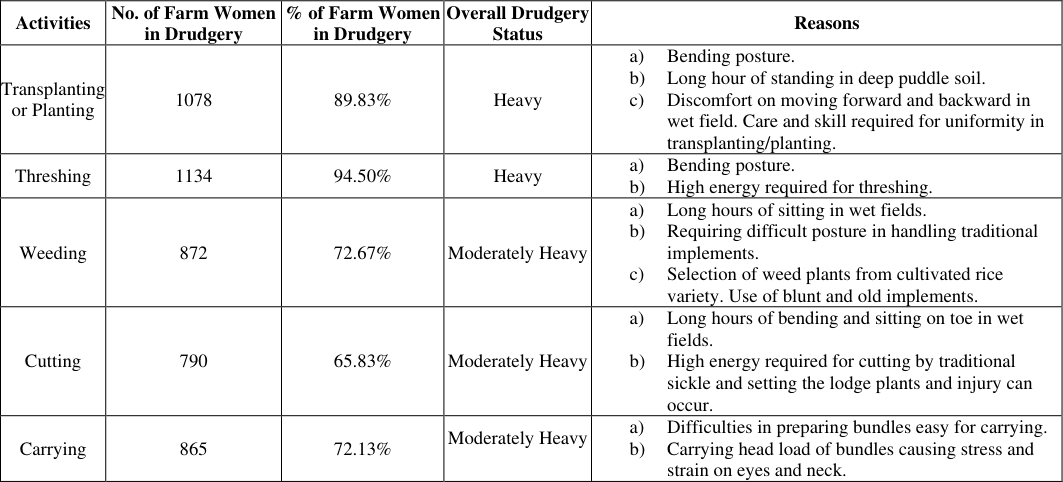 Table 2
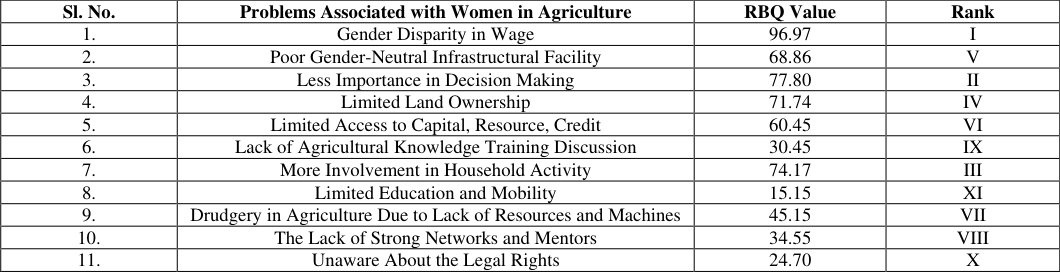 Table 3
Introduction
Agriculture is the single largest livelihood system in Asia, employing nearly 60% of the workforce. It is not only the main source of employment, income and food for over 70% of the population, but it is also the main 'culture' for rural families (Das et al. 2006) [8] . Women are an important segment of the total workforce particularly in rural areas. So, women are a crucial development force in the economy and the society. Women represent 48.27% of population and share abundant responsibilities and perform wide spectrum of duties in running family, maintaining households, agriculture and allied fields such as dairy, goatee, piggery, poultry, fisheries etc. in the rural areas. The extent of their contribution can be gauged from the finding in a study in the Himalayan region, where a pair of bullocks works 1064 hours, a man 1212 hours and a woman 3485 hours a year on a one-hectare farm (Grover & Grover, 2004) [15] . Different roles of rural women are described in following table 1. Thus, a rural woman works along with man in performing several farm operations as well as the roles related to home, family care and management. Rural women play a significant role in agricultural activities such as seed sowing, transplanting, weeding, fertilizer application, plant protection, harvesting, processing, storage etc., several of these operations are exclusively carried out by women only. Their involvement in agriculture varies from region to region and also among different ecological zones, farming systems, caste, class and socio-economic status of families. Thus, by participating in agricultural activities, they directly or indirectly influence the course of agriculture. The economy of Koch Bihar mainly depends on agriculture. Increased population have increased the pressure on land and reduced the man-land ratio, for which it is essential to follow improved technology in crop production. Farm women are not aware of these phenomena. The major problems faced by the farm women in the study area are different due to difference in economic status. An attempt is made to understand the problems in availing the benefits of the research and make suggestions for farm women to improve their efficiency. Accordingly, the data obtained in this regard are analysed and presented in relation to.
1. General problems of the farm women. 2. Suggestions made for farm women on improving their participation in agriculture and allied sectors.
Although, a large number of studies have been conducted to identify the roles, needs and problems of women in agriculture, it seems that they have not been sufficient. It is believed that lack of accurate information on women's role in agricultural production has resulted in the failure of developmental programmes and projects, because they did not address the needs of rural women. The data is collected in order to investigate the problems faced by the farm women while working on their farm. Due to difference in economic status, the farm women of the district have different problems because of social, economic, organizational and technological constraints. Thus, problems are categorized into mainly two broad groups namely health problems with occupational health hazards, socio-economic and technological problems.
Health Problems and Occupational Health Hazards of Farm Women Drudgery in Agriculture
Women plays an important role in agriculture. Women are doing major farm work along with household activities. The farm women play a significant role in agriculture and other agro based activities. The daily work schedule for rural farm women is very demanding and arduous. It is observed during field survey that during peak period, women work every day for about 8-9 hours in agriculture and 4-6 hours in household activities. Women experience drudgery of agricultural activities mostly through the processes of weeding, transplanting, harvesting, threshing, cutting, carrying and storing grains which had explained below.
Transplanting or Planting
Planting requires substantial physical strength, perseverance and manual labour. Transplanting process is a complex activity. Chronologically, it is closely associated with harrowing, ploughing, and gathering of saplings on the field. The transplanting process involves standing in a waterlogged field and bending to put seedlings into the soil by hand, frequently and over a long period of time. During the manual transplanting women labourers are exposed to several work-related physical risks like standing for long hour on the puddle soil, sometimes amidst heavy rain. After working for several hours, they go back to home, feeling discomfort on shoulders, hip and joints. In long term this develops into musculoskeletal disorders. Better skill and techniques are needed to work on the ground to help them avoid or recover, rejuvenate and take self-care during and post transplantation. Drudgery status is high in transplanting or planting process. www.extensionjournal.com
Threshing
During threshing process women labour as have to perform heavy work by keeping same posture for long hours. This job demands strength, techniques and agility along with time management, which leads to high prevalence of workrelated musculoskeletal disease. Low back pain (LBP) is a common health problem arising from manual threshing. Contemporary literature has simply suggested that occupational factors, especially working postures, are the main causes of LBP. Consequently, LBP prevalence has been found highest in the transplanting and threshing process of farming because manual transplanting or threshing is a labour-intensive and tiresome job. Occupational health hazards during threshing causes health problems mainly due to heat and dust. Most of the farm women suffered irritation in eyes, throat, nose and ears affecting their respiratory tract due to exposure into heat and dust, considering the high temperature in summer, causing more discomfort on continuous thrashing process in the field. Women agriculture labourers who are involved in lifting and fetching crops bundle have experienced various musculoskeletal discomforts on their neck, shoulder and upper back. Threshing process also demand very high energy and physical strength quite similar with weight lifting, which in long run pose pressure in joints and skeleton structure to women labourers. This is significant as the nutrition deficiency is so high for women population with inadequate sleep and rest, as after giving full time in field they are also required to cook for their family, raise children, do all domestic works. Overall drudgery status heavy in threshing process.
Weeding
Weeding is an important agricultural task that is performed to ensure a profitable yield. A typical weeding day ranges from eight to ten hours for women labourers with few breaks in between. Often, this type of works is considered extraneous on the back if carried out by hand or with a short-handled tool due to the prolonged periods of time that are spent in awkward postures. Weeding with hands requires workers to bend forward well over 75 0 and sustain static loading to soft tissues of the back. This type of activity leads to over stressing the viscoelastic tissue of the back (ligaments, disks, facet capsules, etc). Agricultural workers performing manual weeding are exposed to high risks of musculoskeletal disorders to the lower back. Hand weeding has exposed workers to sustain static loading to spinal soft tissues, which can lead to the initiation of a cycle of inflammatory response. Overall drudgery status is moderate in weeding process.
Cutting
Like transplanting, cutting requires long hours of bending and sitting on toe in the field with continuous hand movement. For certain crops women labourers have to get into wetland for long duration causes skin infections, itching and patchy skin. Cutting poses a significant pressure on hands and shoulder and led to several injuries in musculoskeletal tissues. Overall drudgery status is moderate in cutting process.
Carrying
Carrying involves lot of strength on knees and shoulder. Women labours needs to carry bundles for long distance from field to home or to load up in tractor or in a carriage van. This exercise over the time develops shoulder and back pain. Sometimes due to time management or on the urge of finishing up carrying work early, labourers lift overload beyond their capacity. This habit results in bone and joint heath deterioration for women. Rising temperature in Koch Bihar region during summary pose a great challenge for carrying tout thus ask by making them fatigued, sweat and dehydrated. In a way to compensate the workforce capital, most of the times agricultural farms allot limited women agricultural labourers for carrying crops instead of the required numbers of labourers which pose a challenge for them to carry extra weight. During monsoon carrying is associated with micro bacterial infections, fungi infections and skin rashes. Overall drudgery status is moderate in carrying process. Ranking Based Question (RBQ) are those which finding out the rank for the given questions. Rank Based Question can be vertical or horizontal depending on the question series. RBQ is a type of survey question asked to respondents to compare a list of items or problems with each other and arrange them in order of preference. Individual make a choice that are influenced by many factors. Each of these factors have different priorities in the decision-making process. To determine how they are prioritized, RBQ method is used. The formula to calculate the Rank Based Question is.
Identify the Problems of Farm Women in Agriculture with the Help of RBQ Method
Where, fi = Frequency. N = No of respondents. N = No. of problems. I = Rank.
Table no. 3 depicts the problems faced by the farm women regarding their involvement in agriculture. Eleven problems are identified in the research area which reflects the barriers in case of involving the women in any agricultural system. On the basis of the Rank Based Question (RBQ) value, the problems are prioritized through the perception of the farm women in local agricultural system. During field survey it is find that majority farm women stated that gender disparity on wage is the major problem and is ranked the first problem. Women are discriminated in agriculture by engaging them in low wage agricultural works and paying less than men for similar work. There is a variation between the wages of male and female, although male and female give equal effort and time in agricultural activities but males are paid Rs 170-190/-per day and female receive only Rs 130-170/-per day in the district. Wages disparities are due to gender specific agricultural operations. Agricultural activities like transplanting, weeding, harvesting etc. which carry lower wages are largely performed by female workers. On the other hand, sowing, fertilizer application, spraying pesticides and postharvest operations with relatively higher wages are performed by male works. Sometimes female workers are also forced to accept the wages in their own area because they cannot migrate as easily as male due to domestic responsibilities. Thus, second rank and third rank take less importance on decision making and more involvement in household activity of the farm women respectively. Women have always been an important and integral part in sustainable agricultural systems. Agriculture is very heavily dependent on manual labour and women constitute the maximum of it. Other than crops they are involved in allied sectors like animal husbandry, dairying, piggery, poultry etc. The extent of women's contribution is aptly highlighted in a study conducted in West Bengal where it has been revealed that a typical work day for women agricultural labour during season lasts for 15 hours and her male counterpart works for 7 to 8 hours. Even within a region their involvement varies widely among different agro ecological sub zones, farming systems, socio-economic status of families. The scenario is same for Koch Bihar district. Farm women are fully occupied and overburdened with three-fold responsibility of home, agriculture and livestock management. Farm women spend their maximum time for agricultural activities and unpaid domestic duties for which they get very little time for their personal care. Women responsibilities are far more than for men because of their involvement in multifarious activities in agriculture as well as at home. Despite extended involvement in agriculture and at home, their contribution is still unrecognised. Women's participation in decision making is bent toward lower side in the family as this is considered as men's domain. Decision-making power of farm women is ineffective and applicable only within the four walls of her home. The fourth important problem identified by the respondents are limited land ownership of farm women. Most common problem in our society is daughters and son can jointly inherit property acquired directly from their fathers, but ancestral property can only be inherited by sons. Women have an equal share in ancestral property but due to gender biasness in joint family systems, women always lose her rights. As a result, farm women have less ownership of land. Most of the farm women who owns land works as a farm labourer because they do not have any legal rights to occupy it. The fifth problem of farm women in the study area is poor gender-neutral infrastructural facility. Today agriculture is fully dominated by modern machineries. Male agricultural labourers usually operate machines like tracker, power tillers, spray machines etc. which sometimes displace female labourers. On the other hand, female workers face problems in handling heavy agricultural machines because of which farm women are discriminated by wages as well as farm work loads. The sixth problem of the farm women are limited access to capital, resource and credit. Limited access to resources like availability of high yield seeds, modern machines, proper irrigation facilities, suitable pesticides are also the constraints faced by the women stakeholders to become integral part of an agricultural system. Limited access to financing is one of the major problems identified by the women respondents. Due to lack of timely available credit facilities women cannot make investments for production or processing purpose and also unable to undertake any business venture. As an aftermath, limited capital leads to lower participation of women as stakeholders in agricultural value chain system. Proper banking facilities can promote more involvement of women in agriculture. The seventh problem rank take drudgery in agriculture due to lack of resources and machines of the farm women. Transplanting or planting, weeding, threshing, cutting, carrying operations are the major drudgery problems for farm women. Majority of the farm women do weed control using hands tools like sickle and khurpi. This leads to muscular stress, musculo-skeletal injuries and posture problems. During field work on different parts of the district, the farm women reported that they felt pain (shoulder pain, back pain, wrist pain, hand pain, leg pain, thigh pain, knee pain) in their body due to repetitive motions and awkward postures adopted while doing agricultural activity. The use of the 'wheel hoe weeder' and replacing the traditional gadgets may lower the physiological and cardiovascular stress. The eighth problem of the farm women are lack of strong network, mentors. The limited market knowledge and low networking are other major problem of the women. In the study area the males are shouldering the responsibilities of selling the agri-products in the market with women but marketing knowledge is not shared by their counterpart. As www.extensionjournal.com a result, the women do not have any market intelligence and interest to know about the value chain. In the nineth rank problem faced by the farm women in the study area is lack of modern agricultural knowledge and training. Due to limited knowledge and access of agricultural techniques, farm women are less interested to attended any kind of agricultural training programme. Unaware about the legal rights of farm women takes tenth rank problem because of limited education, lack of confidence, poor communication, inadequate information of the society etc. Eleventh ranked problem of the farm women are limited education and mobility. Most of the farm women of the rural area have low level of education, low access of mass media, awareness and skills.
Contact with Chemicals
Pesticides are widely used in agriculture and the human exposure to these substances caused adverse health hazards. Non-occupational exposure to this can come from many sources, such as food or water. For occupational exposure, many studies have been conducted on men but very few information is available concerning the exposure of women. It is important to understand how women's susceptibility to the effects of pesticides differ from men. Women generally have a higher proportion of body fat and more likely to store pollutants that bio-accumulate in fat tissue. Women also absorb pesticides through their skin more readily, and pesticides reside in the body longer. Women have a higher level of hormonal sensitive tissues that makes them more vulnerable to the impacts of pesticides, known as endocrine disruptors. Carcinogens linked with breast and ovarian cancer are of special concern for women. Pesticides adversely affect women's fertility and reproductive health, with both known and unknown impacts on future generations. Exposure to the pesticides can have different effects on health from early life stages, resulting in different outcomes ranging from neurodevelopmental effects in newborns to different types of cancers. Pesticide risk is higher to people suffering from asthma, diabetes and cardiovascular diseases. Women farmers are mostly using moderate or highly hazardous pesticides like organochlorine, organophosphorus, and carbamates, while it is found that they never use any protective equipment like masks, gloves, etc. while handling pesticides. Sometimes women farmers use highly hazardous pesticides under deplorable conditions, such as lack of Personal Protective Equipment (PPE) or using leaky spraying equipment. Women's exposure to pesticides increases as their poverty and marginalisation deepens. This is especially true in rural communities in Koch Behar district where small-scale farmers adopted chemical-intensive farming incentivised by governments. Poverty also further increases women's vulnerability to pesticides, as toxic effects are aggravated by poor diet and malnutrition. In this context, it is clear that "gender equality today for a sustainable tomorrow" includes more decisive action to reduce women's exposure to pesticides, while enhancing women's participation in healthy, equitable and sustainable food production. Unfortunately, not much emphasis has been given to enabling women's proper access to pesticides as a means of achieving Sustainable Development Goals (SDGs). There is an earnest requirement for giving more protection to farm women in using pesticides. More researches need to focuses on relationship between the extent of pesticide use and signs and symptoms of illnesses due to pesticide exposure among women farmers.
Climatic Vagaries
The farm women of the district faced some physical challenges due to significant climate factors. Excessive heat, heavy rain, shivering cold posed big challenges for farm women in Koch Bihar. During summer, temperature raised up to 45 ○ C, excessive humidity (90-98%) pull down the energy of farm women in the agriculture field. During December and January temperature falls below 10 ○ C, chilly breeze and fog makes the work difficult for them. Koch Bihar is a place of heavy rainfall in every year and most of the times water logging, poor drainage system not only hamper the regular work but also ruined production frequently. Seasonal extremities play a very big impact on women's farm worker duties and responsibilities.
Poor Healthcare Facilities
Rural healthcare structure does not meet the women's overall wellbeing in terms of treatment, medication, nutrition and recovery. Most of the farm women in Koch Bihar have died due to tuberculosis, post-delivery complications, dengue, malnutrition. The subdivisional hospitals experience huge patients flow and most of the times are unable to provide beds to everyone. The primary healthcare centres in the villages don't have the required infrastructure, diagnostic laboratory and therapeutic area for treatment. So, they mostly depend on quack-practitioner or occultist which many times yield fatal result for patients. Maternal mortality rates in rural areas of Koch Bihar district is very high (98 per 100000 live birth, in 2018), factor that contributes to high maternal mortality rate is the reluctance to seek medical care for pregnancy. Farm women receive very low antenatal care during pregnancy due to heavy work load in field as well as home. As an adult, women receive poor health care than man. They are apprehensive to admit that they are sick and they will wait until their sickness has aggravated before they seek help. Studies on attendance at rural primary health centers reveals that more number of males are treated in hospitals than women, pointing to regional differences in the wellbeing priorities on women health. Additionally, women in Koch Bihar are uncomfortable to consult male doctors and hesitate to check up due to the less number of lady doctors' available at centers.
Malnutrition
Malnutrition is the reason for poor health and wellbeing of farm women. Women are served last after male members and children for which most of the time a larger portion of food is consumed by them. Besides, nutritional food like milk, egg, fish, vitamin enriched vegetables are not a part of their daily diet. Gender disparities in nutrition are evident from infancy to adulthood. In fact, gender has been the most statistically significant determinant of malnutrition among young children and malnutrition is the direct or underlying cause of death among women. Malnutrition has led to chronic energy deficiency, low BMI, underweight, stunted growth etc. At the individual level, immediate effects of www.extensionjournal.com inadequate food and dietary intake increases the susceptibility to disease and illness. These are also influenced by underlying factors at the household level, such as access to food and health services, maternal and child-care practices and household amenities relating to sanitation and safe drinking water. Moreover, there is high risk of chronic malnutrition even among children. Poor access to sanitation facilities and women's literacy in particular is found to be strong factors affecting malnutrition. Field survey data shows 27% farm women in the age 15 to 49 years, have completed primary education. Literacy and basic sanitation have directly impacted the ability of women, men, and children to maintain personal hygiene. Women's health is further harmed by air and water pollution and lack of sanitation. The high incidence of malnutrition present amongst women and their low metabolism and other health problems have affected their capacity to deal with chemical stress. According to Cardiological society of India, 2017, smoke from household biomass (made up of wood, dung and crop residues) stoves within a three-hour period is equivalent to smoking 20 packs of cigarettes every day. For women who spend an average of three hours cooking every day, often in a poorly ventilated area, has led to eye problems, respiratory problems, chronic bronchitis and has further developed into lung cancer in some cases.
Socio-Economic and Technological Problems Faced by Farm Women
There are different socio-economic factors which plays major roles in broader life of farm women. Gender disparity, disparity in wages, occupational stress, low satisfaction in family life and lack of family support, powerlessness, lack of social security, inadequate education, operational holdings are some of the parameters thatdeeply impact women's roles in agriculture. Women have traditionally been integralto on-farm operations and are often responsible for tending to crops and managing household food supply and consequently bear the brunt of these disruptions.
Gender Disparity and Mental Harassment
It is an age-old convention that women are less capable and inefficient as workers as compared to men. The attitude which considers women unfit for certain jobs holds back women. In addition to this, the same attitude governs injustice of unequal salaries for the same job. The true equality has not been achieved even after 76 years of independence. Working on such conditions inevitably puts strain on women to a greater extent as compared to men, thus making them demotivated in their inputs in agriculture. The female agricultural labourers have suffered from wage disparity and women are earning much less compared to their male counterparts for doing the same work. Many women are also engaged in unpaid subsistence labour within farms owned by the male members of the family. The male members mostly husband take the daily income from their wives. There are common pictures in Koch Bihar. Instances like these have not only demotivated women labourers to attend daily work but at some times they remain absent in field. In the study area 70% people think that women are unfit for some agricultural operations such as preparatory tillage, forming ridges and furrows, ploughing, land preparation, manure and fertilizer application, irrigation, labour supervision, account keeping, marketing and transportation etc. That is why they get less wages than male agricultural labourers. A majority of farm women (79%) continued to be denied their right to equal pay, under the Equal Remuneration Act, 1976 and are underpaid in comparison to their male counterpart.
Gender Gap in Wages of Farm Women
There is wage inequality among the male and female agricultural labourers in the study area. Female workers are replacing male workers in the rural sectors because of out migration of male family members in the district. The condition of female agricultural labourers is even worse. They not only receive low wages but they faced discrimination too. According to West Bengal Government, June 2018, the wages of agricultural labour are categorised into three category which are 210.00/-per day with food and 226.00/-per day without food for unskilled agricultural worker, 232.00/-per day with food and 248.00/-per day without food for semi-skilled agricultural worker, 257.00/per day with food and 273.00/-per day without food for skilled agricultural worker. But in actual situation no one have followed it. Mostly women agricultural labourers get 130/-to 170/-and male agricultural labourers get 170/-to 190/-per day without food (Source: field survey, 2017). Wages are likely to be high in peak work seasons during the rice growing period for both male and female agricultural labourers. Most of the people including female agricultural labourers believe that male agricultural labourers are superior than females for various agricultural activities like preparatory tillage, forming ridges and furrows, ploughing, land preparation, manure and fertilizer application, irrigation, plant protection measures etc. So, this belief is natural to offer low wages to female agricultural labourers.
Occupational Stress and Overwork
According to World Health Organization (WHO), 2016 occupational or work-related stress "is the response people may have when presented with work demands and pressures that are not matched to their knowledge and abilities and which challenge their ability to cope". Work and family are the two most important aspects in women's lives. Balancing work and family roles have become a key personal and family issue for many societies. There are many priorities in working mother's lives that are subjected to stress. They have to deal with family and are working under stress every day. The main reason behind occupational stress is imbalance between work and family. Women have extensive workloads with dual responsibility for farm production and household affairs. Women work roughly twice as many hours than men. Women's contribution to agriculture -whether it is subsistence farming or commercial agriculture -when measured in terms of the number of tasks performed and time spend, is greater than men. The extent of their contribution can be gauged from the finding in a study in the Himalayan region, where a pair of bullocks works 1064 hours, a man 1212 hours and a woman 3485 hours a year on a one-hectare farm (Grover & Grover, 2004) [15] . In Koch Bihar district farm women work per day 8 -10 hours in field, 6-7 hours in home activities (Source: field Survey, 2017) so that they get very little time www.extensionjournal.com to do their personal care (30 mints) or leisure activities. Women's work is getting harder and more time-consuming. Women contribute considerably to household income through farm and nonfarm activities as well as through work as landless agricultural laborers. Women's work as family members is underestimated.
Low Satisfaction in Family Life and Lack of Family Support
Family life of farm women in Koch Bihar revolves almost in same direction in the district. They have poor support from family due to the negligence and dominant approach by their husbands or male counterparts. In decision making they hardly get involved in agriculture planning, land, finance or even a small family call. If she needs something for herself or for her children, she has to ask the money from husband and justify the reason. They hardly have any savings for themselves to utilise own the money on herself. During field survey among the farm women, 78% of them are unhappy and not satisfied in their family life due to nonhaving cash or money in hand. Rest of them (22%) are more or less satisfied due to having money in hand as their male counterparts out migrated for job.
Decision Making Power of Farm Women
Various studies on women autonomy and empowerment shows that the decisions taken by women are not considered by the family members. In the study area, male labour circulation / migration in some blocks have led to women taking major decision. Women are traditionally home makers and care givers. Apart from household management, child care and social responsibilities, rural women have worked on the farm as unpaid labourers or helping men folk, harvesting and storing crops leaving little time for effective participation in local organization. Their opinions or their decision-making power are also neglected in their family. Though male labour migration from the district offered women to escape from patriarchal domination, but this opportunity is fruitful only for the young women belonging to the age group of 30-44 years. Young women belonging to the age group of 15-29 years never left home without their husband. They remained under the headship of aged women or men. So, the migration of male gave them pain of separation as well as more responsibility of their home. The aged women get all the opportunity to establish her as they facto head of the family but, lack of education, lack of confidence and obviously age prevent them from their capabilities. Although the decision of the said women is executed in much respect but actually, they are directed by her husband through telephone.
Powerlessness
Legal protection of farm women's rights has little effect in the face of prevailing patriarchal traditions. Farm women are subordinate in their in laws home in Koch Bihar districts. Child marriage have also kept women subjugated. Women are kept subordinate and are even murdered due the practice of dowry in some homes. Women's rights to inheritance are limited and frequently violated. Farm women are not entitled to claim to their father's land or her husband property after their demise in most households which force them to work as agricultural labourer. Loosing the rights of inheritance have make them conquer with low income, landlessness, decision making rights in agriculture and food security for themselves and their children. Transforming the prevailing social discrimination against women must become the top priority and can happen concurrently with intervention by the society and government improve the social and economic status of women. This way, a synergy of progress will be achieved. As farm women receive greater education and training, they will earn more money through agriculture. If women earn more money, she can spend it in the further education and health of her children, as opposed to men who often spend it on drink, tobacco or other women (Dogra, 2002) [11] . When women hold the power in decision making, they will gain greater social standing in the household and will have greater voice. As women gain influence and consciousness, they will make stronger claims to their entitlementsgaining further training, better access to agriculture credit and higher incomes. As women's economic power grows, it will be easier to overcome the tradition of 'son preference' and thus put an end to the evils of dowry. As son preference declines and acceptance of violence declines, families will be more likely to educate their daughters, and age of marriage will rise. As women are better nourished and marry later, they will be healthier, more productive and will give birth to healthier babies. Only through action to remedy of discrimination against women have the chance to live healthy and productive lives.
Lack of or Inadequate Education
Inadequate education was a key contributing factor to gender bias in accessing resources. Women's education is vital for their empowerment, to develop basic skills needed to participate in knowledge intense agriculture and economic activities. Information and Communication Technology (ITC) is a great platform to inform and educate www.extensionjournal.com rural women about agriculture, health and nutrition provided which are user friendly, have gender responsive content and applications. However, there are barriers on mass reach of ITCs initiatives due to low education, inadequate infrastructure, high cost, limited capacity etc.
Lack of Leisure Time and Recreation
Women labourers in Koch Bihar are mostly engaged in home making and agricultural work. They hardly find time for recreational activities and leisure which have made their life monotonous and dull. The extensive pressure of child raising, family issues, cooking other than labour work in field consumes their entire time. Finally, after a period of time they get exhausted and demoralized on their scheduled work. During field survey it is observed that farm women get only 15 to 30 mints per day for their leisure.
Operational Holdings
A lack of ownership of land does not allow women farmers to approach banks for institutional loans, as banks usually consider land as collateral; women farmers hardly have any representation in society and are nowhere discernible in farmers' organizations or in occasional protests. A declining size of land holdings acts as a deterrent due to lower net returns earned and technology adoption etc.
Lack of Agricultural Extension System
The agricultural extension system is conceived and operating to train the capacity building of farmers. It is exclusively composed of men and the attempts to reach out to women farmers was highly inadequate. Further, most of the transfer of technology are conceived with male farmers as the target. The time and location of training hardly takes into consideration the time and work pattern of farm women (Lal, 2011) [12] .
Modernization and Technological Development in Agriculture
Technological developments have not been responsive to household drudgery associated with routine activities of rural women at home and on farm. In most technologies women's actual needs are ignored. Modernization in agriculture have led to increased agricultural productivity and decreased drudgery but have adversely affected the women of lower castes, lower income groups and landless families or with small holding by reducing demand for labour. Introduction of weedicides and pesticides have deprived a large number of women labourers of their meagre source of income.
Remedial Measures
The problems of farm women in Koch Bihar prevalent in the context of different socio-economic factors are listed above. The remedial measures given are based on the basis of study made in the field. Better skill and techniques need to be implemented in terms of advancement of their skills and confidence on the ground to help them women on accessing tools and equipment by themselves and not be dependent on men. For example, if a farm women can drive tractors and run in the field, she is more confident in asking the same wage as men and set examples to others to take control. Health Camps should be held out by government especially for farm women to diagnose, prevent and provide medication for long illness like TB, COPD, skin disease which they incur through daily agriculture work. They should also be ensured health safety, medication and wellness. More responsibilities and benefits need to distributed to women in the form of land ownership, distribution of property, bank or financial institute accounts access to empower them to conquer the societal stigma. Panchyat can start weekly or monthly meetings of agricultural farm women to lead, discuss and distribute their work and ask the support required from government. No men should interfere in such meetings or gathering so they feel morally boosted and confident on decision making in the field as well as in home. Educate them and encourage them to continue study along with domestic and farm work. This can be in the form of evening school or camp conducted with the help of NGOs. They can further identify one of them as role model for such initiatives from whom others can be encouraged. Strictly follow up on wages policy for women and men so no discrimination take place. This includes following the policy laid by the government. The wage needs to be often regulated. This will make a huge change in the decision-making process and social security for farm women.
Conclusion
Women have been shouldering responsibilities in the major activities associated with the agriculture and allied sectors from the ancient times. The district of Koch Bihar comprises of 48.51% (Census 20011) women of its total population where 21.95% female are cultivators and 47.56% female are agricultural labourers. Women were deprived in every stage of the society in the study area. This present chapter deals with the research objective -"To identify the problems of farm women regarding their involvement in agriculture and to find out the way to solve these problems." RBQ method is followed to identify the problems of the farm women in the study area and accordingly some suitable measures have been given to solve their problems. The involvement of women in agriculture from land preparation to post harvest management of agricultural crops and livestock rearing is observed to be higher than her male counterparts. One of the reasons for the increasing trend of participation in agriculture and allied sectors as obtained from the research survey, due to the fact that male persons in this district are migrating to other areas to earn more money and uplift their socio-economic status.
Consequently the crises of male labours in agricultural activities are increasing day by day and the workloads upon the female workers in agriculture are increasing. The astounding fact is that the work load of womenwithin the study area has increasedat a faster rate due to their involvement in agricultural activities and household work.
The trend showeda clear scenario towards the increased drudgery on women in the district. At the same time this phenomenon empowered the women to take independent decision in case of agriculture and household activities due to the absence of male counterpart in the family. With all of the social changes and reformations, there is an emerging trend of increasing feminization in agriculture experienced in the district.
Figures and tables from the paper
| Sl. No. | Problems Associated with Women in Agriculture | RBQ Value | Rank |
|---|---|---|---|
| 1. | Gender Disparity in Wage | 96.97 | I |
| 2. | Poor Gender-Neutral Infrastructural Facility | 68.86 | V |
| 3. | Less Importance in Decision Making | 77.80 | II |
| 4. | Limited Land Ownership | 71.74 | IV |
| 5. | Limited Access to Capital, Resource, Credit | 60.45 | VI |
| 6. | Lack of Agricultural Knowledge Training Discussion | 30.45 | IX |
| 7. | More Involvement in Household Activity | 74.17 | III |
| 8. | Limited Education and Mobility | 15.15 | XI |
| 9. | Drudgery in Agriculture Due to Lack of Resources and Machines | 45.15 | VII |
| 10. | The Lack of Strong Networks and Mentors | 34.55 | VIII |
| 11. | Unaware About the Legal Rights | 24.70 | X |
Table text extracted from the original PDF; superscript letters are shown inline. The original table image is below.
View original table image
References
16 in the original paper- Bala S. Problems Faced by Farm women in Agricultural Activities. Indian Journal of Agricultural Economics. 2000;46(2):47.
- Bhuvaneswari S, Kannan K. Women in Agriculture and Rural Development. Indian Journal of Agricultural Economics. 1999;54(3):324.
- Das L, Mishra SK, Nath NC. Decent Work and Empowerment of Women in Agriculture. Kurukshetra Journal. 2006;May:21-27.
- Desai S, Banerji M. Negotiated Identities: Male Migration and Left Behind Wives in India. Human Development Survey Working Paper. 2008;10:1-36. http://ihds.umd.edu/IHDS_papers/Migration.pdf (Retrieve January 10, 2012).
- Dogra and Bharat. Women Farm Workers' Need to Organise Them. Yojana. February 2002;46:56.
- Lal R, Khurana A. Gender Issues: The Role of Women in Agriculture Sector. Zenith International Journal of Business Economics & Management Research. 2011;1(1):29-39.
- Gandhi S, Dilbaghi M, Mehta M, Pruthi N. Occupational Health Hazards and Efficacy of Protective Masks in Threshing Operation. International Journal of Scientific and Research Publications Work. 2012;41:4983-4986:72-78.
- Goel AK, Behera BK, Mohanty SK, Nanda SK. Development and Ergonomic Evaluation of Manually Operated Weeder for Dry Land Crops. Agriculture Engineering International: The CIGR E-Journal. 2008;Manuscript PM 08 009. vol.-X. September:14-17.
- Hasalkar S, Budihal R, Shivalli R, Biradar N. Assessment of Workload of Weeding Activity in Crop Production Through Heart Rate. Journal of Human Ecology. 2004;15(3):165-167.
- Haslkar S, Shivalli R, Budihal R. Musculoskeletal Disorder of the Farm Women While Performing Top Dressing and Fertilizer Activity. Journal of Human Ecology. 2007;21(2):109-112.
- International Ergonomics Association. Introduction to Ergonomics Principles. 2000;14:25.
- Mondal M. The Role of Rural Women in Agriculture Sector of Sagar Island, West Bengal, India. The International Journal of Engineering and Science (Ijes). 2013;2(2):81-86.
- Muguntha Raj E, Bharathi M. Problems of Farm Women in Small Holdings: A Case Study in Karnataka. Southern Economist. 2001 May;40(2):15:13-15.
- Saito K, Spurling D. Developing Agricultural Extension for Women Farmers. World Bank Discussion Paper. 1992;No. 156:170-172.
- Thangamani K, Uma Rani K. Problems in Agriculture - A Gender Analysis. Social Welfare. 2005 Jun;53(3):2325.
- Varghese MA, Saha PN, Atreya N. A Rapid Appraisal of Occupational Workload from a Modified Scale of Perceived Exertion. Ergonomics. 1994;37(3):485-491.