
Research article · 2024 · Full text
International Journal of Research in AgronomyCharacterization of cow urine for antimicrobial properties and plant growth promoter in rice (Oryza sativa L.)
Volume 7(4) · Pages 589–592 · DOI: 10.33545/2618060x.2024.v7.i4h.609 ↗
Research areasHumic Substances and Bio-Organic StudiesComposting and Vermicomposting Techniques
Abstract
Author-writtenA field experiment was conducted at Agricultural Research field, IGKV, Raipur, Chhattisgarh, during kharif 2023 to know the effect of various levels of RDF and cow urine application on yield of irrigated paddy (Oryza sativa L.) (Var: CG Devbhog) in clay loam soil. There were ten treatments laid out in Randomized Complete Block Design with three replications. Grain yield and straw yield were significantly higher (45.4 q/ha and 57.8 q/ha respectively), with application of 75% RDF + cow urine 30% twice (60 & 75 DAT) Which was on par with the application of 75% RDF + cow urine 20% twice (60 & 75 DAT) and 100% RDF (80:50:30 kg NPK/ha). The number of IAA producing bacteria that was successfully purified was 04 isolates. All isolates except FU2 were quantitatively measured in IAA producing using Salkowski reagent; concentration of IAA were ranged from 0.274 - 0.389 ppm. Characterization of cow urine was carried out to know the antifungal activity against fungal pathogens (Fusarium oxysporum). The extent of growth of test fungi in plates poisoned with cow urine was lesser when compared with the control plates. When the three concentrations of cow urine were compared, maximum growth suppression was observed in Fusarium oxysporum (53.33%) at 30% concentration of cow urine followed by 20% and 10%. Cow urine has antifungal activities and the inhibitory activity can be used in the control of fungi. The beneficial effect of cow urine on rice was also evaluated enhancing the grain yield.
Summary
Source-checkedPlain-language reading of the full paper, prepared with AI and checked against the text. Each point links to the authors' own words.
Why it matters
- Rice is a critical staple crop in India, essential for the livelihoods of millions and overall food security. View evidence ↗
- Rising costs of chemical fertilizers are driving Indian farmers to seek more cost-effective, natural alternatives. View evidence ↗
- Cow urine is a free, nutrient-rich resource containing nitrogen, phosphate, potassium, and other minerals, making it a potentially valuable organic manure. View evidence ↗
The question
- The study aimed to evaluate cow urine's potential for enhancing rice yield, its antifungal properties, and its ability to harbor IAA-producing bacteria. View evidence ↗
What they did
- A field experiment was conducted during the 2022-23 kharif season in Raipur on sandy loam clay soil with a pH of 5.5 and 0.50% organic carbon. View evidence ↗
- The researchers used a randomized complete block design with ten treatment combinations and four replications using the rice variety CGDevbhog. View evidence ↗
- Cow urine was applied as a foliar spray at concentrations of 10%, 20%, and 30% at 30, 45, and 60 days after transplanting (DAT). View evidence ↗
- To test antifungal activity, 5mm discs of Fusarium oxysporum were placed on potato dextrose agar (PDA) plates containing cow urine. View evidence ↗
What they found
- Analysis of cow urine showed a pH of 7.53, electrical conductivity of 31.06 dS m-1, and nutrient levels of 0.59% nitrogen, 0.13% phosphorus, and 0.61% potassium. View evidence ↗
- Cow urine inhibited the growth of Fusarium oxysporum, with the highest suppression of 53.33% occurring at a 30% concentration. View evidence ↗
- Four bacterial isolates were obtained from cow urine, three of which produced Indole-3-acetic acid (IAA) in concentrations ranging from 0.274 to 0.389 ppm. View evidence ↗
- The highest grain yield (29.18 q/ha) and straw yield (45.21 q/ha) were achieved with 75% RDF plus 30% cow urine applied twice, compared to the control's 20.68 q/ha grain and 23.47 q/ha straw yield. View evidence ↗
- The combination of 75% RDF and 30% cow urine (T10) produced yields that were on par with or slightly higher than the 100% RDF treatment (T4), which yielded 29.0 q/ha of grain. View evidence ↗
What it means
- The authors conclude that cow urine is a promising tool for sustainable agriculture due to its ability to improve soil fertility, control diseases, and increase crop productivity. View evidence ↗
Visual summary
2 visualsIllustrations explain the paper; charts are replotted from the paper's own table values.
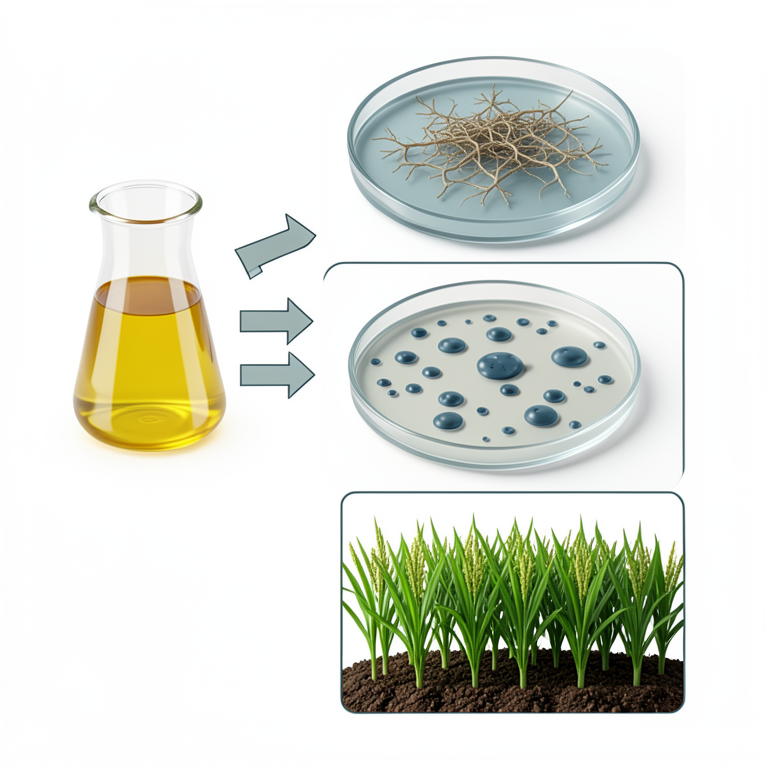
Study Scope Overview
AI-generated conceptual illustration (cow urine, rice plants (Oryza sativa L.), petri dishes with fungal and bacterial colonies). It explains the idea and does not show study data.
View source evidence ↗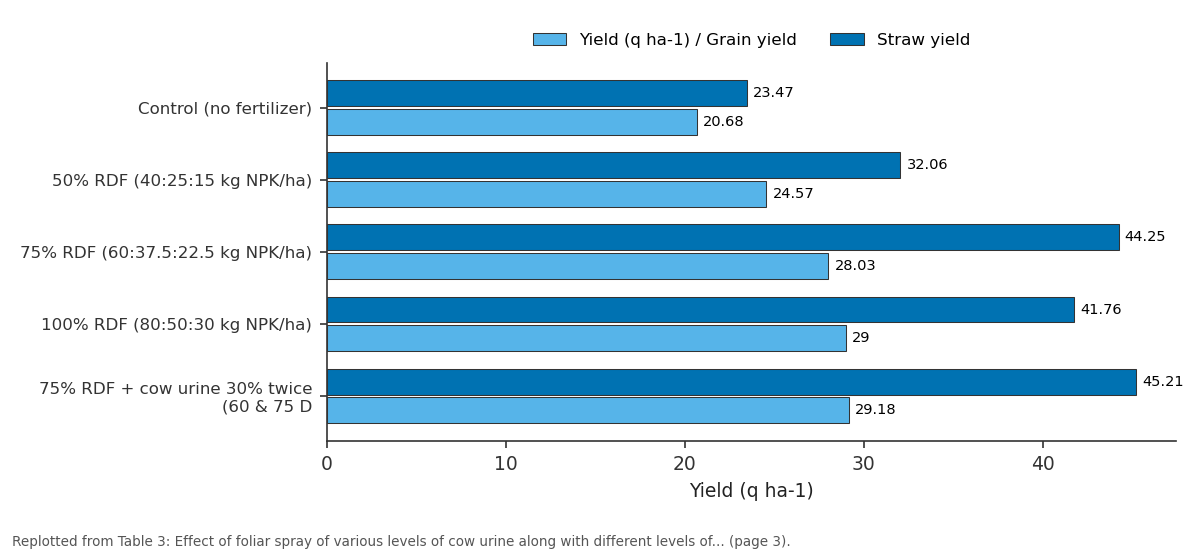
Yield (q ha-1) / Grain yield and Straw yield: Control (no fertilizer) vs 50% RDF (40:25:15 kg... vs 75% RDF (60:37.5:22.5... vs 100% RDF (80:50:30 kg... vs 75% RDF + cow urine 30%...
Replotted from Table 3 (page 3) of the original paper. Every bar is the paper's own table value.
View source evidence ↗Figures & tables
From the original paper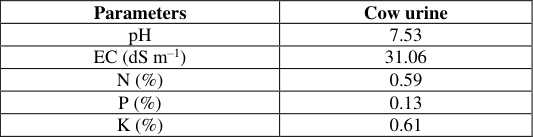 Table 1
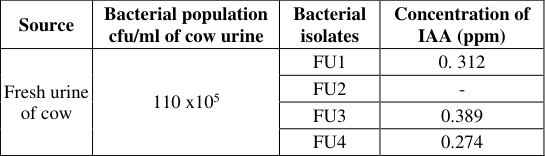 Table 2
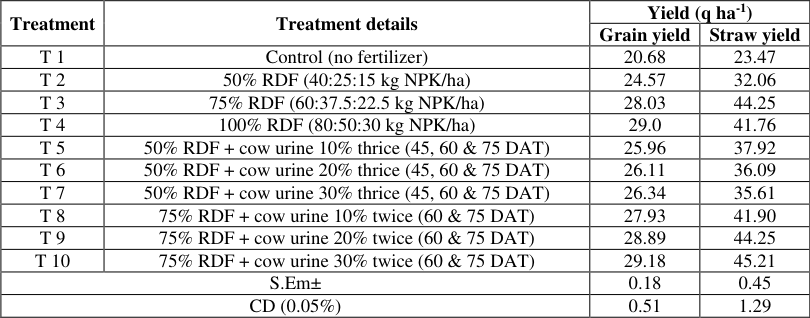 Table 3
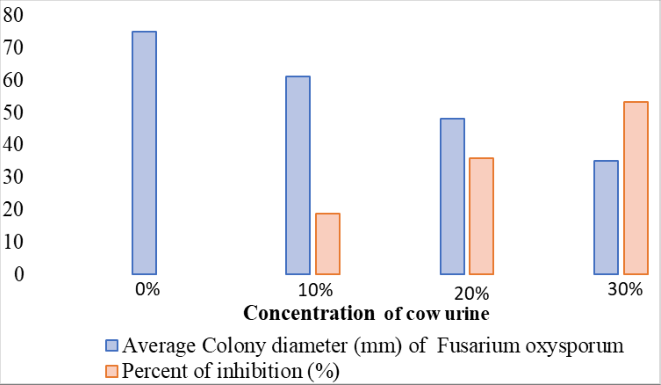 Figure 1
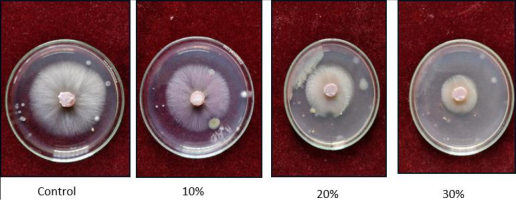 Figure 2
Introduction
In India, Rice (Oryza sativa L.), a staple food, is crucial for food security and livelihoods for millions. In Chhattisgarh, it occupies an average of 3.7 million hectares, with productivity ranging between 1.2 to 1.6 t/ha depending on rainfall. The present hike in the price of chemical fertilizers has compelled Indian farmers to use natural fertilizer sources which are cost effective. Intensive cultivation with continuous use of higher doses of inorganic fertilizers significantly influences soil health, crop growth. Therefore, it is imperative to exploit the potential of organic manures, agricultural wastes, biofertilizers and their synergistic impact with chemical fertilizers for increasing productivity and sustainability. Increase in microbial count of soil has been reported due to organic amendments viz., FYM (Manqiang et al., 2009) [16] , compost, vermicompost (Kanan et al., 2005; Swetha et al., 2009) [12,24] , cow dung and cow urine (Orwin et al., 2010) [17] and Jeevamrut (Swetha et al., 2009) [24] . In India, over 70% of farm households practice crop along with dairy farming. The abundant quantity of cattle excreta consisting of dung and urine is available. Though part of cattle dung is used as manure but cow urine usually drains out as waste material. However, cattle urine being a valuable manure (Khanal et al., 2001) [14] is a rich source of nutrients like nitrogen, phosphate, potassium, calcium, magnesium, chlorite, and sulphate (Belie et al., 2000) [3] , which are available to farmers at free of cost. Being organic in nature it is ecofriendly and can be used in crops with no detrimental effect on environment and human health. It can be sprayed at critical growth stages to overcome slow release nutrients from organic sources, working as a plant growth promoter. Cow urine contains 95% water, 2.5% urea, and 2.5% salts, hormones, enzymes, and minerals (Bhadauria, 2002) [4] besides significant amounts of both nitrogen and potassium.
It has been reported that beneficial effect of farming system with inclusion of cow urine on several crops such as on mustard (Pradhan et al., 2016) [21] , Maize & Sweet corn (Pande et al., 2015) [19] , and on vegetables Burubhai and Eribo, 2012; Keduka et al., 2014 [6,13] . It seems that cow urine application both as soil application and foliar spray is beneficial when use as a biofertilizer and biopesticide in crop production and it needs to be studies under existing climatic condition of Chhattisgarh. In this aspect no systematic studies carried out to find out response of rice to foliar spray of cow urine. Therefore, a study has been planned to assess cow urine properties as plant growth enhancement by isolating IAA producing bacteria from cow urine, its antifungal activity and to evaluate the effect of various levels of fertilizer and cow urine on yield of rice.
Materials and Methods
A field experiment was conducted during kharif season of 2022-23 at the Agricultural Research Farm, IGKV, Raipur. The soil of the experimental site was sandy loam clay with neutral to slightly acidic/ alkaline in pH (5.5), medium in organic carbon (0.50%). The experiment was laid out in randomized complete block design with ten treatment combinations including one control replicated four times. The crop taken was rice, variety CGDevbhog. A spacing of 1mt between two replications and 75cm in between plots was maintained to serve as irrigation channel and working place. Plant to plant spacing of 20 x 10cm was maintained. Well decomposed farm yard manure at the rate of 2t ha -1 was applied at the time of land preparation. Recommended dose of N: P: K at the rate of 80:50:30 kg NPK/ha incorporated in field in the form of Urea, SSP and Murat of Potash, respectively. One third the dose of N and full dose of P 2 O 5 and K 2 O were applied at time of transplanting and remaining one third dose of N was applied at 30 days after planting, again one third dose of N was applied at 45 days of transplanting. Foliar spray of cow urine was applied accordingly to treatment combination at three levels (10% 20% and 30%) was done at 30, 45 and 60 DAT. Cow urine was diluted with water as per the treatment concentration for foliar spray in the rice crop in field at three levels. The experimental field was kept free from weed by periodic weeding. Irrigations were given as and when required during crop growth period. All the recommended package of practices were adopted to raise healthy crop throughout the period of experiment. After 120 days of growth of rice, harvest grain yield and straw yields were recorded as per the treatment and replications Cow urine collection: was collected from the dairy farm of IGKV, Raipur in a sterile container. Filtration of cow urine was done through Whatman No. 1 filterpaper to remove from dusts and other waste precipitated material and was stored in airtight container in the refrigerator for analysis purpose at 4 ºC. The nutrient composition of cattle urine was analyzed. The pH and electrical conductivity of cow urine was determined (Jackson, 1973) [9] . Total nitrogen Total-P and Total-K in cow urine is commonly determined as per Page et al (1982) [18] .
Antifungal activity test in cow urine
The antifungal activity of cow urine concentrations (5%, 10%, 15%) was studied in potato dextrose agar medium. Different cow urine concentrations were adjusted using distilled water. The medium was autoclaved and poured into sterilized Petri plates. 10mL of different concentrations of cow urine was amended in 10mL of potato dextrose agar medium and mixed thoroughly by stirring. Control was maintained in which distilled water was used instead of cowurine. A fungal species, Fusarium oxysporum, was isolated from infected tomato plants, showing symptoms of damping off and wilting. The fungi were grown on the PDA medium to obtain the active culture. Fungal discs of 5mm diameter were taken from active cultures and transferred to PDA plates poisoned with cow urine. Incubated for 7 days at 28 ± 2 o C temperature, colony diameters were measured (Dhingra and Kapoor, 1985) [7] , and the percent of inhibition was calculated using a formula from Vincent (1947) [25] .
Where 𝐼 is inhibition percentage, 𝐶 is colony diameter incontrol plates, and 𝑇 is colony diameter in poisoned plates.
Testing of cow urine for IAA production
Urine sample was diluted from 10 -1 to 10 -4 using with physiologic saline (NaCl 0.85%). A total of 0.1 mL of the mixture was spread on Nutrient Agar (NA) containing 1 mM Ltryptophan and incubated for 24 h at an incubator at 38°C. Bacterial colonies were counted using the total plate count method, purified on NA media containing 1 mM L-tryptophan. A single colony obtained and maintained on slant agar media (Harca et al., 2014) [8] . The bacterial isolates obtained were tested for their ability to produce IAA. For this each isolate was inoculated into Nutrient Broth (NB) containing 1 mM L-tryptophan and incubated in 100 rpm rotary incubator for 8 h at room temperature (± 27 °C), then 2 mL of culture inoculated into 18 mL NB media at Erlenmeyer. The culture was incubated at 100 rpm for 24 h at room temperature and then centrifuged at 10.000 rpm for 10 minutes. A total of 1 mL the supernatant was homogenated with 4 mL of Salkowski reagent and incubated for 15 minutes in the dark. The absorbance was measured by spectrophotometer at 520 nm. IAA concentrations of the bacterial isolate were determined based on the IAA standard curve with a range of 0-100 ppm (Astriani et al., 2016) [1] . The data obtained from various characters under study were analyzed using analysis of variance (ANOVA) for RBD (Panse and Sukhatme, 1967) [20] .
Result and Discussion
Nutrient composition of cow urine pH and EC of cow urine and N, P, K content in percent were presented in Table 1. Cow urine contains 0.59% nitrogen, 0.13% phosphorous and 0.61% potassium. pH of cow urine was 7.53 and EC value was 31.06 (dS m -1 ). Application of cattle urine helps in improving the fertility of soil and it is essential to achieve the sustainability in terms of ecosystem.
| Parameters | Cow urine |
|---|---|
| pH | 7.53 |
| EC (dS m–1) | 31.06 |
| N (%) | 0.59 |
| P (%) | 0.13 |
| K (%) | 0.61 |
Table text extracted from the original PDF; superscript letters are shown inline. The original table image is below.
View original table image
Antifungal activity test in cow urine
The study found that cow urine at different concentrations (10, 20, and 30%) effectively inhibited the growth of fungal plant pathogen, Fusarium oxysporum. With increase in concentration of cow urine there was corresponding increase in the inhibition of vegetative growth of the fungal pathogens. The diameter of the fungal colonies in cow urine included plates was lesser when compared to control plates and it indicates the antifungal effect of cow urine. The maximum inhibition was observed against Fusarium oxysporum (53.33%) at 30% concentration, followed by 20% and 10%, and no inhibition at 0% concentration of cow urine. This indicates that cow urine has a significant effect on the vegetative growth of F. oxysporum, as reported by various researchers. Inhibitory activity of cow urine against fungal pathogens have been reported by different workers Rajesh and Jayakumar 2013 [22] , Rakesh et al. 2013 [10] .
Testing of cow urine for IAA Production
Isolation of IAA producing bacteria from cow urine sample was carried out using nutrient agar (NA) containing 1 mM Ltryptophan. L-tryptophan was known as IAA precursor (Kafrawi al., 2014) [11] . There were 04 isolates (FU1, FU2, FU3 and FU4) were obtained from urine sample (Table 3). All isolates except FU2 were quantitatively measured in IAA producing at NB medium containing 1 mM L-tryptophan for 24 h of incubation.
| Treatment | Treatment details | Yield (q ha-1) | — |
|---|---|---|---|
| Grain yield | Straw yield | ||
| T 1 | Control (no fertilizer) | 20.68 | 23.47 |
| T 2 | 50% RDF (40:25:15 kg NPK/ha) | 24.57 | 32.06 |
| T 3 | 75% RDF (60:37.5:22.5 kg NPK/ha) | 28.03 | 44.25 |
| T 4 | 100% RDF (80:50:30 kg NPK/ha) | 29.0 | 41.76 |
| T 5 | 50% RDF + cow urine 10% thrice (45, 60 & 75 DAT) | 25.96 | 37.92 |
| T 6 | 50% RDF + cow urine 20% thrice (45, 60 & 75 DAT) | 26.11 | 36.09 |
| T 7 | 50% RDF + cow urine 30% thrice (45, 60 & 75 DAT) | 26.34 | 35.61 |
| T 8 | 75% RDF + cow urine 10% twice (60 & 75 DAT) | 27.93 | 41.90 |
| T 9 | 75% RDF + cow urine 20% twice (60 & 75 DAT) | 28.89 | 44.25 |
| T 10 | 75% RDF + cow urine 30% twice (60 & 75 DAT) | 29.18 | 45.21 |
| S.Em± | 0.18 | 0.45 | |
| CD (0.05%) | 0.51 | 1.29 |
Table text extracted from the original PDF; superscript letters are shown inline. The original table image is below.
View original table image
(Astriani et al., 2016) [1] . The Concentration of IAA were ranged from 0.274 -0.389 ppm. The highest IAA production was 0.389 ppm. Ananda (2011) studied characterization of total microbial and fungi population in cow urine and revealed the total bacterial population was 260x104cfu/ml Grain yield and straw yield (q ha -1 )
The grain and straw yields of rice were significantly influenced by various levels of cow urine. T10 [75% RDF + cow urine 30% twice (60 & 75 DAT)] recorded higher grain and straw yields i.e., 6.08 and 9.42 kg/plot, respectively as compared to control (no fertilizer) Also significantly maximum yield was obtained from 100 percent recommended dose of fertilizer applications. While the lowest Grain yield was recorded in T1 Control (no fertilizer)] 20.68 qha -1 .
Conclusion
The field experiment conducted at IGKV, Raipur, during the 2022-23 kharif season evaluated cow urine's efficacy in rice cultivation. The randomized complete block design experiment with ten treatment combinations, including a control, highlighted the potential of cow urine as a soil amendment. Results showed cow urine's nutrient-rich composition, conducive pH, and electrical conductivity for agricultural use. Antifungal tests against Fusarium oxysporum exhibited significant inhibition, indicating potential disease management benefits. Additionally, cow urine displayed IAA production, promoting plant growth. These findings underscore cow urine's promise in enhancing soil fertility, disease control, and crop productivity, emphasizing its role in sustainable agricultural practices.
Figures and tables from the paper
References
23 in the original paper- Astriani M, Mubarik NR, Tjahjoleksono A. Selection of Bacteria Producing Indole 3-acetic Acid and Its Application on Oil Palm Seedlings (Elaeis guineensis Jacq.). Malays J Microb. 2016;12(2):147-154.
- Basak AB, Lee MW, Lee TS. Inhibitive activity of cow urine and cow dung against Sclerotinia sclerotiorum of cucumber. Mycobiology. 2002;30(3):175-179.
- Belie ND, Richardson M, Braam CR, Svennerstedt B, Lenehan JJ, Sonck B. Durability of building materials and components in the agricultural environment. J Agro-Eng. Res. 2000;75:225-234.
- Bhadauria H. Cow urine -a magical therapy. Vishwa Ayurveda Parishad. Int. J Cow Sci. 2002;1:32-36.
- Bradford MM. A rapid and sensitive method for the quantitation of microgram quantities of protein utilizing the principle of protein-dye binding. Anal Biochem. 1976;72(1):248-254.
- Burubai W, Eribo M. Influence of incubation periods and dosage on the bioefficacy of cow urine against melon aphids (Aphis gossypii) and pickleworms (Diaphania hyalinata) in watermelon cultivation. Res J Appl. Sci. Eng. Technol. 2012;4(4):269-272.
- Dhingra OD, Kapoor AC. Nutritive value of mango seed kernel. J Sci Food Agric. 1985;36(8):752-756.
- Harca NN, Mubarik NR, Wahyudi AT. Isolation and Identification of Nitrogen-fixing and Indole Acetic Acid Producing Bacteria from Oil Palm Plantation in Jambi, Indonesia. J Int. Environ Appl. Sci. 2014;9(4):546-553.
- Rakesh KN, Dileep N, Junaid S, Prashith KTR, Vinayaka KS, Noor NAS. Inhibitory effect of cow urine extracts of selected plants against pathogens causing rhizome rot of ginger. Sci Technol Arts Res J. 2013;2(2):92-96.
- Kafrawi, Baharuddin, Sengin EL, Rosmana A. Screening of Free-living Indole Acetic Acid Producing Rhizobacteria from Shallot Rhizospheres in the Island of Sulawesi. Int. J Sci. Technol. Res. 2014;3(2):118-121.
- Kanan P, Sarawanan A, Krishnakumar S, Natrajan SK. Biological properties of soil as influenced by different organic manures. Res J Agric Biol. Sci. 2005;12:181-183.
- Kekuda PTR, Vivek MN, Manasa M, Kambar Y, Nawaz NAS, Raghavendra HL. Antifungal effect of cow urine extracts of selected plants against Colletotrichum capsici isolated from anthracnose of chilli. Int. J Agric. Crop. Sci. 2014;7(3):142-146.
- Khanal A, Shakya SM, Shah SC, Sharma MD. Utilization of urine waste to produce quality cauliflower. J Agric Environ. 2001;12.
- Ledgard SF, Saunders WMH. Effects of nitrogen fertilizer and urine on pasture performance and the influence of soil phosphorus and potassium status. N Z J Agric Res. 1982;25(4):541-547.
- Manqiang L, Feng H, Xiaoyun C, Huang Q, Jiao J, Zhang B, et al. Organic Amendments with Reduced chemical fertilizer promote soil microbial development and Nutrient Availability in subtropical paddy field. Appl. Soil. Ecol. 2009;42(2):166-175.
- Orwin KH, Bertram JE, Clugh TJ, Candron LM, Sherlock RR, Ocallagham M, et al. Impact of bovine urine deposition on soil microbial activity. Biomass and community structure. Appl. Soil Ecol. 2010;44(1):89-100.
- Page AL, Millar RH, Keeny DR. Methods of soil analysis, part-2. Chemical and Microbiological properties. 2 nd edition no. (9) part-2; 1982.
- Panday S, Naik MR, Naidu SM. Effect of Different Sources of Organic Manures on Sweet Corn (Zea mays Saccharata). Environ Ecol. 2015;33(2A):810-813.
- Pradhan S, Bohra JS, Bahadur S, Singh MK, Ram L. Effect of fertility levels and cow urine application on the growth and uptake of nutrients of Indian mustard (Brassica juncea). Res Crops. 2016;17(4):25-26.
- Rajesh M, Jayakumar K. Changes in morphological, biochemical and yield parameters of Abelmoschus esculents due to panchagavya spray. Int. J Modern Plant & Animal Sc. 2013;1(2):82-95.
- Singh L, Singh P, Kotru R, Hasan B, Chand L, Lone BA. Cow urine spray and integrated nutrient management of rice on productivity and energy-use under temperate valley conditions. Indian J Agric Sci. 2012;82(7):593-598.
- Swetha BN, Babalad HB, Jagadeesh KS. Effect of organics and fermented organics on biological activity of soil in soybean. J Ecobio. 2009;25(3):201-207.
- Vincent JM. Distortion of fungal hyphae in the presence of certain inhibitors. Nature. 1947;159(4051):850.
Cited by 1
From OpenAlex, OpenCitations and reference lists read by Scinovex
- Synergistic Effects of Water Hyacinth Biochar and Fly Ash-Enriched Panchagavya as a Sustainable Soil Amendment for Water-Stressed Regions ↗
Nittin Johnson Jeyaraj, Sankararajan Vanitha · Compost Science & Utilization · 2026
Environmental challenges demand sustainable agricultural solutions. This study synthesizes nutrient-enriched biochar from invasive water hyacinth (WH) at pyrolysis temperatures (300–700°C) and integrates it with fly ash-enriched panchagavya for soil amendment in water-stressed ecosystems. WH-derived biochar (WHBC) was characterized using SEM-EDAX, XRD, and FTIR, which revealed that WHBC-400°C was optimal, exhibiting a 128% larger surface area (42.7 m2/g) and 40% higher…
❝ 0