
Research article · 2024 · Full text
International Journal of Advanced Biochemistry ResearchSynergistic antimicrobial action of trans-cinnamaldehyde with last resort antibiotics against Escherichia coli
Volume 8(4) · Pages 619–623 · DOI: 10.33545/26174693.2024.v8.i4h.1023 ↗
Research areasAgricultural and Food Sciences
Abstract
Author-writtenAntibiotic resistance emergence in bacterial pathogens is a global issue and to control it, government enforce strict drug usage regulations and researchers trying to search new antibiotics and explore the paradigm of combinational therapy with other antimicrobials and herbal drugs. Trans-cinnamaldehyde (TC) is the main component of cinnamon oil, which has antimicrobial properties and used as herbal medicine. The present investigation was carried out to explore the interaction of TC with few last resort antibiotic drugs for its synergistic potential. The antibiotic resistance pattern of selected antibiotics against E. coli was also determined to access the level of antimicrobial resistance among different species of animals. A total 430 isolates of Escherichia coli were tested for antibiotic resistance and their MICs were calculated. Checkerboard assay and FICIs were used to determine the synergy between TC and imipenem. Resistant was observed in 20.9%, 3.25%, 8.13%, 5.81% and 9.06% to colistin (CL), imipenem (IPM), nitrofurantoin (F/M), polymixin B (PB) and TC, respectively in E. coli isolates (430), while all isolates were sensitive for tigecycline (TGC). Further, 80 E. coli isolates revealed synergy between TC and any of the five selected antibiotics. TC showed synergistic antimicrobial effect with IPM in 72 E. coli isolates, with CL in 39 isolates, and with F/M in 28 isolates. While no synergistic action was observed with TGC and PB. Present work showed the potential of synergistic effect of the TC with antibiotics in combating the antibiotic resistance by combinational therapy.
Summary
Source-checkedPlain-language reading of the full paper, prepared with AI and checked against the text. Each point links to the authors' own words.
Why it matters
- The global emergence of antibiotic resistance in bacterial pathogens has led researchers to explore combination therapies using other antimicrobials and herbal drugs. View evidence ↗
- Trans-cinnamaldehyde (TC), the primary component of cinnamon oil, is used as a herbal medicine due to its antimicrobial properties. View evidence ↗
- The spread of carbapenem resistance in companion and food-producing animals is a significant public health concern. View evidence ↗
The question
- The study aimed to investigate whether trans-cinnamaldehyde (TC) has synergistic potential when combined with several last-resort antibiotics. View evidence ↗
What they did
- Between 2015 and 2017, 402 fecal samples from various animals (cattle, sheep, goats, pigs, and poultry) were collected from Bareilly, India. View evidence ↗
- The researchers tested 430 Escherichia coli isolates for antibiotic resistance and calculated their minimum inhibitory concentrations (MICs). View evidence ↗
- Synergy between TC and imipenem was determined using a checkerboard assay and Fractional Inhibitory Concentration Indices (FICIs). View evidence ↗
What they found
- Among 430 E. coli isolates, resistance rates were 20.9% for colistin, 3.25% for imipenem, 8.13% for nitrofurantoin, 5.81% for polymixin B, and 9.06% for TC, while all were sensitive to tigecycline. View evidence ↗
- Out of 430 E. coli isolates, 80 showed synergy between TC and at least one of the five tested antibiotics. View evidence ↗
- TC exhibited synergy with imipenem in 72 isolates, colistin in 39 isolates, and nitrofurantoin in 28 isolates, but no synergy was found with tigecycline or polymixin B. View evidence ↗
- In synergistic combinations, adding 320 μg/ml of TC reduced the MIC of imipenem from 40 μg/ml to 2.5 μg/ml. View evidence ↗
- Among 72 E. coli isolates tested with FIC indices, 43% showed total synergy, 37.5% showed partial synergism, and 19% showed indifference. View evidence ↗
- Isolates from cattle demonstrated significantly higher levels of synergy compared to those from goats, pigs, poultry, and sheep. View evidence ↗
What it means
- The authors concluded that TC has effective antibacterial action against E. coli, with the combination of TC and imipenem showing superior synergy compared to other combinations. View evidence ↗
- The authors state there is a need to further explore the synergy of TC with other antibiotics using in vivo models against multidrug-resistant (MDR) bacterial strains. View evidence ↗
Visual summary
1 visualsIllustrations explain the paper; they do not show study data.
Synergy Concept
AI-generated conceptual illustration (Escherichia coli bacteria). It explains the idea and does not show study data.
View source evidence ↗Figures & tables
From the original paper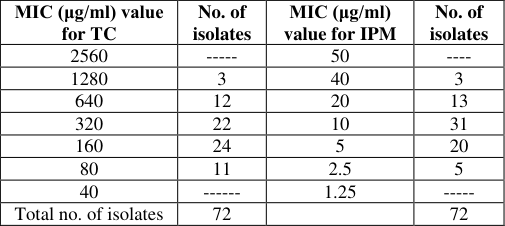 Table 1
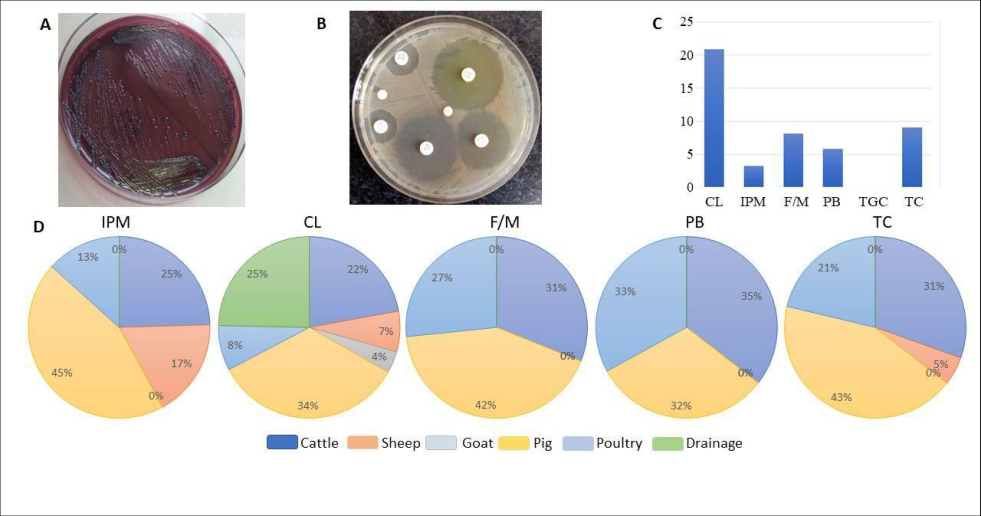 Figure 1
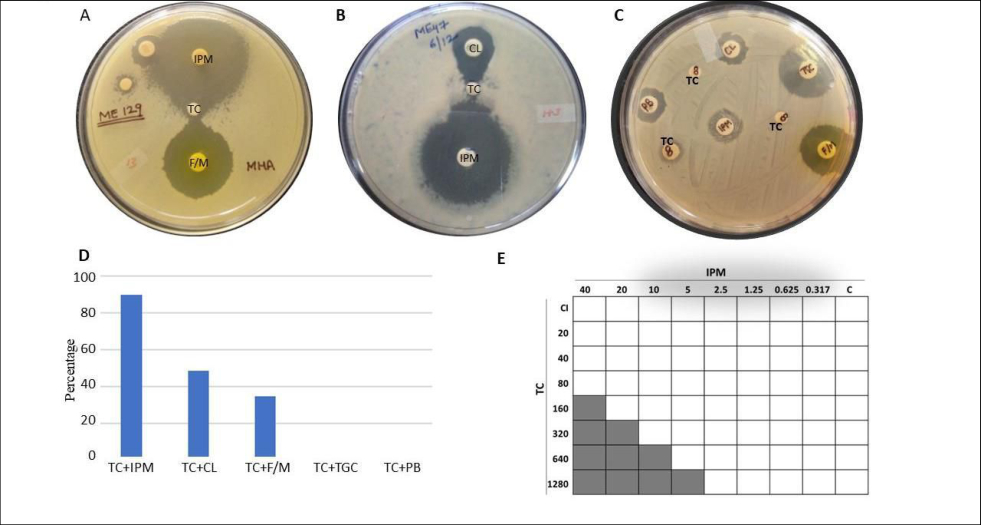 Figure 2
Introduction
The rampant and indiscriminate use of antibiotics has increased bacterial drug resistance worldwide and made it a global health concern. India is currently at highest point in terms of antimicrobial resistance (AMR) among humans as well as food animals (Taneja et al., 2019) [19] . The use of antibiotics in animals as antimicrobial growth promoters influences the prevalence of resistance in animal bacteria like Escherichia coli (E. coli), Campylobacter spp., Salmonella spp. and enterococci. E. coli is an efficient exchanger of genetic material with other E. coli strains and more pathogenic bacteria like Salmonella sp., Shigella sp., Proteus sp. etc. (Alam et al., 2013) [1] , which enable it to transfer the antibiotic resistance genes to them and hence worsen the global problem of antibiotic resistance. Cinnamomum zeylanicum, a natural spice and remedy to combat bacterial infection, belongs to the family Lauraceae and its active components are trans-cinnamaldehyde (TC), cinnamaldehyde, ethyl cinnamate, eugenol, β-caryophyllene, linalool and methyl chavicol (Brackman et al., 2011) [5] . TC has received a significant attention in recent years because of its substantial antimicrobial and medicinal properties (Doyle et al., 2019; Unlu et al., 2010) [6, 20] . The emergence and spread of resistance to carbapenems among food-producing and companion animals constitute a major public health concern. Imipenem (IPM) although is considered as one of best drugs to treat MDR bacteria but due to its higher cost, risk of seizures and its dose-dependent gastrointestinal side effects as compared with other carbapenems, its use has been limited.
Similarly, nitrofurantoin (F/M) is an effective drug but may cause nephrotoxicity at therapeutic doses. Other antibiotics, colistin (CL) and polymixin B (PB) are Other antibiotics, colistin (CL) and polymixin B (PB) are considered as a last line of treatment for some MDR bacteria but recently resistance against both has been reported (Nordmann et al., 2016) [13] . Some recent antibiotics like tigecycline (TGC) is used for most complicated intra-abdominal, skin and soft tissue infections due to its activity against most carbapenemresistant E. coli (Falagas et al., 2011) [7] . However, tigecycline use alone remains a concern in blood, urine, respiratory or other serious infections and there have been several reports of development of resistance due to low concentration level (Soren et al., 2015) [16] . Therefore, an alternative approach may be to use combination therapy which will reduce the dose and toxicity. Synergism is defined as the interaction of two or more agents to produce a combined effect greater than the sum of their individual effects. The complex synergistic interactions with herbal drugs and antibacterial agents are believed to enhance the bioavailability of active components, reduce toxicity, minimize adverse effects and promote therapeutic effects. There are reports of use of combined antibiotic therapy such as beta-lactams and aminoglycosides with fluoroquinolones against Gram-negative bacteria (Tamma et al., 2012) [18] . To control antibiotic resistance governments, try to enforce strict drug usage regulations and researchers are trying to find new antibiotics and explore the paradigm of combinational therapy with other antimicrobials and herbal drugs. In this investigation, we explored the antibacterial activity of TC and its interaction with antibiotics in E. coli isolates.
Materials and Methods
Materials and Methods
Culture of E. coli isolates:
During the period of 2015 to 2017, total 402 fecal samples of clinically sick as well as healthy animals of different species (cattle, sheep, goats, pigs and poultry) were cultured from Bareilly, Uttar Pradesh, India. Briefly, the fecal samples were inoculated into MacConkey broth for 6-8 hrs, then streaked onto MacConkey agar (MA) and Eosin methylene blue agar (EMB) plates and were incubated at 37 °C for 24 hrs. The lactose fermenter colonies on MA further screened for metallic sheen on EMB (Fig. 1A). The bacterial colonies with metallic sheen were confirmed for E. coli by performing biochemical tests. The characterized E. coli cultures were stored in 20% glycerol broth and nutrient agar slants for further testing.
Preparation of isolates for sensitivity testing:
The test culture of E. coli was grown overnight in Luria Bertani (LB) broth at 37 o C. The bacteria were inoculated on Muller Hinton agar (MHA) and incubated for 24 hrs. A single colony was inoculated into Muller Hinton broth (MHB) and the concentration was adjusted to 0.5 McFarland standard to contain approximately 1×10 4 cfu/ml.
Antimicrobial agents:
Imipenem (IPM-10 μg), Nitrofurantoin (F/M-300 μg), Colistin (CL-10 μg), Tigecycline (TGC-15 μg) and Polymixin B (PB-300U) discs were obtained from Becton, Dickinson and Company (BD, Difco). Discs of TC (1μg) were prepared by soaking 4 mm diameter discs of Whatman filter paper no. 3 in 4% TC (Sigma) in methanol.
Disc diffusion assay:
The disc diffusion assay was done to determine antibiotic resistance and for primary screening method of synergy between TC and antibiotics. TC disc was placed in the center of the agar plate and other antibiotic discs at 15 mm apart on the periphery. The key-hole formation between growth inhibition zones of TC and any of the antibiotics tested was considered as a positive indicator of synergy between the two. The absence of keyhole formation was considered as control for the respective E. coli isolate.
2.5
Minimum inhibitory concentration (mic): Antimicrobial activity of TC and IPM was assessed by determination of MIC in accordance with CLSI guidelines (NCCLS, 2014). The MIC for TC and IPM was determined using a two-fold broth dilution method. The lowest concentration, at which the drug inhibited the growth of E. coli, was breakpoint to adjust the MIC for respective E. coli isolate. Two tubes were kept as control in broth dilution method. In the first tube, MHB was added along with antibiotic only and in second tube MHB was added with culture only.
Checkerboard assay:
Evaluation of synergism and antagonism between different combinations for TC and IPM was performed by a checkerboard assay. For the checkerboard assay, growth of E. coli was adjusted to 10 5 cfu/ml in MHB broth. Holes of 6 mm diameter were made in MHA plate and the E. coli culture was inoculated and incubated for 8 hours. The IPM dilutions were added in a vertical direction and the TC dilutions in a horizontal direction. In each well, 25 μl of both drugs were added except in controls where only one drug was added along with 25 μl of DMSO to make it 50 μl. The concentration of both the drugs added in wells was decided by MIC values of drugs. The plates were kept in an upright position for 6 hours and then inverted, and incubated for 24 hours at 37 °C. After 24 hours of incubation, the test culture was observed for clear areas around wells.
Fractional inhibitory concentration indices (FICI):
The isolates showing synergy were tested for quantification of synergy by determining FICI. The MIC value for individual antibiotic was taken from broth dilution method for individual drug. The MIC in combination was provided by checkerboard assay. Both values were used to calculate fractional inhibitory concentration (FIC) as mentioned by (Orhan et al., 2005) [14] . For determining the effect of different antibiotics on isolates of diverse origin Chi-square test (χ 2 ) statistics was used.
Results and Discussion
Results and Discussion
Antimicrobial susceptibility testing of E. coli isolates
Antimicrobial resistance in E. coli has become an important issue in veterinary as well as in human medicine worldwide. Herbal drugs have good antimicrobial activity either alone or in combination with antibiotics but resistance of herbal drugs in bacteria is also reported (Bhardwaj et al., 2019) [3] . The high electronegative charge on TC affects the cell membrane permeability and hence interferes with synthesis of nucleic acid and protein in bacteria (Kwon et al., 2003). According to the biochemical profile (catalase, oxidase, Gram staining and colony morphology (Figure 1A)), 430 E. coli isolates were purified and identified. In the present study TC inhibited the growth of 90.9% of E. coli isolates, revealing its excellent antibacterial potential. Surprisingly, resistance to TC was also observed in isolates of all species, specifically pig isolates showed more resistance. However, TC resistance in E. coli isolates has observed in the study also sparks the increasing concept of herbal drug resistance in past few years. Carbapenems are recently introduced antibiotics and emergence of resistance to them poses great threat to human as well as animal health as it is last resort drug in many disease conditions (Pesingi et al., 2019) [15] . Out of 430 E. coli isolates, 20.9%, 3.25%, 8.13% and 5.81% were found resistant to CL, IPM, F/M and PB, respectively, while all isolates were sensitive for TGC (Fig. 1B,1C). It was observed that isolates from pig comparatively showed more resistance against IPM, CL and F/M while more PB resistance observed in isolates of cattle (Fig. 1D). Besides E. coli, the imipenem resistance was also reported in different species of bacteria viz. Pseudomonas spp., Acinetobacter spp., Klebsiella spp., Citrobacter spp. and Proteus spp. (Lee et al., 2019) [11] . The colistin and polymyxin B antibiotics are used as last line of antibiotic treatment for MDR infections. Detection of the colistin resistance gene mcr-1in food animals possesses a significant public health concern (Gupta et al., 2006) [8] . Similar to present study, CL resistance was found in gram-negative bacteria including E. coli isolates at the rate of 46.4% (Sun et al., 2017) [17] . F/M is an old antibiotic but it has again come in use because of uncontrollable rise in antimicrobial resistance. In case of TGC, all isolates were sensitive irrespective of source. But there are reports that TGC concentrates at sub lethal levels in blood, urine, respiratory infections, that leads to development of resistance (Falagas et al., 2011) [7] . So, the increasing resistance to these new generation antibiotic drugs is reported from the bacteria isolated from different animal species, although, use of these antibiotics are not permitted in animals. This may be due to transfer of the resistance genes to these bacteria through innate or acquired pathways. To combat the emerging antibacterial resistance, it is clear that there is need of use of antibiotics in combination with other antibiotic or herbal drugs.
Synergism between TC and selected antibiotics
Combination therapy strategies for antibiotic use along with herbal drugs can expand repertoire of antimicrobial treatments (Bhardwaj et al., 2016) [4] . Synergistic activity between CL and cinnamaldehyde at the rate of 10% has been reported in MDR Pseudomonas aeruginosa isolates (Utchariyakiat et al., 2016) [21] . In addition, synergistic activity between colistin and amikacin antibiotics has been reported against mcr-1 producing E. coli isolates (Zhou et al., 2017) [23] . In the present study, total 80/430 E. coli isolates showed synergy between TC and any of the five selected antibiotics (Fig. 2A,2B). Seventy-two (90%) isolates showed synergy between TC and IPM, 39 (48.75%) between TC and CL, and 28 (35%) between TC and F/M (Fig. 2D). None of the isolates showed synergy of TC with TGC and PB (Fig. 2C,2D). The synergistic interaction in E. coli isolates between TC and IPM was quantified. TC inhibited the growth of E. coli at concentrations of 80 -1280 μg/ml, similar to earlier reports (Zhang et al., 2015) [22] while MIC of IPM ranged from 2.5 -40 μg/ml (Table 1).
| MIC (μg/ml) value for TC | No. of isolates | MIC (μg/ml) value for IPM | No. of isolates |
|---|---|---|---|
| 2560 | ----- | 50 | ---- |
| 1280 | 3 | 40 | 3 |
| 640 | 12 | 20 | 13 |
| 320 | 22 | 10 | 31 |
| 160 | 24 | 5 | 20 |
| 80 | 11 | 2.5 | 5 |
| 40 | ------ | 1.25 | ----- |
| Total no. of isolates | 72 | 72 |
Table text extracted from the original PDF; superscript letters are shown inline. The original table image is below.
View original table image
The results of FIC indices revealed that out of 72 E. coli isolates, 31 (43%) showed total synergy, 27 (37.5%) showed partial synergism and 14 (19%) showed indifference. In the synergistic combination, 320 μg/ml MIC of TC reduced the MIC of IPM from 40 μg/ml to 2.5 μg/ml (Fig. 2E).
Reduction in MIC of IPM and cinnamon oil in combination treatment was reported earlier by Azza, et al. (2010) [2] . So, in the study combination of TC and IPM was used for expanding the antibacterial activity, reducing dose and decreasing the antimicrobial resistance during in vitro study. All the antibiotics possess different mechanism of action. Imipenem inhibits transpeptidation of peptidoglycan layer after binding irreversibly to the active site of the PBPs, which in turn disrupts cell wall synthesis and finally cell death (Kapoor et al., 2017) [9] . On the other hand, CL acts on Gram-negative bacterial cell membrane through a detergent-like effect, leading to disruption of the outer membrane and loss of cellular contents, thus killing the bacterium. Therefore, disruption of cell envelope could have promoted permeability for both the drugs to reach at optimum concentration inside the bacterial cell. In this investigation, it has been observed that 35% of the isolates showed synergistic antimicrobial effect of TC with F/M, which may open a new window for use of F/M in combination with TC, at least for topical use. Although both IPM and CL are acting on the cell envelope, F/M inhibits several enzymes produced by bacteria involved in the synthesis of DNA and RNA. As we already know, TC also inhibits the nucleic acid synthesis, so it may possible that TC along with disrupting cell membrane, also aids F/M for doing its action more precisely. The comparison of FIC for E. coli isolates from different sources revealed that isolates from cattle showed significantly higher levels of synergy than in goat (p<0.01), pig (p<0.05), poultry (p<0.01) and sheep (p<0.01) isolates. Similarly, isolates from pigs showed significantly (p<0.01) higher chances of synergy than isolates from poultry, sheep and goat. Synergy may be controlled by some universally occurring bacterial genes or due to genes present in a few selected strains or due to some specific targets on some strains of bacteria for combined effect of both drugs. It is hoped that a more profound understanding of the mechanisms of action and resistance will improve our ability to design and develop more potent and less toxic derivatives of IPM, CL and F/M. It is probable that there are multiple genes present in bacteria conferring resistance and if their expression or function is interrupted the bacteria may show sensitivity. However, to understand synergy between TC and antibiotics, more targeted studies are needed.
Conclusion
TC has a good antibacterial action against E. coli strains. Antimicrobial synergy was much better for TC and imipenem than for other combinations. The study indicated that there is a scope and need to explore the antimicrobial synergy of TC with other antibiotics in an in vivo model against MDR strains of bacteria for therapeutic purposes.
Acknowledgement
AcknowledgementsAuthors are thankful to Director, ICAR-IVRI for providing necessary funds for the work. Authors are also thankful to UGC for RGN Fellowship to the first author. Conflict of interestThe authors declare that they have no conflict of interest.
Figures and tables from the paper
References
21 in the original paper- Alam MZ, Aqil F, Ahmad I, Ahmad S. Incidence and transferability of antibiotic resistance in the enteric bacteria isolated from hospital wastewater. Brazilian Journal of Microbiology. 2013;44:799-806.
- Azza A, Abou Z, Mona S, Mohamed I. Control of some multiresistant bacteria infecting upper respiratory system using certain essential oils and plant extracts. In: International Journal of Advanced Biochemistry Research https://www.biochemjournal.com Proceedings of the Fifth Scientific Environmental Conference, 2010, 87.
- Bhardwaj M, Singh BR, Sinha DK, Or VK, Vadhana P, Singh SV, et al. Evaluation of carvacrol as an antibacterial agent against Escherichia coli isolated from different animal species. Journal of Entomology and Zoology Studies. 2019;7:911-914.
- Brackman G, Cos P, Maes L, Nelis HJ, Coenye T. Quorum sensing inhibitors increase the susceptibility of bacterial biofilms to antibiotics in vitro and in vivo. Antimicrobial Agents and Chemotherapy. 2011 Jun;55(6):2655-2661.
- Doyle AA, Stephens JC. A review of cinnamaldehyde and its derivatives as antibacterial agents. Fitoterapia. 2019 Nov 1;139:104405.
- Falagas ME, Karageorgopoulos DE, Nordmann P. Therapeutic options for infections with Enterobacteriaceae producing carbapenem-hydrolyzing enzymes. Future Microbiology. 2011 Jun;6(6):653-666.
- Gupta E, Mohanty S, Sood S, Dhawan B, Das BK, Kapil A. Emerging resistance to carbapenems in a tertiary care hospital in north India. Indian Journal of Medical Research. 2006 Jul 1;124(1):95-98.
- Kapoor G, Saigal S, Elongavan A. Action and resistance mechanisms of antibiotics: A guide for clinicians. Journal of Anaesthesiology Clinical Pharmacology. 2017 Jul 1;33(3):300-305.
- Kwon JA, Yu CB, Park HD. Bacteriocidal effects and inhibition of cell separation of cinnamic aldehyde on Bacillus cereus. Letters in Applied Microbiology. 2003 Jul 1;37(1):61-65.
- Lee Y, Bradley N. Overview and insights into carbapenem allergy. Pharmacy. 2019 Aug 8;7(3):110.
- Nordmann P, Jayol A, Poirel L. Rapid detection of polymyxin resistance in Enterobacteriaceae. Emerging Infectious Diseases. 2016 Jun;22(6):1038.
- Orhan G, Bayram A, Zer Y, Balci I. Synergy tests by E test and checkerboard methods of antimicrobial combinations against Brucella melitensis. Journal of Clinical Microbiology. 2005 Jan;43(1):140-143.
- Pesingi PV, Singh BR, Pesingi PK, Bhardwaj M, Singh SV, Kumawat M, et al. MexAB-OprM efflux pump of Pseudomonas aeruginosa offers resistance to carvacrol: A herbal antimicrobial agent. Frontiers in Microbiology. 2019 Nov 19;10:461519.
- Soren O, Brinch KS, Patel D, Liu Y, Liu A, Coates A, et al. Antimicrobial peptide novicidin synergizes with rifampin, ceftriaxone, and ceftazidime against antibiotic-resistant Enterobacteriaceae in vitro. Antimicrobial Agents and Chemotherapy. 2015 Oct;59(10):6233-40.
- Sun J, Zeng X, Li XP, Liao XP, Liu YH, Lin J. Plasmid-mediated colistin resistance in animals: current status and future directions. Animal Health Research Reviews. 2017 Dec;18(2):136-152.
- Tamma PD, Cosgrove SE, Maragakis LL. Combination therapy for treatment of infections with gram-negative bacteria. Clinical Microbiology Reviews. 2012 Jul;25(3):450-470.
- Taneja N, Sharma M. Antimicrobial resistance in the environment: The Indian scenario. Indian Journal of Medical Research. 2019 Feb 1;149(2):119-28.
- Unlu M, Ergene E, Unlu GV, Zeytinoglu HS, Vural N. Composition, antimicrobial activity and in vitro cytotoxicity of essential oil from Cinnamomum zeylanicum Blume (Lauraceae). Food and Chemical Toxicology. 2010 Nov 1;48(11):3274-80.
- Utchariyakiat I, Surassmo S, Jaturanpinyo M, Khuntayaporn P, Chomnawang MT. Efficacy of cinnamon bark oil and cinnamaldehyde on antimultidrug resistant Pseudomonas aeruginosa and the synergistic effects in combination with other antimicrobial agents. BMC Complementary and Alternative Medicine. 2016 Dec;16:1-7.
- Zhang YB, Liu XY, Jiang PP, Li WD, Wang YF. Mechanism and antibacterial activity of cinnamaldehyde against Escherichia coli and Staphylococcus aureus. Modern Food Science and Technology. 2015;31:31-35.
- Zhou YF, Tao MT, Feng Y, Yang RS, Liao XP, Liu YH, et al. Increased activity of colistin in combination with amikacin against Escherichia coli co-producing NDM-5 and MCR-1. Journal of Antimicrobial Chemotherapy. 2017 Jun 1;72(6):1723-1730.
Cited by 2
From OpenAlex, OpenCitations and reference lists read by Scinovex
- Antimicrobial and anticancer insights of cinnamaldehyde Schiff bases and metal complexes ↗
Neetu Singh, Surender Singh Yadav · Inorganic Chemistry Communications · 2024
❝ 24 - Environmental antibiotic stress and high-risk resistance genes in bacterial communities of the Gomti and Ganga Rivers, India ↗
Fahmi Naznine, Ushba Aafreen, Yashpal Singh Malik, Mohd Ikram Ansari · Molecular Biology Reports · 2025
❝ 0