
Research article · 2024 · Full text
International Journal of Research in AgronomyFloral-pod efficiency and pod productivity potential among some African yam bean (Sphenostylis stenocarpa Hochst. Ex. A. Rich) Harms accessions
Volume 7(4) · Pages 481–485 · DOI: 10.33545/2618060x.2024.v7.i4g.593 ↗
Research areasAgricultural pest management studiesGenetic and Environmental Crop StudiesGenetics and Plant Breeding
Abstract
Author-writtenPod and grain yield in legumes is a function of the quantity of flowers on the field. The present study explored flower and pod productivity potentials of 15 African yam bean (AYB) accessions to provide insight into their intra-specific grain yield potentials. The 15 accessions were evaluated in a randomized complete block design (RCBD) with three replicates at the Teaching and Research Farm, Federal University Oye-Ekiti (FUOYE), Ikole-Ekiti Campus, Nigeria. Data were collected on: number of flowers/peduncle (NOFP), number of filled pods/peduncle (NOFPP), number of unfilled pod/peduncle (NOUPP), number of pods/plant (NOPP) and pod weight/plant (PWP). Data were subjected to analysis of variance and genetic estimates were estimated from the variance components. Pearson correlation coefficient analysis was done using means of the data and ratios of flower to pod were estimated for each accession. Significant (≤0.001) variation existed among the 15 accessions for the five traits. Average NOFP, NOFPP, NOUPP, NOPP and PWP from the 15 accessions were 14.51, 2.06, 0.97, 32.36 and 174.44g respectively. DSs4B and DSs4C had above average NOFP,NOPP and PWP with NOUPP less than the average while TSs69A and DSs4A had above average for the five traits. NOPP had the highest (91.32%) broad-sense heritability. Mean proportion of pod to flower in this study was 21%, seven accessions had above this average, the highest (29%) occurred in DSs4A. African yam bean accessions had different flower-pod ratio efficiencies and pod productivity potential. This study unfolds a platform for pod productivity selection in AYB.
Summary
Source-checkedPlain-language reading of the full paper, prepared with AI and checked against the text. Each point links to the authors' own words.
Why it matters
- Nigeria and other developing nations struggle with protein deficiencies due to rapid population growth. View evidence ↗
- The African yam bean (AYB) is a nutritionally potent legume that remains underutilized despite being comparable to common legumes. View evidence ↗
- AYB is often overlooked because of anti-nutritional compounds and a lack of research on how to improve the crop. View evidence ↗
The question
- The study aims to investigate pod productivity potentials across different AYB accessions and examine differences in seed testa colors. View evidence ↗
What they did
- Fifteen AYB accessions were tested using a randomized complete block design with three replicates in Nigeria. View evidence ↗
- The researchers measured flowers per peduncle, filled and unfilled pods per peduncle, total pods per plant, and total pod weight per plant. View evidence ↗
- To collect data, five peduncles were tagged on the primary branches of two middle plants in each plot. View evidence ↗
What they found
- Across the 15 accessions, the average values were 14.51 flowers/peduncle, 2.06 filled pods/peduncle, 0.97 unfilled pods/peduncle, 32.36 pods/plant, and 174.44g pod weight/plant. View evidence ↗
- The accession TSs217AC had the highest mean of flowers per peduncle (17.15), while TSs217AD had the lowest (10.85). View evidence ↗
- The lowest pod weight per plant was 106.72g (TSs217AA), and the highest was 254.46g (DSs4C). View evidence ↗
- Broad-sense heritability was high (>70%) for pods per plant (91.32%), flowers per peduncle (72.11%), and filled pods (77.97%). View evidence ↗
- There was a high and highly significant positive correlation (r = 0.91) between the number of pods per plant and the total pod weight per plant. View evidence ↗
- The average flower-to-pod conversion ratio was 21%, with DSs4A showing the highest efficiency at 29%. View evidence ↗
What it means
- The authors suggest that crossing accessions DSs4B and DSs4C could potentially create superior heterotic genotypes. View evidence ↗
- The study concludes that these findings provide a basis for optimizing breeding strategies to increase AYB productivity. View evidence ↗
- The authors warn that selecting plants based on the number of unfilled pods may be unreliable because this trait is heavily influenced by the environment. View evidence ↗
Visual summary
1 visualsIllustrations explain the paper; they do not show study data.
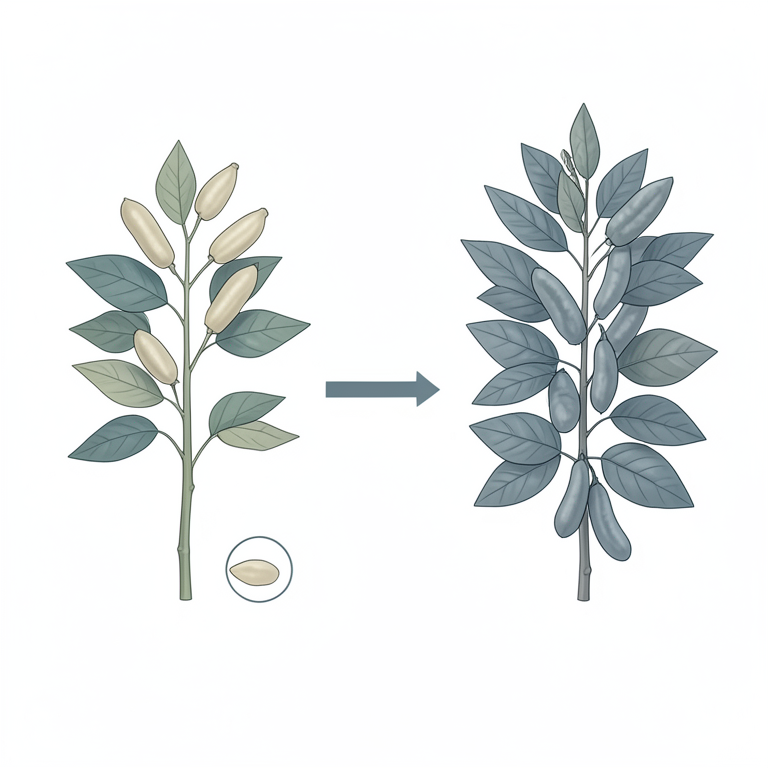
Correlation between Pod Quantity and Weight
AI-generated conceptual illustration (African yam bean (Sphenostylis stenocarpa) plants). It explains the idea and does not show study data.
View source evidence ↗Figures & tables
From the original paper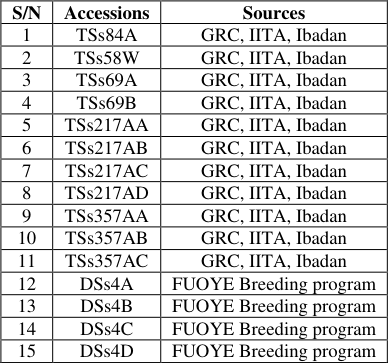 Table 1
 Table 2
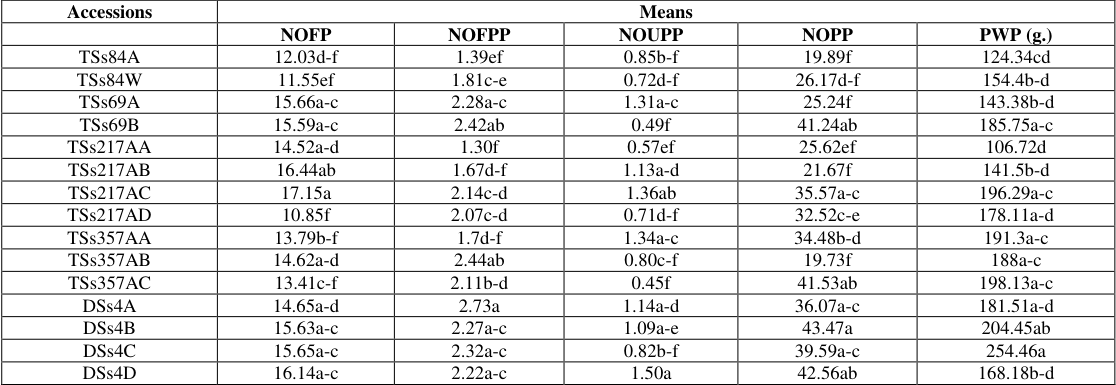 Table 3
 Table 4
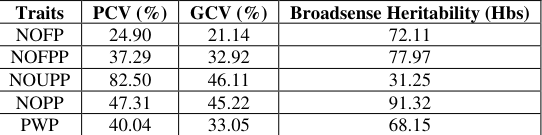 Table 5
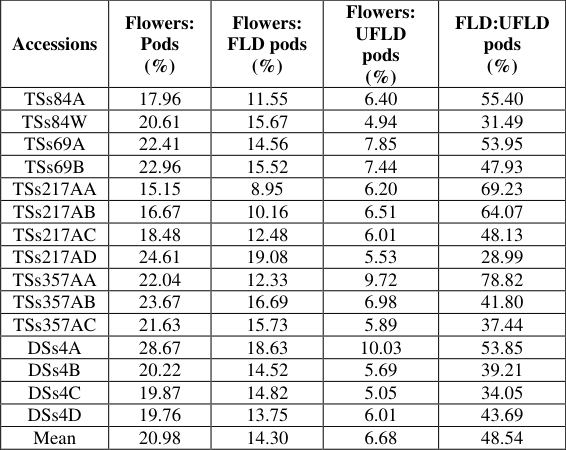 Table 6
Introduction
Nigeria, akin to many developing nations, faces a critical challenge in meeting its nutritional needs, particularly concerning protein deficiencies, aggravated by escalating population growth. In the past decade, over three million children have grappled with inadequate protein intake, resulting in severe stunted physical growth and development [1] . This nutritional shortfall not only affects the young but also detrimentally impacts the health and economic productivity of the adult populace. In light of escalating population pressures and the rapid depletion of natural resources, the exploration of novel plant resources has become an imperative pursuit. This quest is especially relevant given the disproportionate reliance on a limited array of plant resources, encompassing less than 30 crops, among which the African yam bean (AYB), a leguminous crop, holds prominence [1] . Legumes, renowned for their adaptability to adverse ecological conditions and nutritional richness, present an avenue for bolstering the sustainability of dry subtropical and tropical agricultural systems [2,3] . Among these legumes, the African yam bean stands out as an underutilized yet nutritionally potent crop, comparable in nutritional value to widely-consumed legumes [4] . However, despite its nutritional promise, comprehensive awareness of its productivity and nutritional significance remains conspicuously deficient, particularly in regions where it thrives. AYB, classified as a vigorous climbing herbaceous vine indigenous to West and East Africa, exhibits robust growth patterns under specific ecological prerequisites [5] . This leguminous crop, thriving in well-drained sandy and loamy soils with adequate rainfall and temperatures, emerges as a crucial reservoir of protein, carbohydrates, and fats [6,7] . Nonetheless, despite its nutritional prowess, AYB continues to be overlooked, partly attributed to the presence of antinutritional compounds and the paucity of comprehensive research devoted to its enhancement [8,9] . Understanding the genetic diversity encapsulated within AYB is foundational to effective breeding programs and the development of superior cultivars [10,11,12] . However, despite strides in understanding its genetics, detailed investigations into the pod productivity potentials of AYB peduncles and variations in testa colors between planted and harvested seeds remain conspicuously scant in contemporary research. Hence, this study endeavors to investigate the pod productivity potentials across diverse AYB accessions and elucidate variances in testa colors between planted and harvested seeds, aiming to contribute valuable insights to the enhancement of this underutilized yet nutritionally promising crop.
Materials and Methods
An experiment was carried out at the Teaching and Research farm, Department of Crop Science and Horticulture, Federal University Oye-Ekiti (FUOYE). Ikole-Ekiti campus, Ikole-Ekiti, Ekiti state, Nigeria. The land area was ploughed, harrowed and ridged. The experimental layout was randomized complete block design with three replicates. The treatment was 15 African yam bean (AYB) genetic materials obtained from the Genetic Resources Centre (GRC), International Institute of Tropical Agriculture (IITA), Ibadan, Nigeria and AYB Breeding program FUOYE, Ikole-Ekiti Campus, Nigeria (List in Table 1).
| S/N | Accessions | Sources |
|---|---|---|
| 1 | TSs84A | GRC, IITA, Ibadan |
| 2 | TSs58W | GRC, IITA, Ibadan |
| 3 | TSs69A | GRC, IITA, Ibadan |
| 4 | TSs69B | GRC, IITA, Ibadan |
| 5 | TSs217AA | GRC, IITA, Ibadan |
| 6 | TSs217AB | GRC, IITA, Ibadan |
| 7 | TSs217AC | GRC, IITA, Ibadan |
| 8 | TSs217AD | GRC, IITA, Ibadan |
| 9 | TSs357AA | GRC, IITA, Ibadan |
| 10 | TSs357AB | GRC, IITA, Ibadan |
| 11 | TSs357AC | GRC, IITA, Ibadan |
| 12 | DSs4A | FUOYE Breeding program |
| 13 | DSs4B | FUOYE Breeding program |
| 14 | DSs4C | FUOYE Breeding program |
| 15 | DSs4D | FUOYE Breeding program |
Table text extracted from the original PDF; superscript letters are shown inline. The original table image is below.
View original table image
Planting was done at 1m by 1m, thinning and staking was done between weeks two and three after planting. A row plot of six plants were maintained and 15 plots were maintained in a replicate. Five peduncles were tagged on the primary branches of two middle plants in each plot per replicate. The number of flowers, number of pods and number of filled pods were recorded. Number of unfilled pods/peduncle were estimated as: total pods/peduncletotal number of filled pods/peduncle. Furthermore, mean number of flowers/peduncle, flowers to filled and unfilled pod ratios were estimated. Other data include: number of pods/plant and pod weight/plant. Data were submitted to analysis of variance (ANOVA), means of the treatments for each data were separated by Tukey Honestly significant differences. Trait relationships was estimated by Pearson correlation coefficient analysis. Above analyses were conducted in SAS, version 9.4. (SAS, 2011). Genetic estimates such as: phenotypic coefficient of variation (PCV), genotypic coefficient of variation (GCV) and broad sense heritability (Hbs) were estimated from the variance components as follows, following [13] . PCV = 100*√ ……………… Eq. 1 GCV = 100* √ ……………… Eq. 2 Hbs = ……………………… Eq. 3
Where: σ g 2 and σ p 2 are genotypic and phenotypic variance components from ANOVA, σ g 2 -genotypic mean squareerror mean square)/number of replications and σ p 2 -genotypic mean square + error mean square)/number of replications. X is the mean of each trait. Different proportions of the pods, filled and unfilled pods to the total numbers of flowers per pod were estimated.
Result
The 15 genotypes differ significantly (p≤0.001) from each other for all the traits in Table 2 except in the number of unfilled pods per plant. All other traits had coefficient of variation < 15% except number of unfilled pods per plant whose CV was 46.79% (Table 2). Among the 15 studied African yam bean accessions, the highest mean of flowers/peduncle was 17.15, and it occurred in TSs217AC, the genotype with the least (10.85) number of flowers/peduncle was TSs217AD (Table 3). Highest number of filled pods/peduncle was 2.73 in DSs4A, the least (1.30) was observed in TSs217AA, the same genotype had the least (106.72g) weight of pods/plant but DSs4C was the genotype with the highest (254.46 g) pod weight in this study (Table 3). While DSs4D and DSs4B respectively had the highest value for unfilled pod and number of pods/plant, the least values for the same traits were respectively recorded in TSs357AC and TSs357AA (Table 3). Among the five traits, ten correlation coefficients ensued, eight were positive, two were negative and only three were significant (Table 4). Number of flowers/plant positively and significantly (p≤0.05) correlated with: number of pods/plant (r = 0.56) and pod weight/plant (r = 0.68). Correlation coefficient between number of pods/plant and pod weight/plant was high (r = 0.91) and highly significant (Table 4).
| — | NOFP | NOFPP | NOUPP | NOPP |
|---|---|---|---|---|
| NOFPP | 0.38 | |||
| NOUPP | 0.44 | -0.28 | ||
| NOPP | 0.56* | 0.44 | -0.08 | |
| PWP | 0.68** | 0.32 | 0.1 | 0.91*** |
Table text extracted from the original PDF; superscript letters are shown inline. The original table image is below.
View original table image
| Accessions | Means | — | — | — | — |
|---|---|---|---|---|---|
| NOFP | NOFPP | NOUPP | NOPP | PWP (g.) | |
| TSs84A | 12.03d-f | 1.39ef | 0.85b-f | 19.89f | 124.34cd |
| TSs84W | 11.55ef | 1.81c-e | 0.72d-f | 26.17d-f | 154.4b-d |
| TSs69A | 15.66a-c | 2.28a-c | 1.31a-c | 25.24f | 143.38b-d |
| TSs69B | 15.59a-c | 2.42ab | 0.49f | 41.24ab | 185.75a-c |
| TSs217AA | 14.52a-d | 1.30f | 0.57ef | 25.62ef | 106.72d |
| TSs217AB | 16.44ab | 1.67d-f | 1.13a-d | 21.67f | 141.5b-d |
| TSs217AC | 17.15a | 2.14c-d | 1.36ab | 35.57a-c | 196.29a-c |
| TSs217AD | 10.85f | 2.07c-d | 0.71d-f | 32.52c-e | 178.11a-d |
| TSs357AA | 13.79b-f | 1.7d-f | 1.34a-c | 34.48b-d | 191.3a-c |
| TSs357AB | 14.62a-d | 2.44ab | 0.80c-f | 19.73f | 188a-c |
| TSs357AC | 13.41c-f | 2.11b-d | 0.45f | 41.53ab | 198.13a-c |
| DSs4A | 14.65a-d | 2.73a | 1.14a-d | 36.07a-c | 181.51a-d |
| DSs4B | 15.63a-c | 2.27a-c | 1.09a-e | 43.47a | 204.45ab |
| DSs4C | 15.65a-c | 2.32a-c | 0.82b-f | 39.59a-c | 254.46a |
| DSs4D | 16.14a-c | 2.22a-c | 1.50a | 42.56ab | 168.18b-d |
Table text extracted from the original PDF; superscript letters are shown inline. The original table image is below.
View original table image
| — | — | Mean Squares | — | — | — | — |
|---|---|---|---|---|---|---|
| SOV | DF | NOFP | NOFPP | NOUPP | NOPP | PWP(g.) |
| Rep | 2 | 1.70 | 0.07 | 0.03 | 4.91 | 234.71 |
| Gen | 14 | 10.38*** | 0.49*** | 0.34*** | 221.80*** | 3983.5*** |
| Error | 28 | 0.97 | 0.03 | 0.03 | 7.72 | 659.41 |
| Mean | - | 14.51 | 2.06 | 0.95 | 32.36 | 174.44 |
| CV (%) | - | 6.80 | 8.14 | 18.95 | 8.59 | 14.72 |
Table text extracted from the original PDF; superscript letters are shown inline. The original table image is below.
View original table image
From Table 5, the PCV were higher than the GCV in all the traits. The highest PCV and GCV occurred in the number of unfilled pods, the same trait had the least broadsense heritability of 31.23%. Moreover, very high magnitude was observed in the differences between phenotypic and genotypic coefficient variation values (Table 5). Broadsense heritability was > 70% in the number of pods/plant (91.32%), number of flowers/peduncle (72.11%) and number of filled pods (77.97%) Table 6 unfolds the differential flower: pod ratios of the 15 African yam bean accessions. Among the studied 15 accessions, mean flowers: pods, flowers: filled pods, flowers: unfilled pods and filled: unfilled pods ratios were respectively: 20.98%, 14.3%, 6.68% and 48.54 % (Table 6). DSs4A took the lead among the 15 accessions by having the highest number of converted flowers to pods, filled pods and unfilled pods (Table 6). TSs217AD had the least (29%) proportion of losses to unfilled pods, but the highest (79%) was observed in TSs357AA.
| Accessions | Flowers: Pods (%) | Flowers: FLD pods (%) | Flowers: UFLD pods (%) | FLD:UFLD pods (%) |
|---|---|---|---|---|
| TSs84A | 17.96 | 11.55 | 6.40 | 55.40 |
| TSs84W | 20.61 | 15.67 | 4.94 | 31.49 |
| TSs69A | 22.41 | 14.56 | 7.85 | 53.95 |
| TSs69B | 22.96 | 15.52 | 7.44 | 47.93 |
| TSs217AA | 15.15 | 8.95 | 6.20 | 69.23 |
| TSs217AB | 16.67 | 10.16 | 6.51 | 64.07 |
| TSs217AC | 18.48 | 12.48 | 6.01 | 48.13 |
| TSs217AD | 24.61 | 19.08 | 5.53 | 28.99 |
| TSs357AA | 22.04 | 12.33 | 9.72 | 78.82 |
| TSs357AB | 23.67 | 16.69 | 6.98 | 41.80 |
| TSs357AC | 21.63 | 15.73 | 5.89 | 37.44 |
| DSs4A | 28.67 | 18.63 | 10.03 | 53.85 |
| DSs4B | 20.22 | 14.52 | 5.69 | 39.21 |
| DSs4C | 19.87 | 14.82 | 5.05 | 34.05 |
| DSs4D | 19.76 | 13.75 | 6.01 | 43.69 |
| Mean | 20.98 | 14.30 | 6.68 | 48.54 |
Table text extracted from the original PDF; superscript letters are shown inline. The original table image is below.
View original table image
| Traits | PCV (%) | GCV (%) | Broadsense Heritability (Hbs) |
|---|---|---|---|
| NOFP | 24.90 | 21.14 | 72.11 |
| NOFPP | 37.29 | 32.92 | 77.97 |
| NOUPP | 82.50 | 46.11 | 31.25 |
| NOPP | 47.31 | 45.22 | 91.32 |
| PWP | 40.04 | 33.05 | 68.15 |
Table text extracted from the original PDF; superscript letters are shown inline. The original table image is below.
View original table image
Discussion
The findings of this study unfold significant variability among 15 accessions of African yam bean for floral and pod traits. The identified variation may be suggestive of the distinctive genetic variability among the accessions for the various traits, thus offering promising avenue for direct selection of genotypes for cultivar development programs in African yam bean. The traits considered in this study are among the grain yield determinants of grain yield in legumes [14] . Many authors have identified number of flowers [15] , number of pods/plant [16] , number of filled pods [17] , flower to pod ratios [18] as critical traits to guide selection of candidate genotypes as parental stocks for hybridization and hence advanced trial for the generation of elite cultivars. This study reveal that a peduncle of African yam bean situated on a primary branch of the vine can produce flowers in the range of 11 to 18 and up to three pods/peduncle. Furthermore, number of pods/plant recorded in this study for African yam bean ranged between 20 and 44 and pod weight/plant was between 107 g to 255g. Above results were relatively in consonance with that of [19, 20, 21, 22] etc. Selection in plant breeding is a very critical procedure to advance breeding progress, the process is eased when correlation analysis reveal proportional relationship among traits. In this study, number of pods/plant had a positive correlation with the weight of pods/plant. Correlation analyses revealed intriguing relationships between certain traits. Relationship of these two traits underscores direct association of pod quantity and pod weight, this has positive inference on grain yield. Our study therefore identified DSs4B and DSs4C as the best accessions for these traits; possible cross between them can greatly lead to the generation of heterotic genotypes for this economic trait. It is noteworthy from our study that more flowers per peduncle equally translated to higher number of pods/plant and hence the pod weight/plant; meaning, low flower producing genotypes may not be recommended for higher grain yield. The proportional differences between PCV and GCV values for number of flowers/peduncle, number of filled pod and number of pods/plant were very low, moreover the three had broad-sense heritability well above 70%. Many authors [23,11,24] had earlier remarked that selection based on trait with such low PCV and GCV difference and > 70% broad-sense heritability values may be very reliable. Number of unfilled pod had the widest PCV-GCV gap and the lowest broad-sense heritability value. Environmental factors are suspected to be playing a very significant role in its expression, thus selection based on the trait may not be reliable. Practically, factors which enhances pod filling in legumes include water, assimilates, temperature etc. [25,26] . We postulate floral-pod ratio as a measure of efficiencies of the conversion of flowers to pods among different accessions of African yam bean in this study. While mean flower to pod ratio among the 15 accessions was 21%, pod from flower production efficiency may be as low as 15% in TSs217AA and as high as 29% in DSs4A. According to [27,28] flower-pod ratio varies within species and it is mostly determined by assimilate partitioning pattern and other environmental factors. From the results the number of flowers produced per peduncle does not actually determine the productivity of the pod, for example, TSs84W, produced the highest number of flowers while TSs217AD had the lowest. Identifying the most relevant factor determining flower-pod efficiency ratio in African yam bean is key to eventual recommendation. We therefore recommend assessment of physiological role in the determination of flower-pod ratio for African yam bean as a further study gap.
Conclusion
In conclusion, the study revealed significant variability among 15 African yam bean accessions for floral and pod traits, with distinct genetic variability observed. This diversity provides promising opportunities for direct selection of genotypes in cultivar development programs. Traits such as number of flowers, pods per plant, and pod weight were identified as crucial determinants of grain yield, essential for guiding selection of parental stocks for hybridization. Correlation analyses highlighted positive associations between traits, particularly between number of pods per plant and pod weight, indicating their direct influence on grain yield. Notably, accessions DSs4B and DSs4C showed potential for enhancing these traits, suggesting the possibility of generating heterotic genotypes through crosses between them. However, caution is advised in selection based on the number of unfilled pods, given its wide variation influenced by environmental factors. Furthermore, the study introduced floral-pod ratio as a measure of conversion efficiency, emphasizing the need for further investigation into the physiological determinants of this ratio in African yam bean. Overall, these findings contribute valuable insights for optimizing breeding strategies and enhancing productivity in African yam bean cultivation.
References
27 in the original paper- Ikhajiagbe B, Mensah JK. Genetic Assessment of three color variant of African yam bean (Sphenostylis stenocarpa) commonly grown in the midwester region of Nigeria. International Journal of Modern Botany. 2012;2(2):13-18.
- Osakebe Y, Osakebe K, Shinozak K, Tran LP. Response of plant to water stress. Front plant science. 2014;10(2):259.
- Tatrai ZA, Sanoubar R, Pluhar Z, Mancarella S, Orsini F, Gianquinto G. Morphological and physiological plant responses to drought stress in Thymus citriodorous. International journal of agronomy. 2016, Article ID 4165750, 8 pages, 2016.
- George TT, Obilana AO, Oyeyinka SA. The prospect of African yam bean: Pest and future importance. Heliyon 6 2020.
- Milne/Red head E, Polhil RM. Flora of Tropical East Africa Agents for Oversea Government and Administration, millbank. London, 1971, p. 670-674.
- Frank UE, Rita NO, Chukwuemeka SA. Effect of African yam bean (Sphenostylis stenocarpa) on serum calcium, inorganic phosphate, uric acid, and alkaline phosphatase concentration of male albino rats. Journal of Agricultural Science. 2016, 8(1).
- Ojuederie OB, Balogun MO. African yam bean (Sphenostylis stenocarpa) tubers for nutritional security. Journal of underutilized legumes. 2019;1(1):56-68.
- Pusztai A, Bardocz S. Biological Effects of Plant Lectins on the gastrointestinal tract: Metabolic consequences and application. Trends in Glycoscience and Glycotechnology. 1996;8:149-165.
- Machuka J, Okeola OG. One and Two Dimensional Gel Electrophoresis Identification of the Africa Yam Bean Seed Proteins. Journals of Agriculture and Food Chemistry. 2000;(48):2296-2299.
- Oshodi AA, Ipinmoroti KO, Adeyeye EI and Hall GM. Invitro multi enzyme digestibility of protein of six varieties of African yam bean flours. Journal of science; food and agriculture. 1995;69:373-377.
- Adewale BD, Okonji C, Oyekanmi AA, Akintobi DAC, Aremu CO. Genotypic variability and stability of some grain yield components of Cowpea. African Journal of Agricultural Research. 2010;5(9):874-880.
- Singh RK, Chaudhary BD. Biometrical methods in quantitative genetic analysis. Kalyani publishers, New Delhi, Ludhiana, India. 1985, 39-78.
- Ayas S, McKenzie BA, Hill GD, McNeil DL. Variability in the yield of four grain legume species in a sub humid temperate environment I. yields and harvest index. The journal of agricultural science, 2004.
- Ogunbodede BA. Reproductive efficiency in cowpea (Vigna unguiculata (L.) Walp) in southwestern Nigeria. Scientia horticulturae. 1990;42:219-224.
- Lakic Z, Stankovic S, Pavlovic S, Krnjajic SB, Popovic VM. Genetic variability in quantitative traits of field pea (Pisum sativum L.) genotype. Journal of genetic and plant breeding. 2018, 55(No. 1).
- Kamara AY, Chikoye D, Ekeleme F, Omoige L. Field performance of improved cowpea varieties under conditions of natural infestation by the parasitic weed striga gesnerioide. International journal of pest management. 2008;54(3):189-195.
- Nwofia GE, Ogbonna ND, Agbo CU, Mbah EU. Growth and yield of some vegetablecowpea genotype as influenced by planting season. International journal of agriculture and forestry. 2015;5(3):205-210.
- Adewale BD, Aremu CO, Amazue UE. Intra-specific variability and diversity of Africanyam bean by seed size parameters. Journal of Agricultural and Biological Science. 2012;7(6):454-461.
- Ojuederie OB, Balogun MO, Akande SR, Korie S, Omodele T. Intraspecific variability in agro-morphological traits of African yam bean Sphenostylis stenocarpa (Hochst ex. A. Rich) harms. J Crop Sci Biotechnology. 2015;18(2):53-62.
- Aina AI, Ilori CO, Ukoabasi OE, Olaniyi O, Potter D, Abberton MT. Morphological characterisation and variability analysis of African yam bean (Sphenostylis stenocarpa Hochst. Ex. A. Rich) harms. Int J Plant Res. 2020;10(3):45-52.
- Shitta NS, Abebe NT, Oselebe HO, Edemodu AC, Alamu EO, Abberton MT, et al. Evaluation of 93 accessions of African yam bean (Sphenostylis stenocarpa) grown in ethiopia for physical, nutritional, antinutritional and cooking properties. Journal of food quality. 2022;22:11.
- Toker C. Estimate of broad-sence heritability for seed yield and seed criteria in faba bean (Vicia faba L.). Hereditas. 2004;140:222-225.
- Idahosa DO, Alika JE, Omoregie AU. Genetic variability, heritability and expected genetic advanceas indice for yield component selection in cowpea {Vigna unguiculata) (L.) Walp. Academia arena. 2010, 2(5).
- Nadeem M, Jiajia U, Yahaya M, Sher A, Chuanxi ma, Wang X, et al. Research progress and perspective on drought stress in legume. International journal molecular science. 2019;20(10):2541.
- Khatum M, Sarkar S, Era FM, Mominal Islam AKM, Parvez anwar MD, Fahad S, et al. Drought stress in grain legumes: Effects, Tolerance, Mechanism, and Management. MDPI Agronomy journal. 2021;11(12):2374.
- Geiger DR, Koch KE, Shieh WJ. Effects of environmental factors on whole plant assimilate partitioning and associated gene expression. Journal of experimental botany. 1996;12:29-38.
- Faraji A. Flower formation and pod/flower ratio in canola (Brassica napus L.) affected by assimilates supply around flowering. International journal of plant production. 2010;4(4):271-280.