
Research article · 2024 · Full text
International Journal of Research in AgronomyEffect of nitrogen and seaweed extract (k-sap) on growth and yield of Zaid Maize
Volume 7(4) · Pages 511–515 · DOI: 10.33545/2618060x.2024.v7.i4g.599 ↗
Research areasPlant Growth Enhancement TechniquesSilicon Effects in AgricultureCrop Yield and Soil Fertility
Abstract
Author-writtenA field experiment was conducted during Zaid season 2023 at Crop Research Farm, Department of Agronomy, Naini Agricultural Institute, Sam Higginbottom University of Agriculture, Sciences and Technology. To determine “Effect of nitrogen and seaweed extract (k-sap) on growth and yield of Maize”. The treatment consisted of three levels of nitrogen (90,120,150 kg/ha) respectively and three levels of seaweed extract (5%, 10%, 15%). The experiment was laid out in a Randomized Block Design with 10 treatments and replicated thrice. The result revealed that application of (nitrogen 150 kg/ha + seaweed extract 15%) (treatment 9) recorded significantly higher plant height (181.40 cm), higher plant dry weight (102.17 g), maximum number of cobs/plant (2.00), maximum number of grains/cob (245.37), Number of rows/cob (15.40), higher cob length (20.26 cm), higher grain yield (2.83 t/ha) and higher stover yield (6.63 t/ha). Highest gross return (79,900.00 INR/ha), net return (51,237.30 INR/ha) and B:C ratio (1.79) was recorded in treatment 9 (nitrogen150 kg/ha + seaweed extract 15%) was found to be productive as well as economically feasible.
Summary
Source-checkedPlain-language reading of the full paper, prepared with AI and checked against the text. Each point links to the authors' own words.
Why it matters
- Maize is a globally critical food crop that provides essential calories and protein to over a billion people. View evidence ↗
- Recent declines in soil fertility, particularly a lack of nitrogen, have hindered farmers' ability to maintain soil health and crop productivity. View evidence ↗
- Seaweed extracts are valuable because they contain water-soluble potash, minerals, and trace elements that plants absorb easily to prevent mineral deficiency diseases. View evidence ↗
The question
- The study aimed to determine how different levels of nitrogen and seaweed extract (k-sap) affect the growth and yield of Zaid Maize. View evidence ↗
What they did
- The field experiment took place during the 2023 Zaid season at the Crop Research Farm of SHUATS in Prayagraj, India. View evidence ↗
- The researchers used a Randomized Block Design (RBD) with 10 treatments, each replicated three times, combining three levels of nitrogen and three levels of seaweed extract. View evidence ↗
- Nitrogen levels tested were 90, 120, and 150 kg/ha, combined with seaweed extract concentrations of 5%, 10%, and 15%, alongside a standard NPK control. View evidence ↗
What they found
- The combination of 150 kg/ha nitrogen and 15% seaweed extract (Treatment 9) produced the significantly highest plant height at 181.40 cm. View evidence ↗
- Treatment 9 (150 kg/ha N + 15% seaweed extract) resulted in the significantly highest plant dry weight of 102.17 g. View evidence ↗
- The maximum number of cobs per plant (2.00) was significantly achieved using Treatment 9. View evidence ↗
- Treatment 9 recorded the maximum number of grains per cob at 245.37. View evidence ↗
- The highest number of rows per cob (15.40) was significantly recorded in Treatment 9. View evidence ↗
- Treatment 9 resulted in a significantly higher cob length of 20.26 cm. View evidence ↗
- The highest grain yield of 2.83 t/ha was significantly recorded in Treatment 9. View evidence ↗
- Treatment 9 also produced the significantly highest stover yield at 6.63 t/ha. View evidence ↗
What it means
- The authors conclude that applying 150 kg/ha of nitrogen and 15% seaweed extract is the most effective treatment for maximizing grain yield and the benefit-cost ratio in maize. View evidence ↗
Visual summary
3 visualsIllustrations explain the paper; charts are replotted from the paper's own table values.
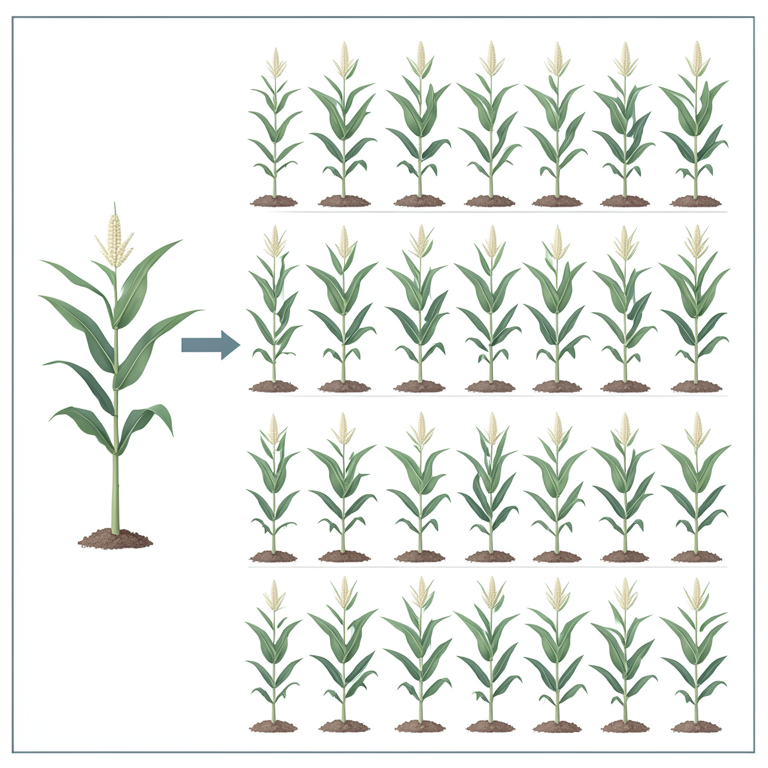
Experimental Treatment Matrix
AI-generated conceptual illustration (Zaid maize plants). It explains the idea and does not show study data.
View source evidence ↗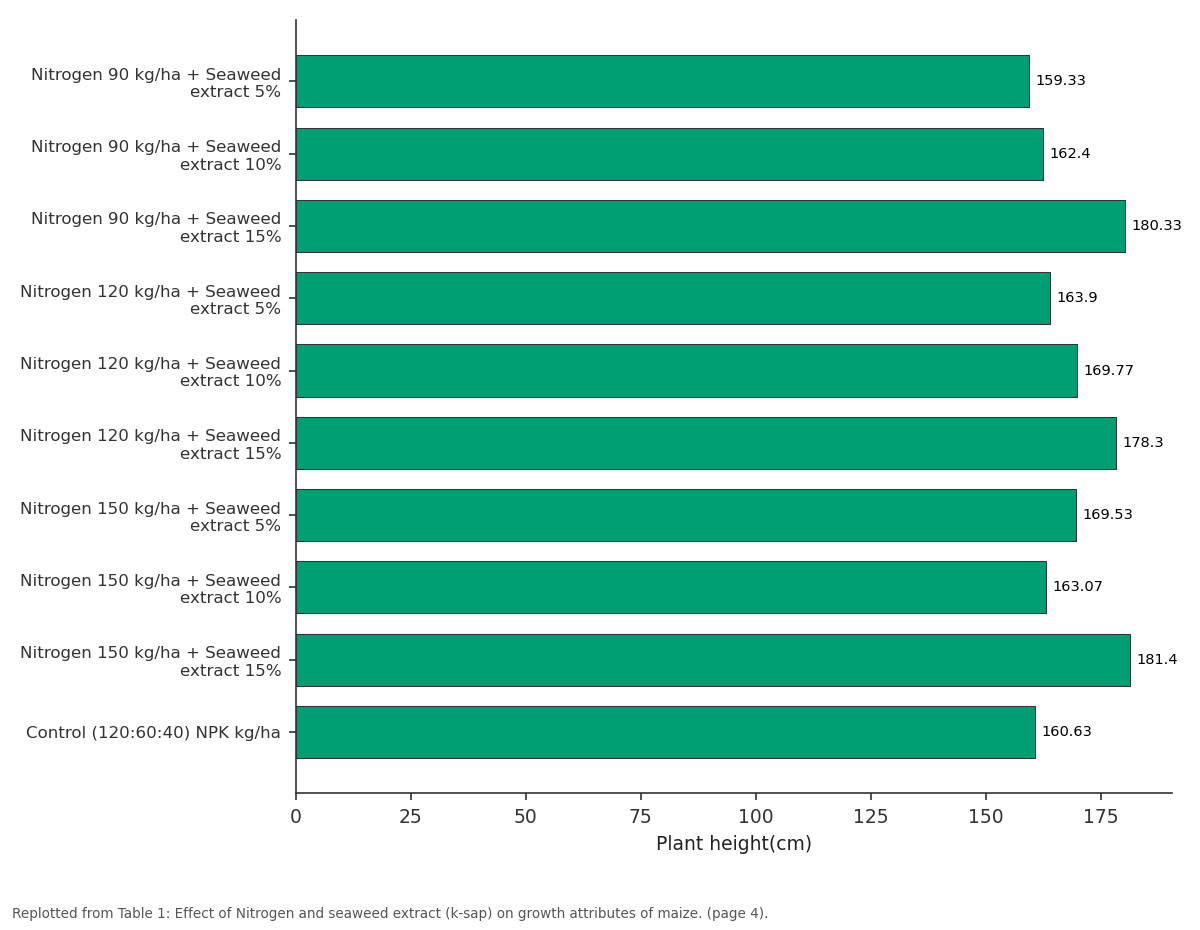
Plant height(cm): Nitrogen 90 kg/ha +... vs Nitrogen 90 kg/ha +... vs Nitrogen 90 kg/ha +... vs Nitrogen 120 kg/ha +... vs Nitrogen 120 kg/ha +...
Replotted from Table 1 (page 4) of the original paper. Every bar is the paper's own table value.
View source evidence ↗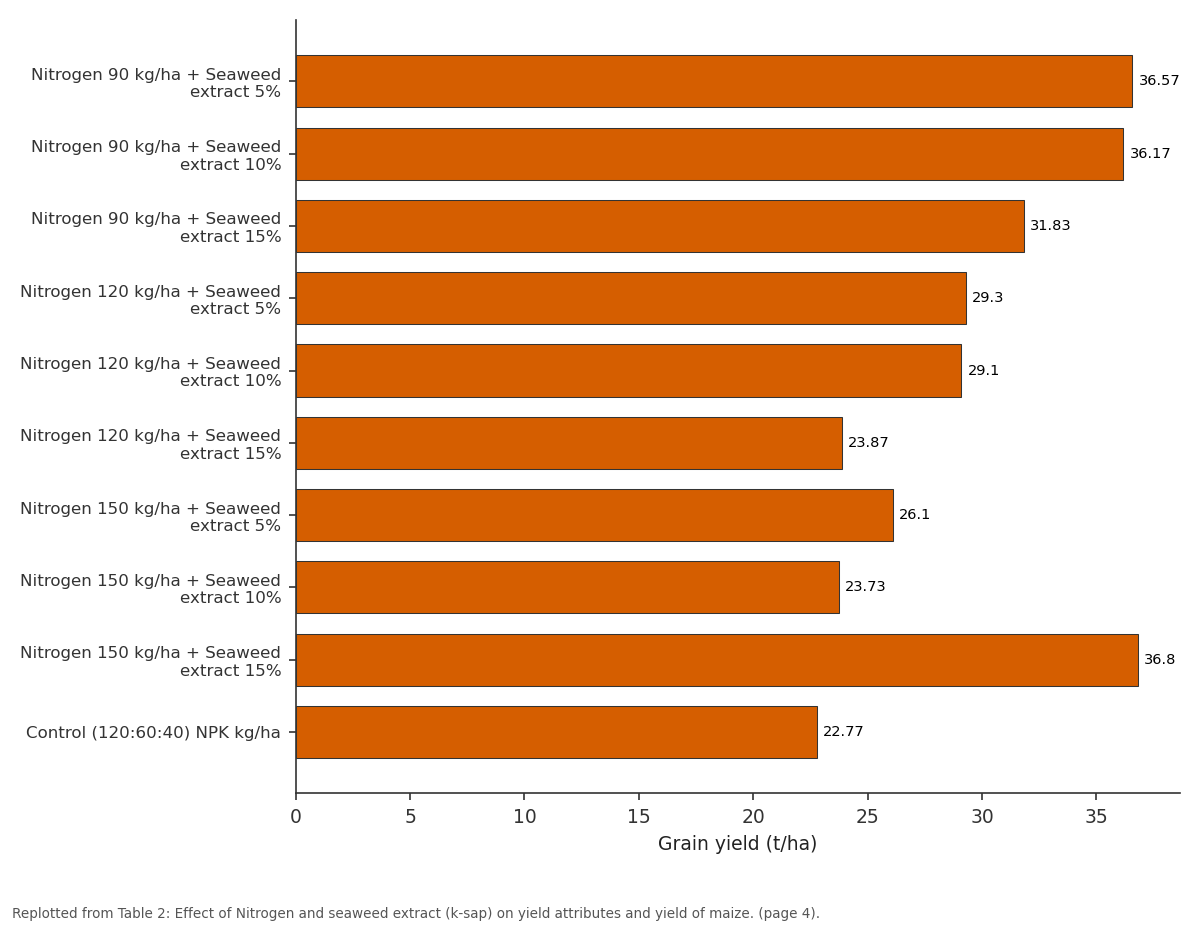
Seed Index (g): Nitrogen 90 kg/ha +... vs Nitrogen 90 kg/ha +... vs Nitrogen 90 kg/ha +... vs Nitrogen 120 kg/ha +... vs Nitrogen 120 kg/ha +...
Replotted from Table 2 (page 4) of the original paper. Every bar is the paper's own table value.
View source evidence ↗Figures & tables
From the original paper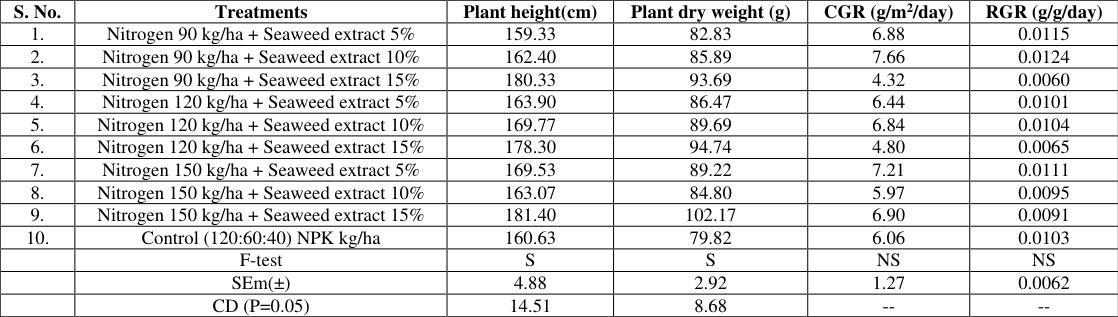 Table 1
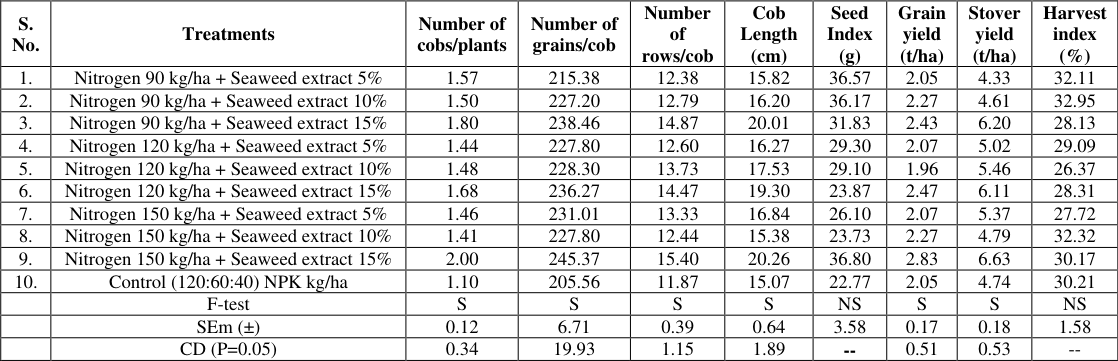 Table 2
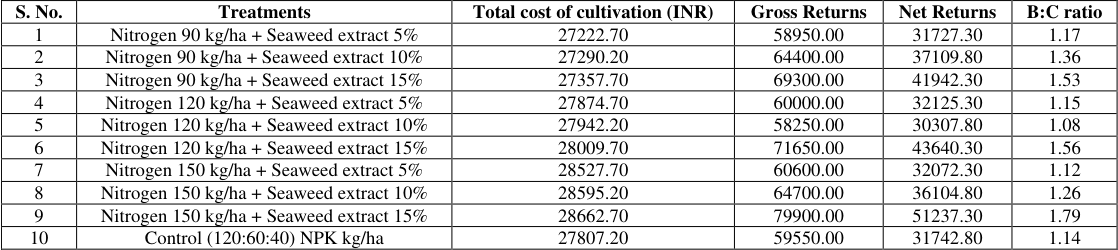 Table 3
Introduction
Maize is the world's most widely cultivated food crop providing ample food calories and protein for more than one thousand million human beings in the world. It is known as the "Queen of Cereals" because it has the highest genetic yield potential among the cereals. It is cultivated throughout the year in all the seasons and grown around the globe. Because of its 72% starch, 10% protein, 8.5% fiber, 4.8% oil, 3.0% sugar, and 1.7% ash content, maize has a high nutritional value. Globally, maize covers an area of 200.53 million hectares with the production of 1157.53 million tons with the productivity of 5.77 t/ha (USDA, 2023) [20] . In India, Maize is grown over an area of about 10.04 million hectares with a production of 33.62 million tons and productivity of 3.3 t/ha. Total area coverage under maize in Uttar Pradesh is 2.61 million hectares with a production of 6.09 million tons and the productivity 2.3 t/ha (GOI, 2022) [7] . According to (Nawab and Muhammad, 2017) [13] the decline in soil fertility condition has resulted in a decrease in crop productivity in recent years. The lack of nitrogen and its limited supply have made it difficult for farmers to maintain the fertility of their soil. Because different soils have different yield potentials, the biggest problem of the day is to ensure that a given soil has a balanced supply of nutrients for healthy plant growth. Applying a lot of inorganic fertilizer damages the ecosystem and the health of the soil; in this case, the only choice is to utilize the available organic and natural fertilizers (Krishnapuram and Debbarma, 2023) [9] . Using the right fertilizer application technique is essential for increasing the production of crops. Compared to techniques involving in soil application, foliar application of mineral fertilizer provides a faster means of providing nutrients to higher plants (Dilavarnaik et al., 2017) [5] . A sufficient amount of nutrients at every stage of growth is crucial for a high-quality and productive crop of maize. Nitrogen and phosphorus are two examples of vital nutrients that are crucial for plant growth, productivity, and quality. The most crucial agronomic practice is fertilization. As a result, numerous studies using varying fertilizer levels have shown that the ideal rate of fertilizer for growing fodder maize depends on a variety of variables, including plant density, management systems, soil fertility, and environmental factors (Chaudhary and Debbarma, 2023) [3] . A sufficient supply of nutrients is always necessary for a crop's maximum development and growth. Protoplasm, proteins, nucleic acids, and chlorophyll all include nitrogen, which is essential for crop growth during the vegetative and reproductive stages (Nawab and Muhammad, 2017) [13] . Plant height, stem thickness, leaf area, leaf area index, dry matter accumulation, net assimilates ratio, and yield per hectare are all said to rise with higher nitrogen levels (Cheema et al., 2010) [4] . One of the world's most significant marine resources is seaweed. For a few years, seaweed extracts, or saps, have been sold as fertiliser additives, and using them has been associated with positive effects. Seaweeds contain a high concentration of watersoluble potash, other minerals, and trace elements that are easily absorbed by plants and help to prevent diseases caused by mineral deficiencies. Using bioassay techniques, chemical analysis of seaweed and their extracts has shown the presence of a wide range of plant growth regulators, including auxins and cytokinin's, and their impact on the development and yield of maize being studied in the field (Dilavarnaik et al., 2017) [5] . As seaweed sap is a rich natural source of major and minor plant nutrients, vitamins, amino acids, and growth-promoting agents like cytokines, auxins, and abscisic acid all of which have been shown to enhance crop growth and yield it can be a valuable source of organic liquid fertiliser. Based on the crop cycle, three to four foliar treatments were applied to boost the growth, yield and quality. A rise in yield levels ranging from 11% to 52% was seen for several crops (Krishnapuram and Debbarma, 2023) [9] . The application of liquid seaweed extracts has been linked to numerous positive outcomes, such as higher crop yields, plant's resistance to frost, improved uptake of inorganic components from the soil, increased resistance to stressful environment and a decrease in fruit storage losses (Pal et al., 2015) [14] . Keeping in view of the above fact, the experiment was conducted to find out "Effect of Nitrogen and Seaweed extract (k-sap) on growth and yield of Maize".
Materials and Methods
The experiment was conducted during Zaid season 2023 at Crop Research Farm, Department of Agronomy, SHUATS, Prayagraj (U.P). The soil of the experimental field was sandy loam in texture, nearly neutral in soil reaction (pH 7.8), low level of organic carbon (0.62%), available N (225 Kg/ha), P (38.2 kg/ha), K (240.7 kg/ha) and zinc (2.32 mg/kg). The treatment consists of three levels of Nitrogen along with the combination of three levels of Seaweed extract. The experiment was laid out in RBD with 10 treatments each replicated thrice. The treatment combinations are T 1 -Nitrogen (90 kg/ha) + Seaweed extract (5%), T 2 -Nitrogen (90 kg/ha) + Seaweed extract (10%), T 3 -Nitrogen (90 kg/ha) + Seaweed extract (15%), T 4 -Nitrogen (120 kg/ha) + Seaweed extract (5%), T 5 -Nitrogen (120 kg/ha) + Seaweed extract (10%), T 6 -Nitrogen (120 kg/ha) + Seaweed extract (15%), T 7 -Nitrogen (150 kg/ha) + Seaweed extract (5%), T 8 -Nitrogen (150 kg/ha) + Seaweed extract (10%), T 9 -Nitrogen (150 kg/ha) + Seaweed extract (15%), T 10 -Control N:P:K (120:60:40 Kg/ha). Data recorded on different aspects of crop, viz., growth, yield attributes and yield were subjected to statistically analysed by analysis of variance method as described by Gomez and Gomez, (1976) [6] .
Results and Discussion
Results and Discussion
The data revealed that significantly higher plant height (181.40 cm) was recorded in the treatment 9 [Nitrogen (150 kg/ha) + Seaweed extract (15%)]. However, treatment 3[Nitrogen (90 kg/ha) + Seaweed extract (15%)], treatment 5 [Nitrogen (120 kg/ha) + Seaweed extract (10%)], treatment 6 [Nitrogen (120 kg/ha) + Seaweed extract (15%)], treatment 7 [Nitrogen (150 kg/ha) + Seaweed extract (5%)] were statistically at par with treatment 9 [Nitrogen (150 kg/ha) + Seaweed extract (15%)] Significant and higher plant height was observed with application of nitrogen(150 kg/ha) may be due to nitrogen is essential for the active division of cells to provide the protein building blocks needed for cell elongation. Similar results were also reported by Nawab et al. (2017) [13] . Further, significant and higher plant height was recorded with application of Seaweed sap might be due to existence of growth hormones, which encourage quicker cell division and internode elongation. Similar results were found by Singh et al. (2019) [18] .
Results revealed that treatment 9 [Nitrogen (150 kg/ha) + Seaweed extract (15%)] recorded significantly higher plant dry weight (102.17 g) was observed in treatment 9 [Nitrogen (150 kg/ha) + Seaweed extract (15%)]. However, treatment 3[Nitrogen (90 kg/ha) + Seaweed extract (15%)] and treatment 6 [Nitrogen (120 kg/ha) + Seaweed extract (15%)] were found to be statistically at par with the treatment 9 [Nitrogen (150 kg/ha) + Seaweed extract (15%)]. Significant and higher plant dry weight was observed with the application of nitrogen (150 kg/ha) might be due to its function in determining how efficiently sunlight is used by increasing biomass and any nitrogen deficiency lowers the photosynthetic capacity or efficiency of sunlight utilization. The present findings are within the close proximity of Shalini (2017) [17] . Further, higher plant dry weight was recorded with application of Seaweed may be due to Auxins are substances that effectively contribute to cell division and growth. A similar result was reported by Dilavarnaik et al. (2017) [5] .
The data recorded during 75-100 DAS; Highest crop growth rate (7.66 g/m2/day) was observed in treatment 2 [Nitrogen (150 kg/ha) + Seaweed extract (10%)].
The data revealed that During 75-100 DAS, treatment 2 [Nitrogen (90 kg/ha) + Seaweed extract (10%)] recorded significantly higher Relative Growth Rate (0.0124 g/g/day), though there was no significant difference among the treatments.
Yield and Yield Parameters 3.2.1 Number of cobs/plant
The data recorded that significant and maximum number of cobs/plant (2.00) was recorded in Treatment 9 [Nitrogen (150 kg/ha) + Seaweed extract (15%)] recorded significant and maximum number of cobs/plant (2.00). However, treatment 3 [Nitrogen (90 kg/ha) + Seaweed extract (15%)] and treatment 6 [Nitrogen (120 kg/ha) + Seaweed extract (15%)] was found to be statistically at par with treatment 9 [Nitrogen (150 kg/ha) + Seaweed extract (15%)].Significant and maximum number of cobs/plants was obtained with the application of nitrogen(150 kg/ha) might be due to increased dry matter accumulation in the plant and efficient photosynthetic translocation from source to sink may have further enhanced number of cobs/plant. Similar results was observed by Worku et al. (2020) [21] . Further, significantly maximum number of cobs/ plants was found with the application of seaweed sap may be due to an increase in photosynthate transport from the vegetative portion to the developing grains may be responsible for the improvement in maize yield attributes. Particularly resulted number of cobs/plants and were corroborated by Layek et al. (2016) [10] .
Number of grains/cob
The data showed that maximum number of grains/cob (245.37) was recorded in Treatment 9 [Nitrogen (150 kg/ha) + Seaweed extract (15%)]. However, treatment 2 [Nitrogen (90 kg/ha) + Seaweed extract (10%)], treatment 3[Nitrogen (90 kg/ha) + Seaweed extract (15%)], treatment 4 [Nitrogen (120 kg/ha) + Seaweed extract (5%)], treatment 5 [Nitrogen (120 kg/ha) + Seaweed extract (10%)], treatment 6 [Nitrogen (120 kg/ha) + Seaweed extract (15%)], treatment 7 [Nitrogen (150 kg/ha) + Seaweed extract (5%)] and treatment 8 [Nitrogen (150 kg/ha) + Seaweed extract (15%)] were found to be statistically at par with the treatment 9 [Nitrogen (150 kg/ha) + Seaweed extract (15%)].Significant and maximum number of grains/cob was observed with the application of nitrogen(150 kg/ha) might be due to nitrogen fertilization induced starch and sugar translocation in grains. Similar findings also reported by Rahman et al. (2016) [15] . Further, significantly maximum number of grains/cob was recorded with the application of seaweed is due to the primary components of chlorophyll production, cytokinin and magnesium, which may have enhanced crop physiology and growth, resulted maximum number of grains/cob. These findings agreed with those of Singh et al. (2017) [16] .
Number of rows/cob
Treatment 9 [Nitrogen (150 kg/ha) + Seaweed extract (15%)] recorded significant and maximum number of rows/cob (15.40). However, treatment 3[Nitrogen (90 kg/ha) + Seaweed extract (15%)] and treatment 6 [Nitrogen (120 kg/ha) + Seaweed extract (15%)] were found to be statistically at par with the treatment 9 [Nitrogen (150 kg/ha) + Seaweed extract (15%)].Significant and maximum number of rows/cob was observed with the application of nitrogen (150 kg/ha) might be due to, it is necessary for the effective uptake and movement of water and nutrients, as well as for the absorption of solar radiation, which is necessary for the meristematic and physiological processes that support the vigorous growth of roots, leaf spread, formation of dry matter in plants, by promoting more photosynthetic activity, which may have raised the amount of assimilates generated and later translocated to different sink components. The present findings are within the close proximity of Tiwari et al. (2022) [19] . Further increased in number of rows/cob was observed with the application of seaweed might be due to the presence of minerals in seaweed extract and plant growth regulator in sap both increased photosynthate or slowed leaf senescence, these would have increased the amount of photosynthate availability for grain filling, leading to bolder grain and higher grain yield. These results were in conformity with those of Indeti et al. (2022) [8] .
Significant and higher cob length (20.26 cm) was observed in treatment 9 [Nitrogen (150 kg/ha) + Seaweed extract (15%)]. However, treatment 3[Nitrogen (90 kg/ha) + Seaweed extract (15%)] and treatment 6 [Nitrogen (120 kg/ha) + Seaweed extract (15%)] was found to be statistically at par with the treatment 9 [Nitrogen (150 kg/ha) + Seaweed extract (15%)]. Significant and higher cob length was observed with the application of nitrogen (150 kg/ha) might be due to increased availability of nutrients, metabolites and photosynthates for the development of reproductive structures, particularly increased in cob length. Similar findings were also reported by Tiwari et al. (2022) [19] . Further, significantly increased in cob length with the application of seaweed might be due to the presence of certain macro and micro elements and plant growth regulators particularly cytokinin, IAA and GA is responsible for the increase of cob length, saps also improve the intake of nutrients. The findings agreed with those of Pal et al. (2015) [14] .
Statistically highest seed index (36.80) was recorded in treatment 10 [Control (120:60:40) NPK kg/ha] among all the treatments though it was recognized non-significant.
Significantly higher grain yield (2.83 t/ha) was recorded in treatment 9 [Nitrogen (150 kg/ha) + Seaweed extract (15%)]. However, treatment 3[Nitrogen (90 kg/ha) + Seaweed extract (15%)] and treatment 6 [Nitrogen (120 kg/ha) + Seaweed extract (15%)] was found to be statistically at par with treatment 9 [Nitrogen (150 kg/ha) + Seaweed extract (15%)].Significant and higher grain yield was resulted with the application of nitrogen(150 kg/ha) might be due to the lower competition for nutrients, resulting in a larger canopy of the plant and increased photosynthetic activity to build up more biomass with the bold grain. These results were in conformity with those of Adhikari et al. (2021) [1] . Further, increased in grain yield with the application of seaweed may be due to the seaweed extract's mineral content, which boosted photosynthetic capacity for grain filing, in addition to being important components of chlorophyll biosynthesis, magnesium and cytokinin found in seaweed extract may have contributed significantly to the improvement of crop physiology growth and yield attributes may have produced bolder grains. The present findings are within the close proximity of Singh et al. (2017) [16] .
Significant and higher stover yield (6.63 t/ha) was observed in treatment 9 [Nitrogen (150 kg/ha) + Seaweed extract (15%)]. However, treatment 3 [Nitrogen (90 kg/ha) + Seaweed extract (15%)] and treatment 6 [Nitrogen (120 kg/ha) + Seaweed extract (15%)] were found to be statistically at par with treatment 9 [Nitrogen (150 kg/ha) + Seaweed extract (15%)].Significant and higher stover yield was observed with the application of nitrogen (150 kg/ha) might be due to the increased rates of nitrogen improved plant metabolism, growth, dry matter production and other physiological processes, there by leading to higher stover yield. Similar findings were also reported by Maseeh and Dawson (2021) [12] . Further increased stover yield was recorded with the application of seaweed might be due to enhanced root development and multiplication, which allowed plants to extract more nutrients in a balanced amount from even further-reaching soil layers, additionally seaweed extract controlled the biophysiological processes of the plants, which kept their overall photosynthetic activity which may have increased the stover yield. The present findings are within the close proximity of Shamirkhan et al. (2017) [5] .
Treatment 2 [Nitrogen (90 kg/ha) + Seaweed extract (10%)] recorded significantly highest harvest Index (32.95%). Though, there is no significant difference found among all the treatments.
Economics
The result showed that Maximum gross return (79,900.00 INR/ha), higher net return (51,237.30 INR/ha) and highest benefit cost ratio (1.79) was recorded in treatment 3 [Nitrogen (150 kg/ha) + Seaweed extract (15%)] as compared to other treatments. Maximum benefit cost ratio was recorded with application of nitrogen(150 kg/ha) might be due to, as a result of split application of nitrogen, which reduces nitrogen utilization and helps in order to improve the vegetative growth and increases the yield, which in turn produces the maximum benefit cost ratio. Similar results were obtained by Meena et al. (2022) [11] . Further, increase in benefit cost ratio was recorded with the application of seaweed extract might be due to source of foliar organic fertilizer source that increased maize productivity and growth, adding to improved B:C ratio. These findings are similar to those of Basavaraja et al. (2018) [2] .
Conclusion
From the results, it is concluded that in Maize (treatment 9), application of Nitrogen 150 kg/ha and Seaweed extract 15% recorded highest grain yield and benefit cost ratio.
Acknowledgement
The authors are thankful to Department of Agronomy, Naini Agricultural Institute, Prayagraj, Sam Higginbottom University of Agriculture Technology and sciences, (U.P) India for providing necessary facilities to undertake the studies.
Figures and tables from the paper
| S. No. | Treatments | Plant height(cm) | Plant dry weight (g) | CGR (g/m2/day) | RGR (g/g/day) |
|---|---|---|---|---|---|
| 1. | Nitrogen 90 kg/ha + Seaweed extract 5% | 159.33 | 82.83 | 6.88 | 0.0115 |
| 2. | Nitrogen 90 kg/ha + Seaweed extract 10% | 162.40 | 85.89 | 7.66 | 0.0124 |
| 3. | Nitrogen 90 kg/ha + Seaweed extract 15% | 180.33 | 93.69 | 4.32 | 0.0060 |
| 4. | Nitrogen 120 kg/ha + Seaweed extract 5% | 163.90 | 86.47 | 6.44 | 0.0101 |
| 5. | Nitrogen 120 kg/ha + Seaweed extract 10% | 169.77 | 89.69 | 6.84 | 0.0104 |
| 6. | Nitrogen 120 kg/ha + Seaweed extract 15% | 178.30 | 94.74 | 4.80 | 0.0065 |
| 7. | Nitrogen 150 kg/ha + Seaweed extract 5% | 169.53 | 89.22 | 7.21 | 0.0111 |
| 8. | Nitrogen 150 kg/ha + Seaweed extract 10% | 163.07 | 84.80 | 5.97 | 0.0095 |
| 9. | Nitrogen 150 kg/ha + Seaweed extract 15% | 181.40 | 102.17 | 6.90 | 0.0091 |
| 10. | Control (120:60:40) NPK kg/ha | 160.63 | 79.82 | 6.06 | 0.0103 |
| F-test | S | S | NS | NS | |
| SEm(±) | 4.88 | 2.92 | 1.27 | 0.0062 | |
| CD (P=0.05) | 14.51 | 8.68 | -- | -- |
Table text extracted from the original PDF; superscript letters are shown inline. The original table image is below.
View original table image
| S. No. | Treatments | Total cost of cultivation (INR) | Gross Returns | Net Returns | B:C ratio |
|---|---|---|---|---|---|
| 1 | Nitrogen 90 kg/ha + Seaweed extract 5% | 27222.70 | 58950.00 | 31727.30 | 1.17 |
| 2 | Nitrogen 90 kg/ha + Seaweed extract 10% | 27290.20 | 64400.00 | 37109.80 | 1.36 |
| 3 | Nitrogen 90 kg/ha + Seaweed extract 15% | 27357.70 | 69300.00 | 41942.30 | 1.53 |
| 4 | Nitrogen 120 kg/ha + Seaweed extract 5% | 27874.70 | 60000.00 | 32125.30 | 1.15 |
| 5 | Nitrogen 120 kg/ha + Seaweed extract 10% | 27942.20 | 58250.00 | 30307.80 | 1.08 |
| 6 | Nitrogen 120 kg/ha + Seaweed extract 15% | 28009.70 | 71650.00 | 43640.30 | 1.56 |
| 7 | Nitrogen 150 kg/ha + Seaweed extract 5% | 28527.70 | 60600.00 | 32072.30 | 1.12 |
| 8 | Nitrogen 150 kg/ha + Seaweed extract 10% | 28595.20 | 64700.00 | 36104.80 | 1.26 |
| 9 | Nitrogen 150 kg/ha + Seaweed extract 15% | 28662.70 | 79900.00 | 51237.30 | 1.79 |
| 10 | Control (120:60:40) NPK kg/ha | 27807.20 | 59550.00 | 31742.80 | 1.14 |
Table text extracted from the original PDF; superscript letters are shown inline. The original table image is below.
View original table image
References
17 in the original paper- and yield of hybrid maize. Journal of Plant Nutrition 0190-4167, 2018.
- Chaudhary K, Debbarma V. Response of Nitrogen and Phosphorous on Growth, Yield and Economics of Fodder Maize (Zea mays L.). International Journal of Plant and Soil Science. 2023;35(14):330-337.
- Cheema MA, Farhad W, Saleem MF, Khan HZ, Munir A, Wahid MA, et al. Nitrogen management strategies for sustainable maize production. Crop and Environment. 2010;1(1):49-52.
- Shamirkhan S, Basavaraja PK, Yogendra ND, Arup G. Influence of Seaweed Saps on Germination, Growth and Yield of Hybrid Maize under Cauvery Command of Karnataka, India. International Journal of Current Microbiology and Applied Sciences. 2017;6(9):1047-1056.
- Venkata Siva IV, Rama K, Mehera B, Mayur. Effect of spacing and seaweed extract on yield and economics of Sweet corn (Zea mays L.). The Pharma Innovation Journal. 2022-2023;11(3):20-22.
- Krishnapuram, Jaya S, Debbarma V. Influence of Seaweed Sap and Zinc on Growth and Yield of Baby Corn. International Journal of Plant and Soil Science. 2023;35(16):251-260.
- Jayanta L, Anup D, Ramkrushna GI, Arup G, Panwar AS, Krishnappa R, et al. Effect of seaweed sap on germination, growth and productivity of maize (Zea mays) in northeastern Himalayas. Indian Journal of Agronomy. 2016;61(3):354-359.
- Arpita M, Solaniki RM, Parmar PM, Chaudhari S. Effect of spacing and nitrogen fertilization on growth, yield and economics of fodder maize (Zea mays L.). The Pharma Innovational Journal. 2022;11(4):1732-1735.
- Maseeh Y, Dawson J. Effect of nitrogen and Sulphur levels on growth and yield of maize (Zea mays L.). The Pharma Innovation Journal. 2021;10(8):241-245.
- Nawab Ali, Muhammad MA. Effect of Different Nitrogen Rates on Growth, Yield and Quality of Maize. Middle East Journal Agriculture Research. 2017;6(1):107-112.
- Pal A, Dwivedi S, Kumar M, Kumar P, Kanwar P. Effect of seaweed saps on growth, yield, nutrient uptake and economic improvement of maize (sweet corn). Journal of Applied and Natural Sciences. 2015;7(2):970-975.
- Rahman MM, Paul SK, Rahman MM. Effects of spacing and nitrogen levels on yield and yield contributing characters of maize. Journal Bangladesh Agriculture University. 2016;14(1):43-48.
- Singh S, Reshu B, Pal SK, Singh MK. Efficacy of Seaweed (Kappaphycus Alvarezii) Sap on Productivity of Wheat. An International Quarterly Journal of Life Sciences. 2017;12(3):1697-1701.
- Kumari S. Effect of Nitrogen and Phosphorus Level on Dry Matter Yield at Different Growth Stages of Popcorn in South Saurashtra Region of Gujarat, India. International Journal of Current Microbiology and Applied Sciences. 2017;6(8):547-553.
- Singh ST, Singh D, Gautam S, Singh MK, Pal SK. Seaweed: An Alternative Liquid Fertilizer for Plant Growth. International Journal of Current Microbiology and Applied Sciences. 2019;8(12):772-781.
- Kumar TD, Chaturvedi DP, Singh T, Yadav TK, Awadhiya P. Effect of nitrogen and Sulphur levels on growth, yield and quality of maize (Zea mays L.) The Pharma Innovation Journal. 2022;11(1):418-422.
- Worku, Abebe, Derebe, Bitwoded, Bitew, Yayeh, et al. Response of maize to nitrogen and planting density. cogent food and agriculture. 2020;6(1):177-405.